7 521 résultats
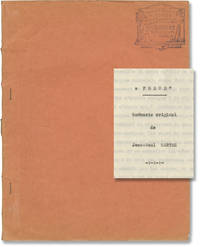
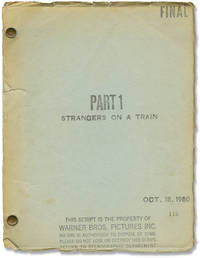
1950156756Burbank CA: Warner Brothers 1950. Final Draft script for the 1951 film dated October 18 1950. Although the front wrapper and the first distribution page identify the script as Part I the script presented here is the complete Final Draft divided into four parts Parts I-IV each with its own distribution page. Laid in are twelve call sheets dating from October 31 1950 through December 23 1950 with all but one heavily annotated in manuscript pencil.<br /> <br /> Based on Patricia Highsmith's 1950 novel. A Hitchcock classic following a psychotic socialite and tennis pro who meet on a train and promptly form a partnership to "exchange murders." The plan seems infallible until one person shirks his end of the deal. <br /> <br /> Shot on location in New York Los Angeles Washington DC and Connecticut.<br /> <br /> Blue titled wrappers noted as FINAL on the front wrapper rubber-stamped copy No. 115 dated OCT. 18 1950. Four distribution pages present one for each Part with the first receipt removed all others intact. 158 leaves with last page of text numbered 153. Mimeograph duplication rectos only with blue revision pages throughout dated variously between 10/30/50 and 11/20/50. Pages Near Fine wrapper Very Good plus with edgewear and a closed tear to the center left front wrapper bound with two gold brads.<br /> <br /> Call sheets: 8.5 x 11 inches. Near Fine overall.<br /> <br /> Grant US. Selby Masterwork. Silver Classic Noir. Spicer US. Warner Brothers unknown
19755110Inscribed by Bertolucci in Italian to Walter Alferol on title page. Full green morocco faded to brown with debossed decoration to front cover. Marbled endpapers. 36 original tipped-in silver gelatin prints 1 color print of the film crew and 1 loose silver gelatin print. All beautifully printed. Loss to tail of spine and its leather is detached from back cover board. Discoloration to spine edge. Unpaginated. 12 1/2 x 13 3/4 inches. hardcover
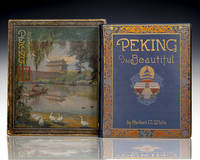
1927149511Shanghai China: The Commercial Press Limited 1927. First edition of White's fine photographic study of the monuments of Shanghai. Folio original royal blue embroidered silk pictorial boards illustrated with seventy mounted color and monochrome photographic plates of the celebrated monuments of China's Northern Capital and its environs complete with descriptive and historical notes by Herbert C. White Art Director of Signed of the Times Publishing House Shanghai. Introduction by Hu Shih Ph.D. Professor of Philosophy at the National University of Peking. In fine condition. Housed in the original publisher's box. Very rare in such fine condition. Herbert C. White 1896-1962 arrived in China in 1922 together with his twin brother James H. White 1896-1954. They opened a language school in Beijing. Attracted by Chinese landscapes and civilization they used their vacations to travel around the country and took large numbers of photographs. This album is a selection of photographs of the city gates and walls the Temple of Heaven the Forbidden City and the temples and monasteries of Beijing. It presents a realistic view of the city's appearance during the early Republican era. From the preface: "For a long time there has been a recognized need for an album on historic Peking that would embody a representative set of all the important monuments of the capital. The very fact that so many of the ancient landmarks . are being torn from their foundations and ruthlessly destroyed makes an album of this kind not only interesting as an art volume but a work of immeasurable value to China and to the world as an authentic record of picturesque Peking." The Commercial Press, Limited hardcover
1965158800N.p.: N.p. 1965. Archive of vintage treatments scripts and other ephemera from the 1962 film.<br /> <br /> Archive includes: <br /> <br /> Two carbon typescript treatment scripts by Jean-Paul Sartre one in English and one in French both dated December 15 1958 with annotations in Sartre's hand.<br /> <br /> An early xerographically duplicated draft of Sartre's voluminous three-part script a later reproduction made for internal use with copied annotations throughout. <br /> <br /> A working script used during the film's production with revision pages.<br /> <br /> A film program. <br /> <br /> Three telegrams a telefax and a letter regarding the release of the film the return of Sartre's treatments and script and a deposition reminder all from agent Paul Kohner to director John Huston. <br /> <br /> A copy of the 1984 posthumous publication of Sartre's script The Freud Scenario.<br /> <br /> Huston announced his intention to make a film about a young Sigmund Freud in 1958 and asked Sartre whom he had met on the set of his 1952 film Moulin Rouge to submit a screenplay. The partnership quickly soured however due to Sartre's refusal to shorten his script which had ballooned to the colossal 472-page script on offer. Huston and Sartre would meet in Galway but Sartre continued to reject the director's proposed cuts wryly noting "We can make a film of four hours in the case of Ben Hur but the Texas public couldn't stand four hours of complexes." The film was ultimately finished and released in 1962 and although many elements of Sartre's script remain in the film the philosopher went uncredited. <br /> <br /> Set in Vienna shot on location in Austria and Germany.<br /> <br /> French Treatment:<br /> <br /> Salmon untitled wrappers. Title page present dated 15 Décembre 1958 noted as Scénario original with credits for author Jean-Paul Sartre. 95 leaves with last page of text numbered 95. Carbon typescript copy on onionskin rectos only. Pages Near Fine wrapper Near Fine saddle-stapled with two staples.<br /> <br /> English Treatment:<br /> <br /> Tan untitled wrappers with a titled label noted as Original Outline on the front wrapper with credits for author Jean-Paul Sartre. Title page present dated December 15 1958 noted as 1. Draft with credits for author Jean-Paul Sartre. 61 leaves with last page of text numbered 60. Carbon typescript copy on onionskin rectos only. Pages Near Fine wrapper Near Fine bound with three screw brads.<br /> <br /> Xerographically duplicated Sartre Script:<br /> <br /> White untitled wrappers. 472 leaves with last page of text numbered 181. Xerographic duplication rectos only. Pages Near Fine wrapper Very Good plus with light soiling overall bound internally with three gold brads.<br /> <br /> Working Script:<br /> <br /> Brown untitled wrappers. Title page present. 162 leaves with last page of text numbered 168. Mimeograph duplication rectos only with blue buff and yellow revision pages throughout dated variously between 9/8/61 and 12/19/61. Pages Near Fine wrapper Very Good lacking rear wrapper and much of the spine bound with a prong binding.<br /> <br /> Telegrams telefax and letter: 6.5 x 4.5 to 8.5 x 11 inches. Very Good plus to Near Fine.<br /> <br /> Program: 7 x 8.5 inches bi-fold. Very Good plus.<br /> <br /> Book: Near Fine and unread in a lightly rubbed Very Good plus dust jacket. N.p. unknown
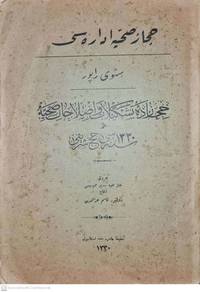
1914000179Ottoman Turkish official report about the Hijaz health rules and organizations with several illustrations of Jeddah and Mecca. Amira , government press paperback
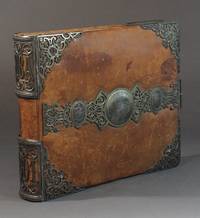
190158762Matanzas Cuba 1901. Oblong folio approx. 12" x 16" overall original padded leather with elaborate filigreed silver corner-pieces and central band bearing two engraved shields Cuban and American and a central medallion bearing the name of the school and the Buffalo Exposition a.e.g. silk moiré endpapers; leather a little scuffed the endpapers loosening but in all the binding is very good and sound; internally fine. Containing an autograph leaf signed by the director and 20 instructors and professors 7 printed leaves of text within red borders describing the Institute's curriculum professors natural history museum gymnasium etc. and 37 original photographs on printed mounts with decorative borders depicting professors benefactors alumni classrooms views of buildings both interior and exterior library and museum. The photographs are by C. Ruiz de Castro of Matanzas of whom there seems to be scant information. Photographs measure 7½" x 10" on mounts 11½" x 14". The Institute exists to this day. Started in September 1839 it went through many transformations over the years. By the mid-1860s the school was offering degrees in "Reasoned Arithmetic Algebra Topography Geometry Trigonometry History Physics Line Drawing Bookkeeping Applied Chemistry Geography and Commercial Statistical Geography Industrial Mechanics Natural History Political Economy and in terms of languages: English and French." Shortly thereafter were added "Grammar Latin Greek Sacred History and Religion Psychology Logic and Morals." By 1895 two chairs were added "Linear Drawing and Natural Drawing and it also had a Museum of Natural History with collections of snails and invaluable plants and specimens of the fauna and flora of Cuba." See a good history of the Institute online at dcubanos.com/rinconcuba/instituto-de-segunda-ensenanza-de-matanzas. unknown
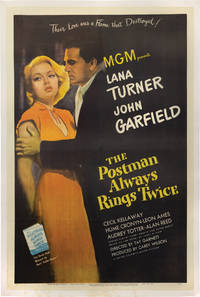
1946157187Beverly Hills CA: MGM 1946. Vintage one sheet poster for the 1946 film.<br /> <br /> Based on the 1934 novel by James M. Cain. A high spot of film noir as well as the careers of Lana Turner and John Garfield. <br /> <br /> Set and shot on location in Los Angeles.<br /> <br /> 27.25 x 41 inches. In an archival frame. Near Fine with some professional restoration and repair at the original folds.<br /> <br /> Grant US. Penzler 101. Selby US Masterwork. Silver and Ward Classic Noir. Spicer US. MGM unknown
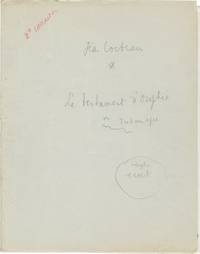
1958167441N.p.: N.p. 1958. Vintage ribbon copy typescript treatment for the 1960 French film. With substantive annotations in director Jean Cocteau's hand throughout noting deletions and amending dialogue. <br /> <br /> Full provenance available. <br /> <br /> The final film in Cocteau's "Orphic" trilogy following "The Blood of a Poet" 1930 and "Orphee" 1950. The only film in the trilogy featuring Cocteau himself as an aging poet who knows he is dying as indeed he was his greatest desire being to experience rebirth so that he can qualify for celestial immortality. <br /> <br /> With cameos by Pablo Picasso Charles Aznavour bullfighter Luis Miguel Dominguen and Yul Brynner. A few seconds of color are spliced in at one point a surreal effect used prior to this film in "Portrait of Jennie" 1948 and later in Samuel Fuller's "Shock Corridor" 1963. <br /> <br /> Having run out of funds in mid-production Cocteau was given money to complete filming by François Truffaut who used the prize money he had won at Cannes for "Les Quatre Cents Coups" 1959. <br /> <br /> Unbound housed in a gray paper folder. Title and Cocteau's name in manuscript pencil on the front of the folder. 31 leaves with last page of text numbered 28. Ribbon copy typescript on onionskin stock rectos only. Pages Fine unbound. N.p. unknown
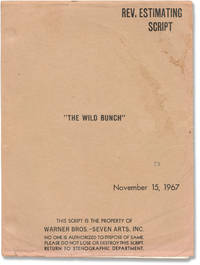
1967160830Burbank CA: Warner Brothers / Seven Arts 1967. Revised Estimating script for the 1969 Western film.<br /> <br /> Sam Peckinpah's classic revisionist Western of nearly inestimable importance and violence made at the peak of his career and which-along with "Straw Dogs" 1971-remains the lasting testament to his vision. A major contributor to the "end of the West" theme so prevalent of the genre in the 1970s and one of the earliest New Hollywood Westerns. <br /> <br /> Set in Mexico shot on location in Mexico and Spain. <br /> <br /> Beige titled Warner Brothers wrappers dated November 15 1967 noted as Rev. Estimating Script and stamped copy No. 75. Title page present dated 11/15/67 with credits for screenwriters Wallen Green and Sam Peckinpah and story credit for Roy Sickner. 125 leaves with last page of text numbered 123. Mimeograph duplication rectos only. Pages about Fine wrapper Very Good plus bound internally with two gold brads. <br /> <br /> National Film Registry. Ebert I. Hardy US. Pitts 4934. Rosenbaum 1000. Schrader Canon Fodder 28. Warner Brothers / Seven Arts unknown
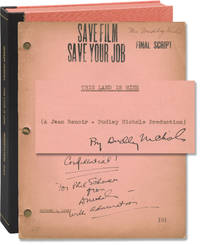
1942151348Santa Ana CA: RKO Radio Pictures 1942. Final Draft screenplay for the 1942 film. Copy belonging to legendary screenwriter Dudley Nichols inscribed by Nichols to Los Angeles Times film critic Phil Scheuer on the title page: "By Dudley Nichols / Confidential! / For Phil Scheuer from D. Nichols-with admiration." Nichols' ownership name is also in manuscript pencil at the top right corner.<br /> <br /> Renoir's second American feature an anti-fascist propaganda film following a meek schoolteacher in a German-occupied European country who is falsely accused of murder and forced to take a stand against the Nazis and their collaborators. <br /> <br /> At the peak of his career Nichols worked with many key Golden Age directors including John Ford George Cukor Howard Hawks Fritz Lang and of course Jean Renoir. He was a founding member of the Screen Writers Guild and is best remembered for "The Informer" 1935 for which Nichols won an Academy Award "Bringing Up Baby" 1938 "Stagecoach" 1939 "For Whom the Bell Tolls" 1943 "Scarlet Street" 1945 "And Then There Were None" 1945 "The Bells of St. Mary's" 1945 and "The Tin Star" 1957. He continued to write prolifically for film up until the time of his death in 1960. <br /> <br /> Housed in a custom quarter-leather clamshell box. <br /> <br /> Pink titled wrappers noted as FINAL on the front wrapper rubber-stamped copy No. 104 dated OCTOBER 2 1942 with credits for director Jean Renoir and screenwriter Dudley Nichols. Distribution page present with receipt removed. Title page integral with the front wrapper. 169 leaves with last page of text numbered 162. Mimeograph duplication rectos only. Pages Near Fine wrapper Near Fine bound with three gold brads. RKO Radio Pictures unknown
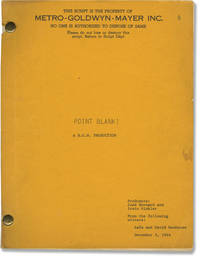
1966160106Beverly Hills CA: Metro-Goldwyn-Mayer MGM 1966. Early Draft script for the 1967 film seen here under the working title "Point Blank!" <br /> <br /> The lead character named Parker here as he was in the novel was renamed Walker in the finished film the role played by Lee Marvin. <br /> <br /> A foundational crime film of the late 1960s setting the stage for the New Hollywood era. A blunt unapologetic nihilistic work one of the gems of early neo-noir with touches of French New Wave. Viewers and critics have often questioned whether or not the film is really a dream that its protagonist has after he is shot in the very beginning. Director John Boorman claims to not have an opinion on the matter and has said that the film is about the lead character's brutalizing experiences in World War II that had dehumanized him and left him desperately searching for his humanity. <br /> <br /> The film's oblique final sequence wherein Parker/Walker realizes he has been unknowingly eliminating the competition for a shadowy figure who now wishes to hire him was not developed at this stage of the script's history. The ending instead adheres more closely to that of the novel. <br /> <br /> Goldenrod titled wrappers rubber-stamped copy No. 6 dated December 5 1966 with credits for screenwriters Rafe Newhouse and David Newhouse. Title page integral with front wrapper. 91 leaves with last page of text numbered 91. Mimeograph duplication rectos only all leaves dated variously between 12/4/66 and 12/9/66. Pages Near Fine wrapper Very Good plus bound with two gold brads. <br /> <br /> Housed in a green cloth clamshell box.<br /> <br /> Grant US. Silver Classic Noir. Spicer US. Metro-Goldwyn-Mayer [MGM] unknown
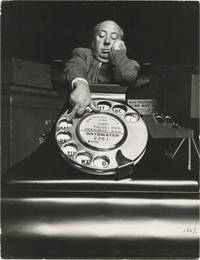
1954153634N.p.: N.p. 1954. Archive of five vintage borderless oversize photographs of director Alfred Hitchcock with various cast and crew members on the set of the 1954 film noir. Manuscript ink and pencil annotations to the verso including layout annotations "FILE" stamps and the stamp of photographer Sanford H. Roth. Four photographs with printed mimeo snipes affixed to the verso and four photographs with manuscript annotations noting their appearance in the May 24 1954 issue of Life magazine. <br /> <br /> Brooklyn-born photojournalist Sanford Roth was best known for his portrait photography capturing intimate and now iconic images of artists and actors throughout his decades-long career including Marc Chagall Joan Crawford Albert Einstein Henri Matisse and Elizabeth Taylor among many others. <br /> <br /> Based on the 1952 play by Frederick Knott who also wrote the screenplay about a tennis player who arranges to have his wife framed for murder after discovering her infidelity. The only Hitchcock film to be shot in 3D although the format would ultimately be discarded for theatrical release and the first of three Hitchcock films to feature actress Grace Kelly followed by "Rear Window" 1954 and "To Catch a Thief" 1955. <br /> <br /> One photograph features Hitchcock leaning over a giant rotary dial a prop made as a result of Warner Brothers' proprietary 3D camera rig. Hitchcock wanted the first shot of the film to feature a finger pressing the letter M on a rotary dial telephone but the specialized 3D camera was unable to focus the close-up correctly leading the director to order a giant finger made from wood and a proportionally large dial in order to achieve the effect. <br /> <br /> Four photographs 10 x 13.5 inches one photograph 9.5 x 13.5 inches. Lightly edgeworn else generally Near Fine. <br /> <br /> Grant US. Selby US. Spicer US. N.p. unknown
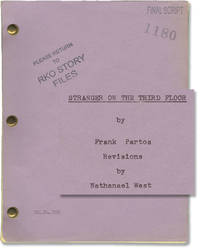
1940153773New York: RKO Radio Pictures 1940. Revised Draft script for the 1940 film noir generally considered to be the first in the American film noir cycle.<br /> <br /> An aspiring reporter is the key witness at the murder trial of a young man accused of cutting a cafe owner's throat and is soon accused of a similar crime himself. Widely regarded as the first film noir. Author and occasional screenwriter Nathanael West who is credited with revisions on the front wrapper was not credited on the finished film. <br /> <br /> Purple titled card wrappers stamped FINAL SCRIPT on the front wrapper dated MAY 24 1940 with credits for screenwriter Frank Partos and revision credits to Nathanael West. Title page integral with the title page as issued. 115 leaves with last page of text numbered 115. Mimeograph duplication on yellow onionskin stock rectos only. Pages Near Fine wrapper Near Fine bound with three gold brads.<br /> <br /> Grant US. Selby US. Silver and Ward Classic Noir. Spicer US. RKO Radio Pictures unknown
1949143058Tokyo: Film Art Association 1949. First Draft script for the 1949 Japanese film noir. Manuscript ink and pencil annotations from production on two leaves. Text in Japanese. <br /> <br /> Generally considered to be the greatest film noir made in Japan and hugely influential on American film noir of the 1950s and 1960s. <br /> <br /> White titled wrappers. 96 leaves with last page of text numbered 96. Mechanical duplication. Toning due to aging throughout wrapper split at spine with mild foxing otherwise Good condition. <br /> <br /> BFI 534. Criterion Collection 233. Grant Japan. Selby Japan. Spicer Japan Classic Noir. Film Art Association unknown
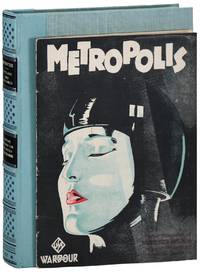
19277591London: UFA / Wardour Films Limited 1927. First U.K. Edition. Small quarto 24.5cm; original pictorial card wrappers saddle-stitched; 32pp; illus. Slim quarto 24.75cm; original pictorial card wrappers stapled; 30pp; illus. Trivial wear along the spine-fold some oxidation to staples with some mild dustiness to rear wrapper; contents are fresh and complete cover is rich in color with corners still sharp; a Near fine unrestored example. Housed in a custom clamshell case.<br /> <br /> Well-preserved program for the British premiere of Fritz Lang's epochal science fiction film held at London's Marble Arch Pavilion on 21 March 1927. The program contains 78 photos and stills - from the film itself and from behind the scenes - including a synopsis of the film casting information a dramatic centerfold and several short pieces written by Fritz Lang Thea Von Harbou Rudolf Klein-Rogge Gustav Frolich Carl Freund Alfred Abel and Brigitte Helm. A desirable and intensely visual piece of ephemera from a groundbreaking sci-fi film. Not found in OCLC. 7591. UFA / Wardour Films Limited unknown
1963165707N.p.: N.p. 1963. Vintage script for the 1964 production of Shakespeare's classic tragedy staged at the Lunt-Fontanne Theatre on Broadway from April 9 through August 8 1964. Copy belonging to actor Christopher Culkin who appeared in the play as "Player King" with his manuscript name on the title page and his manuscript annotations on over 20 pages marking stage blocking and dialogue.<br /> <br /> With sparse set design and a total absence of period costuming director John Gielgud's ultra-minimal staging of "Hamlet" proved entirely new for New York audiences and was ultimately wildly successful achieving the longest run for the play in Broadway history at 137 performances. Actor Richard Burton received a Tony nomination for his performance as the tragic prince and actor Hume Cronyn won a Tony for Best Performance by a Featured Actor in a Play. <br /> <br /> A filmed version of the play was created by recording three live performances on the then-new technology of Electronovision and editing them into a single film. Although considered lost for many years the film was rediscovered and restored in 1995 by producer and director Paul Brownstein. <br /> <br /> Actor Christopher "Kit" Culkin appeared in several Broadway productions throughout the early and mid-1960s but is perhaps best known today for his more famous offspring Kieran Rory and Macaulay. <br /> <br /> Brown titled wrappers. Title page present dated 10-1-63. 124 leaves with last page of text numbered 3-37. Mimeograph duplication rectos only. Pages Near Fine wrappers Very Good separated along the hinge and now archivally reinforced bound with two gold screw brads. N.p. unknown
1933143459Beverly Hills CA: Metro-Goldwyn-Mayer MGM 1933. 70 vintage double weight reference photographs from the 1933 film including seven of cast and crew at work on the set three of which feature director Tod Browning. Also included is a later print of a fourth image of Browning on the set. From the estate of Tod Browning housed in a Kodak photographic paper box with his name in manuscript pencil on the lid. <br /> <br /> Based on an unpublished play by John W. McDermott about a pair of construction workers one a romantic the other a ladies' man who tries to prevent his friend from rushing into marriage with a con artist ex out to steal his friend's nest egg with dangerous consequences. A lesser known film and rare comedy from Browning. <br /> <br /> 8 x 10 inches. Very Good plus. <br /> <br /> For complete collation details please inquire. Metro-Goldwyn-Mayer [MGM] unknown
19712110502150906729Chiku ma shobo 1971. Soft Cover. Fine. Number of books: 3 Chiku ma shobo paperback
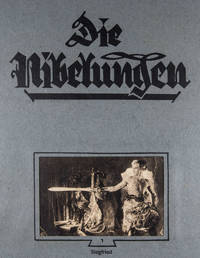
193544791Berlin/ Hannover/ Leipzig: Verlag "Ross"/ Cigarettenfabrik Constantin/ Film-Kurier/ Ufa-Delca 1935. First edition. This collections consists of 9 separate pieces: <br /> 1 Complete set of 40 Photo-postcards housed in a modern 4-ring binder<br /> 2 An unused official album for those cards<br /> 3 Complete set of 75 cigarette cards in an official album<br /> 4 A smaller format copy of the same album including the cards<br /> 5 "Die Nibelungen. Ein Deutsches Heldenlied". Original German film premiere program. <br /> 6 "Das Nibelungenlied. Ein Deutscher Heldensang" "The Nibelungenlied. A German Epic Poem"<br /> 7 Film Program for Die Nibelungen Pt.1: Sigfried<br /> 8 Film Program for Die Nibelungen Pt.2: Kriemhilds Rache<br /> 9 Kriemhilds Rache Der.2 Nibelungenfilm.<br /> <br /> All text in German.<br /> <br /> 1 This is a complete collection of 40 postcards printed by Verlag Ross for Ufa-Delca Film to celebrate the release of Fritz Lang's two-part epic fantasy film Die Nibelungen. The postcards measure approximately 3.5 x5.5" each and are printed in striking sepia-toned photogravure on heavy cardstock. The images depict characters and dramatic scenes from the film covering both parts "Siegfried" and "Kriemhilds Rache" "Kriemhild's Revenge" and are divided into 6 groupings. Each card is captioned with the serial number and title of the character or scene with the name of the actor often mentioned as well. The final group of 4 cards is a sequence showcasing the pivotal dramatic battle between Siegfried and the dragon. This set is not to be confused with the series of colored postcards by Uvachrom which were based in part on these images. The postcards were never used circulated but some have a red triangle stamped insignia on the back. The cards are housed in a blue leather covered photo album with plastic sleeves. The cards and album are in near fine condition overall.<br /> <br /> 2 Also included is an unused empty official Verlag Ross album to house the postcards. Oblong brown-grey thick paper wrappers illustrated with a gilt-bordered cutout image from one the postcards depicting Seigfried and the dragon and gilt-stamped lettering. Brown string-tassel. The album is empty and contains 25 double-sided leaves. Publisher's debossed blind-stamp on the bottom of the back wrapper. Protected by modern mylar. <br /> <br /> 3 Die Nibelungen Complete set of 75 Cigarette Cards in an Album. Small folio. 13x10". Textured Gray-green string-tied wrappers with embossed brown and gold lettering and helmet illustration on the front cover. Yellow-green decorative tassel. The is an album containing the complete collection of Cigarette Cards for "Die Nibelungen" produced by the Cigarettenfabrik Constantin company of Hannover in 1928. Each card measures 2.5x4" and featured b/w photogravure images from the film. Many of the images featured are the same as those of those of the Verlag Ross set but many are unique to this collection. Each double-sided leaf of the album contains a mat with an average of 6 windowed cutouts framing the cards which have been slid underneath. Each cutout section contains a caption in German bellow naming or describing the image on the respective card. The set coves both parts of the film "Siegfried" and "Kriemhilds Rache". Introduction to the collection from the company on the first page of the album. Text in German. Wrappers with some minor creasing along the edges and to the corners. Interior with some minor bumping to the corners of some of the leaves a light closed tear along the bottom left corner of one of the leaves. Wrappers interior and cards in very good to near fine condition overall. Protected by modern mylar.<br /> <br /> 4 The rarer smaller variant of the same album with smaller cards. Includes all the same images in the same order except for image #18 Gunther missing. 74 of 75 images present. Protected by modern mylar.<br /> <br /> 5 "Die Nibelungen. Ein Deutsches Heldenlied". 24pp. Rare original theater program for the German premiere of the film on Feb. 14th 1924 held at the Ufa-Palast am Zoo in Berlin. Dark grey paper wrappers with red string-tied binding and the original UFA gilt-stamped embossed seal. Nicely illustrated throughout with b/w gravure images featuring stills from the film as well as portrait images of director Fritz Lang and screenwriter Thea Von Harbou. The images accompany a series of short essays on the making of the film including one from von Harbou herself. Page 11 contains period manuscript notes in pencil from a previous owner which note in detail various specific scenes from the film. In near fine condition overall. Protected by modern mylar.<br /> <br /> 6 "Das Nibelungenlied. Ein Deutscher Heldensang" "The Nibelungenlied. A German Epic Poem". Wezel & Naumann. Leipzig. 1935. 79pp. Blue cloth boards with debossed gilt lettering on the front cover and spine. This finely printed book pairs text passages from the original medieval German Epic poem "Das Nibelungenlied" with relevant b/w photographic reproductions of stills from Fritz Lang's 1924 film adaptation. Most of the images are smaller cutouts pasted onto the pages but the book also includes 6 full-page glossy photographic plates including frontispiece. All text finely printed in blue gothic script on japan vellum pages. An additional loose copy of one of the smaller images laid in at the front. Binding with some minor bumping to the corners. Interior with name of a previous owner on the endpapers. Rusting to the staples of the binding. Staring at the gutter of a number of pages. Binding tight overall. Binding in near fine interior in very good condition overall.<br /> <br /> <br /> 7 & 8 Die Nibelungen: Siegfried WITH Kriemhilds Rache TWO SOUVENIR FILM PROGRAMS<br /> Berlin: Film-Kurier 1924. First edition. Two premiere souvenir programs depicting both parts of Fritz Lang's monumental "Die Nibelungen" production "Die Nibelungen: Siegfried" released on 2/14/1924 and "Die Nibelungen: Kriemhilds Rache" Kriemhild's Revenge released on 4/26/1924.<br /> <br /> - Die Nibelungen. I Film: Siegfried. Large quarto approx.11.5 x 8.5". Unpaginated. 8pp. Original photo-illustrated wrappers. Illustrated with 22 sepia tone photogravures this program contains the film credits as well as a synopsis of the story. With a later variant cover image showing Siegfried with a sword and a mention of both parts 1&2 of the film.<br /> <br /> - Kriemhilds Rache: Small folio approx.11.5 x 8.5". Unpaginated. 8pp. Original photo-illustrated wrappers. This program devoted to the second part of the "Nibelungen" movie contains 19 sepia-tone photogravures as well as the usual film credits and the synopsis.<br /> <br /> Text in German. Horizontal folding crease at centers of the front wrappers for both programs. Interior of Siegfried with some minor water staining to the first two pages. wrappers in very good interiors in very good to near fine condition overall. vg to near fine. Softcover.<br /> <br /> <br /> 9 Kriemhilds Rache Der.2 Nibelungenfilm. 24 1 unpaginated pages. 7 1/2 x 7 3/4". Hardcover. Tan illustrated paper boards with gilt sword motif and black text on the front cover. The binding is done in a style meant to evoke an older style vellum binding including an ornamental flap with gilt motif. Textured endpapers. Missing 4 pages of printed text at the front. Extremely scarce promotional souvenir publication coinciding with the release of the second part of Die Nibelungen Kriemhilds Rache. Comprised of 24 finely printed b/w collotype images from the film including many striking images not used in other promotion materials. Each image measures 5 3/4x 4 1/2". Cover with very minor smudges and stains. Head and tail of spine lightly bumped. Top left corner near spine lightly bumped and cracked. Front endpaper with a few small stains but the interior is otherwise quite clean throughout with all images clean and vibrant. In very good condition overall. Verlag "Ross"/ Cigarettenfabrik Constantin/ Film-Kurier/ Ufa-Delca unknown
1936147033Burbank CA: Warner Brothers 1936. Collection of nine vintage oversize photographs from the 1936 film. Each with a mimeo snipe on the verso. <br /> <br /> Based on the 1930 Pulitzer Prize winning play by Marc Connelly itself based on "Ol' Man Adam an' His Chillun" a 1928 collection of pseudo African American folk tales by Roark Bradford. One of only a handful of films to feature an all-Black cast made by a major Hollywood studio during the Golden Age becoming the highest grossing such film and remaining so until surpassed by "Carmen Jones" in 1954. <br /> <br /> 14 x 11 inches. Very Good with light edgewear and light vertical creasing down the center. Warner Brothers unknown
1965122002N.p.: N.p. 1965. A dazzling collection of ten original pressbooks designed by Saul Bass documenting the majority of the famed title and ad designer's work with director Otto Preminger in the 1950s 60s and 70s. <br /> <br /> Several of the pressbooks defy the conventions of pressbook design with custom shapes to represent items in keeping with the films for which they were made: "Advise and Consent" resembles a briefcase "In Harm's Way" is designed as a dossier with a string tie "The Cardinal" as a parcel and "Bunny Lake is Missing" as a newspaper. Other key titles in the collection include "Anatomy of a Murder" "Bonjour Tristesse" "Exodus" and "The Man with the Golden Arm."<br /> <br /> For most of the pressbooks in this collection we have never seen another example. A fascinating example of the advertising work done by the premiere title and ad designer of the twentieth century. <br /> <br /> Various sizes ranging from Very Good to Near Fine condition. <br /> <br /> Complete details available on request. N.p. unknown
1942149240Universal City: Universal Pictures 1942. Archive of three scripts and one post-production script for the 1942 film.<br /> <br /> First is a First Draft script under the working title "'Sherlock Holmes' #2" by screenwriters Edward T. Lowe and Scott Darling dated March 24 1942. Ribbon copy typescript on onionskin with annotations in manuscript pencil on several pages inquiries about plotline question marks as well as dates and name of screenwriter Darling. Bound in preceding script are: A two-page carbon typescript breakdown of the story in 21 points with annotation of "1st rough draft" and "One 3/24/42" in manuscript pencil in upper right of first page. A ribbon copy typescript "continuity" breakdown of locations and sequences in ten points dated 4/6/42. A ribbon copy typescript "comments on Sherlock Holmes #2" broken into nine points dated 4-6-42 and a three-page ribbon copy typescript synopsis dated 3/24/42.<br /> <br /> Second is a Third Draft script under the working title "'Sherlock Holmes' #2" crediting screenwriter Scott Darling on front wrapper and Edward T. Love and Scott Darling on title page dated April 22 1942. Annotation in manuscript pencil of "mimeographed pink" on lower right of front wrapper. Ribbon copy typescript on onionskin with several annotations in red or graphite manuscript pencil question marks an asterisk underlines and screenwriter S. Darling's name and date "4-27-42." <br /> <br /> Third is a Draft script under the working title "Sherlock Holmes Fights Back" with name of screenwriter Edmund L. Hartmann on front wrapper. Title page credits to "Additional Changes by Edmund L. Hartmann" and screenwriters Scott Darling and Edward T. Lowe dated May 22 1942. Carbon typescript with mimeograph duplication revision pages. Bound in preceding script is a page describing concept for "The Miss Bently School for Girls" with photograph affixed illustrating concept. Annotations in red and graphite manuscript pencil throughout noting dialogue locations shots characters as well as strikes and dates.<br /> <br /> Lastly a Post-production Dialogue and Contitnuity script dated August 6 1942 with single annotation in manuscript ink on front wrapper.<br /> <br /> Loosely based on the 1903 Sherlock Holmes short story "The Adventure of the Dancing Men" by Sir Arthur Conan Doyle.<br /> <br /> The fourth Sherlock Holmes movie starring Basil Rathbone and Nigel Bruce and the second produced at Universal Studios. Preceded by "Sherlock Holmes and the Voice of Terror" 1942 directed by John Rawlins and followed by "Sherlock Holmes in Washington" 1943 also directed by Roy William Neill who would go on to direct all subsequent Holmes films at Universal.<br /> <br /> Watson and Holmes transplanted from their usual Victorian setting now in England in the midst of WWII have to protect Swiss scientist Dr. Franz Tobel and his invention an advanced bomb site from falling into the hands Nazi Germany as well as Holmes' arch-nemesis Professor Moriarty Lionel Atwill. The first Holmes film to feature Inspector Lestrade Dennis Hoey of Scotland Yard.<br /> <br /> March 24 1942 script "'Sherlock Holmes' #2":<br /> Gray titled wrappers dated March 24 1942 with credits for screenwriters Edward T. Lowe and Scott Darling. Title page integral with first page dated 3/24/42 noted as 1st draft screenplay with credits for screenwriters Lowe and Darling. 103 leaves with last page of text numbered 96. Ribbon copy typescript on onionskin rectos only. Pages Near Fine wrapper Very Good with chipping and closed tears to extremities and one large 4.5 inch closed tear on bottom of front wrapper bound with three gold brads.<br /> <br /> April 22 1942 script "'Sherlock Holmes' #2":<br /> Gray titled wrappers noted as THIRD DRAFT on the front wrapper dated April 22 1942 with credits for screenwriter Scott Darling. Title page integral with first page with credits for screenwriters Edward T. Lowe and Scott Darling. 110 leaves with last page of text numbered 110. Ribbon copy typescript rectos. Pages Near FIne wrapper Very Good with closed tears and chipping at extremities bound with three gold brads.<br /> <br /> May 22 1942 script "Sherlock Holmes Fights Back":<br /> Gray titled wrappers with credits for screenwriter Edmund L. Hartmann. Title page present dated May 22 1942 with credits for Additional Chages by screenwriter Edmund L. Hartmann screenwriters Scott Darling and Edwart T. Lowe and author Sir Arthur Conan Doyle. 107 leaves with last page of text numbered 100. Carbon typescript with mimeograph duplication revision pages rectos only with pink revision pages throughout undated. Pages Near Fine wrapper Very Good with large closed tear to front wrapper and chipping and closed tears to extremities bound with three gold brads.<br /> <br /> script:<br /> Titled self wrappers noted as DIALOGUE CONTINUITY on the front wrapperdated August 6 1942 with credits for director Neill. 109 leaves. Mimeograph duplication rectos only. Pages Near Fine bound at top with two gold brads. Universal Pictures unknown
1932160793New York: Abbott-Dunning 1932. Draft script for the Broadway premiere of the 1932 play. Working copy belonging to playwrights Ben Hecht and Charles MacArthur with their annotations in manuscript pencil throughout. <br /> <br /> An early theatrical effort by legendary playwrights authors and creative collaborators Hecht and MacArthur preceded by "The Front Page" 1928 and "The Great Magoo" 1932.<br /> <br /> Based on "Napoleon of Broadway" an unproduced play by Charles B. Millholland about an egomaniacal theatrical producer based on real-life impresario David Belasco as he attempts to win back his former protégé now working as a Hollywood actress. The play made its Broadway premiere on December 29 1932 at the Broadhurst Theatre running for 152 performances. Adapted for film by Howard Hawks two years later starring John Barrymore and Carole Lombard. <br /> <br /> Set in New York. <br /> <br /> Blue titled wrappers with credits for playwrights Hecht MacArthur and Millholland on the front wrapper. Title page present dated December 29 1932 with credits for playwrights Hecht MacArthur and Millholland director George Abbott and others. 112 leaves with last page of text numbered 3-29. Mimeograph duplication rectos only. Title page lightly dampstained else Pages Near Fine wrapper Good moderately dampstained and edgeworn bound with two gold brads. Abbott-Dunning unknown
1941141535Culver City CA: RKO Radio Pictures 1941. Draft script for the classic 1942 film noir. <br /> <br /> An American ballistics expert in Turkey finds himself targeted by Nazi agents. Safe passage home by ship is arranged for him but he soon discovers that his pursuers are also on board. <br /> <br /> Set in Turkey. <br /> <br /> Yellow titled wrappers rubber-stamped and production No. 1223 dated July 30 1941. 159 leaves with last page of text numbered 165. Carbon typescript with revision pages dated July 29 1941. Pages Very Good plus wrapper Very Good plus bound with three gold brads. <br /> <br /> Godard Histoires du cinema. Grant US. Selby US. Silver and Ward. Spicer US. RKO Radio Pictures unknown
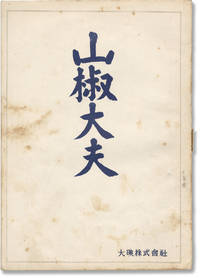
1954160913Kyoto: Daiei Studios 1954. Draft script for the 1954 film. Text and titles in Japanese. <br /> <br /> Often considered one of director Kenji Mizoguchi's masterworks an elegant and contemplative film about the wife and children of an exiled local governor as they are separated and forced into servitude. Winner of the Silver Lion award at the 1954 Venice Film Festival. <br /> <br /> White perfect-bound wrappers with navy blue titles. Approximately 47 leaves with last page of text numbered B-41. Mimeograph duplication printed on rectos and versos. Very Good with age toning foxing and faint soil on the wrappers.<br /> <br /> Criterion Collection 386. Ebert III. Rosenbaum 1000. Daiei Studios unknown