Zhao Vincent Yang Mi Fan Siu-Wong Zhao Vincent Leung PatrickLivre Rare Book

7 632 résultats
500263933Filmedia 13 76x1 48x18 03cm. Sans date. blu_ray.
1986002219Düsseldorf, Bagel, 1986. Orig.-Leinenband mit SU, 408 Seiten, 8°. Erste Auflage 1986. Sauberes und sehr gut erhaltenes Exemplar.
1079258Frankfurt am Main : Peter Lang, 2016. 281 S. Originalhardcover.
Gift inscription from author to Jenifer Neils: "To Jenifer - all best wishes. Yours, Froma".; Greek Studies: Interdisciplinary Approaches; 9.1 X 6.1 X 1.0 inches; 198 pages; Signed by Author
1969972Velber bei Hannover : Friedrich, 1969. 154 S. Mehrere Bühnenbilder. Kl. 8°. 2. Aufl. OPb. m. SU. (Friedrichs Dramatiker des Welttheaters ; 8)
1986230117New York: Weidenfeld & Nicolson 1986. Autobiography of the noted director. First printing. Lightly bumped with just a faint bit of foxing to the upper edge of the text block. Jacket rubbed with short tears to the corners and spine ends in Brodart. Inscribed on the half title page "To my Dear Pamela with my grateful heart for her wonderful competent inspiring collaboration - and friendship. Franco Nov. 7th 1986.". Inscribed By the Author. First Edition. Hard Cover. Near Fine/Good. Weidenfeld & Nicolson Hardcover
186096667Stuttgart, J. G. Cotta, 1860. 98;192; 230; 164 S. Kl.-8vo. 15 cm. Dekorativ goldgeprägtes OLn. mit marmor. Schnitt.
Very light pencilling to a couple of pages by R. E. Fantham else book is fine. Card of Dr. Martin Hose taped to ffep. ; 9.3 X 6.4 X 0.9 inches; 296 pages
19271958Weimann, Leipzig, 1927. Band 1-3, ca. 1800 S. m. zahlr. Skizzen u. Tfln., OHldr., Goldprägung auf Rücken, Frab. Kopfschnitt, Ecken etwas bestossen, Leinen sauber, sonst sehr gut
1973054509American Library Association / Ala 1973. 1st Edition 1st Printing. Hardcover. Fine/Near Fine. Xxii 327 Pp. Brown Cloth Gilt. First Printing 1973. Fine. Tiny Namer Label Of Actress Elizabeth Talbot-Martin. Dust Jacket Priced $25 Sun-Fading To Spine Panel From Brown To Blue Light Wear At Tips And Along To Edge. <br/> <br/> American Library Association / Ala hardcover
1952039431New York: Random House 1952. 1st Edition 1st Printing. Hardcover. Near Fine/Near Fine. Viii 151 Pp. Blue Boards Stamped In Red And Gilt With Paste-On Cover Illustration. Near Fine Light Rubbing Along Bottom Edges And Along Top Edge Of Spine. Dust Jacket Bright And Clean Price Clipped No Fading A Few Touches Of Rubbing At Edges. Inscribed By The Author To The Book Designer "To My Friend Merle Armitage- A Genius Among Book Designers And A Man Among Men. Stanley Young 8 December 1952. Deerfield Beach Fla. <br/> <br/> Random House hardcover
2 vols., 8vo., Second Edition; original black buckram, gilt backs, a very good, bright, clean set. Sold from an institution with its stamps and labels on endpapers and title versos. Much-needed reissue of the original edition of 1933. VERY SCARCE, ESPECIALLY IN THIS CONDITION
200955083Indigo, 2009. DVD DVD
19822081502111703261Not Available 1982. Soft Cover. Fine. The book is in fine condition. Not Available paperback
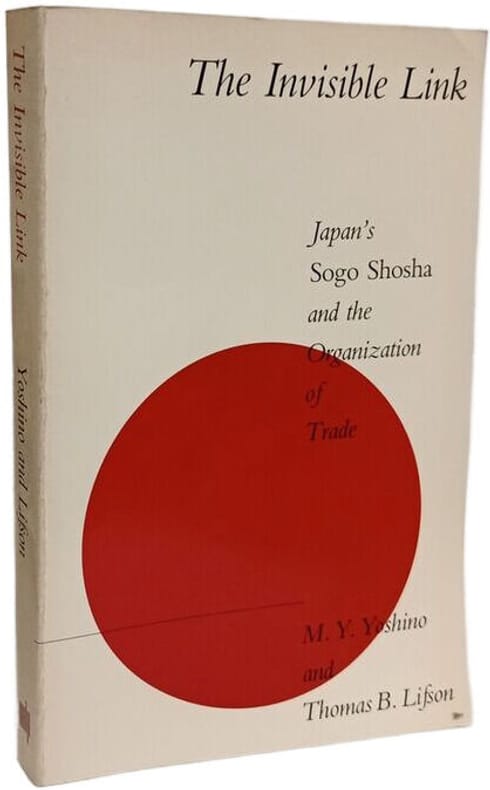
1988100145664MIT Press 1988 304 pages 15 24x22 86x1 7526cm. 1988. Broché. 304 pages. Ce livre examine de près les sogo shosha les puissantes maisons de commerce japonaises comme Mitsubishi et Mitsui qui gèrent environ la moitié des exportations et importations du Japon. Il fournit une description systématique et équilibrée de leurs opérations couvrant des aspects allant de la finance au personnel
94563aafBulle, Les enfants de Joseph Yerly du Mont, 1993, in-8vo, 408 p., reliure ill. de l’éditeur (cartonnage).
123459aafEdition du ‘Paysan fribourgeois’, 1937, pt. in-8vo, 64 p., brochure originale. (ill. d’un dessin de L. Vonlanthen).
Publishers cloth. 8vo. 217; 205; 230 pages. 20 cm. First edition. In Yiddish. Cover illustrated by S. Raskin. From New York to Rehovot and Back, the travel narrative and memoir of Yehoash in three volumes. YEHOASH (pseudonym of Yehoash Solomon Bloomgarden; 18721927) , Yiddish poet and translator. Yehoash was born in Virbalen, Lithuania, and as a boy he read maskilic literature as well as studying Torah with his father, briefly attending the yeshivah of Volozhin, only to begin a career as a Hebrew poet. At the age of 17 he took his first Hebrew poems to Warsaw, where I. L. Peretz encouraged him to continue writing Hebrew and Yiddish lyrics. The following year Yehoash immigrated to the U. S. He made no headway either as a Hebrew poet or in various callings bookkeeping, tailoring, peddling, and Hebrew teaching. For a decade he faced severe privations until he contracted tuberculosis and went to the Denver Sanatorium for Consumptives in 1900 to recuperate. There he remained for almost ten years, maturing as a Yiddish poet, publishing his poems, ballads, fables, and translations in leading dailies, periodicals, and literary almanacs. In his early 30s, he undertook to translate the Bible into a modern Yiddish which would combine scholarly precision with simple idiomatic language, a task to which he devoted the rest of his life. While at work on this translation, he prepared, together with Charles D. Spivak, his physician and the co-founder of the sanatorium, a Yiddish dictionary, first published in 1911, which defined about 4, 000 Hebrew and Aramaic words used in Yiddish and which went through many editions as a basic reference work. Returning to New York in 1909, Yehoash had to struggle to make a living, even though his fame was worldwide and Yiddish periodicals in many lands gladly published his contributions. In January 1914, he left for Erez Israel and settled in Rehovot. He mastered classical Arabic and translated portions of the Koran and Arabian tales into Yiddish. When the Ottoman Empire entered World War I, he returned to New York and published the story of his experiences in three volumes of travel sketches, Fun New York biz Rekhovot un Tsurik (From New York to Rehovot and Back, 191718; Eng. The Feet of the Messenger, 1923) . His sojourn in Erez Israel as well as his knowledge of Arabic proved useful to him in his work on the translation of the Bible. Although he had published a Yiddish rendering of several biblical books including Isaiah and Job in 1910, he realized the inadequacy of this initial attempt and began anew. His more adequate rendering, starting with Genesis, appeared in installments in the New York daily Der Tog from 1922. At the time of his death only the Pentateuch translation had been published, but the rest of the biblical books were printed from his manuscripts. His version was hailed as a contribution of national significance. The translator drew upon idiomatic treasures of various Yiddish dialects, upon the Khumesh-Taytsh (the Old Yiddish, word-for-word translation of Pentateuch) , vocabulary used by melammedim in Ashkenazi schools for many generations, and expressions of the Ze'enah u-Re'enah (Tsene-Rene) , with its archaic patina. Yehoash was thus able to retain the rhythm and flavor of the Hebrew to a larger extent than preceding Bible translators. The two-volume edition, with parallel Hebrew and Yiddish texts, distributed in tens of thousands of copies, became a standard work for Yiddish-speaking homes throughout the world. In 1949, Mordecai Kosover edited Yehoash's notes to the Bible, which afforded an insight into the translator's many years of wrestling with the sacred text. Yehoash, who also translated Longfellow's Hiawatha and the Rubáiyát of Omar Khayyam into Yiddish, was far ahead of his time in terms of his own poetry. When the first edition of his Gezamelte Lider (Collected Poems) appeared in 1907, he was widely hailed as a first-rank artist. His lyrics were reprinted in anthologies and school texts, and were translated into many languages. An English translation, Poems of Yehoash, by Isidore Goldstick, appeared in 1952, and a Hebrew version (1957) was a cooperative venture by a number of significant Hebrew writers, including Jacob Fichmann and Dov Sadan. Yehoash's two later lyric volumes (1919 and 1921) linked him with Inzikhism, the modernist trend of introspection in post-World War I Yiddish poetry, the leaders of which acclaimed him as their forerunner. Yehoash gave expression in his lyrics to his awareness of a divine force permeating the universe. He re-imagined in verse biblical and post-biblical legends, tales from medieval Jewish chronicles, and hasidic lore, versified fables from the Talmud, Aesop, La Fontaine, and Lessing, and created new fables of his own. He wrote romantic, ghostly ballads, but he also felt the spell of Peretz, his lifelong friend, and strove for classical purity and perfection in rhythm and rhyme. Yehoash also influenced American Jewish poetry in English, notably the modernist work of Louis Zukofsky. (EJ 2007) Subjects: Yiddish literature - Palestine. Palestine -Description and travel. Authors, Yiddish - New York (State) - Biography. Authors, Yiddish - Israel - Biography. Light wear to cloth, light soiling to outer edges, endpapers starting on volume 3, otherwise fresh. Good + condition. (YID-16-10)
Publishers cloth. 8vo. 217; 205; 230 pages. 20 cm. First edition. In Yiddish. Cover illustrated by S. Raskin. From New York to Rehovot and Back, the travel narrative and memoir of Yehoash in three volumes. YEHOASH (pseudonym of Yehoash Solomon Bloomgarden; 18721927) , Yiddish poet and translator. Yehoash was born in Virbalen, Lithuania, and as a boy he read maskilic literature as well as studying Torah with his father, briefly attending the yeshivah of Volozhin, only to begin a career as a Hebrew poet. At the age of 17 he took his first Hebrew poems to Warsaw, where I. L. Peretz encouraged him to continue writing Hebrew and Yiddish lyrics. The following year Yehoash immigrated to the U. S. He made no headway either as a Hebrew poet or in various callings bookkeeping, tailoring, peddling, and Hebrew teaching. For a decade he faced severe privations until he contracted tuberculosis and went to the Denver Sanatorium for Consumptives in 1900 to recuperate. There he remained for almost ten years, maturing as a Yiddish poet, publishing his poems, ballads, fables, and translations in leading dailies, periodicals, and literary almanacs. In his early 30s, he undertook to translate the Bible into a modern Yiddish which would combine scholarly precision with simple idiomatic language, a task to which he devoted the rest of his life. While at work on this translation, he prepared, together with Charles D. Spivak, his physician and the co-founder of the sanatorium, a Yiddish dictionary, first published in 1911, which defined about 4, 000 Hebrew and Aramaic words used in Yiddish and which went through many editions as a basic reference work. Returning to New York in 1909, Yehoash had to struggle to make a living, even though his fame was worldwide and Yiddish periodicals in many lands gladly published his contributions. In January 1914, he left for Erez Israel and settled in Rehovot. He mastered classical Arabic and translated portions of the Koran and Arabian tales into Yiddish. When the Ottoman Empire entered World War I, he returned to New York and published the story of his experiences in three volumes of travel sketches, Fun New York biz Rekhovot un Tsurik (From New York to Rehovot and Back, 191718; Eng. The Feet of the Messenger, 1923) . His sojourn in Erez Israel as well as his knowledge of Arabic proved useful to him in his work on the translation of the Bible. Although he had published a Yiddish rendering of several biblical books including Isaiah and Job in 1910, he realized the inadequacy of this initial attempt and began anew. His more adequate rendering, starting with Genesis, appeared in installments in the New York daily Der Tog from 1922. At the time of his death only the Pentateuch translation had been published, but the rest of the biblical books were printed from his manuscripts. His version was hailed as a contribution of national significance. The translator drew upon idiomatic treasures of various Yiddish dialects, upon the Khumesh-Taytsh (the Old Yiddish, word-for-word translation of Pentateuch) , vocabulary used by melammedim in Ashkenazi schools for many generations, and expressions of the Ze'enah u-Re'enah (Tsene-Rene) , with its archaic patina. Yehoash was thus able to retain the rhythm and flavor of the Hebrew to a larger extent than preceding Bible translators. The two-volume edition, with parallel Hebrew and Yiddish texts, distributed in tens of thousands of copies, became a standard work for Yiddish-speaking homes throughout the world. In 1949, Mordecai Kosover edited Yehoash's notes to the Bible, which afforded an insight into the translator's many years of wrestling with the sacred text. Yehoash, who also translated Longfellow's Hiawatha and the Rubáiyát of Omar Khayyam into Yiddish, was far ahead of his time in terms of his own poetry. When the first edition of his Gezamelte Lider (Collected Poems) appeared in 1907, he was widely hailed as a first-rank artist. His lyrics were reprinted in anthologies and school texts, and were translated into many languages. An English translation, Poems of Yehoash, by Isidore Goldstick, appeared in 1952, and a Hebrew version (1957) was a cooperative venture by a number of significant Hebrew writers, including Jacob Fichmann and Dov Sadan. Yehoash's two later lyric volumes (1919 and 1921) linked him with Inzikhism, the modernist trend of introspection in post-World War I Yiddish poetry, the leaders of which acclaimed him as their forerunner. Yehoash gave expression in his lyrics to his awareness of a divine force permeating the universe. He re-imagined in verse biblical and post-biblical legends, tales from medieval Jewish chronicles, and hasidic lore, versified fables from the Talmud, Aesop, La Fontaine, and Lessing, and created new fables of his own. He wrote romantic, ghostly ballads, but he also felt the spell of Peretz, his lifelong friend, and strove for classical purity and perfection in rhythm and rhyme. Yehoash also influenced American Jewish poetry in English, notably the modernist work of Louis Zukofsky. (EJ 2007) Subjects: Yiddish literature - Palestine. Palestine -Description and travel. Authors, Yiddish - New York (State) - Biography. Authors, Yiddish - Israel - Biography. Light wear to cloth, light soiling to outer edges. Very Good Condition. (YID-16-10A)
19085075Stratford-on-Avon: Shakespeare Head Press 1908. First edition thus. Hardcover. Good. 8vo quarter cloth stained darkened spine. <br/><br/> Shakespeare Head Press hardcover
1909001417Portland Maine: Thomas B. Mosher 1909. Hardcover. Near Fine. 6 31 3 p.; 19 cm. Off-white stiffened covers with overlapping fore-edges. Spine and cover titles and front cover decoration printed in light green. Original light green slipcase with title in black at foot of front section. Title page and colophon in red and black. Pages are unopened. "Five hundred copies of this book printed on Japan vellum small quarto and the type distributed in the month of July MDCCCCIX." -- colophon. First American edition thus. Book is in Near Fine Condition: slight discoloration on back cover; slight darkening along edges of covers; otherwise clean and bright. Slipcase is in Poor Condition: separated into two sections; lacking upper and spine sections; lacking small amount of green paper from front section. Thomas B. Mosher hardcover
33 p. Hardcover Very good condition, back strip chipped at top and detached at bottom 950 copies printed.
1939053785Dublin: The Cuala Press 1939. 1st Edition 2nd Printing. Soft cover. Near Fine. 46 Pp. Large Format Soft Cover. Second Printing All But A Few Copies Of The First Having Been Destroyed. Near Fine Slight Bumping To Yapped Edges No Tears Or Chips Or Marks Or Browning. <br/> <br/> The Cuala Press paperback
197120076Indianapolis, The Bobbs-Merill Company, 1971. (Edited with an introduction by Robin Skelton) 382 S. (24,5 cm) Leinen mit Umschlag / gebundene Ausgabe