Petis de la Croix, Alexandre Louis MarieBiblio.com

3 résultats
1768004399Paris: chez Vincent Imprimeur-Libraire 1768 2 volumes in-8 XXIII 694 9 pp; III 786 1 pp. Cont. marbled calf marbled edges raised bands spine gild red morocco labels corners slightly bumped in volume 1 the tail of the spine chipped occasional foxing and staining. Bookplate affixed to the front pastedown of volume one. This is the first edition chronicling the history of the Ottoman Empire. A. L. M. Pétis de la Croix the son of Francois Pétit the younger who served as the Arabic interpreter of the French court a post inherited from his father Francois Pétit de la Croix the elder continued in the footsteps of his father and grandfather establishing himself as a notable orientalist. Atabey 945; Blackmer 745. chez Vincent, Imprimeur-Libraire hardcover
1722019750London: J. Darby 1722. Book. Fine. Hardcover. 1st Edition. This book has just been professionally restored. The pages have been washed to remove foxing and grime new endpapers the old ones were missing and a new leather cover as the previous cover was missing. Sadly the map is not present. . J. Darby Hardcover
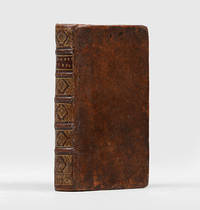
1707120875Paris: widow of Claude Barbin 1707. First edition of this important collection of oriental tales now known as the Forty Viziers published three years after Galland's first edition of the Thousand and One Nights and following its characteristic frame-narrative structure. Notably rare: one copy traced at auction one in British institutions SOAS and six worldwide; bibliographers including Chauvin and Macdonald claimed never to have seen a copy. A second edition with an Amsterdam imprint appeared later the same year and is similarly rare. An English translation was published by Tonson the year after. The frame-narrative echoes the Biblical story of Potiphar's Wife concerning a young prince who refuses the advances of his stepmother who then denounces him to the sultan. The prince is put on trial by means of alternate tales told by the sultana and the forty viziers. Petis de la Croix 1653-1713 dragoman to Louis XIV attributes the Turkish original to one Chéc Zadé tutor to Ottoman ruler Murad II r. 1421-51 but it is now thought that that the tales date back to Arabic original no longer extant possibly written in Egypt for the Turkic ruler al-Ikhshid r. 935-46 and that two writers were involved in its production: "an Ahmed-i Misri Ahmed the Egyptian who translated the work from Arabic and presented it to Murad II r. 1421-51 and a Sheykh Zade who took up the text later presenting it to both Murad II and Mehmed II r. 1451-81" Burrill "Sheykh-Zade" in Encyclopaedia of Islam 2nd ed. The work was to leave an influential trail and European authors to have read it include Hans Christian Andersen who used it as a source for The Emperor's New Clothes. Duodecimo in fours and eights 159 x 92 mm. Contemporary sprinkled calf spine gilt in compartments. Gilt bookplate of French physician and bibliophile Tibulle Desbarreaux-Bernard 1798-1880 to the front free endpaper; contemporary ownership inscription "Simon Chirury" and later ink-stamp "E. T. Simon D. T" to title page. Binding expertly refurbished mild craquelure to spine now stabilised a few faint scores to rear board pastedowns abraded in places revealing lining made from a contemporary manuscript to the rear upper-outer corners of text-block faintly creased small tear to G1 costing a few letters either side the sense unimpaired spill-burn to I6 short closed tear to fore edge Dd2 a few other light marks. A very good copy. Chauvin VIII p. 19 refers; Macdonald "A Bibliographical and Literary Study of the First Appearance of the 'Arabian Nights' in Europe" in The Library Quarterly vol. 2 no. 4 October 1932. hardcover