Paul ELUARDBiblio.com
1 150 résultats
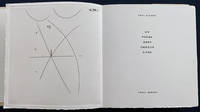
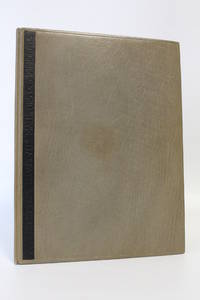
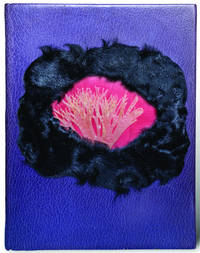
193931<p>Rare and extraordinary double-sided Surrealist binding by Georges Hugnet executed for his own library.<br /><br />He later gave it to Robert Altmann.<br /><br />At the beginning Georges Hugnet mounted a long autograph note offering first-hand details about his production of Surrealist bindings:<br /><br />"This 'book-object' invented for the personal copy of Chanson complète that Paul Éluard had given me is the last I ever made in my workshop on rue de Buci with the help of my bookbinder assistant Louis Christy who died in October 1940. Since then I have never executed any others; the Nazi occupation extinguished this vein in me.<br /><br />Here is the list of 'book-objects' that I still have in my library:<br /><br />Comte de Lautréamont Les Chants de Maldoror 1934<br />G.H. Onan 1934<br />Paul Éluard Défense de savoir 1934<br />André Breton L'Air de l'eau 1935<br />Paul Éluard Facile 1935<br />Hans Bellmer Die Puppe 1935<br />Hans Bellmer a collection of original black-and-white and colour photographs of Bellmer's dolls<br />Raymond Roussel Locus Solus 1937<br /><br />In total between 1934 and 1939 I composed around twenty 'book-objects' which at the time were housed in the libraries of Mme Lise Deharme and Peggy Guggenheim Messrs. Paul Éluard André Breton Robert Valançay P. Bomsel etc. as well as in my own. My 'book-objects' exist only in a single copy with the exception of Défense de savoir which I reproduced in order to offer it to Paul Éluard who desired it and another set of original photographs of Hans Bellmer's dolls commissioned from me after seeing my copy by Robert Valançay.<br /><br />Paris 25 October 1964<br />Georges Hugnet<br /><br />I am happy that the only 'book-object' I can still dispose of enters your library my dear Robert Altmann."<br /><br />Extraordinary "book-object" by Georges Hugnet in one of the 20 copies of Chanson complète illustrated with four lithographs by Max Ernst.<br /><br />Chanson complète is the fourth collaboration between Max Ernst and Paul Éluard following Répétitions Les Malheurs des immortels and Au défaut du silence. It was produced at a time when Éluard had recently been excluded from the Surrealist group by Breton due to his Stalinist positions and several critics have seen in it an act of solidarity by the painter.<br /><br />The volume contains fourteen poems and four lithographs. These are frottage-based works in which the artist's familiar universe reappears: birds animals vegetal forms and female bodies particularly eroticised in the third plate.<br /><br />For this final binding of his invention intended for his personal library Georges Hugnet deployed his full talent in the field. It is imbued with a diffuse eroticism. The hair-like fur framing the algae—or coral—on a pink ground inevitably evokes a female sexual form. One thinks of Étant donnés Marcel Duchamp's final work where a female body is similarly revealed within an ovoid black form.<br /><br />Georges Hugnet's extensive note highlights the rarity of the "book-objects" he created. "The bindings of Georges Hugnet—which are rather ghostly constructions around books—prepare and dress them for the greatest ball of their life" wrote Benjamin Péret in no. 10 of Minotaure Winter 1937.<br /><br />These creations represent both the culmination of "artistic" binding and its ironic subversion. The binding whose execution Hugnet entrusted to his friend Louis Christy a self-taught bookbinder close to the Surrealists who said he had 'made himself among masters who barely knew their craft' becomes a kind of "mental object." It is no longer decoration but the creation of a unique object "the book fulfils its purpose" as he said fully belonging to Surrealist production.<br /><br />Among the "book-objects" mentioned but not precisely listed in Hugnet's note one may also cite Herbe à la lune by Valentine Penrose.<br /><br />Robert Altmann to whom Hugnet gave this copy was the director of the Brunidor publishing house based in New York and later Paris specialising in illustrated books with engravings.<br /><br />Provenance: Jean-Paul Kahn collection.</p> Gallimard
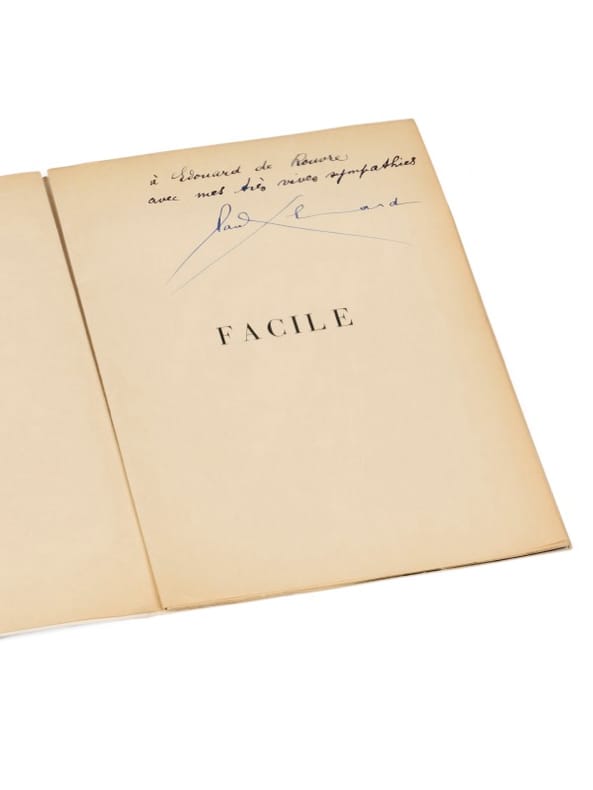
193529784Exemplaire de tête sur japon. Envoi signé Paris, GLM, (24 octobre) 1935. 1 vol. (185 x 240 mm), non paginé. Broché. Édition originale.Illustrée de 12 photographies rayogrammes de Man Ray, en héliogravure. Un des 25 premiers exemplaires sur japon, celui-ci hors commerce. Envoi signé : « à Edouard de Rouvre avec mes très vives sympathies. Paul Éluard. »
19481140701948 Dessin érotique inédit de Magritte, représentant une femme nue entourée de deux hommes dotés de gigantesques pénis. En l'absence de date, le style souple et rapide du tracé et l’iconologie évoquent à la fois la période « Renoir » du peintre et celle plus caricaturale dite « vache » des années 1940. Comme dans Les Profondeurs du plaisir et Le Galet datant de 1948, Magritte passe d’un érotisme allusif et poétique à un érotisme explicite et prosaïque dans un univers réduit au corps et à sa dimension charnelle et matérielle, à contre-courant de la peinture mentale, philosophique et métaphysique d’autrefois. La composition, avec le profil de la femme au visage légèrement incliné serrant le sexe contre elle, s'apparente une ébauche des Profondeurs du plaisir où le peintre a remplacé le phallus par un gigantesque pion d'échec.Destiné à un domaine privé et amical qui autorise l’obscénité et la gaieté, le dessin est accompagné d'un poème autographe de Louis Scutenaire, intitulé "Tarif blanc", où cette jouissance de l'excès figurée par le priapisme des personnages se traduit par l’anaphore en « plus » et par l’énumération exclamative de termes licencieux et argotiques. Un ton et des images qu’on retrouve dans d’autres poèmes de Scutenaire comme par exemple "Hommage à un peintre", dans Frappez au miroir de 1939 illustré par Magritte, et surtout dans la préface irrévérencieuse "Les Pieds dans le plat" écrite pour l’exposition à Paris de 1948 de son ami « Mag », sobriquet employé pour et par les amis. Ici aussi il est question de « brun », de « foutre » et de « fesses »...Cette oeuvre croisée réunissant le crayon de l'artiste et la plume du poète est un témoignage exceptionnel - à notre connaissance unique - de la complicité de Magritte avec son exégète Scutenaire qui lui inspira nombre de titres de tableaux. Il n'est pas anodin non plus de préciser qu'elle a été réalisée en troisième de couverture du tiré-à-part d'un texte de Paul Eluard paru dans le numéro 10 de la revue Minotaure (hiver 1937) et intitulé Premières vues anciennes, dans lequel l'écrivain dresse une rétrospective de la poétique surréaliste en multipliant les références et les citations, au nombre desquelles figure René Magritte. Or ce rare tiré-à-part porte aussi une dédicace autographe signée d'Eluard à Ernest Moerman, écrivain et cinéaste belge, qui venait de réaliser le court-métrage surréaliste Monsieur Fantômas. Entre farce et tragédie, humour et poésie, le réalisateur narre l’amour impossible de Fantômas pour Elvire, et il inclue dans le montage des oeuvres originales d’Eluard (Capitale de la douleur) et de Magritte (Le Viol).Il est indéniable que cette plaquette a été offerte par Eluard en signe de reconnaissance dans une logique de don et contre-don pour l’hommage reçu dans le film. De la même façon, le dessin de Magritte complète la dédicace d’Eluard, réunissant dans les mêmes pages le poète et le peintre si déterminants pour la poétique du film de Moerman qui traversera comme un météore la galaxie surréaliste. On ne sera donc guère étonné si le sujet repropose la pulsion sexuelle et le désir au cœur de l’histoire du court-métrage trahissant, sous une apparente légèreté, le risque d’un épilogue grotesque. Mais pourquoi l'intervention de Magritte et de Scutenaire ne s'accompagne-t-elle pas d'une dédicace ? En raison de son caractère érotique, voire pornographique ? Ou bien parce qu'elle a été réalisée après la mort de Moerman en 1944, et la dispersion probable de sa bibliothèque ? Ces circonstances et la proximité du style et de l'inspiration avec la période "vache" (1948) à laquelle Scutenaire est étroitement lié, permettent donc de dater l'oeuvre de la seconde moitié des années 1940.Témoignage d’un surréalisme désormais sans frontières géographiques et artistiques, des relations entre Eluard, Moerman et Magritte, mais aussi de la complicité entre le peintre et son ami Scutenaire dont le crayon et la plume se rencontrent ici de manière exceptionnelle, ce document est d’une extrême rareté et en parfaite conservation si l’on exclut une petite tache rouge dans la marge inférieure de la page 49. Un certificat d’authenticité délivré par le Comité Magritte en novembre 2023 sera remis à l’acquéreur.
19481140701948 Dessin érotique inédit de Magritte, représentant une femme nue entourée de deux hommes dotés de gigantesques pénis. En l'absence de date, le style souple et rapide du tracé et l’iconologie évoquent à la fois la période « Renoir » du peintre et celle plus caricaturale dite « vache » des années 1940. Comme dans Les Profondeurs du plaisir et Le Galet datant de 1948, Magritte passe d’un érotisme allusif et poétique à un érotisme explicite et prosaïque dans un univers réduit au corps et à sa dimension charnelle et matérielle, à contre-courant de la peinture mentale, philosophique et métaphysique d’autrefois. La composition, avec le profil de la femme au visage légèrement incliné serrant le sexe contre elle, s'apparente une ébauche des Profondeurs du plaisir où le peintre a remplacé le phallus par un gigantesque pion d'échec.Destiné à un domaine privé et amical qui autorise l’obscénité et la gaieté, le dessin est accompagné d'un poème autographe de Louis Scutenaire, intitulé "Tarif blanc", où cette jouissance de l'excès figurée par le priapisme des personnages se traduit par l’anaphore en « plus » et par l’énumération exclamative de termes licencieux et argotiques. Un ton et des images qu’on retrouve dans d’autres poèmes de Scutenaire comme par exemple "Hommage à un peintre", dans Frappez au miroir de 1939 illustré par Magritte, et surtout dans la préface irrévérencieuse "Les Pieds dans le plat" écrite pour l’exposition à Paris de 1948 de son ami « Mag », sobriquet employé pour et par les amis. Ici aussi il est question de « brun », de « foutre » et de « fesses »...Cette oeuvre croisée réunissant le crayon de l'artiste et la plume du poète est un témoignage exceptionnel - à notre connaissance unique - de la complicité de Magritte avec son exégète Scutenaire qui lui inspira nombre de titres de tableaux. Il n'est pas anodin non plus de préciser qu'elle a été réalisée en troisième de couverture du tiré-à-part d'un texte de Paul Eluard paru dans le numéro 10 de la revue Minotaure (hiver 1937) et intitulé Premières vues anciennes, dans lequel l'écrivain dresse une rétrospective de la poétique surréaliste en multipliant les références et les citations, au nombre desquelles figure René Magritte. Or ce rare tiré-à-part porte aussi une dédicace autographe signée d'Eluard à Ernest Moerman, écrivain et cinéaste belge, qui venait de réaliser le court-métrage surréaliste Monsieur Fantômas. Entre farce et tragédie, humour et poésie, le réalisateur narre l’amour impossible de Fantômas pour Elvire, et il inclue dans le montage des oeuvres originales d’Eluard (Capitale de la douleur) et de Magritte (Le Viol).Il est indéniable que cette plaquette a été offerte par Eluard en signe de reconnaissance dans une logique de don et contre-don pour l’hommage reçu dans le film. De la même façon, le dessin de Magritte complète la dédicace d’Eluard, réunissant dans les mêmes pages le poète et le peintre si déterminants pour la poétique du film de Moerman qui traversera comme un météore la galaxie surréaliste. On ne sera donc guère étonné si le sujet repropose la pulsion sexuelle et le désir au cœur de l’histoire du court-métrage trahissant, sous une apparente légèreté, le risque d’un épilogue grotesque. Mais pourquoi l'intervention de Magritte et de Scutenaire ne s'accompagne-t-elle pas d'une dédicace ? En raison de son caractère érotique, voire pornographique ? Ou bien parce qu'elle a été réalisée après la mort de Moerman en 1944, et la dispersion probable de sa bibliothèque ? Ces circonstances et la proximité du style et de l'inspiration avec la période "vache" (1948) à laquelle Scutenaire est étroitement lié, permettent donc de dater l'oeuvre de la seconde moitié des années 1940.Témoignage d’un surréalisme désormais sans frontières géographiques et artistiques, des relations entre Eluard, Moerman et Magritte, mais aussi de la complicité entre le peintre et son ami Scutenaire dont le crayon et la plume se rencontrent ici de manière exceptionnelle, ce document est d’une extrême rareté et en parfaite conservation si l’on exclut une petite tache rouge dans la marge inférieure de la page 49. Un certificat d’authenticité délivré par le Comité Magritte en novembre 2023 sera remis à l’acquéreur.
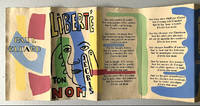
19531689691953. LEGER Fernand. Liberté - J'ecris ton Nom. Text by Paul Eluard. Broadside 117 x 290 cm. 11 3/8 x 44 inches with brightly coloured pochoir design by Fernand Léger. Paris: Editions Seghers 1953. A fine copy of this extremely rare and beautiful broadside in excellent condition with the colours bright and fresh. Leger's strong continuous flow of colour across the broadside illuminates Eluard's elegaic and celebrated poem praising those who struggled in WWII to protect and defend the eternal liberty of France. This copy 'HC/1' of 12 hors-commerce copies from a total of 212 with a warm inscription from Pierre Seghers "A mon ami le plus cher Au poète qui est mon patron en édition et en poésie". Saphire Fernand Léger The Complete Graphic Work 300. unknown books
19532243Paris: Pierre Seghers and Imprimerie Union 1953. Folded concertina made up of three sheets assembled and attached to the back with strips of cloth. Original hangers attached to verso. With the publisher's original rhodoïd case. A gorgeous fine copy bright and fresh. Now housed in a custom clamshell box.<br /> <br /> Eluard wrote the poem during the German occupation of France in 1942; it was originally published in the clandestine book of poetry Poésie et vérité 1942 and later printed in leaflet form and parachuted over occupied territories by the thousands by the British Royal Air Force. Liberté became a symbol of the Résistance under the oppression of Vichy and the German occupation. Eluard himself said of his stirring ode to freedom “I thought of revealing at the end the name of the woman I loved and for whom this poem was intended. But I quickly realized that the only word I had in mind was the word Liberté. Thus the woman I loved embodied a desire greater than her. I confounded it with my most sublime aspiration and this word Liberté was itself in my whole poem only to eternalize a very simple will very daily very apt that of freeing oneself from the occupation.â€<br /> <br /> This edition was commissioned as a tribute to Eluard just after his death. The publisher Pierre Seghers asked Léger to illustrate the poem and he designed this remarkable “poème-objet†in tribute to his friend. The bright pochoirs were printed by Albert Jon. A total of 212 copies were printed with twelve on canvas hand-illustrated by Léger himself; 200 on Auvergne paper and an additional twenty-six lettered copies “tirés pour les divers artisans de ce poème-objet.†This is letter ‘A’ of the twenty-six copies complete with the publisher’s rhodoïd case which is lettered on the spine. The case is rare and not often seen. Also included is the original invitation card for the presentation of the book on October 23 1953 at the Galerie Louis Carré. An exceptional copy of a talismanic and beautiful object a high spot of twentieth century printing and publishing.<br /> <br /> Saphire Fernand Léger. L’Œuvre gravé p. 300. Pierre Seghers and Imprimerie Union unknown
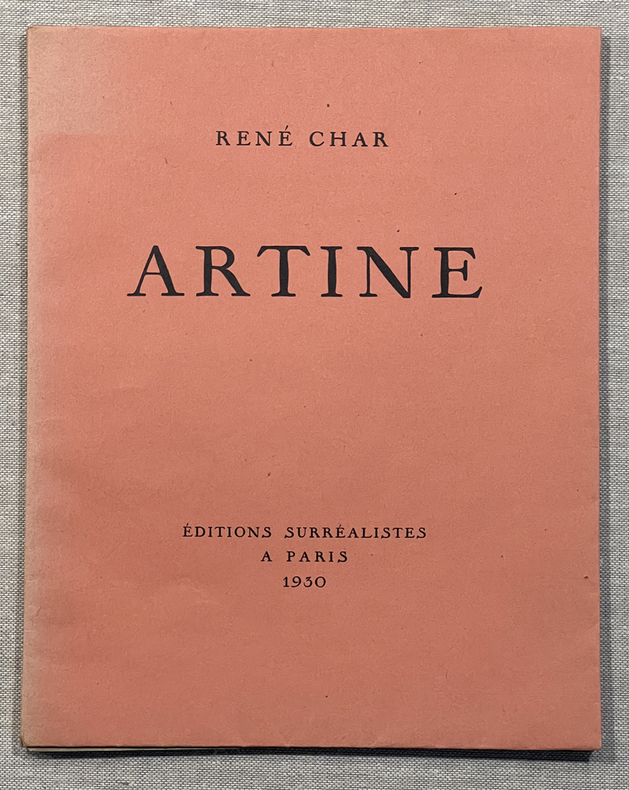
19303884Paris, Éditions Surréalistes, Corti, 1930. Un volume petit-in-4 (235 x 185 mm), broché, couverture de papier rose imprimée. Édition originale tirée à 215 exemplaires. CELUI-CI L'UN DES 15 SUR INGRES VERT, ROSE ET BLEU AVEC UNE EAU-FORTE ORIGINALE DE SALVADOR DALI EN FRONTISPICE (N° 18). Seuls ces exemplaires et les 15 ex. de tête sur japon la contiennent. Le volume est signé au colopon par René Char. Bien complet du "Prière d'insérer" imprimé sur papier couché rouge. Artine est le second ouvrage comportant une gravure de Dali entré dans le groupe surréaliste en 1929. - ENGLISH DESCRIPTION: René CHAR. ARTINE. Paris, Éditions Surréalistes, Corti, 1930. A small quarto volume (235 x 185 mm), paperback, printed pink paper cover. First edition, limited to 215 copies. THIS IS ONE OF 15 COPIES ON GREEN, PINK, AND BLUE INGRES PAPER WITH AN ORIGINAL ETCHING BY SALVADOR DALI AS A FRONTISPIECE (No. 18). Only these copies and the 15 deluxe copies on Japanese paper contain it. The volume is signed in the colophon by René Char. Complete with the "Please Insert" printed on red coated paper. Artine is the second book to include an engraving by Dalí, who joined the Surrealist group in 1929. A perfectly preserved copy. References: Michler-Löpsinger, 3 - Cahiers de l'Herne, 20 - Monod, I-2603 - PAB, René Char, 4. Additional photographs available on request.
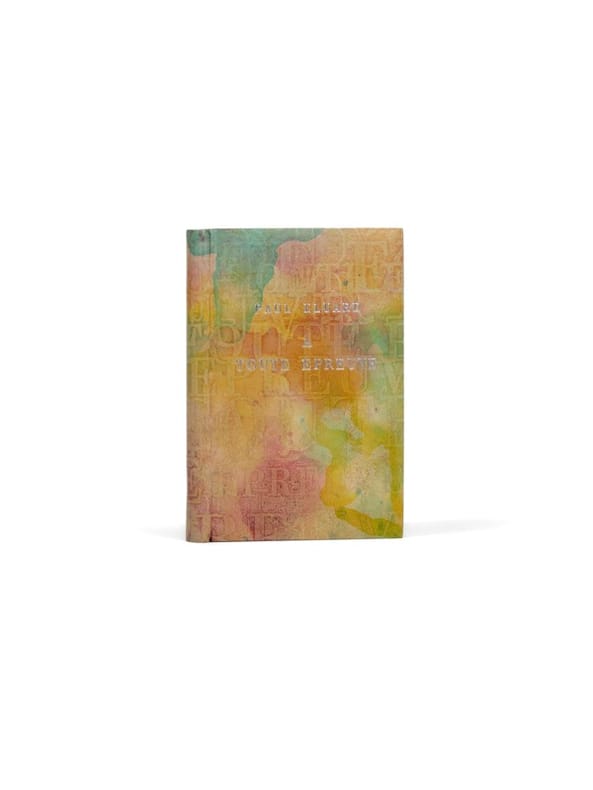
193020266Seul exemplaire sur Chine et papiers de couleurs connu : celui d'Yves Tanguy Paris, Éditions surréalistes, (15 octobre) 1930. 7 plaquettes de [16 p.] et 15 p. réunies en 1 vol. (65 x 105 mm). Veau naturel teinté et estampé d'une eau-forte originale dans les tons rose, jaune et bleu pastel inspirée des caractères typographiques de la page de titre, contreplats bord-à-bord du même décor, titre au palladium sur le premier plat, gardes de chèvre velours vert d'eau, tranches dorées à l'or blanc par Jean-Luc Bongrain, chemise et étui bordés (reliure signée de Louise Bescond - titr. Claude Ribal, 2025). Édition originale. Un des 30 exemplaires sur chine (n° 27). Envoi signé : « Exemplaire d'Yves Tanguy, son vieil ami fidèle, Paul Éluard ». À la suite, sont reliés un exemplaire sur papier d'édition et un jeu d'exemplaire sur papiers de couleurs (saumon, vert, jaune, rose), puis un exemplaire de la plaquette qui servit de modèle à Paul Éluard pour composer la maquette : Victor Hugo, Lettre à Lord Palmerston, publiée à Jersey en 1854]. Soit un ensemble de sept plaquettes.
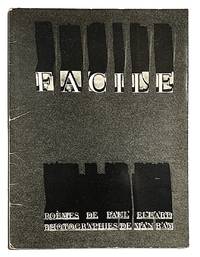
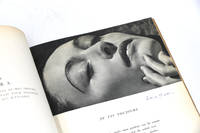
19352245Paris: Editions GLM 1935. First edition. Unbound folded gatherings laid into publisher’s photographically illustrated wrapper as issued. Some creasing to the front cover at the spine as often seen slight rubbing to head and tail of spine. Interior clean and bright. Housed in a custom chemise and slipcase with title printed on front cover of chemise and displayed through cut-outs on the slipcase. Binder’s signature within the chemise dated 1988.<br /> <br /> Of a total edition of 1225 copies this is one of 200 roman-numeraled hors commerce copies. Signed on the half-title by both Eluard and Man Ray and inscribed to Léon Pierre-Quint the literary director and editor of the major surrealist publishing house Editions du Sagittaire and friend and biographer to Proust and Gide. Although not an uncommon book the hors commerce copies are less seen and it is very rare to find it signed by both authors.<br /> <br /> Facile is one of the most beautiful and influential books of the twentieth century the very definition of a fusion of word and image. The heliogravure images of Eluard’s wife Nusch “solarized nudes drift across the pages as if in a dream.†Light shadow curves and the purity of the verse all combine. “The two arts poetry and photography have established themselves as communicating vessels where communication through love leads without effort to universal harmony…. From cover to cover the book points to a single universe expressed by two different languages. The poem is made up of images and the images coalesce into a poem…. The directness of the poet’s voice makes the woman present a presence intensified by but hardly originating in the photographs. This immediacy in no way weakens the dream quality so pronounced in this collaborative work.†Hubert<br /> <br /> Roth The Book of 101 Books 86-87. Parr & Badger The Photobook vol. I 105. Logan Artists’ Books in the Modern Era 184. Castleman A Century of Artists’ Books 183. Renée Riese Hubert Surrealism and the Book 73-83. Caron De Goya à Max Ernst 290-297. Andel Avant-Garde Page Design 339. Perpetual Motif: The Art of Man Ray 221. Editions GLM unknown
194791779Paris: Editions Cahier d'art 1947. Fine. Dora Maar Signs Her Own Work Editions Cahier d'art Paris 1947 18.50 x 24.50 cm broché First edition which supposedly had an issue of 500 numbered copies. Gallimard donated the paper required for the production of this book but only 258 copies could be printed rather than the 500 announced in the justification from a note by Paul Éluard. A slight crease to the covers slight marginal sunning primarily affecting the rear cover. Illustrated with 11 photographs of Nusch Éluard by Man Ray and Dora Maar. Le temps déborde is a collection of eleven poems published in 1947 a few months after the sudden and unexpected death of Paul Éluards wife Nusch. A poignant ode to their seventeen years of life together the work is illustrated with striking portraits of Nusch. This exceptional copy is signed by Dora Maar beneath or directly on each of her five photographs. We are aware of only one other copy signed by the photographer and none signed by Man Ray. A rare and beautiful copy. In 1965 paying tribute to his friend Aragon recalled his discovery of this masterpiece: He signed it with an invented name Didier Desroches because he had killed Paul Éluard. I let him talk. What he had shown me of Didier was of a confounding beauty. This slender book which was to appear as the work of an unknown to say merely that in my eyes it surpasses everything Éluard ever signed with his own name is to say too little. I thought so then and I think so today. The attribution of each photograph in the collection to either Man Ray or Dora Maar has long been a source of confusion. Strangely the question seems to attract little scholarly attention: as Mary Ann Caws notes Dora Maars portraits of the Surrealists muse were originally attributed to Man Ray since they were so clearly superb in their construction and realization These photographing women: The scandal of genius Angels of anarchy: women artists and surrealism 2009. This misattribution was also a consequence of the systematic erasure of Dora Maars photographic work which she abandoned at Picassos request. The two series by Dora Maar and Man Ray are further entwined by their shared style and by both artists fascination with Nusch. Audacious framing and subtle interplay of shadow and light reflect the two Surrealist photographers formal innovation. Beyond aesthetic alchemy the three of them were very close at the time of these photographs 1935-1938. For several years they all took part with their partners Ady Fidelin and Paul Eluard in late-summer gatherings in the rustic village of Mougins overlooking Cannes at the invitation of Picasso where they indulged in role play identity and couple exchanges Alicia Ortiz Dujovne Dora Maar. Some of the collections illustrations are well known: Man Rays Nusch with mirror his diptych with her eyes closed and open and the celebrated portrait by Dora Maar illustrating the poem LExtase with her carefully lit face floating in darkness supported only with her fingers an elusive expression in her eyes. In one unforgettable version of the same image Les années vous guettent The years lie in wait. Maar superimposes a silvery spiders web over Nuschs features Louise Baring Dora Maar: Paris in the time of Man Ray Jean Cocteau and Picasso. The resonance of the photograph is all the more powerful since Nusch died early of a heart attack just on the day she was to lunch with Dora Maar for whom it was an irreparable loss. Mary Ann Caws For other photographs attribution had remained uncertain notably the portrait of Nusch bare-breasted and draped in foliage illustrating En vertu de lamour: the absence of a signature supports the attribution to Man Ray. A sublime poetic and artistic tribute featuring the finest portraits of Nusch central figure in Man Ray and Éluards shared imagery and graceful model for Dora Maars most accomplished portraits at last restored to their right Editions Cahier d'art unknown
194791779Editions Cahier d'art | Paris 1947 | 18.50 x 24.50 cm | broché
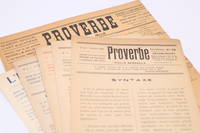
192092144Paris: Proverbe 1920. Fine. Complete copy of this iconic Dada journal with its subscription leaflet Proverbe Paris 1er février 1920 - 1er juillet 1921 14 x 22.5 cm & 208 x 275 5 fascicules sur feuillets double et 1 feuillet recto-versos An exceptionally rare complete collection in six issues of this important Dada journal including the very rare sixth no. of July 1921 entitled ""Invention et proverbe"". Contributions by Paul Eluard André Breton Céline Arnauld Tristan Tzara Philippe Soupault Louis Aragon Jean Cocteau Francis Picabia Jean Paulhan Maurice Raynal Georges Ribemont-Dessaignes Jacques-Emile Blanche Théodore Fraenkel among others. One of the most significant Dada journals published at the height of the movement with its very rare subscription leaflet. Undoubtedly the finest example of poetic parody conceived by the Dadaists as a radical response to the conventionalized atrophy of lan-guage and morality. ""These journals DdO4H2 ; M'amenez-y ; Proverbe and Z represent the specific product of the 1920 Dadaist frenzy. The most interesting of them standing clearly apart from the rest was unquestionably Proverbe which claimed to 'exist only to justify words'"" Michel Sanouillet Dada à Paris ""Thus through the alchemy of Eluard's editorial choices Proverbe became a genuinely Dada journal: consistently innovative exploring the diverse possibilities of language 'justifying' words that is calling them into question inventing its own idiom and more distinctively still indicting conventional syntax through aphorisms. These aphorisms according to Michel Leiris's phrase rhyme falsely: commonplaces caught in everyday speech i.e. 'it means what it means' no. 2; nonsense phrases; sayings taken from Dadaist writings such as Tzara's 'My name is now you' no. 3; sentences of zero denotation such as 'With DADA every day rendez-vous anywhere' no. 4. In Dépaysement de l'aphorisme Marie-Paule Berranger compiled an exhaustive inventory of all the verbal operations proposed by the contributors to Proverbe ranging from the inversion of stereotypes to the portmanteau proverb the commonplace taken at face value the deflating riddle and the redefinition of grammatical rules: all ultimately underscoring the paradox of language. But to focus solely on this aspect is to overlook much else that the publication contains beyond sententious wordplay. Eluard while testing the effect of his own poems clearly took great pleasure in composing these explosive pages and wrote in another journal: 'Proverbe resembles the piers of a demolished bridge' Henri Béhar Dada Circuit total p. 302. A rare complete copy of this ephemeral and incandescent publication: ""of all the Dada journals the one that made the most coherent contribution to the problem of language"" Tristan Tzara. Dada exhibition Centre Pompidou 2005-2006 pp. 830-833. Proverbe unknown
193748609Paris.: G. L. M. Guy Lévis Mano. 1937. Loose as issued poster and invitation original publisher's orange glazed paper wrappers stitched as issued with illustration by Picasso printed titles and advertisments in black to covers. Folio. 502 x 325 mm. 12mo. 184 x 138 mm. 16mo. 138 x 104 mm. Poster of cream paper glazed red / orange recto and with Picasso's illustration from 'Grand Air' and printed text in black the title above and conference details beneath the invitation a bifolium of thick cream wove paper Picasso's illustration at left with printed details of the conference at right in black the catalogue on cream wove paper leaf with definition of 'Surréalisme' from the 1924 manifesto and list of conferences recto verso with advertisement for works by Eluard leaves with quotations by Eluard regarding poetry quotations from various Surrealist-approved poets 'Signe ce que tu approuves' inserted leaves of grey paper with advertisements for publications by GLM central spread with 'Programme' and final leaf with advertisments. The very rare poster by Picasso together with the catalogue and the invitation - also with the same image by Picasso - for Paul Eluard's 1937 conference 'Avenir de la Poésie'.Paul Eluard's conference 'Avenir de la Poésie' Future of Poetry was held on October 2nd 1937 at the Comédie des Champs-Elysées 15 Avenue Montaigne the 'Salon Dada' in 1921 had been held at number 13 at 16.15 p.m. as part of the Exposition Internationale 1937. It seems surprising at least with hindsight to imagine that a Surrealist conference might occur under such an umbrella but the Surrealists were nothing if not serious and Eluard's devotion to poetry cannot be questioned or underestimated.'Avenir de la Poésie' saw Eluard as well as a number of actors close to the Surrealists Michèle Alfa Marcel Herrand who had participated at the dada evening 'Le Coeur à Barbe' in 1921 Jean Marchat Jean-Louis Barrault and Sylvain Itkine whose group 'Le Diable Ecarlate' featured extensively in the Exposition reading poems. The list of poets is comprehensive and included Petrus Borel Charles Baudelaire Gérard de Nerval Germain Nouveau the Comte de Lautréamont Isidore Ducasse Rimbaud Charles Cros Jarry Apollinaire Reverdy Breton Henri Michaux Tzara Péret René Char Eluard himself and Picasso.The poster invitation and catalogue all feature to the front cover a reproduction of the engraved collaboration between Picasso and Eluard 'Grand Air'. The very rare print 'Grand Air' was issued - a few proofs aside - only with the ten copies of the édition de tête of Eluard's verse collection 'Les Yeux Fertiles'. Eluard and Picasso had each contributed to 'Grand Air' Eluard a poem of eighteen lines and Picasso the pictorial frame: at right a nude female minotaur a mask opposite at left out of which the minotaur seems to have snatched the left eye above a rocky landscape with a reclining smoking figure with cat beneath; that the cat appears to be suckling three small black fish underlines the essential Surrealism of the whole.'Le pain est plus utile que la poésie. Mais l'amour au sens complet humain du mot l'amour-passion n'est pas plus utile que la poésie.' Paul Eluard. For the material presented here Eluard's central verse has been replaced with the title of the conference 'Avenir de la Poésie' with his retained signature beneath while the entirety of Picasso's framing is present and the image is attributed to him for the catalogue and invitation at lower left. Details of the conference are printed above and beneath for the catalogue and poster and facing the illustration on the invitation.The poster is not described by Christophe Czwiklitzer in his 1968 'Catalogue Raisonné des Affiches de Pablo Picasso'. The first 'original' poster listed an original lithograph is from 1948 while the first 'exécutées par différents procédés de reproduction' is from 1939.While the catalogue 'Avenir de la Poésie' is rare and the invitation rarer still we trace no other examples of the poster in any collection public or private. G. L. M. (Guy Lévis Mano). unknown
192092144Proverbe | Paris 1er février 1920 - 1er juillet 1921 | 14 x 22.5 cm & 20,8 x 27,5 | 5 fascicules sur feuillets double et 1 feuillet recto-versos
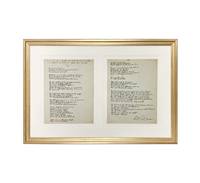
1935Eluard6<p><strong>ÉLUARD Paul 1895-1952</strong></p><p>Autograph poem signed " Paul Eluard "<br />N.p.n.d 2 p. in-folio on thin green paper<br />Some slight browning on margins<br />Bespoke framing</p><p><strong>Complete manuscript of one of the four poems published in <em>Facile</em> a masterpiece of surrealism testifying to the artistic emulation between Paul Éluard his wife Nusch and Man Ray to whom she serves as a model</strong></p><p>A LA FIN DE L'ANNÉE DE JOUR EN JOUR PLUS BAS IL ENFOUIT SA CHALEUR COMME UNE GRAINE.</p><p><em>" I</em><br /><em>Nous avançons toujours</em><br /><em>Un fleuve plus épais qu'une grasse prairie</em><br /><em>Nous vivons d'un seul jet</em><br /><em>Nous sommes du bon port<br /></em><br /><em>Le bois qui va sur l'eau l'arbre qui file droit</em><br /><em>Tout marché de raison bâclé conclu s'oublie</em><br /><em>Où nous arrêterons-nous</em><br /><em>Notre poids immobile creuse notre chemin<br /></em><br /><em>Au loin les fleurs fanées des vacances d'autrui</em><br /><em>Un rien de paysage suffisant</em><br /><em>Les prisons de la liberté s'effacent</em><br /><em>Nous avons à jamais</em><br /><em>Laissé derrière nous l'espoir qui se consume</em><br /><em>Dans une ville pétrie de chair et de misère</em><br /><em>De tyrannie<br /></em><br /><em>La paupière du soleil s'abaisse sur ton visage</em><br /><em>Un rideau doux comme ta peau</em><br /><em>Une aile salubre une végétation</em><br /><em>Plus transparente que la lune du matin<br /></em><br /><em>Nos baisers et nos mains au niveau de nous-mêmes</em><br /><em>Tout au-delà ruiné</em><br /><em>La jeunesse en amande se dénude et rêve</em><br /><em>L'herbe se relève en sourdine</em><br /><em>Sur d'innocentes nappes de petite terre</em><br /><em>Premier dernière ardoise et craie</em><br /><em>Fer et rouille seul à seule</em><br /><em>Enlacés au rayon debout</em><br /><em>Qui va comme un aveu</em><br /><em>Écorce et source redressée</em><br /><em>L'un à l'autre dans le présent</em><br /><em>Toute brume chassée</em><br /><em>Deux autour de leur ardeur</em><br /><em>Joints par des lieues et des années<br /></em><br /><em>Notre ombre n'éteint pas le feu</em><br /><em>Nous nous perpétuons. "</em></p><p><em>" II</em><br /><em>Au-dessous des sommets</em><br /><em>Nos yeux ferment les fenêtres</em><br /><em>Nous ne craignons pas la paix de l'hiver<br /></em><br /><em>Les quatre murs éteints par notre intimité</em><br /><em>Quatre murs sur la terre</em><br /><em>Le plancher le plafond</em><br /><em>Sont des cibles faciles et rompues</em><br /><em>À ton image alerte que j'ai dispersée</em><br /><em>Et qui m'est toujours revenue<br /></em><br /><em>Un monotone abri</em><br /><em>Un décor de partout<br /></em><br /><em>Mais c'est ici qu'en ce moment</em><br /><em>Commencent et finissent nos voyages</em><br /><em>Les meilleures folies</em><br /><em>C'est ici que nous défendons notre vie</em><br /><em>Que nous cherchons le monde<br /></em><br /><em>Un pic écervelé aux nuages fuyants au sourire éternel</em><br /><em>Dans leurs cages les lacs au fond des trous la pluie</em><br /><em>Le vent sa longue langue et les anneaux de la fraîcheur</em><br /><em>La verdure et la chair des femmes au printemps</em><br /><em>La plus belle est un baume elle incline au repos</em><br /><em>Dans des jardins tout neufs amortis d'ombres tendres</em><br /><em>Leur mère est une feuille</em><br /><em>Luisante et nue comme un linge mouillé<br /></em><br /><em>Les plaines et les toits de neige et les tropiques luxueux</em><br /><em>Les façons d'être du ciel changeant</em><br /><em>Au fil des chevelures</em><br /><em>Et toujours un seul couple uni par un seul vêtement</em><br /><em>Par le même désir</em><br /><em>Couché aux pieds de son reflet<br /></em><br /><em>Un couple illimité.</em><br /><em>Paul Eluard "</em></p><p>This poem entitled <em>À la fin de l'année de jour en jour plus bas il enfouit sa chaleur comme une graine</em> 66 lines long and in two parts appears between <em>L'Entente</em> and <em>Facile et bien.</em></p><p>An icon art book first published on October 24 1935 by printer-publisher Guy Levis Mano Easy was printed in 24 copies on Imperial Japan paper. This was followed by 200 non-commercial copies on vellum and a limited edition of 1250 copies.<br />Born from an artistic collaboration between Man Ray Paul Eluard and his wife Nusch the book magnifies the body of the latter by the word of the poet and the light of the photographer. After his collection Au default du silence in which Gala was omnipresent Éluard composed these four poems evoking Nusch echoed by a subtle set of layout twelve photographs by Man Ray representing Nusch completely naked. His body never appears in its entirety according to a process specific to the Man-Light. The book contributed to the awakening of eroticism in the art of the 30s.</p><p>About <em>Facile</em> Pierre Emmanuel writes in <em>Le Je universel chez Paul Éluard</em> G.L.M 1948: "Identical to oneself in its inexhaustible creation of self woman is also like the sign or better: the condition of the identity of all things. It would be necessary to quote almost entirely some of <em>Facile</em>'s poems to give the right idea of the "understanding" that is established between feminine eroticism and the fertilizing energies of the earth – between the gestures of the woman and the movements of the human destiny… "</p><p>The handwritten poems of this collection one of the most emblematic of the poet are rare.</p><p><u>Bibliography:</u><br /><em>Facile – Poèmes de Paul Éluard / Photographies de Man Ray</em> – G.L.M Paris 1935<br /><em>Paul Éluard</em> – Œuvres complètes – Tome 1 éd. Marcelle Dumas et Lucien Scheler Pléiade p. 462 – 464</p><p><u>Provenance:</u><br />Christian Genet Collection</p>
192047900Paris. 1920 - 1921. Single printed folded sheets as issued. 6 issues. 221 x 139 mm. Issue no. 4 with a printed illustration 'Machine de bon mots' after a drawing by Francis Picabia and the printed stamp in red on outer unprinted wrapper: 'PROVERBE / n'existe que pour / justifier les mots.' A rare complete and unsophisticated set of this Paris dada periodical.Edited by poet Paul Eluard the focus of 'Proverbe' is far more seriously linguistic although it retains the playfulness to be expected from dada than many other periodicals of the period. Although the typical elements of dada typography are present - the variable font different register differing colours the ruling and the use of different angles of printing to the plane of the page - here it is the word that reigns. In fact only one of the issues is in any sense illustrated: issue 4 contains a reproduction of a drawing by Picabia the 'Machine de bon mots' but even here Picabia's concern is at least as semantic as visual.The first article of the first issue makes the aim of 'Proverbe' clear: 'Syntaxe' by Jean Paulhan with its urge to reinvigorate language is followed by pieces by Phillipe Soupault Tristan Tzara an aperçu by the Marquis de Sade and an editorial page of aphorisms mottoes advertisements and instructions. Perhaps the most memorable of these latter is the reassuring announcement concerning Picabia's '391': '391 ne contient pas d'arsenic. On peut le prendre en toute sécurité et en secret sans rien changer à ses habitudes.'The second issue saw the arrival of additional contributors and the editorial board of Louis Aragon André Breton Paul Eluard Jean Paulhan Francis Picabia Maurice Raynal and Philippe Soupault was expanded to include Georges Ribemont-Dessaignes. Issue 4 - the only illustrated issue - was printed on the recto only of the sheet but with an excised circular hole Picabia again incorporated into the issue and titled 'Bracelet de la Vie'.The contributions for issue five were published anonymously while issue 6 printed after a delay of nearly a year was titled additionally 'L'Invention' and gives only the initials readily identifiable of each of the contributors. On the final page of issue 6 the contributors are listed as: 'la Canule de verre Rides propres la Nourrice des étoiles le Grand serpent de terre le Mandarin citron l'Homme à vapeur la Pissotière à musique et l'Homme à la tête de perle'.'Je m'appelle maintenant tu. Tzara fou vierge. / Tristan Tzara est un idiote vierge. Francis Picabia. / Et il n'y aura jamais de faux Dada. Paul Eluard.' Proverbe No. 3 1920.' . a delicious melange of quotations from Picabia Paulhan Aragon Dermée and others . '. Ex-Libris Cat. 2. unknown
1956N - 2024 - 114<p>Paul Eluard. Louis Broder Paris 1956. In Octavo 8x73/8 in. Loose as issued in original wrappers in Montval laid paper chemise and slipcase in blue satin. One of 100 numbered copies on Rive wove paper. Signed on the justification page by all the artists with exception of Léger Laurens and Tanguy. The book is a tribute to Paul Eluard who died in 1952 and includes a collection of 12 poems printed with Eluard s handwriting in facsimile and 16 prints that accompany the poems by: Picasso 2 etchings Braque etching Leger lithograph Ernst etching Beaudin drypoint Chagall etching Masson etching Arp woodcut Dominguez drypoint Miro etching Giacometti etching Villon etching Laurens woodcut Hugo drypoint Tanguy etching. Beautiful rare edition. Complete and in very good conditions: Slipcase and Hard chemise in blue satins with some discolorations and light wears. Inside in excellent conditions except for a small and pale stain on the poem Les yeux fertiles and one on the poem Defense de savoir two very small and pale stains on Chagall lithograph and light offprint on the poem Exemples Imbécile habitant.</p> Louis Broder
19272199Paris, Éditions surréalistes, 1927. In-8 (22,8 x 16,8 cm), box crème, sur les plats décor de grandes lettres (DORMIR) en relief de même box, ponctué d'étoiles stylisées de différentes tailles en box vert, rouge et ivoire, titre à l'œser violine au premier plat, auteur et artiste au second, dos muet, tête rognée, doublures bord à bord de box crème, boîte de peau velours gris perle, couvertures et dos conservés, coffret avec le dos en box crème titré à l'œser (F. Brindeau - 2010). ÉDITION ORIGINALE illustrée de 14 dessins d'Yves Tanguy, dont la couverture reprise en page de titre et 3 hors-texte. - 14 DESSINS EN NOIR D'YVES TANGUY REPRODUITS, DONT LA COUVERTURE, LA PAGE DE TITRE ET LES 3 HORS TEXTE AQUARELLÉS PAR L'ARTISTE LUI-MÊME. Tirage à 210 exemplaires signés à l'encre par l'auteur et l'illustrateur Celui-ci un des 20 sur papier de Hollande (n° 26), second papier après 10 Japon, les seuls avec la couverture, la page de titre et les 3 hors-texte rehaussés à l'aquarelle par l'artiste (avec 5 Chine nominatifs). Élégante et virtuose reliure de François Brindeau. - Bibliographie : Monod, 8959. Peyré, Peinture et poésie, n° 28, p. 233. From Manet to Hockney 80. Castleman 179. Andel, Avant Garde Page Design 421. Superbe et très rare exemplaire. Photographies supplémentaires de l'ouvrage sur demande. ENGLISH DESCRIPTION :[TANGUY, Yves - PÉRET, Benjamin."Dormir dormir dans les pierres" (Sleeping sleeping in the stones). Paris, Éditions surréalistes, 1927. In-8 (22.8 x 16.8 cm), cream box, on the covers decorated with large embossed letters (DORMIR) from the same box, punctuated with stylized stars of different sizes in green, red and ivory box, title with a purple oeser on the first cover, author and artist on the second, blank spine, cropped head, edge to edge cream box linings, pearl gray velvet skin box, preserved covers and spine, box with cream box spine titled to the oeser (F. Brindeau - 2010). First edition illustrated with 14 drawings by Yves Tanguy, including the cover on the title page and 3 out of text. - 14 DRAWINGS IN BLACK BY YVES TANGUY, INCLUDING THE COVER, THE TITLE PAGE AND THE 3 IN-TEXT WATERCOLORED BY THE ARTIST HIMSELF. Edition of 210 copies signed in ink by the author and the illustrator. This one of 20 on Holland paper (n° 26), second paper after 10 Japan, the only ones with the cover, the title page and the 3 insets enhanced in watercolor by the artist (with 5 nominative China). First edition,first printing. Elegant and virtuoso binding by François Brindeau. Bibliography: Monod, 8959. Peyré, Painting and poetry, no. 28, p. 233. From Manet to Hockney 80. Castleman 179. Andel, Avant Garde Page Design 421. Superb and very rare copy. Additional photographs of the book on request.
19591719Alès, PAB, 1959. Un volume In-8° (232 x 175 mm), broché, couverture de papier bleu orné de papiers découpés (pour chaque exemplaire l'artiste a fait un découpage particulier et dessiné les étoiles à l'encre de Chine). 2 POINTES SÈCHES ORIGINALES EN BLEU, hors-texte à pleine page. Édition originale de ce court et spirituel poème pour enfant. Édition totale à 35 exemplaires + 5 HC, celui-ci bien signé à l'encre par l'auteur, l'artiste et l'éditeur au colophon.
195148786Paris.: Cercle d'art. 1951. Original publisher's printed wrappers with titles to front cover in black. 4to. 285 x 228 mm. With original lithograph by Picasso and 29 lithographs after Picasso drawings printed by Mourlot. The édition de tête with Picasso's original lithograph.From the edition limited to 150 copies with the original lithograph; this copy exceptionally signed by Picasso in pencil and with the collector's mark WDB.The book published the 29 drawing Picasso made of variations on the theme of peace for the 30th Anniversary of the French Communist Party.Mourlot 203; Cramer 62. Cercle d'art. unknown
192261537Paris: Librairie Six 1922. Fine. Librairie Six Paris 1922 19 x 25.50 cm relié The first edition on simili-Japon paper. Bradel grey cloth binding navy blue cloth band with authors and title blindstamped to edge of upper board upper cover preserved at end. With 21 collages by Max Ernst. A very good and rare copy. Librairie Six hardcover
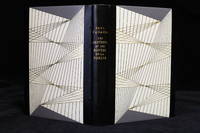
195252661Paris: Armand Henneuse 1952. Fine. Armand Henneuse Paris 1952 14 x 19.50 cm relié sous chemise et étui First edition one of 15 numbered copies on chiffon Auvergne paper tirage de tête. Spectacularly bound in black calf by Pierre-Lucien Martin the covers inlaid with white and grey calf with a geometric decoration of gilt fillets making perspective shapes endpapers and pastedowns of Auvergne paper the delicate Auvergne paper covers and back preserved top edge gilt. Slipcase with black paper flaps lined with grey felt and with a spine of rhodoid plastic small crack to head trimmed with black calf and with a brown paper interior. This copy is enriched with a manuscript sheet bearing six fragments of poems chosen and copied out by Paul Eluard which had appeared in Poésie et vérité Poetry and Truth ten years before. A magnificent copy remarkably bound in decorated black calf by Pierre-Lucien Martin. Armand Henneuse unknown
193653047Paris: GLM 1936. Fine. Offered to the friend beyond words companion of all wars and of loves as well GLM Paris 1936 12.50 x 17 cm broché First edition one of 100 numbered copies on vellum ours unnumbered the only deluxe papers after 15 copies on Japon. Illustrated with a frontispiece drawing by Salvador Dalí. Precious signed autograph presentation from Paul Eluard to René Char : « Exemplaire de mon ami René Char. Paul Eluard. » It was in 1929 that René Char first discovered the verse of Paul Eluard. Captivated the young twenty-two-year-old poet from L'Isle decided to send him a copy of his collection Arsenal inscribing it with the following dedication: « à Paul éluard enfin. L'Isle 17 septembre 1929. » His elder responded kindly a few weeks later: « Cher Monsieur n'est-il pas possible que nous nous connaissions mieux Ne pensez-vous pas venir à Paris Je serais heureux de vous dire combien j'aime vos poèmes tout ce si beau livre. » The young Char elated set off for the first time to meet his « substitute brother » Laurent Greilsamer René Char Perrin 2012 and soon decided to move to Paris to join his new companions Aragon Breton and Eluard placing himself under the Surrealist banner. Eluard abandoned by Gala who left him for Dalí offered Char to live in his apartment on rue Becquerel. The two bachelors soon engaged Odette a young maid who was more than agreeable: « Char enjoyed this refined service but was nevertheless surprised by the marked kindness of this pretty brunette. One day he took her in his arms. The young beauty smiled yielded and proved herself expert. That evening René recounted his adventure to Eluard who the next morning had his breakfast served in bed and invited Odette to join him. A temporary trio was thus formed. » op. cit. Char and Eluard now inseparable shared a taste for revelry and frenetic seduction roaming the Parisian boulevards in search of adventure. Thus on the evening of 21 May 1930 they met a destitute actress and trapeze artist: Nusch. « Eluard decided to take her back like a precious parcel to rue Becquerel. But it would take all the friendship of Char and his powers of persuasion to convince the young woman to stay giving Eluard the timeall the timeto fall in love. » op. cit. Char thus played the role of mediator enabling Eluard to win the great love of his life who died prematurely in 1946 of a cerebral haemorrhage. Despite several passing quarrelsnever over women but always over ideasthe two poets maintained a strong bond of friendship and intellect until the end of Eluard's life. « Je suis vieux René par instants à force de ne plus aimer la vie. Je vis par devoir. Mais je t'aime profondément comme je t'ai toujours aimé : ne te choque de rien ; venant de moi tout est pour moi affection et admiration. . Quelle preuve de plus peux-tu en avoir que je te dise que tu es le seul homme à qui je pourrais avouer ce grand vide que je porte en moi et devant qui je pourrais pleurer autant que j'en ai toujours envie. » GLM hardcover
19301389de la main à la main, s.l. 1930. 1 volume in-4 (270 x 215 mm) broché sous couverture rouge (279 x 220 mm) imprimée du titre en noir sur le premier plat uniquement, 35 pp. + 2 fnch. Seconde édition, (en partie originale), du premier recueil de poèmes de René Char augmentée de cinq nouveaux, les quatorze originaux étant ici modifiés. Avec une illustration hors-texte du peintre catalan Francesc Domingo imprimée en noir. Aussi rare que la première (26 ex.) celle-ci a été tirée "qu'on le veuille ou non" à 39 exemplaires hors-commerce le 5 Février 1930 : 5 Vergé d'Arches + 7 sur Guérimand vert d'eau + 27 sur couché Prioux. Au colophon on lit : " Il est réconfortant de savoir que les imbéciles n'en sauront rien ". Celui-ci 1 DES 7 EXEMPLAIRES SUR PAPIER VERT, numéroté et justifié à l'encre par René Char "EXEMPLAIRE D'ANDRÉ BRETON". Sur le faux-titre, René Char a ajouté de sa plume "Pour distraire Madame Marcelle Ferry, cet ARSENAL, René Char". Le recueil est dédié à Paul Eluard.
192221228Paris, Librairie Six, 1922. In-8 broché de 43-[1] pages.