H Alex Lapassade RoxaneLivre Rare Book
5 822 résultats
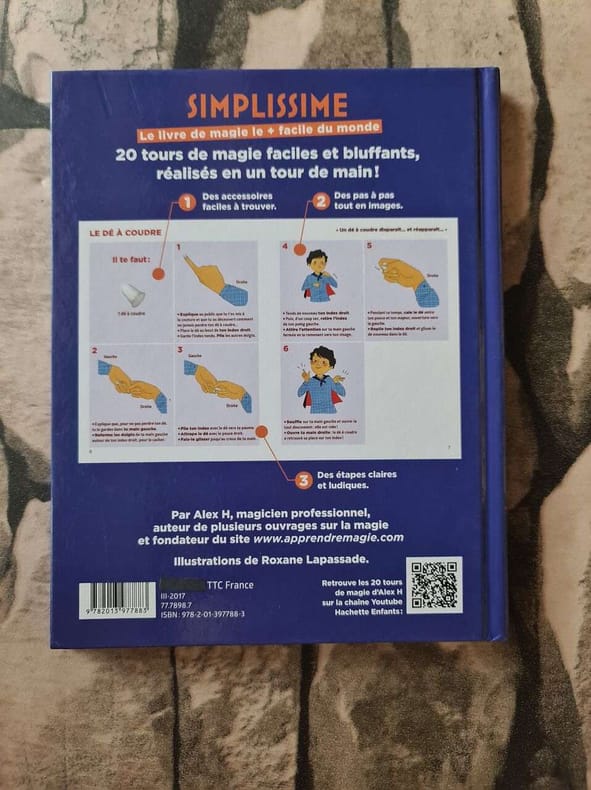
2017500124957HACHETTE ENFANT 2017 48 pages 18 2x23 1x1 2cm. 2017. Relié. 48 pages.
Milano, Mondadori, 1972, 4to cartonato con copertina illustrata a colori, pp. 123, numerose illustrazioni in nero e a colori nel testo (Enciclopedia Disney).
Mm 145x250 Collection "L'atelier du monde". Brossura editoriale con bandelle, 95 pagine profusamente illustrate a colori. Copia molto buona. Testo in lingua francese - french text. SPEDIZIONE IN 24 ORE DALLA CONFERMA DELL'ORDINE.
In-8, broché, couverture de papier bleu ancien, 79 p., planche frontispice (qqs rouss.). Première édition sous ce titre, illustrée dans cette édition d'une belle planche frontispice d'Eisen, gravée par Longueuil et d'une vignette à mi-page d'Eisen gravée par Binel. Ce mélodrame a d'abord été publié sous le titre de 'Sidney et Silly ou la bienfaisance et la Reconnaissance. Histoire anglaise' (1766). Grimm dans sa correspondance analysait ce roman: "Par la voie des romans à grands sentimens et à estampes; il a beaucoup de vogue parmi les couturières et les marchandes de modes, et s'il peut mettre les femmes de chambre dans son parti, je ne désespère pas de sa fortune" (Correspondance, déc. 1770). (Conlon, 'Siècle des Lumières', 66:532. France littéraire, I, 93). Bon exemplaire.
36656In-8, broché, couverture de papier bleu ancien, 79 p., planche frontispice (qqs rouss.). Paris, Le Jay, 1770.
1953024929LEIDEN E.J. BRILL 1953 Un fort volume grand in-8°, VIII 670 pp. Reliure éditeur toile bleue à la Bradel, auteur et titre dorés sur le dos. (coiffe supérieure un peu tassée). Texte sur deux colonnes. Frontispice photographique.
5099, London, Encyclopedia Britannica, 1914., Bound, 150+225mm, 174pp.
From a limited edition of 500, this is number 474. Rebound with original linen added to spine and front cover. With two pages from publisher's lists attached by previous owner to front free endpaper and back free endpaper. This book is extra heavy, and may involve extra shipping charges to some countries
2006Q-0471767840Wiley 2006-12-01. Paperback. New. New. In shrink wrap. Looks like an interesting title! Wiley paperback
Bihari Grammar is a very valueable and rare grammar which was compiled by a great eminent linguist and philologist under the orders of the Government of Bengal. The grammar is in constant and urgent demand. No such document is available presently on the subject. Bihari Language is being spoken in the province of Bihar, in the eastern portion of the North western provinces and the northern portion of the central provinces. It is a compendium grammar of the dialect of each district compiled by the author for official use in the state for government officers. No grammar of any of the dialect of Bihar has even been published except the Bhojpuri grammar of Mr. Beames. No other grammar meets the demand of Magadhi and Bhojpuri speaking parts of Bihar. This Grammar will no doubt meet demand of all. The grammar is a rare compilation and will be of greau set for all including students and teachers of Bihari language. About The Author:- Sir George Abraham Grierson, (Jan. 7, 1851-March 9, 1941) Irish linguist, language scholar and civil servant who conducted the Linguistic survey of India (1898-1928), obtaining information on 364 languages and dialects. While a student of mathematics at Trinity College, Dublin, Grierson took prizes in Sanskrit and Hindi. Grierson went to Bengal in October 1873, where-in addition to carrying out his duties in a succession of government posts until 1898-he devoted much time to language research. The first of his enormous output of papers, reviews, and books appeared in 1877. Contents:- Volume 1: DIVISION I • Historical • Introductory • Meaning of the word dialect •Nomenclature • The Eastern Neo Indo-Aryan or Gaudian languages • Western, Northern, and Southern Neo-Indo-Aryan or Gaudian languages • Their origin • The two great Prakrit languages • Their History • Their final location • Their modern representatives • Comparison of Bihari and Hindi languages • Preliminary definitions • Pronunciation • Derivation • Inflection • Construction • Vocabulary • Final results of the above • Geographical distribution-language boundaries • political boundaries • Dialects of Bihari • Bhojpuri • Maithili • Magadhi • Bihari Literature • General plan of these grammars • DIVISION II • Grammatical • Chapter I. - Alphabet • Character • Anunasik • The neutral vowel • Final sonant a • Short diphthongs • The complete series of Bihari vowels • The Consonants • Chapter II. – Spelling, &c • Concurrent vowels • Contraction • Shortening of antepenultimate vowel • Silent y and w • CHAPTER III. - Nouns • Nominal forms • Number • Case • Gender • CHAPTER IV. - Adjective • Gender • Maithili exceptions • Numeral adjectives • CHAPTER V. - Pronouns • No general rules • CHAPTER VI. - Verbs • General rules • Verbs how quoted • Multiplicity of forms • CHAPTER VII. - Indeclinables • Indeclinables • Adverbs • Prepositions • Conjunctions • Interjections • Final • Appendix • Conversation between two villagers • Translation of a conversation between two villagers • Translation of fables •Volume 2: Introduction • DIVISION I • DECLENSION • CHAPTER I.- NOUNS • Post-positions • Masculine tadbhavas in • Masculine nouns ending in silent consonants • General rules for other nouns • Masculine tatsamas in • Masculine nouns in • Masculine nouns in • Feminine nouns in • Feminine nouns ending in a silent consonant • Periphrastic Plural • Genitive Affixes • CHAPTER II. - ADJECTIVES • Gender • Numeral adjectives, cardinals • Ordinals • Fractional numbers • Multiplicatives • Definite cardinals • Indefinite cardinals • Collective numerals • CHAPTER III. - PRONOUNS • General remarks • Pronouns of the first and second person non-honorific • Pronoun of the second person honorific and reflexive pronoun • Demonstrative pronouns • Correlative pronouns • Interrogative pronoun • Indefinite pronoun • Indefinite pronoun • Indefinite Pronoun • Compound indefinite pronoun • Derivative pronominal forms • Adjectival pronouns • Pronominal oblique genitive • DIVISION II • CONJUGATION • CHAPTER IV. - INTRODUCTORY • Warning as to number and gender • Special honorific form common to second and third persons • Warning as to spelling • Conjugational system • Moods • Simple tenses • Periphrastic tenses • Personal terminations of simple tenses • Formation of tense stems • Present indicative • Preterite indicative • Future Indication • Future conjunctive and imperative • Preterite conjunctive • CHAPTER V. – AUXILIARY VERBS • Classes • Defective auxiliary verbs • Weak ands strong complete auxiliary • verbs • Conjugation of first defective auxiliary verb • Conjugation of Second defective auxiliary • Conjugation of third defective auxiliary verb • Conjugation of fourth defective auxiliary verb • Conjugation of fifth defective auxiliary verb • Conjugation of weak complete auxiliary verb • Preterite • Future • Present conjunctive • Preterite • Present imperative and precative forms • Participle • Strong complete auxiliary verb • CHAPTER VI. – THE REGULAR ACTIVE VERBS • Preliminary • Conjugation of dekh: principal parts • Simple tenses: present indicative • Preterite • Future • Present Conjunctive • Preterite • Present Imperative ands precative forms • Periphrastic tenses-indicative mood • Defitive present • Variety of Above • Imperfect • Durative future • Perfect • Pluperfect • Future exact • Future conditional • Future exact conditional • Preterite conditional • Participles • Infinitives or verbal nouns • Noun of agency • CHAPTER VII. – THE REGULAR NEUTER VERBS • Points of difference • gir: principal parts • Preterite indicative • Perfect • Pluperfect • CHAPTER VIII. – VOCALIC ROOTS • Causes of apparent irregularity • Verbs whose roots end in • Examples of use junction vowel • Example of a verb whose root ends in • Ditto • Ditto • Ditto • CHAPTER IX. – IRREGULAR VERBS • Preliminary • kar dhar • mar • ja • de • CHAPTER X. – THE PASSIVE VERB • Ordinary rule • Verbal noun in al • Passive with par • Potential passive voice • Periphrastic passive voice • CHAPTER XI. – CAUSAL VERBS • Ordinary rule • Shortening of a long radical vowel • Lengthening of short radical vowel • Substitution of a cognate diphthoug • Dissullabic causals • Irregular causals • CHAPTER XII. – COMPOUND VERBS • Kinds of compound verbs • Classes of compound verbs • Compound formed with the verbal noun varieties of verbal noun • Distribution of compound formed with the verbal noun • Intensive • intensive auxiliaries • Potential compounds • Completive compounds • Frequentative compounds • Desiderative compounds • Inceptive compounds • Permissive compound •Acquisitive compounds • Compounds formed from the participles continuative compounds • Statical compounds • DIVISION III • INDECLINABLES • APPENDIX I • SELECTIONS IN THE CENTRAL MUZAF FARPUR DIALECT • APPENDIX II • NOTE ON THE USE OF THE VARIOUS VERBAL TERMINATIONS • Volume 3: INTRODUCTION • DIVISIOIN I • DECLENSION • CHAPTER I. - NOUNS • Post-positions • Masculine tadbhavas in • Masculine nouns ending in silent consonants • General rules for other nouns • Masculine tatsamas in • Masculine noun in • Masculine noun in • Feminine noun in • Feminine nouns ending in a silent consonant • Periphrastic plural • genitival affixes • CHAPTER II. - ADJECTIVE •Gender • Numeral adjective cardinals • Ordinals • Fractional Numerals • Multiplicatives • Definite cardinals • Indefinite cardinals • Collective numerals • CHAPTER III. - PRONOUN • General remarks • Non-honorific pronoun of the first and second persons • Pronoun of the second person honorific and reflexive pronoun • Demonstrative pronouns • Correlative pronouns • Interrogative pronoun • Indefinite pronoun • Indefinite pronoun • Indefinite pronoun • Compound indefinite pronouns • Derivative pronominal forms • adjective pronouns • Pronominal oblique genitive • DIVISION II • CONJUCTION • CHAPTER IV. - INTRODUCTORY • Warning as to numeral and gender • Warning as to spelling • Conjugational system • Moods • Simple tenses • Personal terminations of simple tenses • Formation of tense-stems • Preterite indicative • Future indicative • Present conjunctive and imperative • Preterite conjunctive • The use of the various verbal terminative • CHAPTER V. – AUXILIARY VERBS • Classes of auxiliary verbs • Defective auxiliary verbs • Complete auxiliary verbs • Conjugation of first defective auxiliary verb • Conjugation of second defective auxiliary verb • Preterite • Conjugation of complete auxiliary verb, preterite indicative • Future • Present Conjunctive • Preterite • Present imperative and precative forms • Participles • CHAPTER VI. – THE REGULAR ACTIVE VERB • Preliminary • Conjungation of principal parts • Simple tenses: preterite indicative • Future • Present conjunctive • preterite • Present imperative and precative forms • Periphrastic tenses-indicative mood • Definite present • Variety of above • Imperfect • Durative future • Perfect • Pluperfect • Future conditional • Durative present conditional • Future exact conditional • Preterite conditional • Participles • Infinitives or verbal nouns • Noun of agency • CHAPTER VII. – THE REGULAR NEUTER VERB • Points of defference • gir: principal parts • Preterite indicative • Perfect • Pluperfect • CHAPTER VIII. – VOCALIC ROOTS • Causes of apparent irregularity • Verbs whose roots end in Junction vowel • Examples of use of junction vowel • Example of a verb whose root ends in • Ditto • Ditto • Ditto • CHAPTER IX. – IRREGULARE VERBS • Preliminary • kar dhar • mar • ja • de • CHAPTER X. – THE PASSIVE VERB • Ordinary rule • Verbal noun in • Passive with par • Potential passive voice • Periphrastic passive voice • CHAPTER XI. – CAUSAL VERBS • Ordinary rule • Shorting of a long radical vowel • Lengthening of short radical vowel • Substitution of a cognate diphthoug • Dissyllabic causals • CHAPTER XII. – COMPOUND VERBS • Kinds of compound verbs • Classes of compound verb •Compounds formed with the verbal noun varieties of verbal noun • Distribution of Compounds formed with the verbal noun • Intensive Compounds • Intensive auxiliaries • Potential compounds • Completive compound • Frequentative compound • Desiderative compound • Inceptive compound • Permissive compound • Acquisitive compound • Compounds formed from the participles continuative compound • Statical compound • DIVISION III • INDECLINABLES • APPENDIX • SELECTIONS IN THE SOUTH MAITHIL-MAGADHI DIALECT • Conversation between two villagers. The Title 'Seven Grammar of the Dialects Sub Dialects Subdialects of the Bihari Language written/authored/edited by George A. Grierson', published in the year 2005. The ISBN 9788178354514 is assigned to the Hardcover version of this title. This book has total of pp. 904 (Pages). The publisher of this title is Kalpaz Publications. This Book is in English. The subject of this book is Literature / Linguistic / Reference / Dictionary / Encyclopaedia. Size of the book is 14.34 x 22.59 cms Vol:- 3 Vols. Set
About The Author:- Sir George Abraham Grierson, (Jan. 7, 1851-March 9, 1941) Irish linguist, language scholar and civil servant who conducted the Linguistic survey of India (1898-1928), obtaining information on 364 languages and dialects. While a student of mathematics at Trinity College, Dublin, Grierson took prizes in Sanskrit and Hindi. Grierson went to Bengal in October 1873, where-in addition to carrying out his duties in a succession of government posts until 1898-he devoted much time to language research. The first of his enormous output of papers, reviews, and books appeared in 1877. Contents:- Volume 1: DIVISION I • Historical • Introductory • Meaning of the word dialect •Nomenclature • The Eastern Neo Indo-Aryan or Gaudian languages • Western, Northern, and Southern Neo-Indo-Aryan or Gaudian languages • Their origin • The two great Prakrit languages • Their History • Their final location • Their modern representatives • Comparison of Bihari and Hindi languages • Preliminary definitions • Pronunciation • Derivation • Inflection • Construction • Vocabulary • Final results of the above • Geographical distribution-language boundaries • political boundaries • Dialects of Bihari • Bhojpuri • Maithili • Magadhi • Bihari Literature • General plan of these grammars • DIVISION II • Grammatical • Chapter I. - Alphabet • Character • Anunasik • The neutral vowel • Final sonant a • Short diphthongs • The complete series of Bihari vowels • The Consonants • Chapter II. – Spelling, &c • Concurrent vowels • Contraction • Shortening of antepenultimate vowel • Silent y and w • CHAPTER III. - Nouns • Nominal forms • Number • Case • Gender • CHAPTER IV. - Adjective • Gender • Maithili exceptions • Numeral adjectives • CHAPTER V. - Pronouns • No general rules • CHAPTER VI. - Verbs • General rules • Verbs how quoted • Multiplicity of forms • CHAPTER VII. - Indeclinables • Indeclinables • Adverbs • Prepositions • Conjunctions • Interjections • Final • Appendix • Conversation between two villagers • Translation of a conversation between two villagers • Translation of fables • The Title 'Seven Grammar of the Dialects Sub Dialects Subdialects of the Bihari Language, (Introductory, Bhojpuri Dialect, Magadhi Dailect) written/authored/edited by George A. Grierson', published in the year 2005. The ISBN 9788178354521 is assigned to the Hardcover version of this title. This book has total of pp. 307 (Pages). The publisher of this title is Kalpaz Publications. This Book is in English. The subject of this book is Literature / Linguistic / Reference / Dictionary / Encyclopaedia. Size of the book is 14.34 x 22.59 cms Vol:- Vol. 1st
About The Author:- Sir George Abraham Grierson, (Jan. 7, 1851-March 9, 1941) Irish linguist, language scholar and civil servant who conducted the Linguistic survey of India (1898-1928), obtaining information on 364 languages and dialects. While a student of mathematics at Trinity College, Dublin, Grierson took prizes in Sanskrit and Hindi. Grierson went to Bengal in October 1873, where-in addition to carrying out his duties in a succession of government posts until 1898-he devoted much time to language research. The first of his enormous output of papers, reviews, and books appeared in 1877. Contents:- Volume 2: Introduction • DIVISION I • DECLENSION • CHAPTER I.- NOUNS • Post-positions • Masculine tadbhavas in • Masculine nouns ending in silent consonants • General rules for other nouns • Masculine tatsamas in • Masculine nouns in • Masculine nouns in • Feminine nouns in • Feminine nouns ending in a silent consonant • Periphrastic Plural • Genitive Affixes • CHAPTER II. - ADJECTIVES • Gender • Numeral adjectives, cardinals • Ordinals • Fractional numbers • Multiplicatives • Definite cardinals • Indefinite cardinals • Collective numerals • CHAPTER III. - PRONOUNS • General remarks • Pronouns of the first and second person non-honorific • Pronoun of the second person honorific and reflexive pronoun • Demonstrative pronouns • Correlative pronouns • Interrogative pronoun • Indefinite pronoun • Indefinite pronoun • Indefinite Pronoun • Compound indefinite pronoun • Derivative pronominal forms • Adjectival pronouns • Pronominal oblique genitive • DIVISION II • CONJUGATION • CHAPTER IV. - INTRODUCTORY • Warning as to number and gender • Special honorific form common to second and third persons • Warning as to spelling • Conjugational system • Moods • Simple tenses • Periphrastic tenses • Personal terminations of simple tenses • Formation of tense stems • Present indicative • Preterite indicative • Future Indication • Future conjunctive and imperative • Preterite conjunctive • CHAPTER V. – AUXILIARY VERBS • Classes • Defective auxiliary verbs • Weak ands strong complete auxiliary • verbs • Conjugation of first defective auxiliary verb • Conjugation of Second defective auxiliary • Conjugation of third defective auxiliary verb • Conjugation of fourth defective auxiliary verb • Conjugation of fifth defective auxiliary verb • Conjugation of weak complete auxiliary verb • Preterite • Future • Present conjunctive • Preterite • Present imperative and precative forms • Participle • Strong complete auxiliary verb • CHAPTER VI. – THE REGULAR ACTIVE VERBS • Preliminary • Conjugation of dekh: principal parts • Simple tenses: present indicative • Preterite • Future • Present Conjunctive • Preterite • Present Imperative ands precative forms • Periphrastic tenses-indicative mood • Defitive present • Variety of Above • Imperfect • Durative future • Perfect • Pluperfect • Future exact • Future conditional • Future exact conditional • Preterite conditional • Participles • Infinitives or verbal nouns • Noun of agency • CHAPTER VII. – THE REGULAR NEUTER VERBS • Points of difference • gir: principal parts • Preterite indicative • Perfect • Pluperfect • CHAPTER VIII. – VOCALIC ROOTS • Causes of apparent irregularity • Verbs whose roots end in • Examples of use junction vowel • Example of a verb whose root ends in • Ditto • Ditto • Ditto • CHAPTER IX. – IRREGULAR VERBS • Preliminary • kar dhar • mar • ja • de • CHAPTER X. – THE PASSIVE VERB • Ordinary rule • Verbal noun in al • Passive with par • Potential passive voice • Periphrastic passive voice • CHAPTER XI. – CAUSAL VERBS • Ordinary rule • Shortening of a long radical vowel • Lengthening of short radical vowel • Substitution of a cognate diphthoug • Dissullabic causals • Irregular causals • CHAPTER XII. – COMPOUND VERBS • Kinds of compound verbs • Classes of compound verbs • Compound formed with the verbal noun varieties of verbal noun • Distribution of compound formed with the verbal noun • Intensive • intensive auxiliaries • Potential compounds • Completive compounds • Frequentative compounds • Desiderative compounds • Inceptive compounds • Permissive compound •Acquisitive compounds • Compounds formed from the participles continuative compounds • Statical compounds • DIVISION III • INDECLINABLES • APPENDIX I • SELECTIONS IN THE CENTRAL MUZAF FARPUR DIALECT • APPENDIX II • NOTE ON THE USE OF THE VARIOUS VERBAL TERMINATIONS • The Title 'Seven Grammar of the Dialects Sub Dialects Subdialects of the Bihari Language, ( Maithli Bhojpuri Dialect, South Maithli Dialect) written/authored/edited by George A. Grierson', published in the year 2005. The ISBN 9788178354538 is assigned to the Hardcover version of this title. This book has total of pp. 207 (Pages). The publisher of this title is Kalpaz Publications. This Book is in English. The subject of this book is Literature / Linguistic / Reference / Dictionary / Encyclopaedia. Size of the book is 14.34 x 22.59 cms Vol:- Vol. 2nd
About The Author:- Sir George Abraham Grierson, (Jan. 7, 1851-March 9, 1941) Irish linguist, language scholar and civil servant who conducted the Linguistic survey of India (1898-1928), obtaining information on 364 languages and dialects. While a student of mathematics at Trinity College, Dublin, Grierson took prizes in Sanskrit and Hindi. Grierson went to Bengal in October 1873, where-in addition to carrying out his duties in a succession of government posts until 1898-he devoted much time to language research. The first of his enormous output of papers, reviews, and books appeared in 1877. Contents:- Volume 3: INTRODUCTION • DIVISIOIN I • DECLENSION • CHAPTER I. - NOUNS • Post-positions • Masculine tadbhavas in • Masculine nouns ending in silent consonants • General rules for other nouns • Masculine tatsamas in • Masculine noun in • Masculine noun in • Feminine noun in • Feminine nouns ending in a silent consonant • Periphrastic plural • genitival affixes • CHAPTER II. - ADJECTIVE •Gender • Numeral adjective cardinals • Ordinals • Fractional Numerals • Multiplicatives • Definite cardinals • Indefinite cardinals • Collective numerals • CHAPTER III. - PRONOUN • General remarks • Non-honorific pronoun of the first and second persons • Pronoun of the second person honorific and reflexive pronoun • Demonstrative pronouns • Correlative pronouns • Interrogative pronoun • Indefinite pronoun • Indefinite pronoun • Indefinite pronoun • Compound indefinite pronouns • Derivative pronominal forms • adjective pronouns • Pronominal oblique genitive • DIVISION II • CONJUCTION • CHAPTER IV. - INTRODUCTORY • Warning as to numeral and gender • Warning as to spelling • Conjugational system • Moods • Simple tenses • Personal terminations of simple tenses • Formation of tense-stems • Preterite indicative • Future indicative • Present conjunctive and imperative • Preterite conjunctive • The use of the various verbal terminative • CHAPTER V. – AUXILIARY VERBS • Classes of auxiliary verbs • Defective auxiliary verbs • Complete auxiliary verbs • Conjugation of first defective auxiliary verb • Conjugation of second defective auxiliary verb • Preterite • Conjugation of complete auxiliary verb, preterite indicative • Future • Present Conjunctive • Preterite • Present imperative and precative forms • Participles • CHAPTER VI. – THE REGULAR ACTIVE VERB • Preliminary • Conjungation of principal parts • Simple tenses: preterite indicative • Future • Present conjunctive • preterite • Present imperative and precative forms • Periphrastic tenses-indicative mood • Definite present • Variety of above • Imperfect • Durative future • Perfect • Pluperfect • Future conditional • Durative present conditional • Future exact conditional • Preterite conditional • Participles • Infinitives or verbal nouns • Noun of agency • CHAPTER VII. – THE REGULAR NEUTER VERB • Points of defference • gir: principal parts • Preterite indicative • Perfect • Pluperfect • CHAPTER VIII. – VOCALIC ROOTS • Causes of apparent irregularity • Verbs whose roots end in Junction vowel • Examples of use of junction vowel • Example of a verb whose root ends in • Ditto • Ditto • Ditto • CHAPTER IX. – IRREGULARE VERBS • Preliminary • kar dhar • mar • ja • de • CHAPTER X. – THE PASSIVE VERB • Ordinary rule • Verbal noun in • Passive with par • Potential passive voice • Periphrastic passive voice • CHAPTER XI. – CAUSAL VERBS • Ordinary rule • Shorting of a long radical vowel • Lengthening of short radical vowel • Substitution of a cognate diphthoug • Dissyllabic causals • CHAPTER XII. – COMPOUND VERBS • Kinds of compound verbs • Classes of compound verb •Compounds formed with the verbal noun varieties of verbal noun • Distribution of Compounds formed with the verbal noun • Intensive Compounds • Intensive auxiliaries • Potential compounds • Completive compound • Frequentative compound • Desiderative compound • Inceptive compound • Permissive compound • Acquisitive compound • Compounds formed from the participles continuative compound • Statical compound • DIVISION III • INDECLINABLES • APPENDIX • SELECTIONS IN THE SOUTH MAITHIL-MAGADHI DIALECT • Conversation between two villagers. The Title 'Seven Grammar of the Dialects Sub Dialects Subdialects of the Bihari Language, (South Maithli-Magadhi Dialect, South Maithli-Bangali Dialect),Maithli Bengali Dailect) written/authored/edited by George A. Grierson', published in the year 2005. The ISBN 9788178354545 is assigned to the Hardcover version of this title. This book has total of pp. 301 (Pages). The publisher of this title is Kalpaz Publications. This Book is in English. The subject of this book is Literature / Linguistic / Reference / Dictionary / Encyclopaedia. Size of the book is 14.34 x 22.59 cms Vol:- Vol. 3rd
Piccola enciclopedia tematica, resto affiancato da grafica vintage, cura di E. Dell'Aglio. Brossura vintage segnata dal tempo, copertina con toni sbiaditi dalla luce, alterati da velature di polvere, evidenti e diffuse tracce e sbucciature da attrito e danni da compressione, marcati alle estremità e canaletti, fogli integri, avvolti da ossidazione intensa ai margini, bruna ai tagli, cucitura in parte allentata dall'uso. N. pag. 429. USATO
c6117Paris, Encyclopédie Roret, L. Mulo Editeur, 1901 ; in-18, broché, couverture ocre imprimée en noir, dos muet; 16pp. de texte ( titre et table des figures) et 16 grandes planches dépliantes regroupant 686 figures.
1958LCI-4107Paris, Artheme Fayard 1958 1 in -8 Broché 124[p.p]
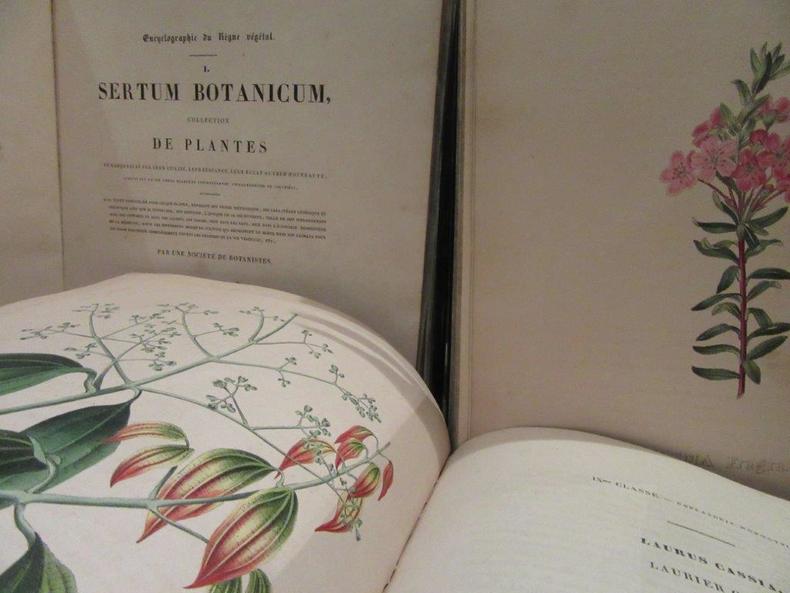
28394Bruxelles. Etablissement Encyclographique, 1828. Encyclopédie du Règne Végétal. E.O. Collection de Plantes Remarquables par leur utilité, leur élégance, leur éclat ou leur nouveauté, consistant en 600 planches (plus une planche non coloriée)soigneusement lithographiées et coloriées accompagnées d'un texte pour chaque plante. Les planches sont dessinées par G.Severeyns et lithographiées par Burggraaff.Cette encyclopédie fut rédigée sous la direction de deux naturalistes belges: Pierre Corneille Van Geel (1796-1838) et Pierre-Auguste Joseph Drapiez (1778-1856). Edition en 6 vol. in-folio. Le Tome 6 est la liste alphabétique des noms latins, des noms français et une classification des plantes. Reliure d'époque en demi-cuir vert aux dos décorés sobrement. Bon état avec reliures usagées.
4-22006Paris 1790 estratto cop. muta pp. 274/348 la pag. 274 facsimilata con 15 tavole di cm. 22 x 295 incise in rame laboratorio utensili bardature carrozze cocchi portantine. - !! ATTENZIONE !!: Con il termine estratto o stralcio intendiamo riferirci ad un fascicolo contenente un articolo di rivista sia che esso sia stato stampato a parte utilizzando la stessa composizione sia che provenga direttamente da una rivista. Le pagine sono indicate come "da/a" ad esempio: 229/231 significa che il testo è composto da tre pagine. Quando la rivista di provenienza non viene indicata é perchè ci è sconosciuta. - !! ATTENTION !!: : NOT A BOOK : “estratto†or “stralcio†means simply a few pages original nonetheless printed in a magazine. Pages are indicated as in "from†“to" for example: 229/231 means the text comprises three pages 229 230 and 231. If the magazine that contained the pages is not mentioned it is because it is unknown to us. unknown
In-8, broché, couverture papier marbré moderne, 15 p. Edition originale. (Goldsmiths, 'Online Catalogue', 14800. Martin & Walter, 1934). Bon exemplaire.
1977R200055343BRUXELLES. 1977. In-8. Broché. Bon état, Couv. convenable, Dos satisfaisant, Intérieur frais. 40 pages environ illustrées en noir et blanc hors texte. . . . Classification Dewey : 703-Dictionnaire, encyclopédie des beaux-arts et des arts décoratifs
Classici Politici, collezione diretta da Luigi Firpo n. 21 - Traduzione di Albina Maffioli Barsella - Introduzione - Nota biografica - Nota bibliografica - Nota storica - Parte I. Scritti politici - Parte II. Voci politiche dell'Enciclopedia - Indice delle tavole 1 23x14,5 cm., legatura in piena tela rossa con protezione in acetato, in oro fregi e titoli su tasselli, pp. 781 (2), 8 tavole in bianconero - ritratto Denis Diderot, frontespizi lettere - fuori ntesto, prima edizione italiana, buone condizioni, solo lievi segni del tempo.
2010AME_9781402766350Sterling 2010. 1st. Paperback. New/New. Sterling paperback
Istituto della Enciclopedia Italiana fondata da Giovanni Treccani Scienza e Tecnica (6 volumi). Roma, Proprietà artistica e letteraria 2007 italian, Opera con copertina rigida in 6 volumi. Illustrazioni in b/n e a colori ft e nt.
[Roma], Gruppo Editoriale L'Espresso, [2005], voll. 17, in-8, cartonatura editoriale illustrata, per oltre 13500 pp. complesive. Con centinaia di illustrazioni. Ottime condizioni. Si tratta dell'opera della UTET ristampata per "La Biblioteca di Repubblica".
19783122777(Paris): Bordas 1978. (77) Blätter. Mit zahlreichen Illustrationen. 4° (25-35 cm). Orig.-Leinenband. [Hardcover / fest gebunden].