199 résultats
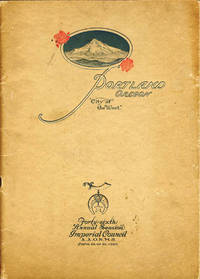
192040911Portland: Privately printed1920. 1920. OREGON. 10-1/2" x 7-1/2" printed wrappers. 60pp. to include wrappers. Frontispiece. Colorful pictures along with black and white photographs all have yellow borders. Three black and white full-page portraits include W. Freeland Kendrick 33 degree Imperial Potentate along with his Masonic Record; W.J. Hofmann General Chairman - Portland Committee; welcoming everyone to the beautiful city of Portland and all it offers; lastly A.H. Lea - Potentate - Al Kader Temple. "A "potentate" is a person who possesses great power as a sovereign monarch or ruler." A 2-page spread showing black and white pictures of the "Officers of the Imperial Council A A O N M S." Much information about the history of the shrine and a Shriner how officials are elected and who elects them information for the guests to include who to call should they need a physician the headquarters hotel and housing headquarters activities such as visiting the Portland sawmill golfing baseball mountain climbing trips swimming etc. There is an aerial view of Portland a picture of Multnomah which is the second highest waterfall in the United States municipal buildings a picture of a car covered in roses as a part of Portland's Rose Festival educational institutions et. al. The Program continues with activities for the rest of the week through Saturday the 26th. Another 2-page spread with black and white pictures of the Portland General Committee - Forty-Sixth Annual Session. Rubbing to wrappers and light wear to spine else a solid tight informative booklet. Privately printed,1920. unknown
1333804490.Gpaperback. Good. Access codes and supplements are not guaranteed with used items. May be an ex-library book. paperback
2002362795London ; New York : I.B. Tauris 2002. First Edition. Hardcover. Fine cloth copy in an equally fine dust-wrapper. Particularly well-preserved overall; tight bright clean and especially sharp-cornered. Physical description: 295p. Subjects: Land tenure Islamic countries History. Land tenure Middle East History. Islamic countries Commerce. Islamic countries Economic conditions. Mediterranean Region Economic conditions. Genre: Commercial history. Language: English. London ; New York : I.B. Tauris hardcover
191682679Honolulu HI: Aloha Temple AAONMS 1916. Presumed First Edition First printing. Single sheet printed on one side. Good. Format is approximately 6.25 inches by 7 inches printed on one side folded in half. Rare surviving copy. There is the Shriners symbol/logo at the top. The text reads: Aloha Temple A. A. On N.M.S. Oasis of Honolulu requests the pleasure of your company at a Reception and Dance in honour of Imperial Potentate J. Putnam Stevens and Party on Monday April the third nineteen hundred and sixteen Moana Hotel eighth thirty P.M. On July 15 1915 Dr. Frederick R. Smith of Rochester N. Y. imperial potentate of the Ancient Arabic Order of the Nobles of the Mystic Shrine who has ruled for the preceding year laid down the scepter of authority to J. Putnam Stevens of Portland Me. who had served as deputy imperial potentate. The J. Putnam Stevens Award is presented by the National Association of Insurance and Financial Advisers Maine. This award given annually goes to that person who in the opinion of the selection committee has rendered outstanding service to the industry and community in the state of Maine. It is not intended to restrict the award only to agents but rather to recognize those people even outside the industry who have advanced the cause of the life insurance business. J. Putnam Stevens was born in Winthrop Maine on Nov. 24 1852. He was one of the pioneers in the life insurance industry. Not only did he exemplify all that is good in life insurance he also demonstrated how worthwhile a good life insurance agent can be to the community. The state can be proud of this great humanitarian and anyone receiving the J. Putnam Stevens' Award gains with it a rich heritage. Shriners International also commonly known as The Shriners or formerly known as the Ancient Arabic Order of the Nobles of the Mystic Shrine AAONMS is a Masonic society established in 1870 and is headquartered in Tampa Florida. Shriners International describes itself as a fraternity based on fun fellowship and the Masonic principles of brotherly love relief and truth. There are approximately 350000 members from 196 temples chapters in the US Canada Brazil Bolivia Mexico Panama the Philippines Europe and Australia. The organization is best known for the Shriners Hospitals for Children that it administers and the red fezzes that members wear. The organization was previously known as "Shriners North America". The idea of a new fraternity for Masons stressing fun and fellowship was discussed. Walter M. Fleming and William J. Florence took the idea seriously enough to act upon it. Florence a world-renowned actor while on tour in Marseille was invited to a party given by an Arab diplomat. The entertainment was something in the nature of an elaborately staged musical comedy. At its conclusion the guests became members of a secret society. Florence took copious notes and drawings at his initial viewing and on two other occasions once in Algiers and once in Cairo. When he returned to New York in 1870 he showed his material to Fleming. Fleming created the ritual emblem and costumes. Florence and Fleming were initiated August 13 1870 and they initiated 11 other men on June 16 1871 In an effort to encourage membership at the June 6 1876 meeting of Mecca Temple the Imperial Grand Council of the Ancient Order of the Nobles of the Mystic Shrine for North America was created. Fleming was elected the first Imperial Potentate. After some other reworking by 1878 there were 425 members in 13 temples in eight states and by 1888 there were 7210 members in 48 temples in the United States and Canada. By the Imperial Session held in Washington D.C. in 1900 there were 55000 members and 82 Temples. Aloha Temple, AAONMS unknown
20021iiiCf0072London New York Bahrain: Kegan Paul Limited 2002. Book. Very Good. Decorative Hardcover. 1st Published in 2002. 8vo or 8° Medium Octavo: 7¾" x 9¾" tall. 307 ix pp. A great almost spotlessly clean copy! Solidly and tightly bound essentially and nearly flawless copy with minimal internal and external wear and use. Copy with crisp pages clean text and light shelf wear. Smooth covers. Slight wear and rubbing on cover board corners. Relevant newspaper article included from previous owner. No dust jacket. . Kegan Paul Limited Hardcover
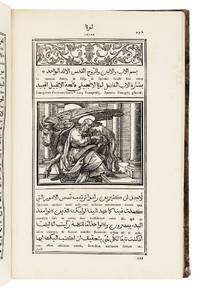
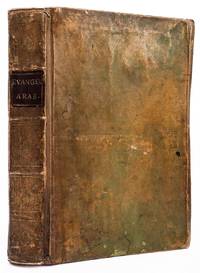
65425Romae Rome: In Typographia Medicea 1591. FIRST EDITION. Folio 32.25 x 21.25 cm. pp.9-4621 colophon. Full 18th-century marbled vellum spine with gilt rules gilt decoration and red morocco label. With 149 text woodcuts by Leonardo Parassole c.1570-c.1630 after Antonio Tempesta 1555-1630 their monograms appearing on a number of the illustrations. The woodcuts are remarkable examples of Tempesta's work notable for their clarity of composition and their didactic narrative of the episodes depicted. Old bibliographical remark in Latin to verso of final leaf. From a German private collection. Some partial browning due to paper stock and occasional light foxing generally a very handsome copy. First edition of the Gospels in Arabic and Latin - a landmark cultural encounter. In 1584 the last year of the papacy of Gregory XIII who had constantly endeavoured to effect a union between the Church of Rome and the eastern Christians Cardinal Ferdinando de' Medici the brother and later the successor of the Grand Duke of Tuscany founded a printing press in Rome with a vast selection of oriental types cut by the French typographer Robert Granjon. Run by a versatile orientalist Giovan Battista Raimondi the press had various aims. One was to produce propaganda which would attract the eastern Christians to Roman Catholicism. Another was to corner the publishing market in an area where typography was prohibited and to make a financial profit from the sale in the east of books printed in Arabic. The third aim was to further European knowledge and to provide good editions of Arabic versions of certain standard non-religious texts. These included the writings of Avicenna al-Idrisi's geographical compendium al-Tusi's adaptation of Euclid's text on geometry and various works on Arabic grammar and syntax. The first major publication was the 1591 edition of the Gospels. This copy has an interlinear Latin translation but the work was also issued solely in Arabic. It contains 149 fine woodcut illustrations made by Leonardo Parasole mainly after designs by one of the best known Florentine artists of his day Antonio Tempesta who owed much of his fame to the frescoes he painted in the Vatican and in a number of Roman palaces. The woodcut in the Gospel of St Mark of the presentation of the head of John the Baptist to Salome Mark 6:28 by a man in Turkish dress reminds us of the common association between the great enemy of Christendom in the sixteenth century and the ancient heathens. The Arabic text is printed in Robert Granjon's famous large fount generally considered the first satisfactory Arabic printing type; as all early printed editions of the Arabic Gospels it is based on the Alexandrian Vulgate cf. Darlow/M. 1636. The Latin version is by Leonardo Sionita. The work begins with page 9 without a title-page or any preliminary matter at all: "the intended prefatory matter was apparently never published" Darlow/M.; these first eight pages were not supplied until the 1619 re-issue. Brunet 1122-1123 Romae [Rome]: In Typographia Medicea, 1591. hardcover
63499Romae Rome: Ex Typographia Medicea 1619. Folio 33.5x21 cm. pp. 4 9-462 2 with at recto the printer's letter repeated with the date of the 1591 original edition blank at verso. Contemporary green vellum spine with raised bands and gilt-decorated compartments red Morocco label marbled endpapers edges dyed red. Title printed in red and black with Medici's woodcut coat-of-arms printer's advice "Typographus lectori". With 149 text woodcuts by Leonardo Parassole c.1570-c.1630 after Antonio Tempesta 1555-1630 their monograms appearing on a number of the illustrations. The woodcuts are remarkable examples of Tempesta's work notable for their clarity of composition and their didactic narrative of the episodes depicted. Ex libris Luigi Bossi Milan 1758-1835 with his engraved heraldic bookplate to front pastedown along with T. Fenteman & Sons Leeds booksellers label to upper corner. Title-page lightly browned boards faded and discoloured some occasional light toning generally a very good copy printed on thick paper the woodcuts in strong impressions throughout. Rare 1619 reissue or of the original 1591 stock of the Arabic Medicean Gospels. The text lines are almost identical with those of the Arabic issue but now have an interlinear Latin version added which was prepared by Antonius Sionita. In 1584 the last year of the papacy of Gregory XIII who had constantly endeavoured to effect a union between the Church of Rome and the eastern Christians Cardinal Ferdinando de' Medici the brother and later the successor of the Grand Duke of Tuscany founded a printing press in Rome with a vast selection of oriental types cut by the French typographer Robert Granjon. Run by a versatile orientalist Giovan Battista Raimondi the press had various aims. One was to produce propaganda which would attract the eastern Christians to Roman Catholicism. Another was to corner the publishing market in an area where typography was prohibited and to make a financial profit from the sale in the east of books printed in Arabic. The third aim was to further European knowledge and to provide good editions of Arabic versions of certain standard non-religious texts. These included the writings of Avicenna al-Idrisi's geographical compendium al-Tusi's adaptation of Euclid's text on geometry and various works on Arabic grammar and syntax. The first major publication was the 1591 edition of the Gospels. This copy has an interlinear Latin translation but the work was also issued solely in Arabic. It contains 149 fine woodcut illustrations made by Leonardo Parasole mainly after designs by one of the best known Florentine artists of his day Antonio Tempesta who owed much of his fame to the frescoes he painted in the Vatican and in a number of Roman palaces. The woodcut in the Gospel of St Mark of the presentation of the head of John the Baptist to Salome Mark 6:28 by a man in Turkish dress reminds us of the common association between the great enemy of Christendom in the sixteenth century and the ancient heathens. The Arabic text is printed in Robert Granjon's famous large fount generally considered the first satisfactory Arabic printing type; as all early printed editions of the Arabic Gospels it is based on the Alexandrian Vulgate cf. Darlow/M. 1636. The Latin version is by Leonardo Sionita. The work begins with page 9 without a title-page or any preliminary matter at all: "the intended prefatory matter was apparently never published" Darlow/M. Darlow & Moule 1637 & 1643; Schnurrer Bibliotheca arabica 318; Brunet II 1122-23; Graesse II 531 Romae [Rome]: Ex Typographia Medicea, 1619. hardcover
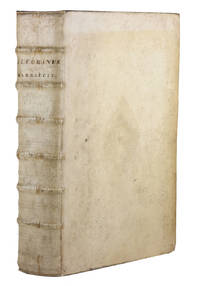
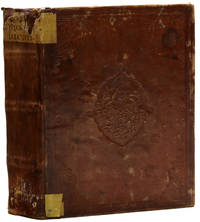
1698H4GD9LIIY5STPadova: Typographia Seminaria 1698. Blind-tooled vellum ca. 1800 reusing and retooling vellum from a slightly earlier blind-tooled binding sewn on 6 double cords each board with a large scrollwork centrepiece over traces of the old one in a panel design made of fillets and corner pieces with the title finely lettered in pen and ink in the 2nd of 7 compartments the old title still faintly visible underneath it and the old volume number VIII faintly visible in the 3rd compartment. Folio 35.5 x 25 cm. With 2 title pages 1 primary and 4 secondary divisional titles in volume 1 more than a dozen woodcut head- and tailpieces plus numerous repeats and dozens of woodcut decorated initials about 9 series plus numerous repeats. Set in roman italic and Arabic types 3 sizes of Arabic with incidental Greek and Hebrew. 2 volumes bound as 1. The first scholarly printed Quran prepared by the anti-Islamic Catholic Ludovico Marracci with a much more accurate Arabic text than any previously printed and the first accurate Latin translation also including extensive notes based on the Islamic commentaries as well as the editor's extensive "refutations" of each sutra. Each sura is given first in Arabic then in Latin translation followed by notes and then the refutation. The entire first volume of about 430 pages is taken up with preliminary matter including a 24-page life of Muhammad one of the first detailed biographies ever printed and again more accurate than its predecessors an 8-page profession of faith with the Arabic and Latin in parallel columns and additional commentaries and introductory matter. The fact that this edition was produced explicitly as an attempt to refute the views of Islam has naturally led Islamic scholars to dismiss it but both the Arabic text and the Latin translation were far better than any previously printed and had no serious rival until the Leipzig edition of 1834. The commentaries also made a great deal of Islamic scholarship available to a European audience for the first time and both the Arabic and the Latin text influenced nearly every edition for the next 150 years.With two bookplates and an occasional early manuscript note and a few letters or numbers inscribed in the foot margin of one leaf. With a tear running into the text of one leaf repaired but otherwise in very good condition. With generous margins. The boards are slightly bowed and there is a small tear repaired at the foot of the spine. A ground-breaking work of Quranic scholarship a valuable source for the study of the Quran and an essential source for European views of Islam.l Cat. Bibl. A.-R. Courbonne dont la vent . 1er février 1842 30 this copy; A. Hamilton Europe and the Arab world 34; Schnurrer 377; O. A. Sheikh Al-Shabab The place of Marraccis Latin translation of the Holy Quran: . in: Journal of King Saud University: language & tanslation 13 2001 pp. 57-74; USTC 1736471/1737617/1748538; not in Atabey; Blackmer; Philologia orientalis but cited in 225g 360a 380b 381c. Typographia Seminaria, hardcover
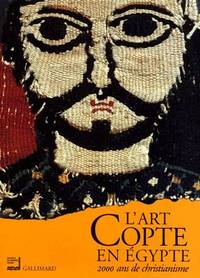
2000PMV403103EParis: Institut du monde arabe ; Gallimard 2000. Hardcover. Good/Good. 238 x 320 x 27 cm. Hardcover • Illustrations en noir et en couleurs jaquette illustrée en couleurs • <b><i>French text original</i></b>. Institut du monde arabe ; Gallimard hardcover
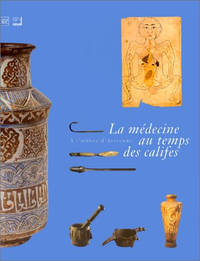
1996PMV422608EParis Gand: Institut du monde arabe Paris ; Snoeck-Ducaju & Zoon 1996. Trade paperback. Good/Not issued. 30 cm. Paperback • Illustrations en noir et en couleurs couverture illustrée en couleurs • <b><i>French text original</i></b>. Institut du monde arabe (Paris) ; Snoeck-Ducaju & Zoon paperback
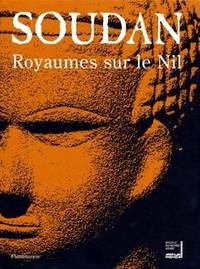
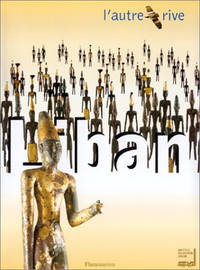
1997PMV436201QParis: Institut du monde arabe ; Flammarion 1997. Trade paperback. Good/Not issued. 230 x 310 x 30 cm. Jürgen Liepe. Paperback • Illustrations en noir et en couleurs • <b><i>French text original</i></b>. Institut du monde arabe ; Flammarion paperback
71236c.1880. . Albumen print. Four-part panorama very good tonal range and in good condition.<br /> <br /> [c.1880]. unknown
1770ABC_48344Probably Egypt 1770. Near-contemporary brown leather with a blind-stamped oriental rosette as a center piece and similar style corner pieces on both boards a partial manuscript title label on the spine. 4to ca. 17 x 22 cm. Arabic and Italian manuscript on paper 19 lines per extensum paginated throughout from right to left. Manuscript dictionary comprising some 9000 Arabic terms and their Italian translations. It was formerly owned by the German oriental scholar and Franciscan priest Arsenius Rehm 1738-1808 who lived in Cairo between 1769 and 1776 building a large collection of manuscripts which he brought with him when he worked for some time at the Franciscan abbey of Frauenberg at Fulda Hesse. After his death his collection remained at the monastery until it was purchased by the Benedictine Abbey of St Boniface Munich in 1852. The present volume which had not been part of the collection proper remained in Frauenberg whose library was dispersed in 2021 by the Franciscan Province. "The library includes a fairly extensive Arabic dictionary of his though not written by him. It offers only the Italian translation of the Arabic words. In the Arabic style it begins from our perspective at the end" cf. Bihl.With old stamps of the Frauenberg Abbey library on the final leaf with attribution to Arsenius Rehm in indelible pencil ca. 1900. The binding is somewhat rubbed and scuffed; remains of old spine labels. Interior shows only occasional light staining; very well preserved.l Michael Bihl Geschichte des Franziskanerklosters Frauenberg Fulda 1907 p. 137. hardcover
23128Probably Persia Circa 18th century. Finely written in Arabic calligraphy in black outlined and highlighted in red and gold. Small Folio 6.5†x 3.75†handsomely presented within a cream mount. A very finely preserved example. Probably Persia unknown
1998PMV521201ZParis: Flammarion / Institut du monde arabe 1998. Hardcover. Good/Good. 240 x 322 x 30 cm. Hardcover • Illustrations en noir et en couleurs jaquette illustrée en couleurs • <b><i>French text original</i></b>. Flammarion / Institut du monde arabe hardcover
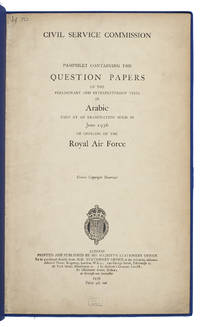
1936ABC_46032London: printed and published at Her Majesty's Stationary Office 1936. Original publisher's printed paper wrappers in later blue paper wrappers. Folio. Printed in English and Arabic. British government publication of an interpretership examination for Arabic translation. It provides the examination questions that officers in the Royal Air Force had to answer correctly to pass as an interpreter of Arabic. The work contains several questions that include translating Arabic texts printed in Arabic type.Library stamp on foot of front cover title-page and pp. 8 and 9: "Liverpool Public Libraries". In good condition.l Consolidated List of Government Publications 1936 p.147; not in WorldCat. printed and published at Her Majesty's Stationary Office, unknown
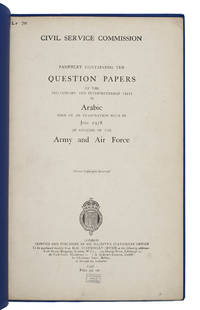
1938ABC_46033London: printed and published at Her Majesty's Stationary Office 1938. Original publisher's printed paper wrappers in later blue paper wrappers. Folio. Printed in English and Arabic. British government publication of an interpretership examination for Arabic translation. It provides the examination questions that officers in the Army and Air Force had to answer correctly to pass as an interpreter of Arabic. The work contains several questions that include translating Arabic texts printed in Arabic type.Library stamp on foot of front cover title-page and pp. 8 and 9: "Liverpool Public Libraries". In good condition.l Consolidated List of Government Publications 1936 p.147; WorldCat 1 copy: British Library. printed and published at Her Majesty's Stationary Office, unknown
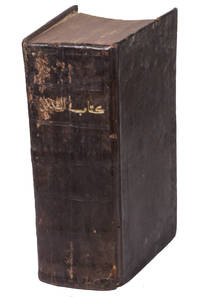
1855ABC_47909London: William Watts 1855. Original elaborately embossed brown calf with the title lettered in gold on the spine red edges. 8vo 22 x 14 cm. Rare edition of one of the best Arabic translations of the Bible. This work is based on the 1671 version from Rome which was the first printed edition of the complete Bible in Arabic. However the version from 1671 was not vocalised written with vowel points but the present edition from London is.The Arabic translation of the Bible from 1671 was done under the direction of Sergius Risi d. 1638 the archbischop of Damascus. It had been requested by the Archbischop of Aleppo and other important figures from the Eastern Church as manuscript copies had become rare and were often found to be incorrect. Risi and his team compared the Arabic manuscripts of the Bible they had access to with Hebrew and Latin versions and then composed their own translation. They first completed the Arabic Pentateuch. The Old and New Testament followed in 1647 and 1650 respectively after Risi's passing. These translations were revised and then finally published in 1671. It was the only Arabic translation of the complete Bible until 1811. Numerous new translations were made in 19th century. The present Catholic edition of the Arabic Bible translation existed alongside the 1860 Protestant translation by Cornelius van Alen van Dyck.According to the title-page this edition of the Old Testament was printed in 1855. However none of the relevant reference works mention an 1855 edition. Since the title-page of the New Testament bears the year 1857 it is possible that the Old Testament was also printed in that year and the date on the title-page is a printing mistake. The 1857 edition is also fairly rare on the market as we have only been able to find it in 1 sales record of the past 100 years.With the label of Watkins' bookbinding factory mounted on the front pastedown and a purple Spanish stamp from the library of someone with a law degree on the final leaf. The edges and corners of the boards are somewhat scuffed the binding is rubbed with some loss of material on the spine. The leaves are somewhat browned mild foxing throughout the back pastedown has a tear in the gutter. Otherwise in good condition.l BM General catalogue vol 2 p. 1276-198/199 other eds.; Darlow & Moule 1684; WorldCat 1402269394 1 copy 1857 ed.; cf. Green Journeymen middlemen: travel transculture and technology in the origins of Muslim printing. In: International journal of Middle East studies vol. 41 2 2009 pp. 203-224. William Watts, unknown
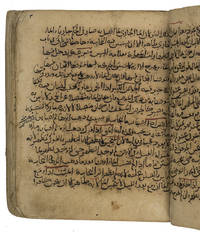
ABC_45853Levant 1290. Contemporary blind-tooled calf mostly covered with later calf leaving only the contemporary back cover exposed. 19th century European paper endpapers. With a loose leaf of 18th century European paper with Arabic manuscript writing on one side. Small 4to in 6s 17 x 14 cm. Arabic manuscript 15 to 17 lines to the page written in clear cursive ta'liq script on brown Middle Eastern paper. With occasional red rubrication. Lengthy and well preserved 13th century Arabic manuscript law book on the fatwa produced in the Levant by an anonymous author. A fatwa is legal advice given by a Muslim authority on request with the purpose of resolving a religious or legal problem that has arisen among members of Islam. The person who gives the legal information is familiar with Islamic jurisprudence fiqh and is referred to as a mufti; the one who asks for legal advice is called Mustafti. According to the famed 13th-century Islamic jurist Ibn al-Qaayyim al-Jawziya mufti were Gods agents". The present anonymous work seems to treat the jurisprudence of the fatwa itself rather than declaring fatwa on something. The title means "The book of kitab analisys or understanding al-waaqi of the fatwa fi'l-Fatawi". As described in the book itself this is the first volume of an unknown total.Fatwas were produced by jurists from the 10th century onward and in the 13th century when the present copy was made several important Islamic lawbooks were compiled in India at the Sultanate of Delhi.Provenance: 1963 Elghanyan to Hagop Kevorkian 1872-1962; sold at Sotheby's 18 April 1983 Kevorkian collection lot 25; private collector.Binding a bit short. Shelf marks on the front pastedown. Later annotations on the 19th century front endpapers. First leaf repaired. A few minor holes throughout paper browned 2 quires in the middle detached. Otherwise in remarkably good condition for its age.l Schoenberg Database: 29775. unknown
23541My translator says the year 1797 appears in the script. I am obliged to a multi-lingual friend for the information I give. Eight pages pages 7/8 blank not paginated12mo unbound stains on title and its verso not affecting text. See images. Titled "This is the creed of sheikh al-Dardiri". Al-Dardiri was born in 1715 AD in Asyoot in Egypt. He's one of the imams of the Sunni Islam of Maliki school of thought. This document was written by Mohamed Ahmed Ibin Alhaj Mohamed Ahmed Abu Qaseesah in 1797. It discusses the twenty attributes in Sunni Islam that are obligatory for God Almighty according to Al-Dardiri. [My translator says the year 1797 appears in the script.] unknown
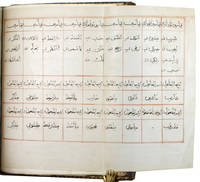
1830ABC_483971830. Contemporary navy blue morocco with the title lettered in gold on spine marbled endpapers. 4to 21.5 x 27 cm. With 2 folding tables 17 lines to the page written in red and black ink. A unique handwritten vocabulary and phrasebook of English and Arabic from the first half of the 19th century. This meticulously prepared manuscript is written in the fashion of a printed book opening with a title page and ending with an index of topics. It is divided into four main sections: nouns adjectives verbs and example sentences. The vocabulary especially in the nouns section is arranged by subjects which include such interesting headings as "Druggist" "Painter" "Merchant" "Cities" "the Bride's Paraphernalia" "Precious Jewels" "War" "The Church" "Clerical Vestments" "Ecclesiastical Degrees & Kinds of Sin" "Festivals" and "Monks their prayers and their dress". Presumably the dictionary was created to help a traveller or merchant who may have had an association with the Church. The final section offers an interesting selection of phrases and sheds some light on the experience of foreign language learning in the early 19th century. The phrases are a mixture of sentences that would be useful in daily life and such as would be included to practice the words from the vocabulary. Examples include: "We roasted a lamb and ate the whole of it and drank wine with it"; "I descended from above with the youth my enemy"; "I shot the bear in the water and he sank"; and "Why dost thou scratch thy head and spit in fire". As a cheat sheet for Arabic grammar the author includes two folding tables of Arabic verb tenses and conjugations. Overall a curious example of a 19th-century Arabic vocabulary and phrasebook.With a presentation note in English indicating it was a Christmas gift in 1881 presented by G. W. Bernard Esq. Binding and spine worn some browning and staining throughout. Otherwise in good condition. unknown
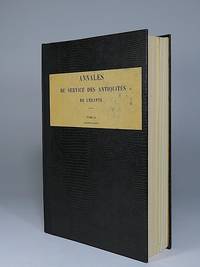
19489999_05036Le Caire Institut Français d'Archéologie Orientale 1948. 1st Edition . Hardcover. . ~ ~ NOTE: THE PRICE OF THIS BOOK IS CURRENTLY REDUCED! ~ ~ . Quarto. Pp. 276. With plates text figures illustrations Original wrappers. In fine condition. Excellent copy practically unused still entirely unopened. ~ FIRST EDITION. First part. For a complete table of contents and a list of contributors consult Wikipedia under series title. _O-7 <br/> <br/> Le Caire, Institut Français d'Archéologie Orientale hardcover
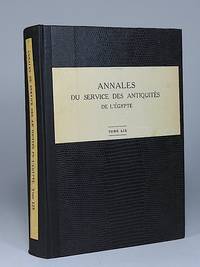
19509999_02754Le Caire Institut Français d'Archéologie Orientale 1950. 1st Edition . Hardcover. . ~ ~ NOTE: THE PRICE OF THIS BOOK IS CURRENTLY REDUCED! ~ ~ . Quarto. Pp. 606. With text figures illustrations plates some in colour and folding plans. HARDCOVER bound in neat cloth and matching pebbled boards lettering-pieces to cover and spine cut from original wrappers. In fine condition. Excellent copy practically unused. ~ FIRST EDITION. For a complete table of contents and a list of contributors consult Wikipedia under series title. _O-7 <br/> <br/> Le Caire, Institut Français d'Archéologie Orientale hardcover
19519999_02755Le Caire Institut Français d'Archéologie Orientale 1951. 1st Edition . Hardcover. . ~ ~ NOTE: THE PRICE OF THIS BOOK IS CURRENTLY REDUCED! ~ ~ . Quarto. Pp. 580. With text figures illustrations many plates and folding plans. HARDCOVER bound in neat cloth and matching pebbled boards lettering-pieces to cover and spine cut from original wrappers. In fine condition. Excellent copy practically unused. ~ FIRST EDITION. For a complete table of contents and a list of contributors consult Wikipedia under series title. _O-7 <br/> <br/> Le Caire, Institut Français d'Archéologie Orientale hardcover
19669999_02763Le Caire Organisme Général des Imprimeries Gouvernementales 1966. 1st Edition . Hardcover. . ~ ~ NOTE: THE PRICE OF THIS BOOK IS CURRENTLY REDUCED! ~ ~ . Crown quarto. Pp. 203. Plus very large number of plates. With text figures and illustrations. HARDCOVER bound in neat cloth and matching pebbled boards lettering-pieces to cover and spine cut from original wrappers. In fine condition. ~ FIRST EDITION. For a complete table of contents and a list of contributors consult Wikipedia under series title. Provenance: With the ink stamp of renowned Egyptologist Prof. Dr. Herman te Velde from whose library this book comes. _O-7 <br/> <br/> Le Caire, Organisme Général des Imprimeries Gouvernementales hardcover