3 889 résultats
Four quarto volumes bound as two books; pale yellow-green ornamental DJs and green boards; : ill., bibliographical references; 25 cm. Uncommon. Complete in two bound volumes. Arabic translation of the Persian (Farsi) original: Puyayi-i farhang va tamaddun-i Islam va Iran. || Contents: al-juz 1-2. Min al-zuhur il· al-izdihar -- al-juz 3. Min al-jumud il· al-nahdah -- al-juz 4. Min hujum al-isti`mar il· al-sahwah. || Islam -- Iran -- History. Islamic civilization. Geographic: Iran -- Civilization. Iran -- History -- 640- Islamic countries -- History. Islamic countries -- Civilization. || Ali Akbar Velayati (b.1945 in Shemiran) is an Iranian politician. Currently an advisor in International Affairs to the Supreme Leader, he was the Foreign Minister of Iran. -- Wikipedia
30885Paris, Calmann-Lévy, 1988. 14 x 20, 167 pp., broché,bon état.
- Guillaumin & Cie, Paris 1887, 14,5x23cm, broché. - Edition originale. Dos restauré, quelques petites rousseurs. Rare exemplaire bien complet de sa carte en couleurs in-fine. [ENGLISH DESCRIPTION ON DEMAND]
8870Paris, Albin Michel, 1943 14 x 21, 316 pp., illustrations N/B, broché, bon état
180923408Imprimerie Impériale | Paris 1809-1829 | 71 x 54 cm | une feuille
180926513Imprimerie Impériale | Paris 1809-1829 | 54 x 71 cm | une feuille
- Imprimerie Impériale, Paris 1809-1829, 71x54cm, une feuille. - Original, unshaved, full-page etching from the "Imperial edition" of the Description de l'Égypte, or 'Recueil des observations et recherches faites en Égypte pendant l'expédition française, publié par les ordres de Sa Majesté l'Empereur Napoléon le Grand [A Collection of the observations and research carried out in Egypt during the French expedition, published on the orders of his Majesty the Emperor Napoleon the Great]'. Produced between February 1802 and 1830 on the orders of Naopleon Bonaparte and published between 1809 and 1828, 1,000 copies were printed and distributed to institutions, on vergé paper with an 'Égypte ancienne et moderne' watermark, visible when held up to the light. Light marginal spotting not touching image, otherwise in very fresh, fine condition. An engraving from the Description de l'Egypte, one of the masterpieces of French printing and the birth of a new field: Egyptology. A gigantic survey of Egypt at the time of Bonaparte's conquests in 1798 and 1799, the work is divided into 13 volumes of engravings making up 892 plates, of which 72 colored, as well as presenting the splendors of the Egypt of the Pharaohs in 9 volumes. The other volumes discuss natural history and present a fascinating portrait of Coptic and Islamic Egypt as it was seen by Bonaparte's Eastern Armies. The 'Egyptian campaign', militarily a disaster, demonstrates, through the engravings of the Description d'Egypte, the scientific success it nonetheless became thanks to the 167 expert members of the Commission of the Sciences and Arts of the Institut d'Egypte [Egyptian Institute] who followed Napoleon's army. The Institut gathered together in Egypt the mathematician Monge, the chemist Berthollet, the naturalist Geoffroy Saint-Hilaire as well as numerous artists, engineers, architects and doctors. They were tasked with re-discovering modern and ancient Egypt and displaying its natural treasures as well as the know-how of its inhabitants. This edition, the so-called "Imperial" edition of the plates for the Description de l'Egypte was printed in four large formats, two of which were specially created for it and christened "Moyen-Egypte" and "Grand-Egypte". A special press was built to print it, the process extending over 20 years, from 1809 to 1829. The "Imperial" edition proved so popular that a second edition, this time in black and white and without the "Egypte ancienne et moderne" watermark - known as the "Royal Edition" - was published during the Restoration by the printing house of C.-L.-F. Panckoucke (Paris). The engravings of the Description d'Egypte owe a great deal to Baron Dominique-Vivant Denon, illustrator, diplomat, collector and later Director of the Musée Napoléon (the Louvre). His exploration of the South of Egypt gave Bonaparte the idea of sending the experts of the Institut there, thus creating a faithful and complete portrait of the area. This was the research gathered together from 1802 in the mammoth Description de L'Egypte. Denon embarked on this story of archeological exploration at the age of 51, reaching first Alexandria and then Cairo before exploring Upper Egypt. Along with the members of the Institut d'Egypte, the Natural History Museum's painter H.J. Redouté (brother of Pierre-Joseph Redouté, author of Roses), the mineralogist Dolomiue, and the draughtsman Joly, Denon then explored the Nile Delta and Lower Egypt. When, however, he joined the 21st Light Infantry Regiment as it marched across Upper Egypt in pursuit of the retreating Mameluks in November 1798, he found himself the only civilian. In the very midst of the battle itself, he reeled off sketches of the works of art that peppered his path right up to the threshold of the Sudan. He said that he had crossed "a country that is, apart from its name, entirely unknown to Europeans, and therefore everything was worth describing" (Voyages dans la Basse et la Haute Egypte pendant le
- Imprimerie Impériale, Paris 1809-1829, 54x71cm, une feuille. - Original, unshaved, full-page etching from the "Imperial edition" of the Description de l'Égypte, or 'Recueil des observations et recherches faites en Égypte pendant l'expédition française, publié par les ordres de Sa Majesté l'Empereur Napoléon le Grand [A Collection of the observations and research carried out in Egypt during the French expedition, published on the orders of his Majesty the Emperor Napoleon the Great]'. Produced between February 1802 and 1830 on the orders of Naopleon Bonaparte and published between 1809 and 1828, 1,000 copies were printed and distributed to institutions, on vergé paper with an 'Égypte ancienne et moderne' watermark, visible when held up to the light. Light marginal spotting not touching image, otherwise in very fresh, fine condition. An engraving from the Description de l'Egypte, one of the masterpieces of French printing and the birth of a new field: Egyptology. A gigantic survey of Egypt at the time of Bonaparte's conquests in 1798 and 1799, the work is divided into 13 volumes of engravings making up 892 plates, of which 72 colored, as well as presenting the splendors of the Egypt of the Pharaohs in 9 volumes. The other volumes discuss natural history and present a fascinating portrait of Coptic and Islamic Egypt as it was seen by Bonaparte's Eastern Armies. The 'Egyptian campaign', militarily a disaster, demonstrates, through the engravings of the Description d'Egypte, the scientific success it nonetheless became thanks to the 167 expert members of the Commission of the Sciences and Arts of the Institut d'Egypte [Egyptian Institute] who followed Napoleon's army. The Institut gathered together in Egypt the mathematician Monge, the chemist Berthollet, the naturalist Geoffroy Saint-Hilaire as well as numerous artists, engineers, architects and doctors. They were tasked with re-discovering modern and ancient Egypt and displaying its natural treasures as well as the know-how of its inhabitants. This edition, the so-called "Imperial" edition of the plates for the Description de l'Egypte was printed in four large formats, two of which were specially created for it and christened "Moyen-Egypte" and "Grand-Egypte". A special press was built to print it, the process extending over 20 years, from 1809 to 1829. The "Imperial" edition proved so popular that a second edition, this time in black and white and without the "Egypte ancienne et moderne" watermark - known as the "Royal Edition" - was published during the Restoration by the printing house of C.-L.-F. Panckoucke (Paris). The engravings of the Description d'Egypte owe a great deal to Baron Dominique-Vivant Denon, illustrator, diplomat, collector and later Director of the Musée Napoléon (the Louvre). His exploration of the South of Egypt gave Bonaparte the idea of sending the experts of the Institut there, thus creating a faithful and complete portrait of the area. This was the research gathered together from 1802 in the mammoth Description de L'Egypte. Denon embarked on this story of archeological exploration at the age of 51, reaching first Alexandria and then Cairo before exploring Upper Egypt. Along with the members of the Institut d'Egypte, the Natural History Museum's painter H.J. Redouté (brother of Pierre-Joseph Redouté, author of Roses), the mineralogist Dolomiue, and the draughtsman Joly, Denon then explored the Nile Delta and Lower Egypt. When, however, he joined the 21st Light Infantry Regiment as it marched across Upper Egypt in pursuit of the retreating Mameluks in November 1798, he found himself the only civilian. In the very midst of the battle itself, he reeled off sketches of the works of art that peppered his path right up to the threshold of the Sudan. He said that he had crossed "a country that is, apart from its name, entirely unknown to Europeans, and therefore everything was worth describing" (Voyages dans la Basse et la Haute Egypte pendant le
36023Editions Way Press, 1992. 13 x 21, 382 pp., 7 figures, broché, très bon état.
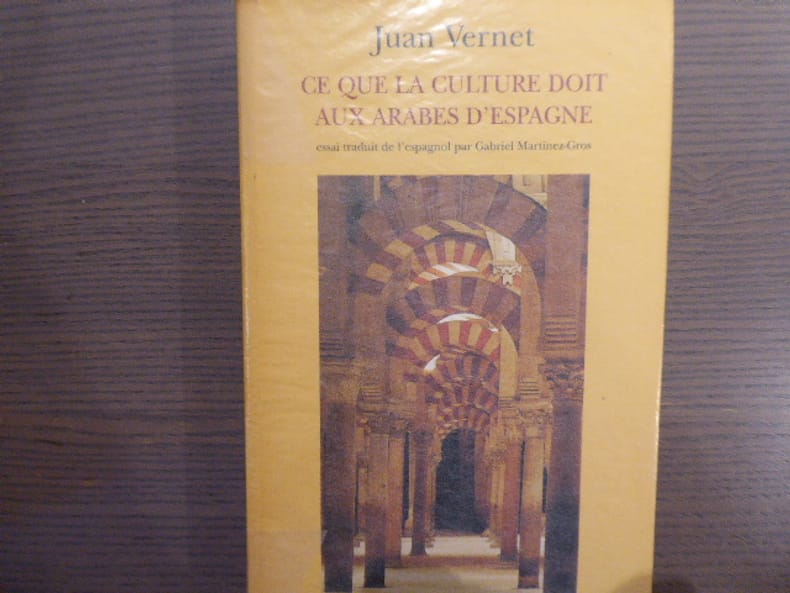
52135Paris Sindbad 1985 in 8 (22,5x14) 1 volume broché, couverture illustrée à rabats, 461 pages [1]. Traduit de I'espagnol par Gabriel Martinez Gros, La bibliothèque arabe, collection L'histoire décolonisée. Très bel exemplaire ( Photographies sur demande / We can send pictures of this book on simple request )
19196Actes Sud Paris 1985 In-8 ( 210 X 145 mn ) de 461 pages, broché sous couverture illustrée. Essai traduit de l'espagnol par Gabriel MARTINEZ-GROS. Très bel exemplaire.
84894Editions Hier et Demain, 1979. 24 x 28, 255 pp., très nombreuses illustrations en couleurs et en N/B, quelques cartes, reliure d'édition pleine toile + jaquette, bon état.
1912109587Madrid, Imprenta Artística de José Blass 1912 Livre en espagnol. In-4 relié pleine toile grise, pièce de titre rouge à caractères dorés 27 cm sur 19,5 . 104 pages - LVIII planches en couleurs et en blanc et noir et 50 illustrations dans le texte. Couvertures originales conservées. Tranches mouchetées. Dos légèrement insolé, infimes décolorations en quatrième de couverture. Etiquette ex-libris sur contreplat. Intérieur en très bon état. Très bon état d’occasion.
In-8, demi-percaline chagrinée, 28 p., petite auréole claire en marge de quelques feuillets. Édition originale de ce rapport prononcé en séance le 15 mai 1843, résultat d'une enquête réalisée par une commission de l'Assemblée. A l'occasion d'une demande de crédits exceptionnels, le député de la Côte d'Or fait un historique de la conquête de l'Algérie depuis 1830, présente les doctrines en présence et évalue les progrès de la colonisation sur le terrain. (Manque à Tailliart et à Gay).
2007500111936VASSEUR 2007 14 8x0 4x0 8cm. 2007. Broché.
Original Publishers Cloth. 8vo. 181 pages. Port. 23 cm. In German. Title translates to English as, "Festschrift for Leo Baeck on the 25th Anniversary of his work at the School of Jewish Studies." "Baeck (1873-1956) was a German rabbi, religious thinker and leader of Progressive Judaism." (EJ) CONTENTS: "Chazor in den Briefen von Tell el-Amarna," Eugen Täubler; "Zu Motivproblemen in der Bibel," Moses Sister; "Die Stilmittel im Deuteronomium," Gustav Ormann; "Der Minhag der Bibel im Spiegelbild des Talmuds," Alexander Guttmann; "Die Uberlieferung von Hillel," Ismar Elbogen; "Zur Analyse des Mischnatraktates Middot," Arthur Spanier; "Bibel und klassisches Altertum im englischen Hochmittelalter," Hans Liebeschütz; "Der Dekalog in Josef Albos dogmatischem System," Max Wiener; "Vom ontologischen Gottesbeweis," Hans Friedländer; "Schaffen und Schöpfung als rechtliche Kategorien," Friedrich Caro; "Zur Erklärung einiger jüdischer Namen," Jechiel Fischer; "Zur Herkunft des altsemitischen Alphabets," Ernst Grumach; "Zur Frage der Bildung des arabischen Elativs," Franz Rosenthal. SUBJECT(S): Judaism. Semitic philology. Baeck, Leo, 1873-1956. Includes bibliographical references. Very good condition. (FEST-1-23)
Original Publishers Cloth. 8vo. 181 pages. Port. 23 cm. In German. Title translates to English as, Festschrift for Leo Baeck on the 25th Anniversary of his work at the School of Jewish Studies. Baeck (18731956) was a German rabbi, religious thinker and leader of Progressive Judaism. (EJ) CONTENTS: Chazor in den Briefen von Tell el-Amarna, Eugen Täubler; Zu Motivproblemen in der Bibel, Moses Sister; Die Stilmittel im Deuteronomium, Gustav Ormann; Der Minhag der Bibel im Spiegelbild des Talmuds, Alexander Guttmann; Die Uberlieferung von Hillel, Ismar Elbogen; Zur Analyse des Mischnatraktates Middot, Arthur Spanier; Bibel und klassisches Altertum im englischen Hochmittelalter, Hans Liebeschütz; Der Dekalog in Josef Albos dogmatischem System, Max Wiener; Vom ontologischen Gottesbeweis, Hans Friedländer; Schaffen und Schöpfung als rechtliche Kategorien, Friedrich Caro; Zur Erklärung einiger jüdischer Namen, Jechiel Fischer; Zur Herkunft des altsemitischen Alphabets, Ernst Grumach; Zur Frage der Bildung des arabischen Elativs, Franz Rosenthal. SUBJECT(S) : Judaism. Semitic philology. Baeck, Leo, 1873-1956. Includes bibliographical references. Spine sunned and lightly worn. Very good condition. (FEST-1-23)
Original Publishers Cloth. 8vo. 181 pages. Port. 23 cm. In German. Title translates to English as, Festschrift for Leo Baeck on the 25th Anniversary of his work at the School of Jewish Studies. Baeck (18731956) was a German rabbi, religious thinker and leader of Progressive Judaism. (EJ) CONTENTS: Chazor in den Briefen von Tell el-Amarna, Eugen Täubler; Zu Motivproblemen in der Bibel, Moses Sister; Die Stilmittel im Deuteronomium, Gustav Ormann; Der Minhag der Bibel im Spiegelbild des Talmuds, Alexander Guttmann; Die Uberlieferung von Hillel, Ismar Elbogen; Zur Analyse des Mischnatraktates Middot, Arthur Spanier; Bibel und klassisches Altertum im englischen Hochmittelalter, Hans Liebeschütz; Der Dekalog in Josef Albos dogmatischem System, Max Wiener; Vom ontologischen Gottesbeweis, Hans Friedländer; Schaffen und Schöpfung als rechtliche Kategorien, Friedrich Caro; Zur Erklärung einiger jüdischer Namen, Jechiel Fischer; Zur Herkunft des altsemitischen Alphabets, Ernst Grumach; Zur Frage der Bildung des arabischen Elativs, Franz Rosenthal. SUBJECT(S) : Judaism. Semitic philology. Baeck, Leo, 1873-1956. Includes bibliographical references. Spine sunned and lightly worn. Very good condition. (FEST1-23)
87277Editions Autrement, 1988. 17 x 25, 228 pp., quelques illustrations, broché, très bon état.
Grand in-8, demi-basane chagrinée, couverture conservée, xvi p., (1) f. blanc, 424 p., 9 planches hors texte. Édition originale. Très bon exemplaire.
28383Grand in-8, demi-basane chagrinée, couverture conservée, xvi p., (1) f. blanc, 424 p., 9 planches hors texte. Bruxelles, Albert Dewit, 1915.
x + 323pp., editor's hardcover (green cloth with gilt lettering), dustwrapper, 25cm., in the series "Orientalia Lovaniensia Analecta" volume 117, fine condition (as new), X88935
viii + 303pp., signé avec dédicace autographe par l'auteur à mr. P. van den Ven, 26cm., brochure originale, dans la série "Studi e Testi" volume 192, bon état, C103509
1957C119274Citta del Vaticano, Biblioteca Apostolica Vaticana 1957 viii + 303pp., Edition originale de 1957, 26cm., brochure originale, pages toujours non coupées, texte et intérieur sont frais, dans la série "Studi e Testi" volume 192, bon état, C119274
Small octavo in drk blue cloth boads; vi, 280 p. ; 19 cm Arabic language -- Dialects -- Iraq.†An nice older edition.