199 résultats
1983BN100032Wiesbaden : Harrassowitz 1983. 1983. Ergebnisse der Ausgrabungen auf der Hirbet el-M¨a¨ Tel Masos 1972-1975 - 3 Bände komplett Volkmar Fritz und Aharon Kempinski / Abhandlungen des Deutschen Palästinavereins <br/><br/>Ergebnisse der Ausgrabungen auf der Hirbet el-M¨a¨ Tel Masos 1972-1975 - 3 Bände komplett Volkmar Fritz und Aharon Kempinski / Abhandlungen des Deutschen Palästinavereins Wiesbaden : Harrassowitz unknown
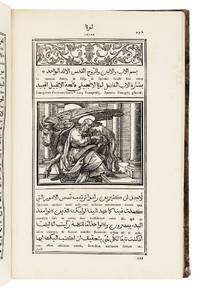
65425Romae Rome: In Typographia Medicea 1591. FIRST EDITION. Folio 32.25 x 21.25 cm. pp.9-4621 colophon. Full 18th-century marbled vellum spine with gilt rules gilt decoration and red morocco label. With 149 text woodcuts by Leonardo Parassole c.1570-c.1630 after Antonio Tempesta 1555-1630 their monograms appearing on a number of the illustrations. The woodcuts are remarkable examples of Tempesta's work notable for their clarity of composition and their didactic narrative of the episodes depicted. Old bibliographical remark in Latin to verso of final leaf. From a German private collection. Some partial browning due to paper stock and occasional light foxing generally a very handsome copy. First edition of the Gospels in Arabic and Latin - a landmark cultural encounter. In 1584 the last year of the papacy of Gregory XIII who had constantly endeavoured to effect a union between the Church of Rome and the eastern Christians Cardinal Ferdinando de' Medici the brother and later the successor of the Grand Duke of Tuscany founded a printing press in Rome with a vast selection of oriental types cut by the French typographer Robert Granjon. Run by a versatile orientalist Giovan Battista Raimondi the press had various aims. One was to produce propaganda which would attract the eastern Christians to Roman Catholicism. Another was to corner the publishing market in an area where typography was prohibited and to make a financial profit from the sale in the east of books printed in Arabic. The third aim was to further European knowledge and to provide good editions of Arabic versions of certain standard non-religious texts. These included the writings of Avicenna al-Idrisi's geographical compendium al-Tusi's adaptation of Euclid's text on geometry and various works on Arabic grammar and syntax. The first major publication was the 1591 edition of the Gospels. This copy has an interlinear Latin translation but the work was also issued solely in Arabic. It contains 149 fine woodcut illustrations made by Leonardo Parasole mainly after designs by one of the best known Florentine artists of his day Antonio Tempesta who owed much of his fame to the frescoes he painted in the Vatican and in a number of Roman palaces. The woodcut in the Gospel of St Mark of the presentation of the head of John the Baptist to Salome Mark 6:28 by a man in Turkish dress reminds us of the common association between the great enemy of Christendom in the sixteenth century and the ancient heathens. The Arabic text is printed in Robert Granjon's famous large fount generally considered the first satisfactory Arabic printing type; as all early printed editions of the Arabic Gospels it is based on the Alexandrian Vulgate cf. Darlow/M. 1636. The Latin version is by Leonardo Sionita. The work begins with page 9 without a title-page or any preliminary matter at all: "the intended prefatory matter was apparently never published" Darlow/M.; these first eight pages were not supplied until the 1619 re-issue. Brunet 1122-1123 Romae [Rome]: In Typographia Medicea, 1591. hardcover
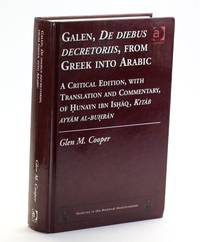
2011508901Ashgate 2011. Hardcover. FINE. 615pp. Perfectbound in printed hard covers sans DJ as issued. FINE copy entirely clean and sharp. 'This volume presents the first edition of the Arabic translation by Hunayn ibn Ishaq of Galen's Critical Days De diebus decretoriis together with the first translation of the text into a modern language. The substantial introduction contextualizes the treatise within the Greek and Arabic traditions. Galen's Critical Days was a founding text of astrological medicine. In febrile illnesses the critical days are the days on which an especially severe pattern of symptoms a crisis was likely to occur. The crisis was thought to expel the disease-producing substances from the body. If its precise timing were known the physician could prepare the patient so that the crisis would be most beneficial. After identifying the critical days based on empirical data and showing how to use them in therapy Galen explains the critical days via the moon's influence. In the historical introduction Glen Cooper discusses the translation of the Critical Days in Arabic and adumbrates its possible significance in the intellectual debates and political rivalries among the 9th-century Baghdad elite. It is argued that Galen originally composed the Critical Days both to confound the Skeptics of his own day and to refute a purely mathematical rationalist approach to science. These features made the text useful in the rivalries between Baghdad scholars. Al-Kindi d.c. 866 famously propounded a mathematical approach to science akin to the latter. The scholar-bureaucrat responsible for funding this translation Muhammad ibn Musa d. 873 al-Kindi's nemesis may have found the treatise useful in refuting that approach. The commentary and notes to the facing page translation address issues of translation as well as important concepts.'. Ashgate hardcover
a939231950-1956. 1 a story book 14p . with illustration about a donkey a cat and a dog. 2 Bible stories with 15 bright fullcolor illustrations. 12p. 3 A primer and workbook on making Arabic letters 22p. 4 workbook on how to write words in Arabic 24p. All 4 booklets are octavo wraps. No owner marks. VG to VG plus. Group of 4: . paperback
20041423Ghent: Snoeck Publishers 2004. 2004 4to. 207 pp. 1. Glossy pictorial wraps. Light rubbing. Near Fine. Soft cover. Near Fine. Ghent: Snoeck Publishers, 2004. paperback
0259762717.Gpaperback. Good. Access codes and supplements are not guaranteed with used items. May be an ex-library book. paperback
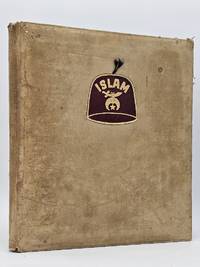
1916357049San Francisco.: Noble A.F. Broad. Ciurca 1916. Full ivory padded leather maroon and gilt Shriners fez Islam device on cover. Good plus covers lightly soiled spine ends and corners worn two pages have short tears with no loss. 31x27x2 cm. Scarce. Many prominent citizens of San Francisco were members of this local chapter of the Shriners. The temple still stands and is is a designated City Landmark. weight: 3.1 lb. Color frontis of the Islam Temple numerous black and white illustrations portraits of officers and members throughout. Noble A.F. Broad. hardcover
0266055850.Gpaperback. Good. Access codes and supplements are not guaranteed with used items. May be an ex-library book. paperback
0282222073.Gpaperback. Good. Access codes and supplements are not guaranteed with used items. May be an ex-library book. paperback
35854921like new. unknown
B9781312301276Hardback. New. hardcover
0359651569.Gpaperback. Good. Access codes and supplements are not guaranteed with used items. May be an ex-library book. paperback
191682679Honolulu HI: Aloha Temple AAONMS 1916. Presumed First Edition First printing. Single sheet printed on one side. Good. Format is approximately 6.25 inches by 7 inches printed on one side folded in half. Rare surviving copy. There is the Shriners symbol/logo at the top. The text reads: Aloha Temple A. A. On N.M.S. Oasis of Honolulu requests the pleasure of your company at a Reception and Dance in honour of Imperial Potentate J. Putnam Stevens and Party on Monday April the third nineteen hundred and sixteen Moana Hotel eighth thirty P.M. On July 15 1915 Dr. Frederick R. Smith of Rochester N. Y. imperial potentate of the Ancient Arabic Order of the Nobles of the Mystic Shrine who has ruled for the preceding year laid down the scepter of authority to J. Putnam Stevens of Portland Me. who had served as deputy imperial potentate. The J. Putnam Stevens Award is presented by the National Association of Insurance and Financial Advisers Maine. This award given annually goes to that person who in the opinion of the selection committee has rendered outstanding service to the industry and community in the state of Maine. It is not intended to restrict the award only to agents but rather to recognize those people even outside the industry who have advanced the cause of the life insurance business. J. Putnam Stevens was born in Winthrop Maine on Nov. 24 1852. He was one of the pioneers in the life insurance industry. Not only did he exemplify all that is good in life insurance he also demonstrated how worthwhile a good life insurance agent can be to the community. The state can be proud of this great humanitarian and anyone receiving the J. Putnam Stevens' Award gains with it a rich heritage. Shriners International also commonly known as The Shriners or formerly known as the Ancient Arabic Order of the Nobles of the Mystic Shrine AAONMS is a Masonic society established in 1870 and is headquartered in Tampa Florida. Shriners International describes itself as a fraternity based on fun fellowship and the Masonic principles of brotherly love relief and truth. There are approximately 350000 members from 196 temples chapters in the US Canada Brazil Bolivia Mexico Panama the Philippines Europe and Australia. The organization is best known for the Shriners Hospitals for Children that it administers and the red fezzes that members wear. The organization was previously known as "Shriners North America". The idea of a new fraternity for Masons stressing fun and fellowship was discussed. Walter M. Fleming and William J. Florence took the idea seriously enough to act upon it. Florence a world-renowned actor while on tour in Marseille was invited to a party given by an Arab diplomat. The entertainment was something in the nature of an elaborately staged musical comedy. At its conclusion the guests became members of a secret society. Florence took copious notes and drawings at his initial viewing and on two other occasions once in Algiers and once in Cairo. When he returned to New York in 1870 he showed his material to Fleming. Fleming created the ritual emblem and costumes. Florence and Fleming were initiated August 13 1870 and they initiated 11 other men on June 16 1871 In an effort to encourage membership at the June 6 1876 meeting of Mecca Temple the Imperial Grand Council of the Ancient Order of the Nobles of the Mystic Shrine for North America was created. Fleming was elected the first Imperial Potentate. After some other reworking by 1878 there were 425 members in 13 temples in eight states and by 1888 there were 7210 members in 48 temples in the United States and Canada. By the Imperial Session held in Washington D.C. in 1900 there were 55000 members and 82 Temples. Aloha Temple, AAONMS unknown
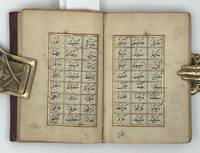
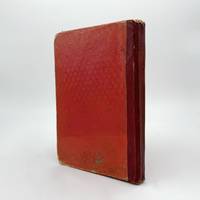
1730369933Ottoman Empire 1730. Polychrome double page ornamental opening text in black ink in a rounded naskh hand 8 lines per page fully vocalized with gold dot aya markers all within gilt rule borders. Attributes within gilt frames 30 per page. Occasional annotations in red. 117 ff. Dated at end A.H. 1143. 1 vols. 12mo. Late nineteenth century Islamic binding of red leather plaque stamped in silver with fore edge guard. Some minor smudging of passages a few paper flaws. Twentieth-century ownership inscriptions on first blank. Very good plus overall. Polychrome double page ornamental opening text in black ink in a rounded naskh hand 8 lines per page fully vocalized with gold dot aya markers all within gilt rule borders. Attributes within gilt frames 30 per page. Occasional annotations in red. 117 ff. Dated at end A.H. 1143. 1 vols. 12mo. Attractive pocket devotional with short surahs tables of the Attributes of Allah and other prayers. unknown
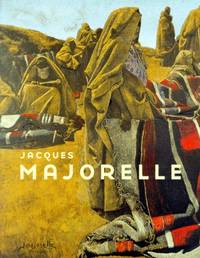
1999PMV608602QParis Nancy: Réunion des musées nationaux / Ville de Nancy 1999. Trade paperback. Good/Not issued. 225 x 280 x 18 cm. Paperback • Illustrations en noir et en couleurs couverture illustrée en couleurs • <b><i>French text original</i></b>. Réunion des musées nationaux / Ville de Nancy paperback
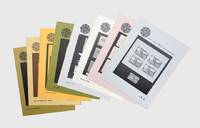
182523Sidney Ohio: Chaplin Editorial Services; R. Howard Courtney Peoria Illinois 1972-82. The birth of Arab philately First editions a complete run. Chaplin was the first to devote a journal to the stamps of the entire Arab world stretching from Libya to the peninsula and as far north as Syria. We have traced one set of Chaplin's journals at the National Postal Museum and none of Courtney's. Mervin Chaplin's Journal of Arabian Philately was published at a time when Arabian stamps were unpopular amongst Western collectors a viewpoint that Chaplin aimed to counteract. His journal covered topics such as mosques featured on stamps and those issued in the Hejaz and Nejd. It also included a list of new issues in the first half of 1972. The journal only lasted for two volumes both released in 1972. Six years later stamp collector Robert Courtney decided to continue Chaplin's work with the Arab World Philatelist. He copied the design and layout of the Journal of Arabian Philately and produced six volumes. Courtney also included a list of recent auction results in every volume. 8 vols octavo. Many half-tone photographic illustrations and maps; advertisements throughout. Original mixed wrappers lettered and decorated in black to recto and verso stapled as issued. Housed in a grey archival box. Some ink tick marks to the Journal of Arabian Philately. Wrappers a touch toned at extremities as expected occasional foxing and offsetting internally: a very good collection. Robert Courtney "The Arab World Philatelist 1978-1982". unknown
365678Ottoman lands undated early 18th c. C.E. Ink on on aharli paper. Text in black and red ink 23 lines per page. 158 ff. 1 vols. 6 x 8 inches. Later red leather spine cloth boards. Old paper repairs throughout pencil page numbers in a European hand. Two ownership inscriptions dated A.H. 1128-1152 1716-1739 C.E. Very good. Ink on on aharli paper. Text in black and red ink 23 lines per page. 158 ff. 1 vols. 6 x 8 inches. An important compendium of Islamic jurisprudence in the Hanafi school by Ê»Abd AllÄh ibn Aḥmad NasafÄ« d. A.H. 710 / 1310 C.E. <br /> It systematically presents authoritative Hanafi rulings without extended argumentation. The introduction highlights its purpose as a concise yet comprehensive reference. A foundational Hanafi legal text Kanz al-Daqâ'iq is an abridgment of the author's al-Wâfî widely studied in Ottoman madrasas. unknown
1925000514Damascus: al- Matba'a al- Haditha 1925 Book. As New. Hardcover. 4to - over 9¾ - 12" tall. A comprehensive work by a well-known scholar and politician from Damasscus about the city including the political social and the other aspects during the Ottoman synasty in the last period. Six volumes 4to. in Arabic printed between 1343 and 1347 AH. 1925 and 1927 AD. in Damascus. 309 317 271 310 308 425 p. in later fine bindings. al- Matba'a al- Haditha hardcover
193132764London: M. L. Cailingold 1931. New Revised edition. Hardcover. g. Octavo. 6 293 1pp. Original black cloth with lettering on spine and front cover. Vignette on title page. A classic of Medieval Jewish philosophy set in a legendary but historical central Asian kingdom. Framed as a dialog between the king of the Khazars a Central Asian kingdom and a Rabbi the Khazari is an exposition of late medieval Jewish philosophy. Moderate shelf wear. Lettering faded on spine. Very first and very last pages foxed. Binding in overall good interior in good condition. M. L. Cailingold hardcover
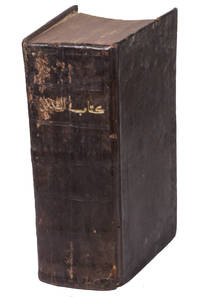
1855ABC_47909London: William Watts 1855. Original elaborately embossed brown calf with the title lettered in gold on the spine red edges. 8vo 22 x 14 cm. Rare edition of one of the best Arabic translations of the Bible. This work is based on the 1671 version from Rome which was the first printed edition of the complete Bible in Arabic. However the version from 1671 was not vocalised written with vowel points but the present edition from London is.The Arabic translation of the Bible from 1671 was done under the direction of Sergius Risi d. 1638 the archbischop of Damascus. It had been requested by the Archbischop of Aleppo and other important figures from the Eastern Church as manuscript copies had become rare and were often found to be incorrect. Risi and his team compared the Arabic manuscripts of the Bible they had access to with Hebrew and Latin versions and then composed their own translation. They first completed the Arabic Pentateuch. The Old and New Testament followed in 1647 and 1650 respectively after Risi's passing. These translations were revised and then finally published in 1671. It was the only Arabic translation of the complete Bible until 1811. Numerous new translations were made in 19th century. The present Catholic edition of the Arabic Bible translation existed alongside the 1860 Protestant translation by Cornelius van Alen van Dyck.According to the title-page this edition of the Old Testament was printed in 1855. However none of the relevant reference works mention an 1855 edition. Since the title-page of the New Testament bears the year 1857 it is possible that the Old Testament was also printed in that year and the date on the title-page is a printing mistake. The 1857 edition is also fairly rare on the market as we have only been able to find it in 1 sales record of the past 100 years.With the label of Watkins' bookbinding factory mounted on the front pastedown and a purple Spanish stamp from the library of someone with a law degree on the final leaf. The edges and corners of the boards are somewhat scuffed the binding is rubbed with some loss of material on the spine. The leaves are somewhat browned mild foxing throughout the back pastedown has a tear in the gutter. Otherwise in good condition.l BM General catalogue vol 2 p. 1276-198/199 other eds.; Darlow & Moule 1684; WorldCat 1402269394 1 copy 1857 ed.; cf. Green Journeymen middlemen: travel transculture and technology in the origins of Muslim printing. In: International journal of Middle East studies vol. 41 2 2009 pp. 203-224. William Watts, unknown
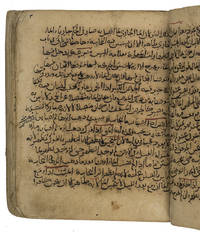
ABC_45853Levant 1290. Contemporary blind-tooled calf mostly covered with later calf leaving only the contemporary back cover exposed. 19th century European paper endpapers. With a loose leaf of 18th century European paper with Arabic manuscript writing on one side. Small 4to in 6s 17 x 14 cm. Arabic manuscript 15 to 17 lines to the page written in clear cursive ta'liq script on brown Middle Eastern paper. With occasional red rubrication. Lengthy and well preserved 13th century Arabic manuscript law book on the fatwa produced in the Levant by an anonymous author. A fatwa is legal advice given by a Muslim authority on request with the purpose of resolving a religious or legal problem that has arisen among members of Islam. The person who gives the legal information is familiar with Islamic jurisprudence fiqh and is referred to as a mufti; the one who asks for legal advice is called Mustafti. According to the famed 13th-century Islamic jurist Ibn al-Qaayyim al-Jawziya mufti were Gods agents". The present anonymous work seems to treat the jurisprudence of the fatwa itself rather than declaring fatwa on something. The title means "The book of kitab analisys or understanding al-waaqi of the fatwa fi'l-Fatawi". As described in the book itself this is the first volume of an unknown total.Fatwas were produced by jurists from the 10th century onward and in the 13th century when the present copy was made several important Islamic lawbooks were compiled in India at the Sultanate of Delhi.Provenance: 1963 Elghanyan to Hagop Kevorkian 1872-1962; sold at Sotheby's 18 April 1983 Kevorkian collection lot 25; private collector.Binding a bit short. Shelf marks on the front pastedown. Later annotations on the 19th century front endpapers. First leaf repaired. A few minor holes throughout paper browned 2 quires in the middle detached. Otherwise in remarkably good condition for its age.l Schoenberg Database: 29775. unknown
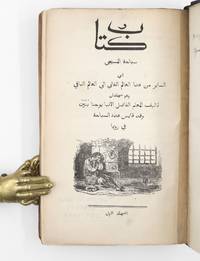
1834372732Malta: press of the Anglican Church Missionary Society 1834. First edition in Arabic. Title vignette of Bunyan in prison 7 plates captioned in Arabic. 6 281 1 imprint 2 blank pp. 1 vols. 8vo in 6s. Original silky cloth over boards twentieth-century binder's cloth spine. Joints crudely rehinged title leaf reinforced at gutter; binding cracked and a few leaves loosened. Contemporary presentation inscription on pastedown. Very good internally fine. First edition in Arabic. Title vignette of Bunyan in prison 7 plates captioned in Arabic. 6 281 1 imprint 2 blank pp. 1 vols. 8vo in 6s. Bunyan's Pilgrim's Progress translated into Arabic with a life of the author by Christoph Friedrich Schlienz. From the title page this is nominally the first volume but press marks are continuous and the text is complete: the end part twentieth sees the Pilgrim reach the Celestial City. Printed at Malta by the Anglican missionaries.<br /> <br /> William R. Whittingham 1805-1879 graduated the General Theological Seminary in 1825 and was named librarian of the newly founded school. He later accepted a position on the faculty in 1836. Whittingham was consecrated the fourth Bishop of Maryland in 1840 and served in that capacity until his death. <br /> <br /> This copy with his contemporary gift inscription to the GTS library "From the Rev. W.R. Whittingham 1834"<br /> <br /> RARE FIRST EDIITION IN ARABIC of a classic of English literature and of Christian devotion. Roper Arabic printing in Malta 1825-1845 56. OCLC: 57188645 Columbia Glasgow Tübingen 643954559 Manchester. Provenance: William R. Whittingham gif tinscription 1834; General Theological Seminary bookplates and inkstamps press of the Anglican Church Missionary Society unknown
14676Late 19th or early 20th century Koummya Arabic dagger with cast brass scabbard. The scabbard has silver engraved motifs and metal accents. The dagger measures 18" along the curve and has a hand carved wood handle with brass encasement rounding the hilt. The blade is curved sharp and slides securely into the sheath. It shows use but no damage. In good condition. unknown
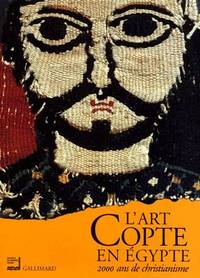
2000PMV403103EParis: Institut du monde arabe ; Gallimard 2000. Hardcover. Good/Good. 238 x 320 x 27 cm. Hardcover • Illustrations en noir et en couleurs jaquette illustrée en couleurs • <b><i>French text original</i></b>. Institut du monde arabe ; Gallimard hardcover
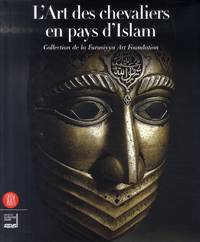
2007PMV417703EMilan: Skira 2007. Hardcover. Good/Good. 258 x 307 x 39 cm. Hardcover • Illustrations en couleurs • <b><i>French text original</i></b>. Skira hardcover