COLLECTIFLivre Rare Book
8 résultats
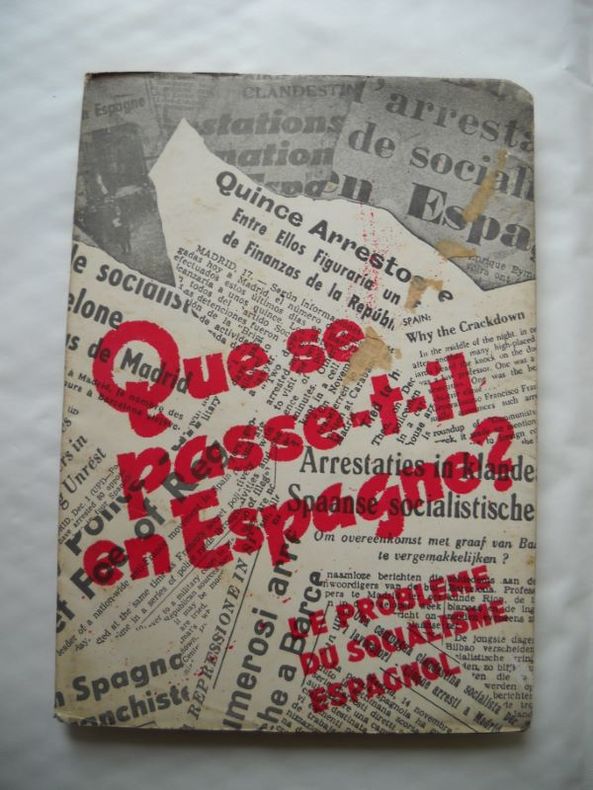
1552185751552 Broché avec jaquette - 15,5 x 22 - 130 pp - année 1959 - Imprime en Espagne Madrid - illustrations
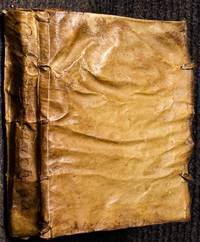
159540142En Granada Por Sebastian De Mena A Costa De Ioan Diaz . Good with no dust jacket. 1595. First Edition. Velllum. 10 267 blank leaves pages; Compendio de Doctrina Christiana with: Siguense Treze Sermones de las Principales.Together 2 parts in 1 volume. Small 4to limp vellum; covers creased and worn 8 tightly written pages of contemporary manuscript notes on endpapers generally sound although bulked internally. Louis of Granada was a Dominican friar who was noted as theologian writer and preacher. The cause for his canonization has been long accepted by the Holy See with his current status being Venerable. Apparently the first edition. Elaborated initials. Ties worn to nubs. Wrinkling thoughout. Only a single copy located in Biblikoteca Nacional de Espana in Madriod Spain. . En Granada Por Sebastian De Mena A Costa De Ioan Diaz ... unknown
150136083Madrid Barcelona & elsewhere: Various publishers 18281927. Mostly small 8vo. Bound in 43 volumes. <br><br>This considerable gathering of Spanish 19th- and early 20thcentury plays includes in 43 sammelbande plays by Hartzenbusch Rodriguez Rubi Breton de los Herreros Lopez de Ayala Garcia Gutierrez Echegaray Zorrilla Eguilaz Gil de Zarate and many others. => One play was expressly written for the actress María Ana de Jesús Guerrero Torija. => Three of the plays are presentation copies from the playwrights.<br>Â Â Â Â Evidence of Readership: Six plays are marked up either as prompt or acting copies or by very interested readers.<br>Â Â Â Â => A list of the collection is available. All volumes are in good condition except one which has waterstaining throughout. Texts sometimes have foxing or stains. Ten plays lack title-leaves. Such condition problems have been taken into account in establishing the price. Various publishers unknown books
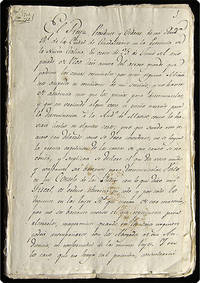
150734851Barcelona Madrid Valldolid Spain Aranjuez Mexico City & elsewhere 170179. Small 4to folio & larger. Approximately 135 ff. <br><br>Explaining why manuscript cedularios were made in the era of the printing press is called for here and the answer is simple: The number of copies that were printed of any given royal cédula tended to be smaller than the number of lawyers clerks judges and other legal sorts who needed a copy. And within months of the issuance of the decree no printed copies were available for love or money. Owning the various editions of the Recopilación de leyes de Indias was insufficient for most cédulas related to => specific issues peculiar to one person place institution or event and such specificity is not included in the recopilaciones though the royal decrees provided good useful precedents to cite.<br>Â Â Â Â QED: Every colonial-era lawyer had to resort to maintaining his own cedulario.<br>Â Â Â Â This cedulario was assembled in Mexico during the 18th century probably around 1778 or 1780 for the use of a lawyer before the audiencia or perhaps for an audiencia judge or a judge's staff member. The decrees relate to a wide variety of topics: criminal cases the army and navy confiscation of property the use of stamped paper the royal treasury royal officials in Nicaragua cabildos proselytization of Indians commodities dress codes bigamy and other social matters in the regions of Mexico New Galicia and Guatemala. Of the 43 items 22 are printed decrees all but one printed in Spain and the remaining 21 are manuscript. Fifteen bear => true rather than stamped royal signatures: six are signed by Felipe V and nine are by Ferdinand VI. Of the 28 documents not signed by a king 17 are printed and 11 are manuscript. The documents are sewn and were once bound; binding removed some time ago. 18th-century numbering of documents shows that 10 documents were removed som time before the collection came into our hands. There are some stains a few holes at folds a few edges a little tattered nothing worse. => A sound and interesting collection. unknown books
155067900En Leon i.e. Strassburg: en Casa de Sebastian Grypho i.e. Augustin Fries 1550. BIBLE IN SPANISH; ENZINAS Francisco de. First Edition in Spanish of Ecclesiasticus<br> <br> BIBLE IN SPANISH. ENZINAS Francisco de translator. Ecclesiastics. Libro de Jesus Hiio de Syrach qu'es llamado el Ecclesiastico. traduzido de Griego en lengua Castellana En Leon i.e. Strassburg: en Casa de Sebastian Grypho i.e. Augustin Fries 1550.<br> <br> First edition in Spanish of Ecclesiasticus. Small octavo 6 x 3 5/8 inches; 151 x 91 mm. 3 109 leaves. With numerous woodcut initials. With an imitation Gryphius woodcut device printed in reverse on title. We could only locate 3 copies at libraries Cambridge Madrid and Copenhagen. No other copy besides this present copy has been at auction in the past 50 years.<br> <br> Early 19th-century mottled sheep. Boards tooled in gilt. Spine stamped in gilt. With red morocco spine label lettered in gilt. Board edges tooled in gilt. Marbled endpapers. Some minor dampstaining mainly to lower blank margin of preliminaries. Signature G is toned. Leaves O3 and O4 with marginal paper repair not affecting text. Final leaf is toned and has a near invisible paper repair not affecting text. Overall a very good copy.<br> <br> "A native of Burgos educated at Louvain and Wittenberg Francisco de Enzinas 1518-52 was a humanist scholar and Protestant convert who produced the first Spanish version of the New Testament printed in 1543 in Antwerp. He formed a partnership with the Strassburg printer Augustin Fries to publish Spanish translations of Greek classics and the remainder of the Bible of which he was only able to complete Psalms Ecclesiasticus Job and Proverbs before his death. Baudrier VIII 241 not having seen or located a copy citing Brunet supplement II 712"<br> <br> "Even before the complete edition of Castellio's Latin Bible appeared Enzinas who had already produced a Spanish Bible New Testament in Antewerp in 1543 had translated the Psalter the Wisdom of Solomon Jesus Sirach present copy and the book of Job into Spanish. All of these appeared with the false address 'En Leon en casa de Sebastian Grypho' though they were in fact his translations from manuscript versions of Castellio's edition. Enzinas continued to work on his translations until his death on 30 December 1552. He had planned to have his Spanish Bible printed in Geneva but this fortunately for Calvin never came to pass." Gilly Spanien und der Basler Buchdruck pp. 342-9 510-11. Found in Sebastian Castellio 1515-1563: Humanist and Defender of Religious .By Hans R. Guggisberg Bruce Gordon.<br> <br> "FRIES Augustine: printer in Zurich and Strasburg began to print at the former place about 1540. In 1547 he printed two books in English by John Hooper Heitz p. 39. Soon after this he moved to Strasburg and there printed among other things several works in Spanish by Franzisco de Enzinas in 1550 and 1551 Wiffen I pp 179 etc." A Century of the English Book Trade: Short Notices of All Printers. By Edward Gordon Duff.<br> <br> HBS 67900.<br> <br> $8500. en Casa de Sebastian Grypho [i.e. Augustin Fries] unknown
155067900First Edition in Spanish of Ecclesiasticus BIBLE IN SPANISH. ENZINAS Francisco de translator. Ecclesiastics. Libro de Jesus Hiio de Syrach qu'es llamado el Ecclesiastico. traduzido de Griego en lengua Castellana En Leon i.e. Strassburg: en Casa de Sebastian Grypho i.e. Augustin Fries 1550. First edition in Spanish of Ecclesiasticus. Small octavo 6 x 3 5/8 inches; 151 x 91 mm. 3 109 leaves. With numerous woodcut initials. With an imitation Gryphius woodcut device printed in reverse on title. We could only locate 3 copies at libraries Cambridge Madrid and Copenhagen. No other copy besides this present copy has been at auction in the past 50 years. Early 19th-century mottled sheep. Boards tooled in gilt. Spine stamped in gilt. With red morocco spine label lettered in gilt. Board edges tooled in gilt. Marbled endpapers. Some minor dampstaining mainly to lower blank margin of preliminaries. Signature G is toned. Leaves O3 and O4 with marginal paper repair not affecting text. Final leaf is toned and has a near invisible paper repair not affecting text. Overall a very good copy. "A native of Burgos educated at Louvain and Wittenberg Francisco de Enzinas 1518-52 was a humanist scholar and Protestant convert who produced the first Spanish version of the New Testament printed in 1543 in Antwerp. He formed a partnership with the Strassburg printer Augustin Fries to publish Spanish translations of Greek classics and the remainder of the Bible of which he was only able to complete Psalms Ecclesiasticus Job and Proverbs before his death. Baudrier VIII 241 not having seen or located a copy citing Brunet supplement II 712" "Even before the complete edition of Castellio's Latin Bible appeared Enzinas who had already produced a Spanish Bible New Testament in Antewerp in 1543 had translated the Psalter the Wisdom of Solomon Jesus Sirach present copy and the book of Job into Spanish. All of these appeared with the false address 'En Leon en casa de Sebastian Grypho' though they were in fact his translations from manuscript versions of Castellio's edition. Enzinas continued to work on his translations until his death on 30 December 1552. He had planned to have his Spanish Bible printed in Geneva but this fortunately for Calvin never came to pass." Gilly Spanien und der Basler Buchdruck pp. 342-9 510-11. Found in Sebastian Castellio 1515-1563: Humanist and Defender of Religious .By Hans R. Guggisberg Bruce Gordon. "FRIES Augustine: printer in Zurich and Strasburg began to print at the former place about 1540. In 1547 he printed two books in English by John Hooper Heitz p. 39. Soon after this he moved to Strasburg and there printed among other things several works in Spanish by Franzisco de Enzinas in 1550 and 1551 Wiffen I pp 179 etc." A Century of the English Book Trade: Short Notices of All Printers. By Edward Gordon Duff. HBS 67900. $8500 en Casa de Sebastian Grypho [i.e. Augustin Fries] hardcover books
15400031701540 Portefeuille grand in-quarto (230 X 337 mm) vélin ivoire recouvert de satin bleu (en partie décousu avec petits manques en marge) et bordé d’un fin galon doré, cordons de fermeture brodés de fils couleurs et or (en partie manquants) ; 28 feuillets (dont deux réglés sans inscription et deux autres vierges) sur peau de vélin reliés au portefeuille par un cordon de soie à brins jaune, vert et rouge (Reliure de l'époque).
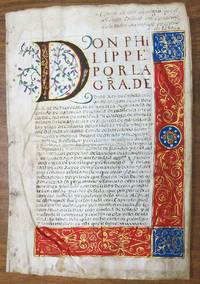
1572RF 1076<p><strong>Royal Provision of Phillip II Confirming and Ratifying the Privileges Granted by the Masters of the Order of Santiago to the Village of Corral de Almaguer Toledo 1572</strong></p><p>Manuscript. Small folio. 12 1/4 x 8 1/4". 8 double-sided vellum manuscript leaves originally bound together now unbound hand painted and decorated in blue red and gilt at various points throughout the text. The first page is hand-painted and decorated along the edge and includes a large decorative initial in multiple colors. Manuscript text in gothic style. Signed "Yo el Rey" on the back of the final leaf by King Phillip II of Spain in 1572.</p><p>ATTRACTIVELY ILLUMINATED EARLY MANUSCRIPT. JUDAICA INTEREST. Our manuscript contains the 4 confirmed provisions originally drafted by Infante Henry Duke of Aragon 1421 and 1440 Alonso de Cárdenas here listed as "Alfoso" sic in 1480 and then "The Catholic Kings" in 1494 all of whom at various times served as "Grand Masters of the Order of Santiago". The provisions were instigated against the Jewish communities of the villages of Corral de Almaguer and Ocana in Toledo province. Residents of the towns affiliated with the Order of Santiago repeately complained throughout the 15th and 16th centuries to the the authorities of that order of that the Jews and later conversos had bought land from Christians and had not paid any taxes on their purchases. Ultimately the Jews of Corral de Almaguer were ordered to pay comparable taxes to the Christians for said property but the Jews of Ocana were excepted because of their previous payments of other taxes. Given the fact that this manuscript copy dates from 1572 and was signed and reconfirmed by King Phillip II so long after the expulsion of 1492 shows there were still clearly tensions and persecution of local conversos even long after the communities had converted to Catholicism.</p><p>The top left margin on the front of the first leaf contains a handwritten note in ink stating in Spanish "It consists of this-privilege that Juan Collado was a secretary of the Order of Santiago in the year 1480". There are a few additional scant marginal notes in ink throughout and additional handwritten notes and signatures some indecipherable on the verso of the final leaf under the King's signature.</p><p>This document provide a fascinating and invaluable resource to those studying the history of Jews in Spain during the 15th and 16th centuries.</p><p>Text in Spanish.</p> hardcover