173 résultats
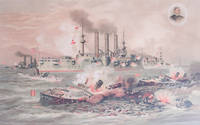
189840301Philadelphia: J. Hoover & Sons 1898. Image 27 x 17 1/2 inches. Framed and glazed. Image 27 x 17 1/2 inches. Schley was selected "at the opening of the Spanish-American War to command the Flying Squadron at Hampton Roads.when Cevera's ships reached Martinique the Flying Squadron.at 9:35 July3 1898 the Spanish ships emerged from the harbor of Santiago and turned westward Schley's flagship the Brooklyn westernmost of the blockading line."<br/><br/>Xanthus Russell Smith 1839-1929 comes from a Family of Philadelphia Artists. He was the som of Russell Smith. J. Hoover & Sons unknown books
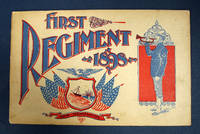
189840039Mexico Mo: Head Bros 1898. 1st printing. White paper wrappers printed in red & blue stapled. Age toning to paper. Staples a bit rusted. A VG copy. Unpaginated though 40 pp. Roster last 4 pages. Profusely illustrated with 65 b&w captioned photographic images. Oblong format: 5-7/8" x 9-1/4" <br/><br/>From the rear cover: "To the Officers and Members of this Regiment. . this book is presented to you as a souvenir of your camp life in the Spanish-American War. The idea is to show by photographs a practical army life ." Head Bros unknown books
190237237v. p. 1902. Maroon half-leather binding with black cloth boards. General wear with spotting to boards which are bowed. A VG copy. 201 numbered pages of lined paper. 9-7/8" x 7-5/8" <br/><br/>The 'Kilpatrick' began life as the SS Michigan beginning service in September 1891 as a cargo vessel with limited passenger accomodation. In 1898 she was sold to the US government to act as a military transport during the war. She was capable of hauling 840 men and 800 horses. While not an active participant in the Spanish American war she did subsequent duty in transport service to the PI as this log documents. Capt Rogers begins his entries Saturday Dec. 31st 1898 noting relief of Cap. Jeffreys taking command of U.S.A.F. Michigan departing for Havana at 9 pm. The final entry is Sept. 2nd 02 noting position/course details of a "Manila to Frisco" run. This log a first-hand account of the ship's life recording location etc. Details of the Captain's or crew's life are for the most part absent. That being said it is a unique historical document that provides daily facts of the ship it's activities & its location. hardcover books
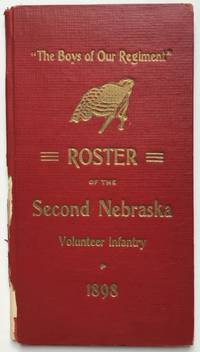
18981081Chattanooga: Times Print 1898. Very good. 29pp. Narrow 12mo. Original red cloth cover gilt. Spine heavily chipped corners worn. Contemporary ownership inscription on front pastedown contemporary notations to several leaves. Regimental roster for the Second Nebraska Volunteers mustered into service for the Spanish American War at Lincoln in May 1898. The regiment consisted of forty-six officers and 975 enlisted men each detailed herein by company. The regiment never saw active duty spending time training at Chickamauga before being transferred to Omaha and then mustered out in October of the same year. This copy with the ownership inscription of Irene G. Courtnay dated September 2 1898. Irene has made notations about several of the men -- presumably friends or acquaintances -- in the Remarks section of some pages. On the page for Company B she has written "Ernest G. Briggs drowned in Chickamauga Creek. 1st death in 2nd Neb. Regiment." Rare and likely produced in limited numbers for friends and family. Only a single photocopy reproduction located in OCLC. An interesting piece of Western Americana from this mostly-forgotten episode in American history. Times Print unknown books
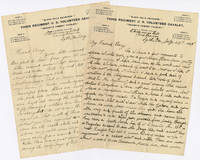
1898WRCAM46791Chickamauga Park Ga 1898. 5pp. Quarto written on "Black Hills Squadron" stationery. Old fold lines. Minor wear. Very good plus. A pair of letters written by Leighton H. Baxter to a friend back home. In his first letter he states that he is "not an enlisted soldier but has a regulation suit.a horse to ride and am fixed up very nicely. He works for the commander of the squadron Major Leigh H. French presumably as a teenage civilian clerk. His duties include "a good deal of writing to do telegrams to send take notes of cases tried in the regiment and a great many other minor duties." He sleeps in the same tent as the Major and takes his meals with the officers. He is well fed but is very glad not to be a private as they "fare badly." It is however "a regular circus to see the boys ride and shoot they beat Buffalo Bill all to pieces." Baxter reports that there are some 40000 to 50000 troops at Camp Thomas with more due to arrive. Some have already departed for "Porto Rico" and he expects his squadron to be going there at any time. In his second letter he notes that the men in his regiment are all "crack shots and fine riders" and all from around Deadwood and the Black Hills. He has been drilling with the men and has learned to handle a sword fairly well. He also mentions practicing "rough riding.such as leaping from a horse while he is running then back again picking up a hat while at full speed etc." <br> <br> The Third U.S. Volunteer Cavalry was mustered into service in May 1898 and commanded by Melvin Grigsby attorney general for the state of South Dakota. The unit was known both as the "Black Hills Squadron" and as "Grigsby's Cowboy Cavalry." Its commander Maj. Leigh H. French was trained as a medical doctor and surgeon and had a practice in Washington D.C. when the war broke out. One of his captains Seth Bullock was the first sheriff of Deadwood. The squadron never saw active duty outside the continental United States spending most of its brief career at Camp Thomas in Georgia. In the crowded camp in the heat of a southern summer typhus measles and other illnesses were rampant and Grigsby's Cavalry lost twenty-seven men to disease. unknown books
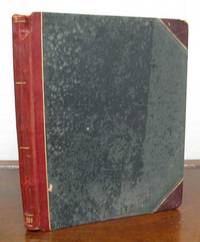
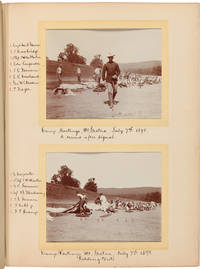
1898WRCAM54683Various places including Pennsylvania Virginia at sea New Jersey and Puerto Rico 1898. 171pp. with 342 photographs. Four large quarto photograph albums. Matching contemporary three-quarter crimson morocco and cloth front covers gilt. Minor shelf wear and some rubbing. Images in overall very good condition. An amazing assemblage of photographs documenting the Spanish-American War experiences of the First Troop Philadelphia City Cavalry which was at that time the oldest volunteer military unit in continuous service to the United States. The photographs are arranged chronologically in four contemporary photo albums with the images occasionally annotated in a contemporary hand and including the identification of numerous members of the Troop. <br> <br> The first volume opens with images of Mt. Gretna Pennsylvania "where troops were sworn into U.S. service May 7th 1898 by Maj. Thompson U.S.A." The photographs record field exercises camp building and tent organization at Camp Hastings cavalry drills an image of "Capt. Groome reading the Articles of War to Troop June 1898" a "first arrival of government horses" several shots of men training and "throwing" their horses shooting practice "Capt. Groome assigning Government horses to Troopers" and various shots of the men at work and even some play. Over the course of the album the names of numerous soldiers are recorded below several of the photographs. <br> <br> The second album opens with several photographs of the Troop striking their tents in preparation for leaving Camp Hastings at Mt. Gretna headed for Camp Alger at Dunn Loring Virginia. Here the Troop was ordered to increase their enlistment numbers. At Camp Alger the Troop was also fitted out with federal supplies and assigned to the Second Army Corps commanded by Maj. Gen. William Graham who is pictured here. Other photographs capture the camp scene at Alger "the First Troop picket line" the Troop receiving their federal-issue khaki uniforms the Troop at roll call and some shots featuring African-American helpers. <br> <br> In late July the Troop was sent to Newport News and several photographs record their brief time there with about a dozen shots of their temporary camp. On July 28 1898 the Troop left Virginia on the transport ship MASSACHUSETTS bound for Puerto Rico. Several images here capture the frenetic loading of the troops and their horses onto the ship with the remaining half dozen or so shots recording the Troop's time on board. <br> <br> The third album picks up where the second left off with the First City Troop embarked on the transport ship MASSACHUSETTS headed for Guanica Puerto Rico. Shipboard activities captured here include a few shots of groups of men being showered with water hoses. Several shots record the arrival of the men in the port of Guanica where they encounter the hospital ship NUECES which reports of the news of the "surrender of Ponce." After the men disembark they pitch their camp around Cathedral Virgin del Carmen on August 5. The next day several photographs record the unloading of horses and stores in the harbor at Ponce. The remaining thirty-eight photographs in this volume record scenes in the interior of Puerto Rico and are the most heavily annotated of the four albums. The images record scenes from the "road from Port of Ponce to Ponce" several scenes capturing a market day in Ponce and recording numerous native islanders the Troop's "temporary camp about 2 miles beyond Ponce" the "Troop wagon leaving camp beyond Ponce to join wagon train for Guayama" on August 8 a shot of the Troop's wagon "on road to Guayama in a Porto Rico mudhole" images of the wagon train to Guayama with the H Troop 6th U.S. Cavalry the "Point of Advance Guard entering Guayama within the lines" the Troop itself "entering Guayama passing General Brooke's Headquarters" a "View of First Troop Phila. City Cavalry U.S.V. Camp at Arroyo August 10th to 6A.M. Aug. 13th 1898" with the last ten images recording the camp or the streets at Arroyo. <br> <br> The fourth album documents the Troop's voyage home to Philadelphia. This time they take passage on the transport ship MISSISSIPPI and about half of the images record their voyage on board. On Sept. 10 1898 they reach Jersey City in New York harbor where they camp for a short time before returning to camp in Pennsylvania where the album ends. A couple of months later all three officers and the ninety- eight enlisted men of the First City Troop were mustered out of federal service for the Spanish-American War. <br> <br> Originally founded in 1774 by twenty-eight Philadelphia patriots as the "Light Horse of the City of Philadelphia" the First Troop of Philadelphia Cavalry is the oldest mounted military unit operating in continuous service to the American republic being the first volunteer cavalry troop organized in defense of the colonies. Among the Troop's original founders was John Dunlap printer to Congress from 1778 to 1789 publisher of the first American daily newspaper and the first printer of the Declaration of Independence. Most of the earliest members were similarly notable professional men of Philadelphia. The Troop served with valor in the American Revolution the War of 1812 the Mexican- American War the Civil War the Spanish- American War and every major American war through the Korean War. <br> <br> The present albums present a unique and important visual record of the First City Troop's activities before during and on the way home from the Spanish-American War. hardcover books
1898WRCAM54953Puerto Principe Cuba 1898. Broadside 16 1/4 x 12 1/4 inches. Toned old folds and creases minor edge chipping short closed tear slight fold separations. Very good. A very rare possibly unique surviving example of a Cuban broadside dating from the month after the conclusion of the Spanish- American War. The war ceased with a truce between the United States and Spain on August 12 1898; the official end of the war came a few months later on December 10 when the two parties signed the historic Treaty of Paris. Here on September 10 in the interim between truce and treaty the outgoing Spanish colonial governor of the south- central Cuban city of Puerto Principe present-day Camagüey Emilio March y Garcia calls for reinforcement of the truce agreement that would ensure free and open commercial trade in the region in the face of continuing interference by Cuban insurgents. March y Garcia claims that the Cuban revolutionaries are illegally detaining people interrupting the cattle trade trampling property rights carrying arms in flagrant disregard for the law and more. The ARIZONA REPUBLICAN published an English translation of this proclamation in its September 26 1898 issue. The translation reads: <br> <br> "I hereby inform the commanders of insurgent bands who are pillaging in the neighborhood of this city; who not observing the agreement between the Spanish and American governments with regard to the freedom of commercial relations are illegally detaining the country people; who are obliging the land owners to procure special passes and permits in order to put in order their plantations and will not allow them either to sell their cattle under the absurd pretext that the estates are the property of the nominal Cuban state and that its government alone can distribute and sell them and turn their products to what uses it sees fit thus trampling under foot the rights of property whereas on the part of this government the most absolute liberty in making contracts has been allowed and will be allowed in the future thus demonstrating the respect it has for the rights of all persons within its jurisdiction. I must call to notice with real sorrow that if these towns are suffering almost the horrors of starvation it is the result of the measures adopted by the chiefs of the insurgent bands who are impeding free traffic by forbidding the entry of all kinds of provisions especially cattle into the towns. In view of what I have already explained I consider it necessary to publish the following warnings: Article 1. I repeat my order of August 23 last permitting free entry and exit to all towns of this province subject to my authority and the most absolute freedom of trade between all the inhabitants of the province. Article 2. The prohibition to enter towns with arms remains in force and whoever is found with arms in his possession will be punished in accordance with the laws." <br> <br> Don Emilio Augusto March y Garcia Mesa was a career Spanish military commander who spent at least three stretches of time in Cuba the last as military governor of Puerto Principe during the Spanish defeat in the Spanish- American War. He also served as the colonial governor of Puerto Rico and general captain of Arago the Balearic Islands and the Canary Islands. <br> <br> The present broadside is exceedingly rare and quite possibly unique with no copies listed in OCLC and no records at auction. unknown books
1897262561London: Published for the Spanish Atrocities Committee by J. Perry 1897. 23p. stapled wraps 5x7.25 inches wraps lightly foxed bottom edge of front wrap browned staple rusted pp8-17 evenly browned rear wrap lightly silverfished along two edges. Reprinted from "Freedom." On the mistreatment of anarchist political prisoners. Published for the Spanish Atrocities Committee by J. Perry unknown books
1897262648London: Published for the Spanish Atrocities Committee by J. Perry 1897. 23p. stapled wraps 5x7.25 inches wraps lightly foxed staple rusted else good condition. Reprinted from "Freedom." On the mistreatment of anarchist political prisoners. Published for the Spanish Atrocities Committee by J. Perry unknown books
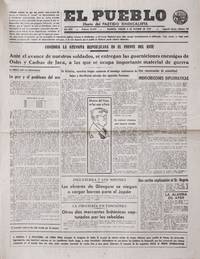
193730146Valencia: S.i. 1937. Six tabloid issues 58cm; newsprint wrappers; 4pp per issue; occasional illus; text entirely in Spanish. Publication sequence as follows: Año XLIV Nos.15.394 15.409 15.411 15.413 15.424 15.435 October 8272931; November 1326 1937. All six issues horizontally folded at center occasional creasing to extremities with a few scattered passages underlined in red and blue colored pencil; one with mild toning along folds else paper is still supple and quite fresh; Very Good overall. Nicely-preserved selection of issues of this Republican daily newspaper the official organ of the Partido Sindicalista one of the smaller Spanish left-wing workers' parties that would eventually become affiliated with the United Front. The paper was founded in 1896 by the popular Spanish novelist and journalist Vicente Blasco Ibañez. During the Second Republic under the management of Ibañez's nephew Sigfrido the paper became more politically aligned eventually becoming the organ of the Syndicalists in 1932; it ceased publication with the end of the Republic in 1939. Rare; OCLC finds 2 locations holding any issues Biblioteca Universitat de Barcelona Universidad de Valencia none in the U.S. S.i. unknown books
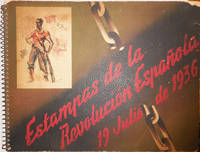
193711613Barcelona: Bureau of Propoganda 1937. First edition. Hardcover. Good. Oblong 4to. Spiral bound book of color drawings depicting scenes from the Spanish Civil War. Chipping and wear to covers. First two pages loose from binding. A good copy of this attractive book. <br/><br/> Bureau of Propoganda hardcover books
1936WRCLIT83255New York: Dutton 1936. Pictorial cloth. Endsheets darkened at edges modest rubbing to extremities a near very good copy without dust jacket. First US edition of this novel about the political lives of two anarchists in the Spanish Republic. With the author's signed gift inscription: "For Oliver Kenyon Brooks with gratitude from Ralph Bates." With the earlier ink ownership signature of Eleanor S. Brooks wife of Van Wyck Brooks marked through in pencil and signed "O.K. Brooks" Eleanor and Van Wyck Brooks' son. A decent association. Dutton hardcover books
193450545New York: Libertarian Publishing Society 1934. First Edition. 12mo. Staple-bound pamphlet; printed paper wrappers; 24pp. Text paper tanned and slightly fragile with shallow stains in margins; chipped at corners without loss to text front wrapper partially split at spine-fold but still attached; a complete sound copy no better than Good. Covers the anti-fascist uprisings in Spain in December 1933 and October 1934. The pamphlet was reprinted in 1967 by Son of Coptic Press; the first printing is rarely seen in commerce. Libertarian Publishing Society unknown books
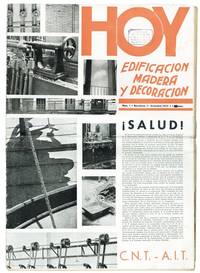
193735126Barcelona: Comité Regional en Cataluña de los Industrias de la Edificación Madera y Decoración C.N.T - A.I.T. 1937. First Edition. Large folio 49cm. Staple-bound pictorial paper wrappers; 23pp; illus. Horizontal fold; partial perforation at bound edge; creasing to corners with marginal soil to wrappers and a few chips to contents; a sound Good or better example. The unlikeliest of publishing endeavors during the depredations of wartime: an avant-garde large-format lavishly illustrated journal of architecture and decorative arts issued no less under the auspices of an anarchist workers federation. The editors intended to usher in a new era of progressivism and modernism following the defeat of the fascist rebels in the July Barcelona uprising of 1936 ".aquel magnifico y revolucionario 19 de julio tan digno y decisivo; no solo como fin de etapa sino tambien como prologo de una etapa nueva repleta de posibilidades consequidas ya en parte ye en parte perfiladas no siempre malogradas." and the magazine fashioned itself upon the model of such avant-garde revolutionary journals as the Soviet Union's USSR in Construction and the American Labor Defender with bold photo-montage layouts and modernist typography. The timing was not propitious. By December 1937 the Republic was mired in an increasingly hopeless civil war and the glorious New Era that had seemed so certain in July of 1936 was now a rapidly fading hope. The magazine appears to have lasted for only a single issue before folding; today it is extremely rare with no examples in North America and only two physical locations noted in European institutions via COPAC and OCLC Biblioteca Nacional and Bibliotheque Nanterre. BNE attributes editorship to the avant-garde graphic artist DarÃo Carmona de la Puente but this information does not appear to derive from the publication itself which makes no editorial attribution. Comité Regional en Cataluña de los Industrias de la Edificación Madera y Decoración, C.N.T - A.I.T. unknown books
195516509Berkeley: University of California Press 1955. First Edition. Octavo. Original printed buff wrappers softcover; 290pp. Includes bibliography. Scattered foxing to covers; text generally clean and tight with two brief instances of ink marginalia; about Very Good overall. Scholarly study of the role of the Kremlin in the Spanish Civil War. Reissued in a trade edition in 1965; the present edition somewhat uncommon. University of California Press unknown books
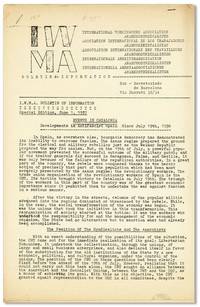
193733100Barcelona: IWMA 1937. Folio 33.5cm.; staplebound self-wrappers printed mimeograph; 14 leaves printed rectos only. Minor wear from handling light toning to extremities else Very Good and sound. Special issue of the Bulletin issued by the IMWA most likely in conjunction with the anarcho-syndicalist Civil War-era libertarian movement headed by the Confederación Nacional del Trabajo and the Federación Anarchista Ibérica. Contents comprised of a single article "Events in Catalonia: Developments in Antifascist Spain Since July 19th 1936. IWMA unknown books
193850549New York: Medical Bureau and North American Committee to Aid Spanish Democracy 1938. 12mo. Staple-bound pamphlet; printed paper wrappers; 13pp. Slight foxing and toning to wrappers; pencil annotation to front cover; text complete and sound - Very Good. Statement of support by the American Scottish Rite Freemasons for the Nye Resolution calling for a lifting of the embargo against Republican Spain. Signed in print at end of text by John H. Cowles Grand Commander; Walter Reed Secretary General; TJ. Wakeman Secretary and others. Uncommon. Medical Bureau and North American Committee to Aid Spanish Democracy unknown books
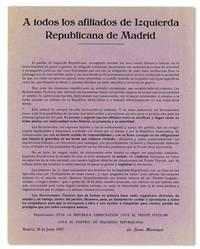
193738496Madrid: Partido Izquierda Republicana 1937. First Edition. Broadside 27.5cm x 21.5cm; printed recto-only in black on purple stock. Paper a bit faded at margins still a clean presentable copy Very Good. Broadside to the citizens of Madrid calling on all Republican forces to join under the banner of the Izquierda Republicana historically the main-line leftist party of pre-Revolutionary Spain. Dated June 30 1937 some ten days after the fall of Bilbao to Nationalist forces. Fragile and scarce; not separately catalogued in OCLC. Partido Izquierda Republicana unknown books
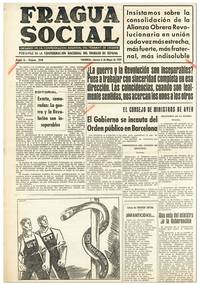
193726237Valencia: CNT 1937. 49 tabloid issues ca.48cm with publication seqence as follows: Año II Nos. 219 224-225 227-228 233-234 241-243 245 327-329 331-332 334-340 342 347-349 351-352 356 358-363 365-378. Printed offset on newsprint ca.8pp per issue; illus. Issues show light overall wear and toning creases and small tears with underlining and marginalia in red and blue colored-pencil to most issues; overall Very Good. Substantial run of this Spanish Civil War newspaper the official organ of the anarcho-syndicalist group Confederación Nacional del Trabajo. Published in Valencia between 1936-1939 the paper provided daily coverage of the Republican struggle with articles by Jesus Muro Felix Paredes Enrique Lopez Alarcon Gaston Leval and Juan Lopez et al. Illustrated with political cartoons and caricatures throughout. Large runs extremely uncommon in the trade; OCLC shows just 5 American institutions holding any issues. [CNT] unknown books
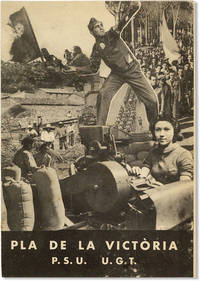
193743660Barcelona: P.S.U. / U.G.T. n.d. but ca. 1937. First Edition. Octavo 21cm.; bifolium printed on newsprint photo-montaged upper panel. A hint of wear and toning else Near Fine. Promotional handbill issued at the height of the Spanish Civil War delineating the platform of the short-lived Unified Socialist Party of Catalonia the Catalan referent of the Communist Party of Spain and its workers' union. The lovely photo-montaged upper panel depicts both military scenes agricultural activities and at the fore-front a young woman working on a piece of heavy machinery. Text entirely in Catalan. UCSD only in North American according to OCLC February 2019. P.S.U. / U.G.T. unknown books
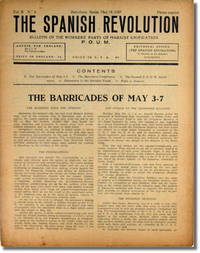
193740843Barcelona: The Spanish Revolution 1937. Paperback. Very good. Single sheet folded twice to make 8pp. Partially unopened. paper tanned with some very minor loss at the extremities else a good example of the final issue of thsi Spanish Communist Partyy organ. <br/><br/>The Workers' Party of Marxist Unification was a Spanish communist party formed during the Second Republic and most active during the Spanish civil war. The Spanish Revolution paperback books
1937WRCLIT69942Madrid & Barcelona: Sindicato de Professionales de la Bellas Artes / Indus Gráficas Seix y Barral 1937. Folded leaflet. 17.5 x 12.5 cm on stiff card with pictorial top panel. Very near fine. A separate printing of Alberti's poem "Vosotros no Caisteis" in facsimile of his ms. with a French translation in type "Vous N'êtes pas Tombés" with a cover illustration signed in the image "Parilla XXXVII." This was published as an element in an interesting set of cards with a series title "Recuerdo de España" distributed for the promotion and defense of the Republic published under the direction of the Fine Arts trade union the alliance charged with some of the most important propaganda efforts during the war. The cards bear illustrations in various media and internally present both in type and in facsimile of manuscript statements in support of the cause both prose and poetry. Sindicato de Professionales de la Bellas Artes / Indus Gráficas Seix y Barral unknown books
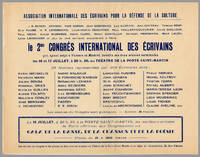
1937WRCLIT53115Paris 1937. Oblong quarto purely typographic broadside 27 x 21 cm. Printed on recto only. Old vertical crease slight tanning at lower edge but unusually nice. An original handbill/flyer for the Paris component of this important event featuring over two hundred writers from twenty-six countries rallying in support of the beleaguered Spanish Republic and in opposition to the Nationalist/fascist forces. Among the listed participants are of course Malraux and Aragon as well as Cocteau H. Mann Benda Cowley Ehrenbourg L. Hughes Auden Brecht Neruda Tzara Spender Alberti Tolstoi et al. The conferences as well as a "Gala de la Danse de la Chanson et de la Poésie" to be held on the 18th were hosted at the Théatre de la Porte Saint-Martin. unknown books
1937WRCLIT70515London: Paramount 1937. 10pp. Quarto. Pictorial self-wrappers with upper wrapper bearing Paramount's standard house imagery. Heavily illustrated. About fine. Original campaign pressbook for the British release of this film adaptation of a story by Paul and Elsie Fox with the screenplay by Louis Stevens and Robert Wyler. Directed by James P. Hogan starring Dorothy Lamour Lew Ayers Gilbert Roland Lionel Atwill Anthony Quinn et al. The film is obviously set within the context of the Spanish Civil War and was touted as the "First Spanish War Romance" but the war serves chiefly as a backdrop affording little insight into the causes and events. The publicity paper however offered some dramatic period imagery. Paramount unknown books
1936WRCLIT25517London: Gollancz 1936. Limp printed cloth wrappers. First Left Book Club edition. Wraps a bit handsoiled but a good copy with ephemera laid in. Gollancz hardcover books