Heinrich WernerAntiquariat.de

215 résultats
1995016230Otto Harrassowitz, Wiesbaden 1995. Broschur Sehr gut
1984016313Otto Harrassowitz, Wiesbaden 1984. Leinen Sehr Gut, Tadellos
21x13. 234p. Firma anterior poseedor. Enc. Tela ed.
Mm 170x240 Brossura editoriale di pagine XIII-128. Opera in ottime condizioni. Spedizione in 24 ore dalla conferma dell'ordine.
1996016229Otto Harrassowitz, Wiesbaden 1996. Broschur Sehr gut
19703119348Erlangen-Nürnberg: Selbstverlag 1970. 234 Seiten. 8° (17,5-22,5 cm). Orig.-Broschur mit leinenverstärktem Rücken. [Softcover / Paperback].
br. La voce parla i nostri pensieri e detta la nostra lingua. Toni e intonazioni fondano, costituiscono e costruiscono il discorso così come lo sappiamo dire. Anche in quel discorso e nella voce che lo dice alberga la nostra identità. Si tratta di un'identità certo linguistica, ma anche geografica e sociale, psichica e culturale - ove si profilano conoscenze e credenze che fanno parte di un costume, quindi di un canone. E si tratta anzitutto di un'identità profonda e non piuttosto superficiale, come si sarebbe inclini a credere. A volte il tono dice più della parola. L'intonazione più del discorso. Ma dove poggia la nostra voce? Con quale accento parliamo? Chi ha stabilito una volta per tutte il nostro timbro vocale? Tutto si circoscrive nella nostra natura o è l'effetto della cultura alla quale apparteniamo? Come possiamo modificare, anche in modo appena percettibile, i nostri sistemi espositivi agendo sulle tonalità consce e inconsce della voce? Il "Trattatello di prosòdica" di Mario Gennari non produce soltanto domande, ma presenta pure delle risposte per quanto riguarda la prosodia: ossia il timbro dell'eloquio composto di toni e accenti, intonazioni e cadenze, inflessioni e ascendenze.
DISPONIBILITÀ GARANTITA AL 99%; SPEDIZIONE ENTRO 12 ORE DALL'ORDINE. BUONE/OTTIME CONDIZIONI GENERALI, MACCHIETTE/FIORITURE E SEGNI DEL TEMPO. TIMBRO IN ANTIPORTA. RARO. Adolfo Duch, Illustre professore di letteratura italiana alla Sorbona. Descrizione bibliografica Titolo: Trattatello di pronunzia francese: con numerosi esercizi compilato ad uso delle scuole secondarie d'Italia Autore: Adolfo (Adolphe) Duch Editore: Torino [etc.]: G.B. Paravia e comp., 1907 Lunghezza: 215 pagine; 20 cm Lingua di pubblicazione: Italiano, Francese Collana: Insegnamento delle lingue straniere Soggetti: Esercizi, Pronuncia francese, Ortografia, Vecchi Manuali, Didattica, Fraseologia, Grammatica, Libri scolastici antichi, Collezionismo, Libri Vintage Fuori catalogo, Libri rari, Rarità, Alfabeto, Vocali, Consonanti, Accenti, Dizionari bilingue, Italiano-francese, Verbi, Nomi, Sinonimi, Modi di dire, Espressioni, Uso comune, Scuola media, Medie, Pubblica Istruzione, Lezioni, Corsi, Esercizi, Eserciziari, Metodo, Insegnamento, Apprendimento, Lingue straniere, Anni Dieci, Novecento, Scuola italiana, Manualetti, Labouesse, Linguistica, Fonologia, Fonetica, Suoni, Parole, Sillabe, Regole, Doppie, Prosa, Antologie, Racconti, Poesia, Scene, Dialoghi, Discorso, Erre, Gutturali, Nasali, Exercises, French pronunciation, Spelling, Old Manuals, Didactics, Phraseology, Grammar, Old school books, Collecting, Out of print books, Rare books, Rarities, Alphabet, Vowels, Consonants, Accents, Bilingual dictionaries, Italian-French, Verbs, Names, Synonyms, Idioms, Expressions, Common use, Middle school, Education, Lessons, Courses, Exercises, Method, Teaching, Learning, Foreign Languages, Ten years, Twentieth century, Italian school, Manuals, Linguistics, Phonologies, Phonetics, Sounds, Words, Syllables, Rules, Doubles, Prose, Anthologies, Tales, Poetry, Scenes, Dialogues, Speech, Erre, Guttural, Nasal, Exercices, Prononciation française, Orthographe, Vieux manuels, Didactique, Phraséologie, Grammaire, Livres de la vieille école, Collection, Livres épuisés, Livres rares, Raretés, Aphabet, Voyelles, Consonnes, Accents, Dctionnaires bilingues, Italien-français, Verbes, Noms, Synonymes, Idiomes, Expressions, Usage commun, Collège, Education, Leçons, Cours, Exercices, Méthode, Enseignement, Apprentissage, Langues étrangères, Dix ans, XXe siècle, Ecole italienne, Manuels, Linguistique, Phonologies, Phonétique, Sons, Mots, Syllabes, Règles, Doubles, Prose, Anthologies, Contes, Poésie, Scènes, Dialogues, Discours, Moliere, Rousseau, Hugo, Fenelon, Diderot, Voltaire, La Fontaine, Montesquieu, Pedagogia
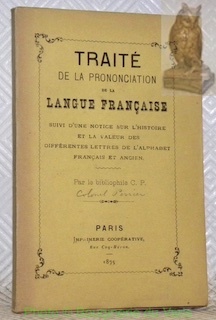
26378Paris, Impr. Coopérative 1875, 150x100mm, 133pages, broché. Bel exemplaire.
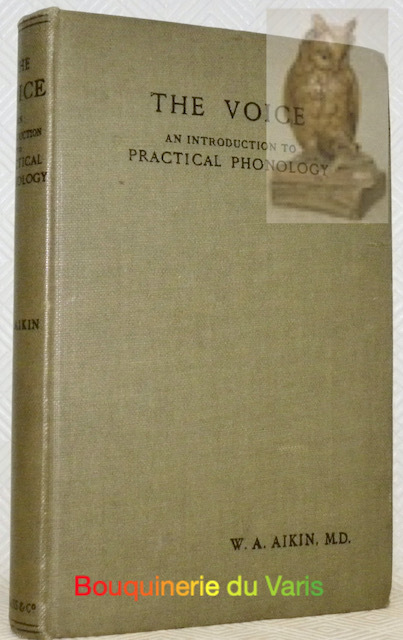
13084London, Longmans, Green 1920, 225x145mm, 159pages, reliure de l’éditeur. Book in good condition.
195845181ABTokyo, Kenkyusha, showa 33 (1958). 8° (21x14), VI, 115 S., publisher's softcover, tight and clean, well cared,
Small scratch on back cover. Dent on bottom of front cover. Small area of page block covered by white paint.
Mm 140x215 Ristampa dell'edizione 1949. Brossura editoriale spillata di 53 pagine. Aloni di nastro adesivo rimosso alla copertina, peraltro esemplare in buone condizioni. Testo in inglese - english text. SPEDIZIONE IN 24 ORE DALLA CONFERMA DELL'ORDINE.
1203051Berlin ; Bern ; Wien : Peter Lang Verlag, 2020. 247 Seiten : Illustrationen ; 21 cm; fadengeh. Orig.-Pappband.
Wie neu / As new. - The book investigates the morphology and phonology of the nominal domain in Tagbana of the Senufo group of Côte d'Ivoire. The nominal domain is the locus of a phenomenon called 'alliterative concord', a special kind of concord expressed by consonantal alliteration. All dependent morphemes of a head noun share articulatory features, which are realized on the onset of the first syllable of each morpheme. In this way. the articulatory features signal the class of the dependent morphemes. This volume also discusses the segment inventory and the syllable structure and describes the complex noun operations in the nominal domain. Distributed Morphology and Optimal Theory form the theoretical background of the empirical facts. ISBN 9783631798089
Gutes Ex.; Rückdeckel mit kl. Kratzspuren. - The book investigates the morphology and phonology of the nominal domain in Tagbana of the Senufo group of Cote d'lvoire. The nominal domain is the locus of a phenomenon called 'alliterative concord', a special kind of concord expressed by consonantal alliteration. All dependent morphemes of a head noun share articulatory features, which are realized on the onset of the first syllable of each morpheme. In this way, the articulatory features signal the class of the dependent morphemes. This volume also discusses the segment inventory and the syllable structure and describes the complex noun operations in the nominal domain. Distributed Morphology and Optimal Theory form the theoretical background of the empirical facts. (Verlagstext) / INHALT : Abstract. ---- List of abbreviations. ---- Introduction. ---- Introduction. ---- Tagbana. ---- Social and political organization. ---- Habitat cultural life economy and religion. ---- Fro?o (Tagbana). ---- Previous works. ---- Data collection . ---- Structure of the book. ---- The sounds of Fro?o. ---- Introduction. ---- Phonemes of Fro?o. ---- Distinctive features. ---- Features for consonants. ---- Features for vowels. ---- Feature geometry. ---- Feature geometry for consonants. ---- Feature geometry for vowels. ---- Allophonic alternations. ---- Voicing of stops. ---- Allophonic relation between [g] and fn] ---- Free variation of [g] [y] [?] or [0] in some Senufo languages ---- Allophonic relation between the palatal glide [j] and palatal nasal [ji]. ---- Vowel lengthening process before a liquid. ---- Tones of Fro?o. ---- Syllable structure and syllabification. ---- Introduction. ---- Underlying syllable structure. ---- Simple onsets. ---- Complex onsets. ---- V syllable: Nucleus. ---- Vowel lengthening. ---- Nasal syllables. ---- Loanwords. ---- Resyllabification. ---- Vowel deletion leading to coda formation. ---- Vowel deletion leading to complex onset formation. ---- Liquid deletion. ---- Fusion processes in Fro?o. ---- Summary of the fusion with sequences of two pronouns. ---- OT applied on the syllable structure. ---- Overview of OT. ---- OT and syllable structure in Fro?o. ---- Syllables with an onset. ---- Onsetless word-initial syllables. ---- Onsetless word-internal syllables. ---- Codas and coda-less syllables. ---- Resyllabification by segment deletion. ---- Vowel deletion resulting in codas. ---- Word-final vowel deletion. - (u.v.a.) ISBN 9783631798089
199340640BBChicago, Ill. [u.a.], Publishers: University of Chicago Press, 1993. Original Flexible Boards. Very good Condition with only minimal Signs of Usage at the Cover. No Markings in the Text! No Underlinings! No Owner's Note! (Studies in Contemporary Linguistics).
1333712758.Gpaperback. Good. Access codes and supplements are not guaranteed with used items. May be an ex-library book. paperback
xxxi + 277pp.of which 6pp.plates, hardback (editor's cloth with gilkt lettering), very good condition, [study on the manuscript: Kassel MS.Theol. Qu. 2], R34712
1972R34712Assen, Van Gorcum 1972 xxxi + 277pp.of which 6pp.plates, hardback (editor's cloth with gilkt lettering), very good condition, [study on the manuscript: Kassel MS.Theol. Qu. 2], R34712
20131079368Frankfurt, M. : Lang-Ed., 2013. 203 S. : graph. Darst. ; 22 cm Pp.
brossura La lingua greca è la più grande manifestazione culturale del mondo antico. Con la sua letteratura e storia ha gettato le basi della civiltà occidentale, diventando pietra miliare dell'umanità. Questo testo indaga tutti i suoni e i «segreti» che gli antichi greci ci hanno lasciato attraverso la loro lingua. Esso analizza sia la fonologia che la fonetica greca, i suoni e i relativi grafemi, il tutto in maniera organica e scientifica senza rinunciare alla fruibilità e alla chiarezza. Tali fenomeni linguistici sono basilari sia per una corretta traduzione dal greco sia per una conoscenza stessa della lingua e le sue relative trasformazioni diacroniche.
Hardcover with white lettering on spine. Front board has very lightly worn bottom corners, otherwise cover is sound. Contents in very good clean condition. Bookseller's stamp on back inside cover. T Clean Copy
1994030754Vandenhoeck und Ruprecht, Göttingen 1994. Softcover Sehr gut
2000030747Vandenhoeck und Ruprecht, Göttingen 2000. Softcover Wie neu