26 102 résultats
1954RO40173204Non précisé. 1954. In-8. Broché. Bon état, Couv. convenable, Dos satisfaisant, Intérieur frais. 159 pages. Etiquette de code sur le dos. Tampons et annotations de bibliothèque sur le 1er plat et en page de titre. Dos muet.. . . . Classification Dewey : 470-Langues italiques. Latin
Non précisé. 1954. In-8 Carré. Broché. Bon état. Couv. convenable. Dos satisfaisant. Intérieur frais. 159 pages. Etiquette de code sur le dos. Tampons et annotations de bibliothèque sur le 1er plat et en page de titre. Dos muet. Pars Dissertationis pro gradu Doctoratus in Facultate Theologica Univ. Friburgensis Helvetiorum obtinendo approbatae.
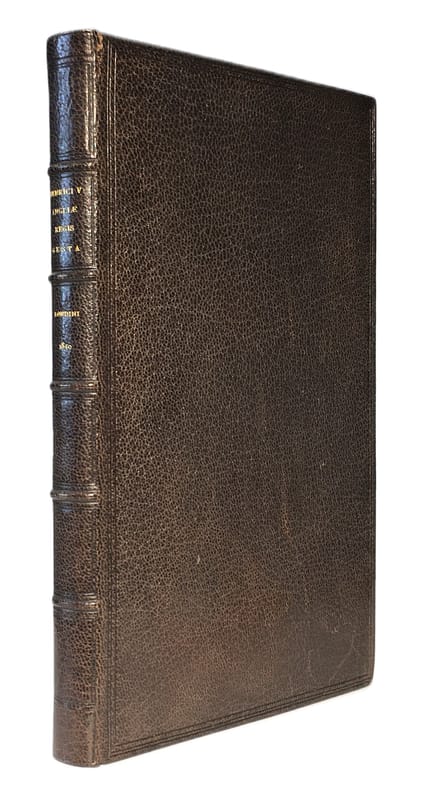
185035Londres, 1850 ; in-8 de xxxii-[2] 298 pp., maroquin janséniste brun, filets à froid en encadrement sur les plats, dos à nerfs, dentelle intérieure, tranches dorées (Weber).
66020, Brepols, 2019 Paperback, xi + 123 pages, Size:140 x 215 mm, Language: Latin. ISBN 9780888444868.
RO20077031Garzanti.. 1953.. In-8. Relié toilé. Etat d'usage, Couv. convenable, Mors fendus, Intérieur acceptable. 189 pages. 1ère de couverture illustrée en jaune et noir. Mord fendu.. . . . Classification Dewey : 470-Langues italiques. Latin
105140N.pl., n.d.
Remainder mark to bottom of textblock. Slight soiling to wraps. Contents clean and bright. ; English introduction and notes with William Herebert's (1317-1319) extant works-- six sermons in Latin, and twenty-three lyrics in Middle English. ; Studies and Texts - Pontifical Institute of Mediaeval Studie; 173 pages
1906R320082171TREVERIS - EX OFFICINA AS S. PAULINUM. 1906. In-8. Relié cuir dos-coins. Bon état, Couv. convenable, Dos satisfaisant, Intérieur frais. XVIII + 662 pages -Auteur, titre, filets, roulettes, tomaisons et fleurons doés au dos - Coiffes legerement frottées.. . . . Classification Dewey : 470-Langues italiques. Latin
TREVERIS - EX OFFICINA AS S. PAULINUM. 1906. In-8 Carré. Relié cuir dos-coins. Bon état. Couv. convenable. Dos satisfaisant. Intérieur frais. XVIII + 662 pages -Auteur, titre, filets, roulettes, tomaisons et fleurons doés au dos - Coiffes legerement frottées. OUVRAGE EN LATIN
1906R320082236TREVERIS - EX OFFICINA AD. S . PAULINUM. 1906. In-8. Relié cuir dos-coins. Bon état, Couv. convenable, Dos satisfaisant, Intérieur frais. XXVII + 578 pages - Auteur, titre, fleurons et roulettes dorés au dos - Coiffe en tete legerement frottée.. . . . Classification Dewey : 470-Langues italiques. Latin
TREVERIS - EX OFFICINA AD. S . PAULINUM. 1906. In-8 Carré. Relié cuir dos-coins. Bon état. Couv. convenable. Dos satisfaisant. Intérieur frais. XXVII + 578 pages - Auteur, titre, fleurons et roulettes dorés au dos - Coiffe en tete legerement frottée. OUVRAGE EN LATIN.
1986R118873Turnhout, Brepols 1986 Complet en 2 tomes, 1171pp. (pagination continuée) + 6 planches hors-texte, 25cm., dans la série "Corpus Christianorum Continuatio Mediaevalis" volumes LXIII-LXIIIA (63-63A), reliures toile d'éditeur avec titre doré, ISBN 2-503-03631-1 & 2-503-03633-5, (introduction en français, texte en latin), texte frais, petit cachet ex-libris sur la feuille de garde blanche et au verso de la page de titre, bon état, poids: 2.3 kg., R118873
150877Leuven, Katholieke Universiteit Leuven, 1968.
113911Tübingen, Basel, Attempo, 2001.
673pp. Backstrip a bit sun-faded, else Fine.; Heuremata: Studien Zu Literatur, Sprachen Und Kultur Der Antike; 673 pages
An Enumeration of Plants in the Royal Botanic Garden, Berlin. Library label of Madame la Duchesse d'Ursel to front pastedown. A few pencil inscriptions, a very little faint soiling, hinges splitting a little, contemporary half sheep, a little worn. 1099 pages. Referenced by: Pritzel 10285
150523Cambridge, CUP, 1966.
152253Cambridge, CUP, 1970.
327p. Hardcover Very good condition Anthology of Latin classics in English translation
Book has light shelfwear. Scholar's name to ffep (Philippa Goold née Forder). Dustjacket has chipping with small tears. DJ is browned. ; Horace is viewed as the poet of the Odes and Epodes -- the incomparable genius of the lyric form, and a sympathetic and engaging character. Like most Roman poets, Horace was not inventive in subject-matter -- rather it is the manner of his writing, his mastery of form, rhythm and cadence that have charmed and captivated his readers for centuries. This is the aspect of Horace that is studied here, with much grace and insight, with profound and liberal scholarship, and with a readily communicated affection. ; 192 pages
Scholar's name to ffep (Robert Brown). Former owner's name on inner cover. Light shelfwear. Upper corners very lightly bumped. ; Ovid was, despite his faults, what Macaulay called him, 'a good fellow'. But he was also a wit, the product of an age of refinement. More important, he was an artist with conscious mastery of a great range of literary artifice; his poetry has a studied movement, a grace, a rich and patterned surface, a music, that have appealed to readers and writers with an ear for ' technique' ever since. ; 484 pages
Spine creased and a little discolored. Rubbing to wraps. Sticker stains to front wrap. Scholar's small label to half-title (Hugh J. Mason). Clean text. ; Ovid was, despite his faults, what Macaulay called him, 'a good fellow'. But he was also a wit, the product of an age of refinement. More important, he was an artist with conscious mastery of a great range of literary artifice; his poetry has a studied movement, a grace, a rich and patterned surface, a music, that have appealed to readers and writers with an ear for ' technique' ever since. In this 1962 volume, Mr Wilkinson writes to communicate his own evident enjoyment and understanding of Ovid's fortunes. A life tells what is known of the poet, and serves as a framework to the account of the poetry. This book, an abridgement of Ovid Recalled, is designed particularly for those who have no Latin: no special knowledge is assumed, and the ample quotation is translated into heroic couplets. The result is a delightful and serviceable introduction to Ovid. ; 235 pages
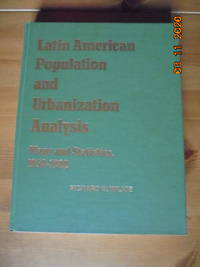
198410864UCLA Latin American Center Publications University of California 1984. Hardcover. Near Fine/No Jacket. Statistical Abstract of Latin America SALA Supplement Series no.8. Binding not as tight as new opens readily to pastedowns with no apparent defects. Could still pass for new. 431 pages BW photos maps tables figures. 222 x 286 cm. Not a library discard remainder or used. I received this book as new when I worked for the publisher in 1989. Oversized 8.75 x 11.25. <br/> <br/> UCLA Latin American Center Publications, University of California hardcover
Very light shelfwear to book else fine. DJ has light edgewear. ; This collection of essays honors Alexander Gordon McKay, one of the most respected names in Vergilian studies. Written by some of the world's leading scholars, the essays offer new perspectives on the larger Vergilian world which Dr. McKay's scholarship has so richly illuminated. The Two Worlds of the Poet focuses primarily on Vergil and Augustan literature and art, with several essays that expand the Vergilian theme and reflect the wide research interests of Professor McKay in such areas of classical studies as literature, art, architecture, painting, and sculpture. Vergil's world presents two faces, each inseparable from the other-the world which formed the poet and the world which the poet himself created—and it is proper that a volume which commemorates a scholar whose own work has elucidated both of these worlds should address itself to each. Several essays examine the poet's modus creandi—his use of the simile; his assimilation of the language and motifs of Roman comic drama; his exploitation of the rich store of Greek, Etruscan, and Roman mythological, legendary, and historical material; and his treatment of a variety of themes which touch upon the very essence of the human condition. Other essays touch upon various aspects of Vergil's material and cultural environment, enabling readers to place his created work in a broader perspective. Contributors offer new perspectives on the post-classical treatment of Vergilian themes, illustrating how the reception of Vergil varied with successive generations. The volume concludes with the reflections of the senior statesman of Vergilian criticism upon the scholar's art and mission. Vergil knew that to understand the present it was essential to break out of the narrow circle of the moment and to reach into the past, thereby affirming our own humanity and our place in the world and finding paths into the future. Vergil and his poetry create evocative connections that cut across time and place and culture, providing a glimpse at the universal human experience. The essays in The Two Worlds of the Poet explore Vergil's own struggle to find his place in the world, chronicle the pathway by which we gain entry into the world of the poet, and examine how the world of the poet has influenced and enriched our world. ; Classical Studies Pedagogy Series; 548 pages
Very light shelfwear to book and DJ else fine. ; This collection of essays honors Alexander Gordon McKay, one of the most respected names in Vergilian studies. Written by some of the world's leading scholars, the essays offer new perspectives on the larger Vergilian world which Dr. McKay's scholarship has so richly illuminated. The Two Worlds of the Poet focuses primarily on Vergil and Augustan literature and art, with several essays that expand the Vergilian theme and reflect the wide research interests of Professor McKay in such areas of classical studies as literature, art, architecture, painting, and sculpture. Vergil's world presents two faces, each inseparable from the other-the world which formed the poet and the world which the poet himself created—and it is proper that a volume which commemorates a scholar whose own work has elucidated both of these worlds should address itself to each. Several essays examine the poet's modus creandi—his use of the simile; his assimilation of the language and motifs of Roman comic drama; his exploitation of the rich store of Greek, Etruscan, and Roman mythological, legendary, and historical material; and his treatment of a variety of themes which touch upon the very essence of the human condition. Other essays touch upon various aspects of Vergil's material and cultural environment, enabling readers to place his created work in a broader perspective. Contributors offer new perspectives on the post-classical treatment of Vergilian themes, illustrating how the reception of Vergil varied with successive generations. The volume concludes with the reflections of the senior statesman of Vergilian criticism upon the scholar's art and mission. Vergil knew that to understand the present it was essential to break out of the narrow circle of the moment and to reach into the past, thereby affirming our own humanity and our place in the world and finding paths into the future. Vergil and his poetry create evocative connections that cut across time and place and culture, providing a glimpse at the universal human experience. The essays in The Two Worlds of the Poet explore Vergil's own struggle to find his place in the world, chronicle the pathway by which we gain entry into the world of the poet, and examine how the world of the poet has influenced and enriched our world. ; Classical Studies Pedagogy Series; 548 pages