Boturini Benaducci, Lorenzo (1702-1753)Biblio.com
30 résultats
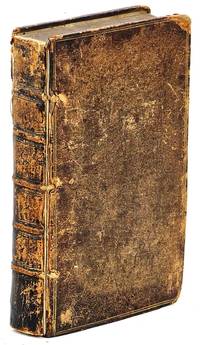
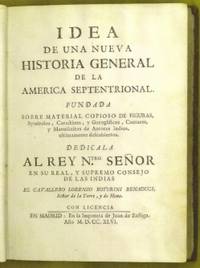
1746A0068xxxvi167viii96 pages. Octavo 8 1/4" x 6 1/4" bound in full leather with decorative gilt and lettering to spine. From the library of George M Foster. First edition.<br /><br />Lorenzo Boturini Benaducci born in Italy of noble parentage studied in Milan and lived in Trieste and Vienna. He was a knight of the Holy Roman Empire. Forced to flee Austria because of the war with Spain Boturini arrived in Spain via England and Portugal. In Madrid he met the Condesa de Santibáñez oldest daughter of the Condesa de Moctezuma. The mother authorized him to collect a pension due her as a descendant of the Aztec Emperor Moctezuma II from the royal treasury in New Spain. Boturini went to New Spain in 1736 where he remained eight years. During those years he assembled a vast collection of paintings maps manuscripts and native codices. He copied more than 500 pre-Columbian inscriptions and made his own drawings of monuments and sculptures and he investigated the history of the apparition of the Virgin of Guadalupe on the hill of Tepeyac. He traveled widely and on his travels brought together the largest collection of Mexican antiquities assembled to that time by a European. Not only did he intend to write the history of the Virgin of Guadalupe but he also had plans to crown her image with a gold crown. For that purpose he sought donations from the bishops and from the public. This brought him to the attention of the colonial government which was suspicious of the motives of a foreigner making this proposal. On June 2 1743 after an investigation the recently arrived viceroy Pedro Cebrián y Agustín had him imprisoned and impounded his collection. He was accused of entering New Spain without license from the Council of the Indies and of introducing papal documents without a royal permit. After eight months in prison Boturini was sent to Spain. He fell into the hands of pirates who eventually released him at Gibraltar. From there he traveled to Madrid in miserable conditions. In Madrid he met Mariano Fernández de Echeverría y Veytia another passionate collector of Indian antiquities. Fernández de Echeverría y Veytia offered Boturini a place to live and financial support and got the Council of the Indies to reconsider his case. Boturini was absolved. The king named him royal chronicler of the Indies ordered that his collection be returned to him and extended an invitation for him to return to New Spain. Boturini however declined to return to New Spain and his collection was never restored. It appears that he was granted recompense and a stipend to work on his projected history of the colony. In Madrid he wrote a history of ancient Mexico unpublished at the time of his death in 1753. The library at the Basílica de Nuestra Señora de Guadalupe is named for him. The Boturini Collection was formed between 1735 and 1743 to serve as the basis of a projected Historia de América Septentrional. It consisted of many valuable documents the majority of them of Indian provenance. Among these were hieroglyphic paintings that had belonged to Juan de Alva Ixtlilxochitl a descendant of the rulers of Texcoco. Ixtlilxotchitl bequeathed these documents to Carlos de Sigüenza y Góngora. The collection was confiscated by Viceroy Pedro Cebrián y Agustín at the time of Boturini's arrest in 1743. It was deposited in the office of the secretary of the viceroyalty. The documents were neglected there for years and suffered considerable pilferage. The subsequent viceroy Juan Francisco de Güemes 1st Count of Revillagigedo granted the historian and antiquary Fernández de Echeverría y Veytia Boturini's friend from Madrid the paintings and documents he solicited for his own studies. On Fernández de Echeverría y Veytia's death they passed to Antonio de León y Gama. He died in 1802 and the collection passed to his heirs. Shortly thereafter 16 paintings were obtained by Alexander von Humboldt during his visit to Mexico in 1802-03. He published them in Vues des cordillères et monuments des peuples indigènes d'Amérique. The originals of these are now in the Berlin State Library. Part of the remainder of the collection may have passed to Father José Pichardo an amateur antiquarian. Joseph Alexis Aubin beginning in 1827 or shortly thereafter obtained important parts of the collection from a variety of sources. He sold his collection to Eugène Goupil who was of French and Mexican descent. This part of the collection passed by donation or purchase to the National Library in Paris where it remains under the name Aubin-Goupil Collection.<br /><br />George McClelland Foster Jr born in Sioux Falls South Dakota on October 9 1913 died on May 18 2006 at his home in the hills above the campus of the University of California Berkeley where he served as a professor from 1953 to his retirement in 1979 when he became professor emeritus. His contributions to anthropological theory and practice still challenge us; in more than 300 publications his writings encompass a wide diversity of topics including acculturation long-term fieldwork peasant economies pottery making public health social structure symbolic systems technological change theories of illness and wellness humoral medicine in Latin America and worldview. The quantity quality and long-term value of his scholarly work led to his election to the National Academy of Sciences in 1976. Virtually all of his major publications have been reprinted and/or translated. Provenance from the executor of Foster's library laid in.<br /><br />Condition:<br /><br />Lacks frontispiece portrait. Lacks Foster's stamp or date of purchase. some damp stains to end papers neat old marginalia in Spanish to back end paper worm hole ant head and heal of spine going through spine extremities bumped and rubbed old owner's label to front paste down 1" chip at back head hinge and name to front end paper scuffed else a good copy of a rare item. En la Imprenta de Juan de Zuniga hardcover
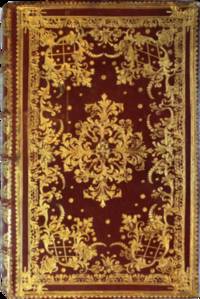
17564062Rome: Gioacchino & Giovanni Giuseppe Salvioni Stampatori Pontificii Vaticani 1756. 8vo 210 x 135 mm. 24 407 1 pp. 2 parts the Office of the Dead separately titled. Printed in red and black. Engraved frontispiece and 12 full-page engravings by Arnold Van Weserhout and Jacob Frey after Joseph Passarus Giuseppe Passaro two engraved title vignettes and 12 tailpiece vignettes a few unsigned others by Frey after Passaro or by M. Schedi engraver 3 engraved initials numerous red-printed woodcut initials. Occasional light browning. 18th-century Roman gold-tooled red goatskin covers with densely tooled dentelle border built up from leafy plant tools sprigs floral and arabesque tools each cornerpiece enclosing a grid with gold dots blossom tools and dots in central field ornamental centerpiece of large foliate arabesque and dandelion tools spine in six uniformly gold-tooled compartments block-printed pastedown endpapers with flower and fruit design stencil-colored in red green and yellow gilt edges with gauffred border design; upper cover a bit faded and bowed corner bumped a couple of scrapes to lower cover. Provenance: Horace de Landau 1824-1904 bookplate shelfmark no 47854; Vicomte de Cossette armorial bookplate. A rococo binding on a luxuriously printed and illustrated Office of the Virgin from the Salvioni press official printers to the Vatican. The Salvioni press used several workshops sometimes collectively mislabeled as the "Vatican" or "Salvioni" bindery. Those bound for the papal library were finely executed and different binderies can be identified by their tools color of leather and stylistic details. The present pretty but crowded binding decor with its in places overlapping tooling does not seem to belong to the corpus of binderies represented in for example the Vatican Library's 1977 exhibit catalogue of papal bindings. Stylistically it uses types of tools and decoration - the wide "Louis XV" style border and the basketweave cornerpieces - in vogue during the reigns of Clement XIV 1769-1774 and Pius VI 1775-1799. Its decoration is similar for example to binding no. 262 in Legature papali but it is of inferior workmanship and does not use the same tools. It was probably produced in a Roman shop executing many commissions and forced to work quickly although it could even be a provincial binding. Cf. Biblioteca Apostolica Vaticana Legature papali da Eugenio IV a Paolo VI no. 262 plate CXCI. Gioacchino & Giovanni Giuseppe Salvioni, Stampatori Pontificii Vaticani hardcover
1731102630London: J. Senex W. Innys J. Osborn and T. Longman. 1731. Vol 2 only of 2. Full leather early binding 25 engraved folding platespp xv 285 indx xix. Spine heavily rubbed hinges fragile stitching weak corners rubbed. Worming to bottom edge including through the inner corner of pages heavier at earlier and latter pages but not affecting any of the text with some tanning to these pages. Peter Cowan's the Australian writer copy wih his ownership signature to front paste-down. Good condition. 's Gravesande was a Dutch mathematician and natural philosopher who helped to propagate Isaac Newton's ideas in Continental Europe and laid the foundations for the teaching of Newtonian mechanics through experimental demonstrations. Vol. II of "Mathematical Elements of Natural Philosophy" studies Newton's ideas on fire the refraction and reflection of light opacity and colours the planetary system and celestial motions including universal gravity. The publisher John Senex was one of the principal cartographers of the 18th century. This edition published only a few years after Isaac Newton's death and complete with all twenty-five engraved plates showing experiments. 4th Edition. Leather. J. Senex, W. Innys, J. Osborn and T. Longman hardcover
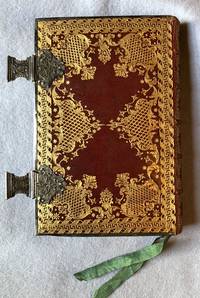
17562896Rome: Gioacchino & Giovanni Giuseppe Salvioni 1756. <p>8vo 208 x 133 mm. 24 407 1 pp. 2 parts the Office of the Dead separately titled. Printed in red and black. Engraved frontispiece and 12 full-page engravings by Arnold Van Weserhout and Jacob Frey after Joseph Passarus Giuseppe Passaro two engraved title vignettes 12 engraved tailpiece vignettes a few unsigned others by Frey after Passaro or by M. Schedi engraver 3 engraved capital initials numerous red-printed woodcut initials. Foxing occasionally severe short marginal tear to fol. Z7.<br /> Slightly later eighteenth-century Roman gold-tooled red goatskin covers with large dentelle border composed of a triple neo-classical roll-tooled outer frame enclosing six large ornaments each with a basketweave design of diagonally crossing gilt fillets framed in volutes and leafy sprigs a few tiny petal or star tools board edges protected with a probably later frame of silver or silver-plated metal discreetly nailed to the binding two elaborately chased silver fore-edge clasps and catches spine in six uniformly gold-tooled compartments gilt edges with gauffred border design pair of green ribbon page markers marbled endpapers; 20th-century black morocco felt-lined case. Provenance: with Gumuchian Catalogue XII/1930/225; Maurice Burrus bookplate purchased from Gumuchian in 1934 purchase notes at end. <br /> <br /> A striking rococo binding in fine condition on a luxuriously printed and illustrated Office of the Virgin from the official Vatican press.<br /> <br /> From the mid- to late eighteenth century the Salvioni press used one or more bookbinding workshops that produced finely gold-tooled bindings for their Vatican publications. Although often referred to as the “Salvioni bindery†this appellation is circumstantial: â€the Salvioni firm was responsible for promoting the bindings but it is not known which workshop produced them†British Library Database of Bookbindings. Some of these “Vatican†bindings incorporated variously colored or mottled leather. This example with its basketweave cartouches relies purely on tooling for its effect. An example evidently from the same workshop on a book printed at Rome in 1791 by Salomini using analogous cartouches as corner-pieces as well as a similar “spiraling†border design and some of the same leafy spray and star tools is reproduced in Legature papali no. 264.<br /> <br /> “Whereas the . more flamboyant bindings produced by the Salvioni Bindery rely frequently on polychrome enamel heightening these Vatican bindings strike a somewhat more sober note with their very fine dark-red morocco and rich gold-tooling of high quality†Martin Breslauer Catalogue 107/428.<br /> <br /> Gumuchian Catalogue de Reliures du XVe au XIXe siecle no. 225 plate 68. Cf. British Library Database of Bookbindings Shelfmark c27e18; For other “Salvioniâ€Â bindings see Miner / Walters Art Gallery The History of Bookbinding no. 523; Biblioteca Apostolica Vaticana Legature papali da Eugenio IV a Paolo VI no. 264 plate CXCIII. </p> Gioacchino & Giovanni Giuseppe Salvioni unknown
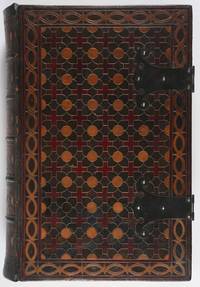
170153475Liege: Jean-François Broncart 1701. First edition thus. Hardcover. Very good. Two tomes each in two parts bound in one volume folio: 6 lxxix 1 blank 544; 1 title 1 blank 545-957 1 blank xx Cantique des cantiques 96 La sagesse; Ecclesiastique de Jesus fils de Sirach; 1 title 1 blank 468; 1 title 1 blank 430 16 Oratio Manassae; Liber Esdrae - tertius et quartus pp. Main titles for each tome in red and black; secondary titles in black only all four titles with engraved printer's device; each dated 1701. Text in two columns Latin and French. Illustrated with 6 engraved plates: frontispiece Johann Friederich Karg von Bebenburg; folding plate with 16 vignettes 4x4 depicting well-known biblical scenes; 4 folding maps The Holy Land; The Promised Land Apportioned by Tribe; Jerusalem in the Second Temple Era - after Lamy; The World Known to the Evangelists. Quarter-page engraved vignettes at the head of each of the 30 biblical books; historiated initials; printed marginalia. Exquisitely bound in the 19th century in levant morocco extra over wooden boards with mosaic compartments in crimson ochre; and dark brown bordered in fine gilt line; spine with raised bands lightly rubbed; pair of brass mounts finished in black with steel rivets at both covers clasps and catched perished. All edges gilt and elaborately gauffered in textured floral motif; gilt inner dentelles; decorative endleaves renewed in orange and black; crimson silk ribbon marker. The work of a master binder. Expertly repaired at spine caps. Occasional faint embrowning; marginal dampstains beginning in second half mostly at outer corners; expanding to fore-edge and darkening considerably in final 20 leaves. Overall a very good copy with crisp text throughout though incomplete: lacks Antoine Arnould's "Concorde des quatre Evangélistes" along with its accompanying Latin version and the concluding index.<br /> <br /> Amply margined copy of this sumptuous edition of the Bible comprising the Latin Sixto-clementine Vulgate and the Port-Royal French translation printed in parallel columns. Isaac-Louis Lemaistre de Sacy 1613-1684 was the principal translator of the French version which was edited and completed after his death by Pierre Thomas du Fossé 1634-1698 and Henri-Charles de Beaubrun 1655-1723 who also provide annotations throughout. According to Barbier the French controversialist Thierry de Viaixnes 1659-1735 who found himself often at odds with his superiors was the principal editor of the work; at the time of its preparation he was serving as director of an academy at Hautvilliers in the diocese of Rheims McClintock & Strong.<br /> <br /> Dedicated to Johann Friederich Karg von Bebenburg 1648-1719 whose signed portrait was drawn and engraved by C. Gustav of Amling. An advocate of maximal papal power Karg served as Privy Councilor of the Prince-Bishop of Bamberg and Würzburg Peter Philipp von Dernbach then of Elector Max Emanuel of Bavaria. He served as Dean of Our Lady in Munich and was entrusted by Emperor Leopold I with a legation to Pope Innocence XI. By these efforts he secured in 1688 the election of Prince Joseph Clemens of Bavaria as Archbishop of Cologne as a result of which he was made Chancellor and Minister of State here noted on the frontispiece.<br /> <br /> Provenance and annotations: Bookplate of Herman Blum Blumhaven Library & Gallery with his ticket below; two gilt-stamped ex-libris morocco labels: Henry W. Poor oval; Adolph Lewisohn octogonal. References: Darlow & Moule 3779; Deleveau & Hillard Bibles imprimées du XVe au XVIIe siècles conservées è Paris 605; ADB 15 1882 "Karg: Johann Friedrich; Jean-François Broncart hardcover