Willlem-James 's Gravesande [Willem Jacob van's Gravesande] in Latin; trans JT Desaguliers J TBiblio.com
26 125 résultats
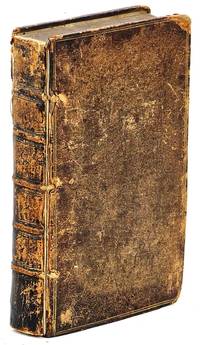
1731102630London: J. Senex W. Innys J. Osborn and T. Longman. 1731. Vol 2 only of 2. Full leather early binding 25 engraved folding platespp xv 285 indx xix. Spine heavily rubbed hinges fragile stitching weak corners rubbed. Worming to bottom edge including through the inner corner of pages heavier at earlier and latter pages but not affecting any of the text with some tanning to these pages. Peter Cowan's the Australian writer copy wih his ownership signature to front paste-down. Good condition. 's Gravesande was a Dutch mathematician and natural philosopher who helped to propagate Isaac Newton's ideas in Continental Europe and laid the foundations for the teaching of Newtonian mechanics through experimental demonstrations. Vol. II of "Mathematical Elements of Natural Philosophy" studies Newton's ideas on fire the refraction and reflection of light opacity and colours the planetary system and celestial motions including universal gravity. The publisher John Senex was one of the principal cartographers of the 18th century. This edition published only a few years after Isaac Newton's death and complete with all twenty-five engraved plates showing experiments. 4th Edition. Leather. J. Senex, W. Innys, J. Osborn and T. Longman hardcover
1947029402Stanford: Stanford University Press 1947. 1st Edition 1st Printing. Hardcover. Fine/Near Fine DJ. Photographs Maps. X 152 Pp. First Edition 1947 Dj With $3.00 Price Stamped Out Apparently By Publisher And New $4.00 Price Stamped In. Fine Book No Wear No Names Or Marks In Complete Dj Touch Of Rubbing Slight Browning At Top Edge And Side Edges A Single 1/2" Closed Tear At Top Right Of Front Panel. Bailey Willis 1857 - 1949 Was A Geological Engineer Who Worked For The United States Geological Survey Usgs And Lectured At Two Prominent American Universities. He Also Played A Key Role In Getting Mount Rainier Designated As A National Park In 1899. After Later Focusing More On Seismology He Became One Of The World's Leading Earthquake Experts Of His Time. In 1944 He Was Awarded The Penrose Medal By The Geological Society Of America. From 1921 To 1927 He Was President Of The Seismological Society. The Willis Wall On The North Face Of Mount Rainier Is Named For Him. <br/> <br/> Stanford University Press hardcover
214964Oxford et Londres, Robert Scott, 1674 in-8, [16] ff. n. ch. (titre, dédicace, préface, table), 330 pp., [5] ff. n. ch. d'index, avec 6 planches dépliantes hors texte, basane fauve marbrée, dos à nerfs, encadrement de simple filet à froid sur les plats, tranches mouchetées (rel. du XVIIIe s.). Coiffes rognées, charnière supérieure entièrement fendue.
97474New Haven, London, Yale University Press, 1980.
156560New Haven, London, Yale University Press, 1980.
Creasing along spine. Red ink stain along textblock. Stamp along inner cover. Wear to corners. ; Inside the Ancient World; 72 pages
Very light shelfwear to DJ and book. ; 143 pages
Scholar's bookplate to inner cover (Robert Brown). Wraps are browned with a few small tears and chipping. Minor creasing. ; Greece & Rome New Surveys in the Classics No. 1; 52 pages
94 pages. Fiction: The Terrible Morning; Mountain Time; (part 4 of 5); The Pond; A Serious Study of Love; A Man Needs a Horse; The Importance of Being Kissed. Articles: All Out Against Cancer; Little Miss Innocent; American in Germany; Underwater Wealth; A.W.O.L. De Luxe - Private John Martin, and American in the Canadian army; Fashion on the Downgrade; Lindbergh in Battle (conclusion); The Little Doc - Doris Gnauck; Bad Neighbor Policy - our diplomatic bungling in Latin America. Ads include: Mary Brewer in Ipana ad; Perry Como and Martha Stewart in G.E. Radio ad; Great logging-theme ad for International Trucks; Mercury cars; Elsie the Cow; Piper Cub; American Airline System; REO trucks; Clark's Teaberry Gum; Perilous Holiday (Movie ad); The Lockheed Constellation aircraft; Great back cover Coke ad shows male and female troops on train. Unmarked. Average wear. A sound copy of this vintage issue. Book
DJ with moderate chipping ; An ode to the continent, containing numerous b&w photographs ; 8vo 8" - 9" tall; 350 pages
Dustjacket has minor shelfwear with light discoloration to spine. DJ flap creased. Scholar's name to ffep. Minor shelfwear to book else fine. ; Contents: Contemporary analyses of decline; Ovid: the poet and politics; The dominance of Greek culture; Authoritarianism and irrationality; Thought and expression; Literature and society. ; Sather Classical Lectures; 344 pages
Dustjacket has light discoloration to spine. Book is fine. ; Contents: Contemporary analyses of decline; Ovid: the poet and politics; The dominance of Greek culture; Authoritarianism and irrationality; Thought and expression; Literature and society. ; Sather Classical Lectures; 344 pages
DJ has tear to upped edge of front panel. Scholar's blindstamp to ffep (Robert Brown). Scholar's bookplate to inner cover (Robert Brown). ; Contents: Contemporary analyses of decline; Ovid: the poet and politics; The dominance of Greek culture; Authoritarianism and irrationality; Thought and expression; Literature and society. ; Sather Classical Lectures; 344 pages
Dustjacket has minor shelfwear and light rubbing. DJ has one open tear near spine (1cm). Book has minor shelfwear. ; Contents: Contemporary analyses of decline; Ovid: the poet and politics; The dominance of Greek culture; Authoritarianism and irrationality; Thought and expression; Literature and society. ; Sather Classical Lectures; 344 pages
Dustjacket has minor shelfwear and light rubbing. DJ spine a bit sunned. Scholar's bookplate to inner cover (G. P. Goold). Book has minor shelfwear. ; Contents: Contemporary analyses of decline; Ovid: the poet and politics; The dominance of Greek culture; Authoritarianism and irrationality; Thought and expression; Literature and society. ; Sather Classical Lectures; 344 pages
Dustjacket has a few small tears to head of spine. Small handwritten bookplate to ffep (Elaine Fantham "With the compliments of the Author"). Book has minor shelfwear. ; Contents: Contemporary analyses of decline; Ovid: the poet and politics; The dominance of Greek culture; Authoritarianism and irrationality; Thought and expression; Literature and society. ; Sather Classical Lectures 45; 344 pages
Inscribed by author to R. E. Fantham on ffep : "To Elaine with love from the author. 15. V. 80" top corners bumped. Minor shelfwear to book. DJ has large tear to front panel and creasing. DJ has chipping and tears. DJ is somewhat tatty. ; 312 pages; It has long been assumed that the language of Roman poetry was constructed under the dictates of elaborately defined rules of rhetoric, and its content determined according to the system of comparable classifications called invention. This belief has persisted in spite of the difficulty of fitting the works of Catullus, Horace, Virgil, Propertius, and Tibullus into such a rigid scheme. In this book Gordon Williams demonstrates that, although Ovid and his successors did indeed assimilate their poetry to the rhetorical rules devised for prose, the earlier poets employed a quite different method. Williams sees this method as falling into either a metaphorical or metonymic mode, both of which permitted the poet "to say one thing and mean another." Delicate and often startling transitions of thought could be grasped-though not necessarily on first reading-by readers "assumed by the poet to have a special access to the poet's process of thought." This access presupposed similarities of "education, social position, and sympathetic understanding." Through close analyses of many poems, Williams shows how poets in the fifty years before Horace's death exploited metaphor, metonymy, and a third device that he calls thematic anticipation to evoke subtle associations of thought. In doing so he elucidates problems of Latin poems that have been generally misunderstood almost since they day they were written.; Signed by Author
Scholar's bookplate to inner cover (Robert Brown). Hard bump to lower edge of front board. Tiny sticker damage to ffep. Else book is VG. DJ has chipping and tears. DJ is somewhat tatty and a bit soiled to rear panel. ; 312 pages; It has long been assumed that the language of Roman poetry was constructed under the dictates of elaborately defined rules of rhetoric, and its content determined according to the system of comparable classifications called invention. This belief has persisted in spite of the difficulty of fitting the works of Catullus, Horace, Virgil, Propertius, and Tibullus into such a rigid scheme. In this book Gordon Williams demonstrates that, although Ovid and his successors did indeed assimilate their poetry to the rhetorical rules devised for prose, the earlier poets employed a quite different method. Williams sees this method as falling into either a metaphorical or metonymic mode, both of which permitted the poet "to say one thing and mean another." Delicate and often startling transitions of thought could be grasped-though not necessarily on first reading-by readers "assumed by the poet to have a special access to the poet's process of thought." This access presupposed similarities of "education, social position, and sympathetic understanding." Through close analyses of many poems, Williams shows how poets in the fifty years before Horace's death exploited metaphor, metonymy, and a third device that he calls thematic anticipation to evoke subtle associations of thought. In doing so he elucidates problems of Latin poems that have been generally misunderstood almost since they day they were written.
Gift inscription from author to G. P. And Philippa Goold on ffep. Foxing/dustsoiling to top of textblock. DJ has minor edgewear. DJ spine a bit sunned. ; 312 pages; It has long been assumed that the language of Roman poetry was constructed under the dictates of elaborately defined rules of rhetoric, and its content determined according to the system of comparable classifications called invention. This belief has persisted in spite of the difficulty of fitting the works of Catullus, Horace, Virgil, Propertius, and Tibullus into such a rigid scheme. In this book Gordon Williams demonstrates that, although Ovid and his successors did indeed assimilate their poetry to the rhetorical rules devised for prose, the earlier poets employed a quite different method. Williams sees this method as falling into either a metaphorical or metonymic mode, both of which permitted the poet "to say one thing and mean another." Delicate and often startling transitions of thought could be grasped-though not necessarily on first reading-by readers "assumed by the poet to have a special access to the poet's process of thought." This access presupposed similarities of "education, social position, and sympathetic understanding." Through close analyses of many poems, Williams shows how poets in the fifty years before Horace's death exploited metaphor, metonymy, and a third device that he calls thematic anticipation to evoke subtle associations of thought. In doing so he elucidates problems of Latin poems that have been generally misunderstood almost since they day they were written.; Signed by Author
Corner torn with a bit of loss to lower front corner. Light edgewear to wraps with a bit of chipping. Scholar's bookplate to inner cover (Robert Brown). Else VG. ; Greece & Rome New Surveys in the Classics No. 6; 49 pages
Minor shelfwear. Light browning to front wrap. ; Greece & Rome New Surveys in the Classics No. 6; 49 pages
Scholar's blindstamp and name to ffep (Robert Brown). Scholar's bookplate to inner cover (Robert Brown). Minor pencilling to a couple of pages. Spine slant. DJ has chipping and a few tears. ; 312 pages
Small tear to cloth at top of spine. DJ a bit sunned with a couple of small tears and light chippin; 312 pages
A few small scratches to wraps. Back upper corner is creased. Spine very slightly faded. Pages slightly tanned. ; Opus Books; 198 pages; This book analyzes the features unique to Roman poetry composed in the period 240-8 B. C. , demonstrating how these features are to be recognized and used as the basis for interpreting individual poems. Williams's particular emphasis is on the relation between poetic tradition (largely derived from Greek literature) and Roman originality.
305 p. Hardcover Very good condition good Bibliography: p. 283-296.