[ITALIAN ART]. COCHIN, Charles-NicolasBiblio.com
39 résultats
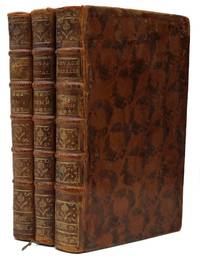
1758AQ13524A Paris: Chez Ch. Ant. Jombert 1758. In three volumes. xvi 230; 4 197 1; 4 288pp. Attractively bound in contemporary cats-paw calf gilt all edges red. Rubbed with slight surface loss. Marbled endpapers index to rear blank endpapers of Vol. I. ink- stamps of the Ben Damph Forest Library - family seat of the Earls of Lovelace - to all FFEPs. A travelogue and guide to the artworks of Italy produced following a journey of two years conducted by French engraver and critic Charles-Nicolas Cochin 1715-1790 undertaken in part in the company of Abel Francois Poisson brother of mistress to Louis XV Madame de Pompadour. . 12mo. Chez Ch. Ant. Jombert unknown
1800130Venice 1800. 1. Mercier Louis Sébastien. Il Disertore. Commedia del Sig. Mercier. Tradotta dal Francese. Bologna: Stamperia di S. Tommaso d'Aquino 1772. 8vo. 82 pp. Original paste paper wrappers. ICCU cites one copy in Bologna; NUC cites only the 1796 edition at Johns Hopkins only. Not in OCLC. 2. Albergati Capacelli Francesco. Il Capriccioso. Farsa del Cittadino Francesco Albergati Capacelli. Venice. 1797. 8vo. 42 pp. Original past paper wrappers. NUC cites copies at Johns Hopkins and NYPL; OCLC adds Munich; ICCU list 8 locations. 3. Alberghetti Forciroli Carlo. Edipo. Tragedia inedita del Cavaliere Carlo Alberghetti Forciroli. Venice 1797. 8vo. 68 pp. Original paste paper wrappers. NUC cites copies at Johns Hopkins and NYPL; OCLC adds U Penn; ICCU lists 12 locations. 4. Collin d'Harleville Jean François I Castelli in Aria. Commedia del Signor Collin d'Arleville. Traduzione inedita di Giovanni Piazza. Venice 1798. 8vo. 76 pp. Original paste paper wrappers. No copies in US libraries. ICCU cites 20 locations. 5. Cornielle Pierre. Il Cid. Tragedia di Pietro Cornelio. Tradotta da Giuseppe Greatti. Venice 1798. 8vo. 87 pp. Original paste paper wrappers. OCLC cites copies at Johns Hopkins U Penn Duke and Getty. 6. Dumaniant M. Guerra Aperta Ovvero Astuzia Conrto Astuzia. Commedia del Sig. Dumaniant tradotta da Pietro Andolfati. Venice 1798. 8vo. 76 pp. Original paste paper wrappers. OCLC Johns Hopkins and U Penn. 7. Piron Alexis. Gustavo Wasa. Tragedia di Alessio Piron. Tradotta dal Nobile Francesco Gritti. Venice: 1798. 8vo. 95 pp. Original paste paper wrappers. OCLC cites copies at Johns Hopkins and U Penn. 8. Bassi Domenico. L'Impensato Accidente. Commedia del Signor Domenico Bassi. Venice 1799. 8vo. 72 pp. Original paste paper boards. NUC cites copies at Boston Public Library and NYPL; OCLC adds U. Penn. 9. Avelloni Francesco. Giulio Villenwelt Assassino. Commedia del Signor Francesco Antonio Avelloni. Venice: 1800. 8vo. 64 pp. Original paste paper boards. OCLC cites copies at Johns Hopkins and Michigan State. 130. unknown
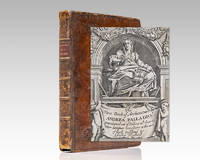
1733151582London: Printed for A. Bettesworth and C. Hitch and J. Osborn in Pater-noster-Row 1733. Finely bound eighteenth century example of Godfrey Richards' English translation of the first book in Palladio's monumental work. Octavo bound in full contemporary polished calf with a morocco spine label lettered in gilt front and rear panels decoratively stamped in blind title page printed in red and black additional engraved pictorial title page illustrated with 71 engraved plates and full-page illustrations 4 folding including a view of St. Paul's Cathedral woodcut illustrations advertisement leaf at end. Twelfth edition. Neat ownership inscriptions and small bookplate to the front free endpaper. Bookseller's ticket to the pastedown. In very good condition with the engravings very crisp and bright. One of the foremost architects of the Venetian Renaissance Andrea Palladio 1508–1580 based his designs on the principles of classical Greek architecture and the traditions of Roman building as described by Vitruvius. He is widely regarded as one of the most influential figures in the history of Western architecture particularly known for his villas in the Veneto as well as his palaces in Vicenza and churches in Venice all within the Venetian Republic. His architectural theories were codified in his treatise I Quattro Libri dell’Architettura The Four Books of Architecture which exerted a lasting influence on architectural practice across Europe and the United States. Palladio’s style later termed Palladianism combined elements of Greek Roman and Renaissance design emphasizing symmetry proportion and harmony in a manner inspired by classical temple architecture. Printed for A. Bettesworth and C. Hitch, and J. Osborn in Pater-noster-Row unknown
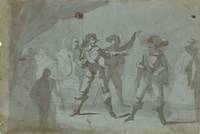
18002841800. Graphite and grayish ink wash on bluish wove paper 7 x 10 1/2 inches 177 x 265 mm matrix. Scattered surface soiling adhesive residue dog-eared corners and scattered edge tears along left margin outside of image area. Paper is braced on the verso with two pages from a mid 19th century book with illustrations by C.Perrin. One image depicts a scene of a group of soldiers representing the Holy Roman Empire causing a ruckus in a tavern named for King Richard the Lionhearted. Soldiers in what appears to be 18th century uniform bicker one drawing his sword in defense a lady appearing at his side the other standing at the foot of an empty throne. Perhaps a then modern depiction of King Richard refusing to show deference to the Holy Roman Empire. unknown
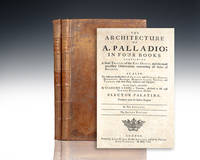
1721146284London: Printed by John Darby for the Author 1721. Rare second English edition of Leoni's English translation of Palladio's monumental work containing new typesetting but reusing the same plates from the first edition. Folio two volumes bound in full contemporary polished calf with gilt titles and ruling to the spine in six compartments within raised bands double gilt ruling and decorative stamping to the front and rear panels engraved frontispiece portrait of Palladio illustrated with 104 numbered engraved plates on 203 leaves including 15 double-page plates as well as 12 engraved in-text plates. Armorial bookplate to the pastedown of each volume. In very good condition. One of the giants of Venetian Renaissance architecture of the 16th century Andrea Palladio based his designs on the values of Greek architecture and the traditions of Roman architecture as outlined by Vitruvius. He is regarded as one of the greatest architects in the history of Western art best known for his villas in the Veneto as well as his palaces Vicenza and churches Venice all located within the Venetian Republic. His architectural theories were laid out in his treatise Quattro Libri dell Architettura The Four Books of Architecture which had a profound impact on building design throughout Europe and America. His style of architecture - a blend of Greek Roman and Renaissance art later known as Palladianism - accorded the greatest priority to maintaining symmetry perspective and overall harmony in the manner of Greco-Roman temple architecture and was widely imitated during the 17th and 18th centuries. Printed by John Darby for the Author hardcover
174040863Italy 1740. Oblong folio 222 x 305 mm. Notated in black ink on 10-stave rastrum-ruled paper. Watermark with initials "G.M." within a circle below a trefoil. <br /> <br /> Violino primo: 1f.<br /> Violino secondo: 1f. <br /> Unfigured basso continuo: i title 2 i blank pp. <br /> <br /> Violino primo part slightly soiled at edges; small tears to blank margins. Violino secondo part with small tear and minor stains to blank margins. Basso continuo part slightly soiled and stained with small tears to margins of title; title and second page of music reinforced at inner margins with early narrow strip of paper. This elegant and lighthearted trio sonata in B-flat major is cast in three movements: Allegro Assai C Andante C and Presto 3/8. Each movement is in binary form with repeats. The opening Allegro Assai incorporates leaping octaves occasional swerves into G-minor terrain and climactic rising scales at its conclusion. The Andante makes use gentle syncopations and slides of a third. The opening two movements start with the Romanesca progression a favorite opening gambit of 18th century composers conveying freshness and an amorous mood. The final Presto is a compact and attractive minuet. Most often the violins harmonize with each other and the bass making frequent use of parallel thirds and sixths; in several spots however they double each other. This may indicate that this work was originally conceived for a larger ensemble with string sections as it is not particularly common to encounter such doubling in chamber music. This sonata may have originally been an orchestral overture to a theatrical work. <br /> <br /> Not located in the RISM manuscripts database. unknown
175021218Firenze: Con Licenza de' Superiori 1750. Stiff Wrappers. Good. 2 of 6 volumes ONLY. Two vols. 8vo. pp. ff 2 2-100 2-96 2-88 blank 2-82; ff 1 2-95 blank 2-96 2-106 blank; contemporary limp paper boards; volume II rebacked with brown library tape; volume I spine ends chipped and worn; library tickets to spines; library stamps and pencil annotations to title leaves; embossed library stamps scattered throughout both volumes; card pockets at rear pastedowns; electronic tag at rear pastedown of volume I; text leaves clean throughout; a reasonably attractive set. Properly de-accessioned. Stiff Wrappers. Con Licenza de' Superiori unknown
175021219Firenze: Con Licenza de' Superiori 1750. Stiff Wrappers. Fair. Volume 3 of 6 ONLY. 8vo. pp. ff 1 xviii 126 blank ii-viii 74 2-103; contemporary limp paper boards; spine ends chipped and worn; backstrip detached from text block with gatherings becoming loose; library stamps and pencil annotations to title leaf; embossed library stamp; card pocket at rear pastedown; text leaves clean throughout; good copy at best. Stiff Wrappers. Con Licenza de' Superiori unknown
1735038060Rome Cira 1735 1735. 1st Edition 1st Printing. No Binding. Very Good. Original Engraving Colored In Shades Of Gray. Trimmed To Margins All Around. One Of A Large Collection Of Original Antique Engravings Formed By A Southern California Artist In The Early To Middle Twentieth Century. Each Plate Has Small Glue Marks On Reverse Where They Were Tipped In To An Album. Arthur Pond C.1705-1758 Was An English Painter And Engraver. He Was Educated In London And Stayed For A Time In Rome Studying Art In Company With The Sculptor Roubiliac. He Became A Successful Portrait-Painter. He Was Elected A Fellow Of The Royal Society In 1752 And Died In Great Queen Street Lincoln's Inn Fields 9 September 1758. His Numerous Original Portraits Include Alexander Pope William Duke Of Cumberland And Peg Woffington. Pond Was Also A Prolific Etcher And Used Various Mixed Processes Of Engraving By Means Of Which He Imitated Or Reproduced The Works Of Masters Such As Rembrandt Raphael Salvator Rosa Parmigianino Caravaggio And The Poussins. In 1734-5 He Published A Series Of His Plates Under The Title Imitations Of The Italian Masters. He Also Collaborated With George Knapton In The Publication Of The Heads Of Illustrious Persons After Jacobus Houbraken And George Vertue With Their Lives By Thomas Birch London 1743-52; And Engraved Sixty-Eight Plates For A Collection Of Ninety-Five Reproductions From Drawings By Famous Masters In Which Knapton Was Again His Colleague. Another Of His Productions Was A Series Of Twenty-Five Caricatures After Pier Leone Ghezzi Republished In 1823 And 1832 As Eccentric Characters. <br/> <br/> unknown
1735038059Rome Circa 1735 1735. 1st Edition 1st Printing. No Binding. Very Good. Original Engraving Colored In Shades Of Red-Brown. Trimmed To Margins All Around. One Of A Large Collection Of Original Antique Engravings Formed By A Southern California Artist In The Early To Middle Twentieth Century. Each Plate Has Small Glue Marks On Reverse Where They Were Tipped In To An Album. Arthur Pond C.1705-1758 Was An English Painter And Engraver. He Was Educated In London And Stayed For A Time In Rome Studying Art In Company With The Sculptor Roubiliac. He Became A Successful Portrait-Painter. He Was Elected A Fellow Of The Royal Society In 1752 And Died In Great Queen Street Lincoln's Inn Fields 9 September 1758. His Numerous Original Portraits Include Alexander Pope William Duke Of Cumberland And Peg Woffington. Pond Was Also A Prolific Etcher And Used Various Mixed Processes Of Engraving By Means Of Which He Imitated Or Reproduced The Works Of Masters Such As Rembrandt Raphael Salvator Rosa Parmigianino Caravaggio And The Poussins. In 1734-5 He Published A Series Of His Plates Under The Title Imitations Of The Italian Masters. He Also Collaborated With George Knapton In The Publication Of The Heads Of Illustrious Persons After Jacobus Houbraken And George Vertue With Their Lives By Thomas Birch London 1743-52; And Engraved Sixty-Eight Plates For A Collection Of Ninety-Five Reproductions From Drawings By Famous Masters In Which Knapton Was Again His Colleague. Another Of His Productions Was A Series Of Twenty-Five Caricatures After Pier Leone Ghezzi Republished In 1823 And 1832 As Eccentric Characters. <br/> <br/> unknown
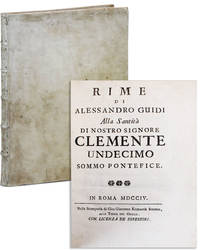
170415585Roma: Giacomo Komarek 1704. First Edition. Quarto 24cm. Contemporary vellum over boards; hand-inked spine title; 119pp. Boards bowing; scattered internal foxing; still a tight pleasing copy. Guidi 1650-1712 was an important Roman poet and critic noted for his reforming influence over the schools of Marini and Achillinni qv Britt. 11th ed. This was the final collection of Guidi's lyrics issued in his lifetime he is said to have died of an apoplectic fit upon discovering a typographical error in his final book a verse translation of six homilies of Pope Clement XI. From the library of artists Ben and Bernarda Bryson Shahn with estate bookplate inside front cover. Giacomo Komarek unknown
17801481780. Graphite and ink on handmade watermarked C & I Honig laid paper 8 15/16 x 6 3/4 inches 226 x 170 mm. Signed illegibly in ink lower margin. Scattered light creasing and surface soiling minor areas of rubbing all consistent with age. unknown
1771D19137Venice: Presso Lorenzo Baseggio 1771. Hardcover. Good. Pocket edition. Contemporary vellum worn and stained. Bookblock pulling away from binding. Collates complete. <br/><br/> Presso Lorenzo Baseggio hardcover
1774ST12037<p>Vicenza: per Gio. Battista Vendramini Mosca 1774. FIRST EDITION. 305 x 216 mm. 12 x 8 1/2". lxxvi pp.</p><p>Original paste paper boards covered in red and green block-printed patterned paper. In a modern red cloth folding box. Frontispiece engraving of the arms of bride and groom engraved allegorical vignettes on title page and at end woodcut head- and tailpieces and foliated initials all done with considerable charm. Spine and head edge just slightly faded a couple of very small snags in backstrip one page with mild thumbing but A SUPERB COPY EXCEPTIONALLY CLEAN FRESH AND BRIGHT both the text and original printed paper wrappers in an almost unbelievable state of preservation.<br /><br />This is a remarkably well-preserved Italian "wedding book" a souvenir produced for friends and guests of a noble bride and groom. It contains a collection of romantic poems by 28 different authors along with engravings of the newlyweds' arms. This kind of book was popular in Italy particularly in the north during the second half of the 18th and early part of the 19th centuries. Such occasional works were produced by printers in the major cities like Venice Vicenza Padua Trento and Milan for assorted noble patrons. Copies of these fête books are to be found today in Italian and Swiss libraries but only two copies of any such volumes are held in North America one by the New York Public Library and one by the Getty. KVK locates four copies of our work one of them damaged in three Italian libraries. The groom here Count Lodovico Tiene or Thiene was a scion of one of Vicenza's most important families. His ancestor also named Lodovico built the Palazzo Thiene that was memorably remodelled by Vicenza's most famous son Andrea Palladio. Our volume was obviously a treasured keepsake that was carefully stored away from light and dust and it looks amazingly like it must have on the day of the happy nuptials.</p> per Gio. Battista Vendramini Mosca
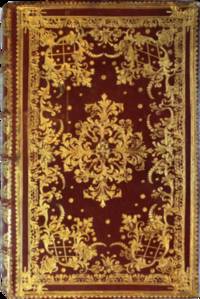
17564062Rome: Gioacchino & Giovanni Giuseppe Salvioni Stampatori Pontificii Vaticani 1756. 8vo 210 x 135 mm. 24 407 1 pp. 2 parts the Office of the Dead separately titled. Printed in red and black. Engraved frontispiece and 12 full-page engravings by Arnold Van Weserhout and Jacob Frey after Joseph Passarus Giuseppe Passaro two engraved title vignettes and 12 tailpiece vignettes a few unsigned others by Frey after Passaro or by M. Schedi engraver 3 engraved initials numerous red-printed woodcut initials. Occasional light browning. 18th-century Roman gold-tooled red goatskin covers with densely tooled dentelle border built up from leafy plant tools sprigs floral and arabesque tools each cornerpiece enclosing a grid with gold dots blossom tools and dots in central field ornamental centerpiece of large foliate arabesque and dandelion tools spine in six uniformly gold-tooled compartments block-printed pastedown endpapers with flower and fruit design stencil-colored in red green and yellow gilt edges with gauffred border design; upper cover a bit faded and bowed corner bumped a couple of scrapes to lower cover. Provenance: Horace de Landau 1824-1904 bookplate shelfmark no 47854; Vicomte de Cossette armorial bookplate. A rococo binding on a luxuriously printed and illustrated Office of the Virgin from the Salvioni press official printers to the Vatican. The Salvioni press used several workshops sometimes collectively mislabeled as the "Vatican" or "Salvioni" bindery. Those bound for the papal library were finely executed and different binderies can be identified by their tools color of leather and stylistic details. The present pretty but crowded binding decor with its in places overlapping tooling does not seem to belong to the corpus of binderies represented in for example the Vatican Library's 1977 exhibit catalogue of papal bindings. Stylistically it uses types of tools and decoration - the wide "Louis XV" style border and the basketweave cornerpieces - in vogue during the reigns of Clement XIV 1769-1774 and Pius VI 1775-1799. Its decoration is similar for example to binding no. 262 in Legature papali but it is of inferior workmanship and does not use the same tools. It was probably produced in a Roman shop executing many commissions and forced to work quickly although it could even be a provincial binding. Cf. Biblioteca Apostolica Vaticana Legature papali da Eugenio IV a Paolo VI no. 262 plate CXCI. Gioacchino & Giovanni Giuseppe Salvioni, Stampatori Pontificii Vaticani hardcover
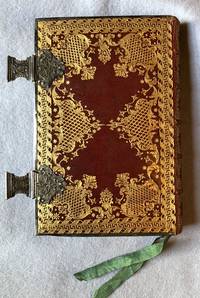
17562896Rome: Gioacchino & Giovanni Giuseppe Salvioni 1756. <p>8vo 208 x 133 mm. 24 407 1 pp. 2 parts the Office of the Dead separately titled. Printed in red and black. Engraved frontispiece and 12 full-page engravings by Arnold Van Weserhout and Jacob Frey after Joseph Passarus Giuseppe Passaro two engraved title vignettes 12 engraved tailpiece vignettes a few unsigned others by Frey after Passaro or by M. Schedi engraver 3 engraved capital initials numerous red-printed woodcut initials. Foxing occasionally severe short marginal tear to fol. Z7.<br /> Slightly later eighteenth-century Roman gold-tooled red goatskin covers with large dentelle border composed of a triple neo-classical roll-tooled outer frame enclosing six large ornaments each with a basketweave design of diagonally crossing gilt fillets framed in volutes and leafy sprigs a few tiny petal or star tools board edges protected with a probably later frame of silver or silver-plated metal discreetly nailed to the binding two elaborately chased silver fore-edge clasps and catches spine in six uniformly gold-tooled compartments gilt edges with gauffred border design pair of green ribbon page markers marbled endpapers; 20th-century black morocco felt-lined case. Provenance: with Gumuchian Catalogue XII/1930/225; Maurice Burrus bookplate purchased from Gumuchian in 1934 purchase notes at end. <br /> <br /> A striking rococo binding in fine condition on a luxuriously printed and illustrated Office of the Virgin from the official Vatican press.<br /> <br /> From the mid- to late eighteenth century the Salvioni press used one or more bookbinding workshops that produced finely gold-tooled bindings for their Vatican publications. Although often referred to as the “Salvioni bindery†this appellation is circumstantial: â€the Salvioni firm was responsible for promoting the bindings but it is not known which workshop produced them†British Library Database of Bookbindings. Some of these “Vatican†bindings incorporated variously colored or mottled leather. This example with its basketweave cartouches relies purely on tooling for its effect. An example evidently from the same workshop on a book printed at Rome in 1791 by Salomini using analogous cartouches as corner-pieces as well as a similar “spiraling†border design and some of the same leafy spray and star tools is reproduced in Legature papali no. 264.<br /> <br /> “Whereas the . more flamboyant bindings produced by the Salvioni Bindery rely frequently on polychrome enamel heightening these Vatican bindings strike a somewhat more sober note with their very fine dark-red morocco and rich gold-tooling of high quality†Martin Breslauer Catalogue 107/428.<br /> <br /> Gumuchian Catalogue de Reliures du XVe au XIXe siecle no. 225 plate 68. Cf. British Library Database of Bookbindings Shelfmark c27e18; For other “Salvioniâ€Â bindings see Miner / Walters Art Gallery The History of Bookbinding no. 523; Biblioteca Apostolica Vaticana Legature papali da Eugenio IV a Paolo VI no. 264 plate CXCIII. </p> Gioacchino & Giovanni Giuseppe Salvioni unknown
17992539<p>Lipsia 1799. Hardback. Very Good/No Jacket. 1874 8vo. disposto con Ordine Etimologico da Cristiano Giuseppe Jagemann Socio Corrispondente dell'Accademia Fiorentina. 2 volumes: 'Parte Prima ove le voci italiane si convertono in tedesco Parte Seconda ove le voci tedesche si convertono in italiano con una raccolta di voci italiane che hanno affinita colla lingua tedesca o con altre lingue settentrionali'. Lipsia 1799 appresso Sigefredo Lebrecht Crusius. Half leather. Condition notes: Sound clean volumes although with age-tanning to pages especially to earliest and last. External page edges protected by red tinting. Leather somewhat rubbed boards a little knocked but attractive copies.</p> hardcover
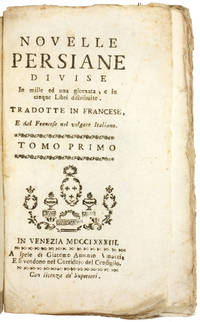
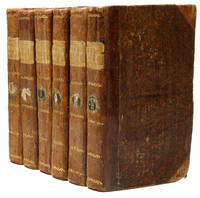
1783ABC_49354Venice = Naples: Giacomo Antonio Vinaccia 1783. Contemporary grey paper wrappers with manuscript volume numbers on the spines. Stored in a brown decorated paper slipcase. 12mo. With vignettes built up from typographical ornaments on each title page and some ornamental headpieces. 5 volumes. Very rare highly remarklable pirated edition in five volumes of the Heyaryek-Rouz or Thousand and One Days so called to give the work an air of originality Chauvin IV 124. A Persian manuscript of this work was given to Francois Petit de la Croix in Isfahan in 1675 but enjoyed far fewer editions and translations than the Alf layla wa-layla. As Chauvin notes it cannot be determined whether the Thousand and One Days or the Thousand and One Nights was composed first nevertheless to this day the Heyarek-Rouz is much less well-known to the Western world IV 123f. Chauvin quotes one commentator who declares the Heyarek-Rouz much more ingenious and more realistic as it sometimes includes marvels following the taste of the Oriental.The place of printing given on the title page of the present edition is Venice but the costs were borne by the well-known Neapolitan publisher Giacomo Antonio Vinaccia and the books were also sold in Naples in the Corridoio del Consiglio. It is known that Vinaccia drew on the great publishing pool of Venice for many of his publications creating actual counterfeits and it is thought that even Venetian publishers themselves relied on his presses to encourage the distribution of their works in the south as well without having to pay duties or apply for printing licences cf. A. Scannapieco. In 1784 the following year an identical edition appeared giving Naples as the place of printing.The wrappers are worn mainly around the spines the edges of the leaves are somewhat frayed. Otherwise in good condition.l OPAC SBN ITICCUNAPE028513 4 copies incl. 3 incomplete; WorldCat 955557595 1 copy also in OPAC SBN; cf. A. Scannapieco Un editore goldoniano nella Napoli del secondo Settecento in Problemi di critica goldoniana IV 1997 pp. 7-152; This edition not in Chauvin. Giacomo Antonio Vinaccia, unknown
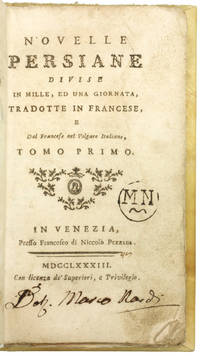
1783ABC_49353Venice: Niccolò Pezzana 1783. Later vellum with the manuscript titles and volume numbers in red on the spines. 12mo. With small vignettes built up from typographical ornaments on the title pages and some headpieces built up from typographical ornaments. 5 volumes. Extremely rare charming five-volume Italian edition of the Heyaryek-Rouz or Thousand and One Days so called to give the work an air of originality Chauvin IV 124. A Persian manuscript of this work was given to Francois Petit de la Croix in Isfahan in 1675 but enjoyed far fewer editions and translations than the Alf layla wa-layla. As Chauvin notes it cannot be determined whether the Thousand and One Days or the Thousand and One Nights was composed first nevertheless to this day the Heyarek-Rouz is much less well-known to the Western world IV 123f. Chauvin quotes one commentator who declares the Heyarek-Rouz much more ingenious and more realistic as it sometimes includes marvels following the taste of the Oriental.The present edition is printed by Niccolò Pezzana who only the following year would produce the Thousand and One Nights part of an ambitious publishing project catering to the Venetian public which at the time was rediscovering a taste for exotic fairy tales.With an owner's stamp MN on each title page and a manuscript inscription "Dot. Marco Nardi on the title page of vols. I and II. Both the inscription and the stamp belong to Dr. Marco Nardi. Further with some manuscript annotations in brown ink on the blank flyleaves. The endpapers are slightly worn some marginal worming to vol. V not affecting text some leaves are very slightly dust soiled. Otherwise in good condition.l OPAC SBN ITICCULO1E019364 3 copies incl. 2 incomplete; cf. this edition not in Chauvin; WorldCat. Niccolò Pezzana, hardcover
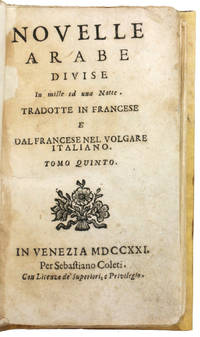
1721ABC_49346Venice: Sebastiano Coleti 1721. Near-contemporary vellum. 12mo. With a small woodcut vignette on the title page and a woodcut ornamental tailpiece. 2 volumes bound as 1. Two volumes from the very rare first Italian edition of the Arabian Nights based on Gallands liberal but highly influential French translation. Adapted to Parisian tastes it had been first published in 12 volumes between 1704 and 1717. The present translation was the main vehicle for the circulation of the Nights in Italian culture through the 18th- and 19th centuries and via Venice also influenced Modern Greek literature which had access to the work only in the Italian translation. The history of the Italian reception of the Arabian Nights is characterised by the hegemony of Gallands work in Italian translation which circulated first via Coletis edition and its various new editions and later in the translation by Armando Dominicis in 1893 Christian-Muslim relations p. 859.Volumes V and VI contain respectively Nights CLXVI-CCIII and CCV-CCCXXXIV. The work is of great rarity: only two complete sets of the present work are traceable in libraries worldwide Arezzo City Library and National Central Library Florence and only two other libraries have an incomplete set volumes 11 and 12; Biblioteca Saveriana Conforti Parma and Biblioteca comunale Alessandro Cialdi Civitavecchia. Thus only two other copies of the present fifth and sixth volumes are known!The binding is slightly soiled internally slightly soiled with small repairs to the title page. Otherwise in good condition.l Burton VIII 104; Chauvin IV p. 46 no. 104A; OPAC SBN ITICCURMSE061932 4 copies incl. 2 incomplete; cf. Christian-Muslim relations A bibliographical history 37; this ed. not in WorldCat. Sebastiano Coleti, hardcover
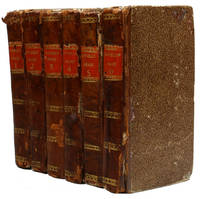
1791ABC_49348Venice: Giuseppe Orlandelli per la dita del fu Francesco di Nicolò Pezzana 1791. Contemporary half calf marbled paper sides with vellum corners a title label lettered in gold on the spine. 12mo. With a small vignette built up from typographical ornaments on the title page of each volume and with some headpieces built up from typographical ornaments. 6 volumes. Second Pezzana edition following that of 1784. That Niccolò Pezzanas company which in the meantime had been succeeded by Giuseppe Orlandelli returned to print the Arabian Nights testifies to the great favour the stories had found among readers in Venice. Also in 1791 the "Continuation of the Thousand and one nights" left its presses in a major publishing project to rediscover oriental fables.With the black ownership stamp of Ettiénne della Valle on the title page of each volume. Overall in good condition.l OPAC SBN ITICCUPUVE023925 4 copies incl. 3 incomplete; WorldCat 960425061 and other numbers for vols. 2-6 1203593861 3 copies; cf. Callegari Le edizioni veneziane delle Novelle arabe divise in mille ed una notte nel XVII secolo in Antoine Galland 1646-1715 et son journal: Actes du colloque international organise a lUniversite de Liege 16-18 fevrier 2015 a loccasion du tricentenaire de sa mort 2020 pp. 105-116 here at 108. This edition not in Chauvin. Giuseppe Orlandelli, per la dita del fu Francesco di Nicolò Pezzana, hardcover
1784ABC_49347Venice: Francesco di Nicolò Pezzana 1784. Near-contemporary gold-tooled half calf marbled paper sides with a red morocco title label lettered in gold on the spine. 12mo. With a small vignette built up from typographical ornaments on each title page and some headpieces built up from typographical ornaments. 6 volumes. First edition by Pezzana a both prolific and diligent publisher of exotic tales. After Coletis first Italian edition of 1721-22 and that of Domenico Occhi between 1741 and 1743 Nicolò Pezzana was the third to issue the "Arabian Nights" in Italian: the text is the same as Coletis as is the size 12mo. From the time of their appearance the Novelle Arabe had been considered a work of literature for wide consumption and circulation . It was no coincidence that as early as 1780 the stories had been included in the group of works released from their privilege and subsequently raffled off among the less affluent members of the Guild. The printer Pietro Piotto who owned only a print shop without a bookshop was awarded the rights to the publication on 22 October; when he failed to exploit that privilege it was quickly seized by Pezzana Callegari. A very rare edition recorded in only six copies in the Italian OPAC SBN.The bindings are a little rubbed and the spines show some signs of wear around the head and foot. The work is somewhat browned throughout. Otherwise in good condition.l OPAC SBN ITICCULO1E019227 6 copies; Cf. Callegari Le edizioni veneziane delle Novelle arabe divise in mille ed una notte nel XVII secolo in Antoine Galland 1646-1715 et son journal: Actes du colloque international organise a lUniversite de Liege 16-18 fevrier 2015 a loccasion du tricentenaire de sa mort 2020 pp. 105-116 here at 108; this ed. not in Chauvin; WorldCat. Francesco di Nicolò Pezzana, unknown
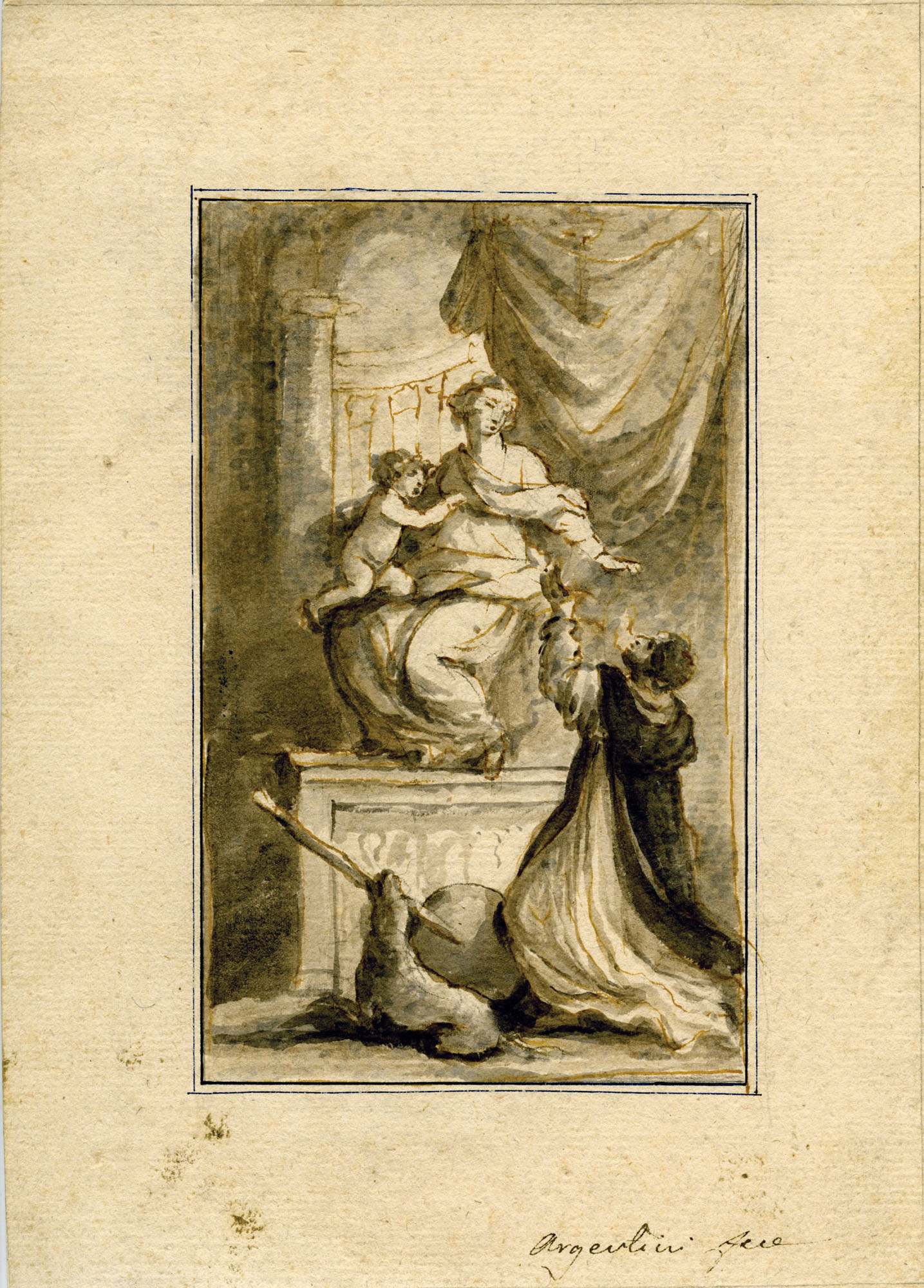
17508801750. Ink wash in gray and black with heightening in brown pen and ink on cream laid paper laid down to an archival matrix 9 3/4 x 7 inches 247 x 178 mm. In good condition with some minor surface soiling and slight attenuation especially visible in the areas with brown ink. Adhesive residue on the verso at the top corners and bottom center margin does not effect the recto. The name "Argentini." appears in ink on the recto in the lower right margin. unknown
179036609N. P.: Augustae Tavrinorum Typis Ignatii Soffietti 1790. Engraved title vignette by Valperga after Palladius. 1 vols. 4to. Contemporary marbled boards remains of printed label on spine. Rubbed joints starting printed label on upper cover some spotting of endpapers bookplate from the Bibliotheca Giuliari else a very good and clean copy. Engraved title vignette by Valperga after Palladius. 1 vols. 4to. Memorial of Henrietta the Countessa Tapparelli Balbo wife of Prospero Balbo mother of Cesare Balbo the Italian Writer and Statesman and daughter of Robert Taparelli d'Azeglio Conte di Lagnasco. Including poetic contributions of Gioanni Batista Ghio Conte Guiseppe Franchi Conte Giambatista Somis Albo Crisso Camillo Maulandi Emanvele Rosetti Francesco Morelli and others. Augustae Tavrinorum Typis Ignatii Soffietti unknown