1 303 résultats
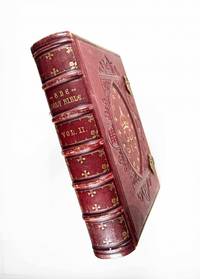
186249952Glasgow Edinburgh and London: William Mackenzie 1862. Deluxe Edition. Two volumes folio 450 x 330 mm published between 1862 and 1863. 16 1344pp. 57 unnumbered leaves of albumin prints 230 x 160mm mounted on card stock. Crimson morocco over wooden boards elaborately tooled in gilt and blind; edges mounted in brass double brass clasps with thistle motif; covers with a broad blind-stamped border around a recessed central panel with the crowned cipher of Queen Victoria in gilt; gilt tooled spine with 5 raised bands; a.e.g. marbled endleaves with gilt dentelles. Covers with some mild traces of use; single crease in each marbled endleaf partially detached in second volume; occasional light to moderate foxing mostly confined to the plate mounts; albumin prints in fine condition often with foxing extending about 5mm from the edges into the mount. Overall a very good set with a fine series of photographs notable for their technical achievment.<br /> <br /> Deluxe edition one of 170 copies complete with all 57 albumen prints. Produced for the 1862 International Exhibition and dedicated to Queen Victoria then recently in mourning for the death of Prince Albert this work appeared at a time when photography though still a laborious and expensive process was just beginning to become a popular activity. Victoria herself was an amateur photographer and "the royal couple had been enthusiastic supporters of photography in England from the beginning; in 1853 they became founding patrons of the Photographic Society Club" K. Fiedorek. Francis Frith 1822-1898 the devout Quaker whose photographic images grace the present work was one of the best-known photographers to work in the Near East and the most commercially successful photographer of the nineteenth century. Finding his elementary studies tedious Frith left school at the age of ten apprenticed with a grocer and eventually started his own business. He later went into printing sold the grocery business to a competitor at a substantial profit and went on to devote himself to photography. "The growing Victorian interest in the East and its exotic and historic attractions caught the attention of this astute businessman" Perez. Between 1856 and 1860 Frith made three photographic expeditions to Egypt Ethiopia Sinai and the Levant accompanied by the engineer Francis Herbert Wenham who provided technical assistance in mechanics and optics. While Perez notes that Frith's "approach was always a strictly commercial one and his concern was to make truthful and accurate views of the area" he readily concedes that "the technical quality of Frith's photographs is superior." Frith employed the new wet collodion process in which glass plate negatives were sensitized exposed and developed while still wet. While technically demanding the process yielded rich detail and broad tones. "Frith's were the first original wet-plate photographs of Jerusalem and the Holy Land to reach a wide English-speaking audience and his pictures of the small Palestinian towns were most likely the first published anywhere" Nir p.66.<br /> <br /> Perhaps the most novel aspect of this celebrated edition of the Bible and certainly a harbinger of things to come was the way in which the photographer "presented the radical possibility of seeing photographs of the biblical sites alongside related verses of scripture. he sought to defend and promote his faith by conscripting the veracity of science and materialism to his cause and considered photography to be the most effective medium for his campaign" Foster et al. This vision is manifest even in such details as the re-captioning of prints previously offered for sale so that the new descriptions would more clearly reference the King James text. It should be noted that while the printing was still done by hand this was one of the earliest books for which machinery was used for composing. Original publisher's price = 50 guineas. Another version of this work was published at London in 1860-1862 by Eyre & Spottiswoode; sometimes confused with the present work it was issued in 20 parts each containing a single photographic print by Frith.<br /> <br /> K. Fiedorek A Photographic Bible Fit for a Queen NYPL Blog 2014. Foster Heiting and Stuhlman Imagining Paradise pp. 68-69. Gernsheim Incunabula of British Photographic Literature 1839-1875 p.36 no.184. Herbert The English Bible 1940 1217. Y. Nir The Bible and the Image The History of Photography in the Holy Land 1939-1899 esp. chap. 3: "Early Traveling Landscape Photographers". N. Perez Focus East: Early Photography in the Near East 1838-1885 pp.163-165. William Mackenzie unknown
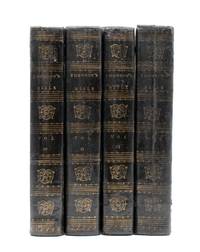
1808354112Philadelphia: Printed by Jane Aitken 1808. First edition. 512; 490; 444; 472pp. 4 vols. 8vo. Contemporary full black morocco gil likely bound by Jane Aitken minor wear at joints one spine splitting but holding. First edition. 512; 490; 444; 472pp. 4 vols. 8vo. "Charles Thomson 1729-1824 made the first translation of the Septuagint into the English language and the first English translation of the New Testament in the western hemisphere. Thomson spent twenty years in making the translation. The books called Apocrypha which are included in the canon of the Greek Old Testament but not in the Hebrew were omitted in his translation. After copying the manuscript four times he had it published at Philadelphia by Jane Aitken the first woman to print any part of the Holy Scriptures in America and the daughter of the printer Robert Aitken. It is of interest that the name 'Cha. Thomson' appears as the signer of the Congressional resolution in the front of the 1782 Aiken Bible" Hills.<br /> <br /> Charles Thomson emigrated to America from his native Ireland in 1739. On recommendation of Benjamin Franklin he served as a tutor at the College of Pennsylvania later the University of Pennsylvania. He later left teaching for business in which he prospered. "Because of his reputation for fairness and integrity he was chosen by the Indians to keep their record of proceedings at the treaty of Easton 1757 and in the following year he was adopted into the Delaware tribe with a name meaning `man who tells the truth'" DAB. He was an early and ardent supporter of the Revolution and was unanimously elected Secretary to the Continental Congress serving in that post from 1774 to 1789. Thomson "was the very man in Philadelphia with whom John Adams busily probing the minds of all and sundry on the vital questions involved would wish to have as he did have 'much conversation.' 'This Charles Thomson' Adams wrote 'is the Sam Adams of Philadelphia the life of the cause of liberty they say.'" DAB. Thomson resigned his post when he was offered no part in Washington's inauguration ceremonies nor any post in the new administration. He devoted the next twenty years to his monumental translation.<br /> <br /> Jane Aitken continued her father Robert's business after his death in 1802. "She had in 1810 a printing house in Philadelphia. She obtained much reputation by the productions which issued from her press" Thomas. In addition to being one of the first American female printers Jane Aitken was also a bookseller bookbinder businesswoman and employer. The typeface Aitken used for the Thomson Bible was an attractive and utilitarian type developed in 1796 by two Scotsmen Binney and Ronaldson at their Philadelphia type foundry. The Thomson Bible is considered her greatest printing achievement and the first Bible printed by a woman in America.<br /> <br /> This set in a very unusual American full morocco gilt binding likely bound by Aitken's shop. See Spawn Willman and Carol Spawn "The Aitken Shop: Identification of an Eighteenth-Century Bindery and Its Tools" in The Papers of the Bibliographical Society of America vol. 57 no. 4 1963 pp. 422-37. Darlow & Moule 1005; Herbert 1514; Rumball-Petre 184; O'Callaghan 1808.2; Wright p.113; Hills 153; Thomas History of Printing in America p.402 Printed by Jane Aitken unknown
185369294Philadelphia: Isaac Leeser 1853. BIBLE IN ENGLISH; LEESER Isaac. LEESER Isaac translator. The Twenty-Four Books of the Holy Scriptures. Carefully translated according to the Masoretic Text on the Basis of the English Version after the best Jewish Authorities; and supplied with short Explanatory Notes. By Isaac Leeser. Hebrew "For it shall not be forgotten out of the mouth of his seed." Dent. xxxi 21. Philadelphia: Isaac Leeser 1853.<br> <br> Full Description:<br> <br> BIBLE IN ENGLISH. LEESER Isaac translator. The Twenty-Four Books of the Holy Scriptures. Carefully translated according to the Masoretic Text on the Basis of the English Version after the best Jewish Authorities; and supplied with short Explanatory Notes. By Isaac Leeser. Hebrew "For it shall not be forgotten out of the mouth of his seed." Dent. xxxi 21. Philadelphia: Isaac Leeser 1853.<br> <br> First edition of the first complete translation of the Old Testament by a Jewish translator into English building upon Leeser's 1845 translation of the five books of the Pentateuch translation in 1845-1846. Folio 10 3/8 x 8 3/8 inches; 275 x 212 mm.<br> <br> Original full brown morocco. Boards ruled and elaborately stamped in gilt. Spine stamped and lettered in gilt. All edges marbled. Marbled endpapers. Binding with some restoration along joints and edges. A bit of foxing mainly to the preliminaries. Some occasional light dampstaining. Overall a very good copy.<br> <br> "Having published a five-volume Pentateuch-cum-haftarot lections from the Prophets translation in 1845-1846 as well as a complete vocalized and accentuated Hebrew Bible in 1848 the first such edition published in the U.S. he proceeded from April 1852 to September 1853 to extend his translation efforts to the entire Hebrew Bible. The result was his Twenty-Four Books of the Holy Scriptures the first translation of all of Tanakh into English by a Jew complete with short explanatory notes. Leeser explained in the preface to his magnum opus that he undertook the project in order to provide Anglophone Jewry with a vernacular version of the Bible "which has not been made by the authority of churches in which they can have no confidence" pp. iii-iv. The book achieved wide popularity among English-speaking Jews and even some Gentiles especially in America and went through multiple editions." Sotheby's<br> <br> "The translation of the Bible was Leeser's great literary achievement and represented many years of patient labor and devotion to a task which he considered sacred. Leeser was not fully equipped for this work for he was no specialist in Hebrew philology nor a master if Jewish learning in general and he was quite conscious of his shortcomings but he was inspired. He says in his preface: 'I thought in all due humility that I might safely go to task confidently relying upon that superior aid which is never withheld from the inquirer after truth.' He made good use of the various German translations by Jews of the collective commentary known as the Biur vol. III sec. 81 and of other Jewish exegetic works. As a result his translation though based in style upon the King James version can be considered an independent work for the changes he produced are numerous and great. His prime concern was to supply the traditional interpretation when necessary and the retention of the Jewish spirit at times even at the expense of beauty of style. The translation went through numerous editions and until the new Jewish Publication Society version was issued in 1917 it was the only source from which many Jews not conversant with Hebrew derived their knowledge of the Bible in accordance with Jewish tradition" Waxman History of Jewish Literature 1090.<br> <br> HBS 69294.<br> <br> $12500. [Isaac Leeser] unknown
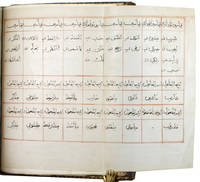
1830ABC_483971830. Contemporary navy blue morocco with the title lettered in gold on spine marbled endpapers. 4to 21.5 x 27 cm. With 2 folding tables 17 lines to the page written in red and black ink. A unique handwritten vocabulary and phrasebook of English and Arabic from the first half of the 19th century. This meticulously prepared manuscript is written in the fashion of a printed book opening with a title page and ending with an index of topics. It is divided into four main sections: nouns adjectives verbs and example sentences. The vocabulary especially in the nouns section is arranged by subjects which include such interesting headings as "Druggist" "Painter" "Merchant" "Cities" "the Bride's Paraphernalia" "Precious Jewels" "War" "The Church" "Clerical Vestments" "Ecclesiastical Degrees & Kinds of Sin" "Festivals" and "Monks their prayers and their dress". Presumably the dictionary was created to help a traveller or merchant who may have had an association with the Church. The final section offers an interesting selection of phrases and sheds some light on the experience of foreign language learning in the early 19th century. The phrases are a mixture of sentences that would be useful in daily life and such as would be included to practice the words from the vocabulary. Examples include: "We roasted a lamb and ate the whole of it and drank wine with it"; "I descended from above with the youth my enemy"; "I shot the bear in the water and he sank"; and "Why dost thou scratch thy head and spit in fire". As a cheat sheet for Arabic grammar the author includes two folding tables of Arabic verb tenses and conjugations. Overall a curious example of a 19th-century Arabic vocabulary and phrasebook.With a presentation note in English indicating it was a Christmas gift in 1881 presented by G. W. Bernard Esq. Binding and spine worn some browning and staining throughout. Otherwise in good condition. unknown
185934522n.p. n.d. but Japan 1859. An interesting and instructive look at how the Japanese learned English in the generation following Admiral Perry's opening of Japan. 2 volumes in 1 oblong fukurotoji 5.5" x 8" approx. 198 french-fold pages sewn in the Japanese manner in contemporary and almost certainly original brown paper wrappers; minor working and wear but in all a very good and striking example of a Japanese student's workbook for the attainment of English. The book has apparently been copied from American primers published by A. S. Barnes in New York in 1857 and Sargent's School Primer Boston 1859; both contain a variety of reading and spelling lessons "especially adapted to the capacity and taste of young children. It is hoped that it will proved sic valuable introduction to the national series of school readers prepared by Richard G. Parker." Both Parker's and Sargent's primers were available in bi-lingual editions in the Japanese market. Might this be the manuscript from which a printer might have used to publish the Japanese editions Throughout the English text which has been carefully written in ink is often translated interlineally in red ink with Japanese characters creating an attractive visual appearance on the page. Included are 3 pages of alphabets simple sentences often in rhyme "A cart for me / to ride and see / A ship at sea / with you and me. unknown
185934522n.p. n.d. but Japan 1859. An interesting and instructive look at how the Japanese learned English in the generation following Admiral Perry's opening of Japan. 2 volumes in 1 oblong fukurotoji 5.5" x 8" approx. 198 french-fold pages sewn in the Japanese manner in contemporary and almost certainly original brown paper wrappers; minor working and wear but in all a very good and striking example of a Japanese student's workbook for the attainment of English. The book has apparently been copied from American primers published by A. S. Barnes in New York in 1857 and Sargent's School Primer Boston 1859; both contain a variety of reading and spelling lessons "especially adapted to the capacity and taste of young children. It is hoped that it will proved sic valuable introduction to the national series of school readers prepared by Richard G. Parker." Both Parker's and Sargent's primers were available in bi-lingual editions in the Japanese market. Might this be the manuscript from which a printer might have used to publish the Japanese editions Throughout the English text which has been carefully written in ink is often translated interlinearly in red ink with Japanese characters creating an attractive visual appearance on the page. Included are 3 pages of alphabets simple sentences often in rhyme "A cart for me / to ride and see / A ship at sea / with you and me." <br/><br/> unknown books
1846238568New York: Harper & Brothers 1846. First book edition of Harper Bible first issued in 54 parts. Engraved presentation leaf printed in green and black in other copies sepia contents leaf printed in sepia marriages births and deaths pages printed in red blue and sepia respectively engraved main title printed in sepia in other copies blue engraved title to New Testament printed in blue in other copies sepia 2 frontispieces text in triple column the middle column a narrow one with notations and glosses; numerous wood-engraved illus. throughout; bound without the 2 half-titles printed in red; 844 128 256 4 8 14 34 pp. Large thick 4to. In full American black pebble-grain morocco covers with triple gilt rule enclosing decorative floral outer panel with rosettes urns and other decorative elements with an ornate gilt lozenge central gilt decorated spine in 6 compartments gilt-lettered direct in 1 the binder's name J. H. Sackmann and Brother in gilt at the bottom gilt turn-ins and elaborately decorated endpapers with a floral and ornithological motif; small crack at the top of the upper joint else fine and bright in a handsome deluxe American binding of the period. First book edition of Harper Bible first issued in 54 parts. Engraved presentation leaf printed in green and black in other copies sepia contents leaf printed in sepia marriages births and deaths pages printed in red blue and sepia respectively engraved main title printed in sepia in other copies blue engraved title to New Testament printed in blue in other copies sepia 2 frontispieces text in triple column the middle column a narrow one with notations and glosses; numerous wood-engraved illus. throughout; bound without the 2 half-titles printed in red; 844 128 256 4 8 14 34 pp. Large thick 4to. Harper Bible in Deluxe American binding. A copy in deluxe binding of the first complete book edition of the Harper Bible. ".this Harper publication was a remarkable production for its time and place and retains its importance in the annals of American book-making. W.J. Linton noted wood-engraver and author knew 'no other book like this so good so perfect in all its undertakes.' The illustrations are like paintings of history as are so many of the old European Biblical painting and illustrations" Hills quoting Weitenhampf. Hills 1161; Hamilton 198; cf. Exman The House of Harper pp. 34-35 Harper & Brothers unknown books
183333830New Haven: Durrie & Peck; Sold by Hezekiah Howe & Co. and by N. & J. White 1833. 8vo 23 cm; 9". xvi 907 pp. <br><br>First edition of the Bible in English Authorized Version tailored for American readers by Noah Webster 17581843. "His purpose was to remove obsolete words and those offensive to delicacy" Rumball-Petre Webster himself further stipulating "To avoid giving offense to any denomination of christian sic I have not knowingly made any alteration to the passages of the present version on which the different denominations rely for the support of their peculiar tenets" Preface p. iv. Webster further explains that the purpose of his revisions is to make the language clearer and purer so as to not "divert the mind from the matter to the language of the scriptures and thus in a degree frustrate the purpose of giving instruction" Preface p. xvi.<br>Â Â Â Â Webster considered his work on the revision of the Bible more important than that on the dictionary and was sorely disappointed at the Bible's poor reception among all levels of readers.<br>Â Â Â Â Provenance: 19th-century ownership signatures of Luther P. Hubbard undated and R.T. Hall 1894; after ca. 1954 in The Howell Bible Collection Pacific School of Religion properly released. <br>Â Â Â Â <br>Â Â Â Â Darlow & Moule 1793; Hills 826; Rumball-Petre 197. Publisher's sheep spine dry and tending to flake; front board once detached and resecured with a cloth tape repair at the hinge inside. Foxing as usual. Priced to encourage better repair to its binding this is a complete sound copy. Durrie & Peck; Sold by Hezekiah Howe & Co., and by N. & J. White hardcover books
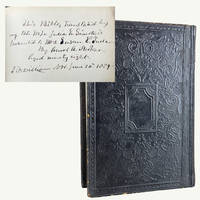
1876R69<p><strong>Description: </strong>Quarto 9.75" x 6.5". Text in two column Roman font. 3-892 Old Testament 1-276 pp. New Testament. The books of the Old Testament are arranged in Jewish order with Chronicles at the end. One of 950 copies.</p><p><strong>Binding: </strong>Rebacked in matching black calf with original spine laid down. Embossed cloth spine with "Holy Bible" and "Translated by Julia E. Smith" lettered in gilt to spine. All edges speckled red. Rubbed to edges with loss of small portions of relaid spine.</p><p><strong>Condition:</strong> Crisp clean and bright.</p><p><strong>Provenance: </strong>Note inked on front flyleaf reads "This Bible translated by my late wife Julia E. Smith is presented to Mrs. Susan E. Tullar by Amos A. Parker Aged Ninety Eight – Fitzwilliam N.H. June 20th 1889."</p><p><strong>Note: </strong>A remarkably well-preserved copy of the first and only Bible translated entirely by a woman. Julia E. Smith 1792–1886 of Glastonbury Connecticut used her knowledge of Latin Greek and Hebrew to render the entire Bible into English. A member of the Sandemanian sect which sought to restore the Apostolic church she dedicated eight years to her translation but did not publish it for another twenty-one years.</p><p>Sampson recounts Julia's deep passion for the project: "I cannot express how greatly I enjoy the work of translating and now the real meaning of different texts would thrill through my mind till I could hardly contain myself." According to one account she became so engrossed in her work that she often failed to hear the dinner bell and had to be summoned by her sisters.</p><p>Elizabeth Cady Stanton in her radical and controversial work <em>The Woman's Bible</em> remarked that Smith's translation would become a rarity in the next century "much sought after by bibliomaniacs to say nothing of scholars who will want it for its real value."</p><p><strong>References:</strong> Herbert 2202; Hills 1918; Rumball-Petre 201; Stanton Elizabeth Cady. <em>The Woman's Bible</em>. Sampson Emily. <em>With Her Own Eyes: The Story of Julia Smith.</em></p> American Publishing Company hardcover
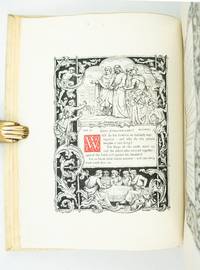
1862ST20857London: Edmund Evans for Sampson Low Son and Co 1862. ONE OF PERHAPS 10 COPIES PRINTED ON VELLUM. 260 x 195 mm. 10 1/4 x 7 3/4". vii 1 235 1 pp. <br/> Publisher's stiff vellum smooth spine with gilt lettering edges untrimmed. In a modern felt-lined blue buckram drop-back box. Decorative initials in red or blue title page and text leaves with full criblé border of vined foliation occasionally inhabited eight or 10 leaves with more extensive illustrations at head or foot all engraved by W. J. Linton after illustrations by John Franklin. Front pastedown with ex-libris of Marion Hope Rattey. A Large Paper Copy. McLean "Victorian Book Design" p. 184. Short thin cracks to head and tail of front joint spine vaguely soiled upper cover with two very small brown spots and one trivial red mark occasional mild rumpling or naturally occurring variations in the grain or thickness of the vellum as usual a couple of minor smudges but still a very agreeable copy the binding solid and without the splaying common in vellum books the interior clean fresh and bright and the margins extraordinarily wide.<br/> <br/> This is an infrequently encountered copy of a beautiful Victorian book on vellum issued by one of the era's top printers. The volume was printed by Edmund Evans 1826-1905 who is now best remembered for his illustrations and advances in color wood engravings. Relatively little is known about this book's production: Ruari McLean tells us that it was "entirely printed" by Evans but it is unknown whether he was responsible for the design as well McLean remarks that "if Evans was responsible for its design it shows his superiority in book-making". We also are unsure how many copies were printed on vellum although the general consensus is 10. Regardless as McLean tells us "it is one of the prettiest books of the 'sixties" with sharp deep impressions of the type on the rich creamy vellum jewel-like colored initials and elegant wood-engraved illustrations. These illustrations are the work of John Franklin ca.1800-68 a painter and draftsman who was highly respected in his own time. The precisely realized borders feature idealized human forms posed within a robust botanical largely acanthus context the figures posing with balletic grace their expressive faces often turned gently away from the reader. The size of the leaf here is significant: the untrimmed edges retain their tiny printing pinholes which would normally have been trimmed away with regrettable loss. And not surprisingly our vellum printing is almost never seen: we could trace just two copies at auction since 1924. Former owner Marion Hope Rattey 1922-97 was likely the daughter of bibliographer Clifford C. Rattey 1886-1970 whose impressive library featured incunabula and block prints. [Edmund Evans for] Sampson Low, Son, and Co unknown
181053914Translated from the original Latin of Cornelius Van Bynkershoek, 1 vol. 8vo, original full leather binding, Published by Farrand & Nicholas, Philadelphia, also by Farrand, Mallory & co, Boston, P. H. Nicklin & Co, Baltimore, D. Farrand & Green, Albany; Lyman, Mallory & Co, Portland, and Swift & Chipman, Middlebury, Fry and Kammerer, Printers, 1810, 1 f. blanc, 1 f. n. ch., xxxiv-218 pp. , pp. 249-251 (Index from another book) et 1 f. blanc
184441372Milsom Street Bath and 26 Haymarket London: Edmund Francis English Jr. and Thomas McLean. Lithographed and printed at 79 St. Martin's Lane and by Moyes and Barclay Castle Street Leicester Square London 1844. Folio. 24 1/4 x 16 1/2 inches. First Edition. 8 1-10. 18 pp. 12 leaves of plates. Title with hand-colored vignette mounted on card lithographed dedication to Princess Emilia of Baden and the Marchionesses Douglas and Clydesdale List of Subjects and List of Vignettes on Letterpress List of Subscribers "To the Reader" by English Lithograph letter from Beckford to English that is not mentioned in Abbey 6 tinted lithograph "Illustrations of Lansdown Tower Bath" with text on each room of the tower and Beckford's obituary and woodcut epitaph errata note 13 tinted and hand-colored lithograph plates mounted on 12 card leaves with pencilled titles underneath plates. Dark red straight-grained half morocco over publisher's brown moiré cloth title stamped and lettered in gilt on front and on spine with bookplate on pastedown<br/> <br/> Grand first edition folio volume of a fantastical folly with 13 hand-colored lithographs of Beckford's unimpeachable decor.<br/> <br/> Shortly after the eccentric novelist collector bibliophile and plantation-owner William Beckford died in May of 1844 the book Views of Lansdown Tower was published revealing Beckford's extraordinary retreat its luxurious interiors and the exquisite art collection he had assembled inside this fantastical architectural folly just outside Bath in Somerset England. Views was initiated by Willes Maddox under the patronage of Beckford who is found in the book's subscribers list. Beckford had moved to Bath from his estate Fonthill Abbey in Wiltshire in 1822 and remained there until his death. In 1826 Beckford employed a young architect named Henry Goodridge 1797-1864 to build the tower and its adjoining library about a mile away from Beckford's residence in Crescent. Beckford's Tower known initially as Lansdown Tower was built in Italianate neo-classical style on Lansdown Hill. The Tower and its attached railings are now designated as a Grade I listed historic building by the UK. It is the only standing example of Beckford's architecture. Though he did not live there Beckford used the tower as a showcase for his collection of art and fine books and its crowning cupola as a belvedere for taking in picturesque vistas of the surrounding landscape. The book reproduces drawings by Maddox in lithographs by C. J. Richardson. Maddox later gained a reputation for painting the portraits of eminent Turks and took up an invitation from the Sultan to work in Istanbul. Four of the book's 13 plates illustrate some of Beckford's objets d'art including ceramics ivories and metalware alongside his immaculate parlor furniture. The colored plates in order: I. Ornamental Title with View of Tower. II. Exterior of LansdownTower. III. The Vestibule. IV. The Scarlet Drawing Room. V. The Staircase. VI. View of the Belvedere. VII. Objects of Vertu No.1 in Mr. Beckford's Collection. VIII. The Sanctuary. IX. The Crimson Drawing Room. X. Black Cabinet in Crimson Drawing Room. XI. Objects of Vertu No.2 in Mr. Beckford's Collection. XII. The Library. XIII. Objects of Vertu No.3 in Mr. Beckford's Collection. XIV. Ornamental Furniture in Mr. Beckford's Collection. And the Vignettes in Letterpress: XV. Embattled Gateway in Garden. XVI. Italian Cottage. XVII. The Grotto. XVIII. View in Garden where the Sarcophagus stood before removed. XIX. The Tomb of Mr. Beckford. XX. The Tomb of Mr. Beckford's favourite Dog.<br/> <br/> Abbey Scenery 420. Bobins II 682. SP Lohia 626. Edmund Francis English Jr. and Thomas McLean. Lithographed and printed at 79 St. Martin's Lane, and by Moyes and Barclay, Castle unknown
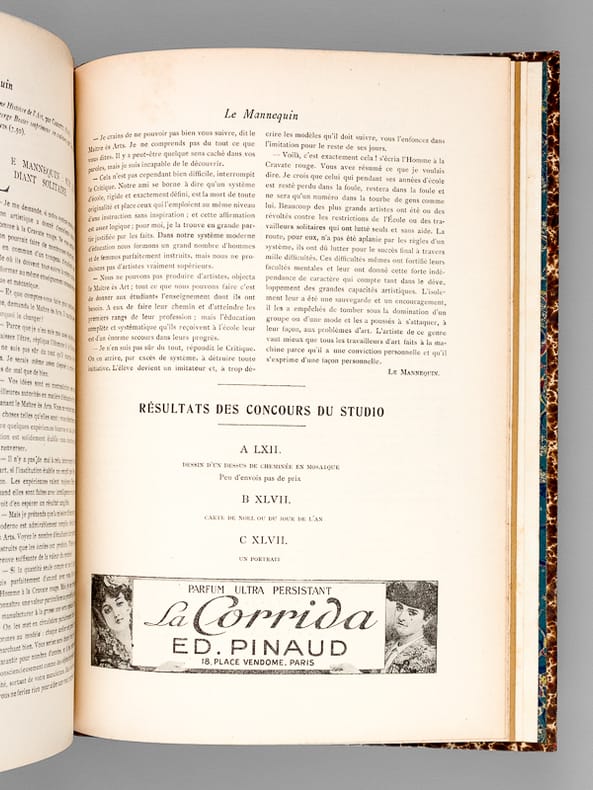
18936415981 volume 4to (79 quarter-leather, 1 paperback and 1 vol. - 51 - in 4 paperback issues), among which we can particularly point out : Vol. 4 (estampe en couleurs de Fernand Khnopff et estampe en couleur et relief) ; 5 (2 estampes en couleurs dont une par Boutet de Monvel) ; 7 (plusieurs estampes en couleurs dont le bourg de Perros-Guirec par Henri-Rivière, eau-forte par Charlton) ; 9 (plusieurs estampes en couleur dont Helleu et estampe en couleur et relief) ; 10 (dont dessin gaufré par Alexandre Charpentier) ; 11 (dont "Pierrot et Pierrette by Mrs Dearmer) ; 12 (dont bois gravé sur papier bleu par Lepère, et bois gravé en couleur par Nicholson) ; 13 (dont "Ombre chinoise" sur calque par Caran d'Ache, eou gravure en relief "Bath-Room by A Charpentier) ; 15 (dont portrait de Puvis de Chavannes par Valloton, estampes de Henri Rivière) ; 17 (contains "Beauty's awakening, a Masque of Winter and Spring) ; 18 (from october 1899, with Special winter-number 1899-1900 : Modern bookbinding and their designers et sa traduction française ) ; 20 (with "Modern British watercolour drawings) ; 21 (dont "The Queen of Hearts" by Percy Gossop) ; 23 (dont a Scene in Dido an Aeneas by Gordon Craig) ; 26 (1902 avec traduction française) ; 27 (dont eaux-fortes par Alphonse Legros) ; 29 (avec traduction française pour septembre) ; 30 (avec traduction française) ; 31 (avec traduction française, 1 planche et un cahier débrochés) ; 32 (avec traduction française) ; 33 (avec traduction française) ; 34 (avec traduction française) ; 39 : An exhibition of Portraits (avec traduction française) ; 44 (avec les couvertures portant "Revue mensuelle avec traduction française) ; 51 (paperback, spines used, in4 issues) ; 61 (Until Issue n° 254, May 1914) ; For the special numbers, we have 21 "bis" : 11 : Art supplements : The Salon Champs Elysées Paris 1897, The Salon Champ de Mars Paris 1897, Art at the New Gallery London 1897 ; 13 : A Record of Art in 1898 ; 21 : Modern pen drawings : European and american ; 23 : Modern British Domestic Architecture and Decoration, 1901 (avec traduction française) ; 24 : Modern design in Jewellery and Fans, 1902 ; 26 : Modern Etching and Engraving (avec traduction française) ; 27 : Corot and Millet with critical Essays by Gustave Geffroy and Arsène Alexandre ; 28 : Masters of English Landscape Paintings ; 30 : The Genius of J.M.W. Turner, R.A. ; 31 : The Royal Academy from Reynolds to Millais (avec traduction française) ; 33 : Daumier and Gavarni with critical and biographical notes by Henri Frantza and Octave Uzanne ; 35 : Art in Photography with selected examples of European and American Work (avec traduction française) 1905 ; 36 : The Mansions of England in the olden time, by Joseph Nash, 1906 (avec traduction française) ; 37 : The Royal Institute of Painters in Watercolours Spring 1906 ; 37 ter : Year-Book of decorative Art 1906 ; 40 : Royal Scottish Academy ; 40 ter : Year-Book of decorative Art 1907 ; 42 : The Gardens of England in the Southern & Western Counties (avec traduction française) ; 42 ter : Year-Book of decorative Art 1908 ; Paperback : Les Habitations Villageoises en Angleterre Numéro de Printemps 1912
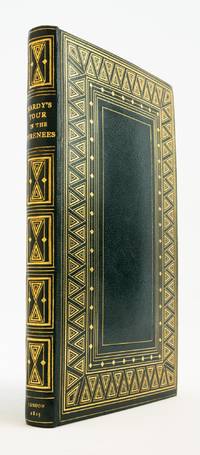
1825ST20491London: R. Ackermann 1825. FIRST EDITION. 236 x 144 mm. 9 1/4 x 5 3/4". vii 1 84 pp. <br/> STRIKING DARK GREEN MOROCCO VERY ELABORATELY GILT BY CUNEO stamp-signed on lower front turn-in for Mildred B. Davey named stamped on upper front turn-in covers with geometric Art Deco frame smooth spine in compartments with triangle ornaments gilt lettering git-ruled turn-ins marbled endpapers. Housed in matching green morocco-backed clamshell box lined with fleece. Engraved map and 24 FINE DELICATELY HAND-COLORED PLATES inlaid on heavy stock as issued; original tissue guards. Verso of front free endpaper with engraved bookplate of Mildred Davey and red morocco ex-libris of Paul Edward Chevalier; front flyleaf with 19th century ink owner inscription of William Mitchell. A Large Paper Copy. Abbey Travel 210; Tooley 245; S. T. Prideaux "Aquatint Engraving: A Chapter in the History of Book Illustration" p. 229. See Peter Thorold "The British in France: Visitors and Residents since the Revolution" p. 64. A very small ink spot just intruding on very bottom edge of a handful of leaves a few vague spots of foxing to map isolated faint offsetting from illustrations but A VERY FINE COPY in all other ways--the text clean fresh and bright the plates immaculate the margins spacious the binding lustrous and sparkling.<br/> <br/> This is a lovely copy of a work with plates Prideaux considers "among the most beautiful to be found in aquatint engraving" and it comes in a handsome binding commissioned by Mildred Benson Davey and later owned by Paul Chevalier. Issued by a publisher known for his lavishly illustrated travelogues the volume takes us on a journey through the scenic French Pyrenees escorted by Englishman Joseph Hardy who adds his insights on the local population and government gives recommendations on the best mineral baths and describes in word and image the breathtaking scenery. The views are small measuring approximately 90 x 70 mm. but as Abbey notes "part of their charm is certainly in their small size." Sarah Prideaux praised their composition: "The ground is exceedingly fine and there is no line whatever. The colouring is most delicate and all the twenty-four illustrations are exquisite." We can only be impressed by the achievement of the colorist; the detail is cleanly executed the colors are luminescent and the images do not disappoint even under magnification. Thorold notes that this work was "a great success" and was later translated into French. Our copy was bound in a bold modern design at the Chicago workshop founded by in 1926 by John Cuneo 1884-1977. Cuneo hired fine British craftsmen like the Englishman Leonard Mounteney to create bibliophile-quality bindings for American collectors. After apprenticing at the bindery of G. & J. Abbott in Nottingham and studying ornamental design at the Battersea Polytechnic Mounteney worked as an exhibition finisher for Riviere before emigrating to Chicago where he initially worked with Alfred de Sauty at the R. R. Donnelley bindery before joining Cuneo's hand bindery. The present binding was a commission for Mildred Benson Davey 1890-1953 daughter of the founder of Benson & Rixon men’s clothiers. Cuneo also bound books for Chicago retail magnate Marshall Fields. Later our binding was appreciated by distinguished connoisseur Paul Chevalier whose library of beautiful volumes was uniformly characterized by outstanding workmanship and superb condition. The sale of his books in 1990 represented one of the best collections of 20th century bindings brought to auction in the past half century. Laid in is Christie's slip from Chevalier's 9 November sale where this appeared as lot 23 selling for $935. R. Ackermann unknown
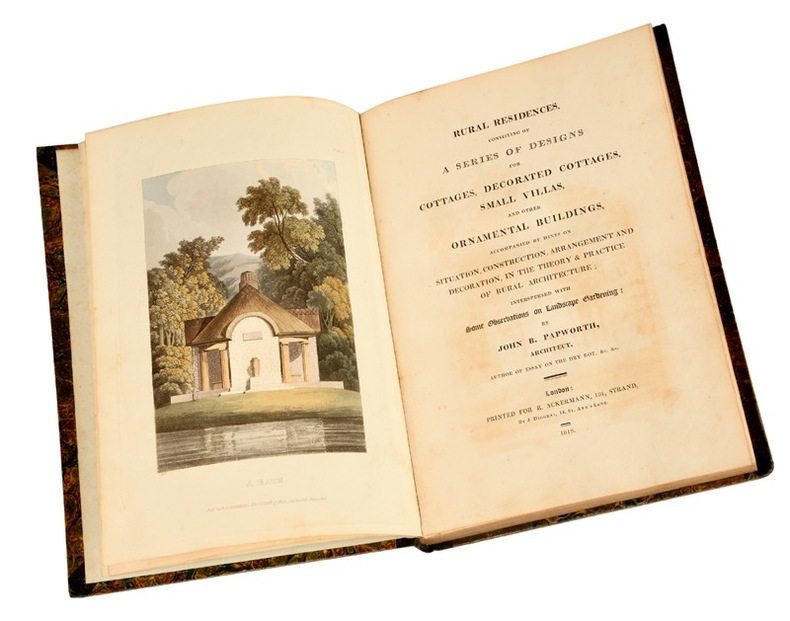
181821571London, Diggens pour Ackermann, 1818 ; petit in-4°, demi-veau vert foncé, dos à nerfs décoré de fleurons à froid et de palettes, filets et titre dorés, roulette décorative à froid d’une part et d’autre du dos (reliure romantique de l’époque) ; VIII, 106, [4] pp. et 27 planches hors-texte très finement aquarellées, avec les plans.
18957527New York: American Bible Society 1895. Hard Cover. First edition of this Bible volume I only; folio 14" x 13" 164 leaves embossed in the New York Point Alphabet for the Blind which is a system of tactile raised dots similar to Braille. Contemporary 3/4 calf over tan cloth covered boards spine ruled in gilt; spine label is absent. New York Point for the Blind was invented by William Bell Wait 1839-1916 educator for the Blind as an alternative to the "Line Letter" system consisting of raised letters of the standard alphabet which was in use in the late 19th Century and lasted for several decades. But Braille had been invented by Louis Braille in 1824 but fell into disuse only to be revived in the early 20th Century and Braille remains today the standard in reading and writing for the Blind throughout the world. Internally quite clean with the embossed dots in very good condition; small loss at head of spine and corners worn through; a very good copy now quite scarce on the market. <br/><br/> American Bible Society hardcover books
18770009039NAPLES ALEXANDRIA CAIRO SUEZ JAFFA JERUSALEM. Good. 1877. On offer is a fascinating journal written by an English woman of a trying and difficult voyage from Naples Italy to the Holy Land of Jerusalem in 1877. The journal is 35 pages long and is of a trip of a small group who travel first to Alexandria via Sicily then by rail to Cairo and Ismailia through the newly constructed Suez Canal and finally an extraordinary months journey on horseback with tented camping in the desert at night. The trip is a very difficult journey and at one point the woman writes this was our first experience of travelling in Palestine and I can assure you it was a most trying one. The authors handwriting is beautiful and is an easy pleasure to read. These pages seem to be notes for a talk the woman is going to give. There are also corrections of the writing in pencil by the woman herself and the book ends as if the words were meant to be spoken to an audience. The journal begins: Naples to Jerusalem Notes by the way Naples which is to be my starting point tonight is beautifully situated on one of the finest bays in the world. The city extends for three miles along the short of the bay but rows of houses villages and small towns extend almost entirely around it. Nearly opposite Naples is Mount Vesuvius from whose summit have poured in times past the streams of lava and showers of ashes which have again and again buried whole towns and villages situated on its sides and even at some distance from its foot; and from which a light cloud of smoke is always rising.; We went on board a steamer bound for Alexandria at two p.m. on Sunday February the 18th 1877 but did not sail until five oclock during which time we had a fine view of the city and its surroundings.On the following morning we entered the straits of Messina and about 11 oclock landed at Messina capital of Sicily where we stayed a short time and walked through the town. We sailed about 12 and it was quite smooth through the straits our companions came on deck.Soon after we got through the straits a storm burst upon us. The guards were fixed on to the table today to keep the things in their places but did not remedy all the evil for as you know anything liquid will find its own level so that when we had soup before us and the boat rolled to an angle of 45 de. It was either running over the opposite edge of the plat or pouring over us which was far from pleasant we had no more soup during the three days that the storm commenced. They reach Alexandria a few rough days later: Pompeys pillar and Cleopatras needles are the most striking monumental relics of Alexandria and we drove to Pompeys pillar first. It stands on rising ground the highest in the neighborhood and close to it is a Mohammedan cemetery. The writer is a smart woman adept at conveying events with skillful detail grativats and occasionally humor. She is also quite a worldly woman often bringing in recent world events to give context: Recent events have brought Egypt to the notice of all newspaper readers and the bombardments of the forts of Alexandria by the British Fleet and the subsequent setting on fire of the principal parks of the city and especially of the European part has been brought very vividly before the public by the Illustrated Papers. The Great Square is where the principal buildings of the city were situated. The buildings surrounding it were of imposing appearance here were the Consulates the principal Banks the finest shops and the largest hotel.All this is now a heap of ruins. She goes on to describe the contrast in dress between native women and European women: you often see for instance an Egyptian woman covered from head to foot with a long thick veil which hides all but her eyes and walking close behind her an European lady dressed in the height of Paris fashion. The European gentlemen are of course dressed as we are accustomed to see them except that all wear the Turkish fez and the higher class Egyptians mostly wear the same dress but the lower classes all wear loose petticoat trousers reaching to the ankles and a loose jacket and round the waist they often have a gaily coloured sash or shawl. After Alexandria the writer takes a train to Cairo. She describes the train ordinary first class ones made in England and sent out and the landscape she sees the land is well cultivated and is watered by the annual overflowing of the Nile and is also artificially irrigated by means of numerous canals cut for the purpose from the Nile.. Cairo is a more purely Oriental city than Alexandria and we stay here five days. The writer describes the contrast between old Cairo and new Cairo as well stating that the new Cairo is built after the style of the boulevards of Paris with wide streets and trees planted on the side paths shops and houses in the European style while the old Cairo is truly Eastern narrow irregular streets merely of earth trampled smooth though far from being level. In Cairo the writer describes many different places she sees travelling around the city by donkey indeed there are regular stands for them and anyone who wishes to go out calls for one as we call for a cab and especially the shops in the bazaars. While in Cairo she takes a donkey trip to the Island of Rhoda to see the famous Nilometer that measures flood height. She also goes to see the Boulak Museum the finest collection of Egyptian Antiquities in the world the University of the East and observes the Muslim call to prayer at the University: At 12 o.c. the call to prayer was heard from the minarets of the mosk mosque and instantly all spread their prayer carpets on which they knelt down with their faces turned towards Mecca and utterly regardless of our presence they went through their devotions. From Cairo there are day trips to Sakkara and Memphis where the writer sees and writes of many statues sculptures and sacred bulls all very well preserved and recently discovered and excavated. After the five days in Cairo the author sets off for Ismailia a place on the Suez canal about half way between Suez and Port Said. She comments on the refilling of the dry Lake Imshah after Suez Canal construction just 8 years or so earlier. She writes Ismailia has entirely grown up since the canal was made it was before nothing but desert but a freshwater canal supplies it and other stations on the Suez Canal. It seems as if wherever water can be got on to the land the desert may be turned into a garden for already they have a few good gardens there and many avenues of trees. The author than travels to Port Said across the Suez Canal by steamer. From Port Said she goes onto Jaffa. During the time we had our only experience of the Kamseen which is a hot dry wind full of fine sand blowing off the desert and looks like a thick yellow fog. The sand was so fine that it penetrated all our clothes and we had to go into the cabin for protection. In Jaffa she comments on the numerous orange and lemon groves the poor sanitary situation in the city and the many muddy dirty and crooked streets of the city our first impressions were not pleasant. In Jaffa she goes to Simon the Tanners house and also to where Peter had his vision of a sheet let down from Heaven knit at the four corners and filled with all manner of beasts etc. She also visits a Mission school run by an English lady attended by Jews Mohammedans and Syrians alike. The school is Methodist. From Jaffa the author and her companions set out for the month long horseback trip to Jerusalem sleeping in tents at night. We rode between orange and lemon groves for some distance the road was fenced off with prickly pear a close growing thorny cactus which reaches about 6ft high a fence which will defy man or beast. From the onset of the journey there are persistent problems with the horses: my horse had a bad trick of pulling up suddenly if I tried to pass the foremost of the party they cing very tenaciously to each other and there was no attempt to run away with any of us.We were in the saddle for over five hours with the sun fiercely shining on us from a cloudless sky and if there had not been a nice breeze we should have found it much worse than we did. Despite the problems the write is astounded with the beauty of the Middle Easter landscape. The Plain of Sharon was gay with flowers particularly with a small anemone of a very bright scarlet and as we got into the hill country the ledges of the rocks were filled with beautiful varieties of cyclamen. At night she describes the tents they have brought along and the new experience of sleeping in tents which seemed almost like sleeping out of doors. They have brought along five sleeping tents a saloon tent and a kitchen tent with a Union Jack flag flying from one and Stars and Stripes from the other. It is obvious the people on the trip come from wealth as she describes the extraordinary five course dinner they are served in their camp site: first course soup 2nd stewed tongue with fried potatoes 3rd cauliflower browned with egg & breadcrumbs 4th chicken and asparagus 5th apricot tarts and dessert nuts raisins & Jaffa oranges after which we had a large cup of tea to finish off with. The first nights are cold and noisy nights with dogs barking and frogs croaking. They wake up each morning with a servant blowing a rams horn trumpet. The writer is taken by the Biblical ground through which she travels: Our route to day is over ground of great interest and where great events in the early history of the subjugation of Palestine by Joshua took place. It was here that Joshua uttered the memorable words at the battle of Beth Horon Sun stand thou still upon Gibeon and thou Moon in the valley of Aijalon.I have no doubt they would take the same road we were going for we reached Kirjath Jearim where the Ark was kept so long early in the day. Finally the author and her companions reach Jerusalem. Here she writes clearly and beautifully of Jerusalem of its hills and deep valleys and twisting roads. We descend the Mount of Olives past the garden of Gethsemane then across the brook Hedron and up the other side of the valley passing the traditional site of Stephen's martyrdom. Enter Jerusalem by St. Stephen's gate and along the Via Dolorosa return to our hotel. The journal ends like so We spent several days in visiting the places of interest in the city and its neighbourhood but it would take too long for me to attempt a description of them. I can only hope in conclusion that some here present may have the pleasure of seeing for themselves that wonderful city and land. The journal consists of four gatherings of roughly 10 pages each though these gatherings are not bound and many pages are loose or very close to being unattached. The paper shows some wear and coloration from age but it does not hinder the experience of reading this amazing travelogue at all.; Manuscript; Folio - over 12" - 15" tall; KEYWORDS: HISTORY OF PILGRIMAGE TO THE HOLY LAND JERUSALEM PRE-STATE ISRAEL NAPLES MESSINA ITALY SICILY ALEXANDRIA CAIRO EGYPT ISMAILIA SUEZ CANAL ARABIAN DESERT TRAVEL BY HORSEBACK 19TH CENTURY FEMALE TRAVEL IN THE 1800s BAZAARS OF EGYPT NOTES FOR A LECTURE TRIP THROUGH THE ARAB WORLD NORTH AFRICA MIDDLE-EASTERN TRAVEL RAIL TRAVEL IN THE LEVANT KHAMSIN WIND JAFFA SHARON PLAIN LUXURY TRAVEL BIBLE TRAIL DESCRIPTIONS OF MIDDLE EASTERN LANDSCAPE BRITANNICA HANDWRITTEN MANUSCRIPT DOCUMENT LETTER AUTOGRAPH WRITER HAND WRITTEN DOCUMENTS SIGNED LETTERS MANUSCRIPTS HISTORICAL HOLOGRAPH WRITERS AUTOGRAPHS PERSONAL MEMOIR MEMORIAL ANTIQUITÉ CONTRAT VÉLIN DOCUMENT MANUSCRIT PAPIER ANTIKE BRIEF PERGAMENT DOKUMENT MANUSKRIPT PAPIER OGGETTO DANTIQUARIATO ATTO VELINA DOCUMENTO MANOSCRITTO CARTA ANTIGÜEDAD HECHO VITELA DOCUMENTO MANUSCRITO PAPEL . hardcover
185067639A Family Bible with Six of the John Martin Bible Illustrations BIBLE IN ENGLISH. The Holy Bible Containing the Old and New Testaments: Translated out of the original tongues: and with the former translations diligently compared and revised by His Majesty's special command. Appointed to be read in churches. London Edinburgh and Glasgow: William Mackenzie n.d. ca. 1850. Folio. Measures 9 3/4 x 13 x 5/12 x 3 3/4 in. thick; 250 x 335 x 93 mm. thick. Illustrated with thirty full-page engravings by various artists including a frontispiece and a vignette title-page titled The Family Bible With Copious Notes and References two engravings by J. Stephens from photographs of the Holy Land by Frith and six engravings after John MartinÃs Old Testament illustrations ìThe Fall of Manî ìThe Destruction of Pharaoh's Hostî ìJoshua commanding the sun to stand stillî ìBy Babel's Streams We Sat and Weptî ìBelshazzar's Feastî and ìThe Fall of Ninevehî. Contemporary black polished calf over bevelled boards covers tooled in gilt and blind spine lettered and decoratively tooled in gilt in compartments. Gilt turn-ins marbled endpapers. All edges gilt. Minimal wear to extremities. Hinges neatly reinforced. A bright fresh copy throughout. Near fine. MartinÃs Biblical paintings are among the finest ever produced: ìThe spirit in which Martin worked is suggested by a passage in his catalogue for the large oil painting ëThe Fall of Ninevehà which he exhibited in lonely magnificence in 1827: ëThe mighty cities of Nineveh and Babylon have long since passed away. The accounts of their greatness and splendor may have been exaggerated. But where strict truth is not essential the mind is content to find delight in the contemplation of the grand and the marvelous. Into the solemn visions of antiquity we look without demanding the clear daylight of truth. Seen through the mist of ages the great becomes gigantic the wonderful swells into the sublimeÃî Ray The Illustrator and the Book in England from 1790 to 1914 p. 44. At the front of the Bible are three leaves of a family history partially inscribed with the births deaths and marriages of three generations of the Hubbard family of Derby England during the years 1889-1943. A lovely example of a nineteenth-century Bible. HBS 67639. $3000 William Mackenzie hardcover books
18306526London 1830. Aquatints coloured by hand. A fine complete series of four anonymous prints of hunting scenes possibly after the Alkens.<br/> <br/> The style and naming of these prints suggests an Alken origin for the series. Siltzer records a number of series by the Alken family in which the first plate is titled "Unkennelling." This title appears to be unique to them and supports the supposition that the present series are after the Alkens. Henry Thomas Alken was born into what became an artistic dynasty. He studied under the miniature painter J. T. Barber and exhibited his first picture a miniature portrait at the Royal Academy when he was sixteen. From about 1816 onwards he "produced an unending stream of paintings drawings and engravings of every type of field and other sporting activity. He is best remembered for his hunting prints many of which he engraved himself until the late 1830s.To many sporting art is "Alken" and to describe his work or ability is quite unnecessary." Charles Lane British Racing Prints pp. 75-76<br/> <br/> Cf. Siltzer pp.57-76. unknown
18306526London 1830. Aquatints coloured by hand. A fine complete series of four anonymous prints of hunting scenes possibly after the Alkens.<br/> <br/>The style and naming of these prints suggests an Alken origin for the series. Siltzer records a number of series by the Alken family in which the first plate is titled "Unkennelling." This title appears to be unique to them and supports the supposition that the present series are after the Alkens. Henry Thomas Alken was born into what became an artistic dynasty. He studied under the miniature painter J. T. Barber and exhibited his first picture a miniature portrait at the Royal Academy when he was sixteen. From about 1816 onwards he "produced an unending stream of paintings drawings and engravings of every type of field and other sporting activity. He is best remembered for his hunting prints many of which he engraved himself until the late 1830s.To many sporting art is "Alken" and to describe his work or ability is quite unnecessary." Charles Lane British Racing Prints pp. 75-76<br/> <br/>Cf. Siltzer pp.57-76. unknown books
18702222265<p>First edition. Octavo. Frontispiece and vignette on half title page. Later 3/4 brown morocco gilt spine with four small gilt flowers by Root & Son. t.e.g. Ten page preface and folding map at end of text. Fine clean copy. No foxing. 491 pages. No signatures or bookplates.</p><p>Penzer 84.</p><p>Printed by Savill Edwards & Co. Chandos Street Covent Garden.</p> Tinsley Brothers hardcover books
181816976Pittsburg: Cramer and Spear 1818. Small 8vo. 792pp. Original publisher's sheep. Signatures sprung from use but attached; pages generally very soiled and with some contemporary markings; old repair to the spine else the binding is in good condition. Ownership name of Dan Smith dated 1828 and later 'Dan Smith His Book'. The New Testament has a separate title page. <br /> <p><br /> In this copy there is a short note pinned to its verso listing the births of members of the McNees family in the late nineteenth century. <br /> <p><br /> This is the first Bible printed west of the Allegheny River and the first Bible in English printed west of the Allegheny Mountains. <br /> <p><br /> Note: this is a well used copy but in good condition. Rare. <br /> <p><br /> Hills 349; Not in Darlow and Moule<br /> <p>. Cramer and Spear unknown
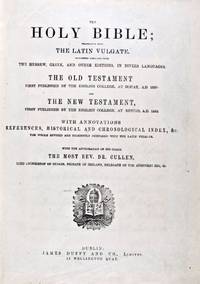
186530602Dublin: James Duffy & Co 1865. Later edition. Hardcover. g to g. Large quarto. 2 764 222pp. Finely gold-stamped and gold-tooled contemporary black leather. All gilt edges. Striking fore edge painting of landscape with antique church complex. Silk-moire endpapers. Handwritten family registry in front. Frontispiece of Old Testament reproduction of a painting in monochrome by W. & A. K. Johnston. Frontispiece engraving in New Testament. "This New Edition of the English Version of the Bible printed with our permission by James Duffy.carefully collated by our direction with the Clementine Vulgate; likewise with the Douay Version of the Old Testament of 1609 and with the Rhemisch Version of the New Testament of 1582 and with other approved English Versions." Illustrated with 12 full-page monochrome plates in sepia-tone 2 full-page engravings as well as many b/w in-text illustrations. Some age wear and staining on binding. Wear along front joints and corners. Gutters at front and rear endpapers reinforced with fine red cloth band. Inscription on blank leaf following front endpaper: "Gift from Stephanie to Tom on the eve of their marriage October 3rd 1983." Sporadic foxing throughout. Overall good condition. James Duffy & Co hardcover
181816976Pittsburg: Cramer and Spear 1818. Small 8vo. 792pp. Original publisher's sheep. Signatures sprung from use but attached; pages generally very soiled and with some contemporary markings; old repair to the spine else the binding is in good condition. Ownership name of Dan Smith dated 1828 and later 'Dan Smith His Book'. The New Testament has a separate title page. <br/> <br/>In this copy there is a short note pinned to its verso listing the births of members of the McNees family in the late nineteenth century. <br/> <br/>This is the first Bible printed west of the Allegheny River and the first Bible in English printed west of the Allegheny Mountains. <br/> <br/>Note: this is a well used copy but in good condition. Rare. <br/> <br/>Hills 349; Not in Darlow and Moule Cramer and Spear unknown books