COLLECTIFLivre Rare Book

26 368 résultats
19356911935 - reliure - Sanjian Shuwu 三閒書屋 - Yinyu ji 引玉集 (« Recueil pour attirer le jade ») 木刻五十九幅 - Deuxième tirage, avril 1935 - In-8 (19,5 × 15,5 cm) reliure cartonnée de l'éditeur, dos noir, pièce de titre contrecollée sur le premier plat - 68 pages - 59 reproductions de gravures sur bois soviétiques imprimées au procédé collotype (珂羅版) d'après les tirages originaux fournis par les artistes - Comprend un texte de Chen Jie (陳節), traduction abrégée d'un essai de A. D. Chegodaev consacré à la gravure soviétique contemporaine - Tirage limité à 215 exemplaires, dont 15 exemplaires hors commerce - Diffusion assurée par la librairie Uchiyama (內山書店), Shanghai - Ouvrage en chinois - Avec des œuvres de Dmitri Isidorovich Mitrokhin, A. Kravchenko, N. Piskarev, Vladimir Andreevich Favorsky, P. Pavlinov, A. Goncharov, M. Pikov, Sergei Mikhalovich Mocharov, L. Khizhinsky, Nikolai Vasilievich Alekseev et Sergei Mikhailovich Pozharsky - A PROPOS : Rare anthologie consacrée à la gravure soviétique moderne, publiée à Shanghai par 三閒書屋 et diffusée par la librairie Uchiyama (內山書店). L'ouvrage réunit cinquante-neuf reproductions en collotype de gravures sur bois réalisées par plusieurs figures majeures de l'école russe et soviétique de la gravure des années 1920-1930, parmi lesquelles Vladimir Favorsky, Dmitri Mitrokhin, Alexei Kravchenko et Pavel Pavlinov. Accompagné d'une traduction abrégée par Chen Jie d'un essai de l'historien de l'art soviétique A. D. Chegodaev, ainsi que d'une préface, d'un catalogue des planches et d'une postface, le volume fut conçu comme une introduction à l'estampe contemporaine soviétique pour le public chinois. Témoignage remarquable des échanges artistiques sino-soviétiques dans le Shanghai républicain des années 1930, il s'inscrit dans le contexte du mouvement de la Nouvelle Gravure (新興木刻運動), alors en plein essor sous l'influence des milieux intellectuels de gauche et des réseaux culturels gravitant autour de la librairie Uchiyama et de la figure de Lu Xun. Les reproductions furent réunies à partir de documents et publications soviétiques découverts au début des années 1930, notamment par l'intermédiaire de la revue Graphika. /// ENGLISH: Sanjian Shuwu (三閒書屋) - Yinyu ji (引玉集, “Collection to Draw Forth Jade”): Fifty-Nine Woodcuts (木刻五十九幅) - Second printing, April 1935 - Octavo (19.5 × 15.5 cm), publisher's boards with black spine and mounted title label on upper cover - 68 pages - 59 collotype (珂羅版) reproductions of Soviet woodcuts printed from original impressions supplied by the artists - Includes a text by Chen Jie (陳節), an abridged translation of an essay by A. D. Chegodaev on contemporary Soviet printmaking - Limited edition of 215 copies, including 15 non-commercial presentation copies - Distributed by Uchiyama Bookstore (內山書店), Shanghai - Text in Chinese - Featuring works by Dmitri Isidorovich Mitrokhin, Alexei Kravchenko, Nikolai Piskarev, Vladimir Andreevich Favorsky, Pavel Pavlinov, Aleksandr Goncharov, Mikhail Pikov, Sergei Mikhailovich Mocharov, Leonid Khizhinsky, Nikolai Vasilievich Alekseev and Sergei Mikhailovich Pozharsky. ABOUT: Rare anthology devoted to modern Soviet wood engraving and printmaking, published in Shanghai by Sanjian Shuwu and distributed through Uchiyama Bookstore (內山書店). The volume gathers fifty-nine collotype reproductions of woodcuts by several leading figures of the Russian and Soviet printmaking revival of the 1920s and 1930s, including Vladimir Favorsky, Dmitri Mitrokhin, Alexei Kravchenko and Pavel Pavlinov. Accompanied by Chen Jie's abridged translation of an essay by Soviet art historian A. D. Chegodaev, as well as a preface, plate catalogue and postface, the work was conceived as an introduction to contemporary Soviet printmaking for Chinese readers. A remarkable testimony to Sino-Soviet artistic exchanges in Republican-era Shanghai, it belongs to the context of the New Woodcut Movement (新興木刻運動), then flourishing under the influence of left-wing intellectual circles and cultural networks associated with Uchiyama Bookstore and the figure of Lu Xun. The reproductions were assembled from Soviet books, periodicals and documentary sources discovered in the early 1930s, notably through the journal Graphika. /// 中文:三閒書屋出版 — 《引玉集:木刻五十九幅》 — 1935年4月再版 — 32開(19.5 × 15.5厘米)精裝本,黑色書脊,封面貼書名籤 — 68頁 — 收錄蘇聯木刻作品59幅,以珂羅版工藝依據藝術家提供之原拓本複製印製 — 附陳節摘譯 A. D. Chegodaev(契戈達耶夫)論蘇聯現代版畫藝術之文章 — 限印215部,其中15部為非賣贈送本 — 上海內山書店代售 — 中文版 — 收錄 Dmitri Isidorovich Mitrokhin、Alexei Kravchenko、Nikolai Piskarev、Vladimir Andreevich Favorsky、Pavel Pavlinov、Aleksandr Goncharov、Mikhail Pikov、Sergei Mikhailovich Mocharov、Leonid Khizhinsky、Nikolai Vasilievich Alekseev 及 Sergei Mikhailovich Pozharsky 等藝術家作品。關於本書:本書為三閒書屋於上海出版、由內山書店代售之珍稀蘇聯現代木刻版畫選集。全書收錄59幅以珂羅版精印之蘇聯木刻作品,作者均為1920至1930年代俄羅斯及蘇聯版畫復興運動的重要藝術家,其中包括弗拉基米爾·法沃爾斯基(Vladimir Favorsky)、德米特里·米特羅欣(Dmitri Mitrokhin)、阿列克謝·克拉夫琴科(Alexei Kravchenko)及帕維爾·帕夫利諾夫(Pavel Pavlinov)等人。書中除收錄陳節摘譯之蘇聯藝術史家 A. D. Chegodaev 論文外,尚附序言、圖版目錄及後記,旨在向中國讀者介紹蘇聯當代版畫藝術。本書不僅是研究俄蘇版畫的重要文獻,亦是1930年代上海中蘇藝術交流的珍貴見證。其出版背景與中國新興木刻運動(新興木刻運動)密切相關,反映了左翼知識界、內山書店文化網絡以及魯迅所倡導之版畫思想的深遠影響。書中圖版主要彙集自1930年代初傳入中國之蘇聯書籍、期刊及藝術資料,其中包括《Graphika》等重要出版物。
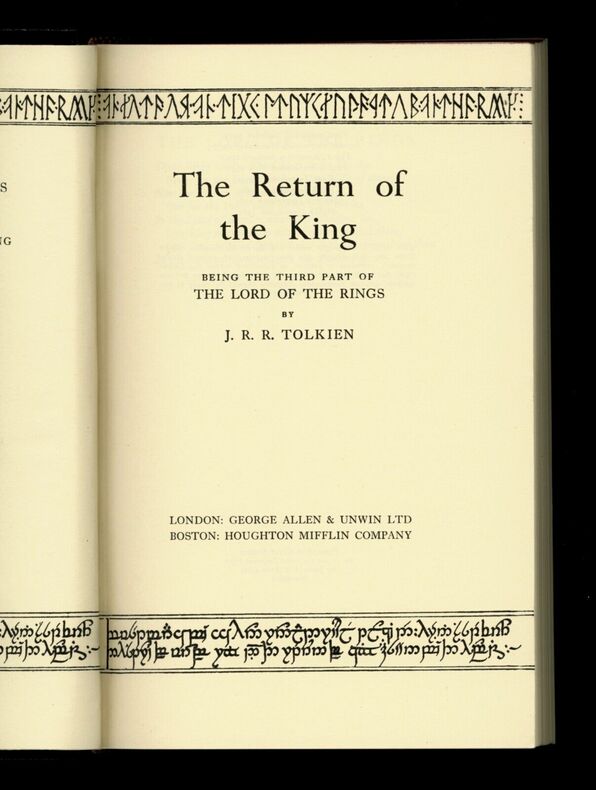
1961AMO-4505London : George Allen & Unwin ltd. Boston : Houghton Mifflin Company. 3 vol. 8vo 9.0" x 6.0" inches (23 x 15,5 cm) 423pp, folding map ; 352pp, folding map ; 416pp, folding map. First edition. Later printings (12/9/8). The Fellowship of the Ring. First edition first published in July 1954. Twelfth impression 1962. The Two Towers. First edition first published 1954. Ninth impression 1962. The Return of the King. First edition first published, October 1955. Eight impression 1961. Printed in Great Britain in 11 on 12 point Imprint type by Jarrold & Sons Ltd, Norwich. Each volume with a folding map at the end printed in red and black, top edges stained red. Exquisite full dark blue morocco fine leather binding, gilt ruled covers with the gilt "Ring & Eye" design stamped on the both covers, spine with decorated 5 raised bands ans two red gilt lettered morocco labels in the second and fourth compartments, with intertwined "J.R.R.T." initials in the bottom compartment. The amazing quality of the binding in in the style of Sangorski & Sutcliffe in fine condition. Extremely rare and absolutely spectacular.
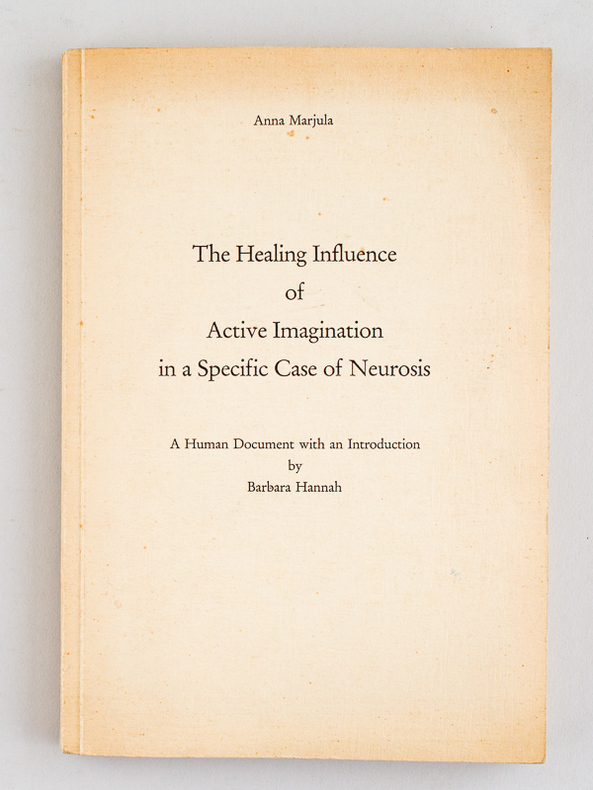
196757805A human document, with an Introduction by Barbara Hannah, 8vo paperback, Schippert & Co, Zurich, s.d. [ 1967 ], XII-128 pp. with 12 original colored drawings under an envelope pasted on guard, and autograph text in flemish on 14 leaves (letters, poems) in another one. Full Tite : The healing influence of Active Imagination in a Specific Case of Neurosis [ Unique and exceptional copy with autograph manuscripts and 12 original drawings: Anna Marjula mystery solved ! ]
181053914Translated from the original Latin of Cornelius Van Bynkershoek, 1 vol. 8vo, original full leather binding, Published by Farrand & Nicholas, Philadelphia, also by Farrand, Mallory & co, Boston, P. H. Nicklin & Co, Baltimore, D. Farrand & Green, Albany; Lyman, Mallory & Co, Portland, and Swift & Chipman, Middlebury, Fry and Kammerer, Printers, 1810, 1 f. blanc, 1 f. n. ch., xxxiv-218 pp. , pp. 249-251 (Index from another book) et 1 f. blanc
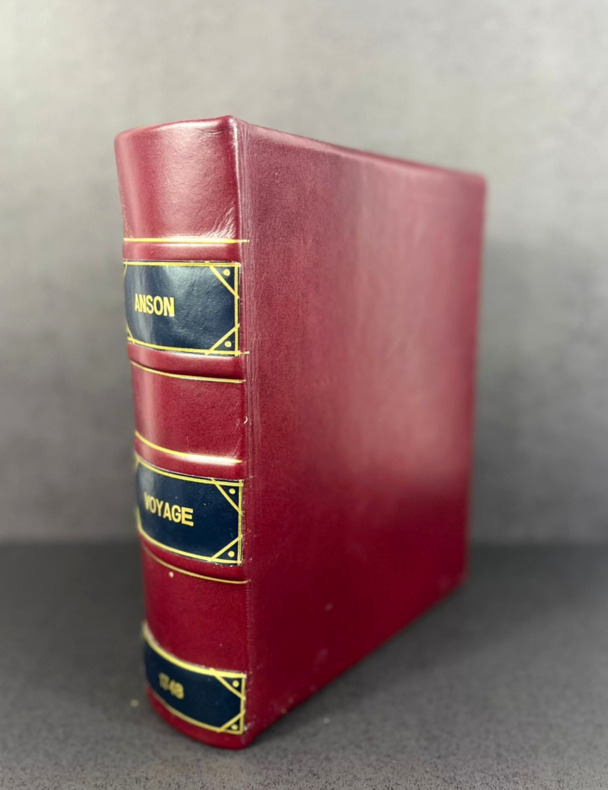
1748493London, John and Paul Knapton in Ludgate Street, 1748. This is a subscriber copy, so the real first edition of Anson's book. A brick of a book with 215 x 260 mm, 80 mm thick. 33 unpaginated pp. at the beginning, 417 (2) pp. Contemporary thick binding of a deep purple hue, four nerves on the spine, three black title pieces with author's name, book title and year in gold print characters. Includes the list of subscribers, p. 319 incorrectly designated as p. 219, two pages of instructions to the binder at the end of the book. With 42 copper plates: 14 maps and 28 engravings, all folding (38 having dimensions close to the book itself or to unfold horizontally and 3 being large folding maps). Comes with a sliding protective case. This is a copy of George Anson's account of his circumnavigation voyage. Complete with all the features which are often missing or signal a later edition. A lively tale of hardship, courage, curiosity, risk-taking and doing the impossible: overtaking Spain on the Peru coast, taking a Spanish galleon and completing the travel around the world with an awesome booty and an epic story to tell. The victory of Anson's Centurion launched the age of British dominance over the oceans and paved the way for a Victorian empire where "the sun never sets."
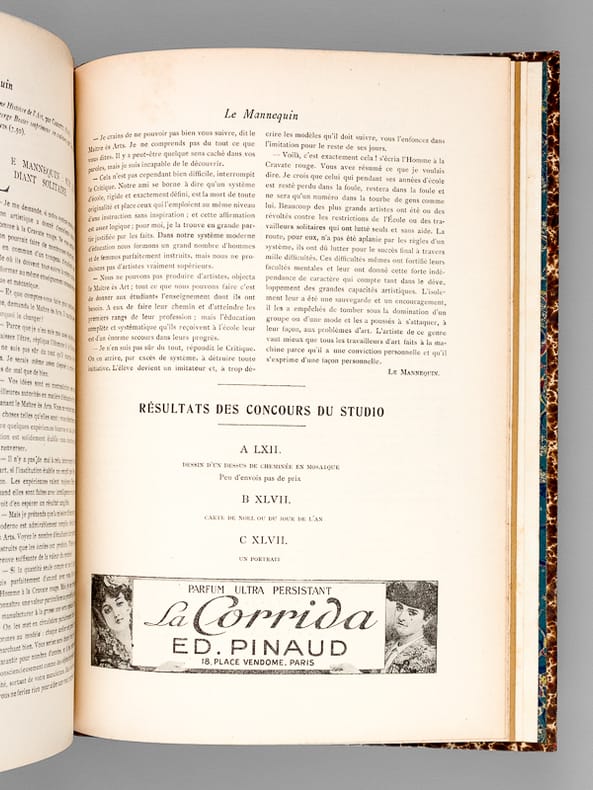
18936415981 volume 4to (79 quarter-leather, 1 paperback and 1 vol. - 51 - in 4 paperback issues), among which we can particularly point out : Vol. 4 (estampe en couleurs de Fernand Khnopff et estampe en couleur et relief) ; 5 (2 estampes en couleurs dont une par Boutet de Monvel) ; 7 (plusieurs estampes en couleurs dont le bourg de Perros-Guirec par Henri-Rivière, eau-forte par Charlton) ; 9 (plusieurs estampes en couleur dont Helleu et estampe en couleur et relief) ; 10 (dont dessin gaufré par Alexandre Charpentier) ; 11 (dont "Pierrot et Pierrette by Mrs Dearmer) ; 12 (dont bois gravé sur papier bleu par Lepère, et bois gravé en couleur par Nicholson) ; 13 (dont "Ombre chinoise" sur calque par Caran d'Ache, eou gravure en relief "Bath-Room by A Charpentier) ; 15 (dont portrait de Puvis de Chavannes par Valloton, estampes de Henri Rivière) ; 17 (contains "Beauty's awakening, a Masque of Winter and Spring) ; 18 (from october 1899, with Special winter-number 1899-1900 : Modern bookbinding and their designers et sa traduction française ) ; 20 (with "Modern British watercolour drawings) ; 21 (dont "The Queen of Hearts" by Percy Gossop) ; 23 (dont a Scene in Dido an Aeneas by Gordon Craig) ; 26 (1902 avec traduction française) ; 27 (dont eaux-fortes par Alphonse Legros) ; 29 (avec traduction française pour septembre) ; 30 (avec traduction française) ; 31 (avec traduction française, 1 planche et un cahier débrochés) ; 32 (avec traduction française) ; 33 (avec traduction française) ; 34 (avec traduction française) ; 39 : An exhibition of Portraits (avec traduction française) ; 44 (avec les couvertures portant "Revue mensuelle avec traduction française) ; 51 (paperback, spines used, in4 issues) ; 61 (Until Issue n° 254, May 1914) ; For the special numbers, we have 21 "bis" : 11 : Art supplements : The Salon Champs Elysées Paris 1897, The Salon Champ de Mars Paris 1897, Art at the New Gallery London 1897 ; 13 : A Record of Art in 1898 ; 21 : Modern pen drawings : European and american ; 23 : Modern British Domestic Architecture and Decoration, 1901 (avec traduction française) ; 24 : Modern design in Jewellery and Fans, 1902 ; 26 : Modern Etching and Engraving (avec traduction française) ; 27 : Corot and Millet with critical Essays by Gustave Geffroy and Arsène Alexandre ; 28 : Masters of English Landscape Paintings ; 30 : The Genius of J.M.W. Turner, R.A. ; 31 : The Royal Academy from Reynolds to Millais (avec traduction française) ; 33 : Daumier and Gavarni with critical and biographical notes by Henri Frantza and Octave Uzanne ; 35 : Art in Photography with selected examples of European and American Work (avec traduction française) 1905 ; 36 : The Mansions of England in the olden time, by Joseph Nash, 1906 (avec traduction française) ; 37 : The Royal Institute of Painters in Watercolours Spring 1906 ; 37 ter : Year-Book of decorative Art 1906 ; 40 : Royal Scottish Academy ; 40 ter : Year-Book of decorative Art 1907 ; 42 : The Gardens of England in the Southern & Western Counties (avec traduction française) ; 42 ter : Year-Book of decorative Art 1908 ; Paperback : Les Habitations Villageoises en Angleterre Numéro de Printemps 1912
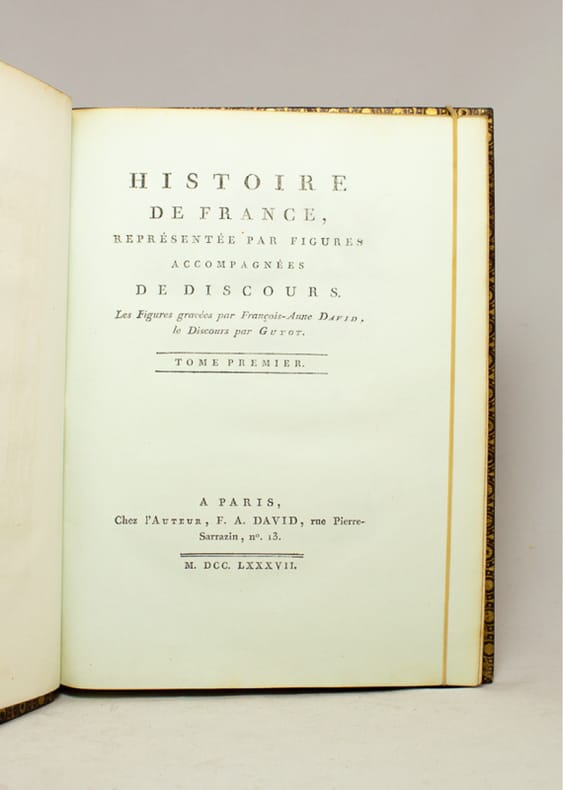
16571Paris, Chez l'auteur, M. David, 1787 - 1796. 5 volumes in-4, plein maroquin havane, dos lisses richement ornés de roulettes, filets et fleurons dorés, plats ornés de roulettes, grecques et filets dorés, canthares dorés en écoinçon, roulette dorée aux coupes, dentelle dorée intérieure, garde de soie moirée fleur d'amarante, tranches dorées. Etiquette du relieur Bradel le jeune.
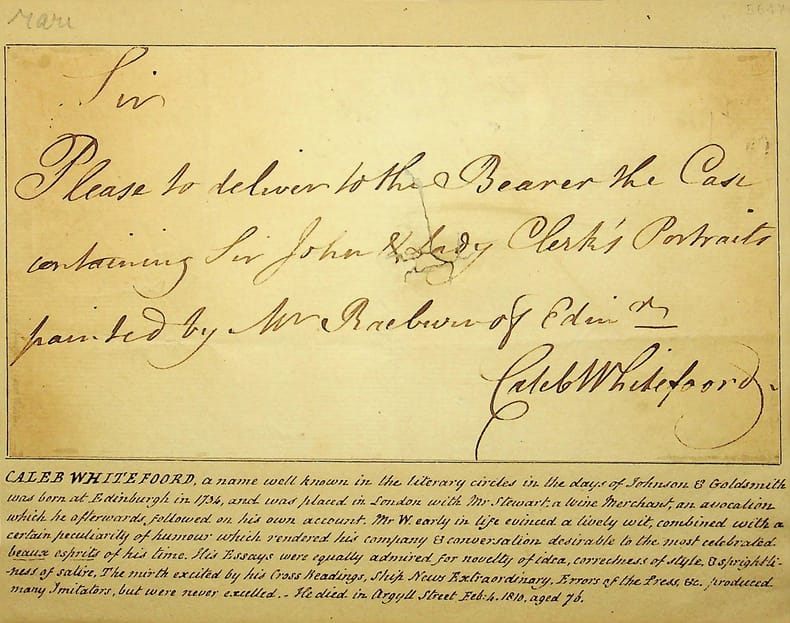
015243Caleb Whitefoord (1734-1810), marchand anglais, diplomate, écrivain (satiriste). P.A.S., sd [1791], 1p in-8 oblong. « Sir, Please to deliver to the Bearer the Case containing Sir John & Lady Clerk's Portraits painted by Mr Raeburn of Edin[bur]gh. Caleb Whitefoord ». Henry Raeburn (1756-1823) était un célèbre portraitiste. Il s'agit en fait d'un unique et imposant tableau, Portrait of Sir John and Lady Clerk of Penicuik, peint en 1791. Il mesure 145*206 cm et se trouvait dans la collection Beit en 1987 et est aujourd'hui présenté à la National Gallery of Ireland. Ce tableau est d'ailleurs un des tableaux emblématiques de ce musée. Le couple représenté est Sir John Clerk of Pennycuik, 5th Baronet (1736-1798) et son épouse Rosemary Dacre Appleby. Sympathique document, tant par le signataire peu commun que le sujet. [375]
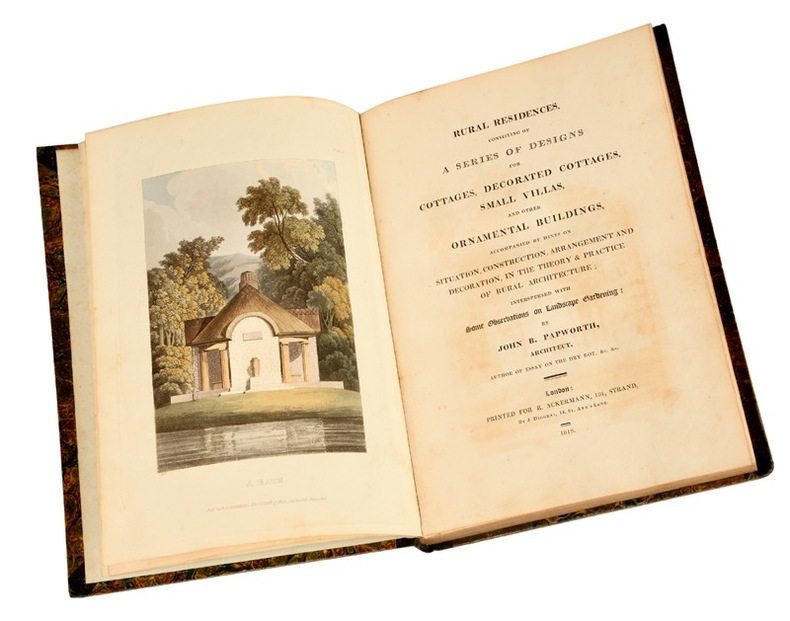
181821571London, Diggens pour Ackermann, 1818 ; petit in-4°, demi-veau vert foncé, dos à nerfs décoré de fleurons à froid et de palettes, filets et titre dorés, roulette décorative à froid d’une part et d’autre du dos (reliure romantique de l’époque) ; VIII, 106, [4] pp. et 27 planches hors-texte très finement aquarellées, avec les plans.
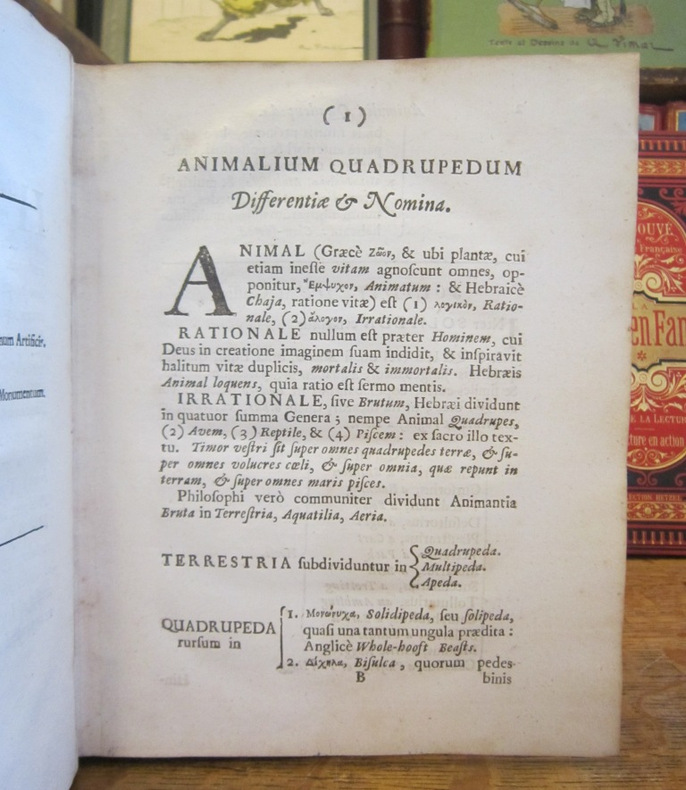
16084431London Robert Barker 1608 Très bel exemplaire d'une Bible en culotte de cheval publiée par Robert Barker en 1608. Contient : Un titre général ; l'Ancien Testament (mais pas de page de titre séparée pour l'Ancien Testament) ; le Nouveau Testament avec un titre ; l'Apocalypse ; 2 concordances (avec un titre séparé indiquant qu'elles ont été rassemblées par R.F.H.) ; le Livre des Psaumes (avec un titre séparé indiquant qu'elles ont été rassemblées par Thomas Sternehold & John Hopkins). Reliure en plein veau moucheté du 20e siècle. Les pages de garde sont neuves et unies. 4 bandes surélevées au dos, décorations aveugles sur les compartiments. Bords de la planche à motifs. Étiquette et titres noirs et dorés au dos. Toutes les pages de titre sont présentes. Les 3 dernières pages, Psaumes avec de très vieilles réparations et une page insérée dans le désordre. Les Psaumes sont complets mais le Credo est incomplet à la fin du livre (il se termine à la page 92). Toutes les sections sont datées de 1608. Robert Barker. Les problèmes notés dans cet exemplaire sont : f68 marqué comme f96 ; f173 avec une note de bordure collée ; f329 (dernière page d'Ezéchiel mal reliée à Daniel) ; f330 présent mais avec perte d'une grande partie du texte ; f434 mal paginé comme f435 ; f435 a une grande tache d'encre au verso ; f464 petite déchirure fermée ; f483 déchiré avec une certaine perte ; f490 mal paginé comme f499 ; f534 complet mais déchiré ; Livre des Psaumes : Les 10 premières pages ne sont pas paginées ; p28 mal paginée comme p27 ; p86 mal paginée comme p66 ; pps 87/88 échangées avec pps 89/90 ; Les deux derniers feuillets ont été réparés, et le dernier feuillet avec une perte modérée sur les bords. Comme c'est inévitable avec une Bible de cet âge, il y a aussi de petites déchirures, des entailles et un assombrissement général des pages, mais c'est un très bel exemplaire. Cette édition de la Bible de Genève a reçu le surnom de Bible à culotte, en raison de sa traduction erronée du chapitre 3, verset 7 de la Genèse. Le texte se lit comme suit : Les yeux de l'un et de l'autre s'ouvrirent, et ils connurent qu'ils étaient nus. Ils cousirent ensemble des feuilles de figuier et se firent une culotte. Chaque page n'étant numérotée qu'au recto (voire pas du tout), il s'agit en fait de numéros de feuilles (nous nous référons donc à fn). Pour compliquer encore les choses, le livre des psaumes numérote chaque page, et non chaque feuille. Collation complète : [ii], 1-554, [1-98], [1]-91.pp Collation : [manque le blanc q1], q2-Zzz10, A-L2, A-G3. Notre exemplaire est en grande partie conforme à Darlow & Moule 225a. Il s'agit d'une réimpression proche du quarto de 1605, avec le texte se terminant sur fo.554 (comme le nôtre pour l'AT et le NT) et avec Gen. i. 3 : 'Then God Sayd...' 240 par 170mm (9œ par 6Ÿ pouces).
1668002733Londini (Londres), Jacobum Allestry, 1668
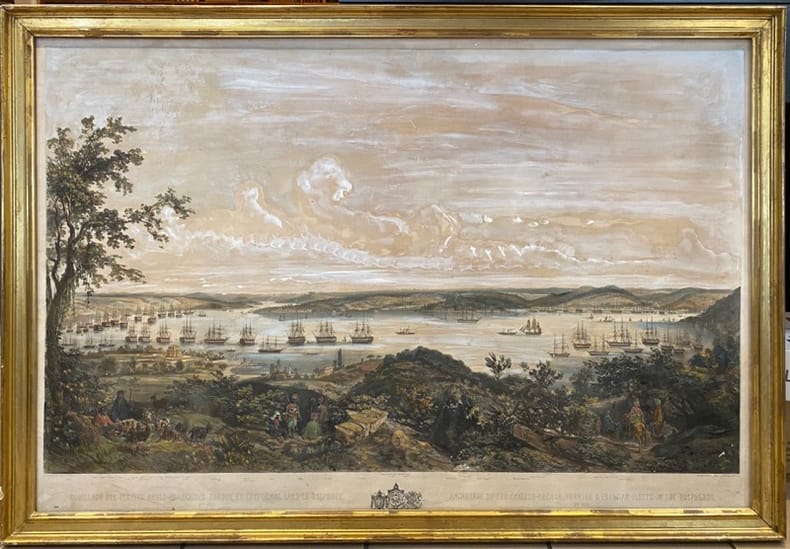
210664A Constantinople, A. Percheron et J. Schranz, Paris, Imp. de Jacomme & Cie, (1854) 89 x 129 cm, lithographie en deux tons, mise en coloris de l'époque, en feuille, sous cadre doré ancien. Sans verre.
195359302Menu original format 16 x 10,5 cm, aux armes de la Reine Elizabeth, texte calligraphié du menu, rédigé en français : "Potage de Tomate à l'Estragon", "Truite de Rivière", "Poulet Reine Elizabeth ou Cornets de Jambon Lucullus", "Salades", "Galettes aux Fraises", "Roulade", "Mousse au citron", "Café. Friandises", "Moselle Brauneberger '43", 'Champagne Krug '45" / Original Coronation Luncheon Menu", 1953, with Queen Elizabeth coat of arms, size : 16 x 10,5 cm, Manuscript calligraphied text, with first mention of "Poulet Reine Elizabeth" and full text in french
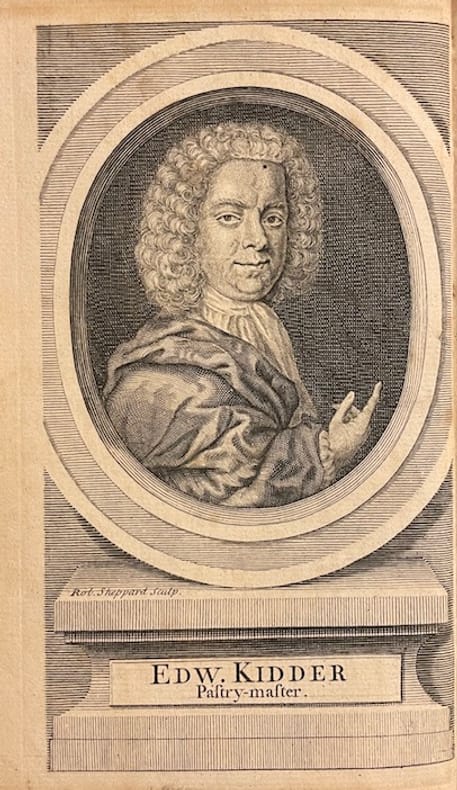
43242[Londres, sans nom, vers 1740] In-8° (187 x 115 mm), 44ff. + 8 planches. Reliure plein veau d'époque, plats ornés d'un décor à froid.
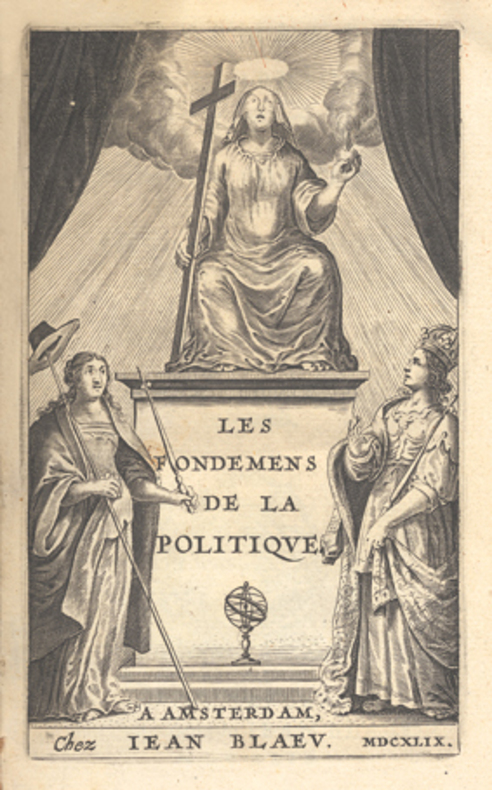
16492480Amsterdam (Paris), Jean Blaeu, 1649 ; petit in-8 ; pleine basane marbrée, dos à nerfs muet, filets dorés au dos et d'encadrement sur les plats (rel. ancienne) ; (28) ff. y compris le frontispice gravé et le portrait de Thomas Hobbes, (4) ff. d'épître dédicatoire au comte de Devonshire, 246 pp., (1) f. blanc, 144 pp., (8) ff. d'"avertissement du traducteur, adjousté après la publication de cest ouvrage".
1787PHO-1655Paris, Cuchet, 1787. 3 vol. in-8 veau marbré, dos à nerfs ornés, p. de titre et de tomaison en mar. rouge et vert, tr. rouges (reliure de l'époque). 4ff.-xxxii-478pp-3ff., 3ff.-438pp.-5ff., 2ff.-592pp-2ff., illustrée de 3 vignettes de titre, 4 planches hors texte et 5 grandes cartes dépliantes. Qqs lég. épidermures, qqs restaurations aux coiffes et nerfs, manque de cuir en bas du second plat du tome I. Ex-libris M. Trumet, avocat. Mouillures claires par endroits. Bel exemplaire.
1969014798Paris, New York, Genève, Milano, Roma, Madrid Alexander Iolas Gallery 1969 In-4 à l'italienne Reliure de l'éditeur Signé par l'illustrateur
1847RO40057368LAWRENCE LABREE - william taylor & co baltimore. 1846 - 1847. In-4. Relié demi-cuir. Etat d'usage, Coins frottés, Dos frotté, Quelques rousseurs. 331 + 492 pages - Nombreuses planches (51 gravures collationnées, réparties sur les 2 volumes) en noir et blanc sous serpente + nombreuses illustrations noir et blanc, dans le texte - En anglais, texte sur deux colonnes. Une petite déchirure sur une page, sans conséquence sur la lecture. Contreplats marbrés. Titre et tomaison dorés au dos. Coiffes abîmées. 4 photos disponibles.. . . . Classification Dewey : 810-Littérature américaine
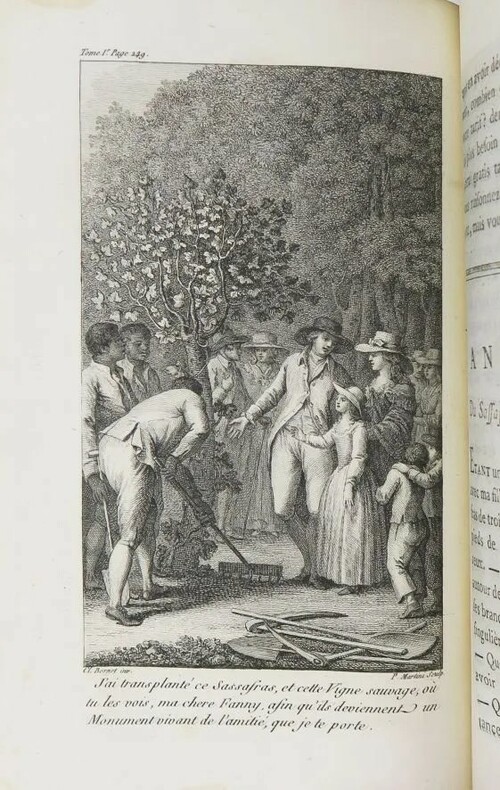
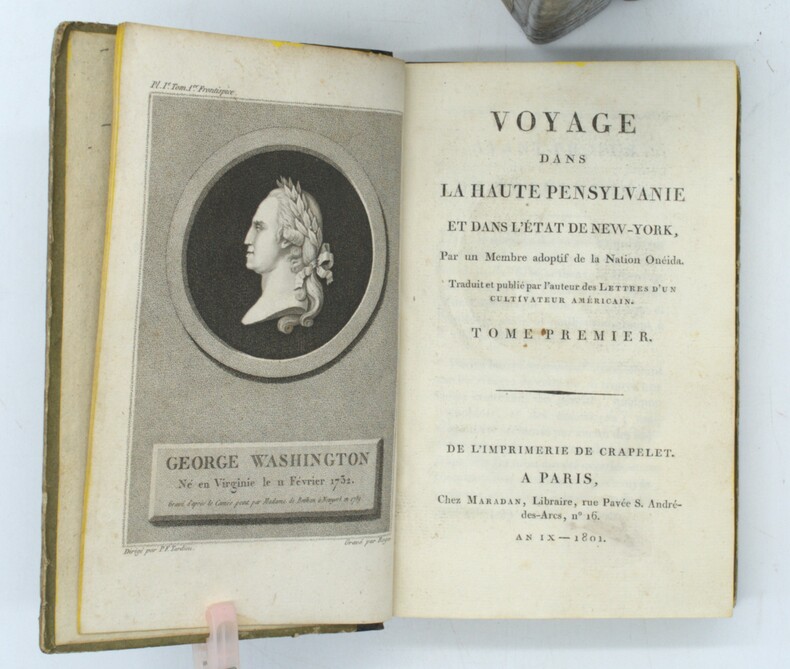
1801PHO-1645Paris, Maradan, 1801. 3 volumes in-8, demi-basane brune, dos lisse orné, tranches jonquille (Reliure de l'époque). Édition originale, illustrée de 3 portraits, de 4 (sur 6) planches gravées dépliantes, de 2 grandes cartes dépliantes des États-Unis et de 4 tableaux, timbres, déchirures sans manque aux cartes, petites rousseurs
19259583New York, Alfred A. Knopf, 1925. In-8 de 283-[5] pages, demi-toile verte, étiquette de titre au dos (passé et taché), plats de fantaisie florale. Sous étui gris (un peu taché, avec frottements en tête), étiquette de titre contrecollée au dos. Une troisième étiquette de titre couleur framboise est collée au second contreplat. Les défauts mentionnés mis à part, en belle condition. Page de titre non coupée.
195543736Privately Printed Softcover Iroquois Falls / Ontario 1955
218657Melbourne et Adelaide, 1865-1866 5 pièces en un vol. in-8, demi-veau blond, dos lisse, roulette dorée, filets à froid (reliure pastiche). Cachet (annulé). Bon exemplaire.
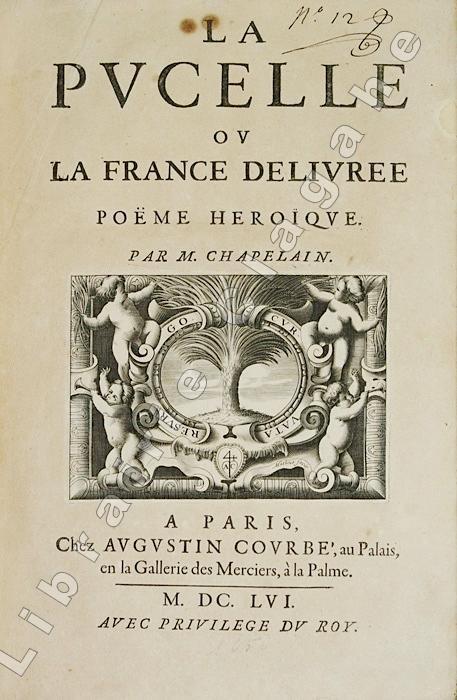
17788Paris, Augustin Courbé (imprimerie Jean Roger), 1656 ; in folio, basane havane, dos refait et plats d'époque conservés, fleurons dorés à l'ancienne ; 1blanc, frontispice, titre ; (6) ff. , portrait de l'auteur, (16) ff. , 522 pp. , (6) ff.
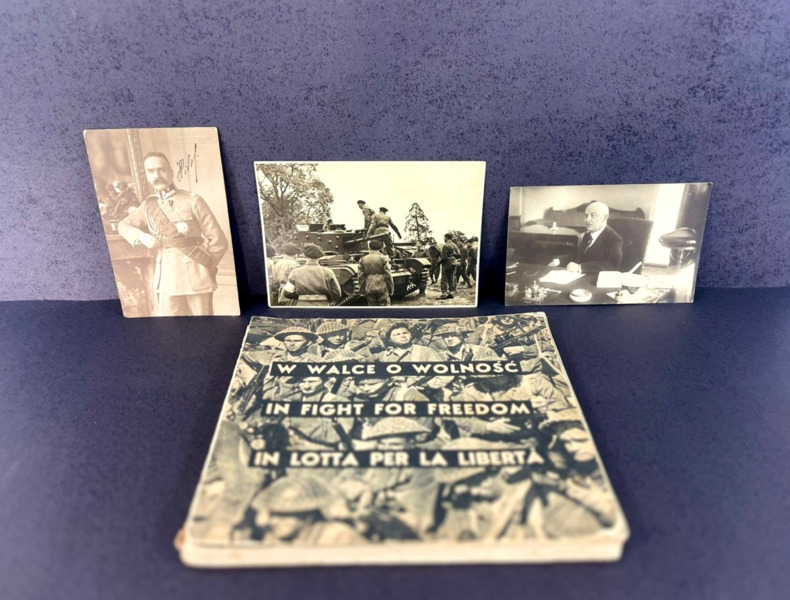
1945517This is a set which belonged to Janusz Gluchowski, a high-ranking Polish military officer at the time of the WW2. The set contains three original B&W pictures. First one: undated postcard showing Marshal Jozef Pilsudski, signed by himself in black ink, 8.5 x 13.5 cm, with two embossed mentions above and below. Second picture: undated postcard showing Poland President Gabriel Narutowicz, with a written mention on the back. Third picture: 11 x 15.5 cm photograph. General Tadeusz Bór-Komorowski inspecting a British Cromwell tank, accompanied by Polish officers of the 3rd Armored Regiment (3 puk pancerny). The image was captured during an official ceremony in the city of Kelso, Scotland, in the immediate post-war period, on June 15, 1945. The scene shows the General in an observation position, climbing onto the tank while surrounded by Polish soldiers. The tank corresponds to a British model widely used by Polish forces in exile during the Western European campaign. On the reverse, the following handwritten inscriptions appear: VI 1945, Kelso. N. Wódz gen. Bór-Komorowski dokonuje inspekcji 3 p. panc. N. Wódz w towarzystwie bryg. puku na czogu." / June 15, 1945, Kelso The book is an illustrated three-languages (Polish, English and Italian) set commemorating the struggles of the Polish II Corps. Edited by Wyda Rererat [Referat] Kultury i Prasy Kresowej Dywizji Piechoty in Rome, 1945. Oblong book of 21 x 19 cm, unpaginated (144 pp.). Cover detached. Endpapers and first page show Janusz Gluchowski's stamp. In publisher's photographically illustrated wrappers. Each page contains a photographic image or a photomontage accompanied with a short text in three languages. Front cover shows some wear and tear, the binding is a bit loose - we would advise having this book bound. The Polish II Corps was a major tactical and operational unit recruited from Polish deportees in the Soviet Gulags in 1943. First they fought in the Middle East, and in 1944 February they were transferred to Italy and as independent part of the British Army to fight in the Italian campaign, in the battles of Monte Cassino and Ancona and also the Battle of Bologna during the final offensive in Italy in 1945. The book goes through the story of Poland and the later established Polish II Corps, starting with the German and Soviet occupation in 1939. It shows the deportation of Poles to forced labour to the Gulag and, after the Polish-Russian Military Agreement in 1941, the establishment of the Polish Army on Soviet soil, also their military training and their fights in various battles. Janusz Julian Gluchowski was a Major General in the Polish Army during the Second Polish Republic. He was born on August 6, 1888, in Bukowa. He fought in the Polish Legions in World War I, the Polish-Ukrainian War, the Polish-Soviet War, and the invasion of Poland by Nazi Germany, Slovakia, and the Soviet Union in 1939, which culminated in the start of World War II. In his adolescence, he attended high school in Czstochowa. In 1905, he became a member of the Combat Organization of the Polish Socialist Party and was wounded in the hand during an attack near Czstochowa. To avoid arrest by the Russian authorities, he left for Belgium, where he studied at the University of Liège. He returned to divided Poland around 1910 and settled in Austrian Galicia. In 1912 he graduated from the Officers' School of the Riflemen's Association in Stroza, near Krakow. In the early hours of August 1914, he commanded a platoon in Oleandria and was Wadysaw Belina-Pramowski's representative during the legendary attack of the so-called Seven Lancers of Belina (Uaska siódemka). On August 6th, together with the First Cadre Company, he left Krakow and marched to Miechów. In October 1914 he was promoted to Lieutenant (Poruchik) and, in November 1916, to Rittmeister (Cavalry Master). Until 1917 he served in the First Uhlan Regiment of the Polish Legions. After the Oath Crisis (Kryzys przysigowy) he was interned first in Fort Beniaminów and later in Werl. Released in October 1918, he went to Lublin, where, in early November, he formed the Third Ulan Regiment (later renamed the Seventh Ulan Regiment of Lublin). Along with his unit, he fought in the Polish-Soviet War. On May 29, 1920, he was promoted to Polkovnik. He was transferred in July 1920 to Eastern Galicia, taking command of the First Cavalry Brigade, fighting against the Soviets in Galicia and Volhynia. After the war, he remained in this position until 1925, when he was transferred to the Fourth Cavalry Brigade. Promoted to Brigadier General on March 16, 1927. Appointed commander of the Center for Higher Military Studies on June 4, 1930, and three years later, after the death of General Stanislaw Tessaro, he was appointed commander of Military District X in Przemyl. In October 1935, he became Deputy Minister of Military Affairs. In the early days of the 1939 invasion of Poland, Gluchowski ordered General Walerian Czuma to prepare the defense of Warsaw. In mid-September 1939, he fled to Romania. After his escape, he managed to travel to the Middle East and, in January 1941, received orders to go to London. In October 1941, he was appointed Commander of the Training Brigade stationed in Scotland. On September 23, 1943, he was appointed commander of all Polish Army units stationed in Great Britain, except the First Independent Parachute Brigade, which remained under the authority of the Commander-in-Chief. He was promoted to Major General on June 1, 1945. He decided not to return to Soviet-occupied Poland and remained in Great Britain. He frequently criticized the Soviet regime and the Soviet occupation authorities in postwar Poland. Furthermore, he was one of the founders and president of the Jozef Pilsudski Institute in London. He was, therefore, an active member of the Polish community in Great Britain. He was president and honorary member of several Polish veterans' organizations. He died on June 11, 1964, in London, England.