427 résultats
18080MV432North Shields England 1808. Extremely rare handwritten letter of great interest to collectors or researchers of ENGLISH QUAKER LIFE. ROBERT SPENCE Quaker banker ALS North Shields dated 1808. Three pages 4to. plus integral address leaf. To his future wife's father Robert Foster Hebblethwaite Hall near Ledberge Kendal. This letter is the nexus of a correspondence that will last nearly five decades between these two English Quakers - bound by blood religion and soon matrimony - Spence begs to be allowed to visit Hebblethwaite now that Foster has learned of his attachment to Mary. Very sensitively written and in many ways a proposal of marriage but much more than the simple face value of the words may be read between the lines as Spence appears very defensive for not having spoken to Foster first. Simply sensational English Quaker historical autographed letter. VG. Autograph. Manuscript. Very Good. 4to - over 9¾" - 12" tall. Paperback
18770009039NAPLES ALEXANDRIA CAIRO SUEZ JAFFA JERUSALEM. Good. 1877. On offer is a fascinating journal written by an English woman of a trying and difficult voyage from Naples Italy to the Holy Land of Jerusalem in 1877. The journal is 35 pages long and is of a trip of a small group who travel first to Alexandria via Sicily then by rail to Cairo and Ismailia through the newly constructed Suez Canal and finally an extraordinary months journey on horseback with tented camping in the desert at night. The trip is a very difficult journey and at one point the woman writes this was our first experience of travelling in Palestine and I can assure you it was a most trying one. The authors handwriting is beautiful and is an easy pleasure to read. These pages seem to be notes for a talk the woman is going to give. There are also corrections of the writing in pencil by the woman herself and the book ends as if the words were meant to be spoken to an audience. The journal begins: Naples to Jerusalem Notes by the way Naples which is to be my starting point tonight is beautifully situated on one of the finest bays in the world. The city extends for three miles along the short of the bay but rows of houses villages and small towns extend almost entirely around it. Nearly opposite Naples is Mount Vesuvius from whose summit have poured in times past the streams of lava and showers of ashes which have again and again buried whole towns and villages situated on its sides and even at some distance from its foot; and from which a light cloud of smoke is always rising.; We went on board a steamer bound for Alexandria at two p.m. on Sunday February the 18th 1877 but did not sail until five oclock during which time we had a fine view of the city and its surroundings.On the following morning we entered the straits of Messina and about 11 oclock landed at Messina capital of Sicily where we stayed a short time and walked through the town. We sailed about 12 and it was quite smooth through the straits our companions came on deck.Soon after we got through the straits a storm burst upon us. The guards were fixed on to the table today to keep the things in their places but did not remedy all the evil for as you know anything liquid will find its own level so that when we had soup before us and the boat rolled to an angle of 45 de. It was either running over the opposite edge of the plat or pouring over us which was far from pleasant we had no more soup during the three days that the storm commenced. They reach Alexandria a few rough days later: Pompeys pillar and Cleopatras needles are the most striking monumental relics of Alexandria and we drove to Pompeys pillar first. It stands on rising ground the highest in the neighborhood and close to it is a Mohammedan cemetery. The writer is a smart woman adept at conveying events with skillful detail grativats and occasionally humor. She is also quite a worldly woman often bringing in recent world events to give context: Recent events have brought Egypt to the notice of all newspaper readers and the bombardments of the forts of Alexandria by the British Fleet and the subsequent setting on fire of the principal parks of the city and especially of the European part has been brought very vividly before the public by the Illustrated Papers. The Great Square is where the principal buildings of the city were situated. The buildings surrounding it were of imposing appearance here were the Consulates the principal Banks the finest shops and the largest hotel.All this is now a heap of ruins. She goes on to describe the contrast in dress between native women and European women: you often see for instance an Egyptian woman covered from head to foot with a long thick veil which hides all but her eyes and walking close behind her an European lady dressed in the height of Paris fashion. The European gentlemen are of course dressed as we are accustomed to see them except that all wear the Turkish fez and the higher class Egyptians mostly wear the same dress but the lower classes all wear loose petticoat trousers reaching to the ankles and a loose jacket and round the waist they often have a gaily coloured sash or shawl. After Alexandria the writer takes a train to Cairo. She describes the train ordinary first class ones made in England and sent out and the landscape she sees the land is well cultivated and is watered by the annual overflowing of the Nile and is also artificially irrigated by means of numerous canals cut for the purpose from the Nile.. Cairo is a more purely Oriental city than Alexandria and we stay here five days. The writer describes the contrast between old Cairo and new Cairo as well stating that the new Cairo is built after the style of the boulevards of Paris with wide streets and trees planted on the side paths shops and houses in the European style while the old Cairo is truly Eastern narrow irregular streets merely of earth trampled smooth though far from being level. In Cairo the writer describes many different places she sees travelling around the city by donkey indeed there are regular stands for them and anyone who wishes to go out calls for one as we call for a cab and especially the shops in the bazaars. While in Cairo she takes a donkey trip to the Island of Rhoda to see the famous Nilometer that measures flood height. She also goes to see the Boulak Museum the finest collection of Egyptian Antiquities in the world the University of the East and observes the Muslim call to prayer at the University: At 12 o.c. the call to prayer was heard from the minarets of the mosk mosque and instantly all spread their prayer carpets on which they knelt down with their faces turned towards Mecca and utterly regardless of our presence they went through their devotions. From Cairo there are day trips to Sakkara and Memphis where the writer sees and writes of many statues sculptures and sacred bulls all very well preserved and recently discovered and excavated. After the five days in Cairo the author sets off for Ismailia a place on the Suez canal about half way between Suez and Port Said. She comments on the refilling of the dry Lake Imshah after Suez Canal construction just 8 years or so earlier. She writes Ismailia has entirely grown up since the canal was made it was before nothing but desert but a freshwater canal supplies it and other stations on the Suez Canal. It seems as if wherever water can be got on to the land the desert may be turned into a garden for already they have a few good gardens there and many avenues of trees. The author than travels to Port Said across the Suez Canal by steamer. From Port Said she goes onto Jaffa. During the time we had our only experience of the Kamseen which is a hot dry wind full of fine sand blowing off the desert and looks like a thick yellow fog. The sand was so fine that it penetrated all our clothes and we had to go into the cabin for protection. In Jaffa she comments on the numerous orange and lemon groves the poor sanitary situation in the city and the many muddy dirty and crooked streets of the city our first impressions were not pleasant. In Jaffa she goes to Simon the Tanners house and also to where Peter had his vision of a sheet let down from Heaven knit at the four corners and filled with all manner of beasts etc. She also visits a Mission school run by an English lady attended by Jews Mohammedans and Syrians alike. The school is Methodist. From Jaffa the author and her companions set out for the month long horseback trip to Jerusalem sleeping in tents at night. We rode between orange and lemon groves for some distance the road was fenced off with prickly pear a close growing thorny cactus which reaches about 6ft high a fence which will defy man or beast. From the onset of the journey there are persistent problems with the horses: my horse had a bad trick of pulling up suddenly if I tried to pass the foremost of the party they cing very tenaciously to each other and there was no attempt to run away with any of us.We were in the saddle for over five hours with the sun fiercely shining on us from a cloudless sky and if there had not been a nice breeze we should have found it much worse than we did. Despite the problems the write is astounded with the beauty of the Middle Easter landscape. The Plain of Sharon was gay with flowers particularly with a small anemone of a very bright scarlet and as we got into the hill country the ledges of the rocks were filled with beautiful varieties of cyclamen. At night she describes the tents they have brought along and the new experience of sleeping in tents which seemed almost like sleeping out of doors. They have brought along five sleeping tents a saloon tent and a kitchen tent with a Union Jack flag flying from one and Stars and Stripes from the other. It is obvious the people on the trip come from wealth as she describes the extraordinary five course dinner they are served in their camp site: first course soup 2nd stewed tongue with fried potatoes 3rd cauliflower browned with egg & breadcrumbs 4th chicken and asparagus 5th apricot tarts and dessert nuts raisins & Jaffa oranges after which we had a large cup of tea to finish off with. The first nights are cold and noisy nights with dogs barking and frogs croaking. They wake up each morning with a servant blowing a rams horn trumpet. The writer is taken by the Biblical ground through which she travels: Our route to day is over ground of great interest and where great events in the early history of the subjugation of Palestine by Joshua took place. It was here that Joshua uttered the memorable words at the battle of Beth Horon Sun stand thou still upon Gibeon and thou Moon in the valley of Aijalon.I have no doubt they would take the same road we were going for we reached Kirjath Jearim where the Ark was kept so long early in the day. Finally the author and her companions reach Jerusalem. Here she writes clearly and beautifully of Jerusalem of its hills and deep valleys and twisting roads. We descend the Mount of Olives past the garden of Gethsemane then across the brook Hedron and up the other side of the valley passing the traditional site of Stephen's martyrdom. Enter Jerusalem by St. Stephen's gate and along the Via Dolorosa return to our hotel. The journal ends like so We spent several days in visiting the places of interest in the city and its neighbourhood but it would take too long for me to attempt a description of them. I can only hope in conclusion that some here present may have the pleasure of seeing for themselves that wonderful city and land. The journal consists of four gatherings of roughly 10 pages each though these gatherings are not bound and many pages are loose or very close to being unattached. The paper shows some wear and coloration from age but it does not hinder the experience of reading this amazing travelogue at all.; Manuscript; Folio - over 12" - 15" tall; KEYWORDS: HISTORY OF PILGRIMAGE TO THE HOLY LAND JERUSALEM PRE-STATE ISRAEL NAPLES MESSINA ITALY SICILY ALEXANDRIA CAIRO EGYPT ISMAILIA SUEZ CANAL ARABIAN DESERT TRAVEL BY HORSEBACK 19TH CENTURY FEMALE TRAVEL IN THE 1800s BAZAARS OF EGYPT NOTES FOR A LECTURE TRIP THROUGH THE ARAB WORLD NORTH AFRICA MIDDLE-EASTERN TRAVEL RAIL TRAVEL IN THE LEVANT KHAMSIN WIND JAFFA SHARON PLAIN LUXURY TRAVEL BIBLE TRAIL DESCRIPTIONS OF MIDDLE EASTERN LANDSCAPE BRITANNICA HANDWRITTEN MANUSCRIPT DOCUMENT LETTER AUTOGRAPH WRITER HAND WRITTEN DOCUMENTS SIGNED LETTERS MANUSCRIPTS HISTORICAL HOLOGRAPH WRITERS AUTOGRAPHS PERSONAL MEMOIR MEMORIAL ANTIQUITÉ CONTRAT VÉLIN DOCUMENT MANUSCRIT PAPIER ANTIKE BRIEF PERGAMENT DOKUMENT MANUSKRIPT PAPIER OGGETTO DANTIQUARIATO ATTO VELINA DOCUMENTO MANOSCRITTO CARTA ANTIGÜEDAD HECHO VITELA DOCUMENTO MANUSCRITO PAPEL . hardcover
1832D4411England probably Beckenham 1832-1862. Hardcover. Good. Written in several varying hands with 6 fine pencil drawing vignettes one laid-in loose one of Napoleons grave signed Chas. Cadby one pen and ink landscape vignette. A fine painting of sparrow and rose; several laid in drawings of architectural views mainly pastoral English scenes one view labeled Beckenham one view for the stake of William Hunt of Brentwood Protestant Marytyr died 1555 and landscape. Few clippings from publications stationery postcard views including those for Rydal Lake Westmoreland Beckenham Arundel Castle Grange Bridge Bolton Abbey Exeter Coniston Old Man and some Welsh landscapes loose or laid-in. two full-page pasted in photographs unidentified portraits likely of Bird or Cadby family and seven other photographs loose or laid in. Original paneled calf; covers detached but present spine mostly perished some contents loose. Written contents include copied poems of: Sun of the Sleepless by Lord Byron; From the Recesses by Sir John Bowring 1792-1872; a hymn: If all our hopes and all our fears by Sir John Bowring; Sweet is the balmy evening hour by Miss Mitford; It is not that my lot is low by Henry Kirke White; Byrons lament to H.K. White Unhappy White! While was in its spring And thy young muse just waved her joyous wing The spoiler came; and all thy promise fair Has sought the grave to sleep for ever there copied by Alfred Bird and dated 1862. Other original work by the Bird family include To the First of my brother Anemonies When Aging some lines from a memorial for Charles Cadby signed by Bird dated 1846 3 pages in memoriam of Albert Prince Consort died 1861 in the hand of Emily Bird dated 1862. Pasted to paper and mounted on doilies are 2 preserved dissected ivy-leaves said to be taken from Brompton cemetery. Commonplace books were collections of proverbial wisdom. Such books were essentially scrapbooks filled with items of every kind: medical recipes quotes letters poems proverbs and prayers. Many of the Bird familys commonplace book themes encircle death and mourning. Alfred Bird perhaps later Bird family member composed Fair but False in 1867 on unrequited love and in that same year The River of Life love poem to nature and another The Lords of Lochleaven. A memorial page left unfinished is for Emily Bird. Alfred and Emily Bird daughter born 1827 to Charles Cadby married at Westminster in April 1847. The book was passed between the two after their marriage where some nice Victorian themes are realized in the collection. Fine Victorian anthology tied to a single family. <br/><br/> hardcover
187133942Northumberland August 5 1871. 1871. Good. - Octavo 7-1/8 inches high by 4-3/8 inches wide. Over 300 words penned on all four sides of a folded sheet of creamy white paper with the address embossed in blind at the top of the cover sheet. Replying to a request for his assistance in working out a solution to the strike by engineers in Newcastle seeking that limits be placed on the hours they are required to work each day: "I also yesterday received a letter on the same subject from Mr Lowthian Bell - In answer to his letter I told Mr. Bell that I would be very glad to do anything in my power to assist in bringing the unfortunate strike at Newcastle to a close but that I fear that nothing that I would do would be likely to promote that object & might even tend rather to increase than to diminish the existing irritation between the employers & the employed." Earl Grey asks if the recipient might have some "arrangement to propose for the settlement." which might help him decide if he should get involved in the negotiations. He mentions in closing that he will be traveling over the next several days culminating with his being "compelled to go to London to vote against the ballot bill". Signed "Grey". Folded twice horizontally the letter was once mounted or tipped-in to a book with remnants of paper adhering to the top edge of the last page not affecting the text. There is also a tiny piece of dark paper near the lower center of the last page which does not touch on the text. <p>The "Nine Hours Strike" began in August of 1871 when engineers in Newcastle upon Tyne and adjoining areas requested that working hours be limited to nine hours a day. The bitter strike was prolonged when employers refused to talk and brought in foreign workers in an attempt to break the strike. Though there were a few incidents of violence many of the foreign workers soon realized that they were being used to support a system of industrial slavery and would lose their jobs anyway once the strike was resolved. The strike went on for 14 weeks before employers finally compromised and granted the strikers' request.<p>The Ballot Bill to which Earl Grey refers proposed that parliamentary and local elections in the UK take place by secret ballot. The Bill was passed in 1872.<p>Also known as Viscount Howick the English statesman Henry George Grey 3rd Earl Grey 1802-1894 entered parliament in 1826. His father became Prime Minister when the Whigs came to power in 1830 and Earl Grey then Viscount Howick was made Under-Secretary of State for War and the Colonies. Aligned with colonial reformers he resigned in 1834 when the emancipation of slaves was made to take place gradually instead of immediately. He became Secretary of War when he entered Lord Melbourne's cabinet in 1835 and made significant administrative reforms. He again resigned in dissatisfaction in 1839 and gained a reputation for crotchetiness. He supported free trade and as colonial secretary a post to which he was appointed in 1846 was the first minister to proclaim that the colonies should be governed for their own benefit and not for that of Great Britain & Ireland. As much as possible he accorded them self-governance. He was however soon embroiled in the turmoil and discontent brewing in Ceylon the West Indies and New Zealand. He authored several works on political subjects and policy including an 1888 work on the state of Ireland and one on the United States tariff. Northumberland, August 5, 1871. unknown
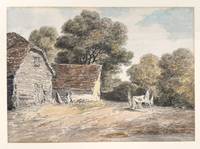
185022821850. Watercolor on cream laid paper laid down to archival board 5 5/8 x 7 7/8 inches 142 x 199 mm the full sheet. In excellent condition with a signature in graphite in the lower right image area that remains illegible. unknown
1830004148Boston: Francis Grant 1830 1830. Hardcover. Near Fine. Third Edition. 16mo - over 5" - 6" tall. Wraps. Fair. Title page worn Cover is chipped <br/> <br/> Boston: Francis Grant, 1830 hardcover
1891ABE-1687640925475Piper & Carter 1891 Softcover 12mo. 2nd edition. 126 pp. index. Grey wraps. "In Connection With the Art of Photography and Its Branches." Considerable age wear/staining to wraps. Scarce. 2nd Edition. Soft cover. Good. Piper & Carter paperback
189520220004New York & London: Charles scribner's Sons / John Lane 1895. First Illustrated Edition. Hardcover. Very Good. Duodecimo 186 pages pictorial gilt covers corners bumped short split in rear hinge partially unopened with t.e.g. and deckle-edged <br/><br/>Illustrated by Charles Robinson who was the son of an illustrator and the brother of two illustrators Thomas Heath and William Heath Robinson. Born in 1870 this 1895 work was Charles's first full-size book commission. Its popularity caused a number of new commissions and many reprints of this beloved book. Charles scribner's Sons / John Lane hardcover
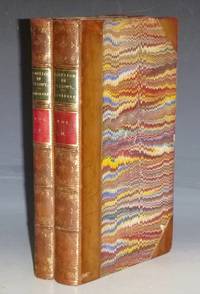
1820023155London: John Murray 1820. First Englsih Translation. Octavo. In two volumes 343 and 459pp. translated into english by Alfred John Kempe late officer of infantry notes by M. Aubert De Vitry editor of the French edition. folding map of the French and allied armies in volume one errata slip placed before folding map. Odeleben was lieutenant-colonel of the Royal Saxon cavalry adjutant on the General staff knight of the order of St. Henry and member of the legion of Honour. This is his detailed account of the campaign of 1813 in Saxony. Armoral bookplate of T. W. Pulman who was promoted to Lieutenant and appeared in the Asiatic Journal of 1841 and another name Charles dated Dec. 1900 . A handsome set bound in contemporary 3/4 calf over marbled paper covered boards with matching endpapers and marbled edges raised bands with compartments decorated in gilt double contrasting red and green morocco spine labels gilt with one chipped light scattered foxing and some spots of rubbing or scrapes joints have been streanthened on volume II. Bookplate of T.W. Pullman. A very nice set. John Murray unknown
1834254177London: printed by George Eyre and Andrew Spottiswoode 1834. First Edition. Hardcover. Poor copy with wear tear and dust-dulling as with age. Text remains clear and without blemish. Physical description; 412 pages. Subjects; King William the Fourth. Public General Statutes. Second Session of the Eleventh English Parliament. London: printed by George Eyre and Andrew Spottiswoode hardcover
1832254178London: printed by George Eyre and Andrew Spottiswoode 1832. First Edition. Hardcover. Poor copy with wear tear and dust-dulling as with age. Text remains clear and without blemish. Physical description; 770 pages. Subjects; King William the Fourth. Public General Statutes. Second Session of the Tenth English Parliament. London: printed by George Eyre and Andrew Spottiswoode hardcover
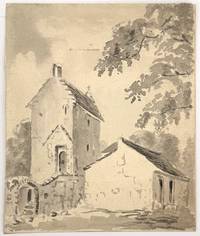
184025121840. Ink and wash on wove paper 6 x 5 inches 152 x 128 mm the full sheet. In very good condition with uniform toning and some paper tape tabs and pencil inscriptions on the verso. unknown
1825305815Newcastle upon Tyne: printed by T. and J. Hodgson for E. Charnley 1825. First edition. One of 32 Large Paper copies. Engraved portrait frontispiece by W. Colalrd after W. Nicholson on india paper and mounted engraved armorial headpiece to dedication page. xxxvi 243 1 pp. Royal 8vo 248 x 181 mm. Contemporary brown straight-grained morocco covers with double gilt rule and corner arabesques covers centered with gilt arms of Brockett family motto: Invictus Maneo spine gilt a.e.g. Small stain at foot of spine and a few small scuffs to boards offset and minor spotting to title spotting to endpapers later gift inscription to f.f.e.p. but overall a fine copy internally in an attractive binding. First edition. One of 32 Large Paper copies. Engraved portrait frontispiece by W. Colalrd after W. Nicholson on india paper and mounted engraved armorial headpiece to dedication page. xxxvi 243 1 pp. Royal 8vo 248 x 181 mm. An attorney by profession Brockett 1788-1842 was a dedicated antiquarian with an interest in philology printing and book collecting. His 1818 Hints on the Propriety of Establishing a Typographical Society in Newcastle led to the founding of that society. Brockett assembled remarkable collections of books medals and coins and the sale of part of his library in 1823 through Sotheby's lasted fourteen days and raised more than £4000. That sale catalogue notes numerous bindings bearing his arms by the great London binder Charles Lewis 1786-1836. The present binding is unsigned but of a very high quality suggesting it may also be an example of Lewis' work for presentation or for the author's own shelf.<br /> The regular edition was printed in 600 copies. This large paper copy is about 2 inches taller.<br /> A fascinating work on dialects in the north of England in a fine binding bearing the arms of the author. Vancil p 34; O'Neill B-198 Regular Issue printed by T. and J. Hodgson, for E. Charnley unknown
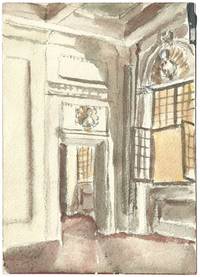
189022311890. Watercolor on heavy stock wove paper 6 1/8 x 4 3/ 8 inches 154 x 110 mm the full sheet. Scattered light areas of unobtrusive foxing otherwise in good condition. On the verso appears an illegible inscription written in pencil perhaps a signature. unknown
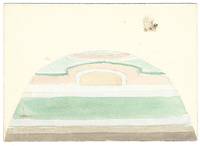
189022301890. Watercolor and graphite on heavy wove paper 4 3/8 x 6 1/8 inches 110 x 154 mm the full sheet. In good condition with an inky fingerprint in the upper right sheet area recto. On the verso is a painted sample color palette and the title of the work in pencil. unknown
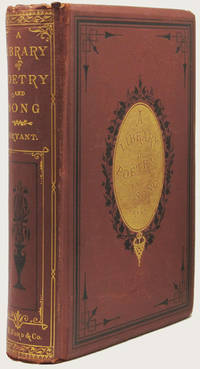
187133217New York: J. B. Ford and Company 1871. Revised and updated edition. Profusely illustrated with a steel engraved frontispiece portrait of William Cullen Bryant 16 wood engravings and 25 facsimiles of autograph manuscripts of the poets. 8vo in the publisher’s binding of brown cloth the spine lettered and ruled in gilt and with a black decorative design of a vase with flowers the covers black ruled and decorated in a geometric pattern on the covers and the upper cover also decorated with a central gilt and black oval design. xxxi 789 pp. A very pleasing and well preserved copy with very minor rubbing to the extremities internally clean and bright. AN IMPRESSIVE COLLECTION OF THE GREAT POETS AND POEMS ARRANGED BY THEME. POEMS OF CHILDHOOD FRIENDSHIP LOVE SORROW RELIGION NATURE AND MUCH MORE. Among the many poets included are Coleridge Wordsworth Shakespeare Milton Shelley Scott Emerson Longfellow Browning Poe and Stowe. <br> American poet William Cullen Bryant made a name for himself when his Romantic blank verse meditation â€Thanatopsis†was published by the ‘North American Review’ in 1817. His long career was divided between his many published collections of poetry and the 50 years he spent as editor of the ‘New York Evening Post’. J. B. Ford and Company hardcover
1884mon0000023628Walter Smith 1884. Hardcover. Good. in x in x in. Two volume set vols 1&2 but oxford publication s augustine on the psalms anterior to the division of th east and west ex libris copies damged spines on blue cloth Walter Smith hardcover
1884mon0000023629Walter Smith 1884. Hardcover. Good. in x in x in. Volumes 45 & 6 Library of the fathers publsihed by oxford anterior to the division of the east and west Walter Smith hardcover
1868003524London: John Russell Smith 1868. Looks like it has been rebacked at some point new spine original boards slightly faded and bumped some foxing occasional ink underlining and pencil notes otherwise clean and fairly firm. Cloth. Good Minus/No Jacket. 8vo. John Russell Smith Hardcover
188276007Epping: A. B. Davis 1882. Firs edition Small octavo viii 41 1 2 testimonials pp. Publisher's black-stamped nay belie cloth with gilt cover lettering pale yellow endpapers. An excellent copy of a scarce item.Tipped in at rear are two autograph letters signed by English signed to a person curious as to his methods. A. B. Davis hardcover
18821393106Epping: Alfred B. Davis 1882. Hardcover. Octavo viii 41 pages. In Fair condition. Spine is blue without print. Boards in blue cloth with gold print. Light wear to spine caps and corners. Text block has intermittent spine breaks. <br /> <br /> <p>NOTE: Shelved in Netdesk office Case #2 - New Ephemera Box #3. 1393106. FP New Rockville Stock. Alfred B. Davis hardcover
181817093Edinburgh: Oliver & Boyd 1818. Hardcover. Very good. 12mo. 108pp. Publishers original drab brown cloth; upper board blocked in gilt with title within a floral design. Ink name on front pastedown. Cloth soiled binding lightly shaken gilt rubbed else a very good copy. The date of publication is taken from the Advertisement page 4. This seems to be the first Oliver and Boyd printing of a hieroglyphic Bible and the second Edinburgh printing after the Doig and Sterling edition of 1814. The accepted publicaton date for this Bible is 1818; three other known copies are known to have been issued either in quarter leather and marbled paper boards or in printed card covers. Our copy is in what is clearly publisher's cloth with gilt blocked on the upper board. This combination is unknown before 1826. It is likely then that the textblock while printed earlier was bound after 1826. Exceedingly scarce. Protected in a custom clamshell box. Oliver & Boyd hardcover
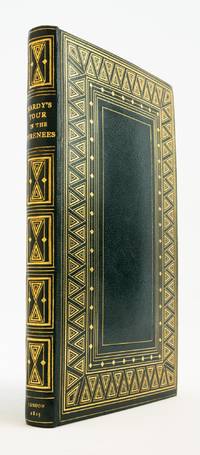
1825ST20491London: R. Ackermann 1825. FIRST EDITION. 236 x 144 mm. 9 1/4 x 5 3/4". vii 1 84 pp. <br/> STRIKING DARK GREEN MOROCCO VERY ELABORATELY GILT BY CUNEO stamp-signed on lower front turn-in for Mildred B. Davey named stamped on upper front turn-in covers with geometric Art Deco frame smooth spine in compartments with triangle ornaments gilt lettering git-ruled turn-ins marbled endpapers. Housed in matching green morocco-backed clamshell box lined with fleece. Engraved map and 24 FINE DELICATELY HAND-COLORED PLATES inlaid on heavy stock as issued; original tissue guards. Verso of front free endpaper with engraved bookplate of Mildred Davey and red morocco ex-libris of Paul Edward Chevalier; front flyleaf with 19th century ink owner inscription of William Mitchell. A Large Paper Copy. Abbey Travel 210; Tooley 245; S. T. Prideaux "Aquatint Engraving: A Chapter in the History of Book Illustration" p. 229. See Peter Thorold "The British in France: Visitors and Residents since the Revolution" p. 64. A very small ink spot just intruding on very bottom edge of a handful of leaves a few vague spots of foxing to map isolated faint offsetting from illustrations but A VERY FINE COPY in all other ways--the text clean fresh and bright the plates immaculate the margins spacious the binding lustrous and sparkling.<br/> <br/> This is a lovely copy of a work with plates Prideaux considers "among the most beautiful to be found in aquatint engraving" and it comes in a handsome binding commissioned by Mildred Benson Davey and later owned by Paul Chevalier. Issued by a publisher known for his lavishly illustrated travelogues the volume takes us on a journey through the scenic French Pyrenees escorted by Englishman Joseph Hardy who adds his insights on the local population and government gives recommendations on the best mineral baths and describes in word and image the breathtaking scenery. The views are small measuring approximately 90 x 70 mm. but as Abbey notes "part of their charm is certainly in their small size." Sarah Prideaux praised their composition: "The ground is exceedingly fine and there is no line whatever. The colouring is most delicate and all the twenty-four illustrations are exquisite." We can only be impressed by the achievement of the colorist; the detail is cleanly executed the colors are luminescent and the images do not disappoint even under magnification. Thorold notes that this work was "a great success" and was later translated into French. Our copy was bound in a bold modern design at the Chicago workshop founded by in 1926 by John Cuneo 1884-1977. Cuneo hired fine British craftsmen like the Englishman Leonard Mounteney to create bibliophile-quality bindings for American collectors. After apprenticing at the bindery of G. & J. Abbott in Nottingham and studying ornamental design at the Battersea Polytechnic Mounteney worked as an exhibition finisher for Riviere before emigrating to Chicago where he initially worked with Alfred de Sauty at the R. R. Donnelley bindery before joining Cuneo's hand bindery. The present binding was a commission for Mildred Benson Davey 1890-1953 daughter of the founder of Benson & Rixon men’s clothiers. Cuneo also bound books for Chicago retail magnate Marshall Fields. Later our binding was appreciated by distinguished connoisseur Paul Chevalier whose library of beautiful volumes was uniformly characterized by outstanding workmanship and superb condition. The sale of his books in 1990 represented one of the best collections of 20th century bindings brought to auction in the past half century. Laid in is Christie's slip from Chevalier's 9 November sale where this appeared as lot 23 selling for $935. R. Ackermann unknown
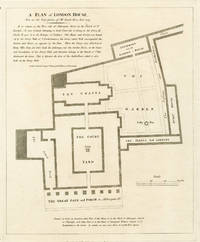
1814948London: Robert Wilkinson 1814. Copperplate engraving on watermarked Smith wove paper 12 1/4 x 9 3/4 inches 310 x 245 mm full margins. There is some minor marginal toning and handling wear that is consistent with age otherwise in very good condition. Robert Wilkinson unknown
190030716Philadelphia: Henry T. Coates & Co 1900. Hardcover. 12mo. Burgundy cloth with black and red pictorial gilt and color plate tipped to front board. viii 303pp 7pp ads. Very good. Slightest bit of faint edgewear. Tight clean and attractive undated edition of the first novel by the British author 1835-1903 -- first published in England in 1887. A fantasy about an island people with unusual colored skin. Rather uncommon. Henry T. Coates & Co hardcover