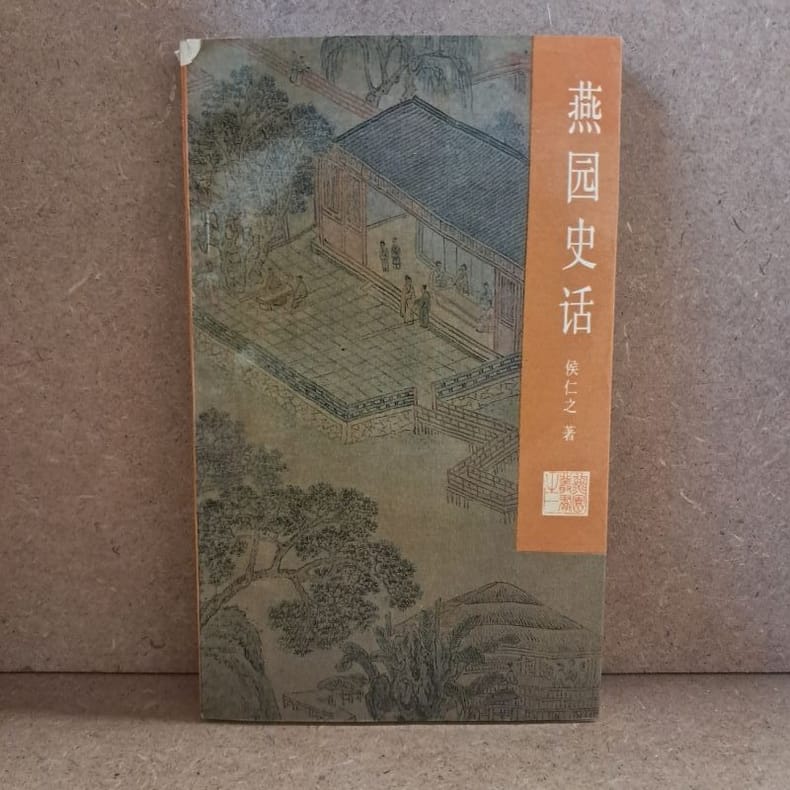
侯仁之 著 / Hou RENZHILivre Rare Book
41 069 résultats
19886061988 - broché - Peking University Press - 1988 - In-12 (18 x 11 cm) broché, couverture à rabats - 241 pages - Illustrations et photographies en noir et blanc - Quelques cartes dépliantes - ISBN : 7-301-00453-2 - Traduction de Wang Mingzhu & Meg Gallagher - Textes en anglais et en chinois - ENGLISH: Peking University Press - 1988 - In-12 (18 × 11 cm) softcover with flaps - 241 pages - Black-and-white illustrations and photographs - Includes some fold-out maps - ISBN: 7-301-00453-2 - Translated by Wang Mingzhu & Meg Gallagher - Texts in English and Chinese - 中文:北京大学出版社 — 1988年 — 12开(18 × 11厘米)平装折口封面 — 241页 — 黑白插图及照片 — 附若干折叠地图 — ISBN 7-301-00453-2 — 译者:王明珠、Meg Gallagher — 中英文对照
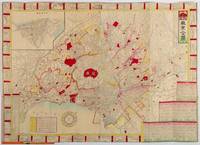
1893214413東京. Tokyo.: 奎暉閣. Keikikaku. Revised Edition. Meiji 26 1893. Folding engraved map of Tokyo in Japanese and English with woodblock colour 51.7 x 71.7cm folds into 18.5 x 10cm original covers title and publishing details upper cover. Neatly repaired on the reverse along some of the folds with a little minor loss occasional minor spotting otherwise very good. This is a map of Tokyo which was originally published in 1887 and revised in 1893. The map could be used for a tourist self-guide map as 39 illustrations of major sites and buildings are surrounding the map. Main landmarks including the Royal Palace are coloured in deep red. Some residents' names are recorded in some blocks. Three charts of text in Japanese on the bottom right give the names of the neighbourhoods to be found within each of Tokyo's wards. An inset at the top left shows a map of Yokohama. . 奎暉閣. [Keikikaku]. unknown
19356911935 - reliure - Sanjian Shuwu 三閒書屋 - Yinyu ji 引玉集 (« Recueil pour attirer le jade ») 木刻五十九幅 - Deuxième tirage, avril 1935 - In-8 (19,5 × 15,5 cm) reliure cartonnée de l'éditeur, dos noir, pièce de titre contrecollée sur le premier plat - 68 pages - 59 reproductions de gravures sur bois soviétiques imprimées au procédé collotype (珂羅版) d'après les tirages originaux fournis par les artistes - Comprend un texte de Chen Jie (陳節), traduction abrégée d'un essai de A. D. Chegodaev consacré à la gravure soviétique contemporaine - Tirage limité à 215 exemplaires, dont 15 exemplaires hors commerce - Diffusion assurée par la librairie Uchiyama (內山書店), Shanghai - Ouvrage en chinois - Avec des œuvres de Dmitri Isidorovich Mitrokhin, A. Kravchenko, N. Piskarev, Vladimir Andreevich Favorsky, P. Pavlinov, A. Goncharov, M. Pikov, Sergei Mikhalovich Mocharov, L. Khizhinsky, Nikolai Vasilievich Alekseev et Sergei Mikhailovich Pozharsky - A PROPOS : Rare anthologie consacrée à la gravure soviétique moderne, publiée à Shanghai par 三閒書屋 et diffusée par la librairie Uchiyama (內山書店). L'ouvrage réunit cinquante-neuf reproductions en collotype de gravures sur bois réalisées par plusieurs figures majeures de l'école russe et soviétique de la gravure des années 1920-1930, parmi lesquelles Vladimir Favorsky, Dmitri Mitrokhin, Alexei Kravchenko et Pavel Pavlinov. Accompagné d'une traduction abrégée par Chen Jie d'un essai de l'historien de l'art soviétique A. D. Chegodaev, ainsi que d'une préface, d'un catalogue des planches et d'une postface, le volume fut conçu comme une introduction à l'estampe contemporaine soviétique pour le public chinois. Témoignage remarquable des échanges artistiques sino-soviétiques dans le Shanghai républicain des années 1930, il s'inscrit dans le contexte du mouvement de la Nouvelle Gravure (新興木刻運動), alors en plein essor sous l'influence des milieux intellectuels de gauche et des réseaux culturels gravitant autour de la librairie Uchiyama et de la figure de Lu Xun. Les reproductions furent réunies à partir de documents et publications soviétiques découverts au début des années 1930, notamment par l'intermédiaire de la revue Graphika. /// ENGLISH: Sanjian Shuwu (三閒書屋) - Yinyu ji (引玉集, “Collection to Draw Forth Jade”): Fifty-Nine Woodcuts (木刻五十九幅) - Second printing, April 1935 - Octavo (19.5 × 15.5 cm), publisher's boards with black spine and mounted title label on upper cover - 68 pages - 59 collotype (珂羅版) reproductions of Soviet woodcuts printed from original impressions supplied by the artists - Includes a text by Chen Jie (陳節), an abridged translation of an essay by A. D. Chegodaev on contemporary Soviet printmaking - Limited edition of 215 copies, including 15 non-commercial presentation copies - Distributed by Uchiyama Bookstore (內山書店), Shanghai - Text in Chinese - Featuring works by Dmitri Isidorovich Mitrokhin, Alexei Kravchenko, Nikolai Piskarev, Vladimir Andreevich Favorsky, Pavel Pavlinov, Aleksandr Goncharov, Mikhail Pikov, Sergei Mikhailovich Mocharov, Leonid Khizhinsky, Nikolai Vasilievich Alekseev and Sergei Mikhailovich Pozharsky. ABOUT: Rare anthology devoted to modern Soviet wood engraving and printmaking, published in Shanghai by Sanjian Shuwu and distributed through Uchiyama Bookstore (內山書店). The volume gathers fifty-nine collotype reproductions of woodcuts by several leading figures of the Russian and Soviet printmaking revival of the 1920s and 1930s, including Vladimir Favorsky, Dmitri Mitrokhin, Alexei Kravchenko and Pavel Pavlinov. Accompanied by Chen Jie's abridged translation of an essay by Soviet art historian A. D. Chegodaev, as well as a preface, plate catalogue and postface, the work was conceived as an introduction to contemporary Soviet printmaking for Chinese readers. A remarkable testimony to Sino-Soviet artistic exchanges in Republican-era Shanghai, it belongs to the context of the New Woodcut Movement (新興木刻運動), then flourishing under the influence of left-wing intellectual circles and cultural networks associated with Uchiyama Bookstore and the figure of Lu Xun. The reproductions were assembled from Soviet books, periodicals and documentary sources discovered in the early 1930s, notably through the journal Graphika. /// 中文:三閒書屋出版 — 《引玉集:木刻五十九幅》 — 1935年4月再版 — 32開(19.5 × 15.5厘米)精裝本,黑色書脊,封面貼書名籤 — 68頁 — 收錄蘇聯木刻作品59幅,以珂羅版工藝依據藝術家提供之原拓本複製印製 — 附陳節摘譯 A. D. Chegodaev(契戈達耶夫)論蘇聯現代版畫藝術之文章 — 限印215部,其中15部為非賣贈送本 — 上海內山書店代售 — 中文版 — 收錄 Dmitri Isidorovich Mitrokhin、Alexei Kravchenko、Nikolai Piskarev、Vladimir Andreevich Favorsky、Pavel Pavlinov、Aleksandr Goncharov、Mikhail Pikov、Sergei Mikhailovich Mocharov、Leonid Khizhinsky、Nikolai Vasilievich Alekseev 及 Sergei Mikhailovich Pozharsky 等藝術家作品。關於本書:本書為三閒書屋於上海出版、由內山書店代售之珍稀蘇聯現代木刻版畫選集。全書收錄59幅以珂羅版精印之蘇聯木刻作品,作者均為1920至1930年代俄羅斯及蘇聯版畫復興運動的重要藝術家,其中包括弗拉基米爾·法沃爾斯基(Vladimir Favorsky)、德米特里·米特羅欣(Dmitri Mitrokhin)、阿列克謝·克拉夫琴科(Alexei Kravchenko)及帕維爾·帕夫利諾夫(Pavel Pavlinov)等人。書中除收錄陳節摘譯之蘇聯藝術史家 A. D. Chegodaev 論文外,尚附序言、圖版目錄及後記,旨在向中國讀者介紹蘇聯當代版畫藝術。本書不僅是研究俄蘇版畫的重要文獻,亦是1930年代上海中蘇藝術交流的珍貴見證。其出版背景與中國新興木刻運動(新興木刻運動)密切相關,反映了左翼知識界、內山書店文化網絡以及魯迅所倡導之版畫思想的深遠影響。書中圖版主要彙集自1930年代初傳入中國之蘇聯書籍、期刊及藝術資料,其中包括《Graphika》等重要出版物。
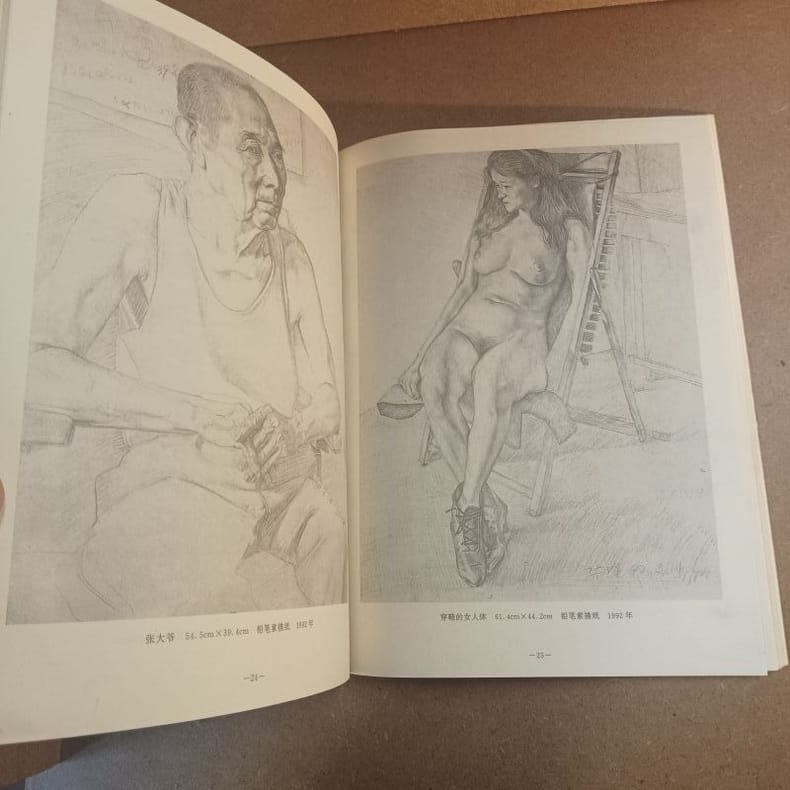
19956771995 - broché - Éditions des Beaux-Arts du Hebei et Académie Centrale des Beaux-Arts de Chine - Collection « Art du croquis et enseignement » - Deuxième tirage : 1995 - In-4 (28,5 x 21 cm) broché, couverture à rabats et plats cartonnés - 60 pages - Très nombreuses illustrations en noir et blanc - ISBN : 7-5310-0578-6 - Ouvrage en chinois - ENGLISH: Hebei Fine Arts Publishing House and Central Academy of Fine Arts - Make the Best of a Mistake: Wang Huaxiang's Sketch Art - "Sketch Art and Teaching" Series - Second printing: 1995 - Quarto (28.5 × 21 cm), paperback with flaps and stiff card covers - 60 pages - Very numerous black-and-white illustrations - ISBN: 7-5310-0578-6 - Text in Chinese - 中文:河北美术出版社、中央美术学院出版 - 《素描艺术与教学》丛书 - 《将错就错:王华祥的素描艺术》 - 1995年第二次印刷 - 16开(28.5 × 21厘米)平装,带折页封面及硬纸板书面 - 60页 - 大量黑白插图 - ISBN 7-5310-0578-6 - 中文版
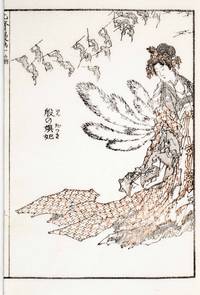
196246618æ±äº¬ Tokyo: èŠ¸è‰¸å ‚ Unsodo 1962. Revised edition. Softcover. vg- to near fine. Quartos. Unpaginated. 15 string-bound volumes in blue paper wrappers. White paper labels with gilt lettering on the front covers. Housed in a large dark blue cloth-covered clamshell portfolio with a printed paper label on the front cover and bone fasteners. English label on the spine of the portfolio. Gorgeous reproduction of the classic monumental work by Hokusai 1760-1849 originally issued in 15 volumes between 1812-1878. The first 12 volumes were issued by the artist during his lifetime while volumes 13-14 were issued posthumously from previously unpublished material. The final volume includes a compilation of some previously published material and of other work not even by Hokusai and is therefore not considered authentic.<br /> <br /> The vast amount of content covered in these "sketchbooks" consists of thousands of images ranging from domestic and social scenes animals landscapes plants architecture historical scenes legends and martial arts to masks as well as household and ritual objects. Of interesting note are some detailed close up images of firearms. Finely printed to reproduce the quality and look of the original editions with images printed in b/w and hues of light pink. The set includes a 22-page informative text booklet in Japanese and English. Additionally the final section of each volume contains text in Japanese and English relating to the specific content of the volume and giving additional technical and historical context. <br /> <br /> Text in Japanese and English.<br /> <br /> Portfolio with some light foxing to the label and on the interior. A few of the wrappers with minor rubbing to corners. Foxing to the edges of book blocks. Interiors with some sporadic minor to light foxing mostly to top margins with images almost entirely unaffected. Images clean bold and bright. Portfolio in very good wrappers in very good to near fine interiors in very good- to near fine. 芸艸堂 (Unsodo) unknown
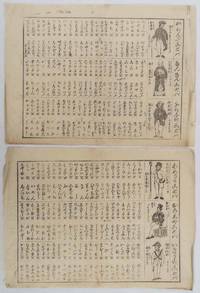
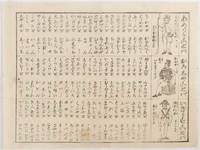
1860217209Japan. Circa 1860. Two black and white woodblock kawarabans 22.4 x 30cm occasional light creasing but overall very good. These two kawaraban present vocabulary lists comparing Japanese with six foreign languages: American Russian British Dutch Chinese and French. Alongside each vocabulary list a small portrait of a "typical" man from the respective country is provided with the country's capital indicated. For instance an American soldier is shown holding a gun with Washington listed as the capital while a Russian officer is depicted with a sword and St. Petersburg is named as Petoruku the capital. <br> <br>The vocabulary lists themselves are quite difficult to interpret raising the possibility that some of the words may be fabricated or inaccurate. However in the American section a few recognisable words such as "silver" and "coin" appear to have been transcribed phonetically into Japanese. . unknown
216798Japan. Late Edo early Meiji. Black and white wood block print with three illustrations on right of sheet 22.4 x 30cm. Small brown mark at foot of print but otherwise very good. This kawaraban features comparative vocabulary lists showcasing Japanese alongside three foreign languages: American English Russian and British English. Accompanying each list is a small portrait of a "typical" man from each country with the respective capital noted. For instance an American soldier is depicted holding a gun with Washington identified as the capital while a Russian officer holding a sword is paired with St. Petersburg transcribed as Petoruku in Japanese.<br><br>The vocabulary lists are challenging to interpret suggesting that some entries might be fabricated or inaccurately represented. However the American section includes a few recognisable words such as "silver" and "coin" transcribed phonetically into Japanese offering a glimpse of early efforts at linguistic comparison and cross-cultural representation. . unknown
50466, La Haye, Brill / Nijhoff 2021, in-12, br., neuf, 300p.
2620131 October 1931. On letterhead of 24 Holland Park Road Kensington W. London. See the two men’s entries in the Oxford DNB. In good condition on the first leaf of bifolium. There are extensive pencil annotations in a later hand on the second leaf. Very neatly written. Addressed to ‘J. G. Wilson Esqre.’ and signed ‘Anstey Guthrie’. He has ‘much pleasure’ in answering Wilson’s question. ‘‘Shut Out’ is a short story of mine which was published in Longmans Magazine about 1895 or 6 afterwards included in a volume of short stories under the title of “The Talking Horseâ€. I think published by Messrs. Smith & Elder - but now long out of print. “The Talking Horse†is included in “Humour & Fantasy†but not “Shut Outâ€.’ See Image. 31 October 1931. On letterhead of 24 Holland Park Road, Kensington, W. [London] unknown
2628615 September no year. On letterhead of Hunthay near Axminster Devon. See her entry in the Oxford DNB. 1p landscape 12mo. In fair condition lightly aged with curling to inner edge. Central vertical fold. She thanks her for writing about ‘Broome Stages’ and is glad she enjoyed it. ‘You are quite right it is a pleasure and an encouragement to hear that a book makes friends.’ She concludes ‘Yes I suppose the name did come from the Church: it gave me the idea but it was pure chance there is no association.’ 15 September [no year]. On letterhead of Hunthay, near Axminster, Devon. unknown
2410712 May 1908. On letterhead of 14 Hanover Square W. London. See his entry in the Oxford DNB. 2pp 12mo. Bifolium. In good condition lightly aged. Folded once. The valediction reads ‘Yours alway faithfully / Arthur W. Pinero’ and it is written with quite a flourish: the ‘y’ of ‘faithfully’ hooks downwards in a long squiggle exrending downwards past the right of the termination of Pinero’s signature which rises upwards being dotted above and below the signature’s underlining. He feels that her ‘kind letter is all the more welcome inasmuch as it gives signs’ that she is recovering from her recent illness. ‘We have indeed been greatly concerned at the bad news we have heard of you. I hope that the present fine weather will set you up completely.’ He thanks her for what she says about his play ‘The Thunderbolt’: ‘I fear it is rather too serious an affair for the taste of the ordinary playgoer; but we shall see.’ He ends with ‘repeated acknowledgments’. 12 May 1908. On letterhead of 14 Hanover Square, W. [London.] unknown
24123In another hand: ‘Written Oct 7. 1870.’ New York. During Lahrbush’s lifetime William John Thoms in his ‘Human Longevity’ 1873 described his claim to have been born in 1766 as ‘the most barefaced case of pretended centenarianism which has ever come under my notice’. ‘Capt. Lahrbush’ who claimed to have been born in 1766 ended his days in New York. He also claimed to have guarded Napoleon in St Helena and to have obbained a lock of Bonaparte’s hair there. In fact he was court-martialled for fraud in 1818 and sent as a convict to Australia. See Roberts and Roussac ‘Authenticating a Lock of Napoleon’s Hair: The Bizarre and Dubious Career of Frederick Lahrbush’ ‘The Gazette’ 2002 and the article on the Rollins College Archive website ‘Enough Hair to Carpet Versailles’ On 11.5 x 5 cm slip of paper laid down part of leaf from an album. In fair condition lightly aged and worn. In a remarkably bold hand reads ‘F: Lahrbush / born March 9th. 1766.’ Beneath this in a small contemporary hand: ‘written Oct. 7. 1870.’ See image. In another hand: ‘Written Oct 7. 1870.’ [New York.] unknown
2455616 December 1956; on letterhead of ‘International Comedy Musicans with Concertinas & Piano / Clown / Ralom and Rosa’ 29 Hibbert Road Leyton London E17. From the Macqueen-Pope papers. See his entry in the Oxford DNB. 1p 4to. On light-blue paper with letterhead in dark-blue and red. Signed ‘Ralom’ with ‘RALOM & ROSA’ typed beneath. In good condition lightly aged. Writing to MP at the Evening News London. ‘There has sic been quite a few remarks passed by critics of the “paucity†of Acts in the Variety profession. My Act which comprises good clean comedy and expert musicianship is one of the most successful Acts from “an audience point of view†in the business to-day and obviously what audiences want.’ MP could ‘ascertain the truth’ of this statement by visiting the forthcoming show at Collins’ Musical Hall. He concludes: ‘Owing to the “paucity†of the right recognition we are contemplating leaving the country shortly to try and find recognition on the Continent.’ 16 December 1956; on letterhead of ‘International Comedy Musicans with Concertinas & Piano / Clown / Ralom and Rosa’, 29 Hib unknown
248789 April 1974; on his letterhead as Warden of Wadham College Oxford. See his entry in the Oxford DNB. The recipient Philip Dosse was proprietor of Hansom Books publisher of a stable of seven arts magazines including Books and Bookmen and Plays and Players. See ‘Death of a Bookman’ by the novelist Sally Emerson editor of ‘Books and Bookmen’ at the time of Dosse’s suicide in Standpoint magazine October 2018. This item is 1p 4to. In good condition lightly aged and creased and folded twice for postage. Signed ‘Stuart Hampshire’. He thanks him for his letter ‘arising from the television programme with Melvyn Bragg’ and expresses agreement ‘about a boycott in South Africa. No British Government could afford the economic cost of severing economic relations with South Africa and of boycotting in that sense. Therefore it is left to artists and sportsmen and playwrights and so on to do the boycotting.’ He regrets that he has to decline the invitation to review for ‘Books and Bookmen’ which he knows ‘quite well through Martyn Goff’ as he has to ‘cut down the amount of reviewing that I do and cannot undertake any more’. 9 April 1974; on his letterhead as Warden of Wadham College, Oxford. unknown
26316No date or place. ‘Mr Flotsam and Mr Jetsam’ are regarded as precursors of Flanders and Swan. The present item is on a 14 x 13 cm leaf torn from an album. The high-acidity paper is discoloured otherwise in good condition with no chipping or wear. Entirely blank on both sides apart from the autograph ‘Flotsam’ with diagonal flourish beneath a highly stylized and simplified portrait of flotsam seated at his piano. A nice and unusual item. See Image No date or place. unknown
24606No date 1940s. Stamped ‘FOR & ON BEHALF OF / THE NEW ENGLISH WEEKLY. / 15 REGENT’S PARK TERRACE / GULiver 3875’. On one side of a 12mo a piece of grey-green paper; creased worn and torn at the bottom. A fifteen-line poem in five three-line stanzas titled ‘REST’. At end: ‘JOHN GAWSWORTH’. Proof directions in pencil to convert a full-stop at the end of the fourth stanza to a comma. While the poet's attempt at direct simplicity verges on triteness one should recall that he served manfully in the RAF: ‘Beneath the oaks the soldiers lie / Staring at the open sky / Drowsily lazily. / Like England is this plot of green / But in the mountains all unseen / The guns’ complaint affects the scene. / Death is abroad this sunny day. / Life has no time for idle play: / Soon these will go their comrades’ way. / Meanwhile the oaks throw chequered shade / Upon the brows of many a blade / Still eager and still unafraid / And overhead the clouds scud on / Unto their own oblivion / Whence soon these men too will be gone.’ Apparently published in the Briarcliffe Quarterly - Volumes 1-12 - Page 50 1944 but Google don't even give a snippet. No date [1940s]. Stamped ‘FOR & ON BEHALF OF / THE NEW ENGLISH WEEKLY. / 15 REGENT’S PARK TERRACE / GULiver 3875’. unknown
2452414 March 1949; 60 Christchurch Road Streatham Hill SW2 London. From the Macqueen-Pope papers see his entry in the Oxford DNB. 2pp 8vo. In good condition lightly aged and worn and folded three times for postage. She asks him to send ‘3 or 4 more copies’ of his ‘nice write up in the “Sunday Chronicle†March 13th.’ as she would like to send ‘a copy to Australia Canada & America as there is some talk about my going to America in the near future’. She has ‘tried all over Streatham and Brixton and it seems impossible to get a copy anywhere’ and will be happy to pay the cost. She would ‘also like to ask you if you could put me in touch with anyone who could write up my memoirs for me’. 14 March 1949; 60 Christchurch Road, Streatham Hill, SW2 [London]. unknown
243174 February no year; on letterhead of 38 Westbourne Terrace W. London. See his long but strangely-cagey entry in the Oxford DNB. 2pp 12mo. On a bifolium. In good condition lightly aged. Folded once. Signed ‘Frederic Harrison.’ The recipient is not named. The letter begins: ‘Madam I am obliged to you for your interesting letter. I do not enter an argument because it is founded on a few sentences which give a very imperfect idea of what I said on Sunday last.’ He does not dispute many of her assertions and as for ‘the usefulness of larger landlords’ he has ‘repeatedly urged it in my addresses’. He refers her to his paper ‘Report of the Industrial Remuneration Conference 1885. Cassells. 2s/6d’. He ends with the observation that ‘it is now not safe to take a newspaper paragraph report of the speeches of any public man’. In pencil in another hand at foot of second page: ‘Written in reply to mother’. 4 February [no year]; on letterhead of 38 Westbourne Terrace, W. [London.] unknown
251227 February 1896. London: 242 Portsdown Road W. 4pp 12mo. Bifolium. Aged worn and with spots of discoloration. 106 lines in a truly execrable hand. The following reading is tentative. The recipient is not named and the letter is signed ‘T. Outram Marshall’. The letter begins: ‘My dear Sir / I also read the letters in the Guardian very carefully’. There follow references to ‘the argument of a pamphlet as to the Teaching of Holy Scripture’. The third paragraph begins: ‘But to my mind the words of the Council of Arles are evidence that in 314 the Bps. there assembled believed just what our Petitioner says.’ He quotes a Latin test and discusses it. There are three long numbered objections. and three assertions are given of which ‘We are convinced’. He discusses what is the case ‘If “the High Ch. Party†is not content with the Scripture & the existing Laws of the English & whole western Ch’. He is glad that the recipient does not agree on one point ‘with the Bp. of London’ ‘But if you do not - what remains - you say the husband of this unfaithful wife - has permission to marry again - then it follows that he has permission to dissolve the bond which till he desides to do so - has not been broken. This is a wholly new theory which as yet no Bp. East or West has fulfilled. / Forgive my writing this - I want to shew you how very insecure is your foothold’. 7 February 1896. London: 242 Portsdown Road, W. unknown
2414219 November 1957. 9 Courtfield Mews Courtfield Road SW5 London. On his letterhead. See the entries for Warner and Macqueen-Pope in the Oxford DNB. Such was the popularity of Warner’s portrayal of George Dixon that the Queen told him it had become part of ‘the British way of life’ and he was carried to his grave by six real officers from Paddington Green Police Station. LETTER: 1p 4to. Folded twice. In good condition lightly aged. Signature ‘Jack.’ and salutation to ‘My dear Popie’ in Warner’s hand; the rest typed. Letterhead with his name. He is sending ‘the long promised photos’ delayed because he ‘had to get some new prints of the “pipe†one. It is the character I play in the film “Carve her name with Pride†with Virginia McKenna and Paul Schofield. / I look a bit scruffy but I think people get a bit fed up with “tidy†pictures and anyway it is the character and after all that is what matters.’ He ‘just got through the show’ on the previous Saturday before going ‘home to bed with “fluâ€. It was a very near thing and I have never felt more like chucking my hand in but only because I could hardly think or see anybody. What we do for ART eh I’d like to meet this fellow Art one of these days.’ In a postscript he states that his ‘Indian doctor performed a miracle’. PHOTOGRAPH: 16 x 20.5 cm black and white print with unobtrusive vertical crease. Inscribed ‘To / A lifelong “FAN.â€â€™ and ‘With best wishes / Sincerely / Jack Warner / Sergt Dixon’. A smiling Warner in the part of Police Sergeant George Dixon stands in uniform with one hand on his desk. See image. 19 November 1957. 9 Courtfield Mews, Courtfield Road, SW5 [London]. On his letterhead. unknown
2455915 April 1953; on letterhead of Lavender Lodge Maidenhead Court Maidenhead. From the Macqueen-Pope papers. See his entry in the Oxford DNB. 1p 16mo. Signed ‘Bill Owen’. In fair condition lightly aged and creased. Hailing him as ‘the greatest living authority on British Theatre’ he asks for advice. ‘My job is acting and it has always been an ambition of mine to portray the life of Dan Leno either on film or TV. The “powers that be†have shown a certain interest in the idea and in order to get things moving I want to present them with a full working script or even a synopsis as soon as possible.’ He asks him ‘what reading matter I might find useful for historical detail of this wonderful artiste’. 15 April 1953; on letterhead of Lavender Lodge, Maidenhead Court, Maidenhead. unknown
249189 June 1907; 34 Norham Road Oxford. See his entry in the Oxford DNB. At his death in 1917 H. T. Beresford-Hope was Third Secretary at the British Legation at Athens; and he left the enormous sum of £67167. Bifolium. In fair condition lightly aged and worn. Folded twice for postage. Addressed to ‘My dear Beresford-Hope’ and signed ‘H. Fisher’. Twenty-eight lines of text. He begins a gently teasing letter by stating that he is delighted to hear of Beresford-Hope’s ‘triumph in the Diplomatic Service examination’ his wife joining him in sending congratulations. ‘Herbert is a good man and moreover a man of a sic Balliol and it is a distinction to have got ahead of him.’ He presumes that Beresford-Hope is now ‘the complete foreigner retaining only the slightest acquaintance with your native tongue’. He urges him to ‘Become an ambassador if you like the sooner the better but do not plunge us into war or in any way imitate the proceedings of that courteous but unwise gentleman the late Duc de Grammont. Eradicate by your personal example the false maxim now so prevalent that England expects every diplomat to play polo.’ He thinks that BH has ‘a chance of going ahead judging from the deplorable feebleness of so many of our Foreign Blue books notably the recent collection of reports in Foreign Income boxes compiled by the second secretaries of our legations.’ He ends by inviting him to ‘Come and see us when you are next this way.’ 9 June 1907; 34 Norham Road, Oxford. unknown
2407611 May 1977. On letterhead of 12 Regents Park Terrace London N.W.1. Pritchett’s ‘The Gentle Barbarian: The Life and Work of Turgenev’ appeared in 1977; the present letter is clearly addressed to his editor at the book’s publishers Chatto & Windus. Pritchett’s entry in the Oxford DNB describes his handwriting as ‘legendarily ugly and difficult to decipher’ but the present example is no worse than an average hand. 1p 12mo. In good condition lightly aged. Two fold lines. He is sending his ‘Turgenev’ and explains: ‘As you will see I have marked passages from the book in purple crayon and my own summary bridges in green. They are long because of course a whole career lies between the quotations.’ He hopes Higgins finds that ‘they are satisfactory; if they need changes in your opinion they can be altered’ but he gives dates when he will be ‘away in Cornwall’ for ‘A much needed holiday!’ He ends in the hope that Higgins is enjoying his holiday. See image. 11 May 1977. On letterhead of 12 Regents Park Terrace, London N.W.1. unknown
25158Without date or place. In his entry on Laye in the Oxford DNB Sheridan Morley describes her as a ‘bright particular star’. 1p 16mo.Good firm signature. In good condition lightly aged. Folded once for postage. On the otherwise-blank reverse is Laye's monogram with her initials. Reads: 'My dear Kenneth. / Thank you for your very sweet letter. I am so delighted you liked the broadcast. It brought back many happy memories to me & when I sat & listened to it all alone I must say I longed for the past. / Bless you. / Evelyn Laye.' From the papers of Kenneth Sephton. Without date or place. unknown