Pierre LOTIBiblio.com
927 résultats
188985815Paris: Calmann Lévy 1889. Fine. Calmann Lévy Paris 1889 11.50 x 18.50 cm relié First edition. Contemporary half-morocco with corners in citron signed at top of first endpaper: Bound by S. Kaufmann. Jansenist spine with raised bands. Top edge gilt. Scattered foxing mainly in margins. Spine slightly darkened. Traces of rubbing. Halos on upper cover. Impressions from Loti's travels to Japan. Calmann Lévy hardcover
32114Paris Calmann Lévy 1912. 1 vol. 115 x 180 mm de 234 p. et 1 f. Demi-chagrin bronze dos à nerfs orné de fleurons dorés titre doré chiffre en pied « M. L. » couvertures conservés. . Édition originale. Envoi signé : « à Maurice de Lacoste bien amicalement Pierre Loti ». . En 1901 lorsque Pierre Loti visite Angkor il accomplit l'un de ses plus anciens rêves. Ce rêve remonte à l'enfance : son frère aîné Gustave médecin de marine mort à Saïgon en 1865 avait rapporté d'Indochine des objets des notes et des récits qui avaient durablement frappé l'imagination du futur écrivain. Voir Angkor pour Loti ce n'est donc pas seulement découvrir un site mythique mais c'est rejoindre une promesse ancienne qu'il effectue au cours d'une mission officielle en Extrême-Orient. A cette date le Cambodge est placé sous protectorat français depuis 1863 et Angkor devient progressivement un objet d'étude de restauration de prestige et de projection pour l'administration coloniale et les savants français. L'École française d'Extrême-Orient commence alors à jouer un rôle décisif dans la conservation et la mise en valeur du site. Un pèlerin d'Angkor est à la fois un document sur la rencontre occidentale avec les ruines khmères un jalon dans l'histoire littéraire d'Angkor et l'un des derniers grands livres de voyage de Loti. Exemplaire d'intéressant dédicataire : son cadet de l'École Navale et ami Maurice de Lacoste. Natif de Metz en 1864 ce dernier entre à l'école navale en 1882 quinze ans après Loti. Aspirant de 1ere classe en octobre 1885 il est tout d'abord affecté dans la division navale d'Extrême-Orient. C'est lors de ces premières traversées qu'il rencontre Pierre Loti qui navigue dans ces mers depuis la même année à bord du Mytho l'un des onze transports officiels des forces navales en Extrême-Orient. Promu lieutenant de vaisseau en octobre 1893 il est successivement affecté sur plusieurs cuirassés puis croiseurs les fers de lance de la Marine et les plus puissants des navires de guerre de l'époque. Il sera affecté ensuite à la direction centrale de l'artillerie navale puis capitaine de frégate avant d'être affecté à l'état major en 1909. Paris, Calmann Lévy, 1912. 1 vol. (115 x 180 mm) de 234 p. et 1 f. Demi-chagrin bronze, dos à nerfs orné de fleurons dorés, unknown
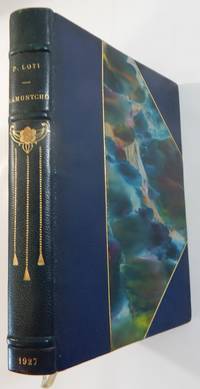
192721559Paris: Le Musée du Livre 1927. Limited edition. Hardcover. Near fine. Illustrated by Ramiro Arrue.`. 8vo. 339 3 pp. Half deep blue morocco brightly decorative paper and endpapers. Spinetooled simply but effectively in gilt with a small beige onlay. Top edge gilt. Original wrappers bound in. Trace of wear else a fine copy.<br /> <p><br /> Illustrated with designs and aquarelles by Arrue. One of 1200 copies on Rives laid paper from a total edition of 1300 copies. This copy unnumbered.<br /> <p><br /> In French.<br /> <p>. Le Musée du Livre hardcover
1898017941Paris: Calmann Levy. Attractive half red leather with nicely decorated paper-covered boards with elegant gilt spine decoration. Edge and corner wear blanks and half title tanning gift inscription in ink cracked in one place but very tight Good. . Good. Hardcover. 1898. Calmann Levy hardcover
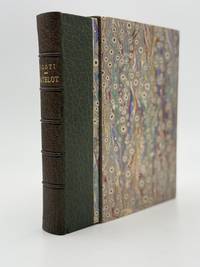
189387729Paris: Alphonse Lemerre 1893. Fine. Alphonse Lemerre Paris 1893 13 x 20 cm relié First edition illustrated by Myrbach with plates headpieces and vignettes from the Guillaume and Lemerre collection. Contemporary half grey morocco binding with corners. Slipcase with morocco entry and covered with peacock-eye paper. Original wrappers preserved lacking spine. Spine with 4 raised bands in Jansenist style. Top edge gilt. Uncut paper with wide margins fresh paper free from foxing. Light rubbing to slipcase. Very handsome copy. After ""Mon frère Yves"" and ""Pêcheur d'Islande"" ""Matelot"" completes in 1893 Pierre Loti's trilogy of sea novels and recounts the adventures of Jean Berny who after failing the Naval Academy entrance exam enlists in the merchant marine as an ordinary sailor. Alphonse Lemerre hardcover
189952576Paris: Calmann Lévy 1899. Fine. Calmann Lévy Paris 1899 12 x 18.50 cm broché First edition one of 25 numbered copies on Japon tirage de tête. Repaired tears to the spine otherwise a good copy. Calmann Lévy unknown
32109Paris Calmann Lévy 1901. 1 vol. 115 x 180 mm de 464 p. 1 et 1 f. Demi-chagrin bronze dos à nerfs orné de fleurons dorés titre doré chiffre en pied « M. L. » couvertures conservés. . Édition originale. Envoi signé : « à Maurice de Lacoste son ami Pierre Loti ». . Le 9 mai 1901 Le Figaro publie en une le premier épisode d'un récit qui s'étalera jusqu'à la fin du mois de décembre. Pierre Loti célèbre pour ses romans orientalistes y raconte son voyage en Chine où il s'est rendu l'année précédente à bord du cuirassé Le Redoutable. En tant que lieutenant de vaisseau il participe en effet à la guerre des Boxers qui secoue le pays depuis 1899 opposant les rebelles chinois les Boxers aux colons étrangers l'alliance des huit nations parmi lesquelles la France. Dans un lettre adressée au vice-amiral Pottier Loti précise qu'il s'est « borné à noter les choses qui ont passé directement sous mes yeux au cours des missions que vous m'avez données et d'un voyage que vous m'avez permis de faire dans une certaine chine jusqu'ici à peu près inconnue. Quand nous sommes arrivés dans la mer Jaune Pékin était pris et les batailles finissaient. » C'est néanmoins une cité saccagée que découvre Pierre Loti : la capitale à l'été 1900 a vu la confrontation entre les légations étrangères assiégées et les troupes des Boxers soutenues par le pouvoir impérial. Le siège qu'on appellera les « 55 jours de Pékin » s'est soldé par la victoire des puissances étrangères et le massacre des Chinois rebelles. La guerre des Boxers prend fin en septembre avec la signature d'un traité de paix. Le récit de Loti sera publié dans Le Figaro jusqu'au 30 décembre 1901 et paraîtra sous forme de livre en mars 1902. Intéressant exemplaire offert à un proche et fidèle camarade de Navale Maurice de Lacoste. Natif de Metz en 1864 ce dernier entre à l'école navale en 1882 quinze ans après Loti. Aspirant de 1ere classe en octobre 1885 il est tout d'abord affecté dans la division navale d'Extrême-Orient. C'est lors de ces premières traversées qu'il rencontre Pierre Loti qui navigue dans ces mers depuis la même année à bord du Mytho l'un des onze transports officiels des forces navales en Extrême-Orient. C'est sur ce navire durant un mois un mois de traversée que Loti a rédigé en partie le manuscrit de Pêcheur d'Islande. Lacoste est promu enseigne de vaisseau en octobre 1887 servant à bord d'innombrables bâtiments de la Marine française. Promu lieutenant de vaisseau en octobre 1893 il est successivement affecté sur plusieurs cuirassés puis croiseurs les fers de lance de la Marine et les plus puissants des navires de guerre de l'époque. Il sera affecté ensuite à la direction centrale de l'artillerie navale puis capitaine de frégate avant d'être affecté à l'état major en 1909. Bel exemplaire. Paris, Calmann Lévy, 1901. 1 vol. (115 x 180 mm) de 464 p., [1] et 1 f. Demi-chagrin bronze, dos à nerfs orné de fleurons dor unknown
189773993Paris: Imprimerie Champenoispour CH. MassonH. Piazza 1897. Fine. Imprimerie Champenois pour CH. Masson H. Piazza Paris Novembre 1897 24 x 35 cm une feuille et une serpente Rare original color lithograph executed by Jacques Wely for L'Estampe Moderne series number 7 published in November 1897. One of 50 deluxe proofs printed on Japan paper with wide margins artist's signature and date in the plate publisher's dry stamp depicting a child's profile in the lower margin numbered stamp of the deluxe printing on the verso minimal corner damage of no consequence; engraving preceded by a tissue guard captioned with the artist's name title and a poem; blank tissue guard. Lithograph inspired by a text by Pierre Loti from his novel Mon frère Yves of which an extract is reproduced on the print's tissue guard. Magnificent French monthly publication issued between May 1897 and April 1899 L'Estampe moderne consists of original chromolithographs which unlike other magazines such as Les Maîtres de l'Affiche and as stipulated on the tissue guards were created specially by each artist for the magazine. Thus 100 prints appeared in total covering the major artistic movements of the late 19th century: Symbolism Art Nouveau Pre-Raphaelites Orientalists and Belle Époque. Each issue of four prints was printed in 2000 copies sold for 3.50F and 100 on Japan paper offered at 10F. Henri Piazza also planned a confidential deluxe printing: 50 copies on Japan paper with wide margins and 50 in black on China paper at the considerable price of 30F. This print in a handsome format is superbly printed on the most prestigious of papers: Japan. Thick silky satin and pearlescent it contributes to making each page a work in its own right. Its quality of ink absorption and its affinity with colors also make it the ideal support for these very fine lithographs. French collectors' interest in artistic posters intensified in the early 1890s. Octave Uzanne to describe this fever invented the term ""affichomanie."" The poster originally popular and plastered on the streets of the capital then became an art object and its ephemeral medium became precious and destined for preservation. Piazza decided to remove the poster from its advertising vocation and elevate it to the rank of a complete work of art on the same level as the luxury illustrated book. He thus composed a prestigious collection of entirely original works by the most prominent European artists of the moment: Georges de Feure Eugène Grasset Henri Detouche Emile Berchmans Louis Rhead Gaston de Latenay Lucien Lévy-Dhurmer Gustave-Max Stevens Charles Doudelet Hans Christiansen Henri Fantin-Latour Steinlen Ibels Engels Willette Henri Meunier Evenepoël Bellery-Desfontaines Charles Léandre etc. Handsome copy in the Belle Époque style. Imprimerie Champenoispour CH. MassonH. Piazza unknown
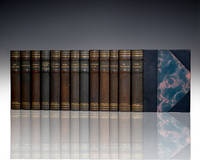
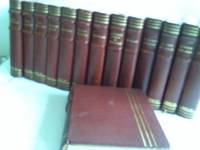
1936149542Paris: Calman-Levy 1936 -1937. The Calmann-Lévy limited illustrated edition of the works of Pierre Loti. Octavo thirteen volumes uniformly bound in three quarter pebbled blue morocco over marbled boards with gilt titles and ruling to the spine in three compartments within raised bands top edge gilt marbled endpapers ribbons bound in profusely illustrated with colored engravings by Pierre Brissaud J.G. Domergue Maurice Lalau A.E. Marty and Mathurin Meheut among others. In very good condition. Pierre Loti was the pen name of Julien Viaud 1850–1923 a French naval officer and celebrated novelist known for his exotic romantic and autobiographical fiction. Drawing heavily from his experiences in the French Navy and his travels across the Middle East Asia and the South Pacific Loti crafted atmospheric narratives that blended personal reflection with vivid depictions of foreign cultures. His works such as Aziyadé Pêcheur d’Islande An Iceland Fisherman and Madame Chrysanthème were widely read and admired for their lyrical prose and emotional depth. Loti became a member of the Académie française in 1891 cementing his status as a major literary figure of the Belle Époque. Calman-Levy hardcover
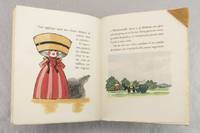
1927ST12683-311Paris: Henri Floury 1927. No. 270 OF 274 COPIES on vélin d'Arches of a total edition of 302. 245 x 192 mm. 9 1/2 x 7 1/2". 84 2 pp. 1 leaf colophon. <br/> Publisher's color illustrated wrappers original glassine. With 76 illustrations including wrapper image by André Hellé hand colored in gouache via pochoir stenciling by J. Saudé. ◆Half-inch joint split at spine head and tail mild edgewear glassine with many small chips to spine and edges but AN EXTREMELY APPEALING COPY the fragile book quite solid and internally quite clean fresh and bright with very rich coloring.<br/> <br/> Illustrated with great charm in vivid colors this volume is comprised of two Loti stories that harken back to his childhood in the city of Saint Pierre on Oléron an island off France's Atlantic coast. "House of Grandmothers" and "Miss Anna A Very Humble Doll" are memoirs intended for children of all ages. "Pierre Loti" is the pseudonym for Julien Viaud 1850-1923 who wrote popular novels at the same time that he was a career officer in the French navy. He was known for incorporating material from his life and details from the exotic places he visited to give his novels deep levels of emotion and authenticity. Inspired by Monet he endeavored to write as the Impressionists painted. Contemporary critic Edmund Gosse said that "at his best Pierre Loti was unquestionably the finest descriptive writer of the day. In the delicate exactitude with which he reproduced the impression given to his own alert nerves by unfamiliar forms colors sounds and perfumes he was without a rival. But he was not satisfied with this exterior charm; he desired to blend with it a moral sensibility of the extremest refinement at once sensual and ethereal." Artist André Hellé produced humorous illustrations for all the leading French periodicals during the first half of the 20th century. Though famed as a theater set designer he illustrated many books most of which as here were inspired by childhood. This endearing but fragile book has not surprisingly become quite rare in the marketplace and it is remarkably so in the original glassine. Henri Floury unknown
191968467Paris: Calmann Lévy 1919. Fine. Calmann Lévy Paris s. d. 1919 18 x 19.50 cm broché First edition one of 50 numbered copies on Japan deluxe copies ""tirage de tête"". Two small tears in the head and foot of the spine nice copy wide-margined. Calmann Lévy unknown
19481026111948. First Edition. Signed. LOTI Pierre FARRERE Claude. Cent Dessins de Pierre Loti. Tours: Arrault 1948. Quarto original printed paper self-wrappers. $1100.Limited illustrated edition of Farrère's selection of 100 of Lotis drawings made while traveling in remote regions of the world warmly inscribed at length and signed by Farrère.Pierre Loti born Julien Viaud traveled the world as a French naval officer for 30 years winning ""his very considerable reputation"" as the author of nearly 40 novels and travel books. ""His greatest successes were gained in the species of confession half-way between fact and fiction which he essayed in his earlier books Pierre Loti remains one of the most original and most perfect French writers of the second half of the 19th century"" Britannica 11th ed. This posthumous collection of Loti's drawings and sketches amply demonstrates that he was a talented draftsman as well with a keen eye. The inscription reads: ""Pour Roger Noël avec toute ma profonde affection Farrère. 1949. Je n'ai pas connu ce Loti la celui des années 1869-1886 Hélas! Je ne suis né qu'en 1876 le jour même que Loti p. 127 faisait à Toulon les exercices de clown au Cirque Etrusque Et je n'ai vu de mes yeux qu'en 1903 Loti celui de 53 ans Et toute ça comme c'est loin cher Roger Toi C.F."" With my profound affection Farrère. I did not know this Loti of the years 1869-86 Alas! I was not born until 1876 the same day that Loti attended in Toulon a performance of the Etruscan Circus And I did not see him with my own eyes until 1903 Loti of 53 years and all that remote as that is dear Roger. The circus Farrère mentions and Loti's presence there is described on page 127. This is an hors commerce copy No. 4 from a total edition of 2500 copies. Text in French. About-fine condition. unknown
32107Paris Calmann Lévy 1897. 1 vol. 115 x 180 mm de 351 p. Demi-chagrin bronze dos à nerfs orné de fleurons dorés titre doré chiffre en pied « M. L. » couvertures conservés. . Édition originale. Envoi signé : « à mon ami Maurice de Lacoste Pierre Loti ». Montée en tête : 1 enveloppe à l'adresse de Maurice de Lacoste lieutenant de vaisseau à bord du Calédonien /Salins d'Hyères Var » Conservée dans l'exemplaire : 1 lettre autographe signée sur papier de deuil adressée au même avec env. conservée en date du 8 mars 1897 :. « Mon cher ami Je vous savais déjà sur le Bugeaud car j'étais allé il y a quelques jours à Rochefonts et moins oublieux que vous pensez j'avais de suite envoyé demander à la Préfecture si par hasard vous étiez là. Certainement vous recevrez Ramuntcho le livre. Quant à Ramuntcho le vrai c'est un joli et vigoureux bébé de bientôt deux ans qui parle le Basque et habite pour le moment St Jean-de-Luz. Je ne sais pas combien de temps je resterais à Hendaye ni ce que je ferai ensuite je suis sans projets comme sans courage. Je vous serre de tout coeur la main. P. Loti. Oui envoyez-moi cet intéressant opuscule quand vous y penserez ». Exemplaire de dédicataire idéal à son cadet de l'École Navale et ami Maurice de Lacoste. Il lui adresse à bord du navire Calédonien qui mouille au Salins d'Hyères cet exemplaire de son roman majeur du « cycle basque » entrepris par Loti après ses affectations sur la Bidassoa. Ramuntcho transpose dans un Pays basque encore perçu comme un « ailleurs » l'apprentissage d'un jeune joueur de pelote devenu contrebandier ses amours avec Gracieuse puis l'épreuve d'une séparation et le heurt avec un catholicisme de fer qui culmine dans le projet d'enlèvement manqué depuis le couvent. Publié d'abord en feuilleton dans La Revue de Paris 15 décembre 1896 - 15 février 1897 le texte paraît la même année chez Calmann-Lévy. À rebours du strict carnet de route Loti y privilégie la fiction « objective » et la scénographie des paysages intérieurs nourris des séjours d'Hendaye et de Saint-Jean-de-Luz qui fixent durablement l'imaginaire basque fin-de-siècle. La lettre jointe situe précisément l'auteur au moment de la mise en volume juste après la fin des feuilletons qui se terminent en février. Et confie à son destinataire un point essentiel où Loti précise la genèse fictive et « réelle » du héros entre le roman qui sort de presse et l'enfant basque auquel il emprunte le prénom : le propre fils de Pierre Loti. il faut rappeler que « Ramuntcho » n'est pas qu'un héros de fiction. Au Pays basque Loti entretient - en marge de sa vie officielle - une relation durable avec Juana Josefa Cruz Gainza dite Crucita. Pour s'en rapprocher il loue à Hendaye la maison Bachar-Etchea dite « la maison solitaire » que Crucita n'habite jamais car dès la conclusion de sa liaison et de son « contrat » avec Loti il l'emmène à Rochefort pour l'installer dans une maison des faubourgs de la ville. Elle lui donna quatre fils non reconnus tous nés au Pays Basque. Le premier Raymond né dans la nuit du 29 au 30 juin 1895 est couramment désigné comme « Ramuntcho » et a souvent été tenu pour l'inspiration directe du titre et du personnage du roman. Cette filiation parallèle longtemps tue est ici confirmée par un Loti confiant dans l'amitié et la confidence d'un secret à son ami Maurice de Lacoste. Natif de Metz en 1864 ce dernier entre à l'école navale en 1882 - quinze ans après Loti. Aspirant de 1ere classe en octobre 1885 il est tout d'abord affecté dans la division navale d'Extrême-Orient. C'est lors de ces premières traversées qu'il rencontre Pierre Loti qui navigue dans ces mers depuis la même année à bord du Mytho l'un des onze transports officiels des forces navales en Extrême-Orient. C'est sur ce navire durant un mois un mois de traversée que Loti a rédigé en partie le manuscrit de Pêcheur d'Islande. Lacoste est promu enseigne de vaisseau en octobre 1887 servant à bord d'innombrables bâtiments de la Marine française. Promu lieutenant de vaisseau en octobre 1893 il est successivement affecté sur plusieurs cuirassés puis croiseurs les fers de lance de la Marine et les plus puissants des navires de guerre de l'époque. Il sera affecté ensuite à la direction centrale de l'artillerie navale puis capitaine de frégate avant d'être affecté à l'état major en 1909. Leur amitié ne sera jamais entachée et durera jusqu'à la mort de Loti en 1923. Paris, Calmann Lévy, 1897. 1 vol. (115 x 180 mm) de 351 p. Demi-chagrin bronze, dos à nerfs orné de fleurons dorés, titre do unknown
1L7995Calmann-Levy ohne Ort 1936/1937. Zusammen 3741 S. mit Abb. einheitliche dunkelrote Ledereinbände mit zieselierter Goldprägung goldgeprägtem Rückentitel Kopfgoldschnitt mit je 2 aufgesetzten Schmuckbünden Grobschnitt Groß-Oktav. - Komplett wohl erhaltene Prachtausgabe/ Magnifique edition totalment preservee. Comprend les titres suivants et illustrateurs/ Enthält folgende Titel und Illustratoren: Le roman d'un spahi illustriert von CH. Fouqueray/ La mort de philae illustriert von H. Deluermoz/ Pe cheur d' islande illustriert von Mathurin Meheut/ Ramuntcho illustriert von Pierre Brissaud/ Aziyade illustriert von Aug. Leroux/ Prime jeunesse suivi de un jeune officier pauvre illustriert von A.E. Marty/ Madame Chrysantheme illustriert von Sylvain Sauvage/ Un pelerin d' angkor illustriert von Maurice Lalau/ Le mariage de loti illustriert von J.-G. Domergue/ Vers Ispahan illustriert von H. Deluermoz/ Les Desenchantees illustriert von A. Calbet/ Mon frere Yves illustriert von D'Emilien Dufour/ La troisieme jeunesse de Madame Prune illustriert von Sylvain Sauvage/ Matelot illustriert von CH. Fouqueray/ Le roman d'un enfant illustriert von A.-E. Marty - unknown
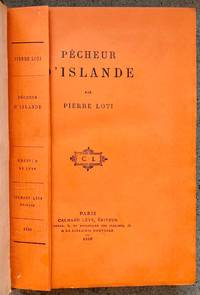
1422<br /><br /><br /><b>"The most popular and finest of all Loti's writings"</b> Gosse:<b> an excellent example of the "edition de luxe" of the first edition limited to 235 copies in large octavo format this copy being #27.</b><br /><br /><b>With an unusual high quantity of different states of the plates and retaining its bright orange publisher's wrappers in fresh condition.</b><br /><br />A classic of French literature <i>Pêcheur d'Islande</i> narrates about the romantic but inevitably sad life of Breton fishermen who sail each summer season to the foggy ice-laden waters of Iceland. The French naval officer Pierre Loti 1850–1923 pays a personal tribute in this novel to the memory of his brother Gustave a marine surgeon who fell ill in Cochinchina and died at sea. To this prose Loti adapted some of the impressionist techniques of contemporary painters especially Monet combining them with elements of naturalism and exoticism.<br /><br />Loti wrote the novel from 1884 onwards in his estate of Rochefort continued in the Far East and completed in Rochefort in March 1886. It first appeared in La Nouvelle revue de Juliette Adam from 1 April to 1 June and then as a separate book in 1886. When published Pêcheur d'Islande was criticised by Maupassant but praised by Henry James Octave Mirbeau and the Breton poet Anatole Le Braz. Literary critic Edmund Gosse characterised it as "the most popular and finest of all Loti's writings" and Loti himself as "one of the most original and most perfect French writers of the second half of the 19th century". The novel met a significant success: a dozen of editions were published over the next several decades.<br /><br />This deluxe tirage de tête of only 235 copies was printed on hollande paper with fine illustrations usually in multiple states different in each copy; the other copies were printed on ordinary paper in 12mo format.<br />The present copy has the largest number of impressions we found at auctions in the last decades: most of the other copies list only two or three states of engravings whereas this one shows four states of the frontispiece and the illustrations in five to nine states.<br /><br /><u>Provenance</u><br />Waldfried armorial ex-libris bookplate on upper endpaper.<br /><br />Description<br />Large 8vo 23 x 16 cm. Half-title portrait-frontispiece in 4 states title dedication 319 pp. with 2 engraved vignettes one in 4 and another in 6 states six plates 3 in 6 states one in 5 one in 7 and another in 9 states by G. Manchon after P. Jazet.<br />Binding<br />Original publisher's wrappers and spine bound in contemporary full crushed green morocco spine with raised bands lettering in gilt gilt triple-ruled compartments with fleurons gilt rollwork and fleurons to covers richly gilt rollwork to turn-ins top edge gilt marbled endpapers.<br />Condition<br />Minimally rubbed at spine foot; "MG" red stamp to a couple of plates otherwise in excellent condition.<br />Bibliography<br />Vicaire V 404; Encyclopædia Britannica Eleventh Edition "Pierre Loti" by Edmund Gosse. Paris, Ph. Bosc for Calmann Lévy, 1886.
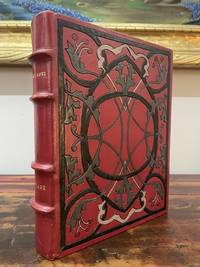
19365394Paris: Calmann-Lévy Éditeurs 1936. First Thus. Fine. Auguste Leroux. Illustrations by Auguste Leroux. Finely rebound in full leather with black grey cream and red stained leather in a series of overlapping motifs and designs on front and rear. With four raised bands on the spine and gilded lettering. Bound by A.S.M. Top edge gilt with uneven long and lower edges. Minor scuffs on spine. Original jacket bound in including original spine covers counted in page numbers spine piece not counted. Marble dyed endpapers. The interior is clean clear crisp with all illustrations present. The ordinary edition made extraordinary. <br /> <br /> Pages: 18 247 15 Dimensions: 9¼ x 73/8 x 1½ . Calmann-Lévy, Éditeurs unknown
1900FGN24-D-3Paris: Calmann-Levy c1900. Leather. Very Good. 5" by 8". Not Stated . A uniformly bound collection of the works of Pierre Loti in the original French. A collection of the works of Pierre Loti including 'Les Desenchantees' 'Matelot' 'Le Roman d'un Spahi' 'La Galilee' 'Le Livre de la Piete et de la Mort' 'Ramuntcho' 'L'Inde sans les Anglais' 'Journal Intime 1878-1881' 'Au Maroc' 'Fleurs d'Ennui' 'Jerusalem' 'Turquie Agonisante' 'Le Mariage de Loti' and 'Les Derniers Jours de Pekin'Pierre Loti pseudonym of Julien Viaud; 14 January 1850 10 June 1923 was a French novelist naval officer and member of the Academie Francaise. He began writing when in 1876 fellow naval officers persuaded him to turn passages in his diary dealing with some curious experiences at Istanbul into a novel. He proceeded to the South Seas as part of his naval training and several years after leaving Tahiti published the Polynesian idyll originally named Rarahu 1880 which was reprinted as Le Mariage de Loti; this was followed by Le Roman d'un spahi 1881 a record of the melancholy adventures of a soldier in Senegal. In 1882 Loti issued a collection of four shorter pieces three stories and a travel piece under the general title of Fleurs d'ennui. In 1890 he published Au Maroc the record of a journey to Fez in company with a French embassy and Le Roman d'un enfant a somewhat fictionalized recollection of Loti's childhood that would greatly influence Marcel Proust. A collection of "strangely confidential and sentimental reminiscences" called Le Livre de la piti et de la mort was published in 1891. Includes a frontispiece to 'Les Desenchantees' and publishers advertisments to each. Includes fourteen volumes each complete in their own right. In French. In half-morocco bindings with marbled boards. Externally generally smart lightly rubbed in places. Some marks to the boards and spine and some rubbing or wear to the corners of the boards. Internally firmly bound generally bright and clean throughout with spotting to the first and last pages. Very Good Calmann-Levy hardcover
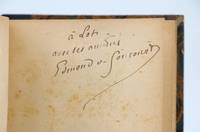
189185331Paris: Charpentier 1891. Fine. Charpentier Paris 1891 11 x 18.50 cm relié First edition. Half dark green shagreen binding spine with five raised bands decorated with gilt floral motifs marbled paper boards marbled endpapers and pastedowns contemporary binding with the pasted label of Henry Mériot on the front pastedown bookbinder established in Rochefort since 1878 and friend of Pierre Loti. Precious autograph inscription signed by Edmond de Goncourt: ""A Loti avec ses amitiés E. de Goncourt"" To Loti with his friendship E. de Goncourt. Charpentier hardcover
200699306Museum. New. 2006. Hardcover. 2879009626 . FREE UPGRADE to Courier/Priority Shipping Upon Request - IN STOCK AND IMMEDIATELY AVAILABLE FOR SHIPMENT - Flawless copy brand new pristine never opened -- Text in French. -- with a bonus offer-- . Museum hardcover
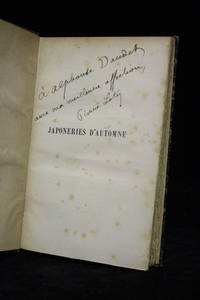
188951098Paris: Calmann Lévy 1889. Fine. Calmann Lévy Paris 1889 12 x 18.50 cm relié First edition. Contemporary Bradel binding of half purple cloth over marbled paper boards spine faded with gold fillets brown shagreen label with title and author. Handsome autograph inscription signed by Pierre Loti to Alphonse Daudet : "". avec ma meilleure affection. with my best wishes "" Julia Daudet's library stamp to head of one endpaper. A little spotting. Calmann Lévy hardcover
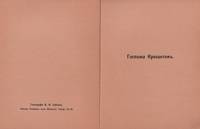
2675325Short description: In Russian. Loti Pierre. Collection of essays. Moscow: V. M. Sablin 1910-. The image is provided for reference only. It may reflect condition of one of the available copies or only help in identifying the edition. Please feel free to contact us for a detailed description of the copies available. SKU2675325 unknown
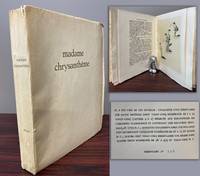
192533414Paris: Edition Excelsior 1925. 1st Edition. Soft cover. 1st Edition. Soft cover. "Madame Butterfly" the opera was influenced by Pierre Loti's 1887 novel Madame Chrysanthème. First edition in the Rare ORIGINAL Plain printed wrappers.1 of 400 numbered copies on papier Arches of 425. Majestically illustrated by Foujita with numerous colour in-texte and full page format drawings each pasted delicately on the paper. <br /> A very good or better example of this scarce precious and much sought after work. Of the entire edition 55 copies were printed on Japon Imperial of which 25 are numbered 1-25 25 lettered A-Z with an original eau forte & 5 H-C. In addition 65 copies were printed on Hollande Van Gelder of which 50 are numbered 26-75 & 15 H-C. 425 copies were printed on Arches of which 400 are numbered 76-475 & 25 H-C. This lovely copy is example # 149 is therefore one of the 400 of 425 copies on Arches. Total copies all papers 545: 55 Japon 65 Holland 425 Arches <br /> <br /> A very Good copy indeed. Edition Excelsior unknown
1927006395Paris: Librairie Lemercier 1927. Limited Edition. First Edition thus. Three Quarter Morocco. Wooden boards. Fine. No. 54 of 255 copies in limitation on velin pur fil Lafuma. Beautiful 3/4 morocco binding with unusual wood or wood veneer boards and matching wood veneer endpapers. And leather painted "onlay" illustration mounted onto spine! 4to. 28 by 22 cm. 208 pp. with 18 color plates and twelve vignettes and a second suite of all the illustrations in just outline form bound in at the end along with the spine to the wraps. The wrap cover serves as one of the three title pages. In its original title "Raharu" this is the novel that put Loti on the map in 1880 and it served as the inspiration for Leo Delibes' once popular opera "Lakmé" which premiered just three years later. Essentially Loti was the authorial counterpart to Gauguin in plunging whole into Tahitian society and his pen-name "Loti" followed from this novel. Without question one of Loti's greatest strengths as a writer was the color he brought to his descriptions and exotic subject matter and these pochoirs most definitely honor and capture that mastery. The bright plates and vignettes could be mistaken for actual painting and they are a feast to the eye. Apparently scarce with the only copy we could locate at the BNF -- no copies of this edition were found at all on OCLC or in commerce. Light rubbing of front joint. Librairie Lemercier unknown
1927004618Paris: Librairie Lemercier 1927. Limited Edition. First Edition thus. Three Quarter Morocco. Marbled Boards. Near Fine. 1 of 12 copies to the limitation this being a presentation copy to Madame de Becque the wife of the illustrator. Beautiful 3/4 morocco binding by Saulnier. 4to. 28 by 22 cm. 208 pp. with 18 color plates and twelve vignettes and a second suite of all the illustrations in just outline form bound in at the end along with the spine to the wraps. The wrap cover serves as one of the three title pages. In its original title "Raharu" this is the novel that put Loti on the map in 1880 and it served as the inspiration for Leo Delibes' once popular opera "Lakmé" which premiered just three years later. Essentially Loti was the authorial counterpart to Gauguin in plunging whole into Tahitian society and his pen-name "Loti" followed from this novel. Without question one of Loti's greatest strengths as a writer was the color he brought to his descriptions and exotic subject matter and these pochoirs most definitely honor and capture that mastery. The bright plates and vignettes could be mistaken for actual painting and they are a feast to the eye. Apparently scarce with the only copy we could locate at the BNF -- no copies of this edition were found at all on OCLC or in commerce. A few tiny specks of discoloration on the spine and very light edgewear. Otherwise clean and pristine inside. Librairie Lemercier unknown
51-7084Paris: Les Editions d'Art Devambez 1926. 4to. 22 x 27cm. Original green and black morocco with gilt floral designs on the covers; Mabled endpapers and slipcse. Spine repaired. .17 color etchings by Foujita. Comprising the complete set of 17 etchings and aquatints printed in colors fine impressions on Arches laid paper; total edition of 458 on the justification page with text in French by Pierre Loti printed by R. Coulouma at 'La Roseraie' published by Les Éditions d'Art Devambez leather-bound and gilded by Ren Kieffer Paris bound as issued within the original marbled paper-covered slipcase;.Luc Monod Manuel de l'amateur de livres illustrés modernes no. 7341; OCLC Number / Unique Identifier:1020894233. Paris,: Les Editions d'Art Devambez, 1926 hardcover