97 résultats
1795128087Nella stamperia di Filippo Raimondi Napoli 1795. Vellum. Very Good. 1795 Nella stamperia di Filippo Raimondi Napoli 8vo contemporary vellum darkened spine with loss of gilt titling paper label added. Ink to flyleaf and title page. Frontis. 301 pages. Please email for photos. Nella stamperia di Filippo Raimondi, Napoli hardcover
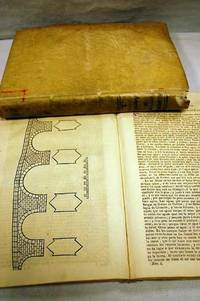
179788<p>RARE FIRST EDITION OF LORENZO MASCHERONI's TREATISE ABOUT THE USE OF THE COMPASS IN GEOMETRY</p><p>UNTRIMMED AND UNCUT COPY IN ORIGINAL PAPER WRAPPER</p><p>Mascheroni Lorenzo. <i>La geometria del compasso di Lorenzo Mascheroni. </i>Pavia : presso gli eredi di Pietro Galeazzi anno V della Repubblica francese 1797.</p><p>8to 223 x 130 mm original printer's wrappers; pp. 2 XVIII 264 14 leaves of folding plates woodcut decoration at title page friezes and headletters. </p><p>The principle of economy in geometric constructions</p><p>First edition of Mascheroni's most important work with a dedication in verse to Napoleon in which he proves that any geometrical construction of Euclidean geometry can be carried out by means of compasses alone admitting that a straight line is constructed once two of its points have been defined thus demonstrating how a certain principle of economics in geometric constructions proclaimed by all the great mathematicians of the past from Pappus to Descartes was regularly and violated by the use of two tools where only one was enough.</p><p>His approach was to first demonstrate how to use the compass alone to bisect a given arc of a circle add and subtract two given segments find the fourth proportional given three segments find the point of intersection of two given lines and the points of intersection between a given line and a circle.</p><p>At this point Mascheroni theoretically demonstrated how all constructions completed with ruler and compass can be considered as a composition of the elementary operations defined above and therefore obtained using only the compass. In the spirit of the Enlightenment this work is not meant to be just theoretical but is also designed to facilitate the construction of precision instruments. </p><p>Although some authors such as the Danish G. Mohr had sought before Mascheroni the solution of certain geometrical problems by using the compass alone he was able to deal with the subject of the geometry of the compass with such depth and in such a general way to make his forerunner forgotten.</p><p>Lorenzo Mascheroni 1750 - 1800 was an Italian mathematician scholar and academic who since 1778 taught physics and mathematics at the Bergamo seminary.</p><p>His most important contributions concern mathematical analysis with studies related to integral calculus and natural logarithms construction science with its original studies on arc-breaking calculus and geometry with the demonstration that solvable problems with row and compasses can also be solved with just the compass.</p><p>His name is also linked to the Euler-Mascheroni constant of which he calculated the first 32 decimal digits. The Euler – Mascheroni constant also called Euler's constant is a mathematical constant recurring in analysis and number theory usually denoted by the lowercase Greek letter gamma γ.</p><p>It is defined as the limiting difference between the harmonic series and the natural logarithm.</p><p>Napoleon whose passion for science and mathematics is known met Mascheroni in 1796 during the invasion northern Italy and was intrigued by his theories ion the use of the compasses becoming they say a great expert. "General we could expect from you everything but geometry lessons": with this sentence the mathematician Laplace and Lagrange welcomed Napoleon's explanations on Mascheroni's constructions whose book just a year after the Italian edition in 1798 was translated into French by Charette.</p><p>Conditions: Light marks of use along the text small warmholes never touching the text in general very good copy printed on strong paper untrimmed and uncut in its original paper wrapper.</p><p>References: RICCARDI P. "Biblioteca Matematica Italiana Milano 1952 vol. 1 134 9.1 "Pregiata e Rara".</p> Pietro Galeazzi paperback
17457285Zaragoza: Imprenta del Rey 1745. 207x150mm. 8¼x6". Zaragoza Imprenta del Rey 1745. En 4º. 34 h. 316 pp. 3 h. Portada dentro de orla tipográfica. Encuadernación de la época en pergamino. Primera edición. Historia de las magistraturas en España en su amplio sentido es decir no solo de los jueces sino también de los cargos polÃticos desde la época romana hasta el siglo XVIII. En la obra sigue la doctrina de Mariana Francisco Garma Antonio Sotelo Salazar de Mendoza etcétera. Lorenzo Santayana Bustillo fue catedrático de la Universidad de Cervera y oidor de la Audiencia de Zaragoza. Nuestro ejemplar incluye al principio 9 hojas manuscritas de época con el "Yndice delos Apellidos de sugetos que se nombran en este Libro cadado por Don Josef Ruiz de Santayana montero de Cámara de S.M." Procedencia: José Ruiz de Santayana Montero de Cámara y Guardia de S.M. descendiente del autor. Imprenta del Rey unknown
1773C2470vii384 pages with numerous woodcuts and decorative initials throughout. Small quarto 8" x 5 3/4" bound in half leather over marbled boards. Bibliotheca van der Linde-Niemeijeriana: Not listed From the library of J W Rimington Wilson. Second edition. First edition published in 1769. <br /><br />Domenico Lorenzo Ponziani was an 18th-century Italian law professor priest chess player composer and theoretician. He is best known today for his chess writing. Ponziani was friend with fellow Modenese chess players and writers Ercole del Rio and Giambattista Lolli and collectively the trio is known as the Modenese Masters. In 1769 Ponziani published the first edition of <i>Il giuoco incomparabile degli scacchi</i> <i>The Incomparable Game of Chess</i>. As Ponziani did not include his name in this work <i>Opera d'Autore Modenese</i> it was identified to the Anonymous Modenese. The edition in 1782 was much improved and laid out the principles of the Italian school of chess as exemplified by 17th-century Italian masters such as Gioachino Greco. Although Ponziani identified himself in the second edition the 1820 translation by English naval officer J. B. Smith using the pen name J. S. Bingham <i>The Incomparable Game of Chess</i> attributed the work to del Rio. Ponziani's work is the best practical guide produced by the Modenese Masters. Like writings by del Rio and Lolli Ponziani deals only with the opening and endgame with no discussion of the middlegame. In the opening the primary objective is to obtain the maximum amount of mobility for the pieces aiming in particular for vulnerable points such as the f2 or f7 square. No importance is attached to formation or maintenance of a pawn center pawns are used to drive back enemy pieces. Ponziani 1782 also gave an example of an endgame blockade or fortress in which the inferior side is able to hold a draw despite having only two minor pieces for the queen by hemming in the opposing king. In the opening Ponziani is best known as the eponym of the Ponziani Opening 1.e4 e5 2.Nf3 Nc6 3.c3 although he did not originate it as it was published by Lucena around 1497. His name is properly attached to the Ponziani Countergambit 1.e4 e5 2.Nf3 Nc6 3.c3 f5 in the Ponziani Opening as he published the first analysis in 1782. Wikipedia<br /><br />James Wilson Rimington-Wilson 1822-1877 was one of the great collectors of books about chess as well as books about other games and sports. He was a strong amateur chess player and records of some of his games survive including a victory over Wilhelm Steinitz the first official world champion of chess. Rimington-Wilson developed an extensive gaming library which was maintained and perhaps added to by his son Reginald Henry Rimington-Wilson 1852-1927. After the death of R. H. his son Captain H. E. Rimington-Wilson 1899-1971 ordered the sale of the library by auction at Sotheby's. It was the Quaritch firm that purchased the vast majority of the Rimington-Wilson lots at Sotheby's. They offered the books in two catalogues shortly after the sale.<br /><br />Condition: Provenance J W Rimington Wilson with his signature to front paste down. Contemporary half calf rebacked and recornered earlier ink calculations and annotations in Italian on front free end paper Brooklyn Public Library ink stamp on back free end paper else very good. Simone Occhi hardcover
17837140Madrid: Miguel Escribano 1783. Hardcover — Tapa dura. Madrid Miguel Escribano 1783. 3 volúmenes. En 4º. -I: 4 viii-474 pp. -II: 4 425 pp. -III: 4 400 pp. Texto a dos columnas. Encuadernación en pergamino original. Cuarta edición de este famoso Diccionario Geográfico publicado originalmente en inglés y cuya traducción al castellano tuvo mucho éxito en su época pues era el único existente en su tiempo para el público español; esta es la cuarta edición en nuestra lengua y la primera corregida por el erudito Antonio de Montpalau. Contiene la descripción "de las naciones imperios reynos repúblicas y otros estados provincias territorios ciudades villas y lugares memorables lagos rios desiertos montañas volcanes mares puertos golfos islas penÃnsulas istmos bancos cabos &c. que se encuentran en el globo terráqueo". La traducción castellana no está tomada directamente del inglés original sino de la traducción francesa de Mr. Wosgien publicada en 1756 y de nuevo en 1772 muy aumentada. Esta edición corregida por Montpalau es acaso la más importante: "se han añadido mas de cuatrocientos artÃculos nuevos; se han rehecho con mejores noticias y descripciones cerca de dos mil; ascendiendo el número de los artÃculos casi refundidos del todo á otros tantos. En una palabra se puede asegurar que este Diccionario tan plagado de defectos y equivocaciones que apenas habÃa palabra que no fuese un yerro ó de imprenta ó de ortografÃa ó de ignorancia sale en esta nueva edición no solo enmendado sino en realidad renovado". Muy buen ejemplar limpio. Procedencia: Miguel Lobera y ContÃn inscripción en tinta de la época en las portadillas. Miguel Escribano hardcover
174689154Madrid: Imprenta de Juan de Zuñiga 1746. Hardcover. Very light foxing intermittently throughout. Small bump to top and bottom left edges on back board. Sparse marginalia in pencil. Light partial crack to joint at rear board top; very light scuffing and soiling to boards. All in all very good to very good clean & tight copy. Two ownership signatures to front paste-down. Two small mostly erased circular stamps to upper edge of title page. Most likely ex-library. Octavo in half vellum and brown marbled paper-backed boards; marbled endpapers; gilt title and date of 1746 to spine; frontis page & protrait page; 20 preface pages165 pages. 96 pages; 21 cm. Rare. In Spanish. Small oval bookseller stamp of "Libreria Porrua Hmnos y Cia Mexico D.F." to front free endpaper verso as well as two presumable owner signatures holographic to same: "Federico Gomez de Orozco" and "Genaro Guijardo" sp. Two small circle stamps in ink 90% erased to upper right corner of title page. Scant marginalia in pencil is scholarly. Presumed Mexican binding. No other markings. Palau 33786 Sabin 6834. Imprenta de Juan de Zuñiga hardcover
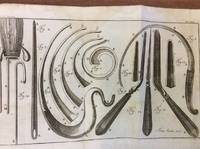
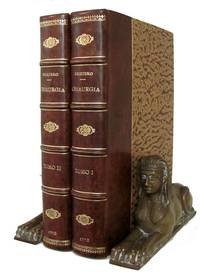
1759131443Neapoli : expensis Antonio Cervone 1759. In-8 p. mm. 233x175 4 volumi p. pergamena coeva restaur. per mancanze e con macchie pp. 16XLVIII296; 263; 300; 3102 molto ben illustrati da un ritratto dell'autore e da 39 tavole inc. in rame da Francesco Sesone più volte ripieg. e fuori testo inclusa 1 tav. a una pag. nel 1° volume raffiguranti strumenti chirurgici fasciature vari generi di interventi ginecologici ortopedici odontoiatrici etc.; vignetta ai frontespizi il 1° volume con titolo in rosso e nero testate grandi iniziali e finali inc. su legno. Edizione latina di quest'opera pubblicata per la prima volta nel 1718 atque in tabulis multis aeneis praestantissima ac maxime necessaria instrumenta itemque artificia sive encheirises praecipuae & vincturae chirurgicae repraesentantur. Opus triginta annorum quod in hac novissima Editione Neapolitana Dissertationibus cum auctoris tum aliorum selectis ad rem Chirurgicam spectantibus auctum atque mendis typographicis quibus Veneta scatebat quam diligentissime expurgatum prodit in lucem.Cfr. Castiglioni Storia della medicina p. 635: A Lorenzo Heister 1683-1758 nato a Francoforte allievo di Boerhaave spetta il merito di aver contribuito notevolmente al miglioramento dell'insegnamento chirurgico in Germania e di esser stato l'autore di un testo di chirurgia pubblicato a Norimberga nel 1718 che si può considerare uno dei primi trattati completi. Heister fu come lo Scarpa ed altri insigni chirurgh del Settecento un eccellente anatomico. Aloni arrossature e fioriture intercalate nel testo; fori di tarlo margin. restaurati ma complessivamente discreto esemplare. expensis Antonio Cervone, unknown
17927506Roma: Nella Stamperia Pagliarini 1792. Hardcover. Very Good. Full vellum with gilt lettering on spine. All volumes lightly rubbed and soiled with bumped corners; Book Nine the fifth volume has a tiny split at rear joint near tail of spine though binding ñ as with all volumes ñ remains tight. All volumes internally clean. VG and quite handsome. An important and rare set of books. Heavy too so MAY REQUIRE ADDITIONAL SHIPPING CHARGES. <br/><br/> Roma: Nella Stamperia Pagliarini hardcover
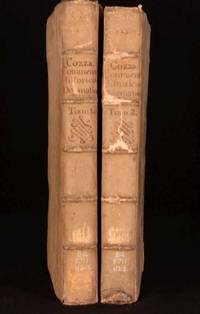
1717FGN1-E-9Rome: Plachi 1717. Vellum. Very Good. 13" by 9". None. An extremely scarce copy presumed first edition of Cozza's dogmatic histories on the heresies of St. Augustine. Lorenzo Cozza 1654 1729 was an Italian friar Minor Observantist Roman Catholic Cardinal and theologian. In his order he filled the positions of lector of theology in the convent of Santa Maria in Aracoeli lector of philosophy in the convent of Saint Diego Naples 1676 and lector of theology in the convent of Viterbo where he also became guardian. He then returned to the convent of Aracoeli as lector of theology and later in 1696 guardian. For five years Cozza was master of Francesco Antonio Placidi friar Minor and future Saint Thomas of Cori. Cardinal Giulio Cesare Sacchetti chose Cozza as his confessor and theological adviser thus giving rise to a friendship that lasted through life. St Augustine was one of the most prolific Latin authors in terms of surviving works and the list of his works consists of more than one hundred separate titles. They include apologetic works against the heresies of the Arians Donatists Manichaeans and Pelagians texts on Christian doctrine notably De Doctrina Christiana On Christian Doctrine exegetical works such as commentaries on Book of Genesis the Psalms and Paul's Letter to the Romans many sermons and letters and the Retractationes a review of his earlier works which he wrote near the end of his life. In vellum bindings. Externally sound. Some marks to the boards. Front hinge of Volume II starting. Bookplate and library label to front pastedowns of each volume. Internally firmly bound. Pages are bright with the odd spot. Copperplate ink inscriptions to title pages. Very Good Plachi hardcover
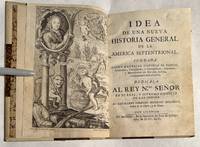
179518539PRIMERA EDICION.- Madrid: Imprenta Real el tomo 1º y Imp. de Fermín Villalpando el tomo 2º 1795.- 2 Vols. 3 h. VIII p. 2 h. 335 p.; 3 h. 376 p.: Con 5 láminas plegadas en el tomo 2º; 4º menor 217 x 16 cm.; Media Piel.- Aunque en Palau se indica que está impreso en la Imprenta Real no da referencia alguna de la imprenta del tomo 2º ni hay referencia a ninguna otra edición en dicha bibliografía por lo que suponemos que esta es la única edición existente siendo el tomo 1º de la Imprenta Real y eltomo 2º de la de Villalpando. ES UNA OBRA MUY IMPORTANTE PUES FUE UNO DE LOS PRIMEROS TRATADOS SOBRE LA ENSEÑANZA DE SORDOMUDOS EN EL MUNDO. La portadilla y la portada del tomo 1º tienen una leve señal de humedad en el ángulo inferior interno. El 2º tomo falto de portadilla con la portada y 2 hojas siguientes restauradas de pequeñas faltas y algo sucias. Algunos ejemplares se editaron con un retrato del autor que reseña Palau 114450 pero el nuestro no lo incluye. Es probable que se aprovecharan los grabados excedentes de otra obra coetánea "Viage estático al mundo planetario" y que por tanto no alcanzasen a cubrir toda la tirada. SIGLO XVIII ESPAÑOL Libro en español Imprenta Real [el tomo 1º] y Imp. de Fermín Villalpando [el tom hardcover
177024871Venezia: Presso Francesco Pitteri 1770. Second Edition. Hardcover. Second edition in Italian. Two volumes. xx 447pp; 400pp. There are several misnumbered pages. Recent half mottled calf over marbled boards spine with raised bands decorated and lettered in gold edges sprinkled red. Engraved frontispiece twenty copper-engraved foldout plates initials and tail-pieces in volume one; title vignette eighteen copper-engraved foldout plates initials and tail-pieces in volume two. A massive treaty that covers every aspect of surgery from tending to wounds to performing complex procedures. Garrison and Morton states: "Heister is the founder of scientific surgery in Germany. This was the most popular surgical text of the 18th century; it underwent numerous editions and translations". The plates show numerous surgical instruments and their application. Old dampstains affecting the edges scattered foxing throughout. Short tears not affecting text to four of the leaves some old mends to five of the leaves and one of the plates. There was a third separate volume with a different title and only two plates dedicated to the eye which is not included here. Garrison-Morton 5576. ; Octavo. Presso Francesco Pitteri hardcover
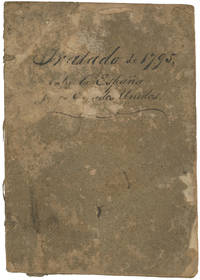
1796LIST0119Madrid: Imprenta Real 1796. First Edition. Good. The first bilingual edition of Pinckney’s Treaty of San Lorenzo which ended the West Florida Conflict by establishing an amicable agreement between Spain and the United States for the navigation of the Mississippi River. Thomas Pinckney signed as a representative of the United States and Manuel de Godoy signed in the name of Carlos IV of Spain. The agreement’s effects were far reaching as the ceded land that became the Mississippi Territory - particularly the Natchez region - formed a gateway for the United States expansion into the Southwest by destabilizing Spanish power. A landmark treaty uncommon in its first bilingual edition. Rear wrap and final leaf detached and lacking the passports. Worming and chips to wraps contents well preserved good condition overall. <br /> <br /> Palau 339329; Sabin 96587. Imprenta Real unknown
174061809Venezia Tipografia Balleoniana 1740. Parti 4 riunite in 3 volumi in folio belle legature coeve in mezza pelle con fregi oro e titoli su tasselli a due colori ai dorsi. Pp. XXIV 418 XII 440 CLVI 224 XII 268 testo arricchito da testatine e finalini oltre ad un bel ritratto a piena pagina dell'A. posto nel primo volume. L'Opera comprende: Discursus legale De Commercio .Tractatus de avariis Quintini Weytsen in novam methodum ab Auctore nostro ad faciliorum usum accommodatus: nec non tractatus ipsius Il cambista istruito; Consulatus Maris cum ejusdem explicatione. Et elucubrationes ac Resolutiones ad Statuta Januae de Decretis ac de Successionibus ab Intestato . Gialliture sparse buon esemplare. Seconda e più completa edizione di tutte le opere del grande giurista genovese curata dal fratello Giovanni Bartolomeo e dal giurista Gian Franco Brandi i quali basandosi sugli appunti dellA. arricchirono di aggiunte anche i testi precedenti Venezia, Tipografia Balleoniana unknown
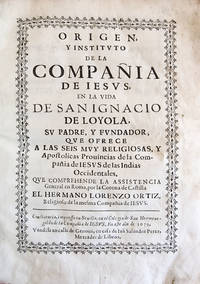
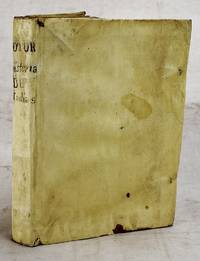
17462109020001En Madrid : En la imprenta de Juan de Zuniga 1746. First Edition. Hardcover. Very Good. Historiography of Mexico: Early Spanish Imprint 4to 21 cm. Bound in vellum with manuscript lettered spine. 40 167 9 96 pages. Engraved frontispiece. Light penumbra of foxing to the margin of some of the pages but still a handsome copy. In this work Benaducci considered how to write a new history of ancient Mexico drawing on new forms of historical evidence primarily Nahua vocabularies. The last 96 pages of the book include as an appendix: "Catalogo del Museo Historico Indiano." The catalogo contains a detailed list of the author's important collection of books and manuscripts colonial indigenous codices. Benaducci had one of the largest mid-17th century collections of Mexican codices and art. Many of these works were later destroyed. <br> Refs: Alden/Landis 746/28; Medina BHA 3403; Pilling 420a; Palau 33786; Sabin 6834. En Madrid : En la imprenta de Juan de Zuniga hardcover
1796389830Madrid.: por D.Placido Barco Lopez. 1796. Hardcover. Cubierta deslucida. . guardas algo abiertas . Good. 30 cm. 2 v. 8 288 p. ; 2 471 i.e. 473 4 p. Profusamente ilustrados con grabados intercalados. Encuadernación en tapa dura de editorial con lomo estampado. Compuesto por el P. Fray Lorenzo de S. Nicolás Agustino. 1ª parte. Con el primer Libro de Euclides traducido en castellano. - 2ª parte. Con el Quinto y Septimo Libro de Euclides y las medidas difíciles de bóvedas y de las superficies y pies cúbicos de las pechinas ; con las ordenanzas de la Imperial Ciudad de Toledo. y se añaden. las Ordenanzas de Madrid. Aguilar Piñal. Bib. S.XVIII. Sig.: a A-Z Aa ; ¹ A-Z Aa-Qq Rr¹. Portadas xilográficas arquitectónicas. Las ilustraciones son grabados xilográficos de planos y elementos geométricos. Arquitectura. Obras anteriores a 1800. Barco López Plácido. imp . Cubierta deslucida. . guardas algo abiertas . Arquitectura.72 72 por D.Placido Barco Lopez. hardcover
179322140EN MADRID: Imprenta de Aznar 1793-1794. Primera edición.- 4º.- Plena piel de época lomera con doble tejuelo filetes y anagrama al pie en dorados.- 4 tomos.- I: 1793.- 10 hojas de Dedicatorias.- XXII de Introducción.- 1 hoja.- 280 páginas.- Errores en la paginación pero bien completo.- II: 1793.- 2 hojas.- 291 páginas.- III: 1794.- 10 hojas.- 396 páginas.- IV: 1794.- 2 hojas.- 323 páginas.- 1 lámina frontis grabada retrato del autor dibujada en Roma por Dominic Cardelli y grabada por Josef Ximeno más tres láminas fuera de texto grabadas y plegadas. Estado de conservación: Al final del tomo I ligero agujero de polilla siempre marginal sin afectar para nada el texto. Por lo demás es un ejemplar limpio y marginoso con una buena encuadernación de época. Procedencia: La obra está dedicada a Antonio Ponce de León Carrillo de Albornoz Duque de Montmar y en cada una de las portadas de la obra aparece un escudo que contiene sus iniciales entrecruzadas dicho escudo aparece también al pie de la lomera de cada tomo. El jesuita Lorenzo Hervás y Panduro nació en Horcajo Cuenca el 10 de mayo de 1735. Enseñó metafísica en el Colegio Imperial de Madrid. Después de la expulsión de los jesuitas residió en Córcega Forli Cesena y Roma donde fue Prefecto de la Biblioteca Pontificia. Murió en Roma el 24 de agosto de 1809. En 1800 pidió al Gobierno español una ayuda económica para la publicación de sus obras Aguilar Piñal. La dedicatoria de la obra a Antonio Ponce de León está fechada en Roma a 2 de febrero de 1793. Palau al final e la descripción de sus obras comenta que las obras de Hervás fueron transportadas al puerto de Cartagena para mandarlas a América en 1808 de resultas de la Guerra de la Independencia el cargamento quedó bloqueado hasta que años después fueron trasladadas a Osa de la Vega Belmonte para quedar almacenadas más de 70 años siendo pasto de ratones goteras y destruyéndose más de 1500 volúmenes. Siendo en la actualidad raras en comercio. Muy buen ejemplar limpio y marginoso con encuadernación de época. Palau 114449 - Aguilar Piñal IV - 3163 Imprenta de Aznar unknown
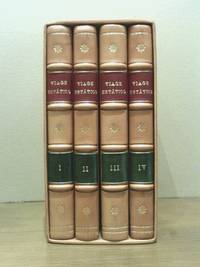
179317459PRIMERA EDICION.- Madrid: en la Imp. de Aznar 1793-94.- 4 Vols. 10 h. XXXII280 p. 1 h.; 2 h. 292 p.; 10 h. 396 p.; 2 h. 323 p.: Con un retrato del autor grabado al cobre tras la portada del tomo 1º y 3 láminas plegadas grabadas al cobre sobre temas astronómicos ubicadas en los tomos 1º 2º y 3º respectivamente; 4º menor 206 cm.; Papel verjurado; Plena Piel moderna en color canela de ejecución maestra lomera con 4 nervios y tejuelos en rojo y verde estuche.El autor mediante la explicación de las maravillas del Universo astronómico trata de demostrar que de la contemplación del cielo el hombre puede acercarse más a Dios y admirar asà su creación. MUY RARO. Con viejos sellos tampón de un antiguo propietario en la portada y portadilla. El tomo 1º tiene la portadilla y la portada restauradas de algunas faltas de papel que afectan un poco al tÃtulo pero de éstas se adjunta un duplicado facsÃmil en papel de la época perfectamente realizado. Este tomo también tiene diversas señales de humedad en general aunque el papel se conserva firme y fuerte. Por lo demás en buen estado con una encuadernación magnÃfica e impecable. ASTRONOMÃA Y ASTROFÃSICA Libro en español en la Imp. de Aznar hardcover
175911054Florence: Ex Typographio Caesareo. Good with no dust jacket. 1759. First Edition. Vellum. 4 cccclxiv and 4 pp 1188 columns. With a full page engraved portrait of Ambrose by Carlo Gregori 1719-1759 before the title red and black title page with an elaborate printer's mark with puti doing things to various printing implements. 2 large folios in full parchment of the time with gilt stamped titles on the spines engraved initials nicely printed. Red marbled edges. Stiff parchment covers are normally worn boards slightly bowed top of spines pulled with some vellum chipped away some cracking of the parchment at the edges. Interiors have institutional stamps from a monastery in Philadelphia along with a personal stamp from a Pennsylvania theologian some minor foxing and aging but otherwise clean and strong. Surprisingly hard to find in commerce no auction records in the last 70 years. Ambrogio Travesari 1386-1439 was an Italian monk and great proponent of papal supremacy. But he is particularly interesting because he became convinced that the knowledge and wisdom of the Greek fathers was important to the modern church and he decided to learn Greek so that he could read them in the original. He worked with a Byzantine refugee from Constantinople for 10 years translating Basil Athanasius Gregory of Nazianzus and of course John Chrysostom among others. As a result of his great respect for the Greek fathers he attempted to bring the Eastern and Western churches together at least to mediate the differences. "He supported the pope at Ferrara and Florence and worked hard in the attempt to reconcile the Eastern and Western Churches. Bt in this council and later in that of Florence Ambrose by his efforts and charity toward some poor Greek bishops greatly helped to bring about a union of the two Churches the decree for which 6 July 1439 he was called on to draw up. He died soon after. His feastday is celebrated by the Camaldolese Order on 20 November." Heavy and oversized for international shipping. ; Ex-Library; Folio 13" - 23" tall . Ex Typographio Caesareo hardcover
17466973Madrid: Imprenta de Juan de Zúñiga 1746. First Edition — Primera edición. Hardcover — Tapa dura. 190x145mm. 7½x5¾". Madrid Juan de Zúñiga 1746. En 4º 190 x 145mm. frontis y retrato dibujados y grabados por irala 40 167 8 96 pp. Encuadernación en pergamino de época autor rotulado de época en la cubierta delantera. Primera edición de esta obra importante. A partir de la página 167 comienza con portada propia: "<em>Catálogo del Museo Histórico Indiano</em>". Palau dice de este libro: "Obra estimada e indispensable a todo americanista". Lorenzo Boturini 1702-1755 nació en Sondrino obispado de Como en Italia. Pasó a las Indias en 1736 sin licencia permaneciendo en la Nueva España hasta 1743. Allà se dedicó a la búsqueda de testimonios sobre la Virgen de Guadalupe y a su gran afición de las antigüedades mexicanas prehispánicas reuniendo manuscritos y documentos y aprendiendo el idioma Nahuatl. Su fervor guadalupano le llevó a querer coronar a la Virgen consiguiendo un breve pontificio y recaudando dinero; todo ello y su condición de extranjero levantó sospechas del virrey quien le arrestó confiscó su colección y finalmente le expulsó a España sin sus papeles. Nunca más volverÃa a ver lo que él mismo llamó su "Museo histórico indiano". Ya en España fue nombrado Cronista de Indias pero murió en 1755 sin haber recuperado sus manuscritos. Parte de la Colección Boturini se perdió por desidia de sus custodios y el resto se dispersó; los documentos más valiosos son los que se conservan en la BN de ParÃs además de muchos otros depositados en la Real Academia de la Historia de Madrid. Para la redacción de la obra estableció tres grandes edades o perÃodos de evolución de las culturas novohispanas: la edad de los dioses la de los héroes y la de los hombres. En el texto continuamente hace gala de su erudición clásica justificable en un autor que quiso demostrar el parentesco de la historia de los pueblos americanos con la del resto del mundo. Eduardo Anglada "Testimonios cinco siglos del libro en Iberoamérica" 1992 nº 3 Buen ejemplar generalmente limpio. Primeras hojas de preliminares con ligera mancha en la esquina inferior pequeña restauración marginal al verso del frontis sin afectar por lo demás perfecto. Procedencia: Huating anotación manuscrita del siglo diecinueve Imprenta de Juan de Zúñiga hardcover
174312853Madrid: Juan de Zúñiga 1743. 193x135mm. 7½x5¼". Madrid Juan de Zúñiga 1743. 2 obras en un volumen. En 4º 193 x 135mm. -I: 8 504 pp.1 bl. -II: 4 42 pp. Encuadernación de la época en piel lomera cuajada de dorados. Segunda edición del "Arte o cartilla del nuevo beneficio de la Plata" publicado por primera vez en Lima en 1738 donde se describen las minas del Perú y se explica el nuevo beneficio que consiste en el empleo de la colpa o caparrosa en lugar del magistral consiguiendo no solo un ahorro de costo por el escaso precio y abundancia de la primera comparado con el del segundo sino también y principalmente por el consumo menor de azogue y un rendimiento mayor de plata o "aumento de ley". Explica como se ha de hacer el beneficio con el nuevo ingrediente en las diferentes clases de metales y termina doliéndose de la indiferencia con que se ha mirado este asunto en el pasado. Sus maestros según él mismo dice habÃan sido 25 años de trabajo y experiencia estudiando en casi todos los metales conocidos en el reino del Perú y empleando el servicio de muchas y diferentes minas entre ellas las famosas de Nuestra Señora de la Regla y la de San Juan de Lucanas donde habÃa sido minero azoguero beneficiador y al final dueño de la mina. La segunda obra del volumen el "Resumen del arte" impreso por Zúñiga el mismo año es un compendio del "Arte o cartilla" del mismo autor. "Este resumen es solamente dar a los dueños de minas de los reynos del Perú y Nueva España las reglas prácticas que deben observar en el nueo methodo de beneficio de la plata". MagnÃfico ejemplar de ambas obras en perfecto estado. Juan de Zúñiga unknown
179640343PRIMERA EDICION De orden del Rey.- Madrid: En la Imprenta Real Año de 1796.- 1 h. 54 p.: Al final 2 h. con sendos modelos plegados de 42 x 473 cm. uno con el "Modelo del Pasaporte ó Patente de Mar que se concede á los Buques para navegar en Europa citado en el Artículo XVII" y el otro con el "Modelo del Pasaporte ó Patente de Mar que se concede á los Buques para navegar en América citado en el Artículo XVII"; 4º 23 x 173 cm.; Excelente impresión a dos columnas sobre magnífico papel verjurado; Edición bilingüe en español e inglés; Enc. moderna ca.1925 finamente ejecutada en Media Piel lomo dorado.- MUY RARO. El tratado de San Lorenzo de 1795 también conocido como tratado de amistad límites y navegación o tratado Pinckney en los Estados Unidos fue firmado por España y los Estados Unidos para definir las fronteras entre los Estados Unidos y las colonias españolas en Norteamérica y regular los derechos de navegación en el río Mississippi. El acuerdo fue firmado en San Lorenzo de El Escorial el 27 de octubre de 1795 por Manuel de Godoy en nombre de Carlos IV de España y por Thomas Pinckney en representación de Estados Unidos; sería ratificado por el presidente estadounidense George Washington el 7 de marzo de 1796 en Filadelfia y por el rey de España en Aranjuez el 25 de abril del mismo año. SIGLO XVIII ESPAÑOL Libro en español En la Imprenta Real hardcover
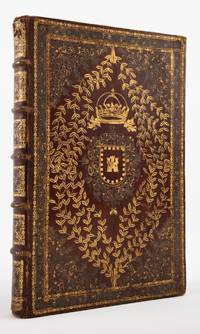
1714ST20995Naples: Bernardo-Michele Raillard 1714. 343 x 223 mm. 13 1/2 x 8 3/4". 6 p.l. CCLXIX 15 pp. <br/> IMPOSING CONTEMPORARY BROWN MOROCCO EXUBERANTLY GILT covers with painted and gilt frames of floral rolls central panel with elaborate volute cornerpieces large central lozenge formed by myriad leafy gilt vines enclosing a coat of arms containing a three-turreted castle topped by a crown held up by two putti raised bands spine compartments framed by floral roll painted and gilt daisy centerpiece tulip cornerpieces all edges gilt. The Academy's engraved device on title page and 75 ENGRAVED PLATES of scientific instruments and experiments. DSB 9:3; Dibner Herald of Science 82 first edition. Joints with modern wear one short crack at top of rear joint head of spine a bit wormed corners and extremities somewhat rubbed gilt a bit rubbed in spots difficult to tell if some of the decoration is dark because painted or is now missing gilt a couple of leaves slightly browned in the text bed occasional minor foxing more pronounced on a couple of quires other trivial imperfections but an excellent copy--quite clean and fresh internally--in a solid binding still bright with gilt.<br/> <br/> Given its binding and provenance this is a uniquely desirable copy of a significant scientific work: our stately Neapolitan edition of the "Essays on Natural Experiments" is offered here in very animated morocco bearing the arms of the man who paid for its printing and to whom the book is dedicated. That remarkable patron Caesare Michelangelo d'Avalos Marquis of Pescara and Vasto prince of Isernia and Francavilla 1667-1729 was a true Renaissance man who took Machiavelli's "The Prince" as inspiration. He was both a wily political conspirator and a generous patron of the arts and sciences. His palace at Vasto was renowned for the beauty of its furnishings for its splendid art gallery and for its impressive library overseen by the humanist scholar Alessandro Berti. The present volume was a worthy addition to that library with its glowing dedication and its regal binding extravagantly gilt but so tastefully composed that it never crosses the line into ostentatious. <br /> First printed in 1666 "Essays" was produced by the Accademia del Cimento the most significant expression of post-Galilean scientific progress in Italy. Founded in 1657 as the first organization formed for the sole purpose of making scientific experiments the Accademia occupies a singular position in the history of the development of science. Prince Leopold of Tuscany the last exceptional member of the Medici family and his brother Ferdinand who followed the Medici family tradition of patronizing the arts and sciences provided the support free-thinking direction and financial patronage for the Academy. A well-equipped laboratory and an apparently inexhaustible supply of apparatus and materials helped to make the work of the 10 scientists associated with the Academy more sustained and broader in scope than anything that had come before it. W. E. K. Middleton "The Experimenters" According to Thorndike among many other subjects the experiments described here "were concerned with air pressure and freezing; or they aimed to prove that water was incapable of compression and that there was no such thing as lightness or positive levity. Some experiments were magnetic and others electric the latter being chiefly performed with amber. Other subjects investigated were the change of colors in fluids the motion of sound and projectiles." Although no author is given by name the title page of the 1666 first edition indicated that this account was written by the secretary to the academy Lorenzo Magalotti 1637-1712. A pupil of Viviani and a friend of Boyle Magalotti was celebrated for his highly finished colorful almost dramatic descriptions of experiments. DSB notes "He has the distinction . . . of having written the best scientific prose in Italian after that of Galileo.". Bernardo-Michele Raillard unknown