LongusBiblio.com

274 résultats
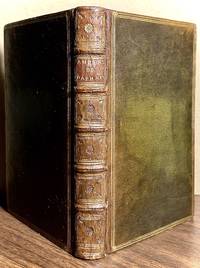
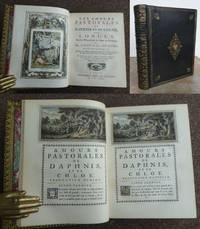
17541322129Lutetiae Parisiorum i.e. Amsterdam 1754. Hardcover. Small Quarto 175 pages. In Very Good condition. Bound in period red morocco with triple gilt rule to board edges and brown label with gilt lettering to elaborate gilt spine. Boards show mild rubbing and slight cracking to upper rear hinge. Large bookplate removed from front pastedown replaced with small bookplate. Top edge of text block gilt. Gilt rolls to doublure edges. Marbled endpapers.<br /> <br> <br /> <br> <br /> Bilingual with Greek on the verso and Latin on the recto; illustrated with 28 of the 29 plates plus a frontispiece lacking plate 20 with signs it was cut out Titled 'Liccenion écoute Daphnis et Chloé qui cherchent remede d'Amour' elaborate vignettes and headpieces. MW Consignment. Shelved in Case 3. Daphnis and Chloe is an ancient Greek novel written in the Roman Empire the only known work of the second-century AD Greek novelist and romance writer Longus. 1322129. Shelved Dupont Bookstore. hardcover
18961912Paris: Societe Des Beaux Arts 1896. First edition. First edition. Limited to 20 Copies 9 for America. This one lettered “B.†Large thick quarto. Superb dark green morocco with ornate inlaid morocco decorative covers heavily gilt front and back covers as well as spine. Large ornately gilt inner dentelles with inlaid color oval illustrations matching image on preliminary pages four separate pages one color three tinted; 166pp with superb engravings throughout many whole-page some in tint by Raphael Collin. Printed on thick Japan Vellum with tissue guards throughout. Binding in near fine condition except for the joints at the spine which are worn due to large weight of covers. The front cover quite weakened. In need of small repair to make this a highly desirable item. Societe Des Beaux Arts unknown
193159005New York: Privately Printed for Rarity Press. As New. 1931. Hardcover. FREE UPGRADE to Courier/Priority Shipping Upon Request IN STOCK AND IMMEDIATELY AVAILABLE FOR SHIPMENT - AS NEW THE TEXT BLOCK IS PRISTINE CLEAN UNMARKED AND IN EXCELLENT CONDITION - - 200 pages. Illustrated by John Austen -- with a bonus offer-- . Privately Printed for Rarity Press hardcover
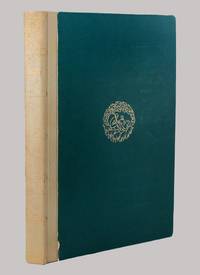
193323659Chelsea: Ashendene Press 1933. First edition thus. Hardcover. Orig. vellum-backed green boards white corner tips gilt device front cover. Near fine. 163 pages. 25.5 x 18.5 cm. Limited edition of 310 copies. Printed in red and black in Ptolemy type. Initials hand-colored in blue by Graily Hewitt wood-engravings throughout by Gwen Raverat. HORNBY XXXIX. This edition was initially printed in 1931 the ink used was very slow to dry the sheets packed before the ink dried. When discovered at the binder Hornsby decided to destroy the entire edition. Text in French. Fresh very bright copy. Ashendene Press hardcover
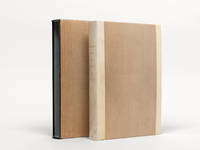
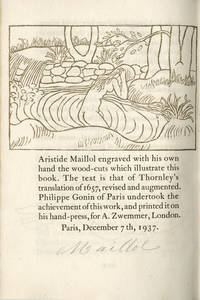
1937193981London: A. Zwemmer 1937. Signed by Aristide Maillol; Numbered 209 of 250. Hardcover. Good Slipcase is worn peeled foxed and smudged with the top open; vellum boards are heavily smudged and darkened; textblock edges are smudged and foxed; interior is super clean; binding is solid. Maillol Aristide. Full white vellum boards with gilt lettering on the spine in a personalized white slipcase that says "for Marion; from Ted 1938." 211 pp. unopened and untrimmed pages; richly illustrated; signature of Maillol in pencil on the final engraved page. Signature page reads "Aristide Maillol engraved with his own hand the wood-cuts which illustrated this book. The text is that of Thornley's translation of 1657 revised and augmented. Philippe Gonin of Paris undertook the achievement of this work and printed it on his hand-press for A. Zwemmer London." Extremely rare. Numbered 209 of 250 numbered signed by Maillol and printed on hand made paper. A. Zwemmer hardcover
1933ASHENDEN016599Ashendene Press London. 1933. First edition. Quarto. pp iv 163. One of 290 copies. 26 wood engravings by Gwendolen Raverat; initials filled in by hand by Graily Hewitt. Translated into French by J. Amyot. Edited and corrected with an Introduction by Paul-Louis Curier. Vellum-backed turquoise boards stamped with gilt vignette. Printed by C.H. St John Hornby in Ptolemy type on Batchelor handmade paper with title and marginal notes printed in red.Fine in very good indeed sturdy patterned board slipcase with a bit of rubbing to the corners. Ashendene Press, London. hardcover
193737010Paris: Les frères Gonin 1937. Fine. Les frères Gonin Paris 1937 14 x 21 cm en feuilles sous chemises et étui With 48 original woodcuts by Aristide Maillol printed in 500 numbered copies on Maillol paper. Autograph signature of Aristide Maillol to justification. This copy is complete with its separate suite of 21 original woodcuts. Les frères Gonin unknown
171823660Paris: Quillau 1718. First printing. Hardcover. Contemporary olive green cloth spine faded to brown. Aeg. Very good. 6 Preface. 164 pages. 16.5 x 10 cm. Limited edition of 250 copies. Engraved frontispiece by B. Audran after A. Coypel 28 plates thirteen are double-paged after Philippe d'Orleans engraved by B. Audran. and with engraved headpiece by J.B. Scotin plus six engraved initials. An attractive copy of the "Regent Edition" so called as it was printed at the expense of Phillipe duc d'Orleans also the latter was Regent for his cousin Louis XV from 1715-1723 illustrated with engravings by Benoit Adran after the Regent's own drawings. Text is based on the celebrated French translation by Jacques Amyot. COHEN-DE RICCI. "Jolie edition tres recherche." GORDON RAY. ART OF THE FRENCH BOOK. "a fixture in the collections of French bibliophiles." Armorial bookplate of the Duke of Albany and small bookplate of T. Hugh Cobb. Spine with raised bands gilt spine label triple gilt cover border panels inner dentelles silked endpapers. Text in French. Quillau hardcover
51-5816Paris: Tériade Editeur 1961. . Folio. 32.3 x 42cm. Edition of 250 this one without the limitation page. Two volumes in cream board chemises in matching slipcase.Text volume with 78 pages. Plate volume with paper wraps only.Ideal for someone who owns one or more of the lithographs for presentation. Cramer no. 46 Paris: Tériade Editeur, 1961. paperback
1745018270Paris: Quillau 1745. Book. Very good condition. Hardcover. Early edition. Octavo 8vo. ii 150 pages of text. Contains an engraved title page by Coypel 28 engraved plates by Audran followed by one engraving by le Compte de Caylus. The Caylus engraving is titled "Conclusion du Roman" but is best known as the "petit pieds" plate. Translated by J. Amyot Bishop of Auxerre. The engravings by B. Audran are from designs by Philip Duke of Orleans. Full red morocco binding by Simier is heavily worn on the extremities and hinges where it has been inexperty recolored but this poor attempt at recoloring does not distract from the elegance and beauty of the elaborate gilt-stamped decorations. The front endpaper marbled is detached. The text is clean and unmarked. Early edition with different pagination that the editions that appear on the market. No publisher listed but published by Quillau. Quillau Hardcover
1919000387<p><strong>One of the most beautiful books illustrated by Carlègle. With 33 original woodcuts. With two extra suites of illustrations on Japon ancien and on Chine all signed by the artist. No. 2 of 20 numbered and signed copies of the special edition on Japon ancien à la forme. "C'est la meilleure illustration de l'artiste" Carteret. </strong></p><p><strong>Description:</strong> Vellum spine and fore edge with wood veneer covered boards filleted in gilt; flat spine lettered and decorated in gilt. Housed in the original slipcase covered with wood veneer and black leather entry. Bound by Devauchelle signed. Quarto: 27 × 19 cm; pp. 144 1ll. 33 plates on Japan 33 plates on China. Top edge gilt.</p><p><strong>Ref.:</strong> Carteret: iv 242</p><p><strong>Condition:</strong> Slipcase with slightly torn edges otherwise a near fine copy.</p><p><strong>Notes:</strong> Charles Émile Egli born in Aigle in 1877 was a Swiss illustrator and artist. Under the name Carlègle he worked in Paris from 1900 until his death in 1937 for numerous magazines such as Le Rire Gazette du Bon Ton and La Vie Parisienne. From 1908 he began to illustrate books working for publishers such as Georges Briffaut Calmann-Lévy collection "Pour nos enfants" Mornay the Société de Bibliophile the Société Littéraire de France and Léon Pichon. The edition of the "Amours Pastorales" is one of Carlègle's most elaborate works. The total edition consisted of 395 copies of which only copies 1-20 were signed.</p> Léon Pinchon hardcover
1933087819N: The Ashendene Press 1933. Traduction de Messie J. Amyot editee et corrigee par Paul-Louis Courier. Text in French. Pp. iviv164last blank printed in red & black text illustrations 4 full page the decorative initials drawn in blue by Graily Hewitt and his assistants printer's mark C in red at colophon; narrow cr. 4to; qr. vellum lettered and ruled in gilt turquoise papered boards with vellum corner-tips circular gilt design by Gwen Raverat at centre of upper board the edges of the paper very slightly chipped; uncut; within patterned papered slipcase which is slightly worn; lower hinge tender a little light foxing; printed by C. H. St. John Hornby The Ashendene Press Chelsea 1933. Edition limited to 310 copies; this being one of 290 copies printed on paper. Franklin pages 242-3. The penultimate book from The Ashendene Press. The wood-engraved illustrations by Gwen Raverat are described by Colin Franklin The Ashendene Press page 243 as 'the only worthwhile original illustrations in an Ashendene book'. The Ashendene Daphnis et Chloe was intended for publication in 1931 but that edition was printed on Japanese vellum and because the sheets were packed before the slow-drying ink had sufficiently hardened all but 10 copies had to be destroyed. The Ashendene Press unknown
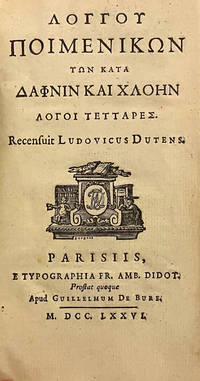
1776102736<p>Paris typographia Fr. Amb. Didot 1776. 12mo. viii 157 pp. Contemporary full red morocco binding spine goldtooled covers with a three-line border inner dentelles gilt all edges gilt.</p><p>Edition in Greek with a preface in Latin of the pastoral romance by Longus or Longos 2nd century AD. The work was first printed Florence in 1598. The present edition was established by Louis Dutens 1730-1812 and is one of two editions in Ancient Greek that were published during the eighteenth century the other Amsterdam 1754. It was published by the François-Ambroise Didot who may be said to have laid the foundation of the subsequent typographic celebrity of the house of Didot. He made great improvements in type-founding and his founts of type were superior to all that had been produced previously in France. <strong>According to Brunet this edition was printed in only 200 copie.s</strong> c.f. Bigmore & Wyman I p. 176; Brunet 3 1155.</p> Didot
1954002315Paris: Manuel Bruker 1954. First Limited Edition. Wraps. Very Good. No. 12 of 20. With a folio of three original ink drawings signed by Vertes a folio of 10 engravings that were rejected for use in the book proper and a suite of all the engravings used in the book. This copy is also inscribed by the artist to the collector/owner which is not something called for in the limitation. 204 pp. Stylistically the Hungarian-American Vertes brought a loose near-abstraction sensibility to what nonetheless remained lucidly representational art. He executed his images with a spare economy while keeping his lines fluid and flowing. At times his output could look slapdash and improvisational; this effect though splendidly captured the emphemeral moment in an ever-changing scene and we can sense easily movement and motion. Vertes was a modernist very much of his time and place. His was an oeuvre that dared to please the average man and thus his work decorate such places as the lobby of the Carlyle Hotel in New York. Vertes was also a costume designer who won an Academy Award for his art direction and costume designs in the movie "Moulin Rouge" released in 1952. Manuel Bruker unknown
1937353London: A. Zwemmer printed in Paris by Philippe Gonin 1937. Limited Edition. Fine. Aristide Maillol 1861-1944. 8vo 7 3/4 x 5 1/2 in. 200 x 132 mm; pp. 6 blank vi 211 colophon 12 blank; Copy 21 of 250 numbered copies on hand-made Maillol paper and SIGNED BY THE ARTIST on the colophon with 52 original woodcuts and 4 woodcut initials printed in bistre; leading and bottom edges deckle. Full vellum with laced-in thongs gilt lettering on spine faint; pencil notations and tipped in label from earlier booksellers on inside front cover edges stained on first 2 and last 2 blanks. <br /> EXTRA SUITE of 45 WOODCUTS in a separate vellum portfolio printed in black. <br /> Fine copy in simple cardboard slipcase.<br /> <br /> Colophon: "Aristide Maillol engraved with his own hand the wood-cuts which illustrate this book The text is that of Thronley's translation of 1657 revised and augmented. Philippe Gonin of Paris undertook the achievement of this work and printed it on his hand-press for A. Zwemmer London. Paris December 7th 1937" followed by MAILLOL'S SIGNATURE IN PENCIL. <br /> <br /> Garvey 174; Garvey Wick 22; BNF32393010. According to Eleanor Garvey "The Artist and the Book" p. 122 this work is "perhaps the most harmonious of Maillol's illustrated books."<br /> An ancient Greek novel written during the Roman Empire the only known work of the 2nd century CE Greek novelist and romance writer Longus translated by George Thornley in 1657 the story of Daphnis and Chloe inspired the French-Catalan sculptor Aristide Maillol 1861-1944 to create an extensive set of sometimes mischievous woodcuts of nymphs and lovers using the same classical lines that typify his sculpture. The format of the book is particularly suited "to the black and white balance of the decorated page" François Chapon. The images the luscious hand-made paper the sensual tone of the engravings all contribute to this piquant book meant to educate and titillate the "young beauties" to whom the book is dedicated. The Epistle Dedicatory reads "To Young Beauties". "The ceremonies customes & manners of the ancient Greekes; with delightfull interspersion of their old and sweet Tales: And in short; nothing to vex you unless perchance in your own conscience. A. Zwemmer [printed in Paris by Philippe Gonin] unknown
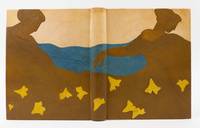
ST16989London: Willow Press 1982. No. 31 OF 55 COPIES SIGNED by artist and binder Susan Allix. 300 x 230 mm. 12 x 9". 4 p.l. 91 1 pp. 1 leaf colophon. Translated by A. M. Burnett. <br/> WHIMSICAL PICTORIAL MOROCCO BY SUSAN ALLIX stamp-signed on rear pastedown the wrap-around design showing Daphnis and Chloe in blind-tooled brown morocco silhouetted against a blue morocco sea and cream morocco sky beneath the lovers a blind-tooled vine with 11 inlaid or onlaid citron morocco leaves blind-stamped lettering to front cover turquoise blue pastedowns and white free endpapers painted with blue fore edge of front free endpaper cut into wave pattern showing a glimpse of the yellow handmade paper front flyleaf edges untrimmed and lightly brushed with blue paint. In the original felt-lined tan linen clamshell box blind-lettered cream and blue morocco label on back. With etched frontispiece and 20 etchings 14 in color and six in sepia by Allix. As new.<br/> <br/> This is a modern take on the most popular romance of ancient Greece from book artist Susan Allix who is responsible for the binding illustrations and the printing through her Willow Press imprint. The third century pastoral romance was newly translated from the Greek by Andrew M. Burnett and illustrated with etchings based on Allix's travels in Greece. The binding in Allix's words "creates an atmosphere of the sea landscape and figures in the story." Born in 1943 and educated at the Royal College of Art Allix began her career as a printmaker before creating her first hand-crafted book in 1973. Mark Dimunation Chief of the Rare Book Division at the Library of Congress wrote of Allix's work: "her books launch you on a visual journey. Each book is a voyage propelled by color texture image impression and material. . . . Because she insists on creating the entire book--from letterpress to illustration to binding--her work has a certain recognizable aesthetic; a malleable signature that responds to the particular character of a piece but is still unquestionably hers. Allix conceives each book visually. 'I am concerned with visual things so I see books as full of colour and form in a pictorial sense as well as through the images created in my mind by the words and through the sculptural qualities a book possesses.' The real narrative of her books is the flow of color and image as they move throughout the piece.". Willow Press unknown
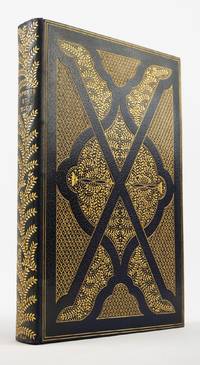
1890ST20732Paris: H. Launette et Cie 1890. No. 196 of 1000 copies and 100 Large Paper Copies with the etchings in multiple states. 255 x 165 mm. 10 x 6 1/2". 3 p.l. viii 190 pp. 3 leaves.Translated into French by Jacques Amyot. <br/> LOVELY DARK BLUE MOROCCO GILT BY CAPTAIN GLADSTONE stamp-signed C. E. G. on front dentelle covers divided into multiple compartments that at center a lobed mandorla all of the compartments densely gilt the inner compartments with swirls of leafy branches on a dotted background the others diapered by diagonal gilt fillets into lozenge-shaped compartments containing a single gilt dot smooth spine covered with leafy branches gilt lettering wide inner dentelles with sprays of leafy branches green silk pastedowns and endleaves top edge gilt imperceptible repair at top of spine. With 12 full-page etchings and 29 in-text illustrations by Champollion after the designs of Raphaël Collin. Ray "French" p. 377. Spine just faintly sunned though difficult to see with all its gilt occasional very minor foxing otherwise a fine copy clean and fresh internally with vast margins in a well-preserved binding bright with gilt.<br/> <br/> A unique combination of decadence and sweet innocence Longus' charming pastoral novel appears here with a series of engravings that were considered to be some of the most attractive of the period and in an impressive binding that emphasizes its pastoral setting and that has an origin clouded with mystery. Ray says that in a survey conducted in 1895 our "Daphnis et Chloé" with the Collin engravings came in fourth in a poll to determine the 10 most successful modern French illustrated books. Our edition uses the popular translation of Jacques Amyot 1513-93 first printed in 1559 and always recognized for its graceful style. Naval Commander Charles Elsden Gladstone 1855-1919 or "Captain Gladstone" as he is commonly called was an English bookbinder of great technical skill working in the late 19th Century but no one seems to know how or by whom he was trained. We know he had many hobbies including microscopy and optical magic lanterns per family accounts suggesting a curious mind and attention to detail both useful in bookbinding. Although testimony from the period indicates that Gladstone personally bound his books there are no known contemporaneous i.e. 1880-1910 exhibitions or auction records of the sale of any of his bindings and no information exists about his being an apprentice. Since the degree of complexity and beauty of his bindings--clearly in evidence here--is extraordinary one wonders if he did in fact personally bind the books. Yes he could have been a self-taught genius binding for his own pleasure but it is not inconceivable that he commissioned someone like Alfred de Sauty as finisher requiring that his own initials always be placed on the dentelles. Regardless of their origin Captain Gladstone bindings are exquisitely crafted filled with lovely all-over gilt-tooled work and characterized by innovative design features. Whoever produced them they are among the best to be found in England around the turn of the century. H. Launette et Cie unknown
175753169<p>Paris Imprimées pour les curieux 1757. HAND COLOURED EDITION 1757. Small 4to approximately 200 x 150 mm 7¾ x 6 inches title in red and black with engraved vignette engraved frontispiece by Benoit Audran after A. Coypel 29 further engraved plates 28 by Audran after Phillippe Duc d'Orléans 1 unsigned plate after the Comte de Caylus including the plate of Les petits pieds at page162 each within decorative border by S. Focke all engravings HAND COLOURED including initials and 16 head- and tailpieces 20 heightened with gilt parallel text. Pages: viii 1-269 1 bound in 19th century black morocco by Masson-Debonnelle his name on first lower dentelle gilt lettering and decoration to spine covers with central gilt-blocked bird quiver of arrows and torch motif corners with rose device triple fillet border gilt decorated dentelles all edges gilt marbled endpapers. Spine professionally relaid small brown stain to top inner margin of title page most plates have pale foxing to margins in varying degrees pale foxing to blank side of plates occasional foxing to text otherwise a very good copy of a hand coloured copy. The earlier translation is by Jacques Amyot 1513-1593. See Brunet Manuel du Libraire Volume 3 page 1158; Bonham's Auction Lot 41 29th July 2020 who sold a hand coloured edition see Google. MORE IMAGES ATTACHED TO THIS LISTING ALL ZOOMABLE FURTHER IMAGES ON REQUEST. POSTAGE AT COST.</p> Paris, Imprimées pour les curieux, 1757. hardcover
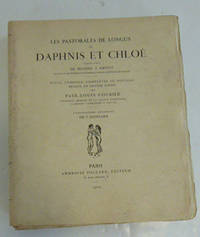
51-6792Paris: Ambroise Vollard 31 octobre 1902. 4to. 24.5 x 30cm. 10. 294 4pp.Original wraps in a contemporary half calf chemise with marbled boards in a matching slipcase repaired. One of 250 numbered copies.Francis Bouvet The Complete Graphic Work no. 75; Luc Monod Manuel. no. 7262; François Chapon Le Peintre et le livre pp. 67-68 -- The Artist & the Book 28 -- Rauch 22; OCLC Number / Unique Identifier:54167315.One of the most famous modern illustrated books – copy on hollande paper. Seduced by his first collaboration with Pierre Bonnard on Parallel by Verlaine 1900 Ambroise Vollard commissioned a second one from him these Pastorales. Where Parallel with its daring layout and the choice of printing the lithographs in pink had been disconcerting the layout of this second book is more classical the illustration being clearly separated from the text. However at the time of its publication it remained "shunned by bibliophiles who for a long time refused to see it as an appropriate illustration technique for luxury books because it was considered too commercial even vulgar" Limited edition. Vollard Petiet et l'estampe de maîtres pp. 44-45. .This judgment has largely been revised by their successors and the work is today considered one of the greatest successes of the illustrated book. Carteret Illustrés IV p. 242: a beautiful work highly sought after and highly rated. One of the greatest stars of modern books. ; « Like Bonnard’s earlier lithographs for Parallèlement and Manet’s for Le Corbeau these subtle plates had little appeal in 1902 for a public that preferred the sharply defined realism of the professional engraver.The book is today considered one of the finest of its periodâ€. The Artist and the Book n°28 ; Mahé II col. 695 ; Mornand Vingt-deux artistes du livre pp. 45-46 “Daphnis et Chloé fut pour Bonnard l’occasion de montrer toute la souplesse de son talent non seulement par la pureté du style bien antique des personnages mais par le caractère des paysages essentiellement grecsâ€. Paris: Ambroise Vollard, 31 octobre 1902. paperback
1937ST11995Paris: Les Frères Gonin 1937. No. CXXV OF 500 COPIES SIGNED BY THE ARTIST this is one of the hors commerce copies with an additional suite of plates. 219 x 149 mm. 8 5/8 x 5 7/8". 2 217 5 pp. One volume and one portfolio. Translated by Jacques Amyot. <br/> MOST ATTRACTIVE BEIGE CRUSHED MOROCCO BY IRMGARD HACCIUS stamp-signed "I. H." in gilt on rear cover front cover with gilt titling arranged in 10 short descending rows surrounded by blind-tooled leaves and grasses rear cover with three-inch column of blind-tooled leaves bearing gilt berries and the binder's initials flat spine with titling in blind top edge gilt. Housed with the portfolio of plates in its original printed paper wrapper in a matching marbled paper folding box with beige morocco spine and edges no doubt done by Haccius as well. WITH 47 WOODCUTS BY ARISTIDE MAILLOL depicting scenes from the text AND WITH AN EXTRA SUITE OF 48 PLATES printed in sanguine the additional plate bearing the 15 woodcut initials used in the text. Front pastedown with armorial bookplate of German bibliophile and music publisher Ludwig Strecker. The Artist and the Book 174. ◆A SPLENDID COPY clean and bright in a luxurious unworn binding.<br/> <br/> This version of Longus' charming Greek pastoral novel of awakening love long retained its popularity and was published frequently often with illustrations. And perhaps the chief virtue of the present edition is the unaffected sometimes mischievous woodcuts of nymphs and lovers by the French-Catalan artist Aristide Maillol 1861-1944 best known for his sculpture. His engravings here have the same classical lines that typify his three-dimensional works. According to "The Artist and the Book" the work is "perhaps the most harmonious of Maillol's illustrated books." The very attractive and intelligent binding is by Mainz master bookbinder Irmgard Haccius 1916-2003 whose work here is entirely in keeping with the illustrator's graceful simplicity. Haccius studied at the art academies in Munich and Berlin in addition to completing advanced training in book binding at the Academy of Fine Arts at Castle Giebenstein Hall. She was one of the first faculty members at the State University Institute for Art and Handicraft in Mainz before joining Johannes Gutenberg University in 1973 as a professor in the Department of Visual Arts. Les Frères Gonin unknown
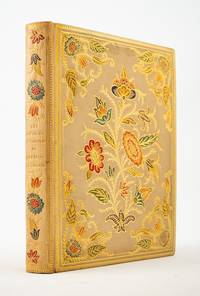
1745ST20826Paris: s.n. 1745. 205 x 155 mm. 8 x 6". 6 p.l. first blank 159 1 xx pp.Translated by Jacques Amyot. <br/> SPLENDID CREAM-COLORED MOROCCO BEAUTIFULLY GILT AND INLAID BY RENÉ KIEFFER stamp-signed on front turn-in verso of front flyleaf with his Rue Seguier ticket covers framed by dogtooth roll and plain rule border a charming spray of flowers at center inlaid in scarlet orange citron indigo turquoise lilac pink and violet morocco tooled with gilt on graceful gilt branches with leaves in three shades of green morocco smaller sprays of inlaid flowers and leaves in similar shades at corners the whole giving the effect of an elegant embroidered sampler smooth spine framed in gilt and with a chain of four inlaid morocco blossoms in brilliant hues extending from the head and foot of spine gilt lettering at center of spine turn-ins with frame of cream morocco inlaid with strips of emerald green morocco tooled with a ribbon and floral chain roll orange morocco squares at corners stamped with gilt flowers gold silk endleaves marbled flyleaves all edges gilt. In a kid-lined blue marbled chemise with navy morocco spine and lips and in a matching suede-lined slipcase. Additional engraved pictorial title by Coypel four engraved headpieces of putti four tailpiece vignettes by Cochin and 33 ENGRAVED PLATES consisting of 28 plates after Philippe d'Orléans by Audran the oft-lacking final plate "Les petits pieds" by the Comte de Caylus and EXTRA-ILLUSTRATED with four engraved headpiece vignettes by Fokke after Eisen mounted on blank leaves. A Large Paper Copy. Cohen-de Ricci 652-53; Ray 2A. Four small very faint water spots to boards one plate somewhat foxed in all other ways A GORGEOUS COPY clean and fresh internally with immense margins and in an unworn binding.<br/> <br/> This exceptionally desirable copy of Longus' unique combination of decadence and sweet innocence is printed on quarto-sized paper enhanced with engravings from some of the greatest Rococo illustrators and offered in an exquisite binding by a modern Parisian master. The charming pastoral novel appears here in the popular translation of Jacques Amyot 1513-93 first printed in 1559 and always recognized for its graceful style. The illustrations were created in 1714 by Philippe duc d'Orléans and Regent of France 1674-1723 engraved by Benoît Audran and published for the first time in 1718. Although Ray indicates that Philippe's work is clearly an amateur's he says that the plates "do tell the story in their halting way and the background landscapes in some of the larger plates have a naïve appeal." The plates were re-engraved for our 1745 printing and the always elegantly graceful tailpiece vignettes by Charles-Nicholas Cochin were created for this edition. Cochin 1715-90 is generally considered on a par with the three Rococo masters Gravelot Eisen and Moreau. Ray notes that works from his early career like the engravings here "are marked not only by the mastery of outline and firmness of composition which never deserted him but also by acute observation and unpretentious humor." Our volume also contains an extra plate by the Comte de Caylus omitted from some copies for its suggestive nature as it shows the feet of the entwined lovers Mon Dieu! protruding from the privacy of a grotto. Additionally a previous owner added four engravings created for the 1754 Longus by the great Charles Eisen 1720-78 Louis XV's Court painter and drawing master to Madame de Pompadour. Ray describes him as "the master of the small design" with "a marvelous talent for pleasing." The beauty of this copy was further--and gloriously--enhanced ca. 1910 when binder René Kieffer created the striking binding with its bouquets of fantastical flowers in a riot of colors and gold. Kieffer 1875-1963 was in the first class of students to graduate from the École Étienne where he concentrated on becoming a doreur learning to tool gold designs in the well-established style. After leaving school he worked for Chambolle-Duru until 1898 at which time he established his own studio. According to Duncan & De Bartha he "became a disciple of Marius Michel moving gradually away from his traditional training towards a more emblematic and modern style." He would become one of the most innovative and progressive binders in Paris in the 20th century earning a well-deserved reputation for producing widely variable bindings that defied typification. s.n. unknown
19371720691937. MAILLOL Aristide. Les Pastorales de Daphnis and Chloe. By Longus. With 52 woodcuts by Aristide Maillol. Two volumes. 8vo. original illustrated wrappers and publisher's vellum-backed slipcases. Paris: Gonin 1937. A unique copy of the most beloved of all Maillol's books. This is the publisher's copy accompanied by 6 autograph letters from Maillol to the publisher discussin varuious aspects of the making of the book. As with all his books Maillol was closely involved in all aspects of production and the result is an extremely pleasing work "perhaps the most harmonious of Maillol's illustrated books" Garvey. This is copy number 1 of 25 hors commerce copies on large paper containing a double suite of the plates one in black and white and one in sanguine. It is also accompanied by a somewhat foxed example of the wedding invitation which Maillol printed for Gonin and a letter from Gonin to the original purchaser of this copy. Signed by Maillol on the colophon. The Artist and the Book 174. hardcover
18931276951893. LAWRENCE T.E. LONGUS. Daphnis and Chloe: A Most Sweet and Pleasant Pastoral Romance for Young Ladies. London: Vale Press 1893. Quarto contemporary full black crushed morocco elaborately gilt-decorated spine and covers raised bands top edge gilt uncut. $15000.An exceptional association copy: the finely printed and beautifully illustrated Vale Press Daphnis and Chloeone of only 210 copies 200 of which were for sale with 36 charming woodcuts in the Italian style by Charles Ricketts and Charles Shannon with ""T.E.L.""likely in T.E. Lawrence's handfaintly penciled in the upper right corner of the front free endpaper and a note from recipient Charles Francis Bell describing the circumstances in which Lawrence presented this copy to him. Beautifully bound in full morocco-gilt by C. & C. McLeish.""There are works which will never cease to be reprinted and which artists will ever love to illustrate according to their own individual fancies"" Jules Claretie Preface. This classical Greek work whose author Longus has not been fully identified has been dated to the 2nd or early 3rd century CE. Described by one scholar as ""an unknown best seller"" Giles Barber Daphnis and Chloe is considered ""the original or earliest survivor"" of the idyllic/pastoral romance Hardin Love in a Green Shade 1. This large-format illustrated edition is one of the Vale Press' most impressive books. It uses the quaint 17th-century translation of Thornley designed to convert the lascivious tale into reading matter for young ladies. One homosexual passage is left in the original Greek. In the Art Nouveau style the illustrations by Ricketts and Shannon effectively capture Longus' combination of decadence and sweet innocence.Born in 1859 binder Charles McLeish was apprenticed to Andrew Grieve in Edinburgh then came to London in 1890 to work for Riviere. When Cobden-Sanderson founded the Doves Bindery in 1893 he hired McLeish as the firm's finisher. McLeish held that estimable position until 1909 when he left to go into partnership with his son Charles who had apprenticed under Roger de Coverly. Although the senior McLeish was no longer in the employ of Cobden-Sanderson all of the bindings that were signed ""Doves Bindery"" between 1909 and 1921 were actually done in the McLeish workshop. The work produced by the McLeishes was beautifully designed and impeccably executed as evidenced in the present volume. With publisher's scarce four-page prospectus bound in at rear. Bookplate of recipient art historian Charles Francis Bell with his handwritten note regarding the circumstances of Lawrence presenting this copy to him tipped to the front free endpaper: ""This book was bound by McLeish for Colonel T.E. Lawrence whose initials in pencil in his own writing are in the top corner of the opposite endpaper. It was given by him to me at All Souls College Oxford on November 16 1920. C.F. Bell."" Bell 1871-1966 was curator of the Department of Fine Art in the Ashmolean Museum Oxford where he met Lawrence when the latter had brought fragments of pottery into the Ashmolean for identification. The two became friends and frequently discussed their shared enthusiasm for Medieval art and architecture. Although the brevity and faintness of the initials on the front free endpaper make it difficult to verify it as being in Lawrence's hand it is consistent with Lawrence's known practice of initialing his own books.Mild offsetting from woodcuts; offsetting from morocco turn-ins partially obscuring penciled initials in upper corner of front free endpaper binding beautiful and fine. An excellent association copy with distinguished provenance. hardcover
JUINBB07<p>Paris de l'Imprimerie de Monsieur 1787.</p><p>Small folio 319 x 240 mm of 1 bl. l. viii pp. 1 l. 175 pp. 29 numbered plates out of text in color protected by silky papers. Red morocco gilt fillet and garland around the covers flat spine finely decorated lettering piece in green morocco inner gilt roll-stamp gilt edges. Case. <i>Contemporary binding.</i></p><p><b>Very beautiful edition of the most famous French illustrated book of the 18th century printed on the Comte de Provence's private press Louis XVI's brother and future Louis XVIII illustrated with 29 line duplicates</b><b> of the original figures of the Regent engraved by martini.</b></p><p><b>One of the very rare deluxe copies containing the 29 gouaches printed on vellum.</b></p><p>The paintings are of an exceptional freshness.</p><p><i>"Publisher Lamy had suites of these engravings printed on vellum gouached and inserted them in deluxe copies."</i> Cohen 655.</p><p>Monsieur's press was directed by Pierre-François Didot called "Didot jeune" since 1779.</p><p>In this Greek novel by Longus end of the 2nd century AD the author tells the story of the simple and naive love of Daphnis and Chloe two poor abandoned children.</p><p>The peculiarity of Longus' work in comparison with the other works of the same kind is to have left the ups and downs in the background and to have given full relief to the sentimental adventures of the protagonists.</p><p>Daphnis and Chloe have discovered in a slow progression their sexuality and the novel ends precisely on the accomplishment of the carnal act. The novel is celebrating Eros obviously but also Pan and the Nymphs.</p><p><b>This book translated in all languages was made fashionable again in France thanks to the regent philippe d'orleans </b>and appeared in several beautiful illustrated editions throughout the 18th century.</p><p>This edition offers a new translation by <i>de Bure Saint-Fauxbon</i>.<br /></p><p><b>Superb copy of which all the engravings have been painted in gouache at the time and enhanced with a painted salmon and black double frame preserved in its contemporary morocco binding.</b></p><p><b>This precious copy belonged to Napoleon III</b><b> </b>as evidenced by his ex-libris affixed to the contreplat of the binding.</p><p>Charles-Louis-Napoléon Bonaparte third and last son of Louis King of Holland and Hortense-Eugénie de Beauharnais and nephew of Napoleon I was born in Paris at the Château des Tuileries on April 20 1808 and became on July 22 1832 on the death of the Duke of Reichstadt the direct representative of the Napoleonic dynasty; first settled in Switzerland where he was appointed Captain of artillery in Bern in 1824 he tried in 1836 in Strasbourg to overthrow Louis-Philippe in a military movement; arrested and sent to the United States he made in August 1840 in Boulogne a second failed attempt which resulted in his perpetual imprisonment but he managed to escape from the Fort of Ham on May 26 1846 and reached Belgium; back in France during the 1848 Revolution he was elected Deputy in June 1848 then President of the Republic on December 10 of the same year. His coup of December 2 1851 against the Legislative Assembly gave him the presidency for ten years; finally proclaimed Emperor following a plebiscite of November 21-22 1852 on December 1 1852 Napoleon III married on January 29 1853 Marie-Eugénie de Gusman Countess of Téba second daughter of the Count of Montijo. Under his reign France enjoyed great industrial and commercial prosperity due in part to a number of public utility measures taken by the government while outside a series of wars including the end of the conquest of Algeria gave us Savoy County of Nice and Cochinchina. Following the defeat of Sedan where the Emperor had been taken prisoner the Republic was proclaimed in Paris on September 4. Napoleon III died in exile in Chislehurst England on January 9 1873. Olivier Pl. 2659 15.</p><p><u>FRENCH</u><br /></p><p>Paris de l'Imprimerie de Monsieur 1787.</p><p>Petit in-folio de 1 f. bl. viii pp. 1 f. 175 pp. 29 planches hors-texte en couleurs numérotés protégées par des serpentes. Maroquin rouge filet et guirlande dorés encadrant les plats dos lisse finement orné pièce de titre de maroquin vert coupes décorées roulette intérieure dorée tranches dorées. Etui. <i>Reliure de l'époque. </i></p><p>319 x 240 mm.</p><p><b>Très belle édition du plus célèbre livre illustré français du XVIIIe siècle imprimée sur la presse privée de Monsieur comte de Provence frère de Louis XVI futur Louis XVIII ornée de 29 copies au trait des figures originales du Régent gravées par Martini.</b></p><p><b>Un des rarissimes exemplaires de luxe contenant les 29 figures gouachées tirées sur vélin.</b></p><p>Les peintures sont d'une extrême fraîcheur.</p><p>" <i>L'éditeur Lamy fit gouacher des suites de ces gravures au trait tirées sur vélin et les inséra dans des exemplaires de luxe</i>. " Cohen 655.</p><p>L'imprimerie de Monsieur était dirigée par Pierre-François Didot dit Didot jeune depuis 1779.</p><p>Dans ce roman grec de Longus fin du IIe siècle après Jésus-Christ l'auteur raconte l'histoire de l'amour simple et naïf de Daphnis et Chloé deux pauvres enfants abandonnés.</p><p>La particularité de l'ouvrage de Longus par comparaison avec les autres ouvrages du même genre c'est d'avoir laissé les péripéties au second plan et d'avoir donné tout le relief aux aventures sentimentales des protagonistes.</p><p>Daphnis et Chloé ont découvert en une lente progression leur sexualité et le roman s'achève précisément sur l'accomplissement de l'acte charnel. Le roman célèbre Éros bien sûr mais aussi Pan et les Nymphes.</p><p><b>Ce livre traduit dans toutes les langues fut remis au goût du jour en France par le Régent Philippe d'Orléans</b> et connut plusieurs belles éditions illustrées tout au long du XVIIIe siècle.</p><p>La présente édition offre une traduction nouvelle par <i>de Bure Saint-Fauxbin</i>.</p><p><b>Superbe exemplaire dont l'ensemble des gravures ont été gouachées à l'époque et rehaussées d'un double cadre peint en saumon et noir conservé dans sa première reliure en maroquin de l'époque.</b></p><p><b>Ce précieux exemplaire a appartenu à Napoléon III</b> comme en atteste son ex libris apposé au contreplat de la reliure.</p><p>Charles-Louis-Napoléon Bonaparte troisième et dernier fils de Louis roi de Hollande et Hortense-Eugénie de Beauharnais et neveu de Napoléon Ier naquit à Paris au château des Tuileries le 20 avril 1808 et devint le 22 juillet 1832 à la mort du duc de Reichstadt le représentant direct de la dynastie napoléonienne ; d'abord fixé en Suisse où il fut nommé capitaine d'artillerie à Berne en 1824 il essaya en 1836 à Strasbourg de renverser Louis-Philippe dans un mouvement militaire ; arrêté et envoyé aux Etats-Unis il fit en août 1840 à Boulogne une seconde tentative qui échoua et qui lui valut l'emprisonnement perpétuel mais il réussit à s'enfuir du fort de Ham le 26 mai 1846 et à gagner la Belgique ; de retour en France lors de la révolution de 1848 il fut élu député en juin 1848 puis président de la république le 10 décembre de la même année. Le coup d'Etat du 2 décembre 1851 qu'il fit contre l'Assemblée législative lui donna la présidence pour dix ans ; enfin proclamé empereur à la suite d'un plébiscite des 21-22 novembre 1852 le 1er décembre 1852 Napoléon III épousa le 29 janvier 1853 Marie-Eugénie de Gusman comtesse de Téba seconde fille du comte de Montijo. Sous son règne la France jouit d'une grande prospérité industrielle et commerciale due en partie à nombre de mesures d'utilité publique prises par le gouvernement tandis qu'à l'extérieur une suite de guerres dont la fin de la conquête de l'Algérie nous donnait la Savoie le comté de Nice et la Cochinchine. A la suite de la défaite de Sedan où l'empereur avait été fait prisonnier la république fut proclamée à Paris le 4 septembre. Napoléon III mourut en exil à Chislehurst en Angleterre le 9 janvier 1873.</p><p>Olivier Pl. 2659 15.</p> hardcover