78 résultats
180046402614Paris, Imprimerie de P. Didot l’aîné, an VIII, 1800 ; in-4, plein maroquin vert à longs grains, large encadrement de fil. en pointillé, guirlandes et motifs dorés à l’antique (grecques, amphores et thyrses), dos orné de filets et grands fleurons dorés, dentelle intérieure dorée, non rogné, tranches dorées sur témoin. (Loutrel) VIII pp., 200pp. - 9 planches hors-texte.PREMIER TIRAGE. Un des plus beaux livres illustrés néo-classique. Superbe typographie de Didot l’aîné.9 tableaux de genre hors-texte dont 3 dessinés par PRUDHON et 6 par GÉRARD, gravés sur cuivre par B. Roger, Godfroy, Marais et Massard. “Les figures de Prudhon sont dignes du grand artiste” dit Cohen 656 - Brunet 1159.Bel exemplaire sur vélin fort, non rogné.
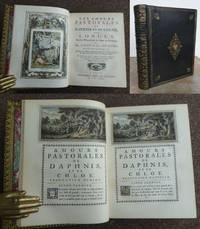
175753169<p>Paris Imprimées pour les curieux 1757. HAND COLOURED EDITION 1757. Small 4to approximately 200 x 150 mm 7¾ x 6 inches title in red and black with engraved vignette engraved frontispiece by Benoit Audran after A. Coypel 29 further engraved plates 28 by Audran after Phillippe Duc d'Orléans 1 unsigned plate after the Comte de Caylus including the plate of Les petits pieds at page162 each within decorative border by S. Focke all engravings HAND COLOURED including initials and 16 head- and tailpieces 20 heightened with gilt parallel text. Pages: viii 1-269 1 bound in 19th century black morocco by Masson-Debonnelle his name on first lower dentelle gilt lettering and decoration to spine covers with central gilt-blocked bird quiver of arrows and torch motif corners with rose device triple fillet border gilt decorated dentelles all edges gilt marbled endpapers. Spine professionally relaid small brown stain to top inner margin of title page most plates have pale foxing to margins in varying degrees pale foxing to blank side of plates occasional foxing to text otherwise a very good copy of a hand coloured copy. The earlier translation is by Jacques Amyot 1513-1593. See Brunet Manuel du Libraire Volume 3 page 1158; Bonham's Auction Lot 41 29th July 2020 who sold a hand coloured edition see Google. MORE IMAGES ATTACHED TO THIS LISTING ALL ZOOMABLE FURTHER IMAGES ON REQUEST. POSTAGE AT COST.</p> Paris, Imprimées pour les curieux, 1757. hardcover
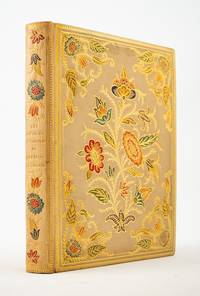
1745ST20826Paris: s.n. 1745. 205 x 155 mm. 8 x 6". 6 p.l. first blank 159 1 xx pp.Translated by Jacques Amyot. <br/> SPLENDID CREAM-COLORED MOROCCO BEAUTIFULLY GILT AND INLAID BY RENÉ KIEFFER stamp-signed on front turn-in verso of front flyleaf with his Rue Seguier ticket covers framed by dogtooth roll and plain rule border a charming spray of flowers at center inlaid in scarlet orange citron indigo turquoise lilac pink and violet morocco tooled with gilt on graceful gilt branches with leaves in three shades of green morocco smaller sprays of inlaid flowers and leaves in similar shades at corners the whole giving the effect of an elegant embroidered sampler smooth spine framed in gilt and with a chain of four inlaid morocco blossoms in brilliant hues extending from the head and foot of spine gilt lettering at center of spine turn-ins with frame of cream morocco inlaid with strips of emerald green morocco tooled with a ribbon and floral chain roll orange morocco squares at corners stamped with gilt flowers gold silk endleaves marbled flyleaves all edges gilt. In a kid-lined blue marbled chemise with navy morocco spine and lips and in a matching suede-lined slipcase. Additional engraved pictorial title by Coypel four engraved headpieces of putti four tailpiece vignettes by Cochin and 33 ENGRAVED PLATES consisting of 28 plates after Philippe d'Orléans by Audran the oft-lacking final plate "Les petits pieds" by the Comte de Caylus and EXTRA-ILLUSTRATED with four engraved headpiece vignettes by Fokke after Eisen mounted on blank leaves. A Large Paper Copy. Cohen-de Ricci 652-53; Ray 2A. Four small very faint water spots to boards one plate somewhat foxed in all other ways A GORGEOUS COPY clean and fresh internally with immense margins and in an unworn binding.<br/> <br/> This exceptionally desirable copy of Longus' unique combination of decadence and sweet innocence is printed on quarto-sized paper enhanced with engravings from some of the greatest Rococo illustrators and offered in an exquisite binding by a modern Parisian master. The charming pastoral novel appears here in the popular translation of Jacques Amyot 1513-93 first printed in 1559 and always recognized for its graceful style. The illustrations were created in 1714 by Philippe duc d'Orléans and Regent of France 1674-1723 engraved by Benoît Audran and published for the first time in 1718. Although Ray indicates that Philippe's work is clearly an amateur's he says that the plates "do tell the story in their halting way and the background landscapes in some of the larger plates have a naïve appeal." The plates were re-engraved for our 1745 printing and the always elegantly graceful tailpiece vignettes by Charles-Nicholas Cochin were created for this edition. Cochin 1715-90 is generally considered on a par with the three Rococo masters Gravelot Eisen and Moreau. Ray notes that works from his early career like the engravings here "are marked not only by the mastery of outline and firmness of composition which never deserted him but also by acute observation and unpretentious humor." Our volume also contains an extra plate by the Comte de Caylus omitted from some copies for its suggestive nature as it shows the feet of the entwined lovers Mon Dieu! protruding from the privacy of a grotto. Additionally a previous owner added four engravings created for the 1754 Longus by the great Charles Eisen 1720-78 Louis XV's Court painter and drawing master to Madame de Pompadour. Ray describes him as "the master of the small design" with "a marvelous talent for pleasing." The beauty of this copy was further--and gloriously--enhanced ca. 1910 when binder René Kieffer created the striking binding with its bouquets of fantastical flowers in a riot of colors and gold. Kieffer 1875-1963 was in the first class of students to graduate from the École Étienne where he concentrated on becoming a doreur learning to tool gold designs in the well-established style. After leaving school he worked for Chambolle-Duru until 1898 at which time he established his own studio. According to Duncan & De Bartha he "became a disciple of Marius Michel moving gradually away from his traditional training towards a more emblematic and modern style." He would become one of the most innovative and progressive binders in Paris in the 20th century earning a well-deserved reputation for producing widely variable bindings that defied typification. s.n. unknown