109 résultats
188060600Paris 1880. Fine. Paris s. d. décembre 1880-juillet 1884 11.70 x 9 cm en feuilles Autograph letter-card signed by Guy de Maupassant to Countess Potocka 19 lines in black ink on letterhead ""GM 83 rue Dulong"". Published in Marlo Johnston ""Lettres inédites de Maupassant à la comtesse Potocka"" Histoires littéraires n°40 October-November-December 2009. Maupassant was part of the circle of suitors of Countess Potocka whom she had nicknamed the ""Macchabées"". The author was much in social demand and this created scheduling problems for him: ""Or voici le cas . Legrand m'avait recommandé de ne pas m'engager . à ce dîner en m'annonçant une invitation de sa belle-soeur invitation qui n'est pas venue."" ""Now here is the case . Legrand had recommended that I not commit . to this dinner by announcing an invitation from his sister-in-law an invitation which never came."" He decides to clear up the doubt by going to his friend Georges Legrand's: ""prendre le vent."" ""to test the waters."" A close friend of Maupassant's it was he who introduced him to Countess Potocka. The author would dedicate to him in 1884 the short story Suicide reprinted in the volume Les Soeurs Rondoli and which had previously been published in the magazine Le Gaulois. Maupassant seems more anxious about visiting Potocka whom he had nicknamed ""présidente"" ""president"" and whose ""conscience le préoccupe. Je m'efforcerai de bien la diriger."" ""conscience worries him. I shall endeavor to guide it well."" He refers to the creation of the ""Société religieuse Coopérative sous la dénomination de Société Anonyme Anti-Soporifique pour la Récréation perpétuelle de la comtesse Potocka"" ""Religious Cooperative Society under the name of Anti-Soporific Anonymous Society for the perpetual Recreation of Countess Potocka"" one of the many games that took place during evenings at Countess Potocka's. Before leaving her he reiterates his admiration: ""Je suis aux pieds de ma présidente."" ""I am at the feet of my president."" Provenance: Jean Bonna collection. unknown
188460604s. l. Paris 1884. Fine. s. l. Paris s. d. circa juillet 1884-décembre 1889 7 x 9.10 cm 2 pages sur une carte-lettre Autograph letter-card signed by Guy de Maupassant to Countess Potocka 13 lines in black ink on letterhead « GM 10 rue Montchanin ». Published in Marlo Johnston « Lettres inédites de Maupassant à la comtesse Potocka » Histoires littéraires no. 40 October-November-December 2009. From 1877 onwards Maupassants health underwent continuous decline beginning that year with the contraction of syphilis. In addition he had to contend with hereditary dementia within the family. Subject to violent migraines his sociability sometimes suffered: « Je dois vous prévenir que je suis plus muet et plus ennuyeux que jamais je le sais vous pouvez donc ne pas me le dire. » He nevertheless took care to reassure his correspondent: « Moi je serai ravi de vous voir. Je vais rester fort peu de temps à Paris je ne vous fatiguerai donc pas trop. » Provenance: Jean Bonna collection. unknown
188460657Paris 1884. Fine. Paris s. d. début janvier 1884 10.20 x 13 cm 4 pages sur un feuillet double Signed autograph letter from Guy de Maupassant to the Countess Potocka 67 lines in black ink on a letterhead ""GM 83 rue Dulong"" envelope attached. This long letter begins with a commission that was made to Maupassant: "" I immediately pay for a commission for which I am charged although I seem to find a little irony in it. The Princess Ourosow who has just written to me to ask to see her this evening begs me in postscript to remind her of your memory when I see you. Princess Ourosov was the wife of the Russian ambassador to Paris. With the Countess she was part of that worldly gotha that surrounded authors and artists. The irony he mentions is this: "" As reputed perceptive people asserted that all the thought of a woman's letter is in the postscript . I wanted to fulfill my role immediately 'intermediate. Because of this addition he deduced: "". that the letter of the Princess despite what it contains of amiable for me was addressed to you ."" This amazing letter then addresses a little-known leaning of Maupassant: his taste for fetishes. He informs his correspondent that: "" The hand since she came home seems to me in an extraordinary agitation. This is the famous hand that Maupassant had bought from George Powell. It was through the poet Charles Swinburne whom Maupassant almost saved from drowning that the two men met at Etretat in 1868. Powell and Swinburne shared a house there filled with Powell's collection of curiosities. The hand in question was mummified and it inspired Maupassant twice. A first in 1875 with La Main de l'écorché then in 1885 with La Main . This nervousness of the lucky charm makes Maupassant wonder: "" Perhaps you were wrong not to keep it as a fetish He adds: ""But I have other singular fetishes. Do you want one Indeed he possesses a collection: "" I own the shoe of a little Chinese woman who has died of love for a Frenchman. He comments on the potential effects of these objects: "" This talisman brings happiness to the desires of the heart. I still have a large copper cross very ugly which worked miracles in the village where I found it. But these talismans do not all work as they should: "" Since she is at home she does not. Maybe it's the environment that's bothering her. But it is not the most astonishing: ""But what I possess most singular are the two ends of a man deceived by his wife and died of shagreen. The guilty wife kept the husband's foot and horn . and made them weld together. I do not know what the effect of this object may be. Despite the seriousness of the affair Maupassant did not abandon his humor: "" Say madam do you want a fetish"" I add that my friends pretend that I bring happiness myself! I place at your feet this last vegetarian who asks for the preference . "" To echo his statement regarding female postscript he adds two to his letter. The first asked the Countess Potocka to recall Maupassant to the memory of Madame Lambert. This lady was the wife of Eugene Lambert a painter known for his cats and who frequented the same milieu as Maupassant and the Countess. The second is much more flavourful: "" Men should not be attached to the postscript of the same importance as to women. "" unknown
188566470s. l. 1885. Fine. s. l. s. d. juillet-août 1885 9.60 x 15.50 cm une feuille Autograph manuscript by Guy de Maupassant to Countess Potocka 36 lines in ink on one page. Horizontal fold at center. Published in Philippe Dahhan ""Guy de Maupassant et les femmes : essai"" Bertout 1996. Unusual manuscript by Maupassant giving a false rabies vaccine formula he calls ""Élixir Pasteur"" made with namely ""seven tears of a rejected academic candidate"" ""five drops of journalist's drool"" and ""one centimeter of novelist's pride"". This amusing prescription is addressed to Countess Potocka a wealthy aristocratic socialite and intellectual whose beauty and fickle personality greatly inspired feminine Maupassant characters: Christiane Andermatt in Mont-Oriol and Michèle de Burne in Notre cur Our Heart. Maupassant writes to Emmanuela Pignatelli di Cergharia wife of the extremely rich Polish count Nicolas Potocki who allowed her a great deal of freedom. Her Parisian salon in the avenue Friedland was from 1882 onwards the exclusive meeting place for an elite composed of writers socialites and literary types. It hosted each Friday a council of suitors ""dying of love"" ironically nicknamed the ""Maccabees"" in reference to the seven martyred brothers of the Bible. Visitors included Guerlain who made a perfume for her called Shore's caprice and composer Camille Saint-Saëns who wrote a mazurka for her artist Léon Bonnart who painted her portrait as well as young Marcel Proust who wrote a Figaro column about her renowned gathering. She remained Maupassant's greatest conquest and muse whom he courted until the end of his life. The author gives the Countess an unlikely recipe for Elixir Pasteur inspired by Louis Pasteur's rabies experiments using rabbit marrow. The undated autograph manuscript was probably written in July-August 1885 when Pasteur successfully administered his rabies vaccine to nine-year-old Joseph Meister. Maupassant deploys his talents for farce and parody twisting medical jargon to create a fake vaccine: ""So this last animal receives the rabies virus at its seventh potency and instantly goes into a rage. You then remove its left eye and extract the visual fluid with a morphine syringe. You put this fluid in a small granite jar with five drops of journalist's slime"". Diagnosed with syphilis some ten years earlier Maupassant was in fact particularly familiar with remedies and potions. He was a frequent visitor to spa towns and consulted numerous doctors before his internment at Doctor Blanche's clinic where he died of general paralysis on July 6 1893. This humorous note to Countess Potocka is one of his countless seduction attempts. He remained an eternally thwarted lover despite having written numerous manuscripts for her composed poems written on fans and visited her almost daily during his stays in Paris. Their correspondence went on for many years with Maupassant going so far as to create the ""Société Anonyme Anti-Soporifique pour la Récréation perpétuelle de la Comtesse Potocka"" with the sole aim of entertaining the Countess and escaping her indifference: ""Realizing that my efforts are often fruitless in the face of your deliberate indifference I've tried to find a way to overcome your boredom on every occasion"" Letter August 1885 The Morgan Library New York. Maupassant ends his note with an amusing remark proving the effectiveness of his remedy against rabies: ""It is by this method that all accidents were avoided during the last Congress"" in reference to the Berlin Conference of 18841885 also known as the Congo Conference where the colonial partitioning of Africa was decided. Provenance: Jean Bonna collection. unknown
188960645Triel Triel-sur-Seine 1889. Fine. Triel Triel-sur-Seine s. d. 8 juillet 1889 9.90 x 15.20 cm 3 pages sur un feuillet rempliée Autograph letter signed by Guy de Maupassant to Countess Potocka 38 lines in black ink on a double sheet. Published in Marlo Johnston ""Lettres inédites de Maupassant à la comtesse Potocka"" Histoires littéraires no. 40 October-November-December 2009. Darker than usual Maupassant seems troubled by some incident he does not mention but for which he apologizes to the Countess: ""Je vous demande encore pardon ce qui du reste n'atténue pas mon remords ; et je vous assure qu'il est cuisant car j'ai cette arrière-pensée que cous m'en voudrez un peu pendant longtemps."" ""I ask your pardon once again which moreover does not diminish my remorse; and I assure you that it is stinging for I have this nagging thought that you will hold it against me for a long time."" Maupassant had earned a reputation as a prankster as well as a man of very free speech; he had no doubt crossed a line in word or deed. A few years earlier he had distinguished himself with the famous doll prank. Countess Potocka had given Maupassant rag dolls representing the guests at a dinner she was hosting at her home. As a joke he stuffed the bellies of said dolls and sent them back to the Countess the next day thus claiming to have impregnated them overnight. The prank became known and provoked many outraged reactions but the Countess had eventually assured him of her forgiveness. Whatever the unfortunate event may have been the letters seem to have crossed in the mail: ""Votre lettre m'a été renvoyée à Triel car le facteur ne me savait pas à Paris."" ""Your letter was forwarded to me at Triel because the postman did not know I was in Paris."" Thinking he would again face reproaches he admits to having: "". été en la lisant pénétré de confusion."" ""been upon reading it filled with confusion."" Anxious to please the Countess he expresses his concern: ""Pourquoi suis-je ainsi nerveux par moments comme une femme sans motifs réels et sans avoir ressenti vraiment aucun froissement. Je n'en sais rien. Je ne peux que le constater."" ""Why am I thus nervous at times like a woman without real motives and without having truly felt any offense. I know nothing of it. I can only observe it."" Whether they were the early signs of the madness in which he would end his days or the consequences of his feelings for the Countess whom he feared to anger these fits of nervousness would never cease for the rest of the author's life. To ensure the Countess's visit to Triel Maupassant asks for confirmation: ""Je compte sur vous demain n'est-ce pas."" ""I count on you tomorrow do I not."" To this end he advises her to take the train: ""Si vous venez par le chemin de fer comme vous y paraissez décidée j'irai vous attendre à Meulan . Si vous veniez par le bateau de Georges je vous prie de vouloir bien m'en informer par une dépêche."" ""If you come by railway as you seem decided to do I will go wait for you at Meulan. If you were to come by Georges's boat I beg you to kindly inform me by telegram."" The Georges in question is Georges Legrand journalist one of the Countess's ""Macchabées"" whom she introduced to Maupassant and according to painter Jacques-Émile Blanche the only one who enjoyed her favors. Provenance: Jean Bonna collection. unknown
188060635Paris 1880. Fine. Paris s. d. 16 janvier 1884 10.10 x 13 cm 2 pages sur un feuillet rempliée Signed autograph letter of Guy de Maupassant to Countess Potocka 26 lines in black ink on a sheet of laid paper headed ""GM 83 Dulong Street"". Maupassant evokes the episode that marks his entry into familiarity with the countess: the famous story of dolls. Following a lost bet the Countess Potocka sent Maupassant rag dolls representing the ladies invited to a future dinner. By play Maupassant took six of them and stuffed them with the belly of cloth before autograph dedication of the author them back to the countess. In a word that accompanied the mail Maupassant boasted of having them all engrossed in one night. To get out of an evening that he would prefer to spend with the countess he had to "". make diplomacy employ the ruses and machinations of the most skilful. In spite of everything he will only be able to: "". save around eleven o'clock or eleven thirty. In order to know the guests who will be at the party he asks Potocka: "" I'll have to give six dolls back to me "". A little joke that reflects their level of intimacy. He regrets to have committed for this evening which prevents him from going to the countess's house: "" Do you see where I am The evening for which I had engaged should not begin to be pleasant until midnight all guests left. At last he proposes to: "". scream like the brother-in-law of your friend:"" To me camphor and water lily ""! Both substances were used as anaphrodisiac or to calm nervousness. Despite his lack of desire he will have to go to this dinner but he plans to offer: "". to God and to you this sacrifice which will seem delicious to me. I will come with feelings of contrition and sacred exaltation. To conclude the most humorous of Maupassant's letters to Countess Potocka the author signs: "" Maupassant free priest ."" hardcover
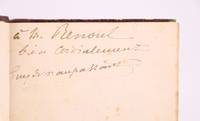
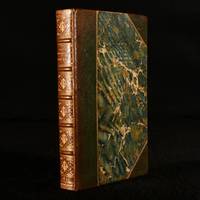
188592059Paris: Victor Havard 1885. Fine. Victor Havard Paris 1885 11.5 x 18.2 cm Relié First edition on ordinary paper.Contemporary half burgundy sheep smooth spine sunned and decorated with double gilt fillets marbled paper boards a few scratches to the lower board marbled endpapers and pastedowns a few small nicks to the edges contemporary binding.Scattered foxing.Presentation inscription signed by Guy de Maupassant « à Monsieur Amaury Renoul » manager of the Librairie Nouvelle established at 15 boulevard des Italiens. The bookshop's back room served as a literary salon frequented by many of the leading artistic and intellectual figures of the French capital. Amaury Renoul 1837-1898 was one of the most prominent men of letters in late nineteenth-century Paris. He was notably acquainted with Flaubert. Maupassant presented at least three books to him between 1884 and 1886. Victor Havard hardcover
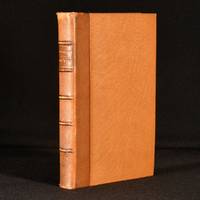
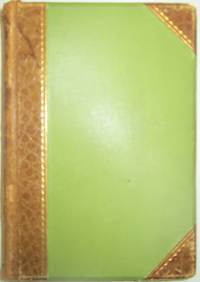
1895860P32Paris: Paul Ollendorff 1895. Leather. Very Good. 7" by 4.5". None. An early edition of the first novel written by Guy de Maupassant a popular work praised by Leo Tolstoy. In the original French.The fifteenth edition.Bound by J. P. Gray & Son.'Une Vie' normally translated as 'The Humble Truth' was the first novel written by Guy de Maupassant. It's a lauded novel with Leo Tolstoy calling it the best French novel since 'Les Miserables'.Maupassant serialised this novel in 'Gil Blas'. In a quarter morocco binding with cloth to the boards. Externally smart. Light rubbing to the leather and extremities. Spine is a little faded. A few light marks to the spine. Spots to the endpapers. Internally firmly bound. Pages are age-toned with the occasional spot. Very Good Paul Ollendorff hardcover
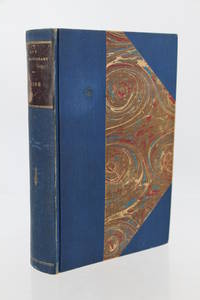
188585486Paris: Marpon & Flammarion 1885. Fine. Marpon & Flammarion Paris s. d. 1885 12 x 19 cm relié First edition printed on ordinary paper. Bradel binding in blue half-cloth smooth spine decorated with a gilt plant motif double gilt fillet at foot black shagreen title-label with some scuffing marbled paper boards covers and spine preserved slightly later binding signed Carayon. Small stains on boards some foxing. Illustrated cover frontispiece and text illustrations by Paul-Eugène Mesplès. Marpon & Flammarion hardcover
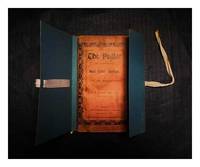
1890412818London : Mathieson & Co. 1890. First UK Edition. Softcover. Very good copy in the original stiff-card wrappers with a clamshell stiff-card protective skin. Edges somewhat nicked and dust-toned as with age. Remains quite well-preserved overall; internally strong and clean. Physical description; 188 p. ; 17 cm. Notes; Date is suggested. Translation from the French of Le Colporteur. Contents; The pedlar -- The avenger -- All over -- Letter found on a drowned man -- Mother and son -- The spasm -- A duel -- The love of long ago -- An uncomfortable bed -- A warning note -- The horrible -- A new year's gift -- Beside a dead man -- After -- A queer night in Paris -- The conservatory -- My twenty-five days -- The question of Latin -- The first snowfall -- The farmer's wife - Boitelle - The tailor's daughter. Subjects; French authors 19th century. Literature France 19th century. French fiction. Short stories. London : Mathieson & Co. paperback
1891612331London: James R. Osgood McIlvaine & Co 1891. Hardcover. Very Good. First British edition Introduction by Henry James. Octavo. 226 1pp. Green cloth gilt. Contemporary owner name Charlotte M/ Martin small stain on front board and spine very good. Scarce. James R. Osgood, McIlvaine & Co hardcover
188991601New York: Harper & Brothers 1889. Hardcover. Near fine. Translation by Jonathan Sturges. Introduction Henry James. NY: Harper & Brothers c1899. 226pp. publisher's list of titles by William Dean Howells and Constance Woolson. sm. 8vo. dark blue cloth stamped in silver and gold. a few small bubbles in the binding on back cover minimal rubbing on ends of spine 2 insignificant spots on front cover; attractive near fine unread hardcover. Harper & Brothers hardcover
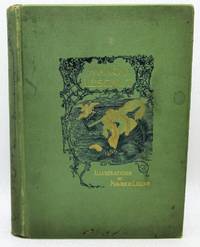
188808410Gebbie & Co 1888-01-01. Hardcover. Good. Green cloth beveled-edge boards on this over-sized volume 9.5x13 are soiled corners are rubbed gold and darker green decoration of mermaid and man being shot with cupid's arrow remains vivid. Not sure why there is a mermaid on the cover. Cloth hinge has held the binding together admirably over these past 130 years some fingerprints and smears. Twelve steel engravings. All orders packed with care most dust jackets protected by Brodart sleeve independent bookseller since 2011 Gebbie & Co hardcover
1899825J22Paris: Paul Ollendorff 1899. Fine Binding. Very Good Indeed. 7.5" by 5". Not Stated. A handsomely bound copy of Guy de Maupassant's 'Sur l'Eau' a travel diary inspired by the author's real life travels on the Cote d'Azur. A compelling work by Guy de Maupassant inspired by his real-life travels in the Mediterranean. This work is a quasi-memoir of the author's nine-day cruise on the Cote d'Azur. An new edition of this work originally published in 1886. Guy de Maupassant was a nineteenth-century French author known particularly for his short stories and creating a format for short stories that is still in use today. His works are excellent examples of Naturalist prose known for its simple and efficient style that often depict human lives destinies and social interactions.Handsomely bound in half morocco with marbled boards. Containing a previous owner's small ink inscription to the front free-endpaper dated 1905. Handsomely bound in half morocco with marbled boards. Externally very smart with just light shelf wear and light fading to the spine. Containing a previous owner's small ink inscription to the front free-endpaper. Internally front hinge is strained at the half title page. A few spots to the endpapers and to the odd page as well as some age-toning to the pages. Very Good Indeed Paul Ollendorff unknown
1899SKU1154935Charles Scribner's Sons 1899-01-01. Hardcover. Good. HARDBACK - GOOD Condition - 1899. Boards have minor wear.Portrait page at beginning of book is loose rest of the book intact. Book pages in good readingse Charles Scribner's Sons hardcover
1899feb12951Librariei H. Steinberg 1899. Used. 1899; Romanian Edition of Razbunarea; For more details please contact me Librariei H. Steinberg unknown
1889EAST 209Lippincott 1889. Book. Very Good. Hardcover. First Edition. A VERY GOOD FIRST IN CLOTH. Total of 36 engravings of which M.A. Lynch did 18 b&w full-page illustrations and M.E. Duez did the head & tail-pieces illustrations with tissue guard;. Lippincott Hardcover
188947Philadelphia: Lippincott 1889. Soft cover. Good. E. Duez & A. Lynch. A beautifully illustrated edition a lg. softcover 4to of 170 pp. with 36 engraved plates. Good plus; the covers are soiled and the text and plates are foxed. The worst foxing is generally on the onionskin interleaves for the plates. English text trans. by Albert Smith. <br/> <br/> Lippincott paperback
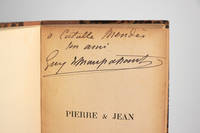
188875542Paris: Paul Ollendorff 1888. Fine. Personal copy of Catulle Mendès Paul Ollendorff Paris 1888 12 x 18.50 cm relié First edition. Half beige cloth Bradel binding flat spine date at foot black shagreen title-piece skillfully restored marbled paper boards contemporary binding. Inscribed by Guy de Maupassant to his friend the writer Catulle Mendès. A fine copy attractively bound. Provenance: from the library of Arthur Christian with his bookplates on the front pastedown. Paul Ollendorff hardcover
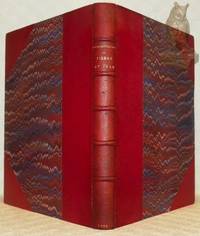
188845137Paris: Paul Ollendorff 1888. Fine. Paul Ollendorff Paris 1888 12.50 x 19.50 cm relié First edition one of 100 numbered copies on Hollande paper the only large paper copies after 5 on Japan paper Half black morocco Bradel binding by Alfred Farez active from 1909 to 1930 gilt date at foot of spine marbled pastedowns and endpapers A fine copy in a handsome binding. Paul Ollendorff unknown
188883338Paris: Boussod Valadon et Cie. 1888. 4to pp. 170 b/w plates with tissue guards b/w vignettes loosely inserted b/w ills of the author faint waterstain top edge prelims and initial leaves occasional minor foxing page edges binding weak edges uncut and frayed wraps spine torn along front joint and chipped rear cover dust jacket intact whilst front portion is in pieces and loosely inserted dust jacket soiled and fragile. Considered one of Maupassant's most important works. Text in French. Wraps. Boussod, Valadon et Cie paperback
188995502Philadelphia: J. B. Lippincott 1889. Paperback. Very Good. half-title illustrations. Later red buckram with most of original red cloth from cover and backstrip mounted. 33 cm. Some cover soiling. Modest foxing mostly on tissue guards on pages with illustrations or on leaves adjacent to those tissue guards. Plain dark khaki endpapers probably added when this was rebound. Translated from the French by Albert Smith. Generally considered one of Maupassant's finest works. J. B. Lippincott paperback
1888117585Paris : Boussod Valadon et Cie. 1888. 325x255mm. 36 gravures reliure demi-maroquin rouge ˆ coins avec auteur titre et date dorÂŽs au dos ˆ cinq nerfs. Plat et garde papier marbrÂŽ. Tranche supÂŽrieure dorÂŽe. Belle reliure. TrÂs faibles rousseurs marginales seulement sur les 6/10 premiÂre et derniÂre pages le reste propre aturement bel exemplaire. 2129 Boussod, Valadon et Cie. unknown
188820028Paris: Boussod Valadon et cie Éditeurs 1888. Illustrated edition. Hardcover. Very good overall. Sml. folio 32.5x25 cm. 170pp 1 pp. 18 full page exquisite photogravure plates by Goupil after watercolors by Albert Lynch; as well as small vignette views as chapter headers and tails after watercolors by Ernest Duez. Period half dark green calf and marbled boards with five raised bands and gilt title to spine and gilt device. Upper edge gilt others uncut and trimmed. A little intermittent foxing. Outer hinge cracking but firm spine sunned to brown. A sumptuous edition published the same year as the first regular edition. The illustrations are charming particularly the couple at a brasserie and another of them in the river shrimping. Boussod, Valadon et cie Éditeurs hardcover
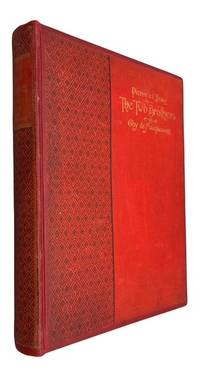
1890013937New York: George Routledge and Sons 1890. Half-Leather. Good. Half leather with green cloth. Color illustrated half title. 339 pp. Black and white illustrations Ernest Duez and Albert Lynch. A novel of the psycho-realist genre exploring the psychological impact of the discovery of a love affair by the mother of two grown sons. GOOD condition. Heavy scuffing to the leather along the spine hinges and corners. Minor uneven fading and scuffing to the cloth. Light soiling and a few tiny stains. Previous owner's circular private library stamp on the inside cover. Text block rather shaken and weak but intact. George Routledge and Sons unknown