2 734 résultats
200134418München : Cormoran-Verl., 2001. 176 S. zahlr. Ill. + NUR 3 von 4 Typen-Tafeln! 4°. 6. Aufl. Geb. in ill. OPpbd.
201140200Frankfurt, M. : Fischer-Taschenbuch-Verl. 2011. 259 S. : Ill. ; 19 cm Top Zustand, kart., Taschenbuch, Exemplar in sehr gutem Erhaltungszustand
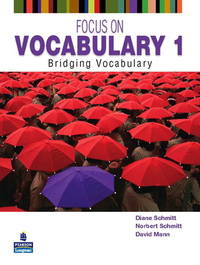
2011SKU0598304Pearson Education ESL 2011-01-05. paperback. Good. 8x0x10. Textbook May Have Highlights Notes and/or Underlining BOOK ONLY-NO ACCESS CODE NO CD Ships with Tracking Pearson Education ESL paperback
2011Q-0131376195Pearson Education ESL 2011-01-05. Paperback. New. New. In shrink wrap. Looks like an interesting title! Pearson Education ESL paperback
2014BN121875Frankfurt Brentano-Gesellschaft 2014. 2014. Gedicht und Gesellschaft 2014. Am Kamin - Der Weg . Frankfurter Bibliothek. Erste Abteiling. Jahrbuch für das neue Gedicht 32. <br/><br/>Gedicht und Gesellschaft 2014. Am Kamin - Der Weg . Frankfurter Bibliothek. Erste Abteiling. Jahrbuch für das neue Gedicht 32. Schmidt-Macon Hrg. Klaus und Susanne Mann Hrg. Frankfurt, Brentano-Gesellschaft unknown
201444641Frankfurt / M.: Brentano Gesellschaft 2014. Original cloth hardcover. 1044 pp.; 21.5x16 cm. Text in German / Deutsch. As good as new see picture. Price when new is 128 euro Brentano Gesellschaft hardcover
201189684(Wiesbaden, Harrassowitz, 2011). 127 S. Mit farb. Abb. (= Wolfenbütteler Hefte, H. 30). 24 cm. Farb. illustr. OKlappenbrosch.
201042216Hamburg: Hoffmann und Campe, 2010. 204 S. Ill. 8°. 1. Aufl. Bibl.- Einbd.
2002231530München : Beck, 2002. 350 S. 21 cm. Pp., gebundene Ausgabe, SU.
201329152[Köln] : Random House Audio 2013. 4 CDs (ca. 268 Min.) ; 12 cm, in Behältnis 13 x 15 x 3 cm + Booklet ([4] S.) Hörkassette mit 4 CD, Exemplar in gutem Erhaltungszustand
200143972Reinbek bei Hamburg: Rowohlt-Taschenbuch-Verl., 2001. 159 S. 8°. OKt. (Tb). (Rororo ; 61129 : Sachbuch)
200683170(Frankfurt a. M.), Suhrkamp, (2006). 479 S. Mit 1 farb. Frontispiz u. mehreren s/w. Abb. im Text. Gr.-8vo. 23,5 cm. OKart.
200783171(Frankfurt a. M.), Suhrkamp, (2007). 472 S. Mit 1 farb. Frontispiz u. mehreren s/w. Abb. im Text. Gr.-8vo. 23,5 cm. OKart.
200930627München : Blessing, 2009. 239 S. graph. Darst. 8°. 1. Aufl. OPpbd. mit SU.
2001286540München : Thomas-Mann-Förderkreis, 2001. 48 Seiten : Noten ; 25 cm Originalbroschur.
201112062Göttingen : Wallstein-Verlag, c 2011. 99 S. mit wenigen schwarzweissen Abb. 8° (21x13cm), Hardcover/Pappeinband im OSchutzU.
201139126Wallstein, Göttingen, 2011. 99 Seiten, 8° , 21 x 13 cm, Pappeinband mit Schutzumschlag
2008889ABBerlin, 2008. 8°. 60 S. Roter typographisch gestalteter Original-Karton. (=Pankower Vorträge; Heft 109).
200118527Freiburg i.Br. : Haufe, 2001. 173 S. 8°. 1. Aufl. Orig. engl. Broschur mit CD-ROM. (Erste Hilfe)
2025__3481048394Müller Rudolf 2025. Hardcover. New. 496 pages. German language. 8.43x1.34x11.97 inches. Müller Rudolf hardcover
20015503ABMünchen, Universitas, 2001. 21,5 cm. 127 S. mit Ill. Illustrierter Originalkarton (Softcover). Tadelloses Exemplar.
200134881München : Ullstein, 2001. 329 S. Ill. 8°. 1. Aufl. OKt. (Tb). (Ullstein ; 36315)
200512162BBPan Kunstforum Niederrhein ca. 2005. 8. ca. 60 Seiten, illustr. Pp. Originalverpackt, neuwertiger Zustand
200840748Augsburg : Weltbild-Verl., 2008. 366, [8] S. Ill., Kt. 8°. Taschenbuch-Lizenzausg., Orig.-Ausg. - 2. Aufl. Bibl.- Einbd. (broschiert).
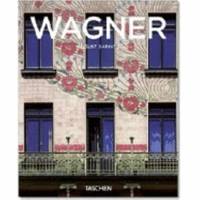
200586181Koln: Taschen 2005. Presumed First Edition First printing. Trade paperback. Very good. The format is approximately 7.25 inches by 9 inches. 96 pages. Map. Illustrations some in color. Bibliography. Covers have front and back flaps. August Sarnitz is a practicing architect and professor of history and theory of architecture at the Akademie der bildenden Künste in Vienna. His many publications include books on Otto Wagner R. M. Schindler Lois Welzenbacher Ernst Lichtblau Adolf Loos and E. A. Plischke. Otto Koloman Wagner 13 July 1841 - 11 April 1918 was an Austrian architect furniture designer and urban planner. In 1862 at the age of 22 he joined the architectural firm of Ludwig von Förster whose studio had designed much of the new architecture along the Ringstrasse. He began to develop his own philosophy of architecture based on the need for buildings to be above all functional. He was a leading member of the Vienna Secession movement of architecture founded in 1897 and the broader Art Nouveau movement. Many of his works are found in his native city of Vienna and illustrate the rapid evolution of architecture during the period. His early works were inspired by classical architecture. By mid-1890s he had already designed several buildings in what became known as the Vienna Secession style. Beginning in 1898 with his designs of Vienna Metro stations his style became floral and Art Nouveau with decoration by Koloman Moser. His later works 1906 until his death in 1918 had geometric forms and minimal ornament clearly expressing their function. They are considered predecessors to modern architecture. The pioneer of Viennese Modernism One of Austria's most influential architects Otto Wagner 1841-1918 played a key role in modernizing urban architecture. Forming an approach described as structural rationalism Wagner pioneered use of materials such as glass steel and especially aluminum. He was associated with the Viennese Succession a group of artists and designers headed by Gustav Kllmt that initiated a departure from the conservative style of the Viennese Kunstlerhaus. Among Wagner's most important buildings are the Vienna Postsparkassenamt Postal Savings building and the Steinhof Church. In the 1890s Wagner became increasingly interested in urban planning. Vienna was growing rapidly; it reached a population of 1590000 residents in 1898. In 1890 the city government decided expand the urban transit system outwards to the new neighborhoods. In April 1894 Wagner was named artistic counselor for the new Stadtbahn and gradually was given responsibility for the design of the bridges viaducts and stations including the elevators signs lighting and decoration. Wagner hired seventy artists and designers for his transit stations including two young designers who later became very prominent in the birth of modern architecture Joseph Maria Olbrich and Josef Hoffmann. The government committee in charge of the project specified that the buildings should be covered in white plaster for uniformity and that the style should be Renaissance also for uniformity. Working within these requirements Wagner designed stations and other structures which combined utility simplicity and elegance. Taschen paperback