17 504 résultats
182848710Paris.: Ch. Motte & Sautelet. 1828. Black morocco-backed marbled boards and endpapers gilt spine original printed wrappers by Devéria bound in. Folio. Frontispiece portrait of Goethe half-title additional lithograph wrapper by Devéria title and 17 lithographs by Delacroix. A large paper copy of the first edition of Delacroix’s masterful interpretation of ‘Faust’ a pioneering meeting of word and image and a monument of nineteenth-century illustration.All of the plates printed on chine and mounted to larger sheets conform to first or first published state with the address of ‘Ch. Motte’. The wrapper is present in two states one of the front cover on white paper and the other including both the front and rear covers and the backstrip on blue paper.One of the monuments of nineteenth-century illustration.'Ouvrage remarquable et typique de l'époque romantique illustration magistrale du grand Delacroix qui est heureusement de plus en plus estimé des bibliophiles de gout.' Carteret. Ch. Motte & Sautelet. hardcover
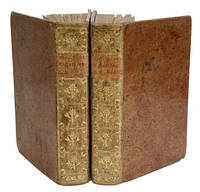
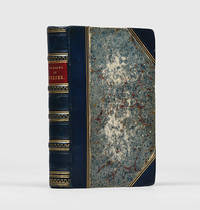
1779167760London: Printed for J. Dodsley 1779. Oh! That I could express these great conceptions with the same energy that they are impressed on my soul! First edition in English of Goethe's sensational novel one of the foundational texts of European Romanticism scarce in commerce: we can trace just two other copies in auction records. The novel was first published in German in 1774 when its author was 24. This English translation by Daniel Malthus is based on one of three early French translations of Goethe's original text. Malthus 1730-1800 was a friend of Rousseau and the father to the economist Thomas. His translation was praised by Goethe in 1783 as having "good feeling good sense and good taste" Lewisohn p. 269 and it was reprinted several times with six further English versions following in the 30 years after its publication. As well as contemporary German philosophy and music the novel was influenced by Goethe's readings of English literature: he responded to and admired Samuel Richardson's epistolary novels and Oliver Goldsmith's The Vicar of Wakefield and he was like Werther a passionate reader of James Macpherson's Ossian. The novel also serves as an important precursor to British Romanticism though Goethe's rich and strange evocations of the relationship between nature and the imagination would be unmatched by anything in English for another 20 years. 2 vols in one octavo 162 x 105 mm. Mid-19th-century blue half calf red morocco label marbled sides spine and covers ruled in gilt pale orange endpapers red speckled edges. Housed in a dark blue quarter morocco solander box by the Chelsea Bindery. Boards lightly rubbed a few pages faintly marked and creased a very good copy. Ludwig Lewisohn Goethe: The Story of a Man 1949; Charles Ryskamp "Boswell and Walter James Goethe and Daniel Malthus" Eighteenth-Century Studies in Honor of Donald F. Hyde 1970 esp. pp. 224-9. hardcover
Eines von nur 250 Exemplaren dieses monumentalen Werkes mit 521 Orig.-Graphiken von Max Slevogt, hier in der seltenen Vorzugsausstattung in rotem Maroquin. Der in Berlin einst von der Kunstkritik gefeierte "König der Illustration" setzt hier mit kongenialen satzspiegelsprengenden Graphiken Goethes Faust II in Szene. Blatt für Blatt der luxuriösen Ausgabe (jedes der 250 riesigen Folianten kostete in der Subskription 1400 Reichsmark ohne den Einband) verbindet eine Orig.-Lithographie Slevogts mit einem längeren oder kürzeren Textabschnitt. Seine Feder umspielt die Textkolumnen mit Faustischen Szenen, Girlanden, Blütenkelchen, Putten und Ornamenten zu einem einzigartigen Bilderteppich. Der vierseitige Verlagsprospekt mit den Umschlägen wurde beigebunden. Tadelloses Exemplar. - Söhn 814,1-527. - Eyssen, S. 146-147 mit Abbildung. - Rümann 25a. - Schauer, Bd. II,84-85 mit Abbildung.
46966Paris.Pelletan.1904.2 volumes grands in-4.Ballade de Goethe et musique de Shubert.Traduction de Catulle Mendès.13 compositions en couleurs de Bellery-Desfontaines.Gravures d'Ernest Florian.Reliures de Marius Michel.Tirage à 214 exemplaires; numéro 1 pour Alphonse Bordes sur Whatman,contenant tous les dessins originaux avec une double suite d'épreuves monochromes et polychrommes sur Japon mince et sur Chine. Le volume de texte est en maroquin bleu foncé.Le 1er plat,orné d'une composition rectangulaire encastrée,mosaiquée à froid en bleu,gris,brun et viel or,représente Le Roi des Aulnes errant dans les bois,d'après Bellery-Desfontaines.Ornements de style gothique.Lettres gothiques.Initiales mosaiquées en maroquin rouge et bleu,sur un fond viel or.Dos muet à 4 nerfs.Le second plat est orné de la mème façon.Large encadrement intérieur orné d'un filet à froid,d'un listel de maroquin gris et de motifs d'angles mosaiqués,bleus.Doublures et gardes en moire grise.Tranches dorées.Couverture illustrée conservée.Etui.Le second volume est identique,avec étui.Reliure janséniste.Et contient 19 dessins et aquarelles originales;études très poussées; suites sur Japon mince et Chine.Provenance: la bibliothèque d'Adolphe Bordes. Magnifique réalisation.
1906295587Boston: Houghton Mifflin 1906. hardcover. fine. Translated into blank verse by Bayard Taylor. Illustrations by Ary Scheffer. Wilheml von Kaulback et. al. hand-colored frontispieces in 2 states in each volume colored and uncolored. 4 volumes 4to magnificently rebound by the Riverside Press in full green crushed morocco mulitple gilt fillet borders: inner dentelles and fully inlaid panels with floral borders and silk moire flyleaves top edges gilt. Boston: Houghton Mifflin 1906. Fine.<br/><br/> Large paper edition. Number 4 of 650 copies.<br/><br/> Houghton Mifflin unknown books
1906295587Boston: Houghton Mifflin 1906. hardcover. fine. Translated into blank verse by Bayard Taylor. Illustrations by Ary Scheffer. Wilheml von Kaulback et. al. hand-colored frontispieces in 2 states in each volume colored and uncolored. 4 volumes 4to magnificently rebound by the Riverside Press in full green crushed morocco mulitple gilt fillet borders: inner dentelles and fully inlaid panels with floral borders and silk moire flyleaves top edges gilt. Boston: Houghton Mifflin 1906. Fine.<br/> <br/> Large paper edition. Number 4 of 650 copies.<br/> <br/> Houghton Mifflin unknown
EXE-738Genève, Graphik Europa Anstalt, 1969. In-folio en feuilles, chemise et étui de l’éditeur illustrés. Édition Originale. Illustrée de 21 gravures originales, dont 11 pointe-sèches à pleine page, toutes avec la signature gauffrée. Tirage à 293 exemplaires, celui-ci le numéro 84 des 50 sur Arches teinté, signé par l’artiste, et comprenant une suite des 11 gravures hors-texte. Référence: Michler et Löpsinger 298 - 318.
352621<p>Schriften. 4 volumes bound in 2 vol. small 8vo 151 x 87mm 256 188 i.e. 288 237 256 pp. engraved vignettes to titles 7 engraved plates. Contemporary speckled calf spines divided into 6 panels decorated with gilt fleurons gilt titling on red paper pieces occasional light spotting joints a little rubbed. Berlin Christian Friedrich Himburg 1775-1779.</p><p>Fine copy of the first complete German edition of Goethe's works first issue volume 1 with the supplement published in 1779 forming volume 4. Like the slightly earlier one printed in Switzerland it appeared without the author's consent or knowledge. The publisher Himburg proud of the aesthetic qualities of his production printed on good paper with fine illustrations sent Goethe some complimentary copies. The author received them with disdain and resentment. He did not reply to Himburg but expressed such feelings in Poetry and Truth where he cites the incident and refers to it as a 'robbery'. Still this edition formed the basis for the later first authorized edition and for Goethe's text of the famous second version of Werther.</p><p>Provenance: several contemporary marginalia in vol. 1 - Ernst Magnus bookplate — Feuerbacher Heide bookplate — Private collection Norway - Restituted to the heir of Ernst Magnus in 2024. The present copy shows it was formerly in the collection of Ernst Magnus 1873-1942. The Magnus family left Hanover in December 1935 first going to Lausanne. While in Switzerland Ernst Magnus had to part with the paintings of his collection and his furniture in an auction sale taking place in Switzerland in May 1941. The family then tried to reach the United States but Ernst Magnus died in Cuba in December 1942. He was able to get his belongings out of Germany and in May 1941 20-24 a sale at the Galerie Fischer in Lucerne took place where some of his property was sold under 'Mobiliar des Herrn M. Lausanne' but no books were included in the sale. Goethe's Schriften appeared on the antiquarian market in Zurich in 2014 the same country where Ernst Magnus had to sell his paintings and furniture; it is quite possible that he also sold books during his time in Switzerland that is to say sometime between December 1935 and May 1941.</p><p>References: Goedeke IV/3 §235 p.1 h1 vol 1-3 and h3 vol. 4; Hagen n°2 and 4.</p> Berlin, Christian Friedrich Himburg, 1775-1779
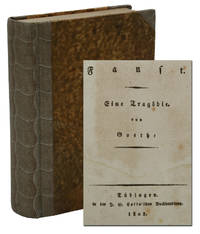
1808140941347Tubingen: Cotta 1808. First Edition. Near Fine. 309 pp. German language. First Edition of the first segment in its complete form though previously appeared in 1790 as a partial printing Faust A Fragment. In an unusual three-quarter early 20th-century art binding with brown marbled paper over metallic patterned cloth. Near Fine. Light working to front cover. Foxing throughout. Browning and light old tidemark to preliminary pages. Loss to lower marine of page 293 with no textual loss. A beautiful copy of what is considered by many to be one of the finest works of German literature. Part II was completed in 1831 and was not published until after Goethe's death in 1832. Cotta unknown books
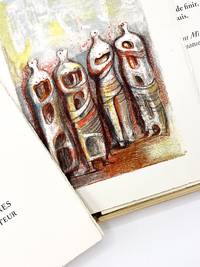
19501696251950. MOORE Henry. Prométhée. By Goethe translated by André Gide. 2 64 6 pp. Illustrated with 16 colour lithographs by Henry Moore including the cover and title lithographs three capital letters three tailpieces and eight full-page lithographs. Folio 318 x 223 mm loose as issued in the original publisher's illustrated wrappers and cardboard folding box. Paris: Henri Jonquières 1950. Prométhée is the first illustrated book by the noted English artist and sculptor Henry Moore and it is regarded as his magnum opus as a book-illustrator. "Although the subject matter was Greek mythology some of Moore's illustrations refer to the great series of drawings that he created based on wartime Londoners huddled in underground shelters during the blitz" Johnson Artists' Books in the Modern Era 1870-2000 p. 208. Not only does it contain the evocative lithographs by Moore printed by Mourlot Frères of Paris but the book is beautifully printed resulting from a commission for a project originating at the Imprimerie Nationale using the Grandjean Romain du Roi type originally cut in 1692. The total edition was 183 copies all on Marais of which this is number 119. An immaculate copy. The Artist and the Book 211. From Manet to Hockney 124. Cramer Henry Moore: the Graphic Work 18-32. Johnson Artists' Books in the Modern Era 1870-2000 No. 129. unknown
190213583Boston: Francis A. Niccolls & Company 1902. First Edition. Hardcover. Edition Magnifique limited to twenty-six lettered copies this being G. Twenty-four volumes. Edited by Nathan Haskell Doyle. Full burgundy morocco sides and spines elaborately decorated in gold with Art Noveau motifs top edges gilt others uncut red and white morocco doublures decorated in gold pearl silk moire endpapers. Frontispieces and plates in three states one colored. Spines uniformly darkened some wear to extremities a few of the hinges a bit tender. Four volumes show small loss to the head of the spine; one has the cover partially detached. In all two very elegant complete sets with matching letters. ; Octavo. Francis A. Niccolls & Company hardcover
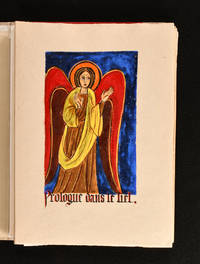
1932681K1Paris: Philippe Gonin 1932. First edition. Cloth. Near Fine. 13" by 9.5". Philippe Gonin. A remarkable and exceptionally scarce handwritten and hand painted work by publisher and artist Philippe Gonin offering a beautifully bright and detailed excerpt from Faust by Goethe. Very scarce. Collated complete with eleven double sheets two blank with calligraphic handwriting half title thirty three gouaches on handmade paper including cover. Initialed by the artist to the final leaf. Disbound as published. Handwritten spine as published. In the original publisher's slipcase. The level of artistry in the work is outstanding with each verse handwritten in neat calligraphy accompanied by an extremely bright and pleasing gouache. The illustrations feature some of the play's most well known characters including Mephistopheles Le Seigneur and Gabriel. The artist Philippe Gonin is also the publisher of the work and initialed the work to the final leaf. Gonin also notably illustrated an edition of Le Prisonnier de Chillon'. Whilst that work was stated as having a print run of thirty five copies further information regarding the print run of this work is unknown. Considering the intricacy of the work as well as the scarcity of other copies there are no copies currently held in institutional libraries we believe the print run to be significantly smaller than this. The work itself is the prologue of Faust by Johann Wolfgang von Goethe. Faust is considered perhaps the greatest ever German-language play and is regarded to be Goethe's magnum opus. The work deals with Heaven piety and souls as the protagonist Faust signs a deal with the devil. The first section discusses themes regarding the soul with the second covering wider social phenomena such as psychology history and politics. Geothe's Faust was published betwen 1808 and 1832 with this particular work published during the German occupation at a time in which many French cultural workers were expressing their interest in the Friends of God movement a central feature of German Mysticism. In the original half cloth binding with hand written title to the spine. In the original publisher's slipcase. Externally in excellent condition with the occasional handling mark to the boards. Slipcase is very smart with slight bumping to the the extremities and the occasional handling mark. Internally disbound as published. Pages are very bright and clean. Pages uncut as called for. Near Fine Philippe Gonin hardcover
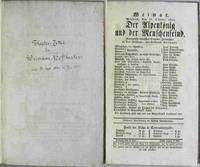
1832951948Weimar 1832-1833. hardcover. Gut. 152 einseitig bedruckte Blätter und ein kleineres Blatt mit Programmänderung zum 07. Mai 1833. Handgefertigter flaschengrüner Pappeinband der Zeit 330 x 214 x 32 mm mit handgeschriebenem Rückenschild. Moderne hellbraune Ganzleinwandkassette 358 x 229 x 45 mm mit goldgeprägtem olivfarbenem Lederrückenschild. Folio. 318 x 201 mm. Einband berieben Ecken etwas bestoßen Rücken ausgeblichen; wenige Seiten papierbedingt minimal fleckig im Ganzen recht gut erhalten. Einhundertzweiundfünfzig Programmzettel des Weimarer Hoftheaters! Der vorliegende Sammelband mit hervorragender Provenienz - aus der Bibliothek des Goethe-Enkels Maximilian Wolfgang von Goethe! - dokumentiert sämtliche Theaterstücke Opern und Konzerte des Weimarer Theaterlebens aus der Zeit kurz nach Goethes Tod 22. März 1832 darunter Stücke von Goethe u.a. "Faust" am 17.11.1832 mit Durand als Faust und La Roche als Mephistopheles Schiller "Wilhelm Tell" "Wallensteins Lager" Lessing "Nathan der Weise" "Minna von Barnhelm" Kleist "Käthchen von Heilbronn" Iffland "Der Spieler" "Die Jäger" Kotzebue "Pagenstreiche" "Der Wirrwarr" "Der Wildfang" "Die beiden Klingsberge" Körner "Die Braut" Holtei "Leonore" von Mozart "Zauberflöte" "Don Juan" "Hochzeit des Figaro" "Cosi van tutte" "Entführung aus dem Serail" Rossini "Wilhelm Tell" Cherubini "Lodoiska" Cimarosa "Die heimliche Heirath" Meyerbeer "Robert der Teufel" von Weber "Der Freischütz" und von Vogel nach E.T.A. Hoffmann "Das Majorat" von Wohlbrück nach Byron "Der Vampyr". Ferner zahlreiche heute fast unbekannte Theaterstücke die sich damals ziemlicher Beliebtheit erfreuten. Maximilian Wolfgang von Goethe Weimar 18.9.1820 - 20.1.1883 Leipzig war der Lieblingsenkel des großen Dichters. Sein Nachlass befindet sich in der Universitätsbibliothek Jena und im Goethe- und Schillerarchiv Weimar. vgl. Kosch 3. Aufl. Bd. 6 p. 534/35. Jeder der Programmzettel mit Angaben zu Stück Autor Komponisten evtl. Erstaufführung Rollenbesetzung Preisen Aufführungszeiten samt Pausen etc. etc. - Contemporary boards. 152 play bills of the Weimarar Hoftheater. From the library of Maximilian Wolfgang von Goethe the grandson of Johann Wolfgang von Goethe with his exlibris. Unique document of 19th-century German theater. In very good condition. - Vorderer fester Vorsatz mit dem gedruckten grauem Papierexlibris 42 x 67 mm des Enkels Johann Wolfgang von Goethes Maximilian Wolfgang von Goethe 1820-1883: "Wolfgang von Goethe" in typographischem Rahmen cf. "Zeitschrift für Bücherfreunde" III. Folge V 1936 pp. 113-114. Aufschlußreiches Zeugnis der Weimarer Theaterlandschaft in den Jahren 1832-33 in dieser Zusammenstellung einzigartig; zusätzlich aus bestmöglichem Vorbesitz. - RFM. Aus der Bibliothek des Goethe-Enkels Maximilian Wolfgang von Goethe. - Weitere Bilder auf Anfrage oder auf unserer Homepage. Wegen Urlaub kann Ihre Bestellung / Anfrage erst nach dem 21.06.2026 bearbeitet werden. - Because of holidays your order / question can be handled only after 06/21/2026. Weimar hardcover
19206570AB1920. Berlin Gurlitt 1920. 46 : 39 cm. 46 Seiten 3 Blatt mit 14 signierten Original-Lithographien und 11 Initialen von Lovis Corinth. Original-Halbpergamentband mit signierter Original-Lithographie von Corinth auf dem Vorderdeckel. Sehr seltenes Belegexemplar des Verlages bezeichnet mit B.E.III. Wohl außerhalb der Auflage der Ausgabe A von 15 bzw. 50 Exemplaren auf handgeschöpftem Zandersbütten aber ohne die beiden zusätzlichen Lithographien der ersten 15 Exemplare. Sämtliche Lithographien auch die Einbandlithographie sowie der Druckvermerk von Corinth signiert. Bei Otto von Holten in Berlin gedruckt. Freie großzügige Illustrationen. - "Corinths Götz-Buch.dürfte als eine der gelungendsten Neuerscheinungen eines mittelalterlichen Werkes frisch belebt und neu empfunden gelten" Schwarz. - Drucke der Gurlitt-Presse Die Neuen Bilderbücher II. Folge. - Sauberes breitrandiges Exemplar; Vorderdeckel minimal angestaubt Bezug des Rückdeckels unmerklich fachmännisch erneuert. - Schwarz L 399 kennt keine Belegexemplare. unknown
1924ST20327Montagnola: Officina Bodoni 1924. ONE OF 12 SPECIALLY BOUND COPIES of a total edition of 224 copies on paper and 6 on vellum. 303 x 215 mm. 12 x 8 1/2". 74 2 pp 2 leaves. <br/> FINE ORIGINAL CITRON MOROCCO BY THE PUBLISHER signed on the rear turn-in covers with double gilt-ruled border and inner panel formed by five closely spaced gilt rules raised bands spine with gilt-ruled compartments and gilt titling turn-ins ruled in gilt top edge gilt other edges untrimmed. In the original felt-lined marbled paper slipcase edged with matching morocco. Red printer's device in colophon. Front pastedown with small brown morocco bookplate featuring a putto carrying a huge bunch of grapes with the initials "K. F." Mardersteig 6. Front flyleaves a little foxed at edges otherwise very fine--clean fresh and bright internally with enormous margins in an unworn binding.<br/> <br/> This a beautiful copy of the sixth book issued by Officina Bodoni Goethe's eyewitness account of the 1788 Roman carnival printed in "the sprightly decorative type" of Cancelleresco which our printer considered "eminently suitable particularly as it seems to have been cut around 1788." An elegant flowing italic font Cancelleresco gives us the impression of a private diary and has the additional advantage of being eminently more readable than most typefaces used for German text. According to Mardersteig's bibliography of Officina Bodoni Goethe had an excellent view of the "colourful and animated goings-on" of Carneval from his apartment window but said of his report: "My guiding principle was to allow myself as little involvement as possible and absorb things as objectively as I could." Probably the most important certainly the longest-lived 20th century Continental private press Officina Bodoni was founded in 1922 by Hans Mardersteig who later changed his first name to Giovanni. Like Sweynheym and Pannartz the first printers in Italy Mardersteig was born in Germany but moved to Italy as an adult and set up his hand press in a small village there. Mardersteig was inspired by Giambattista Bodoni 1740-1813 the Italian royal printer who set up a private press in 1791. Dedicated to creating books of the very highest standard Bodoni perfected his printing technique sought out the finest quality paper and created clear beautiful types that have been envied and copied for many generations. Mardersteig sought to continue this tradition with considerable success. Will Carter has called Mardersteig "probably the finest pressman the world has ever seen or is ever likely to see" and it is difficult to overstate the pleasure derived from the precision of the Officina Bodoni books. The special publisher's morocco binding here makes this an unusually desirable copy since the Officina Bodoni deluxe bindings are not commonly seen in the marketplace. Officina Bodoni unknown
005632La Haye, [Jaques van Karnebeeck, 1781]-1783-1786 et La Haye, Isaac van Cleef, 1803. Quatre volumes petit in-folio (353 X 302 mm) carré veau fauve marbré, plats ornés d'un large encadrement de filets, guirlande, grecque et fers d'angles dorés, dos lisse cloisonné et orné de fers spéciaux (« à tête de Socrate »), pièces de titre et de tomaison maroquin rouge, bordure intérieure ornée d'une torsade dorée, tranches dorées (Mention dorée en queue du dos du tome I : « Relié par Bozérian »). Tome I : (1) f. de titre, X pages, 294 pages, 14 planches h.-t., (2) ff. d'errata et avis au relieur - Tome II : VII-404 pages, (1) f. d'avis au relieur - Tome II : VII-404 pages, 78 planches, (1) f. d'avis au relieur - Tome III : VIII-360 pages, 53 planches, (1) f. d'avis au public - Tome IV : VIII-328 pages, 48 planches.Quelques discrètes et habiles restaurations à la reliure, quelques traces de frottements au dos et petites pertes d'or au plat supérieur du tome I, tache claire en marge de la planche 1 du tome II sans atteinte à la gravure et en marge du feuillet de texte précédent sans atteinte au texte (pages 21/22), rousseurs claires à quelques rares gravures.
1921007617Berlin: Fritz Gurlitt 1921. Limited Edition. First Edition thus. Hardcover. Paper pastedown on boards. Vellum spine. Very Good Plus. No. 135 of 220 copies in limitation. Signed in pencil on title page by Corinth the great German Expressionist artist in his visual actualization of classic Goethe narrative poem. Folio 39 by 29 cm. Unpaginated 29 pages including title and colophon or limitation page. Leaf numbers written in pencil in lower corner of rectos. Leaves are actually folded paper Japanese style -- we are not counting the hidden pages in our page count. Bold Corinth artwork on every page. The verse or text is on versos with elaborate decoration and illustration surrounding the decorative lettering that is a printed rendering of hand-drawn letters. These illustrations float around and under the lettering. On the rectos facing are full page illustrations that are suffused with drama and movement as they hover between the representational and the semi-abstract. Uncommon book -- seven institutional copies located on OCLC First Search three in Germany four in the U.S. No copies found in commerce on the date of this description was written. Light soiling to cover. There are two leaves slightly sticking to one another by the hinge. Fritz Gurlitt hardcover
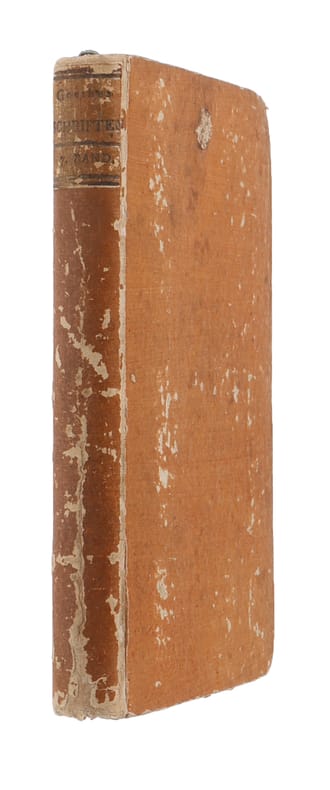
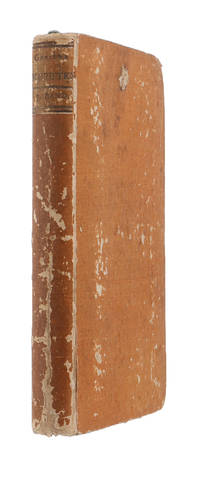
179063278Leipzig, Göschen, 1790. Orange cardboard binding (presumably the original!) with gilt title-labet to top of spine. Corners bumped, and wear along hinges and capitals. Overall a very nice and charming copy, tight, and completely unrestored. Some brownspotting throughout, but overall very nice. With the famous engraved frontispiece depicting Faust in his study, by Lips, after Rembrandt (loose) and the tittle-page stating ""Goethe's Schriften. Siebenter Band."", with the large engraved vignette by Lips, picturing Bätely bandaging Jery's hand (different from the ones in the seven other volumes), and the half-title stating ""Faust. Ein Fragment"" with ""Goethe's W. 7. B."" to the foot (repeated on all quires). Old owner's name to verso of frontispiece, otherwise no markings or annotations of any kind.
179063278Leipzig Göschen 1790. Orange cardboard binding presumably the original! with gilt title-labet to top of spine. Corners bumped and wear along hinges and capitals. Overall a very nice and charming copy tight and completely unrestored. Some brownspotting throughout but overall very nice. With the famous engraved frontispiece depicting Faust in his study by Lips after Rembrandt loose and the tittle-page stating "Goethe's Schriften. Siebenter Band." with the large engraved vignette by Lips picturing Bätely bandaging Jery's hand different from the ones in the seven other volumes and the half-title stating "Faust. Ein Fragment" with "Goethe's W. 7. B." to the foot repeated on all quires. Old owner's name to verso of frontispiece otherwise no markings or annotations of any kind. <br/><br/><em>The scarce first printing in the corrected variant Hagen So of one of the peaks of world literature the main work by the greatest German poet ever and one of the all-times greatest writers of the world Johann Wolfgang von Goethe. "Faust" was first printed as it is here as volume seven of Goethe's Schriften in eight volumes from 1787-1790 and was also published separately likewise under the title "Faust. Ein Fragment". The printing of Faust in the seventh volume of Goethe's works is the original printing after the manuscript of the poet. There are two printings of this volume between which there is traditionally said to be no precedency although So has been corrected which Sm has not. The present copy is Hagen variant So without the misprints see Hagen 11:7 So which can be identified by eg. the lack of the repetition of the three lines in pp. 144-145 which appear in Sm see Hagen p. 12. Few other writers have been as influential as Goethe and his works were an immense source of inspiration to everything from drama and music to science and philosophy. He is generally accepted as one of the most important thinkers within Western culture and his main work Faust is considered one of the most important and influential works of world literature. "If Goethe may justly be called the last representative of the renaissance ideal of the "oumo universale" his "Faust" embodies the sum total of his poetical growth." Printing and the Mind of Man: 298."Faust" is arguably the work for which Goethe is most famous and this is not without reason. The novel emphasizes the strength of the individual and the right to freely investigate aspects of human and divine character. The novel also fights for man's right to determine his own destiny and is thus considered the first great literary work in the spirit of modern individualism. Faust is also considered highly relevant to science and scientific thought as Goethe here offers a holistic and non-analytic approach to these areas. The present volume 7 from 1790 has two vignettes: "Bätely verbindet dem Jery die Hand" H. Lips fec.; and "Faust im Studierzimmer ein am Fenster erscheinendes magisches Zeichen betrachtend" H. Lips sc. nach Rembrandt see Hagen 11:7. On the last page is written "Leipzig gedruckt bey Christian Friedrich Solbrig" see Hagen 11. It also includes the separate texts "Jery und Bätely" pp. 169-224 and "Scherz List und Rache" pp. 225-320. PMM 298 being the 1834 ed. not the real first; Hagen 117 - So. </em> unknown
LCS-18025Précieuse édition française illustrée des Souffrances du jeune Werther. Paris, de l’Imprimerie de P. Didot l’Aîné, 1809. In-8 de vi pp., (1) f., 234 pp. et 3 planches hors-texte. Maroquin rouge, triple filet doré encadrant les plats, dos à nerfs richement orné, double filet or sur les coupes, roulette intérieure dorée, non rogné. Reliure signée R. Wallis binder. 217 x 134 mm.
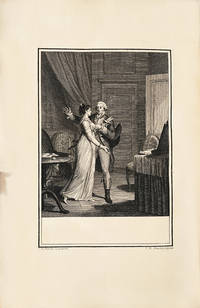
TBF56Paris de l'Imprimerie de P. Didot l'Aîné 1809.<p>8vo 217 x 134 mm of vi pp. 1 l. 234 pp. and 3 plates out of pagination.</p><p>Red morocco triple gilt fillet around the covers spine ribbed and richly decorated inner gilt border untrimmed. <i>Binding by R. Wallis binder.</i></p><p><b>Precious French edition of the </b><i>Sorrows of young Werther</i> <b>in a new translation given by the count de La Bedoyere.</b></p><p>Cohen 442.</p><p><i>Werther</i> the novel whose influence was so great on all European literature was published in Leipzig in 1774; the first French translation is we believe that of George Deyverdun Maestricht J.- E. Dufour 1775 and 1776 2 vols. 12mo then came Seckendorf's Erlangen 1776 8vo closely followed by Aubry's which according to Quérard was largely the work of the Count of Schmettau Mannheim and Paris Pissot 1777 8vo. Other translations were subsequently published by L.- C. de Salse Basle J. Decker 1800 2 vols. 8vo H. de La Bédoyère Paris Colnet year XII 12mo Sévelinges Paris Demonville 1804 8vo Allais Paris Dauthereau 1827 2 vols. 32mo Pierre Leroux Paris Charpentier 1839 12mo and Louis Énault Paris Hachette 1855 12mo.</p><p>In 1774 the first novel by an almost unknown 25-year-old author was published in Leipzig: <i>Les Souffrances du jeune Werther.</i> The work was an immediate success in Germany. Magazines discussed the morality or immorality of the two small volumes readers fought over them and some saw Werther's fate as a model to follow. Johann Wolfgang Goethe's fame was made and his name would long remain attached to this literary event to the first German novel that truly crossed the borders of Germany. A first French translation appeared in 1776. When thirty-two years later on October 2 1808 Napoleon was in Erfurt crossing Germany as a conqueror he asked to see Goethe: it was to speak with the author of Werther a book he had read seven times and which had accompanied him on his Egyptian campaign.</p><p><i>"Werther is a challenge to the virtuous Enlightenment novel. But its discourse is above all a subjectivist profession of faith: a quest for the meaning of life by a demanding soul who is no longer satisfied with the traditional modes of social insertion or the prevailing conceptions regarding salvation"</i>Dictionaire des Oeuvres.</p><p><i>Les Souffrances du jeune Werther</i> Goethe's first novel was an unbelievable success from the moment it was published bringing its author considerable fame throughout Europe overnight. This triggered what was then called 'Werther fever'. </p><p>Mrs. de Staël wrote that <i>"Werther has caused more suicides than the most beautiful woman in the world.".</i> Goethe himself declared: <i>"The effect of this little book was great monstrous even. because it came at the right time but. suicide is by no means a solution advocated by the book".</i> </p><p><b>The volume is illustrated with 3 superb figures</b> by<i>Moreau</i> engraved by <i>de Ghendt</i> and <i>Simonet.</i></p><p><i>"Exists on vellum paper with the figures before the letter</i>" mentions Cohen case of the present copy.</p><p><b>A precious copy on large vellum paper complete with the 3 figures before the letter preserved with full margins as untrimmed bound in red morocco in the nineteenth century by R. Wallis.</b></p><b><u><br /></u></b><br /><b><u>Français</u></b><br />Paris de l'Imprimerie de P. Didot l'Aîné 1809.<br /><br />In-8 de vi pp. 1 f. 234 pp. et 3 planches hors-texte.<br />Maroquin rouge triple filet doré encadrant les plats dos à nerfs richement orné double filet or sur les coupes roulette intérieure dorée non rogné. <i>Reliure signée R. Wallis binder.</i><br /><br />217 x 134 mm. <br /><br /><b>Précieuse édition française des</b> <i>Souffrances du jeune Werther</i> <b>dans une traduction nouvelle donnée par le comte de La Bédoyère.</b><br />Cohen 442.<br /><br /><i>Werther</i> ce roman dont l'influence fut si grande sur toutes les littératures européennes parut à Leipzig en 1774 ; la première traduction française est croyons-nous celle de George Deyverdun Maestricht J.-E. Dufour 1775 et 1776 2 vol. in-12 puis vint celle de Seckendorf Erlangen 1776 in-8 suivie de près par celle d'Aubry qui d'après Quérard serait en grande partie l'œuvre du comte de Schmettau Mannheim et Paris Pissot 1777 in-8. D'autres traductions furent ensuite publiées par L.-C. de Salse Basle J. Decker 1800 2 vol. in-8 H. de La Bédoyère Paris Colnet an XII in-12 Sévelinges Paris Demonville 1804 in-8 Allais Paris Dauthereau 1827 2 vol. in-32 Pierre Leroux Paris Charpentier 1839 in-12 et Louis Énault Paris Hachette 1855 in-12.<br /><br />En 1774 paraît à Leipzig le premier roman d'un auteur presque inconnu âgé de 25 ans : <i>Les Souffrances du jeune Werther. </i>Cette œuvre rencontre en Allemagne un succès immédiat. Les revues discutent de la moralité ou de l'immoralité des deux petits volumes les lecteurs se les arrachent certains voient dans le destin de Werther un modèle à suivre. La célébrité de Johann Wolfgang Goethe est faite et son nom restera longtemps attaché à cet événement littéraire au premier roman allemand qui franchit véritablement les frontières de l'Allemagne. Une première traduction française paraît en 1776. Lorsque trente-deux ans plus tard le 2 octobre 1808 Napoléon traversant l'Allemagne en conquérant se trouve à Erfurt il demande à voir Goethe : c'est pour parler avec l'auteur de Werther un livre qu'il a lu sept fois et qui l'a accompagné lors de sa campagne d'Egypte.<br /><br /><i>" Le Werther est un défi au roman vertueux des Lumières. Mais son discours est avant tout une profession de foi subjectiviste : une quête du sens de la vie par une âme exigeante qui ne se contente plus des modes traditionnels de l'insertion sociale ni des conceptions en vigueur concernant le salut "</i> Dictionnaire des Œuvres. <br /><br /><i>Les Souffrances du jeune Werther </i>premier roman de Goethe connut un succès incroyable dès sa sortie apportant ainsi du jour au lendemain une notoriété considérable dans toute l'Europe à son auteur. Cela déclencha ce qu'on appela alors la " fièvre werthérienne ". <br />Mme de Staël écrira que <i>" Werther a causé plus de suicides que la plus belle femme du monde. ".</i> Goethe lui-même déclara<i> " L'effet de ce petit livre fut grand monstrueux même. parce qu'il est arrivé au bon moment mais. le suicide n'est en aucun cas une solution défendue par le livre ". </i><br /><br /><b>Le volume est orné de 3 superbes figures </b>de <i>Moreau </i>gravées par <i>de Ghendt </i>et <i>Simonet.</i><br /><br /><i>" Existe sur papier vélin avec les figures avant la lettre " </i>mentionne Cohen cas du présent exemplaire.<br /><br /><b>Précieux exemplaire sur grand papier vélin bien complet des 3 figures avant la lettre conservé à toutes marges car non rogné relié en maroquin rouge au XIXe siècle par R. Wallis.</b><br /> hardcover
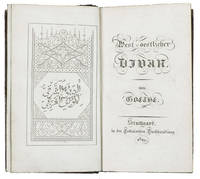
1819ABC_49393Stuttgart 1819. 8vo. in der Cottaischen Buchhandlung = Johann Georg Cotta Contemporary gold-tooled quarter brown calf with a beige morocco title label lettered in gold on the spine brown marbled paper sides marbled endpapers turquoise edges. With an engraved frontispiece and title page. 1 1 blank 556 pp. First edition of Goethe's lyrical poems inspired by the work of the great Persian poet Hafez ca. 1325-1390. The work was intended to enact a dialogue between Eastern and Western poetry but also captures Goethe's feelings for the Austrian dancer Marianne von Willemer 1784-1860 who wrote some of the poems. It is the most famous interaction with Eastern poetry in German Romantic literature and includes some of the best poems of Goethe's later years.The present work is Johann Wolfgang von Goethe's 1749-1832 last great cycle of poetry. He became inspired for it after reading Joseph von Hammer's translation of Hafez's Divan collection in 1814. Goethe's work is divided in twelve books which are each centred around a different theme like Usch Nameh the book of love Mathal Nameh the book of parables and Hafis Nameh the book of Hafez. Together they describe Goethe's fictitious journey to the East. The work starts as a lyrical discussion between Goethe and Hafez but later expands to encompass East and West. The second half of the work contains Goethe's explanatory essay on his oriental studies which he undertook in preparation for the present work.The present edition is the second printing of the first edition which can be recognised by printing mistakes in the pagination and corrections on page 7 and 9. A second enlarged edition was published in 1827.With a contemporary ownership inscription on the back of the frontispiece and the bookplate of H.A. Knofe loosely inserted. The edges and corners of the boards are scuffed and the corners are slightly bumped. The work is slightly foxed throughout pages 495 and 496 have been omitted in the pagination and page numbers 399 and 400 have been used twice which are printing mistakes as there are no missing leaves. Otherwise in good condition.l Goedeke IV pp. 561-563. hardcover
195145839Paris: Henri Jonquières / P. A. Nicaise 1951. Very good plus in very good plus box. Limited first edition of this artistic rendition of the French translation of Goethe's unfinished play with dynamic lithographs by renowned sculptor Henry Moore. Henry Moore created the lithographs for PROMÉTHÉE at the height of his fame as he began to take on more large-scale public works. Many of his illustrations feature a Dalí-esque stark landscape populated by abstracted epic figures complimenting Goethe's retelling of the Greek creation myth - a fitting story to be executed by a sculptor. 15'' x 11''. Original brown pictorial wrapper. Illustrated with 14 color lithographs. 2 69 pages of loose folia. In original board clamshell box with red lettering. Box with rubbing to edges spine with some toning and a bit of staining. Wrapper with light bumping to spine ends; front and back with long closed tear. Leaves with occasional faint finger soiling. Bright. Henri Jonquières / P. A. Nicaise unknown
239-Eo.J. Feder in Grau, Aquarell, über Bleistift, auf cremefarbenem Velin, auf dem Köcher mit Amors Pfeilen monogrammiert ?HK? (ligiert). 14,2:20,7 cm, rundum auf Untersatz montiert, rechte obere Ecke leicht beschädigt. Provenienz: Sammlung L. Blucke, Chemnitz/Dresden. Die Figur des Faust ist angelehnt an J.H. Naekes Faust in der Illustration ?Faust, Szene auf der Straße?, gest. von C.A. Schwerdgeburth (1785-1878), erschienen in: Urania Taschenbuch für Damen?, Leipzig/Altenburg 1815.
1824126782London: Oliver & Boyd 1824. First edition in English of Goethe's masterpiece. Octavo 3 volumes bound in original boards pages uncut. In near fine condition. Exceptionally rare in the original boards we have not seen another example. Wilhelm Meister's Apprenticeship a novel of self-realization greatly admired by the Romantics has been called the first Bildungsroman and has had a tremendous influence on the history of the German novel. The story centers on Wilhelm a young man living in the mid-1700s who strives to break free from the restrictive world of economics and seeks fulfillment as an actor and playwright. Oliver & Boyd hardcover