PASCAL, BlaiseBiblio.com
13 980 résultats
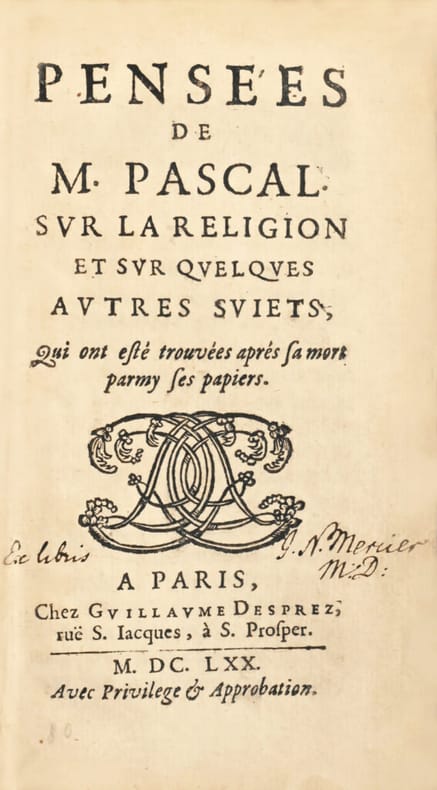
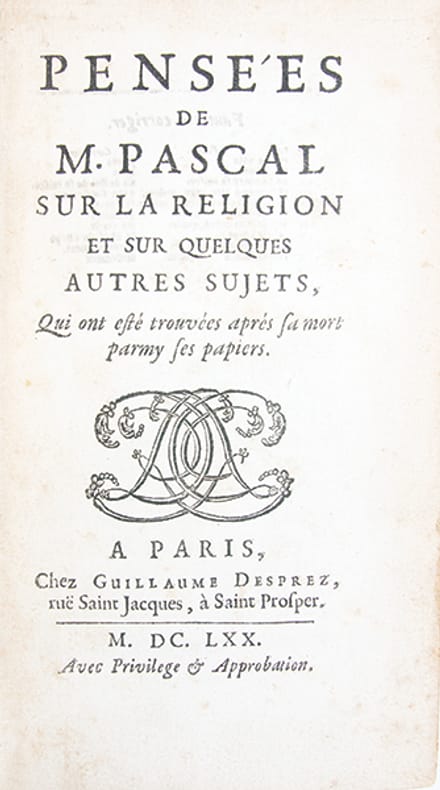
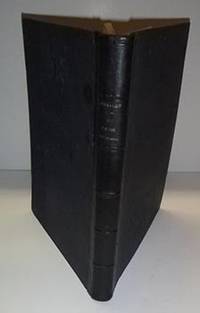
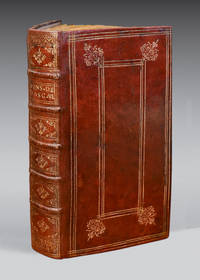
1670LCS-A1<p><strong>The 1670 <em>Pensées</em> by Pascal bound in red morocco à la Duseuil of the period.</strong></p><p><strong>Prestigious copy from the library of the master teacher of the Plessis-Sorbonne college </strong></p><p><strong>the Abbé de Saint-André enriched with his handwritten ex-libris dated March 21 1698.</strong></p><p><strong>"<em>Labbé de St André. A Paris au Collège du Plessis Sorbonne</em></strong></p><p><strong><em>l'an mil six cents nonante huit ce jourduy 21 mars</em></strong><strong>".</strong></p><p>12mo. Collation: 41 preliminary leaves 365 pages 10 leaves of table.</p><p>Full red morocco covers decorated in the style of Duseuil richly decorated spine with raised bands gilt edges. <em>Contemporary morocco binding</em>.</p><p>148 x 82 mm.</p><p>Precious edition of the <em>Pensées</em> printed in the year 1670 bound in red morocco of the period the copy of the Abbé de Saint-André master at the famous College du Plessis-Sorbonne in the year 1698.</p><p>Copy belonging to the second of the four editions published in 1670 <em>Brunet</em> supplément II 167 gives it priority and calls it the original edition; <em>Tchemerzine</em> ranks it second calling it the first counterfeit from the library of the "Abbé de Saint-André master at the Collège du Plessis-Sorbonne A Paris the year 1698 this day March 21".</p><p>This college was founded in 1317 by Geoffroy du Plessis-Balisson apostolic notary and secretary to Philippe le Long under the name Collège Saint-Martin-au-Mont. But it quickly came to be known as the Collège du Plessis. It was joined to the Sorbonne in 1646 and then took the name Plessis-Sorbonne. Its buildings are now occupied by the current Lycée Louis-le-Grand.</p><p>The classical 19th-century bibliographers considered the present edition as the true original. Thus Deschamps in the <em>Supplément de Brunet</em> II-167 described it as:</p><p>"Original edition; it consists of 41 preliminary leaves 365 pages and 10 leaves of table; the privilege granted to sieur Périer given in Paris on December 27 1666 says at the end: Completed printing for the <em>first time January 2 1670; there is an errata on the verso.</em>"</p><p><em>M. Petier was the first to carefully compare this edition with the unique copy of the 1669 edition preserved in the Bibliothèque Nationale; the two editions are essentially the same; the number of pages the ornaments and the typographic layout are identical; the differences are these: the title is not exactly the same; the 1669 copy lacks ecclesiastical approvals the privilege and the table ends at the word <em>Charnel</em> meaning the last nine leaves are missing; moreover the 1669 copy was not revised that is it did not undergo the deletions or changes likely demanded by the Archbishop of Paris.</em></p><p>Two other editions appeared in the same year 1670.</p><p>1/ "<em>A second counterfeit under the same date with identical collation has a slightly different title. The monogram of G. Desprez is replaced by the fleuron from the <em>Provinciales</em> quarto edition of 1657</em>" Tchémerzine V 71.</p><p>2/ The true second edition of the <em>Pensées</em> this time with the errors corrected. The title is identical to that of the original edition but the collation differs: duodecimo of 39 leaves 358 pages numbered as 334 and 10 leaves.</p><p>Among these four editions published in 1670 ours would occupy the second place in chronological order. It is extremely rare bound in morocco of the period.</p><p><em>"Pascal remains unique not so much because he is 'one of the greatest intellects to have appeared' Paul Valéry but for his passion his momentum for that aggressiveness which seizes the reader's soul for those discoveries those surprises which he holds in store which astonish and confound the reader and make him discover within himself not only abysses but the meansor rather the only meansof crossing them."</em></p><p><em>"As it was known that Pascal had planned to work on religion great care was taken after his death to collect all the writings he had made on that subject. They were found all together strung together in various bundles but without any order without any sequence. And all of it was so imperfect and so poorly written that it took immense effort to decipher them"</em> says Étienne Périer in his preface. Pascal's friends Roannez Brienne and Étienne Périer ultimately decided to publish the fragments arranging them in a certain order grouping together the thoughts with related subjects merely "<em>clarifying and embellishing"</em> them. The result of this work was the 1670 edition.</p><p>Copies of Pascal's <em>Pensées</em> printed in 1670 and bound in contemporary morocco are rare; one belonging to the first original edition of 1670 was sold for 230000 by Sotheby's 24 years ago Sotheby's December 5 2001; another from the Pierre Bérès collection trimmed and restored was sold for 120000 twenty years ago.</p><p>Precious copy bound in decorated morocco of the period with superb provenance: "<em>Labbé de St André Collège du Plessis-Sorbonne ce 21 mars 1698</em>"</p><p>The rise of Paris as the capital of France was supported by the development and influence of the University of Paris. It came into being during the 12th century as a result of the steady growth of the Parisian schools grouped on the Montagne Sainte-Geneviève. These schools provided an education preparing for three degrees: the baccalaureate grammar dialectic rhetoric the license arithmetic geometry astronomy music and the doctorate medicine canon law theology.</p><p>By the end of the Middle Ages the University of Paris had become the largest cultural and scientific center in Europe attracting some 20000 students. Its reputation rested on the prestige of its teachers but also on its libraries whose richness was matched only by the papal library. The University of Paris was the cradle of the "second French humanism" in the 15th century and it was at the Sorbonne that the first printing press in France was installed in 1469 by the royal librarian Guillaume Fichet and the prior of the college Jean Heynlin.</p><p>"The institution endowed with a significant library a chapel and dormitories intended for the comfort of its students was indeed associated with the faculty of theology and established itself permanently in the heart of medieval Paris. From century to century the college later known as 'la Sorbonne' played an increasingly important role in the life of the Kingdom of France actively participated in intellectual debate and tirelessly pursued its educational mission. In 1622 its illustrious principal and soon-to-be cardinal Richelieu seeking a place to house his own tomb undertook major renovations and began the construction of a chapel. This marked the beginning of a continuous modernization of the buildings as the University's reputation kept growing throughout Europe. In 1698 the Abbé de Saint-André master at the Collège du Plessis-Sorbonne inscribed his handwritten ex-libris on this copy of the 1670 <em>Pensées</em> bound in morocco of the period.</p><p>FRANCAIS</p><p><strong>Les Pensées de Pascal de 1670 reliées en maroquin rouge à la Duseuil de l'époque.</strong></p><p><strong>Prestigieux exemplaire provenant de la bibliothèque du maître enseignant du Plessis-Sorbonne l'abbé de Saint-André enrichi de son ex-libris manuscrit en date du 21 mars 1698.</strong></p><p><strong>" <em>Labbé de St André. A Paris au Collège du Plessis Sorbonne </em></strong></p><p><strong><em>l'an mil six cents nonante huit ce jourduy 21 mars</em></strong><strong> ".</strong></p><p>In-12. Collation : 41 feuillets liminaires 365 pages 10 feuillets de table.</p><p>Plein maroquin rouge encadrement de filets à la Duseuil sur les plats dos à nerfs richement orné coupes décorées tranches dorées. <em>Reliure en maroquin de l'époque</em>.</p><p>148 x 82 mm.</p><p>Précieuse édition des Pensées imprimée dès l'année 1670 reliée en maroquin rouge de l'époque l'exemplaire de l'abbé de Saint André maitre du célèbre collège du Plessis Sorbonne en l'année 1698.</p><p>Exemplaire appartenant à la seconde des quatre éditions parues en 1670 <em>Brunet</em> supplément II 167 lui donne la priorité et la qualifie d'édition originale ; <em>Tchemerzine</em> la classe en seconde position la qualifiant de première contrefaçon provenant de la bibliothèque de l'abbé de Saint-André maître au collège du Plessis-Sorbonne A Paris l'an 1698 cejourdhuy 21 mars "</p><p>Ce collège fut fondé en 1317 par Geoffroy du Plessis-Balisson notaire apostolique et secrétaire de Philippe le Long sous le nom de collège Saint-Martin-au-Mont. Mais il fut vite désigné sous le nom de collège du Plessis. Il fut uni à la Sorbonne en 1646 et prit alors le nom de Plessis-Sorbonne. Ses bâtiments sont occupés par l'actuel lycée Louis le Grand.</p><p>Les bibliographes classiques du XIXe siècle considéraient la présente édition comme la première originale. Ainsi Deschamps dans le Supplément de Brunet II-167 la décrivait-il ainsi :</p><p>" Edition originale ; elle se compose de 41 ff. limin. de 365 pp. et de 10 ff. de table ; le privilège délivré au sieur Périer donné à Paris le 27 décembre 1666 porte à la fin : Achevé d'imprimer pour la<em> première fois le 2 janvier 1670 ; il y a un errata au verso.</em></p><p><em>M. Petier le premier confronta minutieusement cette édition avec l'exemplaire unique de l'édition de 1669 que conserve la Bibliothèque Nationale ; les deux éditions n'en font qu'une ; le nombre des pages les fleurons les dispositions typographiques sont les mêmes ; il n'y a de différences que celles-ci : le titre n'est pas absolument le même ; l'exemplaire de 1669 n'a ni les approbations ecclésiastiques ni le privilège et la table finit au mot Charnel c'est-à-dire que les ix derniers ff. manquent ; de plus l'exemplaire de 1669 n'a pas été cartonné c'est-à-dire qu'il n'a pas subi les suppressions ou modifications qui furent exigées sans doute par l'archevêque de Paris</em> ".</p><p>Deux autres éditions virent le jour en cette même année 1670.</p><p>1/ " <em>Une seconde contrefaçon sous la même date avec collation identique a un titre un peu différent. Le monogramme de G. Desprez y est remplacé par le fleuron des </em>Provinciales<em> éd. in-4 de 1657 </em>" Tchémerzine v 71.</p><p>2/ La véritable seconde édition des " <em>Pensées</em> " avec cette fois les fautes corrigées. Le titre est identique à celui de l'édition originale mais la collation est différente : in-12 de 39 ff. 358 pp. chiff. 334 et 10 ff.</p><p>Parmi ces quatre éditions parues en 1670 la notre occuperait la seconde place par ordre chronologique. Elle est infiniment rare reliée en maroquin de l'époque.</p><p>" <em>Pascal reste unique non pas tant parce qu'il est " une des plus fortes intelligences qui aient paru " Paul Valéry mais par sa fougue par son élan par cette agressivité qui empoigne l'âme du lecteur par ces découvertes ces surprise qu'il lui réserve qui l'étonnent qui le confondent et lui font découvrir en lui non seulement des abîmes mais les moyens ou plutôt l'unique moyen de les franchir. </em>"</p><p>" <em>Comme l'on savait le dessein qu'avait Pascal de travailler sur la religion l'on eut un très grand soin après sa mort de recueillir tous les écrits qu'il avait faits sur cette matière. On les trouva tous ensemble enfilés en diverses liasses mais sans aucun ordre sans aucune suite. Et tout cela était si imparfait et si mal écrit qu'on a eu toutes les peines du mondes à les déchiffrer</em> " dit Etienne Périer dans sa préface. Les amis de Pascal Roannez Brienne et Étienne Périer s'en tinrent finalement à l'édition des fragments en les disposant dans un certain ordre groupant celles des pensées qui avaient quelque affinité par le sujet se contentant de les " <em>éclaircir et embellir</em> ". Le résultat de ce travail fut l'édition de 1670.</p><p>Les exemplaires des " <em>Pensées</em> " de Pascal imprimés en 1670 reliés en maroquin de l'époque sont rares ; l'un appartenant à la première édition originale de 1670 fut vendu 230 000 par Sotheby's il y a 24 ans Sotheby's 5 décembre 2001 ; le second provenant de la bibliothèque Pierre Bérès court de marges et restauré fut vendu 120 000 il y a 20 ans.</p><p>Précieux exemplaire relié en maroquin décoré de l'époque à superbe provenance : " <em>Labbé de St André Collège du Plessis-Sorbonne ce 21 mars 1698</em> "</p><p>L'affirmation de Paris comme capitale de la France s'appuya sur le développement et le rayonnement de l'Université de Paris. Celle-ci vit le jour au cours du XIIe siècle au terme d'une croissance continue des écoles parisiennes regroupées sur la Montagne Sainte-Geneviève. Ces écoles dispensaient un enseignement qui préparait à trois grades : le baccalauréat grammaire dialectique rhétorique la licence arithmétique géométrie astronomie musique et le doctorat médecine droit canonique théologie.</p><p>A la fin du Moyen-Âge l'Université de Paris était devenue le plus grand centre culturel et scientifique européen attirant quelque 20 000 étudiants. Elle tirait sa renommée du prestige de ses maitres mais également de ses bibliothèques dont la richesse n'avait d'égale que celle de la bibliothèque pontificale. L'Université de Paris fut le berceau du " second humanisme français " au xvè siècle et c'est à la Sorbonne que fut installée en 1469 la première imprimerie de France par le bibliothécaire du roi Louis xi Guillaume Fichet et le prieur du collège Jean Heynlin.</p><p>" L'établissement doté d'une bibliothèque d'envergure d'une chapelle et de dortoirs destinés au confort de ses étudiants s'associe en effet à la faculté de théologie et s'implante durablement au cur du Paris médiéval. De siècle en siècle le collège que l'on nomme par la suite " la Sorbonne " joue un rôle grandissant dans la vie du royaume de France participe activement au débat intellectuel et poursuit sans relâche sa tâche d'enseignement. En 1622 son illustre proviseur et bientôt cardinal Richelieu à la recherche d'un lieu pour accueillir son propre tombeau entreprend de grands travaux de rénovation et débute alors la construction d'une chapelle. C'est le début d'une modernisation constante des bâtiments à mesure que la renommée de l'Université ne cesse de s'accroître dans toute l'Europe. En 1698 l'Abbé de Saint André maître au collège du Plessis-Sorbonne apposait son exlibris manuscrit sur cet exemplaire des Pensées de 1670 relié en maroquin de l'époque.</p> Guillaume Desprez.
LCS-A1Prestigieux exemplaire provenant de la bibliothèque du maître enseignant du Plessis-Sorbonne l’abbé de Saint-André, enrichi de son ex-libris manuscrit en date du 21 mars 1698. «Labbé de St André. A Paris au collège du Plessis Sorbonne l’an mil six cents nonante huit ce jourduy 21 mars». Paris, Guillaume Desprez, 1670. In-12. Plein maroquin rouge, encadrement de filets à la Duseuil sur les plats, dos à nerfs richement orné, coupes décorées, tranches dorées. Reliure en maroquin de l’époque. 164 x 82 mm. Collation: 41 feuillets liminaires, 365 pages, 10 feuillets de table.
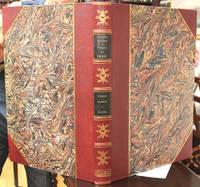
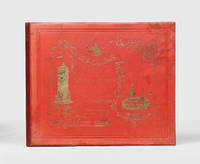
1854B5798Gide et J. Baudry libraires-Editeurs c.1854. Edition: First Edition Binding: Contemporary half red morocco with gilt double fillet borders with marbled boards; expertly rebacked; spine with 5 raised gilt designed bands and central gilt ornaments; gilt titled morocco labels on two and four; matching marbled pasted and free endpapers. Notes: Text in French.<br>This example does not include Perse Ancienne; it includes a complete set of Perse Moderne's 100 exquisite lithographed plates. <br>First edition of this survey of Modern Persia. This is the atlas volume for the Modern Persia section only. There are several atlas volumes that form part of the larger set with text volumes which are not present here. While complete sets are very rare and the part on ancient Persia focuses mainly on ancient monuments and structures of architectural interest the modern part describes the country during the 19th century many parts of which were difficult and unsafe to access; it is therefore of greater interest and the more sought after. <br>Jean-Baptiste Eugène Napoléon Flandin 1809-1889 was a French orientalist painter archaeologist and politician. He is most renowned for his famous drawings and paintings of Persian monuments landscapes and social life made during his travels with the architect Pascal Coste during the years 1839-41. Flandin’s observations on the state of Persia and international politics in the mid-19th century also continue to provide important documentary information. In 1839 Flandin was along with Coste made a laureate of the Institut de France and they both joined the embassy of the Comte de Sercey to Persia. After parting from de Sercey’s mission they left Isfahan with very limited financial means and retinue. Flandin’s courage during this journey which spanned the entirety of Persia was praised by Coste who also noted his intrepidity during times of duress. Their timetable and work were strictly organized. After Flandin’s return to France he was awarded the Légion d’honneur in 1842 for his part in this government-sponsored archaeological mission. The atlas volumes form part of the larger set with text volumes not included here. <br> Size: Folio 612 mm x 432 mm Illustration: 100 lithographed plates including 2 finely hand coloured plates. Some plates with 2 images. Provenance: Round bookplate with heraldry at centre surrounded by References: Brunet II 1280; Wilson p. 72 Pages: P. Ex libris bl. 4 Half Title Publisher’s Note Title bl. 100 lithographed plates Table of contents 3. Category: Book Asia Middle East Iran; Gide et J. Baudry, libraires-Editeurs hardcover
165778<p>An exceptional copy of the 1st edition of Provinciales with 28 other first editions 2 of Pascal and one autographe provenant de la fameuse bibliothèque Maxime Denesle.</p><p>Pascal Blaise. Les Provinciales ou lettres écrites par Louis de Montalte à un provincial de ses amis et aux RR. PP. Jésuites sur le sujet de la morale et de la politique de ces pères. </p><p><i>Cologne Pierre de la Vallée 1657.</i></p><p>Followed by 28 other first editions published between 1657 and 1732.</p><p>4° calf from beginning of the 18th century<i> <br /></i></p><p>246 x 181 mm.</p><p><b>First edition of Pascal's 18 letters written between January 23rd 1656 and March 24th 1657</b> containing <i>Réfutation de la réponse à la douzième lettre</i> and the 17th letter in 12 pages. </p><p>Published separately and in secret all are here published together and bound without the title and <u>the warning leaves: a sign of first printing which is a very sought-after and rare state. It shoiw that the cipoy was constituted as letters were being published</u>. </p><p>Trois corrections manuscrites anciennes. </p><p>Bound together </p><p>29 other pieces 700 pages in total in first edition relating to Jansenism some very rare and of which two are from Pascal are related to the following including a manuscript: </p><p>- Advis de Messieurs les Curez de Paris 8 pp.</p><p>- Extrait des plus dangereuses propositions de Morale de Casuistes 20 pp.</p><p>- Factum pour les Curés de Paris. Paris 1657. Edition originale attribuée à Pascal. 8 pp.</p><p>- Factum pour les Curés de Rouen. Paris 1657. 12 pp.</p><p>- Lettre pastorale de M. L'Évêque de Troyes. Paris 1732. E. O. 10 et 80 pp.</p><p>- La Calomnie portée au dernier excez contre les Appelans. 1728. 25 pp.</p><p>- Ordonnance de M. le Cardinal de Noailles. 1703. E. O. 10 pp.</p><p>- Lettre de la Mère supérieure de la Visitation. 1726. E. O. 3 pp.</p><p>- Lettre et mandement de l'Évêque de Montpellier. 1727. E. O. 4 ; 3 et 4 pp.</p><p>- Mandement de l'archevêque d'Utrecht. 1730. E. O. 8 pp.</p><p>- Requête de l'Évêque d'Auxerre. 1730. E. O. 10 pp.</p><p>- Recueil de pièces. 6 pp.</p><p>- Mandement de l'Évêque de Senez. 1727. E. O. 28 pp.</p><p>- Lettre et instructions de l'Évêque de Montpellier. 1726. E. O. 20 pp. ; 1728 E. O. 29 pp.</p><p>- Mandement de l'Évêque de Saintes 16 pp.</p><p>- Instruction et Lettres de l'Évêque de Montpellier 1726. E. O. 16 et 19 pp.</p><p>- manuscript of the letter of Évêque de Montpellier à Mosseigneurs les Évêques datée Montpellier ce 2 may 1725. 14 pp.</p><p>- Quatre lettres de l'Évêque de Montpellier à l'Évêque de Soissons 1727. E. O. de 16 pp. 40 pp. 35 pp. 26 pp.</p><p>- Lettre de l'Évêque de Soissons à l'Évêque de Montpellier 1727. E. O. 22 pp.</p><p>- Ordonnance et instruction de l'Évêque de Montpellier portant condamnation du livre intitulé " <i>Institutionnes Catholicae</i> " 1726. E. O. 42 pp.</p><p>- Défense et consultation de MM. Les Avocats de Paris 1729. E. O. 115 pp. et 44 pp. </p><p> A beautiful copy of <i>" </i><i>the purest masterpiece of French language "</i> <i>"</i> the first book of genius in prose <i> "</i> Voltaire <i>from Maxime Denesle</i>'s library.</p><br /><br /><br /><br /><br /> Pierre de la Vallée hardcover
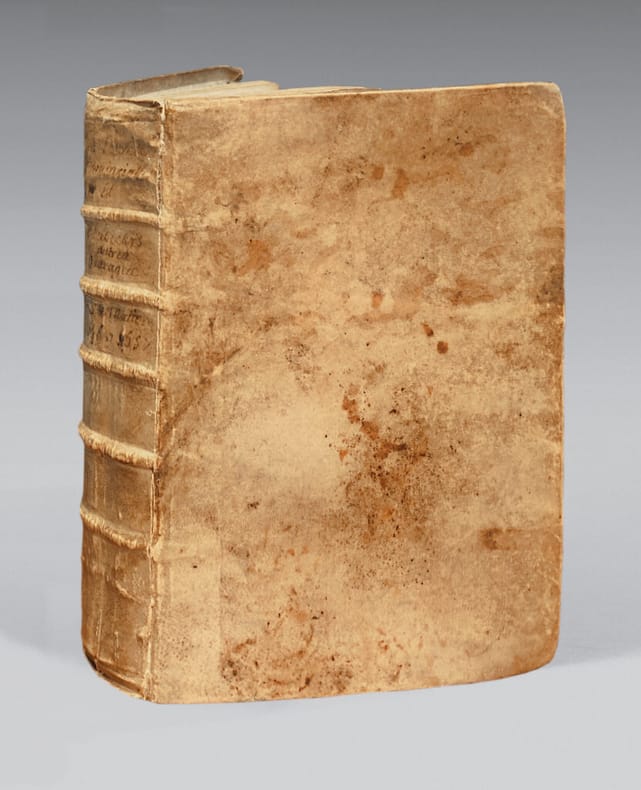
LCS-186412Cologne, Pierre de la Vallée, 1657. - Suivi de nombreuses pièces de controverses philosophiques, théologiques et religieuses s'échelonnant de 1655 À 1658, et d'une pièce de 1748. Table des pièces calligraphiée à l'époque sur les ff. préliminaires et portrait du Père Antoine Escabar, Théologien de la Compagnie de Jésus, ajouté. Ensemble 1volume in-4, vélin. Reliure de l'époque. 237 x 175 mm.
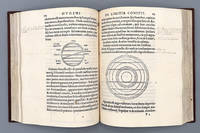
1554winter1<p><strong>PRINCEPS EDITION OF <em>DE AGRORUM CONDITIONIBUS</em></strong></p><p><strong><br />LAND SURVEYING TOPOGRAPHY</strong></p><p><br /><strong>COPY OF THE POET PASCAL ROBIN DU FAUX</strong></p><p><strong><br />FOLLOWER OF LA PLÉIADE</strong><strong> & RONSARD</strong></p><p><em>De agrorum conditionibus et constitutionibus limitum</em> . Paris Turnèbe 1554. 2 parts in 1 volume in-4 2 ff. 256 pp. 6 ff.; 20 pp. Fawn calf pastiche double frame of gilt and blind fillets cornerpieces with azured motifs central oval medallion with scrollwork motifs on an azured ground decorated spine gilt edges Devauchelle. Title-leaf backed and dust-soiled restoration to the corner of two leaves pp. 193-194 and pp. 19-20 of the second part. Dimensions: 20.5 × 15.8 cm. References: BP16_114368. Mortimer <em>Harvard French 16th c. books</em> 244. Provenance: 1. Pascal Robin du Faux 1556 "Paschasii Robini Delphii Andigenae sic 1556" manuscript note at foot of title-leaf. 2. Aymond "Emundi " 17th c. manuscript note at head of title-leaf. Languages of annotation: Latin; Greek a few words.</p><p><strong>Bibliography:</strong> J. Pineaux: "Un admirateur angevin de Ronsard : Pascal Robin du Faux" in <em>La Poésie angevine du xvie siècle au début du xviie siècle</em> Angers Presses de l'Université 1982 pp. 50-59. J. Lewis <em>Adrien Turnebus 1512-1565 a humanist observed</em> Droz 1998. P. F. Girard "Le manuscrit des Gromatici de l'évêque Jean du Tillet" in <em>Mélanges Fitting</em> Montpellier 1908 vol. II pp. 235-286. Michael Crawford "Johannes the last Agrimensor" in C. Carsana and L. Troiani eds. <em>I Percorsi di un Historikos. In Memoria di Emilio Gabba</em> 2016 pp. 216-228 appendix. <em>Les Arpenteurs romains</em> ed. J.-Y. Guillaumin Belles Lettres CUF 4 vols. M. Simonin "René Bellet et Pascal Robin du Faux : une campagne angevine en faveur de La Franciade avant 1572" <em>Mélanges Isamu Takata</em> Classiques Garnier 2009. J.-P. Barbier-Mueller <em>Dictionnaire des poètes français de la seconde moitié du XVIe siècle</em> Q-W Droz 2023.</p><p><strong>A major princeps edition of texts rediscovered during the Renaissance.</strong></p><p><br />An important princeps edition of the treatises of the Roman land surveyors including the <em>De conditionibus agrorum</em> of Siculus Flaccus the <em>De agrorum qualitate et controversis limitum</em> of Frontinus the <em>De limitibus constituendis</em> of Hyginus "the gromaticus" and the <em>De controversiis agrorum</em> of Agennius Urbicus. This corpus is a 5th6th-century compilation of land-surveying and boundary-setting texts from the Roman Empire dating back to the 1st century with agrarian implications use of the cadastre and calculation of tax architectural and religious ones e.g. the layout of a temple. It contains the foundations of surveying the typology of lands the art of tracing boundaries and boundary-marking procedures measurements and plans.</p><p>The work is illustrated with about 150 woodcuts diagrams and schemata inspired by the famous Wolfenbüttel manuscript and our copy is indeed complete with leaf 134bis a printed cancel. It notably includes the figure of the gnomon p. 117 an astronomical instrument whose shadow visualises the movement of the Sun across the celestial vault very valuable for topographical recordings. Adrien Turnèbe is the architect of the edition assisted by Pierre Galland whose dedicatory epistle to Cardinal Charles de Lorraine opens the book. The editors relied on the manuscript they had discovered ten years earlier at the abbey of Saint-Bertin in Saint-Omer today preserved at Wolfenbüttel: Cod. Guelf. 105 Gud. lat.; see Lewis 1998 pp. 38-39 and M. Crawford 2016. After completing most of the edition Turnèbe was given through Gentien Hervetwho was in contact with Pascal Robin our annotator cf. belowa copy of an important Italian manuscript today in the Vatican Library Ms Pal. lat. 1564 then belonging to Angelo Colocci. Hervet likely obtained access to it in Italy through Jean Matal who notes in his copy of the Turnèbe edition regarding passages he transcribed from the Colocci ms.: "I had them copied for Jean du Tillet who showed them to the Parisians" Girard 1908 p. 238. Turnèbe decided to list the main textual contributions provided by Gentien Hervet at the end of the edition in a list of <em>variae lectiones</em> on pp. 247-256.</p><p><strong>Precious copy of the Angevin poet Pascal Robin Seigneur du Faux 1538-1593 an epigone of Ronsard who entered 130 fine scholarly notes in our copy.</strong><br />A follower and devotee of the poets of the Pléiade admirer of Ronsard he wrote numerous occasional pieces or liminary poems: notably for the <em>Oeuvres</em> of Remy Belleau in 1585; and especially for Ronsard's tomb volume: <em>Les funèbres regrets sur la mort de Pierre de Ronsard</em> Paris Linocier 1586 for which he wrote pp. 7-21 including an "Epitaph of Pierre de Ronsard Gentleman of Vendôme Prince of French Poets". In 1582 he announced the publication of an <em>Angiade</em>modelled on <em>La Franciade</em>which however was never completed. Two other poetic collections are attributed to him: <em>Les Sonnets d'Estrenes</em> and <em>Les Vendanges</em> 1572 the latter dedicated to the Duke of Anjou. He also supplied a liminary dizain for the French translation of Saint Augustine's <em>City of God</em> published in 1570 by Gentien Hervetclearly a close associate. Robin du Faux was also very closely connected with the bibliographer La Croix Du Maine and with legal-scholarly circles in Anjou cf. J. Pineaux M. Simonin and Barbier-Mueller.</p><p>Our poet took particular interest in ancient topography: which explainsalong with his closeness to Gentien Hervethis interest in this work on surveying. It is also known that Robin du Faux collaborated on Belleforest's <em>Cosmographie Universelle</em>. As M. Simonin reminds us Robin contributed "at the request of Nicolas Chesneau and Michel Sonnius to this enterprise which bears the name of Belleforest". See on the subject the long article by Jacques Pineaux: "Un admirateur angevin de Ronsard : Pascal Robin du Faux" in <em>La Poésie angevine du xvie siècle au début du xviie siècle</em> Angers Presses de l'Université 1982 pp. 50-59. One also finds in the <em>Cosmographie universelle</em> concerning the environs of Angers Robin du Faux's identification of the village of Reculée described as "a pleasure house near Angers" with Herculée. This is a point of ancient geography that Robin also mentions in one of his poems: "Du grand Hercule a bosquet d'Herculée / Que l'ignorance appelle Recullée" <em>Les Vendanges</em> Nantes Jacques Rousseau 1572.</p><p><strong>Topographical technical & scholarly notes</strong><br />Robin du Faux particularly sought to record systematically in the margins the readings of the Italian manuscript discovered by Gentien Hervet with whom he was in contact and took care to indicate the variants. The most striking variant concerns the beginning of Hyginus's <em>De limitis constituendis</em> p. 91 which elicits the following note with a cross-reference to the end of the work for the alternative beginning: "below fol. 256 another beginning for this book has been added from the Italian manuscript according to Hervet Infra fol. 256 aliud hujus libri initium est additum ex Herveti exemplari italico." Epigraphic considerations require that the examples of <em>tabulae</em> given by Hyginus be accurate: just as Pierre Pithou did in his copy BnF RES-F-891 Pascal Robin restores from the second manuscript the names "P. Tith. filio et Augerio Sullo" missing from the base text p. 132. Robin notes other variants of significant meaning: p. 220 in the short treatise <em>De Casae litterarum</em> concerning the question of the shape of the estate he observes that Turnèbe's text reads <em>rectagoni</em> "rectangle" whereas the Italian manuscript reads <em>tetragoni</em> "square". Several annotations testify to his knowledge of Roman historians: p. 168 regarding <em>scorosiones</em> heaps of rocks he recalls that these evoke Gallic oppida with a reference to Caesar. He is likely thinking of a passage in <em>The Gallic War</em>VI 17 where tumuli erected to Mercury by the Gauls are mentioned. His critical sense appears in a marginal note on Berossus where he shows that he knows it is a dubious source in fact a forgery produced by Annius of Viterbo at the end of the 15th century: "one is close to falsehood and almost to fable unless you trust the history of Berossus" <em>Propinquum tô muthô fabulosumque fere nisi Berosi historiam agnosces</em>. In Hyginus's treatise <em>On Boundaries</em> p. 145 Hyginus 25 CUF ed. vol. II p. 9 he pauses on a development concerning the "quaestorian lands" that is lands entrusted by the people to the authority of the quaestors. He adds a reference to Suetonius's <em>Life of Augustus</em> after writing in Greek the word <em>plinthides</em> a measure designating one hundred <em>jugera</em> of land. He is sometimes halted by questions of etymology etymon of <em>territorium</em> p. 71.</p><p>The second annotator who probably took possession of the book in the 17th century shows interest in technical matters. He adds complementary references: he advises p. 229 referring to Columella for the Gallic agrarian measure <em>arapennis</em> Columella 516 takes interest p. 171 in <em>botontines</em> mounds of earth serving as boundary-markers between plots and refers for additional information to a letter by Symmachus. He does not neglect more contextual developments and thus underlines a passage from Agennius Urbicus's treatise <em>On Land Disputes</em> concerning the increase in the number of Christian faithful in Italy p. 74.</p><p><strong>A precious work annotated by a poet contemporary with Ronsard</strong></p>
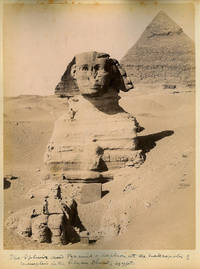
18801037551880. SEBAH J. Pascal DITTRICH P. PERIDIS Pappa and BECHARD H. Collection of 69 photographs. Cairo: J.P Sebah P. Dittrich Pappa Peridis H. Bechard circa 1880. Vintage albumen prints each measuring about 8-1/2 by 11 inches individually mounted on heavy card stock total measures 11 by 14 inches most captioned and signed with photographer's studio imprint in the negative later printed labels on mount versos. Housed in three matching custom clamshell boxes. $12000.69 Striking exhibition-size photographs circa 1880-1890 of Egyptian temples and monuments by J. Pascal Sebah and other pioneering photographers in the early trade in images of Egyptian antiquities including photographs from many of the most iconic temples and locations in Egypt including the Temple of Amun-Ra at Karnak the Temple of Hatshepsut at Deir-el-Bahri the Temple of Hathor at Dendera the Temple of Amon at Luxor and the Great Temple of Rameses II at Abu Simbel.Near the end of the 19th century ""the Middle East exerted an irresistible attraction"" to much of Europe. ""It was in Egypt that the first resident photographic studios were opened"" Frizot 161 encouraging the work of photographers such as J. Pascal Sébah famed for his ""fine images produced in Turkey and Egypt"" Hannavy Encyclopedia of 19th-Century Photography I:1260 and P. Dittrich the first German photographer to set up shop in Cairo. This collection includes 31 photographs by Sébah and 17 by Dittrich plus 21 additional photographs by other photographers including Pappa Peridis and H. Bechard. This collection includes multiple images of the Temple of Amun-Ra at Karnak 10 the Temple of Hatshepsut at Deir-el-Bahri 9 the Tomb of Ti at Sakkara 7 the Temple of Hathor at Denderah 6 the Temple of Amon at Luxor 6 the Temple of Seti I at Abydos 5 the Temple of Isis at Island of Philae 4 Ramses III's Temple at Medinet Habu 3 the Temple of Rameses II at Abu Simbel 3 the Ramesseum at Thebes 3 the Temple of Horus at Edfu 2 and the Temple at Kalabsha 2 and individual images including other sites at Karnak Sakkara and Thebes. With institutional printed labels to mount versos. A fine collection. unknown
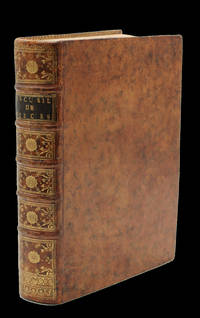
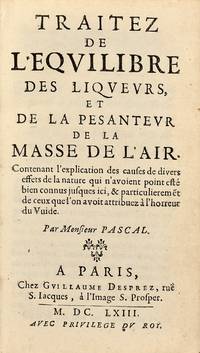
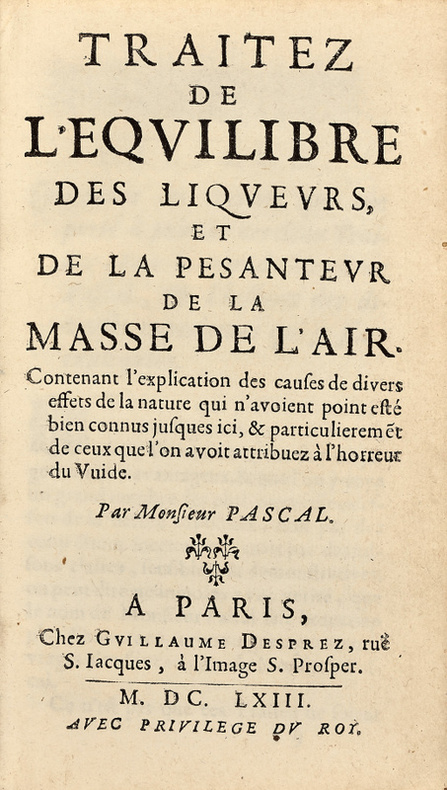
NYBF16<p>Paris Guillaume Desprez 1663.</p><p>12mo 144 x 91 mm of 14 ll. 232 pp. 4 ll. and 2 folded plates out of text. Full brown granite-like calf spine ribbed and decorated head and foot of the spine formerly restored sprinkled edges. <i>Contemporary binding.</i></p><p><b>First edition of the founding treatise of the principles of hydrostatics in contemporary binding.</b></p><p>Bibliotheca Osleriana n° 3625; Bulletin Morgand et Fatout n°4298; Tchemerzine V 59; Brunet IV 400; Dibner 143; Norman 1650; Maire II/1 179 f.; DSB X 334 & 340 13.</p><p><b>Precious copy with the errata and the 11 printing errors not yet corrected during printing.</b></p><p><i>"First edition published by F. Périer Pascal's brother-in-law one year after his death. We find at the end 2 engraved folded plates."</i>Catalogue de Backer n°760.</p><p>Pascal undertakes to search for the cause of the effects he observed both by the method of difference this is the experiment of emptiness into the void and by the method of variations it is the great experiment he talks about in a letter to Périer and which the latter made on the Puy-de-Dôme in 1648.</p><p>He shows that the gravity or pressure of the air which suspends quicksilver mercury in the barometric tube is the cause of all the observed facts and allows to considerate them as special cases of a universal proposition of the balance of liquors.</p><p>With these works Pascal inaugurated experimental science and appeared as the first and one of the greatest among modern physicists at the same time as an extraordinary theorist of the scientific method.</p><p>" <i>La grande expérience de l'équilibre des liqueurs a été effectuée au Puy de Dôme le 19 septembre 1643 et confiée à Florin Périer beau-frère de Pascal. Ce dernier établit d'une façon irréfutable que la hauteur du mercure suspendue dans le tube de Torricelli pouvait varier avec l'altitude. Il s'ensuit dit Pascal que la pesanteur et la pression de l'air sont la seule cause de la suspension du mercure et non l'horreur du vide et qu'au contraire la nature s'accomode fort bien du vide.</i></p><p><i>Pascal généralise tous ces résultats en formulant les principes de l'hydrostatique qui seront consignés dans le 'Traitez de l'équilibre des liqueurs et de la pesanteur de la masse de l'air'.</i></p><p><i>Ce recueil fut publié en 1663 un an après la mort de Pascal. Les expériences de Pascal et Torricelli eurent le grand mérite de prouver non seulement l'expérience de la pression atmosphérique mais aussi l'existence du vide ce vide qui jouera un rôle si important en physique moderne</i> ".</p><p>"<i>The highly persuasive 'Traitez' assembling and coordinating earlier results and recent discoveries are characterized above all by their rigorous experimental method and by the categorical rejection of Scholasticism. In hydrostatics Pascal continued the investigations of Stevin Galileo Torricelli and Mersenne… The 'Traitez' are indisputably a classic of seventeenth-century science</i>". DSB.</p><p><b>The present edition is illustrated with 2 large folding plates illustrating the various experiments of Pascal</b> 245 x 170; 235 x 170 mm.</p><p>This edition was printed six years before <i>Les Pensées</i> by the same printer-bookseller "<i>Guillaume Desprez</i>" in Paris in 1663. The first edition of <i>Les Pensées</i> in contemporary morocco à la Duseuil is extremely rare and we do not know any copy of this scientific and literary first edition in such a condition.</p><b>Precious volume preserved in its first Parisian binding in contemporary decorated calf.</b><br /><b><br /></b><u><b>Fran</b></u><u><b>çais</b></u><p>Paris Guillaume Desprez 1663.</p><p>In-12 de 14 ff. 232 pp. 4 ff. et 2 planches hors texte repliées. Plein veau brun granité dos à nerfs orné coiffes anciennement restaurées coupes décorées tranches jaspées. <i>Reliure de l'époque</i>.</p><p>144 x 91 mm.</p><p><b>Edition originale du traité fondateur des principes de l'hydrostatique en reliure de l'époque.</b></p><p>Bibliotheca Osleriana n° 3625 ; Bulletin Morgand et Fatout n°4298 ; Tchemerzine V 59 ; Brunet IV 400 ; Dibner 143 ; Norman 1650 ; Maire II/1 179 f. ; DSB X 334 & 340 13.</p><p><b>Précieux exemplaire avec l'errata et les 11 fautes non encore corrigées à la plume lors de l'impression.</b></p><p>" <i>Edition originale publiée par F. Périer beau-frère de Pascal un an après sa mort. On trouve à la fin 2 planches gravées repliées</i>. " Catalogue de Backer n°760.</p><p>Pascal entreprend de rechercher la cause des effets qu'il a observés à la fois par la méthode de la différence c'est l'expérience du vide dans le vide et par la méthode des variations c'est la grande expérience dont il trace le projet dans une lettre à Périer et que ce dernier réalisa sur le Puy-de-Dôme en 1648.</p><p>Il montre que la pesanteur ou pression de l'air qui suspend le vif-argent le mercure dans le tube barométrique est la cause de tous les faits observés et permet de les considérer comme des cas particuliers d'une proposition universelle de l'équilibre des liqueurs.</p><p>Par ces travaux Pascal inaugurait la science expérimentale et apparaissait comme le premier et un des plus grands parmi les physiciens modernes en même temps qu'un extraordinaire théoricien de la méthode scientifique.</p><p><i>" Ces Traités ne sont pas seulement remarquables par la justesse et la liaison des idées par la force et la clarté du raisonnement par le choix et la vigueur des arguments; ils le sont encore par la propriété des expressions par les tournures heureuses par la pureté de la diction en un mot par la couleur et les agréments du style. L'aimable facilité et le rare bonheur avec lequel Pascal manie la langue française offrent un contraste frappant avec le ton ampoulé le style précieux guindé et surchargé de figures ridicules que l'on trouve dans les écrivains les plus en vogue de son temps. Les grâces qu'il sait répandre sur des discussions arides de physique et de géométrie annoncent un talent qu'il va déployer bientôt de la manière la plus éclatante sur des matières non moins ingrates. "</i> Michaud.</p><p>" <i>La grande expérience de l'équilibre des liqueurs a été effectuée au Puy de Dôme le 19 septembre 1643 et confiée à Florin Périer beau-frère de Pascal. Ce dernier établit d'une façon irréfutable que la hauteur du mercure suspendue dans le tube de Torricelli pouvait varier avec l'altitude. Il s'ensuit dit Pascal que la pesanteur et la pression de l'air sont la seule cause de la suspension du mercure et non l'horreur du vide et qu'au contraire la nature s'accomode fort bien du vide.</i></p><p><i>Pascal généralise tous ces résultats en formulant les principes de l'hydrostatique qui seront consignés dans le 'Traitez de l'équilibre des liqueurs et de la pesanteur de la masse de l'air'.</i></p><p><i>Ce recueil fut publié en 1663 un an après la mort de Pascal. Les expériences de Pascal et Torricelli eurent le grand mérite de prouver non seulement l'expérience de la pression atmosphérique mais aussi l'existence du vide ce vide qui jouera un rôle si important en physique moderne</i> ".</p><p>" <i>On trouve dans ce volume les premiers expériments relatifs à l'application du baromètre à la mesure de la hauteur des montagnes invention de Torricelli que Pascal publia comme si c'était la sienne</i> " Graesse Trésor de livres rares V p. 147.</p><p>" <i>The highly persuasive 'Traitez' assembling and coordinating earlier results and recent discoveries are characterized above all by their rigorous experimental method and by the categorical rejection of Scholasticism. In hydrostatics Pascal continued the investigations of Stevin Galileo Torricelli and Mersenne… The 'Traitez' are indisputably a classic of seventeenth-century science</i>". DSB.</p><p><b>La présente édition est ornée de 2 grandes planches dépliantes illustrant les différentes expériences de Pascal </b>245 x 170 ; 235 x 170 mm.</p><p>Cette édition fut imprimée six ans avant <i>Les Pensées</i> chez le même Imprimeur-Libraire " <i>Guillaume Desprez</i> " à Paris en 1663. L'originale des <i>Pensées</i> en maroquin à la Duseuil de l'époque est rarissime mais nous ne connaissons aucun exemplaire de cette originale scientifique et littéraire en cette même condition.</p><p><b>Précieux volume conservé dans sa première reliure parisienne en veau décoré de l'époque.</b></p> hardcover
LCS-17938Edition originale du Traité de l’équilibre des liqueurs de Pascal parue six ans avant Les Pensées chez le même imprimeur, conservée dans sa reliure parisienne de l’époque. Paris, Guillaume Desprez, 1663. In-12 de (14) ff., 232 pp., (4) ff. et 2 planches hors texte repliées. Plein veau brun granité, dos à nerfs orné, coiffes anciennement restaurées, coupes décorées, tranches jaspées. Reliure de l'époque. 144 x 91 mm.
165725133Cologne Amsterdam: Pierre de la Valle'e Elzevier 1657. First duodecimo edition and First Elzevier edition same year as the first complete 4to edition printed in Paris. This is the first and uncorrected state of two nearly identical issues. 12mo beautifully bound in regal 18th century full red morocco the covers framed by an elaborate decorative gilt rolled border surrounding a gilt coat of arms the spine beautifully gilt tooled in compartments between fine gilt tooled bands one compartment with a black morocco label gilt lettered and stippled gilt turn-ins and board edges marbled endpapers a.e.g. Ex-Libris of the Chateau de Sampigny. xxiv 398 111 pp. A fine and beautiful copy. FIRST ELZEVIER AND EXTREMELY EARLY PRINTING OF THIS MASTERPIECE OF THE MODERN FRENCH LANGUAGE. PMM 140. "The vividness and distinction of his style recalls the prose of Milton at its best". Elzevier’s was Pascal’s definitive version of the text. It was the first edition to gather the eighteen letters within continuous pagination and has become the standard text for all successive editions. It also contains attached at the end and paginated separately the 'Advis de Messieurs les Curez de Paris<br> "The Lettres Provinciales as they are called are the first example of French prose as we know it today perfectly finished in form varied in style and on a subject of universal importance. Pascal's weapon was irony and the freshness with which the gravity of the subject contrasts with the lightness of the manner is an enduring triumph. The vividness of and distinction of his style recalls the prose of Milton at its best". Printing and the Mind of Man. Pierre de la Valle'e [Elzevier] unknown
39329In-12 (157 x 86 mm), veau moucheté de lépoque, dos à nerfs orné de compartiments cloisonnés et fleuronnés, palette en tête et en pied, titre doré, filet dencadrement à froid sur les plats, roulette sur les coupes, tranches mouchetées, (82), 365 pages, (10) feuillets de table. Paris, Guillaume Desprez, 1670.
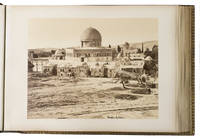
1867ABC_474041867. Contemporary gold-tooled reddish-brown morocco over cushioned covers gold-tooled turn-ins watered-silk end papers gilt edges. Oblong folio ca. 28 x 38 cm. With 75 albumen prints most signed and numbered in the negative. Beautiful and unusually large souvenir album with 75 photographs of Syria Palestine Constantinople and Athens in a luxurious binding. The photographs were made by the renowned studios of Félix Bonfils 1831-1885 and Pascal Sébah 1823-1886 who were already widely celebrated in their own time for their pioneering work in Egypt the Ottoman Empire and the Middle East. Their images could be bought separately or as customised albums but collections as large as the present one are uncommon as few sets exceed fifty images. The majority of the photographs in the album are signed by Bonfils. He opened his first studio in Beirut in 1867 and produced thousands of photographs of the region. The present album contains one of the photographs he is most known for namely the group of Jews in front of the Wailing Wall. Bonfils personally considered this haunting image to be one of his best works. Other photographs include views of Damascus Beirut and Jerusalem the church of the Holy Sepulchre the Dome of the Ascension Jericho Jaffa Ramallah the Jordan river the temple of Jupiter in Baalbek and the Umayyad mosque. The remaining photographs in the album are either signed by Sébah or unsigned and include beautiful portraits of locals views of Istanbul the Blue Mosque Hagia Sophia Galata bridge and the Bosphorus river and Athens the Theseion the temple of Olympian Zeus the Parthenon and the caryatids of Erechtheion.With a black bookseller's label mounted at the foot of the front pastedown Philip Son & Nephew Liverpool some of the photographs are captioned in ink underneath. The leaves are somewhat browned and the albumen prints are slightly yellowed. Otherwise in very good condition.l Cf. El-Hage B. Damascus a photographic journey 1840-1918 pp. 57-58; Hannavy Encyclopedia of nineteenth-century photography pp. 173-175. unknown
165744634A Cologne, chés Pierre de la Vallée, 1657. In-4, maroquin rouge, dos orné à nerfs, triple filet doré d'encadrement sur les plats, dentelle intérieure, tranches dorées, étui bordé (Honnelaître).
1880I45A4CVFDU99Egypt and Switzerland 1880. Contemporary black half morocco. 4to 29.5 x 23.5 cm. 50 photographs of Egypt albumen prints and cyanotypes and approximately 40 albumen prints of Switzerland. Impressively presented series of original photographs taken at various important sites and cities in Egypt including Giza Thebes Karnak Luxor Abydos Esna and others. They show archaeological sites like the temple of Seti I at Abydos the precinct of Ahmen-Rah near Luxor the Avenue of Sphinxes at Karnak the Ramesseum and the Colossi at Thebes the temple of Khnum at Esna the Sphinx and pyramids of Giza and many more. Other photographs show the local population engaged in a wide variety of activities such as catching crocodiles on the nile a Luxor barber shaving the head of a sailor or life in a Bedouin camp in the Libyan Desert. The Istanbul-based Sebah studio catered to the Western European interest in the exotic "orient" and the growing numbers of tourists visiting the Islamic world who wished to take home images of the city ancient ruins in the surrounding area portraits and local people in traditional costumes. "Sebah rose to prominence because of his well-organized compositions careful lighting effective posing attractive models great attention to detail and for the excellent print quality" Saretzky. When Pascal Sébah 1823-1886 died his son Jean Sébah 1876-1947 took over the studio and signed his productions "J. P. Sebah" on the negative putting his initial in front of his fathers.Some spotting and fading binding worn. Otherwise in good condition.l Cf. for Sébah: Saretzky Photo history. unknown
42004Sans lieu Les Bibliophiles de 1967-1970 In-4 mont sur onglets, box brun, premier plat ajour selon une large fissure irrgulire et verticale aux chants rouges, laissant apparatre la garde de daim brun et coupe par trois pices de loupe; rappel du dcor sur le second plat non ajour; noms de l'auteur et de l'artiste ainsi que titre de l'ouvrage en petites capitales pousses or sur le dos sans nerfs; doublures bord bord de box brun, gardes de daim brun, tranches dores sur brochure, couverture imprime. Chemise, tui (Renaud Vernier, 1987).10 eaux-fortes originales pleine page de Michel Ciry. Tirage unique limit 150 exemplaires numrots sur vlin de Rives. Exemplaire portant sur le faux titre un envoi autographe sign de Michel Ciry au bibliophile Philippe Prouveur, enrichi d'une des 20 suites d'un tat des eaux-fortes (chaque preuve signe l'encre par l'artiste), d'une des 10 suites en tat dfinitif des gravures (chaque preuve galement signe), et du menu illustr du dner de la socit ditrice ddicac par l'artiste au bibliophile.
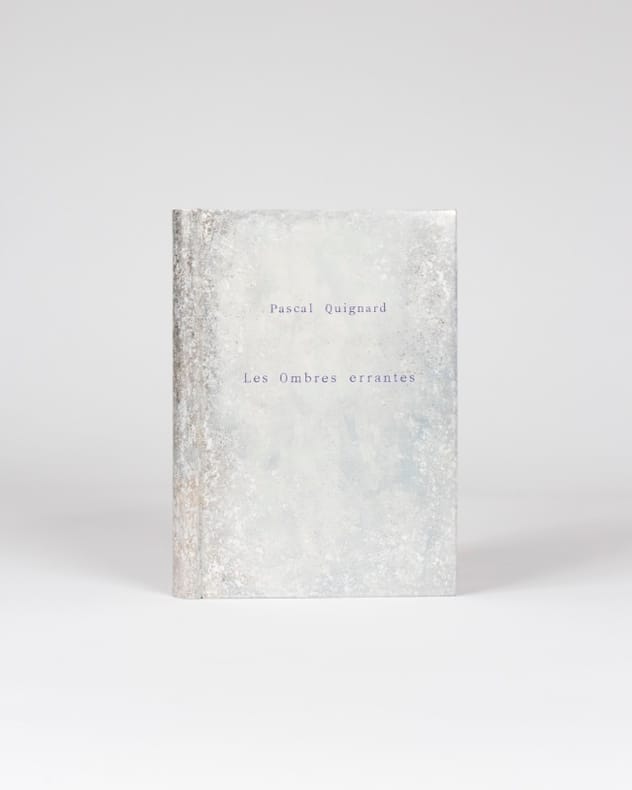
18821Paris Grasset août 2002. 1 vol. 145 x 215 mm de 189 p. et 1 f. Veau naturel blanc estampé et teinté d'un camaïeu de bleus rehaussé d'or blanc et de palladium titre à l'oeser bleu sombre sur le premier plat contreplats bord à bord de papier gris perle et gardes chèvre velours bleu sombre couvertures et dos conservés chemise et étui reliure signée de Louise Bescond titr. Claude Ribal 2019. . Édition originale. Un des 50 premiers sur vélin pur fil Malmenayde n° 15. . Premier volume du cycle du Dernier royaume Les Ombres errantes paraît en même temps que les deux suivants Sur le Jadis et Abîmes mais c'est pour le premier titre que Quignard est récompensé en 2002 du Prix Goncourt l'emportant au troisième tour de scrutin avec six voix contre deux à Olivier Rolin Tigre en papier au Seuil et deux à Gérard de Cortanze Assam chez Albin Michel : l'un des Goncourt les moins commerciaux des vingt dernières années critiqués par certains membres du jury dont Jorge Semprun jugeant qu'il n'ouvrait « aucune voie littéraire nouvelle. Ce n'est pas un problème qu'il ait moins de lecteurs que d'habitude car un livre écrit pour 20 000 personnes peut mériter le prix. Mais c'est très classique très convenu et très prolixe . ». Les Ombres errantes mènent en efet le lecteur vers des pistes abruptes et difficiles loin semble-t-il d'un terrain classique et convenu que fustige Semprun ; un livre qui n'est comme le défendait la présidente du jury Edmonde Charles-Roux « pas un roman mais qui est mille romans. Chaque paragraphe est un roman en puissance c'est cela que nous avons couronné. » Un couronnement dont se serait presque passé Quignard lui qui dans Les ombres errantes parle de ces hommes qui sont « des trous d'acide dans la vie sociale accoutumée » : « Mon embarras est que depuis que je me suis retiré de tout voici sept ans je ne parais plus au moment des prix. C'est pour moi un paradoxe un heureux paradoxe de recevoir un prix pour un livre dont j'avais choisi la date de parution afin qu'il ne soit pas question de prix ». Magnifique exemplaire sublimé de l'ombre froide par Louise Bescond. Paris, Grasset, (août) 2002. 1 vol. (145 x 215 mm) de 189 p. et [1] f. Veau naturel blanc estampé et teinté d'un camaïeu de unknown
200218821Exemplaire de tête relié par Louise Bescond Paris, Grasset, (août) 2002. 1 vol. (145 x 215 mm) de 189 p. et [1] f. Veau naturel blanc estampé et teinté d'un camaïeu de bleus rehaussé d'or blanc et de palladium, titre à l'oeser bleu sombre sur le premier plat, contreplats bord à bord de papier gris perle et gardes chèvre velours bleu sombre, couvertures et dos conservés, chemise et étui (reliure signée de Louise Bescond, titr. Claude Ribal, 2019). Édition originale. Un des 50 premiers sur vélin pur fil Malmenayde (n° 15).
198636762Paris Claude Blaizot 1986 In-4, box noir orn sur le premier plat d'une composition d'arcs de cercles concentriques irradiant et dcoups en creux, travers lesquels apparat un dcor abstrait mosaqu en box blanc et orange; dos sans nerfs portant le titre de l'ouvrage pouss en longueur l'oeser orange; doublures et gardes de daim beige, non rogn, couverture imprime. Chemise, tui (Michel Richard, 1987).Edition originale, illustre de 8 aquatintes originales de Maria Sepiol, dont 3 en couleurs. Tirage unique limit 135 exemplaires numrots sur vlin pur fil Johannot.
198621030Paris Claude Blaizot 1986 In-4 mont sur onglets, box mtallis gris orn au centre du premier plat sur toute sa hauteur, d'une large bande verticale rainure, mosaque en relief en box gris-vert, borde de deux pices rectangulaires mosaques en mme box et en box gris fonc; bracelet servant de fermoir; noms de l'auteur et de l'artiste pousss en grandes capitales sur le premier plat et titre de l'ouvrage pouss de mme sur le dos sans nerfs; doublures de veau vert moutarde, gardes de papier vermicul vert moutarde et bleu, tte dore, non rogn. Chemise, tui (Germaine de Coster - Hlne Dumas, 1987).Edition originale, illustre de 8 aquatintes originales de Maria Sepiol, dont 3 en couleurs. Tirage unique limit 135 exemplaires numrots sur pur fil Johannot. Cette reliure dcore a figur l'exposition "Autour d'un livre" (Paris, Blaizot, 1987, n 13, reproduite page 24).
165728515Cologne" i.e. Paris: Chés Pierre de la Vallée 1657. First edition first issue the 18 separate letters plus the refutation bound together. 23.7 x 17.5 cm. Letters 1-15 have 8 pages; 16-18 have 12 pages. "Refutation de la reponse a la douziéme lettre" bound before the 12th letter. Full brown morocco gilt a.e.g. by Riviere. Small chip at the top of the spine; joints neatly repaired edges lightly rubbed; former owners' signature and bookplate. Fifth letter lightly browned; small hole repaired with loss of a few letters on 18:7/8. First state of advertisement leaf with spelling"advertisement". "These letters were originally issued clandestinely in eighteen parts as a series of separate publications by a variety of different printers between 23 January 1656 and 15 January 1657. No detailed or authoritative information on these separate issues is available" PMM. "The Lettres Provinciales as they are called are the first example of French prose as we know it today perfectly finished in form varied in style and on a subject of universal importance.Pascal was an infant prodigy whose work in mathematics and natural science attracted considerable attention before he was sixteen. But he will always be chiefly remembered as a moralist more especially as the great apologist for Jansenism the seventeenth-century French ascetic movement of reform inside the Roman Catholic Church.At the end of 1655 the movement had been much under attack from the Jesuits and Pascal was persuaded to write a rejoinder.his counter-attack took the form of a brilliant exposure of the casuistical methods of argument employed by the Jesuits.Pascal's weapon was irony and the freshness with which the gravity of the subject contrasts with the lightness of the manner is an enduring triumph. The vividness and distinction of his style recalls Milton at its best." Printing and the Mind of Man 140. Chés Pierre de la Vallée unknown
16-4077Paris : Perrotin 1853. Large folio. 51 x 40 cm. Original qtr. roan and percaline restored.16pp. and 45 color lithograph plates. most lightly foxed and a few more heavily foxed. Provenance: Collector's mark of Gaston Courtois Costumier Paris. His collection sold at auction in Paris Décembre 1894.OCLC Number: 457516951 Paris : Perrotin, 1853. unknown
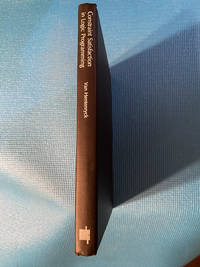
19892788<p><strong>Constraint Satisfaction in Logic Programming</strong></p><p><strong>Pascal Van Hentenryck</strong> MIT Press First Edition 1989 Language: English ISBN 10: 0262081814 ISBN 13: 9780262081818</p><p><strong>Book Description</strong></p><p>A landmark monograph that introduced constraint satisfaction as a first‑class computational paradigm within logic programming. Van Hentenryck presents a unified framework for integrating constraint‑solving techniques with declarative programming covering consistency algorithms propagation methods search strategies and the formal semantics of constraint logic programs. The work played a foundational role in shaping constraint programming as a discipline influencing research in artificial intelligence operations research and combinatorial optimization. This volume is a significant component of the <strong>Hassan Aït‑Kaci archive</strong> aligning directly with his contributions to logic programming unification theory and the formal underpinnings of declarative computation.</p> MIT Press hardcover
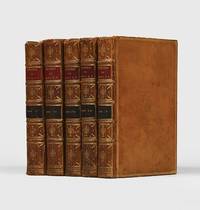
1779153032The Hague: Detune 1779. Collecting Pascal's published and unpublished work First collected edition of Pascal's works containing much significant material published here for the first time. Pascal is the towering figure among the European mathematicians of the mid 17th century. His achievements range from his celebrated calculating machine - the first to be produced commercially - to projective geometry the calculus of probabilities and indivisibles and to the study of infinitesimal problems. This edition was prepared by an important French disseminator of science and major contributor to scientific education Charles Bossut 1730-1814. His textbooks of engineering and physics were in use in France and - in translations - in other European countries up to the Empire. He also wrote the "Discours sur la vie & les ouvrages de Pascal" which takes up pages 3 to 119 of volume I of this edition. The first three volumes are devoted to Pascal's literary and philosophical writings the final two volumes to his scientific texts. For a detailed bibliographical analysis see René Taton's article in DSB. Among the scientific works appearing here for the first time are the famous Pascal-Noël correspondence on the vacuum the letter to Le Pailleur refuting Noël the preface to the treatise on the vacuum the only surviving fragment of his intended major treatise on the vacuum and his correspondence with Fermat and de Ribeyre. Also included are all of the Pascal texts relating to his invention of the calculating machine with two finely engraved plates depicting the mechanism Pascal's letter to Queen Christina Royal patents etc. which are virtually unobtainable in the originals. 5 vols octavo 199 x 127 mm. Titles printed in red and black with engraved portrait frontispiece 13 folding engraved plates 1 further plate usually folding here trimmed and single page woodcut vignettes woodcut tailpieces in the text. Contemporary calf red and black morocco labels gilt in compartments gilt rule border to covers marbled endpapers gilt edges. Some chipping and wear round extremities all joints and hinges intact contents clean bound without the 'Avis' leaf at the end of vol. V repaired closed tear at head of vol. III pp. 491/2 affecting text; a very good set. Maire pp. 11719; see DSB X 33042. unknown
1888167887Istanbul: Sébah & Joaillier c.1888. Remarkable photographic panorama of Istanbul A superb panoramic view of the city taken from the Galata Tower looking over the Bosporus towards the Asian side; across the Golden Horn can be seen the Topkapi Palace and the great mosques of the city Haghia Sophia the Blue Mosque the Yeni Mosque and the Süleymaniye. In 1857 Pascal Sébah opened one of the first photographic studios in Constantinople. Having met with great success in 1873 he expanded the business setting up a further establishment in Cairo near to the renowned Shepheard's Hotel. In 1883 he suffered a stroke and the business was taken over by his son Jean who styled himself J. Pascal Sebah so as not to break the continuity of the business and was to become a talented photographer in his own right. In 1888 he went into partnership with a French photographer resident in Istanbul Policarpe Joaillier the firm in time becoming official photographers of the Sultan. In various forms this business continued down to the middle of the 20th century when in 1952 its last incarnation Foto Sabah finally closed its doors. "From the 1870s Sébah and Joaillier were major suppliers of evocative imagery to the increasing number of people who undertook the Victorian Grand Tour" Hannavy p. 1261. Landscape folio 310 x 375 mm. With 10 albumen prints mounted on card panels and joined with linen tape leporello-style to form a panorama approximately 3.47 m over 11 feet in length card panels 3054 x 340 mm; photographic prints 247 x 340 mm. Original red sand-grain cloth over bevelled boards red roan backstrip title gilt to front cover within elaborate ornamental gilt panel and incorporating images of the Galata and Maiden's towers gilt stamp to back cover of the ay-y ld z star and crescent within a laurel wreath. Covers variably sunned old splash stain to head of front cover a few marks to back light foxing and marginal dust marking the images bright and clean. A very good example. John Hannavy ed. Encyclopaedia of Nineteenth-Century Photography Vol. I 2005; Engin Özendes From Sebah & Joaillier to Foto Sabah: Orientalism in Photography 2004. hardcover
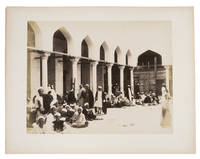
1888ABC_47975Cairo 1888. 34 albumen prints ca. 22 x 27 cm mounted on cream cardstock ca. 28 x 35.5 cm. Remarkable collection of 34 stunning photographic prints of Egypt all numbered titled and signed in the negative by photographer Jean Pascal Sébah 1872-1947 who owned the leading studio for Orientalist photography. He was even named the official photographer of the Sultan of Turkey together with his business partner Polycarpe Joailllier 1848-1904. The majority of the images in the present collection show streets and buildings from lesser known Egyptian cities and scenes of daily life. Larger collections of Sébah's work are relatively rare on the market.Sébah continued the business of his father Pascal Sébah 1823-1886 one of the first photographers working in Egypt. Pascal rose to prominence because of his well-organized compositions careful lighting and quality of his prints. The majority of his photographs are of tourist destinations and locals. Jean Pascal inherited his father's good eye but was more interested in depicting lesser known locations. His photos of people also appear more spontaneous. The present collection includes photographs of El-Souroughieh street and the Khalig canal in Cairo the Virgin Mary's tree in Matariya a local with a buffalo a group of seated men in a mosque a sugarcane market locals working on a sugarcane field a group of boys fishing and the hustle and bustle along the Nile.With a small purple ownership stamp of an anchor in mirror image and the letters "S A" near the top edge of one of the photographs of the Nile. The cardstock is very slightly foxed and yellowed and has somewhat warped from past temperature fluctuations. The prints have somewhat yellowed around the edges but are otherwise in good condition.l Cf. Saretzky The history of photography online. unknown