Blaise PascalBiblio.com
113 résultats
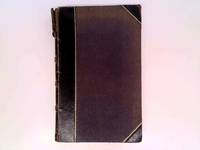
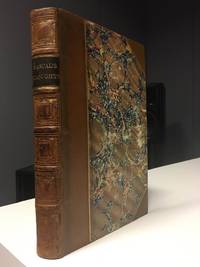
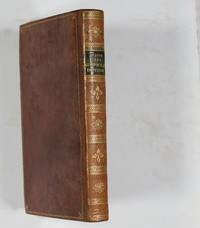
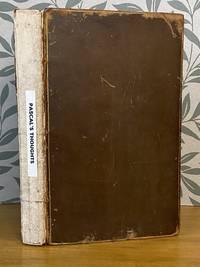
18061823London: Printed for Samuel Bagster 1806. 2nd Edition . Hardcover. Good. 8vo. 384 pages. Brown calf binding; gilt borders to boards. Portrait of Pascal as frontispiece. Boards heavily rubbed; back strip missing; label with printed title attached to spine. Ownership inscription on flyleaf. A little foxing to preliminary pages and the occasional spot elsewhere; a few pages lightly toned. Binding firm. <br/> <br/> Printed for Samuel Bagster hardcover
1806mon0001631614Samual Bagster 1806. Hardcover. Good. . Leather spine and corners. There is a tear near the top of the spine. Boards have faded and the corners are scuffed/bumped.Library plate inside front board and stamp on title page.Hinges and binding firm with no loose pages.Marbled edges on side and bottom clean but top edges faded.Text clean and easy to read. Samual Bagster hardcover
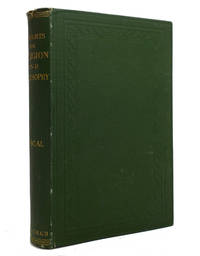
1894143469London: Simpkin Marshall Hamilton Adams & Co 1894. First Edition Thus. Hardcover. Very Good in boards. Owner name on title page. Simpkin, Marshall, Hamilton, Adams, & Co hardcover
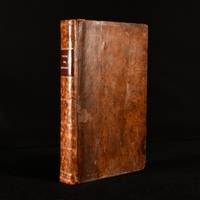
1803774P11London: Samuel Bagster 1803. Leather. Good. 8.5" by 5". None. An English translation of Blaise Pascal's important thoughts on religion and other subjects an interesting philosophical work. Thomas Chevalier's English translation of Blaise Pascals 'Pensees'.Pascal's 'Thoughts' is a collection of fragments a defence of the Christian religion across thirty 'thoughts' in total.A memoir of Pascal's life and writings is included in this edition. Frontispiece is not bound facing the title page the portrait has been excised and adhered to the recto to the front endpaper.Half-title is present.Two pages of publisher's adverts to the rear. In a marbled calf binding rebacked with the original boards restored. Externally with some marks to the boards and spines. Evidence of former loss of leather to the boards. Frontispiece tipped in to the recto to the front endpaper. Internally firmly bound. Pages are lightly age-toned with some spots. Good Samuel Bagster hardcover
1829024768Amherst MA: J. S. and C. Adams. First American Edition so stated of Pascal's famous "Les Pensees." Original full leather. Interesting Provenance: Inside the front cover are two very early bookplates one of Stephen N. Manning and one of the Granville Female College. On the Manning bookplate is W. Grant Spencer in pencil and Spencer's name is on the college bookplate as having presented the book to the college. Spencer's name in ink is on the front free endpaper too. Beneath the bookplates is Leo Heitel in ink. On the front free endpaper in addition to the Spencer name are Granville Female Acad. No. 315 and Smithsonian Society 1852 M126. Some scuffing of the leather covers and spine small edge tear and dampstain on front free endpaper leaving a faint mark on the following title page small corner chip on final blank internals otherwise nice Good Plus. . Good. Hardcover. 1st Edition. 1829. J. S. and C. Adams hardcover
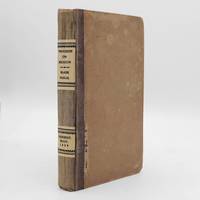
1829376582Amherst Mass: Published by J. S. and C. Adams 1829. First American edition. Translated from an 1819 Paris edition of the "Pensées." The first attempt at the collection of the "Pensées" was in 1670. the first edition in English was the translation by Joseph Walker and published in 1688. 304 pp. 1 vols. 12mo. Contemporary cloth-backed brown boards. New labels some rubbing and wear to binding some spotting and browning of text generally light small tears on title from partial removal of a signature. In a leather tipped brown cloth open end case. First American edition. Translated from an 1819 Paris edition of the "Pensées." The first attempt at the collection of the "Pensées" was in 1670. the first edition in English was the translation by Joseph Walker and published in 1688. 304 pp. 1 vols. 12mo. Craig's edition includes most of the "Pensées" with exceptions of those pieces relating to the Catholic church which he felt inadequate to translate and those pieces that did not relate to religion. "The work is notable for its acute analysis of human character for many striking sayings and for its combination of powerful and persuasive reasoning with passionate devotion" Oxford Companion. American Imprints 39971 Published by J. S. and C. Adams unknown
1803136<p><strong>Contemporary 3/4 Brown calf over marbled paper boards. Decorative spine with raised bands. Octavo. 2 frontispiece 71 330pp. First edition of the Thomas Chevalier 1767-1824 translation of Pascals Penszes. An Anglo-French surgeon with a practice in London undertook this translation because he disapproved of the earlier English translations of the Penszes. He found the Joseph Walker and Kennett translations problematic. Chevalier's own objective was he declared "to communicate the sentiments of Pascal in his own stile." A most uncommon edition. OCLC lists eight copies. A very good and very attractive copy of a scarce book bound with the half-title and 2 ads but with the very rare frontispiece. </strong></p> Samuel Bagster hardcover
182935PA5J. S. and C. Adams Amherst MA: 1829. 1829 304 p. Without the frontis portrait found in some copies. 12mo. 19 cm. XLib. Original boards needs rebacking. Manuscript ownership of N. A. Keyes 1839. First American Edition of the Pensées. Blaise Pascal 16231662 the great French scientist and religious philosopher was famous as a youth. He wrote a paper before he was 16 on conic sections which won the respect of the mathematicians of Paris. At 19 he invented a calculating machine. Credited with founding the modern theory of probability Pascal also discovered the properties of the cycloid and contributed to the advance of differential calculus. In physics his experiments increased knowledge of atmospheric pressure through barometric measurements and of the equilibrium of fluids see Pascal's law. As a young man Pascal came under the influence of Jansenism and in 1651 his sister Jacqueline who had also embraced Jansenist beliefs entered the convent at Port-Royal the center of the movement. As a result of the death of his father and of his own narrow escape from death Pascal in 1654 experienced what he called a "conversion" and thereafter turned much of his attention to religion. When Antoine Arnauld a noted Jansenist was attacked by the Jesuits Pascal championed him in his Lettre escrite à un provincial 1656. Those Provincial Letters rendered into Latin quickly circulated throughout Europe and they still hold a leading place in the literature of polite irony. Pascal's religious writings were posthumously published as Pensées de M. Pascal sur la religion et sur quelques autres sujets 1670. In the Pensées famous both as a religious and philosophical classic Pascal states his belief in the inadequacy of reason to solve man's difficulties or to satisfy his hopes. He preached instead the final necessity of mystic faith for true understanding of the universe and its meaning to man. W145 Rt/R. Language: eng. 1st Edition. Hardcover. Good. J. S. and C. Adams, Amherst, MA: 1829. hardcover
1804254031804. A Paris chez l'auteur / Gabon et Comp. l'an II de la RÂŽpublique / 1804. Un vol. au format in-8 218 x 138 mm de 2 ff. n.fol. et 371 pp. Modeste reliure de l'ÂŽpoque de plein cartonnage souple de couleur crÂme dos lisse piÂce de titre manuscrite contrecollÂŽe. Edition originale. L'exemplaire renferme 3 sur 3 planches gravÂŽes. L'auteur neveu de Jean se propose de retracer ici les techniques usitÂŽes par deux cÂŽlÂbres lithotomistes : Jean Baseilhac - inventeur de plusieurs instruments chirurgicaux dont le lithotome cachÂŽ que figure la planche- ainsi que Jacques de Beauliieu. La figure de FrÂre Cosme appara”t plusieurs fois chez Diderot notamment dans Jacques le fataliste o le Ma”tre lui attribue une opÂŽration de la taille rÂŽussie anecdote de l'anneau de mariage brisŽÊ: "le destin est cauteleux" et dans une lettre ˆ Sophie Volland. Le lithotome cachÂŽ ÂŽtait Instrument servant pour l'opÂŽration de la taille. La lame sortie de la gaine incisait le col et la prostate en sortant de la vessie ˆ l'inverse de tous les autres cystotomes employÂŽs auparavant. QuÂŽrard I La France littÂŽraire p. 206. Dos ridÂŽ et plats prÂŽsentant un ÂŽclat altÂŽrÂŽ. Rares rousseurs dans le texte. Du reste bonne condition. Exemplaire qui a conservÂŽ de grandes marges. Peu courant. b42961 unknown
18874516Paris: Paul Ollendorff 1887. Fine. Paul Ollendorff Paris 1887 12 x 19 cm broché First edition for which there were no large paper copies. A very good copy. Paul Ollendorff unknown
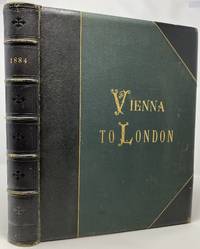
18841295No place listed: No publisher listed 1884. Leather bound. Very good. PHOTO ALBUM. Folio; 64 cream-colored mat board leaves; three-quarters black pebbled-leather over dark green textured cloth gilt-stamped title to front board beveled edges; 5 raised band spine blind-stamped ornaments gilt-stamped date "1884"; all edges gilt; gray marbled endpapers; 161 albumen and collotype photographs mounted on cream-colored mat board some signed sizes vary from the smallest 3" x 4" to largest 7" x 9" although most are in a mid-range of about 3 ½" x 5"; laid in is a 10pp manuscript with photograph descriptions corresponding to the hand-numbered mat boards; five mat boards have been removed as evidenced by the skip in pagination from the small pencil numbering of pages in the upper right corner and from the owner's written listing of images; scuffing to boards a few finger smudges one photograph with a creased edge; very good. A large photography album of natural scenery street scenes buildings and bridges and works of art stretching from Vienna to London passing through Germany and Switzerland. <br /> <br /> Images can be attributed to: <br /> Pascal Amarante by his monogram; <br /> Albert Bonnier by his initial signature "AB;" <br /> Dresden photographer Rudolf Tamme using a blind-stamp oval in the lower right corner of the photograph "F&O Brockmann's Nachf. R.Tamme Dresden" or the Nachflagor or the successor to Brockmann; <br /> Photographische Gesellschaft Berlin Berlin Photographic Company with offices in Berlin London and New York using a blind-stamp;<br /> German photographer C. Hertel by his printed name; <br /> J. Patrick John or James by his printed name;<br /> Two Scottish photographers James Valentine by his initial signature "JV" and George Washington Wilson by his initial signature "GWW." Two unidentified photographers have signed their work "X Phot." and "Davis's Series.". No publisher listed unknown
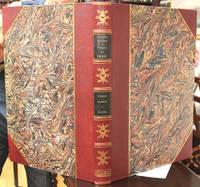
1854B5798Gide et J. Baudry libraires-Editeurs c.1854. Edition: First Edition Binding: Contemporary half red morocco with gilt double fillet borders with marbled boards; expertly rebacked; spine with 5 raised gilt designed bands and central gilt ornaments; gilt titled morocco labels on two and four; matching marbled pasted and free endpapers. Notes: Text in French.<br>This example does not include Perse Ancienne; it includes a complete set of Perse Moderne's 100 exquisite lithographed plates. <br>First edition of this survey of Modern Persia. This is the atlas volume for the Modern Persia section only. There are several atlas volumes that form part of the larger set with text volumes which are not present here. While complete sets are very rare and the part on ancient Persia focuses mainly on ancient monuments and structures of architectural interest the modern part describes the country during the 19th century many parts of which were difficult and unsafe to access; it is therefore of greater interest and the more sought after. <br>Jean-Baptiste Eugène Napoléon Flandin 1809-1889 was a French orientalist painter archaeologist and politician. He is most renowned for his famous drawings and paintings of Persian monuments landscapes and social life made during his travels with the architect Pascal Coste during the years 1839-41. Flandin’s observations on the state of Persia and international politics in the mid-19th century also continue to provide important documentary information. In 1839 Flandin was along with Coste made a laureate of the Institut de France and they both joined the embassy of the Comte de Sercey to Persia. After parting from de Sercey’s mission they left Isfahan with very limited financial means and retinue. Flandin’s courage during this journey which spanned the entirety of Persia was praised by Coste who also noted his intrepidity during times of duress. Their timetable and work were strictly organized. After Flandin’s return to France he was awarded the Légion d’honneur in 1842 for his part in this government-sponsored archaeological mission. The atlas volumes form part of the larger set with text volumes not included here. <br> Size: Folio 612 mm x 432 mm Illustration: 100 lithographed plates including 2 finely hand coloured plates. Some plates with 2 images. Provenance: Round bookplate with heraldry at centre surrounded by References: Brunet II 1280; Wilson p. 72 Pages: P. Ex libris bl. 4 Half Title Publisher’s Note Title bl. 100 lithographed plates Table of contents 3. Category: Book Asia Middle East Iran; Gide et J. Baudry, libraires-Editeurs hardcover
1802701091802. Wien : Hraschanzky 1802 8° 192 pp. Titelvignette polierter Kalbsledereinband mit Rvg. Erste Ausgabe! "Mit gegenwärtiger Abhandlung werden dem Publikum die Berichte vorgelegt welche über die gemachten Versuche mit der Impfung von Kuhpocken der Nied. Oesterreichischen Regierung übergeben worden sind. . Da aber nun alle diese Versuche ohne einige Ausnahme die Behauptung bestättigen daß die Impfung der Kuhpocken ein leicht anwendbares und sicheres Schutzmittel gegen die Blattern sey so ist es nun Pflicht die wohltätige Erfindung allgemein bekannt zu machen ." Ferro Pascal Joseph Ferro ab 1805 Pasqual Joseph Ritter von Ferro 5. Juni 1753 in Bonn - 21. August 1809 in Wien war ein deutscher Arzt Sanitätsreferent der niederösterreichischen Landesverwaltung und Hochschullehrer in Wien der das moderne Sanitäts- und Rettungsdienstwesen sowie die Kuhpockenimpfung in Österreich eingeführt hat. Pascal Joseph wurde 1753 in Bonn als Sohn des Offiziers Johann Lazarus Ferro aus Treviso und der Anna Catharina Komerscheid geboren. Mit 14 Jahren begann er zunächst eine Ausbildung als Wundarzt damals ein Handwerksberuf und ging dann zum Militär. Von 1771 bis 1775 war er Feldscher eines pfälzischen Kavallerieregiments. Ferro wollte jedoch Arzt werden und studierte Medizin in Heidelberg Straßburg und Wien. Er blieb in Wien und war zunächst Assistenzarzt am Parzmayerschen Spital ehe er 1785 in den sanitären Verwaltungsdienst eintrat mit dem Titel Sanitätsmagister von Wien. Im Jahr 1793 wurde er zum Sanitätsreferent der niederösterreichischen Landesregierung im Rang eines Regierungsrates ernannt. In dieser Position sorgte er für die Einrichtung eines Rettungswesens und regelte das Bestattungswesen. 1780 begann Ferro als Mediziner mit Kaltwasserbehandlungen Hydrotherapie und Sauerstofftherapie zudem konstruierte er ein Badefloß als schwimmende Badeanstalt auf der Donau. -cf. wiki unknown