440 résultats
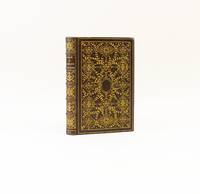
1892ST17001Paris: Imprimé par D. Jouaust Librairie Des Bibliophiles E. Flammarion Successeur 1892. 188 x 104 pp. 6 3/4 x 4 1/4". XL 290 pp. 1 leaf.Preface and notes by J.-F. Thénard. With the autobiographical essay "Self-Portrait by Himself" from the 1665 first edition the introductions to the 1665 and the 1678 fifth editions maxims removed from earlier editions and the posthumously published essays "Reflections." <br/> EXQUISITE DARK BROWN MOROCCO EXUBERANTLY GILT IN THE FANFARE STYLE BY ZAEHNSDORF stamp-signed in gilt on front turn-in blind Exhibition stamp on rear doublure covers with fillet border enclosing a panel with central oval strapwork medallion surrounded by rows of geometric ornaments with sprays of leafy fronds connecting them and filling the space between raised bands spine compartments with central geometric ornament with leafy cornerpieces gilt lettering turn-ins with gilt fillets accented with leaf sprigs crimson silk doublures and free endleaves all edges gilt. Printer's device on title page. Front flyleaf with quote in French from the text "It is more necessary to study men than to study books" and "Christmas 1895" written in ink; recto of rear free endleaf with Taplow Court library label of William Grenfell Baron Desborough. ◆Minor soiling to flyleaves very faint browning to edges of leaves otherwise very fine the text clean and fresh and in a virtually unworn binding bright with gilt.<br/> <br/> This comprehensive edition of the French moralist's famed collection of epigrams is offered here in a binding done in the fanfare style popular when this work was first printed. After a turbulent youth of court intrigue and aristocratic rebellions against King Louis XIII François Duc de La Rochefoucauld 1613-80 settled into a quiet life in the Parisian salons of Madame de Sablé Madame de Sévigné and Madame de La Fayette. It was among this intellectual witty society that he honed the pithy epigrams that would have such an influence on French literature and culture. As the Oxford Companion notes "The high degree of polish in the phrasing of the 'Maximes' which excel in conciseness precision and appropriateness of expression is to some extent due to discussions among his friends . . . . The work is a collection of some 500 gnomic sentences in which the author analyses the motives of human conduct with merciless penetration. While he recognizes in rare cases the existence of pure virtue and disinterested sentiments he finds them tainted almost universally with some element of self-love or interested motive." Voltaire drew on La Rochefoucauld's views when writing "Candide" and the "Maximes" impacted the works of French writers from Stendhal to André Gide as well as philosopher Friedrich Nietzsche and English novelist Thomas Hardy. The duke's worldview would have resonated with former owner William Grenfell Baron Desborough 1855-1945 a sportsman and indefatigable public servant who was one of the founding members of The Souls fl. 1886-1900 an elite group of friends whose social gatherings for intellectual discussions were perhaps Victorian London's closest approximation of a Parisian salon. Although other members included prominent and accomplished men and women it was the parties given by Grenfell's wife and fellow Soul Ettie that attracted guests like Vita Sackville-West H. G. Wells Edith Wharton Oscar Wilde Edward VII when Prince of Wales and Winston Churchill. One can easily imagine one of the Souls presenting this volume to the Grenfells for Christmas in 1895.<br /> <br /> By one of the great London workshops the binding here is a modified example of the fanfare style of decoration popular in France from the late 16th to mid-17th century. The main features of this style in Glaister's words "are interlacing ribbons" that form "compartments of various shapes with emphasis given to a central compartment." Ornaments made with small hand tools "fill all the compartments except the central one and almost completely cover the sides." The fanfare style is perhaps most frequently associated with the work of Nicolas and Clovis Eve court binders and booksellers to successive kings of France from about 1578 to 1634. It is generally believed that the term "fanfare" actually took its name from an early 17th century music book the title of which begins with the word "fanfare" acquired by the bibliophile Charles Nodier in 1829. The book was bound for Nodier by the famous Parisian binder Joseph Thouvenin using an appropriately retrospective design in imitation of the Eves' style which from that point forward came to be known as "fanfare." The Zaehnsdorf bindery produced a number of bindings in this genre with their usual expertise. Hungarian-born Joseph Zaehnsdorf 1816-86 served his apprenticeship in Stuttgart worked at a number of European locations as a journeyman and then settled in London where he was hired first by Westley and then by Mackenzie before opening his own workshop in 1842. His son and namesake took over the business at 33 when the senior Joseph died and the firm flourished under the son's leadership becoming a leading West End bindery. Over the years Zaehnsdorf employed a considerable number of distinguished binders including the Frenchman Louis Genth who was chief finisher from 1859-84 and trained a number of others including Roger de Coverly and Sarah Prideaux. A family-run business until 1947 the Zaehnsdorf bindery continued to produce consistently attractive tasteful and innovative designs executed with unfailing skill. It is generally understood that the Zaehnsdorf firm reserved the use of its oval stamp showing a binder at work for their finest bindings including those entered in exhibitions. [Imprimé par D. Jouaust] Librairie Des Bibliophiles, E. Flammarion, Successeur unknown
1994LFA-126729177Un ouvrage de 24 pages, format 210 x 300 mm, illustré, broché, publié en 1994, Editions du Bastion, bon état
17173617BB1717. Köln van Dyck 1717. 371 S. Lederband d. Zt. mit goldgepr. Rückentitel altersgemäß berieben und beschabt Vorderdeckel an der Längskante mit Bestoßung. Grünes Lesebändchen umlaufender Rotschnitt marmoriertes Vorsatzpapier. Letzte Seite mit auf 1718 datierte Namenseintragung von alter Hand sonst innen in sehr schöner Erhaltung. unknown
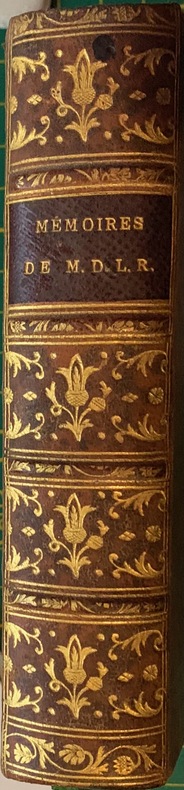
1664122051664 Cologne, chez Pierre Van Dyck, 1664; in-12 de (4) pp. (titre à la sphère, advis au lecteur) - 400pp. Reliure pastiche d'une reliure du XVIIIe siècle, pleine basane marbrée brune, dos à nerfs très orné de petits et fleurons dorés, roulette sur les nerfs et coupes, titre doré sur étiquette de maroquin rouge, tranches rouges. Nouvelle édition, 4e édition originale (cf. Tchémerzine).
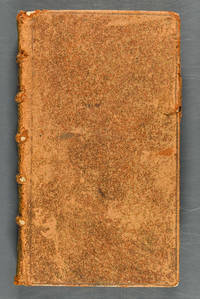
1723125991723 Amsterdam, Aux dépens de la Compagnie, 1723; 2 tomes en 1 for volume in-12 de (2) ff. - XXII - (II) - 256pp.; ( 3)ff. - 318pp. Titres imprimés en noir et rouge. Plein veau granité brun de l'époque, dos à nerfs orné, titre doré sur étiquette de maroquin vieux-rouge, tranches rouges.
166420537BBCologne, Chez Pierre van Dyck. (d.i. Bruxelles), Foppens) 1664. 12°. 2 Bl., 400 S. Geglätteter, hellbrauner Kalblederband mit rotem Rückenschild, reicher Rückenvergoldung und doppelter Deckelfiletierung.
1955866311955 Paris, NRF, Gallimard (Bibliothèque de la Pléiade), 1973, fort volume in 12 relié pleine cuir rouge vénitien de l'éditeur, jaquette rhodoïd, XLVIII-996 pages ; sans étui.
69297Le Puy, Peyrille, Rouchon, sans date, plaquette grand in 8° brochée, 25 pages ; non coupé ; couverture rempliée ; portrait en frontispice.
1956LFA-126712678Publication trimestrielle : 34 pages, format 170 x 250 mm, brochée, illustrée
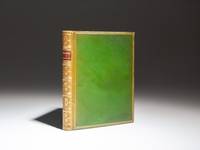
191318937London: Arthur L. Humphreys 1913. Fine Binding. calf. Fine. Finely bound 1913 edition of Maxims by La Rochefoucauld published by Humphreys of London binding by Bayntum and Riviere. Sixteenmo 10116pp 2. Full green tooled calf gilt dentelles. Marbled endpapers top edge gilt. Clean text throughout. Illustrated headers printed on India paper. A beautiful binding by Bayntum. Maxims published in French as Réflexions; ou sentences et maximes morales is the best-known work of François duc de La Rochefoucauld 1613-1680 first published anonymously in 1665 and revised through several editions during the author's lifetime with the 1678 fifth edition generally representing his final authorized text. The book consists of brief moral observations on pride self-interest love friendship virtue hypocrisy and social conduct often reducing human motives to vanity or concealed self-love. Arthur L. Humphreys unknown
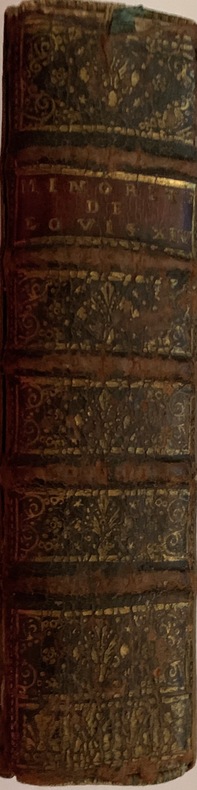
1662elala1361Cologne: Pierre Van Dyck 1662. 1662. 12mo. pp. 3 p.l. 326. complete with initial & final blank. woodcut sphere device on title. contemporary sprinkled calf extremities worn covers chafed & with a few wormholes. One of several counterfeit editions printed in France the same year as the first edition. La Rochefoucaulds memoirs concerning the civil wars in France during the minority of Louis XIV are regarded as the most important after those of Cardinal de Retz. The author played a prominent though ineffective role in the Fronde as an ally of Condé against Mazarin. He took part in the siege of Paris was severely wounded at the siege of Mardyke and was later shot in the head at the battle of the Faubourg Saint Antoine. La Rochefoucauld was "the greatest maxim writer of France one of her best memoir writers and perhaps the most complete and accomplished representative of her ancient nobility." Encyc. Britan. 11th Edn. Barbier III 204. Graesse IV 109. Marchand pp. 34-36. Rahir 3375. Tchemerzine VII 41 2. Willems 1997. cfBerghman 1690. cfBrunet III 818. cfCioranescu 40266-68. cfQuérard IV 567. 1st Edition. Hardcover. Good. Cologne: Pierre Van Dyck, 1662. Hardcover
166475701664 demi-rel. XIXe (pastiche XVIIIe) basane claire mouchetée,dos à n. in-16, (2ff.), 320pp., A Cologne chez Pierre Van Dyck 1664,
16651206Paris, Barbin, [Grenoble, Provensal ?], 1665 ; petit in- 12 de [23] ff., 135 pp., [9] pp., basane brune de l’époque très usée.
15572A Paris, chez la veuve d'Etienne Ganeau, 1741. In-12 de XXXIII-[1]-299 pages, plein-veau brun, dos à nerfs orné de filets et fleurons dorés, pièce de titre beige, tranches rouges. Coiffe supérieure absente et un coin frotté. Ex-libris de Fred et Camille Blanchod.
22120Paris, PUF, 1984. 1 vol. in-8° br., couv. pelliculée illustrée, 292 pp., (1) f.*[G13]
29660P., Hachette (Collection "Les Grands Ecrivains Français"), 1921, in 12 broché, 205 pages
51706P., Plon (Bibliothèque Française, XVIIe siècle), 1914, in 12 cartonnage pleine percaline grise de l'éditeur, 298 pages ; portrait en frontispice.
1765102871765 basane blonde mouchetée, dos plat, tr. mouchetées bleues. in-16, (2ff.), XIX, (2ff.),360pp., Paris Ganeau 1765,
13033Toulouse, Marin Fouchac et Guill. Bely, 1688 ; in-12 (13,6 x 7,8 cm). 16 ff. n. ch. 140 pp.-6 ff. n. ch. Basane brune, dos à nerfs non orné, pièce de tritre bordeaux (Reliure de l'époque).
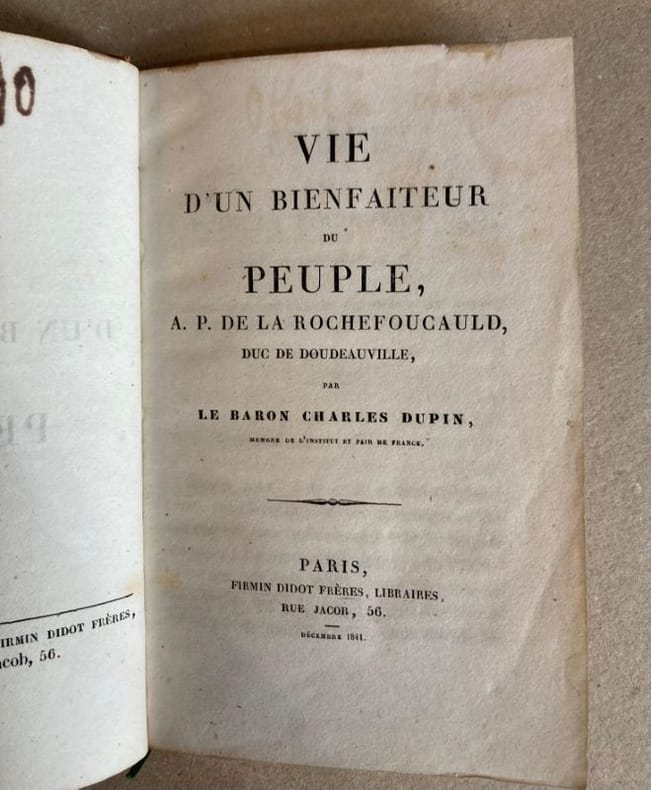
184114170Paris FIRMIN DIDOT 1841 1 A. P. de la Rochefoucauld, duc de Doudeauville, par le baron Charles Dupin, membre de l'Institut et Pair de France. Paris, Firmin Didot, décembre 1841, petit in-12, demi-basane fauve, dos lisse, titre estampé doré, 84 pages, (Simier Relieur).
1959B583Paris, Club du Livre, 1959 ; in-folio, 257 pp., reliure d'éditeur plein-chagrin rouge, dos à nerfs, tête dorée, sous emboîtage, 1er plat estampé à froid d'un portrait de La Rochefoucauld. Burins originaux de Decaris. Bon état.
201201196, Librairie somogy, 1945 ; in-8, 265 pp., br.
200413772Paris, Bibliothèque Larousse, s.d. ; in-12, 182 pp., demi-basane à caissons. Notices et annotations par Marius Roustan - quatre gravures hors texte.
200814453Lausanne, Société coopérative édition rencontre , 1962 ; in-12, 257 pp., cartonnage de l'éditeur. Préface de Jean Valllier.
201611422Paris, Le club francais du livre, 1961 ; in-8, 211 pp., cartonnage de l'éditeur. En très bon état pleine toile d'éditeur avec son rhodoide edition originale numeroté.