279 résultats
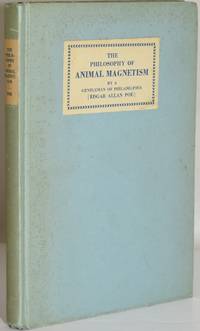
1928279090Philadelphia: Patterson & White 1928. Limited Edition. Hard Cover. Very Good binding. An unnumbered Review Copy signed by Joseph Jackson with "Review Copy" written in his hand. Blue paper-covered board with paper title labels; some light and scattered foxing. Prospectus for the book is laid in. Very Good binding. Patterson & White unknown books
19352133New York: American Book Co 1935. Hard Cover. Very Good/No Dust Jacket. 12mo. 563 pages. Bound in dark blue cloth lettered in gilt spine faded; internally clean; very good. Laid in is a pamphlet reprinted from the Romantic Review Vol. XLI No. 1 February 1970 entitled "A Note on the inadequacy of Poe as a proofreader and of his editors as French scholars." <br/><br/> American Book Co hardcover books
183719474Philadelphia: Printed and Published by Merrihew & Gunn 1837. First edition. Boards soiled and spotted and the edges rubbed; spine split nearly the length of the joint and front board loose; some light foxing throughout; a good sound copy only. 12mo original rose linen spine printed drab boards 84 pages. Poe enthusiast Joseph Jackson was fresh off his triumphant 1920 attribution to Poe of the uncommon pseudonymous anti-Dickens English Notes Boston 1842 by "Quarles Quickens" when in Jackson's own words "the publicity given that discovery set a good many booksellers delving for copies. One Philadelphia bookseller who had not been fortunate enough to uncover a copy . . . did run across an anonymous little book which seemed to him to have a Poesque touch although he could not exactly explain why he was thus impressed. He had no knowledge of the copy which came into his possession but when I was looking over his stock he handed it to me with the remark: 'This looks as if it was written by Poe.'" From this characteristic bookseller remark--a certain offhand scholarly optimism cloaked in the guise of expertise with enough of modesty to serve as a disclaimer and nothing so vulgar here as the mention of a profit--there of course soon burst a moderate boom for this title. In the foreword to the new edition of the Philosophy of Animal Magnetism Philadelphia 1928 which inevitably followed Jackson makes a show of professing a suitably demure initial skepticism before launching into a series of confident assertions regarding Poe's identity as the author--Poe must have visited Philadelphia in 1837 as he had nothing else much better to do; the address of the printers in Carter's Alley puts them on the same block as the editor Samuel Atkinson which "would suggest that Poe had called on Atkinson and that the latter had referred him to the printers as likely to publish the book;" the use of italics and small capitals for emphasis is particularly characteristic of Poe "It is true that his publishers in later years dispensed with the use of small capitals but the printers of 'Animal Magnetism' Merrihew and Gunn Philadelphia were a new firm and did not remain long in business. They evidently followed the author's copy literally"; the appearance of the word "Literati" in the dedication to the receptive mind inevitably suggests Poe etc. etc. Jackson's case was sufficiently convincing to collector J. K. Lilly who reportedly paid $2500 for a copy of the first edition of The Philosophy of Animal Magnetism and--given the well-known difficulties of proving a negative allied to the book trade's understandable reluctance to give up a profitable attribution--later bibliographers have seemed equivocal about showing Jackson's claims the door. BAL vol. 7 page 150 notes "Jackson attributes this piece . . . to Poe" thus leaving outside the Poe canon while bibliographer of animal magnetism Adam Crabtree remarks "Although there is no general agreement on the matter this book has been attributed to Edgar Allan Poe." Scribner in 1941 offered a copy of the first edition for the then-substantial sum of $175 under the fig leaf of "Attributed by some authorities to the pen of Poe." Only Merle Johnson seems to have sufficient temerity to note as early as 1936 that this title "is now definitely established as not the work of Poe." All this having been said still an interesting early American work on the subject including instructions on how to induce magnetic somnambulism. Crabtree 385. Printed and Published by Merrihew & Gunn, unknown books
191519747Saint Louis: William K. Bixby 1915. One of 200 copies printed first edition printed on paper watermarked "Van Gelder Zonen Holland. Facsimiles. 26 pp. 1 vols. 8vo. Original cream boards. Some spotting and soiling of boards light spotting at front and back generally a very clean good copy. One of 200 copies printed first edition printed on paper watermarked "Van Gelder Zonen Holland" Facsimiles. 26 pp. 1 vols. 8vo. While not so markedthis copy was one of those retained in the family. Bixby "Privately Printed Books" p. 16; BAL 16177 William K. Bixby unknown books
1839006294Philadelphia: William E. Burton 1839. Very Good Plus and handsomely bound in later red cloth with gilt titles and rules top edge gilt marbled end pages 332 pp.with six tissue-guarded plates. gilt initials P.L. front board. complete with all illustrations lacking only the tissue guard for the month of September. Bound without the original wrappers. Cloth rubbed at corners and spine ends. Contains the First Printing of Poe's classic story "The Fall of the House of Usher" basis for several movies and TV shows including the 1960 classic "House of Usher" starring Vincent Price and with the screenplay by Richard Matheson. Also includes several other Poe stories and poems including "To Ianthe in Heaven" "The Man that was Used Up: A Tale of the Late Bugaboo and Kickapoo Campaign" "William Wilson: A tale" basis for several TV episodes "Morella: A tale" also filmed 1999 and "The Conversation of Eiros and Charmion". . First Edition. Cloth. Very Good Plus/No Jacket As Issued. 8vo - over 7¾" - 9¾" tall. William E. Burton, Hardcover books
183937562Philadelphia: William E. Burton 1839. 8vo pp. iv 334; 6 steel engraveds plates and illustrations in text; full calf gilt-stamped spine shelf wear; ex-Hill Library with usual markings; foxing and discoloration. This volume includes numerous stories and poems by Poe including "To Ianthe in Heaven" "The Man that was Used Up: A tale of the late Bugaboo and Kickapoo Campaign" "The Fall of the House of Usher" "William Wilson: A tale" "Morella: A tale" and "The Conversation of Eiros and Charmion". Also includes extensive pieces on archery gymnastics and cricket. <br/><br/> William E. Burton unknown books
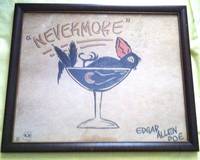
177New Jersey or New York: Al Capp 1930. UNIQUE. Framed. Very Good. Al Capp. Oil painting framed 15 1/2" H by 18 5/8" W; image: 13 7/16" x 16 7/16" signed by Al Capp with facial caricature of a man with bulbous eyes & two teeth plus initials; with the Edgar Allen Poe-based caption "Nevermore" in gold with black highlighting and double underlining above a cartoon of a drunken black raven with orange beak passed out upside down in a martini glass while still holding an olive with pimento. On the tattered brown paper backing there is the ink inscription: "PRESENT from MR. ACE" / The One and Only 1981" and an old browned newspaper cut-out of an Edgar Allen Poe caricature see below. Panel beneath the brown paper reads: Visit our Grecian Art Pavilion Ltd. Home of the "Hellenic Art Festival" Exquisite Oil Paintings Watercolors and select Handicrafts by Greek Artists 95-42 Queens Blvd. Rego Park N.Y. 11374 212 275-1745 Opposite Alexanders with auction tag Stamp faded on brown paper reads: Hellenic Art Center Ltd. 2804 Stenway Street Astoria N.Y. 1805 210-545-5093 Original Oil Paintings Framing & Frames in Stock. "Nevermore" is Al Capp's amusing painted parody of Edgar Allen Poe's famous croaking Raven adapted to point the negative moral of drunkenness for alcoholics. This remarkable and unique framed oil is in a somewhat worn wooden frame; executed on board ; and signed with Capp's unusual early caricature face & initials. Al Capp 1909-79 has been called--correctly I believe--the "Mark Twain of cartoonists." Other comparisons have likenened his work to that of Charles Dickens who also used social satire lampoons reformist topicality and memorable names for his unforgettable characters. Thus Capp observed that Dickens might have written comics if he had been alive today. As Capp also liked to emphasize: "No artist who can write should avoid words; no author who can draw should avoid drawing." From his boyhood on Al Capp was an enthusiastic reader of "literary classics" to name a few: adventure novels Dickens Thackeray Conrad Trollope G.B. Shaw and Edgar Allen Poe. During the late '40's and '50's when public fears mounted about violence and horror in comics having negative effects on children Capp used the example of Poe to illustrate that great authors and their works were not deemed to have such negatives. In this remarkable use of a major Poe image--that of the Raven who croaked "Nevermore"--Al only slightly twists it humorously to point a moral against alcoholism. Of course Poe himself suffered from alcoholism . . . and more while Capp was always a teetotaller though he too suffered in later life from a "cocktail" of drugs he took to cope with manic-depressive tendencies and chronic pain caused by the early amputation of most of his right leg. No doubt in part because of the mysterious alchemy created by the interaction of his comedic genius with his physical and emotional problems Capp's comic-based social satire was brilliant inventive frequently controversial enormously influential and topical--having persisted for 40 or more years through the middle of the 20th century with numerous repercussions to this day. Capp's characters and related creations have become part of American folklore; among them Dogpatch and its folksy denizens: Mammy and Pappy Yokum; Li'l Abner and a bevy of busty-and-leggy femmes fatals: Daisy Mae Stupifying Jones Wolf Gal Lena the Hyena and Available Jones. For many the depressed region of "Slobbovia" still resonates. Capp's inventive genius led to other memorable creations such as "Sadie Hawkins' Day" from 1937 and the mass merchandising of "Shmoos" 1948ff. "Kigme's" and "Kickapoo Joy Juice." Several of Capp's memorable phrases have also entered everyday use such as "amoozin and confoozin" or during the Cold War the name "Nogoodnik." Likewise musicals and movies have been made of "Li'l Abner" while an Arkansas' theme park named "Dogpatch" opened in 1968. A high school dropout Al Caplin took a succession of art courses from several distinguished art schools before he invariably dropped out. Accordingly his brilliant gifts as a cartoonist were honed on the job after constant practice. Highly relevant to the dating of our oil "Nevermore" during Al Capp's school-and-early apprentice years he sometimes worked in oils. Because this rare--but undated--cartoon has been executed in oils we can delimit its creation to Capp's early creative years. For a brief time Capp was active as a boardwalk caricaturist around Asbery Park New Jersey. At that time--about 1931-32--he hung out with an alcoholic portrait sketcher named Anderson. That Capp strongly rejected having a similarly depressed tawdry and boozy life as a starving artist suggests the milieu in which this memorable piece may have been created. Instead as a lifelong teetotaller Al soon took his portfolio of drawings to New York City where he began his strenuous climb toward recognition and prominence. Also about this time though he was still signing his work as "A. G. Caplin" in the early 1930s he formally changed his name to "Al Capp" after he turned 22 in early 1931. We can thus place the creation of this piece to around this period. Comparison of Al Capp's signatures over his career--especially this caricature & initial--indicates that this example is from earlier in his career. Most famous for "Li'l Abner" he began his famous strip on August 8 1934 while his first full color Sunday strip came out on February 24 1934. The beloved strip achieved an enormous circulation of 25-million by 1946. And between 1937 and 1947 it is estimated that each day about 70 million people read his "Li'l Abner" comic strip. Artist-writer Capp often remarked: "I think of myself as a novelist and of 'Abner' as a novel a page of which is pulled every day. At the end of the year I've written 365 pages fully illustrated." The remarkable period of the Thirties also saw the birth of Chester Gould's "Dick Tracy" 1931 and "Terry and the Pirates" 1934; while "Superman" Action Comics came into being in 1938. Capp created the comic strip of "Abbie an' Slats" in 1937. During World War II because he had lost most of his right leg in a trolley-car accident Capp was 4-F. He actively participated in creating promotions for war bonds and regularly visited wounded vets for whom he regularly drew pictures. The tone of our piece doesn't seem appropriate though for a possible hospital visit. During the war and through most of the later 1940's however Capp also created devastating pre-Mad magazine parodies. Among them he lampooned Milt Caniff's "Steve Canyon" with his own "Milton Goniff's 'Steve Cantor'"; John Steinbeck's Grapes of Wrath the Ford film of 1940; and his friend Chett Gould's "Dick Tracy" in contrast to Capp's ridiculous detective "Fearless Fosdick" 1942ff. Al overstepped contemporary legal boundaries with a strip parody of "Gone wif the Wind" starring "Wreck Butler" and "Scallop O'Hara" in late 1942. As a result Margaret Mitchell threatened to sue his publisher for $76-million thereby causing Capp to drop the spoof and formally apologize in another cartoon. Stylistically our "Nevermore" is a take-off or parody of Poe's very well-known ominous raven. During the early 1940s several cartoonists created similar crows and ravens. Capp's raven resembles Chuck Jones' "Mynah bird" that he created for Warner Brothers from 1939-41. Likewise Cliff Edwards' "Jim Crow" appeared in Disney's "Dumbo" in 1941. One also notes nose art that WWII pilots used to decorate their warbirds "Old Crow Express" being one such; as well as Paul Terry's very popular "Heckle & Jeckle"--actually two Magpies not ravens--that he created in 1946 for Terrytoons. Because of this ravenesque flocking I would put a terminus a quem date on Capp's fine piece of the mid-1940s. The above date spread circa 1929-1946 is reinforced by a survey of Al Capp's other bird sketches--not just ravens or crows. This too suggests that the simplicity and humor of his raven in "Nevermore" dates from an earlier phase of his long career. Examination of other birds--particularly parrots--indicates that his "bird-style" became more elaborate and decorative over time e.g. "The Parrots of Wimpole Street" Oct. 1959 drawn by Capp &/or Frazee lot 582 in Nate D. Sanders' 2013 catalog; a flamboyant and wildly colored parrot drawn by Capp in 1974 lot 710 in Sanders. We thus provisionally date our Edgar Allen Poe parody to between the late 1920's through the mid-1940's; and cartoon styles he used--in keeping with other cartoonists--during the 1940's as reflected by the cartoon of Capp's raven. Accordingly "Nevermore" fits within the period late 1920's through the immediate post-WWII period say 1946. The possible reverberation of Capp's antagonism to alcoholism pronounced in 1931-32; his use of paint as medium as during his student and impoverished apprentice days; coupled with the slight wear to the finish of the paint however suggest a date closer to the 1930's than the 1940's. We conjecture that this piece was possibly executed in New Jersey and taken with the cartoonist to New York as part of his portfolio in the early 1930's. One notes that Al Capp once again used oils near the end of his life when he had an exhibition of large paintings of notable "Li'l Abner" characters at the New York Cultural Center April 15-May 11 1975. At this time neither the finish subject backing nor size of our parody fit his late spurt of productivity in oils. The matter of dating is somewhat complicated by the brown paper backing writing stamp and framer's ad beneath it. The brown paper backing of the painting has become tattered but one can still read "For MR. ACE / "The One and Only" as well as next to it the clear date "1981." Given the early suggested dates for the creation of Capp's artwork we assume that this painting was given after Capp's death in 1979 to "Mr. ACE / The One and Only" whomever that was in "1981." Also on the paper backing there was previously a taped & now removed for safe-keeping small ~ 3" newspaper clippling depicting a caricature of Edgar Allen Poe with his famous raven not by Capp with a date of "1967" appearing on its verso. We cannot be certain who cut out this clipping but the "1967" date provides a terminus after which the clipping was cut. One can also identify the Greek framer see above. Given the convergence of likely dates around the late 1920's/early 1930s-early 1940s however these later indications of framing suggest that the painting was gifted--perhaps more than once--sometime between 1967 and 1981. For additional references see especially a recent catalog of Al Capp cartoons issued by Nate D. Silver Inc. in September 2013; as well as Michael Schumacher & Denis Kitchen Al Capp: A Life to the Contrary Bloomsbury 2013--especially pages 20 on Al's early reading; 34 on the alcoholic caricaturist Anderson; 81 112-13 136 on Poe; 162 on Stenbeck's plaudits; & pages 251-52: where Capp observed that when he took up oils in the 1970's he hadn't used that medium since art school. Al Capp unknown books
187237817New York: Harper & Brothers 1872. 1st printing. Printed buff paper wrappers with black lettering printed to spine and covers. Chipping and rubbing to spine and wrapper edges. Tanning to spine moderate foxing to covers and leaves. Small sticker to bottom front cover. Damp stain on first pages. A VG copy. 481 - 640 8 adverts pp. Intratextual b/w illustrations. 10" - 6-1/2" <br/><br/> Harper & Brothers unknown books
198610300Easthampton MA: Cheloniidae Press 1986. Artist's Proof copy one of a few such bound as the state proof edition in full red morocco with an additional two suites of working proofs 21 prints total: 17 woodengravings and 3 states of the frontispiece etching from a total issue of 225 copies: 150 regular edition; 50 deluxe with extra suite of prints bound in quarter morocco by Claudia Cohen; 25 state proof copies with two extra suites and an original drawing full morocco binding; all copies on Magnani Letterpress paper and all signed and numbered by Alan James Robinson. Page size: 6 7/16 x 9 3/8 inches. This is an all new original edition in which the artist re-visits the text of the first book of the press. The text is letterpress by Dan Keliher at Wild Carrot Letterpress; the 9 original woodengravings and one original etching frontispiece portrait of E. A. Poe printed by Harold McGrath. The full red morocco binding is by Daniel Kelm and Sarah Pringle at the Wide Awake Garage the front panel blind-stamped with one of Robinson's woodengravings of a raven. The two additional suites are housed in a grey cloth-over-boards folder with white label printed in black on front "The Raven / Prints" and both housed in grey cloth-over-boards clamshell box red morocco label on spine blind stamped with title author and the turtle logo of Cheloniidae Press; box a bit worn book and prints fine. Cheloniidae Press unknown books
191214637Garden City: Doubleday 1912. Hardcover. Very Good. frontis illustrations index xxiii 369p. Cloth. 19cm. Spine slightly sloped. Adcock was the racist governor of North Carolina from 1901 to 1905. <br/><br/> Doubleday hardcover books
198534739Kalamazoo later Ann Arbor: Popular Reality 1985-1986. Ten tabloid format issues 34cm.; 8-12pp.; illus. throughout. Previous mail folds some splitting and light wear along extremities from handling else a Very Good collection. Publication sequence as follows: Nos. 5-11 13-15. Publishing organ of the Kalamazoo / Ann Arbor anarchist group known as the Shimo Underground Network. The present collection includes early contributions by noted anarchist Bob Black including the anti-feminist essay "Feminism As Fascism" as well as material pertaining to the parody religion the Church of the SubGenius. Popular Reality unknown books
1923W067CRichmond: The Edgar Allan Poe Shrine 1923. Original burgundy cloth gilt with some light wear. Number 116 of 250 copies 200 of which were for sale. Thomas Ollive Mabbott the noted Poe biographer edited this play and provides considerable commentary. The manuscript is at the Morgan Library in New York. Limited/Numbered. Cloth. Very Good/No Jacket. 8vo - over 7¾" - 9¾" tall. Trade. The Edgar Allan Poe Shrine Hardcover books
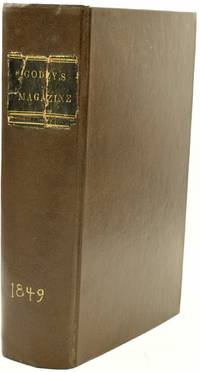
1849289880Philadelphia: Louis A. Godey 1849. Hard Cover. Very Good binding. With the first printing of Edgar Allen Poe's poem Mellonta Tauta in the 1849 February issue p. 133. Also with a hoax consisting of a fraudulent letter with a facsimile of Poe's signature in the 1849 December issue p. 417 and The Lady Hubbard p. 419. From the Poe Bibliography "in the issue of December 1849 a hoax was perpetrated at the late Poe's expense. There appears a letter dated April 1 1848 to which a facsimile of Poe's autograph is affixed. In this letter he is expressing the true purpose of poetry." Heartman and Canny 199. Complete with twelve issues; with the engraved general title page hand colored title page for Vol. 39 and 12 hand colored fashion plates at the start of each monthly issue. Rebound in brown cloth with the remnants of the leather label laid down. Heartman and Canny Poe Bibliography 199-201. Very Good binding. Louis A. Godey unknown books
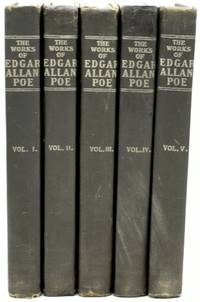
1904293695New York: P. F. Collier & Son 1904. Hard Cover. Very Good binding. Five 8vo. bindings; in the publisher's black cloth; there are no marks of any kind; each volume with a color frontispiece by Arthur Becher;~~An attractive copy of the Raven Edition of the Works of Edgar Allan Poe complete in 5 volumes. A reasonably bright copy of a set which is often quite dulled. We have custom cut mylar for each volume to protect the bindings. Very Good binding. P. F. Collier & Son unknown books
193518677New York: Tudor Publishing Company 1935. Decorative Cloth. Near Fine/Very Good . Harry Clarke. A sharp very well-preserved example of the masterful Harry Clarke-illustrated edition of Poe's "Tales of Mystery and Imagination". Clean and Near Fine in its dark cloth with lovely pasted-on pictorial to the front panel. And in an unusually crisp VG to Near Fine dustjacket with several very small closed tears --and just a touch of light creasing-- along the panel edges. The breathtaking design of the dustjacket remains especially bright and vibrant. And housed in a clean sturdy very attractive pictorial box which clearly has protected the book and dustjacket very well. <br/><br/> Tudor Publishing Company hardcover books
198866656NY:: Knopf. Near Fine in Near Fine dust jacket. 1988. Hardcover. 0394574273 . Black and white photographs throughout. First American edition. Remainder mark on bottom edge else near fine in a near fine dust jacket. . Knopf, hardcover books
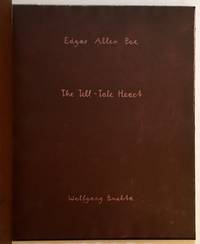
200216243Vienna: Wolfgang Buchta 2002. Near Fine. Lovely 2002 self-published fine press edition of Poe's "The Tell-Tale Heart" with 24 aquatint etchings by Austrian artist Wolfgand Buchta who also published this edition. LIMITED TO ONLY 43 COPIES THIS BEING #18 EACH SIGNED AND NUMBERED BY THE ARTIST AT THE LIMITATION. A clean crisp easily Near Fine copy in its patterned dark-chocolate boards with just the slightest hint of light spotting-- and very faint occasional scuffing-- at the panels. Tall thin folio Poe's immortal text very artfully accompanied by Buchta's evocative etchings along each margin. An impressive early 20th century Fine Press editon of one of Poe's classic tales. <br/><br/> Wolfgang Buchta hardcover books
2010282366Cambridge: D. S. Brewer 2010. First Edition. Hard Cover. Near Fine binding. A fresh clean copy. Bound in blue hardcover with minor shelfwear to the extremities. Volume 18 of the Gallica series. Near Fine binding. D. S. Brewer unknown books
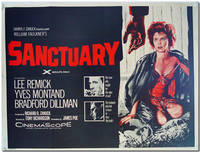
196021963ELos Angeles: Darryl F. Zanuck Productions / Twentieth Century-Fox 1960. Original final draft shooting script with color rewrite pages for the film Sanctuary written by James Poe based on the novel by William Faulkner directed by Tony Richardson and starring Bradford Dillman. This was Dillman’s working script with his scene notations throughout. With Dillman’s estate stamp which reads “From the Library of Bradford Dillmanâ€. Bradbound 138 pages dated July 15 1960. Dillman plays the character of Gowan Stevens with Lee Remick as Temple Drake and Yves Montand as Candy Man. An earlier film adaptation of Faulkner’s 1931 novel is the 1933 film The Story of Temple Drake starring Miriam Hopkins in the title role. A lightly handled copy with some minor darkening to the covers and a bit of edge wear. Bradford Dillman 1930-2018 was one of Hollywood’s best regarded actors among his peers and the public. He was trained at the Actors Studio under Lee Strasberg and knew James Dean in early television. Dillman rose to sudden fame with his appearance in Richard Fleisher’s film Compulsion 1959 with Dean Stockwell and Orson Welles and continued in movies throughout his career in such films as The Way We Were The Iceman Cometh The Enforcer Sudden Impact Crack in the Mirror Escape From the Planet of the Apes Francis of Assisi Piranha The Swarm etc. A great success in television Dillman appeared in a remarkable number of shows and made for TV movies in a variety of genres including Mission Impossible The Man from U.N.C.L.E. Columbo Wagon Train Ironside Dynasty The Wild Wild West Thriller Wonder Woman Cannon Barnaby Jones and many others. Darryl F. Zanuck Productions / Twentieth Century-Fox unknown books
1961WRCLIT71273London: Zanuck / Twentieth Century-Fox 1961. Original highly pictorial British Quad Crown poster 30 x 40"; 76 x 102 cm. Previously folded some light use at edges some small patches of black construction paper tipped to the corners on the verso otherwise very good. A poster issued to promote the UK release -- designated as "X ADULTS ONLY" -- of the second film adaptation of Faulkner's novel based on a screenplay by James Poe directed by Tony Richardson and starring Lee Remick Yves Montand Bradford Dillman Odetta and Strother Martin. SANCTUARY was previously filmed in 1933 as the highly controversial pre-code THE STORY OF TEMPLE DRAKE. Zanuck / Twentieth Century-Fox unknown books
197373052Saddle River: Gerry de la Ree 1973. First edition. 4to. 48 pp. Fine in stapled wrappers. One of 450 numbered copies. Illustrations by Stephen Fabian Charles McGill James B. Wandesford Virgil Finlay and Clark Ashton Smith. Saddle River: Gerry de la Ree, unknown books
19892312265New York: World's Best Reading / Reader's Digest Association Inc 1989. Hard Cover. Fine/No Jacket. Hokanson Lars. A fine copy. 1989 Hard Cover. 335 pp. A collection of short stories by Nathaniel Hawthorne. CONTENTS: The Minister's Black Veil; Wakefield; The Maypole of Merry Mount; The Gentle Boy; Mr. Higginbotham's Catastrophe; The Great Carbuncle; The Prophetic Pictures; David Swan; The Hollow of the Three Hills; Fancy's Show Box; Dr. Heidegger's Experiment; Howe's Masquerade; Edward Randolph's Portrait; Lady Eleanore's Mantle; Old Esther Dudley; The Village Uncle; The Wedding Knell; The Ambitious Guest; The Sister Years; The White Old Maid; The Seven Vagabonds; Peter Goldthwaite's Treasure; Chippings with a Chisel; The Shaker Bible; Endicott and the Red Cross; Edward Fane's Rosebud; The Threefold Destiny; Afterwords. World's Best Reading / Reader's Digest Association, Inc hardcover books
1887245697New York: Benjamin & Bell 1887. paperback. very good. With an Introductory Argument to prove that "Lavante" was Poe and Appendix of Notes by Geoffrey Quarles. 12mo printed wrappers; uncut and unopened; dust soiled. New York: Benjamin & Bell 1887. Reprint of the 1847 edition "with a supposedly plausible but really weak argument in support of Poe's authorship." - Heartman & Canny page 240.<br/><br/> Benjamin & Bell unknown books
198430805Potomac: Scripta Humanistica 1984. First edition. Cloth. Near Fine. Clothbound 8vo. Issued without dustwrapper. 216 pp. Fine Poe scholarship. Small circular blemish to the front endpaper else a fine copy. INSCRIBED by Ljungquist on the front endpaper. Scripta Humanistica unknown books
1864WRCLIT85064Baltimore: Cushings & Bailey 1864. xi2001pp. Quarto. Polished plum-colored cloth stamped in gilt and blind. Lithographed manuscript facsimiles and illustrations. Spine a shade sunned with shallow chips at crown and toe slight edge-wear a bit of foxing early and late old French bookseller's description in corner of verso of front free endsheet offset through tissue to upper blank portion of title old offset from an ancient and absent floral specimen in gutters of pages 42-3 generally a very good copy. First edition of this considerable undertaking to raise funds contemporary with the Baltimore Sanitary Fair to support relief for the aid of soldiers and their families. Includes faithful facsimiles of the contributors' works and includes the first facsimile of Lincoln's handwritten Address Delivered at the Dedication of the Cemetery at Gettysburg. Other facsimiles of works by other important 19th Century authors include: Francis Scott Key Edward Everett Washington Irving Harriet Beecher Stowe Nathaniel Hawthorne John Audubon Oliver Wendell Holmes Henry Wadsworth Longfellow Herman Melville Ralph Waldo Emerson Henry David Thoreau William G. Simms J.J. Audubon and many many others. Melville's "Inscription to the Slain at Fredericksburg" was not collected in book form until 1947. BAL 2418 13672 etc. Cushings & Bailey hardcover books