1 066 résultats
1992639097Akademie Verlag 1992. Hardcover. Very Good/No Jacket. 8vo. - Text in German - Corners a little bumped - Some minor dust marks to edge of text block and very minor shelfwear otherwise Clean bright tight book - Single volume - 822 pages No Jacket Akademie Verlag hardcover
1986BN150879Akademie - Verlag Berlin 1986. 1986. Allgemeiner politischer und historischer Briefwechsel / hrsg. von der Akademie der Wissenschaften der DDR Bd. 1.1668 - 1676 / Bearb.: Paul Ritter . aus: Sämtliche Schriften und Briefe. 1. Reihe <br/><br/>Allgemeiner politischer und historischer Briefwechsel / hrsg. von der Akademie der Wissenschaften der DDR Bd. 1.1668 - 1676 / Bearb.: Paul Ritter . aus: Sämtliche Schriften und Briefe. 1. Reihe Leibniz Gottfried Wilhelm / Briefe - Leibniz Gottfried Wilhelm und Paul Ritter Akademie - Verlag Berlin unknown
2494509017.Gpaperback. Good. Access codes and supplements are not guaranteed with used items. May be an ex-library book. paperback
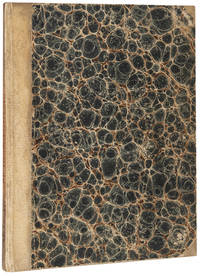
114780Frankfurt Christopher Cröker 1690. . Second edition; 4to 18.5 x 14.5 cm; engraved frontispiece tables in the text decorative initials typographic headpiece contents faintly toned but overall clean; early 19th century half vellum with marbled boards manuscript title to spine small bookplate of the same period in the upper left corner of the front pastedown the name scratched out and the number '192' in manuscript calf a little toned boards rubbed with wear at the edges very good unsophisticated condition; 78pp.<br /> Second edition of Leibniz's groundbreaking early work on combinatorics a highly original proposal in logic and mathematical philosophy expanded from his thesis Disputatio arithmetica de complexionibus and first published with the title Dissertatio de arte combinatoria in 1666. Both editions of the text are rare in commerce with only one copy of each noted in auction records over the last two decades.<br /><br />Leibniz's Arte Combinatoria is concerned with two issues the development of a system of symbols denoting human concepts so that they could be symbolically manipulated 'to discover new truths and find proofs for the old ones' and a 'meta-science' for 'investigating the various methods and procedures deductive and inductive empirical and logical internal to each scientific field' Mugnai Leibniz: Dissertation on Combinatorial Art Oxford University Press 2020. These would remain major pre-occupations for Leibniz throughout his life.<br /><br />Though the book made Leibniz famous among European intellectuals it was written before he had thoroughly studied mathematics. He responded to this unauthorised edition with a note in the scientific journal Acta Erudatorium writing that though the text was 'not sufficiently polished' it contained '"many new meditations" he did not regret concerning "the art of discovery" and the "excellent" idea of an alphabet of human thoughts' Mugnai.<br /> Frankfurt, Christopher Cröker, 1690. hardcover
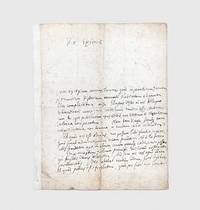
1702168455Hanover: 25 April 1702. A meeting of minds in the Age of Enlightenment The opening letter of Leibniz's correspondence with William Wotton marking the beginning of the long-standing relationship between the two great polymaths. The letter draws attention towards a relatively understudied side of Leibniz his engagement with historiography and presents his reflections on the role of history as a "mirror for princes". Wotton 1666-1727 was an English theologian who wrote chiefly on history and theology. Among his major works are Reflections upon Ancient and Modern Learning 1694 and The History of Rome from the Death of Antoninus Pius to the Death of Severus Alexander 1701 - the latter later used by Gibbon. These caught Leibniz's attention prompting him to open correspondence. Leibniz thanks Wotton for gifting him a copy of his Roman history praising the work as "accurately elaborate" and presented in "an elegant book". He then compliments the breadth of Wotton's knowledge admitting that: "I almost couldn't believe that the author of the History was the same as he who produced that famous work comparing the learning of the ancients and moderns Reflections. For such different forms of erudition are unlikely to coexist in the same person. I can't thank you without also expressing my admiration". Leibniz had read the Reflections a contribution to the ongoing controversy concerning the merits of ancient and modern learning and sided with the moderns as did Wotton. Leibniz first heard of Wotton's works a few years before from his friend Thomas Burnett who acted as a source of English intellectual news for him and had previously introduced him to Locke. In the first part of the letter Leibniz also mentions Wotton's "extraordinary envoy" who delivered the book; this was James Cresset English ambassador for several north-German states and a friend of Leibniz. Leibniz reveals that soon after receiving the book he immediately brought it to court and showed it to Georg Ludwig Elector of Hanover and the future King George I of England. The prince who Leibniz notes was "fond of English literature" was already reading a copy with pleasure; Leibniz regrets that the recently deceased William III could not do the same. This occasion prompts the philosopher to reflect on the educational role of history as a mirror for princes: "It is an old saying that History is the school of princes but hardly another history could be a better teacher than yours in which the Caesars. are depicted almost as if to be admired on a canvas". The letter also exemplifies Leibniz's fluid and creative Latin style: "with this taste you have wonderfully stimulated my appetite which you can satisfy if anyone can". Wotton replied in July and their correspondence continued until Leibniz's death the two typically exchanging cultural news. Leibniz's fascination with history began very early and was concentrated on Germany. Work on the critical edition of his historical contributions started in 2019 and is ongoing. Around the time of this letter he was publishing collections of Medieval documents: Mantissa Codicis Juris Gentium Diplomatici 1700 and Accessiones historicae 1700. These were part of a wider project to collect materials for the publication of a history of Germany which was never realized. The letter is a witness to Leibniz's curiosity towards the works of English historians at a time when he was actively reflecting on these topics; it also testifies to the popularity of Wotton whose achievements are often overlooked by modern scholarship. A transcription of the letter is published in Gottfried Wilhelm Leibniz Sämtliche Schrifte und BriefenReihe I Band 21 2012 no. 137. Single sheet of laid paper 199 x 158 mm legibly written on both sides in brown ink attached to a later blank of wove paper. Lightly toned and foxed creased from folding Leibniz's hand clear and the ink unfaded. Overall in very good condition. unknown
1990__3050010355De Gruyter 1990. Hardcover. New. 626 pages. German language. 9.84x7.64x1.34 inches. De Gruyter hardcover
1990BN253222Frankfurt am Main : Insel-Verl. 1990. 1990. Briefe von besonderem philosophischen Interesse; Teil: Hälfte 2. Die Briefe der zweiten Schaffensperiode <br/><br/>Briefe von besonderem philosophischen Interesse; Teil: Hälfte 2. Die Briefe der zweiten Schaffensperiode Leibniz Gottfried Wilhelm Frankfurt am Main : Insel-Verl. unknown
1019671084.Ghardcover. Good. Access codes and supplements are not guaranteed with used items. May be an ex-library book. hardcover
KS428-20Halle H. W. Schmidt 1860. Oktav. Späteres Bibl.-Halbleinen mit Resten von Rückenschildern. 2 Bll. 188 S. mit einer ausfaltbaren lithographischen Tafel. Insgesamt wohlerhaltenes Exemplar. Ravier 642. - Erste Ausgabe des Briefwechsels Leibniz-Wolf die Leibniz'schen Stücke sind vollständig wiederggegeben soweit sich diese in Hannover befanden die Wolf'schen Gegenstücke nur wenn und insofern von Belang für das Verständnis Leibniz'scher Positionen. Naturgemäß ganz überwiegend mathematischen Themen gewidmet. - PROVENIENZ: Das hier angebotene Buch stammt aus der Ende 2018 aufgelösten Bibliothek des Karl-Sudhoff-Instituts für Geschichte der Medizin und Naturwissenschaften der Leipziger Universität. Es war bei seiner Gründung 1906 das erste medizingeschichtliche Institut der Welt und erlangte erhebliche Bedeutung für die Entstehung der modernen Wissenschaftsgeschichte sowie einer quellenorientierten Kulturwissenschaft und dies weit über den deutschsprachigen Raum hinaus. Die angeschlossene Bibliothek wurde maßgeblich vom Ordinarius des Institutes Karl Sudhoff 1853-1938 dem wichtigsten Medizinhistoriker des 20. Jahrhunderts gestaltet und trug in Anerkennung Sudhoffs historiographischer Verdienste seit 1938 auch seinen Namen. Sämtliche von uns aus diesem Bestand angebotenen Titel ca. 2.500 sind ordnungsgemäß ausgeschieden und tragen in der Regel entsprechende die Provenienz bekundende sauber ausgeführte und meist ästhetisch nicht oder kaum störende Kennzeichnungen auf Vorsatz- und/oder Titelblatt sowie mitunter einem weiteren Blatt. - Ravier 642. - Erste Ausgabe des Briefwechsels Leibniz-Wolf die Leibniz'schen Stücke sind vollständig wiederggegeben soweit sich diese in Hannover befanden die Wolf'schen Gegenstücke nur wenn und insofern von Belang für das Verständnis Leibniz'scher Positionen. Naturgemäß ganz überwiegend mathematischen Themen gewidmet. - PROVENIENZ: Das hier angebotene Buch stammt aus der Ende 2018 aufgelösten Bibliothek des Karl-Sudhoff-Instituts für Geschichte der Medizin und Naturwissenschaften der Leipziger Universität. Es war bei seiner Gründung 1906 das erste medizingeschichtliche Institut der Welt und erlangte erhebliche Bedeutung für die Entstehung der modernen Wissenschaftsgeschichte sowie einer quellenorientierten Kulturwissenschaft und dies weit über den deutschsprachigen Raum hinaus. Die angeschlossene Bibliothek wurde maßgeblich vom Ordinarius des Institutes Karl Sudhoff 1853-1938 dem wichtigsten Medizinhistoriker des 20. Jahrhunderts gestaltet und trug in Anerkennung Sudhoffs historiographischer Verdienste seit 1938 auch seinen Namen. Sämtliche von uns aus diesem Bestand angebotenen Titel ca. 2.500 sind ordnungsgemäß ausgeschieden und tragen in der Regel entsprechende die Provenienz bekundende sauber ausgeführte und meist ästhetisch nicht oder kaum störende Kennzeichnungen auf Vorsatz- und/oder Titelblatt sowie mitunter einem weiteren Blatt. - Ravier 642. - Erste Ausgabe des Briefwechsels Leibniz-Wolf die Leibniz'schen Stücke sind vollständig wiederggegeben soweit sich diese in Hannover befanden die Wolf'schen Gegenstücke nur wenn und insofern von Belang für das Verständnis Leibniz'scher Positionen. Naturgemäß ganz überwiegend mathematischen Themen gewidmet. - PROVENIENZ: Das hier angebotene Buch stammt aus der Ende 2018 aufgelösten Bibliothek des Karl-Sudhoff-Instituts für Geschichte der Medizin und Naturwissenschaften der Leipziger Universität. Es war bei seiner Gründung 1906 das erste medizingeschichtliche Institut der Welt und erlangte erhebliche Bedeutung für die Entstehung der modernen Wissenschaftsgeschichte sowie einer quellenorientierten Kulturwissenschaft und dies weit über den deutschsprachigen Raum hinaus. Die angeschlossene Bibliothek wurde maßgeblich vom Ordinarius des Institutes Karl Sudhoff 1853-1938 dem wichtigsten Medizinhistoriker des 20. Jahrhunderts gestaltet und trug in Anerkennung Sudhoffs historiographischer Verdienste seit 1938 auch seinen Namen. Sämtliche von uns aus diesem Bestand angebotenen Titel ca. 2.500 sind ordnungsgemäß ausgeschieden und tragen in der Regel entsprechende die Provenienz bekundende sauber ausgeführte und meist ästhetisch nicht oder kaum störende Kennzeichnungen auf Vorsatz- und/oder Titelblatt sowie mitunter einem weiteren Blatt. - Halle, H. W. Schmidt, 1860 unknown
1016189583.Ghardcover. Good. Access codes and supplements are not guaranteed with used items. May be an ex-library book. hardcover
1016326963.Ghardcover. Good. Access codes and supplements are not guaranteed with used items. May be an ex-library book. hardcover
1018257284.Ghardcover. Good. Access codes and supplements are not guaranteed with used items. May be an ex-library book. hardcover
1019187352.Ghardcover. Good. Access codes and supplements are not guaranteed with used items. May be an ex-library book. hardcover
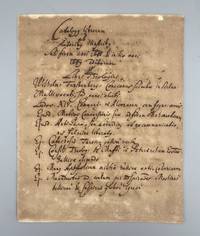
170002965Germany 1700. A single quire unbound evidence of earlier sewing. <p>      LEIBNIZ’S CATALOG OF FIFTY-TWO IMAGINARY BOOKS satirizes European political and military maneuvering in 1688-9 at the outset of the Nine Years’ War. The text was printed in Latin this version and in Latin and German. Together three editions survive in four examples all in German-speaking countries.<br />       Leibniz 1646-1716 grouped the works into theology eighteen law eight medicine ten and philosophy fourteen and closed with two “forthcoming publicationsâ€. The titles’ scholarly veneer hardly disguises his harsh view of contemporary politics. This manuscript copy was likely made between 1691 and 1716 while Leibniz was librarian at Wolfenbüttel then the largest library north of the Alps. Browned the inner bifolium less so.</p> unknown
101943256X.Ghardcover. Good. Access codes and supplements are not guaranteed with used items. May be an ex-library book. hardcover
1023919702.Ghardcover. Good. Access codes and supplements are not guaranteed with used items. May be an ex-library book. hardcover
__3112751361De Gruyter 1964. Hardcover. New. 352 pages. German language. 6.89x0.98x9.69 inches. De Gruyter hardcover
49990543-nnew. unknown
49990543like new. unknown
200626147BB2006 978-3-938793-22-0. Frankfurt/Main: Ontos 2006. 216 S. Pappband sehr gut erhalten unknown
H872Leipzig Grosse & Gleditsch 1697. Acta Eruditorum Anno MDCXCVII. 4to. 594 . mit 4 von 8 Tafeln vorhanden Tafeln 1468. Text komplett S.135/136 in der Paginierung ¸bersprungen - so komplett!. Die wichtigestn Schriften und Beitr‰ge von Leibniz Bernoulli und Newton sind vorhanden: Leibniz G.W.: Communicatio suae pariter duarumque alienarum ad edendum sibi a Dn. Jo. Bernoulli . Solutio problematum a Jo. Bernoullio geometris publice propositorum. S. 201-205 mit 1 gefalt. Tafel;. Leibniz G.W.: Epistola ad Actorum horum Collectores. S.254-256. Bernoulli Johann: Problemapure gemometricum Eruditis propositum. S.95-96. Bernoulli Johann: De Conoidibus et Sphaeroidibus Quedam et c. S.113-118. Bernoulli Johann: Principia Calculi exponentialium seu percurrentium. S. 125-132. Bernoulli Johann: Curvatura radii in Diaphanis non uniformibus solutioque Problematis a se in Actis 1696 . S. 206-211. Bernoulli Jacob: Solutio Problematum fraternorum pecultiari Programmate Cal.Jan. 1697 . S. 211-214. Bernoulli Jacob: Solutio Difficultatis cujusdam circa naturam Flexus contrarii . S.410-412. Bernoulli Jacob: Addenda ad constructionem Problematis Beauniani. S.412-413. Newton Isaack: Excerpta eTransactionibus Philos.Anglig. Jan.1697: Epistola missa ad praenobilem virum d. Carolum Montague Armigerum . Solutio duorum problematum Mathematicorum a Jo. Bernoullio prpositorum. S. 223-224. Weitere Beitr‰ge von Marchio Hospitalius. S.217-218. Erstes Erscheinen der ber¸hmten Ausgabe von Acta Eruditorum in der die vier Lˆsungen der vier damals bedeutendsten Mathematiker zusammen gedruckt wurden. Es gab insgesamt f¸nf Lˆsungen f¸r das gestellte Problem und Newtons Lˆsung wurde erstmals in den Philosophical Transactions Januar 1697 abgedruckt und hier nachgedruckt. Die von L'Hopital vorgeschlagene hier nicht abgedruckte Lˆsung wurde erst 1988 verˆffentlicht. Das Brachistochrone-Problem wurde von Johann Bernoulli in Acta Eruditorum im Juni 1696 gestellt. Er f¸hrte das Problem wie folgt ein: "Ich Johann Bernoulli spreche den brillantesten an." Nichts ist f¸r intelligente Menschen attraktiver als ein ehrliches herausforderndes Problem dessen mˆgliche Lˆsung Ruhm verleihen und als bleibendes Denkmal bleiben wird. Ich hoffe die Dankbarkeit zu gewinnen der gesamten wissenschaftlichen Gemeinschaft indem ich den besten Mathematikern unserer Zeit ein Problem vorlege das ihre Methoden und die St‰rke ihres Intellekts auf die Probe stellt. Wenn mir jemand die Lˆsung des vorgeschlagenen Problems mitteilt werde ich ihn ˆffentlich f¸r lobenswert erkl‰ren. Johann Bernoulli und Leibniz haben Newton mit diesem Problem bewusst in Versuchung gef¸hrt. Angesichts des Streits um die Infinitesimalrechnung ist es nicht verwunderlich dass Johann Bernoulli diese Worte in seine Herausforderung aufgenommen hat: "Es gibt weniger die unsere hervorragenden Probleme lˆsen kˆnnen ja weniger selbst unter den Mathematikern die sich r¸hmen dass Sie haben ihre Grenzen wunderbar erweitert und zwar mithilfe der goldenen Theoreme die ihrer Meinung nach niemandem bekannt waren die aber tats‰chlich schon lange zuvor von anderen verˆffentlicht worden waren. "Laut Newtons Biograph Conduitt lˆste er das Problem auf einem Abend nach der Heimkehr von der Royal Mint. Newton: . "Inmitten der Hektik der groflen Neupr‰gung kam er erst um vier Uhr nachmittags sehr m¸de vom Turm nach Hause schlief aber nicht bis er das Problem gelˆswas um vier Uhr morgens geschah." Newton. Seine Lˆsung schickte er an seinen Freund Charles Montague und Montague verˆffentlichte ihn anonym in den Transaktionen. Auch Newtons Lˆsung die hier in der Acta vorgestellt wird ist anonym. Die Episode gefiel Newton nicht wie er sp‰ter schrieb: "Ich mag es nicht von Ausl‰ndern ¸ber mathematische Dinge bel‰stigt und geh‰nselt zu werden." Nach dem Wettbewerb sagte Johann Bernoulli: "Mein ‰lterer Bruder stellte den vierten von ihnen zusammen nach Leibniz ihm selbst und Newton dass die drei groflen Nationen Deutschland England und Frankreich jede f¸r sich sich mit mir in einer solchen vereinigen." schˆne Suche alle finden die gleiche Wahrheit."Struik Hrsg. "A Source Book in Mathematics 1200-1800 S. 391 ff. unknown
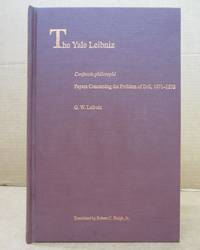
200583578New Haven and London: Yale University Press 2005. Hardcover. Near Fine. 24 x 15.5 cm. Octavo. xli 178pp. Maroon cloth. Original test Latin French or German opposite English translations. End notes index. A few faint marks to front cover. Yale University Press hardcover
200535388Cumberland Rhode Island U.S.A.: Yale Univ Pr. New. 2005. Hardcover. 0300089589 . FREE UPGRADE to Courier/Priority Shipping Upon Request IN STOCK AND IMMEDIATELY AVAILABLE FOR SHIPMENT - BRAND NEW FLAWLESS COPY NEVER OPENED - - pages -- DESCRIPTION: This volume contains papers that represent Leibnizs early thoughts on the problem of evil centering on a dialogue the Confessio philosophi in which he formulates a general account of Gods relation to sin and evil that becomes a fixture in his thinking. How can God be understood to be the ultimate cause asks Leibniz without God being considered as the author of sin a conclusion incompatible with Gods holiness Leibnizs attempts to justify the way of God to humans lead him to deep discussion of related topics: the nature of free choice the problems of necessitarianism and fatalism the nature of divine justice and holiness. All but one of the writings presented here are available in English for the first time. -- with a bonus offer-- . Yale Univ Pr hardcover
1020678607.Ghardcover. Good. Access codes and supplements are not guaranteed with used items. May be an ex-library book. hardcover