1 066 résultats
49922129-nnew. unknown
2026x-110712185XCambridge University Press 2026. Hardcover. New. 578 pages. 6.69x1.25x9.61 inches. Cambridge University Press hardcover
SAL8490456309España: COMARES EDITORIAL FONDO. Rústica. Nuevo/Nuevo. Icar COMARES EDITORIAL (FONDO) paperback
26074Comares Granada 2011. Kartoniert Seite 629 - 1272 Originalschutzumschlag das Buch ist sehr gut erhalten Comares Granada 2011 unknown
26073Comares Granada 2011. Kartoniert 626 Seiten Originalschutzumschlag Widmung des Autors auf dem fliegenden Blatt das Buch ist sehr gut erhalten Comares Granada 2011 unknown
9500393719.Gpaperback. Good. Access codes and supplements are not guaranteed with used items. May be an ex-library book. paperback
62456Klindworth Hanovre Williams - Norgate Londres Friedrich Klincksieck s.d. 1874 In-8 25 cm 428pp. pages non coupees petites marques d'usage sur la couverture Bwx-02 unknown
1020678607.Ghardcover. Good. Access codes and supplements are not guaranteed with used items. May be an ex-library book. hardcover
036551022X.Gpaperback. Good. Access codes and supplements are not guaranteed with used items. May be an ex-library book. paperback
0365510254.Ghardcover. Good. Access codes and supplements are not guaranteed with used items. May be an ex-library book. hardcover
1104642654.Gpaperback. Good. Access codes and supplements are not guaranteed with used items. May be an ex-library book. paperback
1165932229.Gpaperback. Good. Access codes and supplements are not guaranteed with used items. May be an ex-library book. paperback
169230269Paris Jean Anisson 1692. Small8vo. Cont. full mottled calf. Very skillfull rebacked in old style. Gilt titlelabel in leather on back. All edges gilt. 81472185 pp. First and last leaves slightly browned in margins otherwise fine printed on good paper. <br/><br/><em>The scarce first edition of Leibnitz' important work on the tolerance of religions. Leibnitz was interested in the question of religious controversy all of his life and already at a young age he studied Laurentius Valla and Luther. According to Leibnitz one of the resons for religious controversy and dispute lies in the lack of adequate method for discussing and debating such questions. He reflexts thoroughly on the nature of religious controversy. What he means with tolerance of relions is precicely the possibily of discussing religious matters freely on the basis of normative rules that tells us how to conduct the debate. </em> hardcover
116618773X.Gpaperback. Good. Access codes and supplements are not guaranteed with used items. May be an ex-library book. paperback
1104857146.Gpaperback. Good. Access codes and supplements are not guaranteed with used items. May be an ex-library book. paperback
1017658730.Ghardcover. Good. Access codes and supplements are not guaranteed with used items. May be an ex-library book. hardcover
0364678097.Ghardcover. Good. Access codes and supplements are not guaranteed with used items. May be an ex-library book. hardcover
0666669627.Gpaperback. Good. Access codes and supplements are not guaranteed with used items. May be an ex-library book. paperback
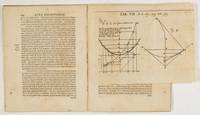
1691614691691. Acta Eruditorum 1691/ 6. - Leipzig Grossium & Gleditsch Juni 1691 4° pp.249-304 3 Kupferstichtafeln feiner Pappband. Erstdrucke dieser sehr wichtigen Arbeiten! 1. Leibniz Gottfried Wilhelm: De linea in quam flexile se pondere proprio curvat ejusque usu insignia ad inveniendas quotcumque medias proportionales & logarithmos. pp.277-281 Tab. VII . Leibniz löst hier das 1690 von Jakob Bernoulli gestellte Problem der Kettenlinie 2. Bernoulli Johann: Solutio problematis funicularii pp.274-276 Tab. VI Fig.1-4. Erste eigenständige Veröffentlichung von Johann Bernoulli. Er beschäftigt sich hier mit der logarithmischen Spirale die er auch wunderbare Spirale "spira mirabilis" nannte. Die vorliegende Arbeit stellt den Beginn der Lehre von den elliptischen Integralen dar. 3. Huygens Christian: Dynastæ in zulechem solutio ejusdem problematis pp.281-282 Tab. VII Fig.2. Hier Huygens' Lösung der Catenaria ohne Zuhilfenahme der Infinitesimalrechnung 4. Bernoulli Jacob: Specimen alterum calculi differentialis in dimetienda spirali ali logarithmica loxodromiis naturarum & areis triangulorum sphæricorum pp.282-29 Tab. VIII. In dieser grundlegenden Arbeit gelingt es Jakob Bernoulli durch die konsequente Einführung der Polarkoordinaten in die Analysis eine Theorie der Evoluten der Kata- und Diakaustiken und der Elastica aufzustellen. Ravier 110 unknown
168941661Leipzig Grosse & Gleditsch 1689. 4to. Contemporary full vellum. Faint hand-written title to spine. A small stamp on title-page. In: "Acta Eruditorum Anno MDCLXXXIX". 8 653 7 pp. and 15 engraved plates. As usual with various browning to leaves and plates. The entire volume offered. Leibniz's papers: pp. 36-38 a. 1 engraved plate; pp. 38-46; pp. 82-89 a. 1 engraved plate; pp. 195-198. <br/><br/><em>First printing of these extremely important papers in which Leibniz claimed that he independently of Newton had discovered the principal propositions of his "Principia" and which present us with Leibniz's fundamental physico-mathematical theory his dynamics his concepts of force space and time. The "Tentamen." constitutes Leibniz's response to Newton's theories about the motion of the celestial bodies. Leibniz can be said to have anticipated the modern mathematical principle of relativity as it is his idea of individual co-ordinate systems and his practical rejection of the Galilean co-ordinate system that Newton adopted. Leibniz opposes Newton's ideas of attractions gravitational forces and calls them "occult qualities". The task of the "Tentamen." was to attain a theory mathematically equivalent to Newton's in accounting for planetary motion and especially for the inverse-square law of Kepler's laws but physically sound and capable of explaining the causes of phenomena.Newton attacked Leibniz's claim of priority in his anonymously published paper "Commercium epistolicum" Phil. Transactions 1714 and states that "in those tracts the principal propositions of that book are composed in a new manner and claimed by Mr. Leibniz as if he had found them himself before the publishing of the said book. But Mr. Leibniz cannot be a witness in his own cause. It lies upon him either to prove that he had found them before mr. Newton or to quit his claim." The features of Leibniz's mathematical representation of motion as put forward in "Tentamen." are see D.B. Meli: Equivalence and Priority. Newton versus Leibniz. pp. 90-91:- Empty space does not exist. The world is filled with a variety of fluids which are responsible for physical actions including gravity.- Living force and its conservation are the fundamental notion and principle respectively in the investigation of nature however they do not figure prominently in the study of planetary motion.- Finite and infinitesimal variables are regularly employed in the study of motion and of other physical phenomena. Living force and velocity are finite; solicitation and conatus are infinitesimal.- Accelerated motion whether rectilinear or curvilinear is represented as a series of infinitesimal uniform rectilinear motions interrupted by impulses. I call this 'polygonal representation'. Usually the polygon is chosen in such a way that each side is traversed in an equal element of time dt. In polygonal representations accelerations are reduced to a macroscopic phenomenon.- Propositions are often used to safeguard dimensional homogeneity. Constant factors - such as numerical factors mass and the element of time - are usually ignored in the calculations.Denys Papin's papers:1. Descriptio Torcularis cujus in Actis Anni 1688 pag. 646 mentio facta a suit. and 1 plate. Pp. 96-101.2. De Gravitatis Causa et proprietatibus Observationes. Pp. 183-188.3. Examen Machinæ Dn. Perrault. Pp. 189-195 a. 1 plate.4. Rotatilis Suctor et Pressor Hasciacus in Serenissima Aula Cassellana demonstratus & detectus. Pp. 317-322 a. 1 plate.5. In J.B. Appendicem Illam Ad Perpetuum Mobile Actis Novemb.A. 1688 p. 592.Pp. 322-324 a. 1 plate.6. Excerpta et Litteris Dn. Dion Papini ad --- de Instrumentis ad flammam sub aqua conservandam. Pp. 485-489 a. 1 plate.With the paper describing and depicting Papin's famous invention of the CENTRIFUGAL PUMP. Rotatilis Suctor et Pressor Hasciacus in Serenissima Aula Cassellana demonstratus & detectus. - The paper offered no.4.Jakob Bernoulli's papers:1. De Invenienda Cujusque Plani Declinatione ex unica observatione projectæ a flylo umbræ. Pp. 311-316 a. 1 plate.2. Vera Constructio geometrica Problematum Solidorum & Hypersolidorum per rectas lineas & circulos. Pp. 586-588 a. 1 plate.3. Novum Theorema Pro Doctrina Sectionum Conicarum. Pp. 586-588 a. 1 engraved plate. </em> hardcover
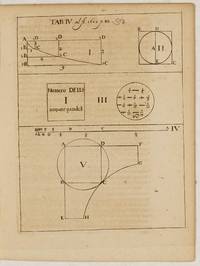
1689614461689. Acta Eruditorum 1689. - Leipzig Grossium & Gleditsch 1689 4° 8 653 7 pp. mit 15 z.T. gefalt. Kupfertafeln feiner Pappand im Stil d.Zt.: frisches Expl. First printing of these extremely important papers in which Gottfried Wilhelm Leibniz 1646-1716 claimed that he independently of Newton had discovered the principal propositions of his "Principia" and which present us with Leibniz's fundamental physico-mathematical theory his dynamics his concepts of force space and time. 1. : De Lineis Opticis et alia; Excerpta ex literis ad pp.36-38 Tab. I Fig. 1 2. : Schediasma de Resistentia Medii Motu projectorum gravium in medio resistente pp.38-46 Tab. I Fig. 2-4. 3. : Tentamen de Motuum Coelestium causis pp.82-96 Tab.II Fig. 1. 4. : De Linea Isochrona in qua grave sine acceleratione descendit & de controversia cum Dn. Abbate D.C. pp.195-198 Tab. IV Fig. 3. The "Tentamen." constitutes Leibniz's response to Newton's theories about the motion of the celestial bodies. Leibniz can be said to have anticipated the modern mathematical principle of relativity as it is his idea of individual co-ordinate systems and his practical rejection of the Galilean co-ordinate system that Newton adopted. Leibniz opposes Newton's ideas of attractions gravitational forces and calls them "occult qualities". The task of the "Tentamen." was to attain a theory mathematically equivalent to Newton's in accounting for planetary motion and especially for the inverse-square law of Kepler's laws but physically sound and capable of explaining the causes of phenomena. Newton attacked Leibniz's claim of priority in his anonymously published paper "Commercium epistolicum" Phil. Transactions 1714 and states that "in those tracts the principal propositions of that book are composed in a new manner and claimed by Mr. Leibniz as if he had found them himself before the publishing of the said book. But Mr. Leibniz cannot be a witness in his own cause. It lies upon him either to prove that he had found them before Mr. Newton or to quit his claim." The features of Leibniz's mathematical representation of motion as put forward in "Tentamen." are -Empty space does not exist. The world is filled with a variety of fluids which are responsible for physical actions including gravity. - Living force and its conservation are the fundamental notion and principle respectively in the investigation of nature however they do not figure prominently in the study of planetary motion. - Finite and infinitesimal variables are regularly employed in the study of motion and of other physical phenomena. Living force and velocity are finite; solicitation and conatus are infinitesimal. - Accelerated motion whether rectilinear or curvilinear is represented as a series of infinitesimal uniform rectilinear motions interrupted by impulses. I call this 'polygonal representation'. Usually the polygon is chosen in such a way that each side is traversed in an equal element of time dt. In polygonal representations accelerations are reduced to a macroscopic phenomenon. - Propositions are often used to safeguard dimensional homogeneity. Constant factors - such as numerical factors mass and the element of time - are usually ignored in the calculations. -cf. D.B. Meli: Equivalence and Priority. Newton versus Leibniz. pp. 90-91. Further we find in this important volume following Papers by Denis Papin - 1. : Descriptio Torcularis cujus in Actis Anni 1688 pag. 646 mentio facta a suit. pp. 96-101 Tab. II Fig. 2 2. : De Gravitatis Causa et proprietatibus Observationes pp.183-188. 3. : Examen Machinæ Dn. Perrault pp.189-195 Tab. IV Fig. 1-3. 4. : Rotatilis Suctor et Pressor Hasciacus in Serenissima Aula Cassellana demonstratus & detectus pp.317-322 Tab. VII Fig. 3-6. This paper describes and depicting Papin's famous invention of the CENTRIFUGAL PUMP 5.: In J.B. Appendicem Illam Ad Perpetuum Mobile Actis Novemb.A. 1688 p. 592. pp.322-324. 6. : Excerpta et Litteris Dn. Dion Papini ad --- de Instrumentis ad flammam sub aqua conservandam pp.485-489 Tab. XI Fig. 2-3. - and 3 papers by Jakob Bernoulli: 1. : De Invenienda Cujusque Plani Declinatione ex unica observatione projectæ a flylo umbræ pp.311-316 Tab. VII Fig. 1-2. 2. : Bernoulli Jakob : Vera Constructio geometrica Problematum Solidorum & Hypersolidorum per rectas lineas & circulos pp.454-459 Tab. X. 3.: Bernoulli Jakob : Novum Theorema Pro Doctrina Sectionum Conicarum. pp.586-588 Tab. XIV. See - Thomas Sonar : The History of the Priority Dispute between Newton and Leibniz: Mathematics . 2018 Ravier 101102103104 unknown
3525821204.Gperfect. Good. Access codes and supplements are not guaranteed with used items. May be an ex-library book. unknown
199314161Vandenhoeck & Ruprecht 1993. paperback. New. 103x6x153. Vandenhoeck & Ruprecht paperback
1682600581682. Acta Eruditorum 1682/ 2. - Leipzig Grossium & Gleditsch Februar 1682 4° pp.33-56 1 Kupferstichtafel feine Broschur. First Edition! This was Leibniz first article published in Acta Eruditorum; He deals with mensuration and describes the Leibniz series 1-1/31/5-1/7.=pi/4. Gottfried Wilhelm Leibniz's 1646-1716 Hannover appointment in the Hanoverian service gave him more time for his favourite pursuits. He used to assert that as the first-fruit of his increased leisure he invented the differential and integral calculus in 1674 but the earliest traces of the use of it in his extant note-books do not occur till 1675 and it was not till 1677 that we find it developed into a consistent system; it was not published till 1684. Most of his mathematical papers were produced within the ten years from 1682 to 1692 and many of them in a journal called the Acta Eruditorum founded by himself and Otto Mencke in 1682 which had a wide circulation on the continent. He was one of the true geniuses of modern history. Although his contributions to the development of differential calculus remain his greatest legacy his definition of identity and his work in establishing a formal notation for all mathematics provided the foundation for others like Peano nearly two hundred years later. Ravier 84 unknown