152 résultats
15132454Basel: and Strasbourg: and Paris:: Io. Froben and Excusum per Renatum Beck in aedibus zum Thiergarten and Jean Petit In vico Sancti Iacobi 1515 and 1515 and 1513. THIRD FROBEN EDITION of the "Praise of Folly". The two prior editions also appeared in 1515. Written in 1509 as a visitor's gift to Thomas More whose name -Morus- was so aptly similar to the Greek "moros" folly the "Moriae Encomium" was first printed by Gilles de Gourmont at Paris probably in 1511. The first of the Froben editions appeared in 1515. This copy is bound with the "Germania" of Aeneas Sylvius Piccolomini Pope Pius II together with the "Responsio" of Jakob Wimpfeling; and an edition of Lactantius edited by Gilles de Maizières and printed at Paris by Jean Petit. Large Quarto:. 20.2 x 15 cm. 3 works bound in one volume: I. Piccolomini: i-iv A-B4 C8 D-E4 F8 G-H4 I8 K-L4 M8 N-O4 P6. II. Lactantius: A6 B4 a-z8/4 A-D8/4 E6 F-N8/4 O6 P4. III. "Praise of Folly": a-h4 a-z4 A-B4 C6 Bound in contemporary quarter alum-tawed pigskin over wooden boards with working clasps and catches. The pigskin is tooled in blind with repeating vines and floral rolls. The text and binding are beautifully preserved. The contents are fresh and bright with wide margins and a number of deckled edges. Excellent. The "Germania" has a fine title page printed in red and black and surrounded by a fine woodcut border. The printer's beautiful device by Hans Baldung Grien appears on the final leaf. The Lactantius has Jean Petit's device on the title page. The text is adorned with fine floriated criblé initials. A contemporary reader has annotated the "De Opificio Dei" densely in Latin and added a long Latin poem to the final two leaves. The "Praise of Folly" has a fine Holbein border with the decapitation of John the Baptist in the lower register and affine woodcut border with a fool by Urs Graf on the contents leaf. This edition includes the original dedicatory letter to Thomas More whose name Erasmus plays upon cleverly in the title of the work; and the letter to Martin Dorp in which Erasmus explains his motives for writing the "Moria": "My aim in the 'Folly' was exactly the same as in my other works. Only the presentation was different. In the 'Enchiridion' I simply outlined the pattern of a Christian life. In my little book the 'Education of a Christian Prince' I offered plain advice on how to instruct a prince. In my 'Panegyric' I did the same under the veil of eulogy as I had done elsewhere explicitly. And in the 'Folly' I expressed the same ideas as in the 'Enchiridion' but in the form of a joke." The Froben edition is augmented with a number of other texts See the final paragraphs of this description.Praise of Folly:"The 'Praise of Folly' is Erasmus' most famous and controversial work… In Erasmus' lifetime the 'Moria' was condemned in 1527 by the theologians of Paris for its attacks on faith and morality and again in 1533 by the Franciscans who found it full of heresies. The officials of the Sorbonne put it on the list of condemned books in 1542 and 1543 a list that was the basis of the Tridentine Index of 1564…"The 'Moria' may start as a learned joke to amuse a fellow humanist Thomas More but it moves into sharp criticism of contemporary mores and ends with a plea for a return to the Christianity of the Gospels… Erasmus writes in a Lucianic spirit of irreverent burlesque of the gods of classical mythology and light-hearted amusement at the irrationality of mankind. Folly argues that she is all that is natural youthful fecund and happy and that life would be intolerable if it were not ruled by civilized conventions which necessitate a degree of humbug and illusion. By contrast the Stoic ideal rational man is a 'kind of marble statue of a man devoid of sense and any sort of human feeling.' She then shifts her viewpoint and lists the people who enjoy her benefits in so far as they try to preserve their illusions or are happy in their ignorance self-deception or self-love. She even adds superstitious piety to alchemy gambling and the nobility's obsession with hunting and extravagant building…"Next Erasmus starts to deliver a sharp and often bitter attack on all the victims of blind folly those who are deaf to the voice of true religion and lacking the gentler Christian virtues among whom are sycophants self-seekers money-makers pedants scholastics lawyers theologians superstitious worshippers of images and relics courtiers and kings worldly monks and irreligious pontiffs. This section culminates in a savage thrust at Pope Julius II the bellicose pope. The keen wit and ingenuity of the satire can be highly entertaining but there is no note of gaiety now. As Erasmus surveys the gulf between the Church and the 'true philosophy of Christ' he moves into the final section where the alternative offered to barren scholasticism is the vision of reality taken from Plato and folly in the sense used by Saint Paul that of receptivity to the Christian message by the 'fool in Christ.' All irony is dropped until the final short epilogue when Folly light-heartedly cuts short her 'hotch-potch of words'; this is a direct and simply worded account of Erasmus' personal belief moving into an exposition of the Neoplatonist concept that the soul's ascent to beatitude ends in ecstasy a form of folly which is its supreme fulfillment."Betty Radice CWE Vol. 27 pp. 78 ff.Piccolomini's "Germania":Shortly after 1455 Aeneas Sylvius Piccolomini came into possession of the recently rediscovered manuscript of Tacitus' "Germania" the most important ancient account of Germany in the first century. In response to a letter from the Bishop of Mainz lamenting the miserable state of the Holy Roman Empire Piccolomini wrote his "Germania" based on Tacitus' own in which he demonstrates that the present high level of German culture as compared with the barbarous past as presented by Tacitus is an accomplishment of the Church. This edition includes the important response by Jakob Wimpfeling in defense of the ancestors of the Germans.Additional "Moria" texts:The Froben editions of the 'Moria' contain in addition to Erasmus' main text two ancient examples of the mock-encomium Seneca's "Ludus de Morte Claudii Caesaris" and Synesius of Cyrene's "De Laudibus Calvitii" "In Praise of Baldness" translated from the Greek by the Englishman John Phreas d. 1465. In his introductory letter to Thomas More Erasmus cites both the "Ludus" and the "Praise of Baldness" in a pre-emptive defense against those who will object to his literary frivolity "levitas et ludicrum argumenti" pp. 102-104 in this edition. The text of the "Moria" is accompanied by the commentary of Gerard Listrius with assistance from Erasmus. I. "Germania": BM STC German p. 701 = Proctor 10307. Not in Adams. Panzer VI.75.410. Ritter 1878. Muller Bibliographie Strasbourgeoise II 228 no. 26. Schmidt Beck 21. II. Lactantius: Adams L-14; BSB-Ink L-13; HC 9819; Moreau Inventaire chronologique II 637. III. "Praise of Folly": Vander Haeghen I 122; Kossmann 967; Bezzel 1304; Not in De Reuck; BM STC German p. 282; Adams E 392; VD 16E 3184 Io. Froben, and Excusum per Renatu[m] Beck in aedibus zum Thiergarten, and Jean Petit, In vico Sancti Iacobi, 1515 and 1515 and books
1545314899Argentorati Strasbourg: Vuendelinus Rihelius Wendelin Rihel 1545. Fourth edition of the Calvin; second Froben folio edition of the Erasmus. Collation alpha-gamma6 delta4 A-Z6 a-s6 t-v4 v4 blank present. Pp. 431 505 3 blank. Errata at foot of index p. 43. 1 vols. Folio 11-3/4 x 8 inches. Contemporary blindstamped pigskin over wooden boards with metal clasps. With 8 pages of contemporary Latin notes loosely inserted; contemporary marginalia throughout second work. L2 in Calvin with old ink stains not affecting legibility; some wear along one bottom edge of binding. Manuscript prayer in Latin on lower pastedown. Small later paper label on upper cover "Bibliothèque de Spietz". A handsome copy. Fourth edition of the Calvin; second Froben folio edition of the Erasmus. Collation alpha-gamma6 delta4 A-Z6 a-s6 t-v4 v4 blank present. Pp. 431 505 3 blank. Errata at foot of index p. 43. 1 vols. Folio 11-3/4 x 8 inches. Calvin's 'Instutitio': Cornerstone of Liberty. "Calvin's 'Institution of the Christian Religion' was the first systematic statement of a Reformed Church. It is the most important doctrinal work of the Reformation as a whole and provided a comprehensive theological system rivaling those of the Middle Ages . Calvinism's most important role despite Calvin's authoritarian influences was to support the movement for liberty and independence in many parts of the world" Printing and the Mind of Man 65. First published in Basel in 1536 the "Institutio was much revised taking its final form in 1559" PMM. Calvin understood the importance of vernacular translations in the transmission of ideas made possible by the printing press and prepared a French edition in 1541. This fourth edition follows closely and corrects the third edition printed in 1543. All early editions are uncommon.<br/><br/>Calvin 1509-64 drew upon St. Augustine and Luther as well as upon classical sources including Plato and Seneca; his work addressed theological issues and also notably the relations between ecclesiastical and civil government. The contemporary annotations often callouts of classical authors and shoulder notes with a few pointing hands are most extensive in the first six chapters again in chapter sixteen on the Lord's Prayer where Melanchthon is cited but appear throughout. <br/><br/>The first work in this well preserved contemporary binding is the second Froben folio edition of Erasmus Ecclesiastes Basel: Froben 1539. OCLC 632887280 BSB Augsburg Univ. Basel. Collation a-z6A-M6N4O-Q6. Pp. 439 1 blank 18 index imprint date 1540 1 blank 1 Froben's device. This was first published in Basel in 1535. The manuscript notes refer to in the early passages of this work. The Bibliotheque de Spietz was dispersed at auction in 1874. The von Erlach family had been established at Bern since the early sixteenth century. Calvin: PMM 65; Adams C357; VD16 C 291; Peter & Gilmont Bib. Calviniana 45/5; En français dans le texte 59 for 1560 ed. Erasmus: Bezzel 823 Adams E632; VD16 E 2723 Vuendelinus Rihelius [Wendelin Rihel] unknown books
1977003112New York: Free Press; London Collier MacMillan Publishers 1977. viii 424p. dj. Free Press; London, Collier MacMillan Publishers unknown books
19777092New York: The Free Press 1977. Hardcover. viiii 424p. very good condition in like dj. The Free Press hardcover books
43147hardcover. 424 pp. 8vo bds d.w.; corner very bumped. NY 1977.<br/><br/> unknown books
1925272322Chicago: Pascal Covici 1925. hardcover. very good. Edited with an Essay of Appreciation by Horace Bridges. Extra illustrated with many exquisite copper engravings steel engravings and mezzotints. Thick 8vo 3.4 olive green morocco spine faded marbled boards and end papers. Chicago: Pascal Covici 1925. Scarce. A fine copy with very good binding.<br/><br/> Pascal Covici unknown books
1829275473Roma: Typographia Della Societa Editrice 1829. Hard Cover. Very Good binding. A handsome folio bound in half-vellum over red cloth with raised bands decorations in gold and morocco labels. This Volume 3 contains description of the Palazzo del Vaticano the Corridojo delle Iscrizioniand the Biblioteca del Vaticano With 113 engraved plates some of which are folding; there is some very modest light and scattered foxing. Very Good binding. Typographia Della Societa Editrice unknown books
1829275472Roma: Typographia Della Societa Editrice 1829. Hard Cover. Very Good binding. A handsome folio bound in half-vellum over red cloth with raised bands decorations in gold and morocco labels. This Volume 6 contains description of Sala della Biga as well as the Galleria delle Carte Geografiche. With 106 engraved plates; there is some very modest light and scattered foxing. There is minor loss to the red cloth at the front board. Very Good binding. Typographia Della Societa Editrice unknown books
1829275463Roma: Typographia Della Societa Editrice 1829. Hard Cover. Very Good binding. A handsome folio bound in half-vellum over red cloth with raised bands decorations in gold and morocco lables. This Volume 2 contains La Grotte Vaticane; Sagrestia del Vaticano; and Cupola del Vaticano. With 48 engraved plates some of which are folding. There is minor loss to the cloth at the rear board and some wear to the corners. Very Good binding. Typographia Della Societa Editrice unknown books
1829275464Roma: Typographia Della Societa Editrice 1829. Hard Cover. Very Good binding. A handsome folio bound in half-vellum over red cloth with raised bands decorations in gold and morocco labels. This is volume 1 only. With 86 engraved plates. There is some minor edgewear to the boards and very light and quite scattered foxing. Very Good binding. Typographia Della Societa Editrice unknown books
15213319Mainz:: Johann Schöffer 1521. ONE OF 9 PRINTINGS all in 1521. Place and printer from VD16. Quarto:. 18.5 x 14 cm. 8 pp. Collation: AA4 Bound in modern wrappers. . A good copy with a light dampstain to the upper corner. Occ. light soiling. With a fine woodcut title page border. A German translation of Erasmus’ annotation on Mathew 11:29 taken from his “In Novum Testamentum annotationes†in which Erasmus differentiates between the divine order and human positive law. He laments that people ignore the commands of God and follow human law instead: ‘Christ’s law is inviting and easy but it becomes onerous and difficult through the addition of human prescriptions and dogmas.’ The verses were often used in Protestant propaganda in the early years of the Reformation hence the need for a vernacular version of Erasmus’ text. See Christine Christ von-Wedel Erasmus of Rotterdam: Advocate of a New Christianity Ch. 16 Bezzel 1228; VD16 E 3106 Johann Schöffer, unknown books
1957112755Munich 1957. hardcover. near fine/very good. Illustrated. 97pp. 8vo cloth d.w. Munchen 1957. A near fine copy in a very good dust wrapper.<br/><br/> unknown books
19506501Oakland: Biobooks 1950 Foreword by Joseph A. Sullivan. 90pp. 2 plates. Blue cloth. A fine copy. The California account of Keyes who for nine years 1849-1858 was stationed at the San Francisco Presidio. A good journal which among other accounts gives a good description of Gold Rush San Francisco. Kurutz: 375-c. Biobooks hardcover books
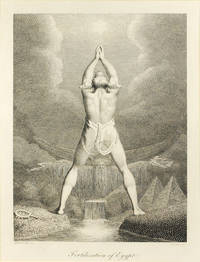
17911107614to. London: Johnson 1791. 4to single leaf 197 x 270 mm margins foxed a good strong impression with wide margins matted. § Designed by Fuseli and engraved by Blake for Erasmus Darwin's poem The Botanic Garden. One of Blake’s best-known commercial engravings. The image is of the God Anubis with the head of a dog praying to the star Sirius for rain his legs bestride a river and between them can be seen the winged figure of Jupiter Pluvius Jupiter giver of rain. Essick Commercial Book Illustrations XXI. Only state. Johnson unknown books
200454841Minneapolis: Coffee House Press 2004. 7.5" x 10.5" quotation broadside printed to celebrate the 20th anniversay of CHP. <br/><br/> Coffee House Press unknown books
1963PW1193London:: Macmillan 1963. 1963. 8vo. vii 1 183 pp. Frontis. map index. Cloth dust-jacket; jacket rubbed. Very good copy. Macmillan, 1963. hardcover books
1963PW1194New York:: Charles Scribner's Sons 1963. 1963. 8vo. vii 1 183 pp. Frontis. map index; small stain p.viii. Green cloth dust-jacket; jacket lightly worn. Very good. Charles Scribner's Sons, 1963. hardcover books
1973PW1195New York:: Twayne 1973. 1973. Series: Twayne's English Authors Series. Small 8vo. 143 1 pp. Index. Cloth dust-jacket; endleaves scarred paper removed d. j. essentially stuck to boards library pocket at rear with spine label numerous rubber-stamps including title. As is but scarce in jacket. Twayne, 1973. hardcover books
1902PW1202Wien Vienna & Leipzig:: Wilhelm Braumuller 1902. 1902. Series: Wiener Beitrage zur Englischen Philologie XVI Band. 8vo. xii 203 1 pp. Later blue buckram gilt stamped spine title. Columbia University Library embossed stamp on title. Very good. Scarce. Wilhelm Braumuller, 1902. hardcover books
15602A Plan for the Conduct of Female Education in Boarding Schools" by Erasmus Darwin. First edition. 1797. Derby: Printed by J. Drewry; for J. Johnson St. Paul's church-Yard London. Rebacked in half calf over boards; spine ruled in gilt with gilt title; Erasmus Darwin was the illustrious grandfather of Charles Darwin and wrote this treatise on the education of young women to help his daughters Susan and Mary when setting them up as proprietors of a boarding school. Darwin's is a voice of practical moderation in women education as much concerned with health and the physical environment as with the nurturing of mental and social faculties for women and girls. Darwin's treatise takes a comprehensive view of women's education suggesting that it should reach beyond social skills and a women should educate herself in literature history natural sciences and even mathematics. unknown books
1970034703Toronto: University of Toronto Press 1970. The Cambridge letters of Erasmus translated by D. F. S. Thomson. Introduction commentary and notes by H. C. Porter. xii 243p. original cloth. University of Toronto Press unknown books
1907294850Boston: Merrymount Press 1907. Limited. hardcover. near fine. Tall slim 8vo green boards with beige cloth spine leather label a bit chipped. Rubricated type. Boston: Merrymount Press 1907. Limited Edition. Near Fine.<br/><br/> One of 303 copies printed by D.B. Updike at the Merrymount Press.<br/><br/> Merrymount Press unknown books
1723D15677York: Printed by Charles Bourne 1723. Second edition. Hardcover. Very Good. 16 mo. pp. 231. Full contemporary English calf; a bit worn with some later strengthening to the spine; still quite nice overall. Formerly in the College of New Rochelle Library and housed in its handsome burgundy clamshell box with labels lettered in gilt. <br /> <br/><br/> Printed by Charles Bourne hardcover books
186426134Bruxelles: T.-J.I. Arnold 1864. 4to 23 cm; 9.25". 5 ff. xliv pp. 18 ff. color map facsims. <br><br>Reproduction photo-lithographique avec notice sur la jeunesse et les premiers travaux d'Ersame." "Tiré a 100 exemplaires numérotés à la presse: 1 sur peau de vélin 13 sur papier ancien véritable 13 sur grand papier de Hollande 69 sur papier de Hollande ordinaire."<br>Â Â Â Â Number 36 of 100 copies one of the copies "sur papier de Hollande ordinaire." The facsimile of an early volume of poetry and satires by Erasmus published at Gouda in 1513 occupies the final 18 leaves while C. Ruelens's introduction and study of Erasmus and of this work fills the 44 preliminary pages. Several of the satires do not appear in later compilations of his satires. 19th-century half black morocco raised bands machine made marbled paper on boards. Joints starting. Some foxing to endpapers. An uncut copy. T.-J.I. Arnold hardcover books
1339967Paris: Gibert Jeune Librairie D'Amateurs n.d. Softcover. Larger Octavo; G; beige pictorial spine with black text; glassine wrap has chips to joints and fore edges; glassine has age toned; covers show mild exterior wear; small chips to spine edges; some chips to edges; deckled text block edges have mild age toning; frontispiece; illustrated; slightly loosed binding; interior clean; pp 169; text in French. The Clock of Madness also In Praise of Madness. 1339967. FP New Rockville Stock. Gibert Jeune, Librairie D'Amateurs unknown books