Locke, JohnBiblio.com
63 résultats
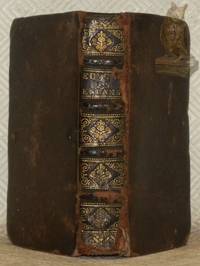
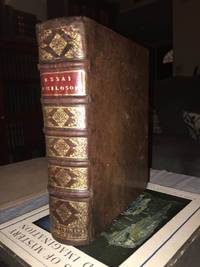
170076523Amsterdam: Chez Henri Schelte 1700. First Edition. Hardcover. The first edition in French of this classic of human thought. Locke's monumental An Essay Concerning Human Understanding 1689 is one of the first great defenses of modern empiricism and concerns itself with determining the limits of human understanding in respect to a wide spectrum of topics. Regarded as among the most important Enlightenment thinkers Locke 1632-1704 greatly influenced Voltaire and Jean-Jacques Rousseau and many Scottish Enlightenment thinkers as well as the American Revolutionaries. Quarto: 56 936 22 p. with an engraved frontispiece portrait. Full period vellum binding with a red morocco spine label five raised bands and decorative blind stamping. Light spotting to the endpapers with a small bookplate to the front pastedown. The front joint is just starting. A bit of bowing to the boards which are stained and soiled more so along the spine and extremities with some scuffing to the spine label. Chez Henri Schelte hardcover
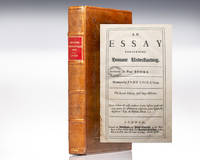
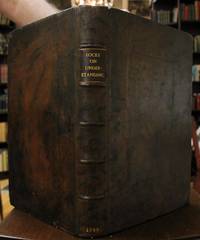
1694044491London: Awnsham and John Churchill and Samuel Manship 1694. Second Edition. Hardcover Full Leather. Good Condition. Full contemporary paneled calf worn rebacked and with small repairs to the corners new endpapers added. Lacking the portrait and with an old repair in the gutter of the title a little yellowed and the first few pages adhered slightly in the inner margin. A touch of marginal browning early on but generally a clean bright well margined copy. The first concentrated attempt to define the limits of human knowledge and the human capacity for comprehension - Hume and Kant built more ornate structures on these same ideas but the foundation was all Locke's. "Philosophy without Dogma" PMM 164 for the first edition of 1690. xl 407 blank 11 blank. Size: Folio. Quantity Available: 1. Shipped Weight: 2-3 kilos. Category: Philosophy; Antiquarian & Rare. Inventory No: 044491. Awnsham and John Churchill and Samuel Manship hardcover
1699117837Amsterdam : Chez Jaques Menassion 1699. 150x90mm. 9 ff. Avertissement - PrÂŽface du traducteur - Indice du Contenu des Sections - 484 pages bandeaux reliure plein veau avec titre fleurons fleurs de lys et caissons ornÂŽs dorÂŽs au dos ˆ quatre faux-nerfs. Coiffe infÂŽrieure abimÂŽe. CharniÂre supÂŽrieure fendue. IntÂŽrieur propre. Barbier III-574. TroisiÂme traduction franÂaise de Coste.Revue Dix-septiÂme siÂcle 2011/4 n.¡ 253 article LÕoeuvre des premiers traducteurs franÂais de John Locke : Jean Le Clerc Pierre Coste et David Mazel : Ã’Locke ne semble pas avoir trouvÂŽ que les commentaires ajoutÂŽs par Coste dans la prÂŽface de la traduction de ses Thoughts concerning Education ÂŽtaient dÂŽplacÂŽs ; au contraire il trouva son conseil ˆ propos de la nÂŽcessitÂŽ de bien ma”triser sa langue maternelle si perspicace quÕil dÂŽcida de lÕinsÂŽrer non pas dans le paratexte mais dans le texte mÂme de lՎdition anglaise revue et augmentÂŽe qui suivit ce dont Coste ne fut pas peu fier. Le transfert culturel eut donc un effet boomerang. En dÕautres termes lÕadaptation culturelle ˆ laquelle Coste fut contraint de procÂŽder pour traduire Some Thoughts concerning Education en franÂais fut ensuite adoptÂŽe par lÕauteur anglais pour son texte source qui fut ainsi enrichi de lÕidÂŽe du traducteur franÂaisÓ. Ã’dans lÕavertissement ˆ la deuxiÂme ÂŽdition franÂaise de De lÕeducation des enfans Coste signala quÕau rang des Ã’articles tout nouveauxÓ dont Locke avait grossi la version originale de lÕÃuvre figurait le sien sur lÕimportance dÕune bonne ma”trise de sa langue maternelle il prÂŽcisa ÂŽgalement que le texte original avait gagnÂŽ en exactitude. . Ë en croire Coste cÕest gr‰ce ˆ lui et ˆ son travail de traduction que Locke en vint ˆ Ã’exprimer en Anglois quantitÂŽ dÕendroits dÕune maniÂre plus prÂŽcise & plus distincte quÕil nÕavoit fait dans les trois premiÂres ƒditions de son LivreÓÓ. 235 Chez Jaques Menassion unknown
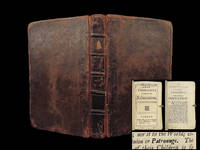
1697PCKLeLOC34London: Printed by H.Clark for A. and J.Churchill and Edw. Castle 1697. 1697. 8vo. pp. 2 p.l. 227 1ad. complete with half-title. paneled calf antique narrow strip from blank upper margin of title cut away; some light foxing. First Edition Second Issue. BOUND WITH: LOCKE John. Mr. Locke's Reply to the Right Reverend the Lord Bishop of Worcester's Answer to his Letter Concerning some Passages Relating To Mr. Locke's Essay Of Humane Understanding: In A Late Discourse of his Lordships In Vindication of the Trinity. 8vo. pp. 2 p.l. 174 1 leaf 7 1errata 2ads. complete with half-title. upper portion of last leaf of ads cut away; some light foxing. London: Printed by H.Clark for A. and J.Churchill and E.Castle 1697. First Edition. In 1696 deist John Toland published his Christianity not Mysterious a work professing to be a strict theological application of Lockean philosophy. It drew immediate response from Edward Stillingfleet Bishop of Worcester who in his Vindication of the Doctrine of the Trinity attacked Toland and Locke alike and charged Locke with disallowing mystery in human knowledge. A heated controversy ensued Locke responding with a Letter and two Replies the second of which appeared in 1699. Wing L2749 & L2754. NCBEL II 1837. Christophersen pp. 37-41. Rand I 342. 1st Edition. Hardcover. Very Good. London: Printed by H.Clark, for A. and J.Churchill and Edw. Castle, 1697. Hardcover
1694044491London: Awnsham and John Churchill and Samuel Manship 1694. Second Edition. Hardcover Full Leather. Good Condition. Full contemporary paneled calf worn rebacked and with small repairs to the corners new endpapers added. Lacking the portrait and with an old repair in the gutter of the title a little yellowed and the first few pages adhered slightly in the inner margin. A touch of marginal browning early on but generally a clean bright well margined copy. The first concentrated attempt to define the limits of human knowledge and the human capacity for comprehension - Hume and Kant built more ornate structures on these same ideas but the foundation was all Locke's. "Philosophy without Dogma" PMM 164 for the first edition of 1690. xl 407 blank 11 blank. Size: Folio. Quantity Available: 1. Shipped Weight: 2-3 kilos. Category: Philosophy; Antiquarian & Rare. Inventory No: 044491. Awnsham and John Churchill and Samuel Manship hardcover books
169439044London: Pr. for Awnsham & John Churchil and Samuel Manship 1694. Folio 32.8 cm 12.875". 40 407 13 12 index pp. portrait lacking; some pagination erratic. <br><br>Second edition "with large additions" of Lockes great work one of the formative influences on empiricism and philosophical thought in general in which Locke "was the first to take up the challenge of Bacon and to attempt to estimate critically the certainty and the adequacy of human knowledge when confronted with God and the universe" according to Printing and the Mind of Man.<br>Â Â Â Â Provenance: Front pastedown with inked inscription of J.H. Randall Jr. dated 1957; back pastedown with small label of bookseller William Salloch one formerly affixed Salloch label and one original Salloch invoice now laid in. Most recently in the library of Robert Sadoff M.D. sans indicia. <br>Â Â Â Â <br>Â Â Â Â Wing rev. ed. L2740; ESTC R21459; Printing & the Mind of Man 164 for the first edition of 1690. Contemporary mottled calf covers framed and panelled in blind with blind-tooled corner fleurons spine with gilt-stamped red leather title-label; leather much rubbed overall with small portion of back joint unsubtly refurbished some time ago. Front hinge inside cracked with sewing holding; lacking the portrait only. Pages cockled and a few leaves with lower outer portions waterstained; two leaves each with small hole affecting a handful of letters. Pr. for Awnsham & John Churchil and Samuel Manship hardcover books
1700185<b>FIRST EDITION IN FRENCH. Large quarto. Portrait of Locke. 937pp. Contemporary full calf. Spine is decoratively tooled in gilt compartments with red morocco gilt lettering label . An excellent copy with clean pages. First edition in French of John Locke's Essay Concerning Humane Understanding first published in English in 1690. A stellar copy.</b> Chez Henri Schelte hardcover
169726429London: Printed by H. Clark for A. and J. Churchill and Edw. Castle 1697 both titles 1697. First editions. Wing L-2749 & L-2753; Yolton 248 second issue state 2 & Yolton 249; NCBEL II 1837. Edges rubbed; front hinge starting but holding soundly; very good copy in the original state. 8vo 2 vols in 1 contemporary black panelled morocco brown morocco label gilt decorations and lettering a.e.g. Half-titles present. ¶ Locke's first published responses to criticism of his Essay Concerning Human Understanding; these two were written in reply first to Edward Stillingfleet's Discourse in Vindication of the Doctrine of the Trinity London 1696 which accused Locke of unorthodox religious beliefs and the second was to Stillingfleet's response to Locke's first letter. There was one further exchange between the two in 1699. <br/><br/> London: Printed by H. Clark, for A. and J. Churchill and Edw. Castle, 1697 [both titles] unknown books
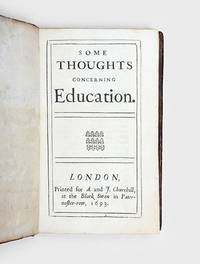
1693LV2329London:: Awnsham & John Churchill 1693. 1693. Small octavo. Collation: A4 B-R8 S4. Pagination: viii 262 2 pp. Modern antique-style spotted paneled calf red morocco spine label edges speckled red old endpapers preserved; some marginal worming G3-N8 with occasional effect to printed text but confined to lower margin some abrasion to fore-edge. Otherwise a fine copy. First Edition "corrected" issue. There has been much discussion of the "states" of the first edition. This copy has the square ornament on the title-page the rules are 13mm below the type and ‘patronage’ on A3v line 19. In addition this copy has the catchword "I" found on A2v indicative of a first printing and not the reprint wherein one finds the catchword altered to "I my". "Locke was known to be concerned at the quality of the printing of his writings and to try to read the sheets before they were finally printed . . . I think the Churchills completed printing the first edition before Locke had made corrections; that he was so incensed by the errors that he insisted the whole first edition be suppressed and the barely distinguishable second edition be made." - Yolton. This copy has most of the corrections but lacks a few at the front of the volume and apparently is made up of some mixed sheets from the first printing. // It quickly became one of his most popular and influential works and is more or less a direct application of Locke’s empiricism as expressed in his Essay Concerning Human Understanding. // From the beginning Some Thoughts Concerning Education was initiated in 1684 with a correspondence with Locke’s friend Edward Clarke. The letters offered to Clarke advice for raising his son and heir. But it was not until William Molyneux encouraged Locke in 1693 to publish this book based on the advice given and even then issuing the first edition without his name on the title. // This work is a cornerstone in educational theory and is further considered a foundation of the principles of modern developmental psychology. "His thought was marked by a ready understanding of and warm sympathy with children. Three main thoughts dominate the work. First the individual aptitudes capacities and idiosyncrasies of the child should govern learning not arbitrary curricular or rote learning taught by the rod. Second Locke placed the health of the body and the development of a sound character ahead of intellectual learning. In the third place he saw that play high spirits and the ‘gamesome humor’ natural to children should govern the business of learning wherever possible. . . His influence on educational thought was enormous and is still very much with us in its fundamental outlook and method." - Encyclopedia of Philosophy. REFERENCES: Alston 10:111; Attig 523; ESTC r213714. T.C. II467; Pfortzheimer 612; Norman 1381; Wing L2762; Yolton 165-6. A[wnsham] & J[ohn] Churchill, 1693. unknown books
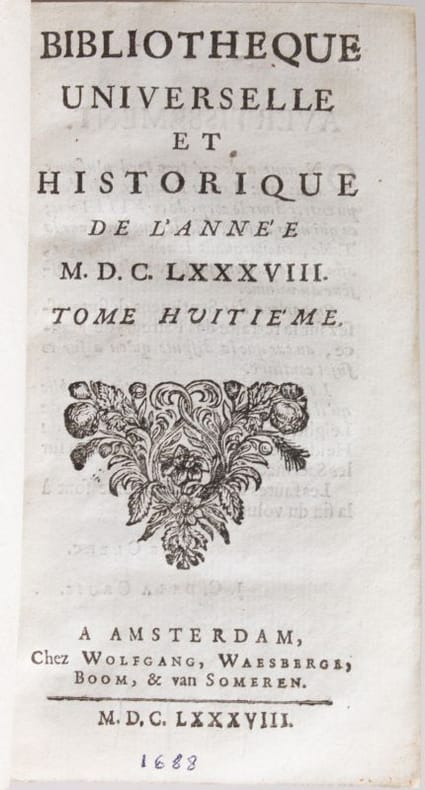
16885037Amsterdam Wolfgang, Waesberge, Boom & van Someren 1688 in-12 pleine reliure Amsterdam, Wolfgang, Waesberge, Boom & van Someren, 1688. 14 x 8 cm, in-12, (12) 538 (24) pp. - 1 planche dépliante hors texte, 1 figure dans le texte, reliure de l'époque de pleine basane cramoisie, dos à 5 nerfs orné de caissons, pièce de titre, traces de roulette sur les coupes, tranches mouchetées.
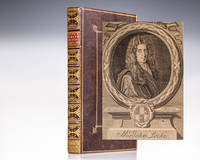
1694149739London: Printed for Awnsham and John Churchil at the Black-Swan in Pater-Noster Row and Samuel Manship at the Ship in Cornhill near the Royal-Exchange 1694. Rare second edition of this fundamental work in the history of Western thought the first to name Locke as the author and to include the frontispiece portrait of him. Folio bound full paneled calf morocco spine label lettered in gilt elaborated diced stamping to the spine in five compartments within raised bands engraved frontispiece portrait of Locke by P. Vanderbanck after Sylvester Brounower. In very good condition. From the library of the Isle of Wight Institution with stamps to the title page page 175 and verso of final leaf; ownership signature of British missionary Daniel Tyerman 1773-1828 of Newport Isle of Wight dated 1804 to the title page. The second edition of Locke's essay contains a number of important changes and additions to the text. It was the first to name Locke as the author and include the frontispiece portrait of him indicative of the celebrity Locke acquired with the publication of the first edition in 1690. "When Thomas Basset was running out of copies of the first edition in February 1693 he signed a contract with Locke to pay him ten shillings per sheet for additional materials for a new printing. These additions included an expansion of Book I Chap. IV; the chapter on power was almost entirely new; a new chapter 'Of Identity and Diversity' was inserted as 2.27 making chapters 27-31 to be renumbered as 2.28-32; and a discussion was added to 2.9.8. Other numerous additions were made throughout sectional summaries added in the margins and an analytical index supplied" Yolton. "It is Locke's second edition of the 'Essay on Human Understanding' that is the masterpiece we remember; the first 1690 edition did not bear Locke's name nor did it include a number of emendations that finished the work as Locke wanted it" Matthews Collecting Rare Books 97. "Locke was the first to take up the challenge of Bacon and to attempt to estimate critically the certainty and the adequacy of human knowledge when confronted with God and the universe" PMM 164. It is in this work that Locke 1632-1704 lays the foundations of British empiricism and the concept of the mind as a tabula rasa. "Locke summed up the Enlightenment in his belief in the middle class and its right to freedom of conscience and right to property in his faith in science and in his confidence in the goodness of humanity. His influence upon philosophy and political theory has been incalculable" Columbia Encyclopedia. Printed for Awnsham and John Churchil, at the Black-Swan in Pater-Noster Row, and Samuel Manship, at the Ship in Cornhill, near hardcover
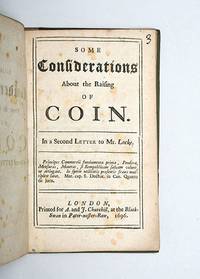
1696151077London: A. and J. Churchill 1696. Responding to Locke on coinage First edition of an anonymous reply to John Locke's Further Considerations Concerning Raising the Value of Money both part of the considerable output of publications surrounding the Great Recoinage of 1696 where the shortage and drawbacks of metal currency was engendering much debate. The terminal page is known in two settings this dated 3 October 1696 with advertisements the other dated 23 September 1696 and without advertisements. Octavo 173 x 106 mm. Nineteenth century white quarter cloth spine lettered in gilt green paper-covered sides. Early notation to title page stamp of Assay Office Library Birmingham to front free endpaper. Spine and extremities darkened contents foxed half-title lightly soiled. A very good copy. ESTC R16348; Pforzheimer 615; Wing S4481; Yolton C1696-5. hardcover
1700B5207London: Awnsham and John Churchil c. 1700. A fine example of this desirable work. Edition: 4th edition with large additions. Binding: Contemporary brown speckled calf boards with blind tooled decorative borders on top and bottom cover rebacked skillfully. Spine in six compartments with gilt text on 2 and 6. Tooled decorations on 1 3 4 5 and 6. <br> Notes: The essay is divided into 4 books within the one volume. John Locke FRS 1632 –v1704 was an English philosopher and physician regarded as one of the most influential of Enlightenment thinkers and known as the "Father of Classical Liberalism". Considered one of the first of the British empiricists following the tradition of Sir Francis Bacon he is equally important to social contract theory. His work greatly affected the development of epistemology and political philosophy. His writings influenced Voltaire and Rousseau many Scottish Enlightenment thinkers as well as the American revolutionaries. His contributions to classical republicanism and liberal theory are reflected in the United States Declaration of Independence. Locke was the first to take up the challenge of Bacon and to attempt to estimate critically the certainty and the adequacy of human knowledge when confronted with God and the universe. In the past similar enquiries had been vitiated by the human propensity to extend them beyond the range of human understanding and to invent causes for what it cannot explain. Therefore Locke’s first task was to ascertain ‘the original certainty and extent of human knowledge’ and excluding ‘the physical consideration of the mind to show how far it can comprehend the universe’. His conclusion is that though knowledge must necessarily fall short of complete comprehension it can at least be ‘sufficient’; enough to convince us that we are not at the mercy of pure chance and can to some extent control our own destiny" Printing and the Mind of Man Size: Small Folio 317x205mm. Illustration: Illustrated with a frontispiece engraving of John Locke. Volume: 4 books in 1 volume Provenance: of William Bell from Ulcombe Kent. References: Attig 228. Grolier 100 English 36. Grolier Wither to Prior 527. Pforzheimer 600. Printing and the Mind of Man 164. Wing L2739. HBS 64538. Pages: P. Blank. Frontis. Title. Dedication 1-4. Epistle to the Reader 1-10. Contents 1-23. 1-438. Index 1-11. Errata. Blank. 91-94 mispag as 93-96 226 jumps to 233 371 mispag as 317 380-381 mispag as 390-391. This is an augmented edition with two new chapters that were not in the previous editions. Category: Book Philosophy; Book Social Sciences; Book Europe United Kingdom; Awnsham and John Churchil hardcover
1700150333London: Printed for Awnsham and John Churchil at the Black-Swan in Pater-Noster Row and Samuel Manship at the Ship in Cornhill near the Royal-Exchange 1700. Rare fourth edition of this fundamental work in the history of Western thought the first to name Locke as the author and include the frontispiece portrait of him. Folio bound in in full speckled calf with gilt titles and tooling to the spine in six compartments within raised gilt bands gilt turn-ins engraved frontispiece portrait of Locke. An exceptional example. The second edition of Locke's essay contains a number of important changes and additions to the text. It was the first to name Locke as the author and include the frontispiece portrait of him. "It is Locke's second edition of the 'Essay on Human Understanding' that is the masterpiece we remember; the first 1690 edition did not bear Locke's name nor did it include a number of emendations that finished the work as Locke wanted it" Matthews Collecting Rare Books 97. "Locke was the first to take up the challenge of Bacon and to attempt to estimate critically the certainty and the adequacy of human knowledge when confronted with God and the universe" PMM 164. Printed for Awnsham and John Churchil, at the Black-Swan in Pater-Noster Row, and Samuel Manship, at the Ship in Cornhill, near unknown
169166937A Founding Document of Democracy The First of John LockeÃs Works to be Translated from His Native English LOCKE John. Du gouvernement civil ou l'on traitte de l'origine des fondemens de la nature du pouvoir et des fins des societe politiques. Traduit de l'Anglois. Amsterdam: Chez Abraham Wolfgang 1691. First edition in French of LockeÃs groundbeaking work and the first of his works to be translated from his native English. Twelvemo 5 7/16 x 3 inches; 138 x 75 mm. 12 321 1 blank pp. Title page with printerÃs woodcut device. Short marginal tears to M7 & 8 repaired and with no loss. Contemporary light salmon paper over boards rebacked at a very early date in similar paper manuscript spine lettering red speckled edges. Small number of upper blank of title and front endpaper. Housed in a quarter morocco clamshell case. Overall an excellent copy; very clean and in a contemporary binding. Originally published in 1690 as ëTwo Treatises of GovernmentÃ. ìLockeÃs anonymous text is here an anonymous translation traditionally attributed to David Mazel. ëOne of the Huguenot pastors living in Hollandà of the second treatise in its 1R version with the first chapter omittedì Yolton. ìThe second treatise contains a plain statement of the principles of democracy. In an age and country in which the practice of democracy had just been triumphantly vindicated LockeÃs theories although anticipated to some degree by the ëWhigà tradition of political thought-Aristotle Aquinas Hooker Grotius-had all the freshness of novelty. Like Hooker Locke presupposes an original and necessary law of reason and bases the constitution of society on it rather than on the de facto existence of a government based on the actual submission of the governed to the rulers. This consent is thus a prior condition of the ësocial contractà not a result of it so that the civil rulers hold their power not absolutely but conditionally; government being essentially a moral trust which lapses if the trustees fail to maintain their side of the contract. Locke was to reinforce these liberal opinions by his Letters on Tolerance and they combine with the Treatises on Government to provide a classic example of the empirical approach to the social and political economy which has remained ever since the basis of the principles of democracyî PMM. Its influence on the development of French and American political though cannot be overstated. Graesse IV 243. Printing and the Mind of Man 163. Yolton Locke 46. No copies of this edition have come up at auction in the last thirty years and OCLC only located twelve copies. HBS 66937. $6000 Chez Abraham Wolfgang hardcover books
169166937Amsterdam: Chez Abraham Wolfgang 1691. A Founding Document of Democracy The First of John Locke's Works to be Translated from His Native English<br> <br> LOCKE John. Du gouvernement civil ou l'on traitte de l'origine des fondemens de la nature du pouvoir et des fins des societe politiques. Traduit de l'Anglois. Amsterdam: Chez Abraham Wolfgang 1691.<br> <br> First edition in French of Locke's groundbeaking work and the first of his works to be translated from his native English. Twelvemo 5 7/16 x 3 inches; 138 x 75 mm. 12 321 1 blank pp. Title page with printer's woodcut device. Short marginal tears to M7 & 8 repaired and with no loss.<br> <br> Contemporary light salmon paper over boards rebacked at a very early date in similar paper manuscript spine lettering red speckled edges. Small number of upper blank of title and front endpaper. Housed in a quarter morocco clamshell case. Overall an excellent copy; very clean and in a contemporary binding.<br> <br> Originally published in 1690 as 'Two Treatises of Government'. "Locke's anonymous text is here an anonymous translation traditionally attributed to David Mazel. 'One of the Huguenot pastors living in Holland' of the second treatise in its 1R version with the first chapter omitted" Yolton. "The second treatise contains a plain statement of the principles of democracy. In an age and country in which the practice of democracy had just been triumphantly vindicated Locke's theories although anticipated to some degree by the 'Whig' tradition of political thought-Aristotle Aquinas Hooker Grotius-had all the freshness of novelty. Like Hooker Locke presupposes an original and necessary law of reason and bases the constitution of society on it rather than on the de facto existence of a government based on the actual submission of the governed to the rulers. This consent is thus a prior condition of the 'social contract' not a result of it so that the civil rulers hold their power not absolutely but conditionally; government being essentially a moral trust which lapses if the trustees fail to maintain their side of the contract. Locke was to reinforce these liberal opinions by his Letters on Tolerance and they combine with the Treatises on Government to provide a classic example of the empirical approach to the social and political economy which has remained ever since the basis of the principles of democracy" PMM. Its influence on the development of French and American political though cannot be overstated.<br> <br> Graesse IV 243. Printing and the Mind of Man 163. Yolton Locke 46. No copies of this edition have come up at auction in the last thirty years and OCLC only located twelve copies.<br> <br> HBS 66937.<br> <br> $6000. Chez Abraham Wolfgang unknown
165426966Oxoniæ: Leonardus Lichfield Academiæ Typographus 1654 1654. First edition. Yolton 251; Wing O-902; NCBEL II 1836; ESTC R203114. Blue morocco faded in spots on the boards; edges a little worn; very good copy with generous margins; rare in the trade. Small 4to 19th century straight-grain blue morocco blind and gilt decorations and lettering a.e.g. Title-page with a border of printer's ornaments. ¶ A collection of over 90 poems in various languages Latin Greek Hebrew English French Anglo-Saxon etc. written by Oxford students and graduates in celebration of Oliver Cromwell's Treaty of Westminster which brought to a conclusion the First Anglo-Dutch War. The most notable contributor is John Locke and his two poems - one in Latin eight lines and one in English 44 lines - constitute his first publication. ¶ Bookplate of Robert S. Pirie on the front paste-down. <br/><br/> Oxoniæ: Leonardus Lichfield Academiæ Typographus, 1654 hardcover books
1693106030London: Printed for A. and J. Churchill 1693. First edition of Locke's seminal treatise on the education of gentlemen which for over a century was the most important philosophical work on education in England. Octavo bound in full calf with morocco spine label lettered and decorated in gilt raised bands and ruling to the spine. ruling and floral cornerpieces to the front and rear panels stamped in blind all edges speckled red. In very good condition. Housed in a custom cloth clamshell box. A scarce and important work. While in political exile during the 1680s Locke wrote letters to his friend Clarke of Chipley about the education of his children. These letters form the substance of his influential Thoughts on Education considered a classic in the subject. "Clarke had spoken of the letters to Thomas Molyneux then studying medicine at Leyden. A correspondence began between Locke and Molyneux's brother WIlliam who insisted that the letters be published"DNB XII 33. It was translated into almost all of the major written European languages during the eighteenth century and nearly every European writer on education after Locke including Jean-Jacques Rousseau acknowledged its influence. Printed for A. and J. Churchill hardcover books
169326181<p><strong>1693 TRUE 1ed John LOCKE Concerning Education GOBLINS Boogeyman Bloody Bones</strong></p><p><em>"I have always thought the actions of men the best interpreters of their thoughts." </em></p><p>– John Locke</p><p>After studying medicine under the teaching of Thomas Sydenham John Locke began his journey of philosophical thinking that would develop into some of his most famous works. In 1693 Locke published a treatise on education entitled '<em>Thoughts Concerning Education'</em>. Throughout the 18th-century it was <strong><u>the most important work on the philosophy of education in England</u></strong>. This work was an extension from 'Concerning Human Understanding' in which he describes how to educate the 'blank slate' mind described in<em> 'Human Understanding'.</em></p><p>Perhaps the most intriguing sections found in this work is Locke's perspectives on <u>goblins sprites and the Boogeyman</u>! Locke describes recorded instances of <strong>Bloody-Bones</strong> being used to scare children into behaving! From this 17th-century printing:</p><p>"It being the usual method of servants to awe children and keep them in subjection by telling them of Raw-Head and Bloody-Bones as carry with them the ideas of some hurtful terrible things in habiting darkness." p. 159</p><p>This incredibly rare printing is notable for being one of the earliest printed editions of Locke and includes the desirable text misprint in the dedication. <u>An absolutely incredible printing of Locke's "<em>Education</em>"!</u></p><p>Item number: #26181</p><p>Price: $7500</p><p>LOCKE John</p><p><strong><em>Some thoughts concerning education</em></strong></p><p>Printed for A. and J. Churchill at the Black Swan in Pater-Noster-Row London 1693. <strong><u>True first edition!</u></strong></p><p><u>Details</u>: </p><p><!-- if !supportLists-->· <!--endif-->Collation: Complete with all pages</p><p><!-- if !supportLists-->o <!--endif-->8 262 2</p><p><!-- if !supportLists-->o <!--endif-->Title page i.e. A1 provided in professional facsimile</p><p><!-- if !supportLists-->· <!--endif-->References: Wing L 2762;</p><p><!-- if !supportLists-->· <!--endif-->Edition point:</p><p><!-- if !supportLists-->o <!--endif-->Verso of A3 line 19: "Patronnge" instead of "Patronage"</p><p><!-- if !supportLists-->· <!--endif-->Provenance: </p><p><!-- if !supportLists-->o <!--endif-->Armorial bookplate – J. Gibson A.M.</p><p><!-- if !supportLists-->· <!--endif-->Language: English</p><p><!-- if !supportLists-->· <!--endif-->Binding: Leather; tight and secure</p><p><!-- if !supportLists-->· <!--endif-->Size: ~7in X 4.5in 18cm x 11cm</p><p><!-- if !supportLists-->· <!--endif-->Exceedingly rare valuable and desirable with auction records and price comparisons between $11000-$15000</p><p>Our Guarantee:</p><p>Very Fast. Very Safe. Free Shipping Worldwide.</p><p>Customer satisfaction is our priority! Notify us with 7 days of receiving and we will offer a full refund without reservation!</p><p>26181</p><p>Photos available upon request. </p> Printed for A. and J. Churchill, at the Black Swan in Pater-Noster-Row hardcover
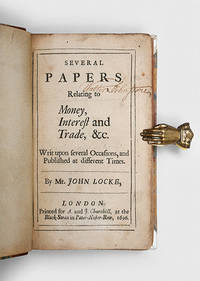
169666981London: Printed for A. and J. Churchill 1696. First collected edition of Locke's important writings on the fundamentals of economics. Small octavo 6 5/16 x 3 3/4 inches; 159 x 95 mm. 4 4 192; 24; 16 111 1 advertisement 1 eratta 1 blank pp. With general title-page and separate title-pages for Some Considerations and Further Considerations.<br> <br> Contemporary full speckled calf rebacked to style. Boards stamped in blind. Red morocco spine label lettered in gilt. Boards a bit chipped and bumped. Overall a very good copy.<br> <br> Comprised of:<br> <br> The Second edition Corrected of:<br> <br> Some Considerations of the Consequences of the Lowering of Interest and Raising the Value of Money. In a Letter to a Member of Parliament 1691. London: for Awnsham and John Churchill 1696.<br> <br> and<br> <br> Short Observations on a Printed Paper Intituled For encouraging the Coining Silver Money in England and after for keeping it here. 1695<br> <br> and<br> <br> Further Considerations Concerning Raising the Value of Money. Wherein Mr. Lowndes's Arguments for it in his late Report concerning An Essay for the Amendment of the Silver Coins are particularly Examined. London: Printed for A. and J. Churchil 1695.<br> <br> ESTC lists two variants: one has "By John Locke Esq;" on the title-page 'Further Considerations' dated 1695 and 111 pages. The other issue has "By Mr. John Locke" on the title-page "Further Considerations" dated 1696 and 112 pages. This copy is a combination of the two with 'Further Considerations' dated 1695 and "By Mr. John Locke" on the title-page.<br> <br> "'The Great Recoinage' controversy of the 1690s was the impetus for Locke's writings on mercantile and monetary theory. In the 1660s Sir Josiah Child had argued that the legal rate of interest should be lowered. It was still a topic for political discussion in the early 1690s: Child was still pressing the argument and was supported by London merchants. Locke however defended a legal rate of interest but refused to fix it below the current rates. This was the occasion for his publishing Some Considerations of the Consequences of the Lowering of Interest and Raising the Value of Money in 1692. When William Lowndes Secretary of the Treasury proposed in 1695 to raise the nominal value of coins Locke slightly revised Some Considerations and also published two further pamphlets Short Considerations and Further Considerations. At that time gold and silver coins had a value equivalent to their metal content representing nothing but their silver or gold quantity. Locke rejected devaluation basing his argument on this 'commodity theory' of money. He considered 'raising of the denomination or the increase of alloy' to be debasement and fraud" Yolton.<br> <br> "Locke's second major essay Further Considerations Concerning Raising the Value of Money 1695 while it reiterated many of his earlier arguments was mostly concerned with the issue of recoinage. Locke took issue with a proposal to devalue the official coinage by 20 per cent and argued strongly for recoining at the old standard the currently circulating coins debased by clipping and normal wear and tear. Money Locke argued was equivalent to gold and silver. People contracted for gold and silver and a government stamp was simply an assurance of the specie content of official coins. Hence a devaluation would only confuse trade and cause an increase in prices denominated in terms of pounds and shillings" The New Palgrave.<br> <br> Einaudi. Goldsmiths'. Kress.<br> <br> HBS 66981.<br> <br> $9500. Printed for A. and J. Churchill unknown
1693POCme[LO61London: Printed for A. and J.Churchill 1693. 1693. 8vo. pp. 4 p.l. 262 2. contemporary mottled calf front joint cracked short split in upper rear joint spine ends bit chipped lacking front flyleaf discolouration to outer margin in some gatherings outer margin of last few leaves with slight fraying. a few old manuscript marginal notes. First Edition First Issue with with slightly skewed woodcut ornament on title catchword I my on A2v and misprint Patronnge on A3v Yolton reversing priority given in Wing. Lockes treatise grew out of a correspondence dating from 1684 between himself and his friend Edward Clarke whom he was advising on the education of his son. Locke was in Holland at the time. "His thought was marked by a ready understanding of and sympathy with children. Three main thoughts dominate the work. First the individual aptitudes capacities and idiosyncrasies of the child should govern learning not arbitrary curricular or rote learning taught by the rod. Second Locke placed the health of the body and the development of a sound character ahead of intellectual learning. In the third place he saw that play high spirits and the "gamesome humor" natural to children should govern the business of learning wherever possible. Compulsory learning is irksome; where there is play in learning there is also joy in it. Throughout he placed emphasis on good example practice and use rather than on precepts rules and punishment. The work was an implicit criticism of his own education at Westminster and Oxford which he found unpleasant and largely useless." James Gordon Clapp Encyc. of Philosophy p. 500 Wing 2762A. Yolton 165. Christophersen p. 57. Pforzheimer 612. 1st Edition. London: Printed for A. and J.Churchill, 1693. unknown
169666981First Collected Edition of Locke's Writings on the Fundamentals of Economics LOCKE John. Several Papers Relating to Money Interest and Trade &c. Writ upon several Occasions and Published at different Times. London: Printed for A. and J. Churchill 1696. First collected edition of Locke's important writings on the fundamentals of economics. Small octavo 6 5/16 x 3 3/4 inches; 159 x 95 mm. 4 4 192; 24; 16 111 1 advertisement 1 eratta 1 blank pp. With general title-page and separate title-pages for Some Considerations and Further Considerations. Contemporary full speckled calf rebacked to style. Boards stamped in blind. Red morocco spine label lettered in gilt. Boards a bit chipped and bumped. Overall a very good copy. Comprised of: The Second edition Corrected of: Some Considerations of the Consequences of the Lowering of Interest and Raising the Value of Money. In a Letter to a Member of Parliament 1691. London: for Awnsham and John Churchill 1696. and Short Observations on a Printed Paper Intituled For encouraging the Coining Silver Money in England and after for keeping it here. 1695 and Further Considerations Concerning Raising the Value of Money. Wherein Mr. LowndesÃs Arguments for it in his late Report concerning An Essay for the Amendment of the Silver Coins are particularly Examined. London: Printed for A. and J. Churchil 1695. ESTC lists two variants: one has "By John Locke Esq;" on the title-page 'Further Considerations' dated 1695 and 111 pages. The other issue has "By Mr. John Locke" on the title-page "Further Considerations" dated 1696 and 112 pages. This copy is a combination of the two with 'Further Considerations' dated 1695 and "By Mr. John Locke" on the title-page. ìëThe Great Recoinageà controversy of the 1690s was the impetus for LockeÃs writings on mercantile and monetary theory. In the 1660s Sir Josiah Child had argued that the legal rate of interest should be lowered. It was still a topic for political discussion in the early 1690s: Child was still pressing the argument and was supported by London merchants. Locke however defended a legal rate of interest but refused to fix it below the current rates. This was the occasion for his publishing Some Considerations of the Consequences of the Lowering of Interest and Raising the Value of Money in 1692. When William Lowndes Secretary of the Treasury proposed in 1695 to raise the nominal value of coins Locke slightly revised Some Considerations and also published two further pamphlets Short Considerations and Further Considerations. At that time gold and silver coins had a value equivalent to their metal content representing nothing but their silver or gold quantity. Locke rejected devaluation basing his argument on this ëcommodity theoryà of money. He considered ëraising of the denomination or the increase of alloyà to be debasement and fraudî Yolton. ìLockeÃs second major essay Further Considerations Concerning Raising the Value of Money 1695 while it reiterated many of his earlier arguments was mostly concerned with the issue of recoinage. Locke took issue with a proposal to devalue the official coinage by 20 per cent and argued strongly for recoining at the old standard the currently circulating coins debased by clipping and normal wear and tear. Money Locke argued was equivalent to gold and silver. People contracted for gold and silver and a government stamp was simply an assurance of the specie content of official coins. Hence a devaluation would only confuse trade and cause an increase in prices denominated in terms of pounds and shillingsî The New Palgrave. Einaudi. Goldsmiths'. Kress. HBS 66981RSL. $11000 Printed for A. and J. Churchill hardcover books
1693185824London: for A. and J. Churchill 1693. Enlightened education First edition of Locke's major contribution to pedagogical theory the seminal Enlightenment treatise on the subject: "His influence on educational thought and practice was enormous and is still very much with us in its fundamental outlook and method" Edwards p. 501. Locke judged his own impeccably orthodox education to be both unpleasant and unhelpful: he therefore welcomed the opportunity to advise a close friend Edward Clarke on the impending education of his son. He argues that pupils are essentially malleable a tabula rasa: receptive to a good education but easily corruptible by a bad one. The ultimate purpose of a Lockean education is to develop rational self-control and so temper one's selfish passions. To do so the teacher should aim first at physical health as a sound body leads to a sound mind while integrating sports and even trade skills. By contrast with his own upbringing the scholastic focus on ancient languages and theology is considerably reduced. These ideas made a deep impression on Enlightenment thought not least on Rousseau and his Emile. The tabula rasa in particular appealed to reformers who saw social progress as possible through education. There are two virtually identical editions the second a line-for-line resetting of the first; this copy has all the points delineated by Yolton as distinguishing the first edition. Octavo 173 x 104 mm pp. 8 262 2. Woodcut device on title page. Contemporary panelled calf rebacked to style edges sprinkled red. With 1716 ownership initials of one Joshua Harrison possibly the Harrison who studied at Queen's College Oxford from 1718 to 1722 to front free endpaper. With 1718 inscription recording Harrison's gift of this copy to one Thomas Horton possibly the Horton 1705-1791 who studied at St John's College Cambridge in 1729. Light scuffing extremities restored and initial 50 leaves washed otherwise crisp: a very good copy indeed. Attig 523; ESTC R7482; Pforzheimer 612; Wing L2762; Yolton 166. Paul Edwards ed. The Encyclopedia of Philosophy vol. III 1967. unknown
1696166327London: A. and J. Churchill 1696. Locke's gospel of sound money First edition thus. Several Papers comprises an issue under a collective title page of the second editions of three of John Locke's economic tracts all relating to the recoinage controversy of the 1690s in which the government attempted to replace the country's clipped worn and widely forged coinage with a new devalued currency. Though Locke was writing in response to a specific crisis his works had a lasting impact on monetary theory. He soon gained and retained well into the 19th century the reputation as a defender of an honest commercial society free from currency manipulation by governments. "Locke's writings on money and his arguments against devaluation have almost been regarded as gospels for 'sound money' men" Ming-Hsun Li pp. 104. The tracts included are Some Considerations of the Consequences of the Lowering of Interest and Raising the Value of Money first edition 1692 Short Observations. on Coining Silver Money first edition 1695 and Further Considerations Concerning Raising the Value of Money first edition 1695. The book is bibliographically complicated composed from existing sheets of the three works with a collective title page in two states. This copy has Yolton's second issue of the collective title page cancelled to read "By Mr. John Locke" rather than the original "By John Locke Esq;". The third work can be present in sheets of either its second or third edition here the second edition and retaining the distinguishing errata slip. Octavo 162 x 94 mm. Recent quarter calf marbled sides vellum tips. Housed in custom black cloth solander box. Contemporary ownership signature of one "Walter John Stone" to title page. Light browning and a few stains. A very good copy. ESTC R19558; Goldsmiths' 3315; Kress 1980; Wing L2757; Yolton 163B. Ming-Hsun Li The Great Recoinage of 1696-9 1963. hardcover
169019072London: Awnsham and John Churchill 1690 1692. First editions of both volumes of Locke's Second and Third Letter Concerning Toleration. Two volumes bound in one. Octavo contemporary calf rebacked. In excellent condition with the text clean contents clean except for light browning rebacked. From the library of James Stonhouse with his signatures and armorial bookplate. Exceptionally rare. The Second Letter Concerning Toleration is a response to the attack on A Letter concerning Toleration Locke's The Argument of the 'Letter concerning Toleration' Briefly Consider'd and Answer'd. In the first letter Locke had claimed 'Toleration to be the chief Characteristical Mark of the True Church'. His views on religious toleration continued to be the subject of controversy and he penned two more letters the fourth of which was published posthumously. Awnsham and John Churchill unknown books