DUPONT DE NEMOURS, Pierre SamuelBiblio.com
49 résultats
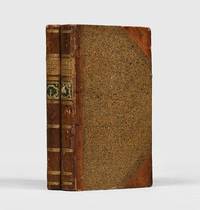
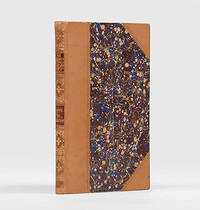
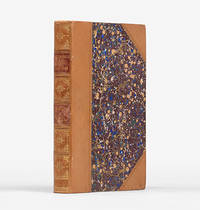
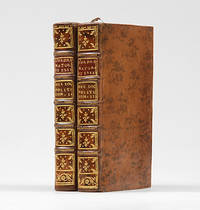
176893587London & Paris: Desaint 1768 and London: John Nourse & Desaint Paris 1767. First edition of undoubtedly one of the scarcest of Dupont's works and probably one of the most successful publications promoting physiocracy. A modern English translation only published in 2003 by Liberty Fund was prepared by Henry H. Clark who describes Dupont's work as "arguably the clearest most concise introduction to the full range of Physiocratic thinking on the nature of an enlightened interdependent exchange-based economy and its moral and political implications." The work is based on Le Mercier de la Rivière's L'ordre naturel et essentiel des sociétés politiques with which it is here bound which Adam Smith referred to as "the most distinct and best connected account of this doctrine". Schumpeter in his discussion on the physiocrats calls Dupont "by far the ablest of the lot" p. 226 and Palgrave notes; "If Quesnay was the father of physiocracy Dupont was its godfather for he gave it its name by the publication of his Physiocratie. a collection of Quesnay's articles which the editor introduced by a Discours." Two works bound in 2 vols duodecimo 163 x 92 mm. Contemporary mottled calf spines decorated gilt in compartments red morocco labels red edges. Housed in a brown cloth flat-back box by the Chelsea Bindery. De l'origine without the terminal errata leaf as called for by Sraffa. Engraved bookplate of Mr. Brossays Duperray to front pastedowns. A superb copy. Goldsmiths' 10390; Higgs 4260; INED 1617; Kress 6547; Mattioli 1074; Schelle 11; Sraffa 1458. hardcover
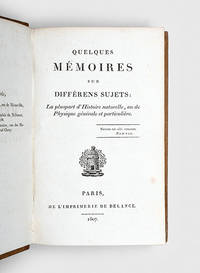
17891669331789-1808. The physiocratic economist in the Revolution First editions beginning with his major collection of 20 essays Quelques mémoires sur différens sujets followed by 13 publications most relating to his role as president of the National Constituent Assembly and his involvement in legal and economic reform during the French Revolution. Comprising: i Quelques mémoires sur différens sujets. Paris: de l'imprimerie de Delance 1807; ii Opinion sur les projets de loterie et sur l'état des revenus ordinaires de la République. Paris: De l'Imprimerie nationale 1797; iii Opinion sur la résolution relative aux canaux d'Orléans et du Loing. Paris: De l'Imprimerie nationale 1797; iv Opinion sur la résolution du premier messidor relative à l'urgence des paiemens et aux négociations à faire par la trésorerie. Paris: De l'Imprimerie nationale 1797; v De la Périodicité des assemblées nationales de leur organisation de la forme à suivre pour amener les propositions qui pourront y être faites à devenir des loix et de la sanction nécessaire pour que ces loix soient obligatoires. Paris: Chez Baudouin Imprimeur de l'Assemblée National 1789; vi Opinion sur la première résolution du 19 messidor relative aux transactions. Paris: De l'Imprimerie nationale 1797; vii Opinion sur les postes. Paris: De l'Imprimerie de Du Pont 1789; viii Opinion sur la résolution du 19 messidor relative aux fugitifs du Haut-Rhin et du Bas-Rhin. Paris: De l'Imprimerie nationale 1797; ix Rapport à la Société philanthropique au nom de sa commission des sociétés de prévoyance sur celle dite des Amis de l'Egalite autrefois Bourse des malades. Paris: no publisher stated 1805; x Extrait de la Revue philosophique littéraire et politique. Notice historique sur M. Quesnay de Saint-Germain. Paris: no publisher stated 1805; xi Le Serpent. Commentaire sur l'ancienne allégorie du Serpent et de la vie qui se trouve dans le Boun-Déhesch et dans plusieurs autres mythologies orientales. Paris: no publisher stated 1796; xii Rapport à la société philanthropique lu à l'Assemblée du 4 ventôse an 13. Paris: Everat 1805; xiii De l'Infidélité. Paris: no publisher stated 1803; xiv Irénée Bonfils. Sur la religion de ses pères et de nos pères. Paris: Chez Firmin Didot Cocheris Nepveu & Delance 1808. 14 works bound in 1 vol. octavo 190 x 115 mm. Contemporary quarter sheep spine lettered in gilt "Oeuvres de Du Pont de Nemours" brown paper-covered sides. Contemporary pencil annotations to p. 49 of first work a little cropped. Light sporadic toning: in excellent condition. unknown
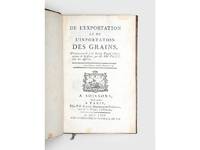
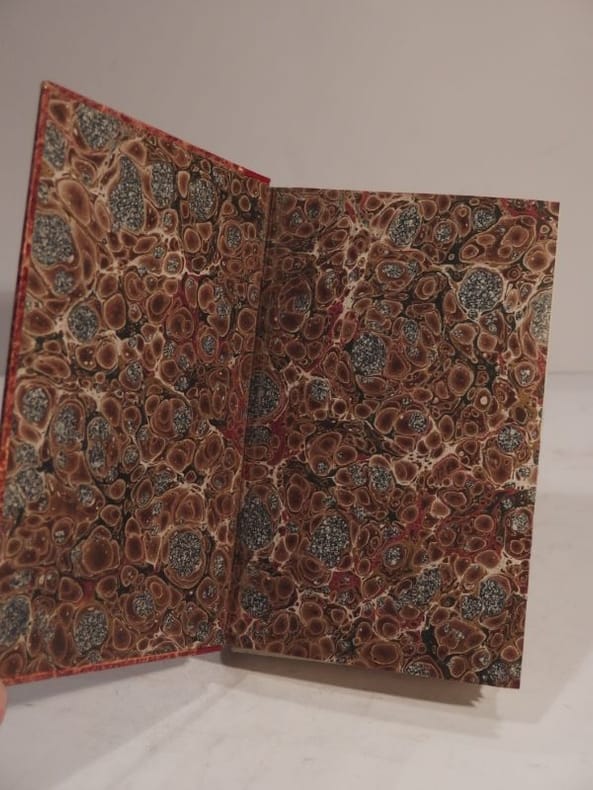
1764174581Soissons: et se trouve a Paris Chez P. G. Simon 1764. An important physiocratic tract First edition of this strong argument for the physiocratic policy of free trade in grain by one of the school's most influential practitioners. Quesnay was pleased with Dupont's tract and encouraged him to dedicate it to his patron Madame de Pompadour which Dupont did although she died before its publication. The work caught the attention of Jacques Turgot then Intendant of Limousin who was drafting an edict to free the grain trade and enlisted Dupont's assistance. The success of the treatise "was due at least in part to the climate of opinion favorable to arguments for removing restrictions on the commerce of grain" Saricks p. 37 an opinion that formed the basis of Turgot's free trade reforms. This copy is from the standard issue with pp. 15-20 and 47-52 cancels; a very few copies are known with the text in manuscript. Octavo 199 x 124 mm pp. vi 2 advertisement leaf vii-viii 174 2 approbation. Large folding table following p. 46. Contemporary mottled calf brown morocco label to spine smooth spine gilt in compartments triple gilt rules to covers with floral cornerpieces marbled endpapers gilt edges. Joints and extremities restored light stain at head. A very good copy. Goldsmiths' 9977; Higgs 3158; INED 1605; Kress S.4336; Schelle 3; not in Einaudi. Ambrose Saricks Pierre Samuel Du Pont de Nemours 1965. unknown
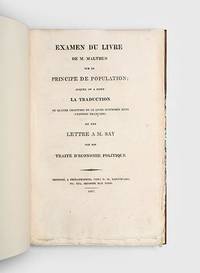
1817161589Philadelphia: P. M. Lafourcade 1817. Dupont's final work Very rare first edition of Dupont's final work published in America where he died the same year: according to Gustave Schelle it is among his writings one of his best and unknown in France. The work is remarkable as a commentary on the development of political economy in Britain and France since the great ferment of half a century earlier in which Dupont himself had been a key figure. It includes a translation of the final four chapters of Malthus's book which had been omitted from the original French translation and a letter to Jean-Baptiste Say whose Traite d'économie politique Dupont had read aboard the ship Fingal in 1814. Octavo 196 x 120 mm. Recent half morocco and marbled boards to style top edge gilt by Ateliers Laurenchet. Very occasional light spotting else a very good copy crisp and clean with uncut fore and lower edges. Einaudi 1666; INED 1603; Schelle 104; not in Goldsmiths' or Kress but located at Kress not in Mattioli or Sraffa. Schelle Du Pont de Nemours et l'Ecole physiocratique 1888 p. 375ff. hardcover
1768138456Yverdon: no printer 1768. Second edition of this collection of texts by Quesnay issued as volumes one and two of a six-volume collection of Physiocratic texts published in Yverdon to promote Physiocratic thought. The text is an almost identical reprint of the original Leiden edition published the year before. This copy is extensively annotated in a contemporary hand with pencil markings throughout and ink marginalia in French to over 90 pages. The annotations were made prior to binding and have been slightly trimmed in the binding process but the sense is largely recoverable. Maddeningly there is no indication of who the annotator was. 2 vols octavo 179 x 106 mm. Near-contemporary half calf and sprinkled boards flat spines ruled gilt paper labels lettered in gilt blue sprinkled edges silk bookmarkers. Spines and corners a little worn one spine label chipped. Extensively annotated throughout with marginal cross marks in pencil and notes in ink the ink marginalia trimmed when bound with loss of a couple of characters sense recoverable. Einaudi 4432; Mattioli 2810 hardcover
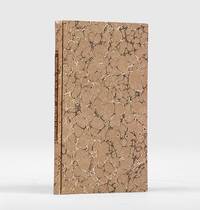
1768123576London & Paris: Desaint 1768. One of the scarcest of Dupont's works and probably one of the most successful publications promoting physiocracy First edition of undoubtedly one of the scarcest of Dupont's works and probably one of the most successful publications promoting physiocracy. Schumpeter in his discussion on the physiocrats calls Dupont "by far the ablest of the lot" p. 226 and Palgrave notes: "If Quesnay was the father of physiocracy Dupont was its godfather for he gave it its name by the publication of his Physiocratie. a collection of Quesnay's articles which the editor introduced by a Discours". Sraffa notes that it was "actually published in December 1767". Octavo 193 x 118 mm. Woodcut headpiece. Rebound in modern marbled paper boards brown morocco label lettered in gilt laid down to spine. Without the half-title and the terminal errata leaf. Contents faintly foxed light dampstain to lower edge of title leaf edges of the cancel B1 browned fore edge strengthened with Japanese tissue overall a very good copy. Goldsmiths' 10390; Higgs 4260; INED 1617; Kress 6547; Mattioli 1074; Schelle 11; Sraffa 1458. hardcover
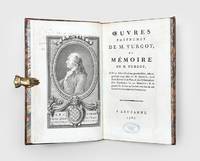
1787175389Lausanne: no publisher 1787. First edition published by Honoré Gabriel Mirabeau the son of Victor de Riquetti. The work was originally drawn up by Du Pont de Nemours in 1776 under the title Mémoire sur les municipalités after a draft left by Turgot. The Lettre which begins on page 99 was written by Du Pont de Nemours and the Observations p. 113ff. by Brissot de Warville. The work was reprinted in 1788 under the title Des administrations provinciales. Turgot was opposed to the summoning of the states-general advocated by Malesherbes possibly on the ground that the two privileged orders would have too much power in them. His own plan is found in the Mémoire which was submitted informally to the King. This copy has a manuscript note on the blank recto of the frontispiece: "Cet ouvrage n'est pas de M. Turgot. Il est de M. dupont qui a pris quelqu'unes de ses idées; je suis certaine de ce que j'avance M. Turgot n'ayant rien écrit sur ses operations." Octavo 192 x 118 mm pp. Engraved portrait frontispiece. iv 5-167 1. Contemporary mottled calf red morocco label flat spine richly tooled in gilt single blind rule border to boards flower cornerpieces marbled endpapers and edges. Ownership stamp of the Château de la Roche Guyonne to title page with their gilt coat of arms stamped in the first compartment of the spine; annotation to blank recto of frontispiece and occasional marginal marks in ink to the contents; pale mostly marginal damp mark to first few gatherings; a very good copy. Einaudi 1668; Goldsmiths' 13504; INED 1614 bis; Kress B.1203. hardcover
1804113554Paris: Veuve Goujon fils 1804. First and only edition. A very rare book printed in only a few copies for private distribution as stated in the preface. Written originally in 1788 in opposition to regressive internal tax policy specifically the tax on hides and leathers it remained unpublished until this moment when that and other reactionary fiscal measures were about to be revived. A virtual treatise on taxation it is a good illustration of the immense practical and theoretical knowledge that Du Pont and his fellow Physiocrats were able to bring to the debate over public policy. Octavo 196 x 120 mm. Large folding table opposite page 28. Late 19th or early 20th century half calf and marbled boards by George J. Swayne of Brooklyn spine decorated gilt in compartments morocco labels marbled edges and endpapers. Engraved armorial bookplate of Alexis and Elizabeth du Pont of Rencourt to front pastedown. Lightly toned throughout one or two spots; an excellent copy. Schelle 82. Not in Saricks and no copy listed in the Kress Goldsmiths' Einaudi or Mattioli catalogues. OCLC lists only two copies: Yale and Hagley Museum Library. hardcover
1788113111Rouen & Paris: Chez Moutard 1788. First and only edition of Dupont's defence of the free-trade treaty concluded between France and England in 1786. Du Pont had played an important role in its formation and passage. "Dupont's Lettre constitutes one of the best justifications of the Treaty of 1786 ever published. While admitting that certain interests have been temporarily damaged it insists upon the ultimate benefits which will be certain after necessary changes have been carried out in France. Had these measures been effected as the King and the Ministry desired according to the author there would have been no ill results." Saricks Pierre Samuel Dupont de Nemours p. 97. Octavo 196 x 120 mm. Late 19th or early 20th century half calf and marbled boards by George J. Swayne of Brooklyn spine decorated gilt in compartments morocco labels marbled edges and endpapers. Engraved armorial bookplate of Alexis and Elizabeth du Pont of Rencourt to front pastedown. Very occasional light spotting; an excellent copy. Einaudi 1667; Goldsmith's' 13576; Kress B1404; Mattioli 1077; Schelle 30; 411. Sowerby Catalogue of the Library of Thomas Jefferson 3617. hardcover
1812113624Paris: Le Normant Firmin Didot 1812. Stated second edition but apparently the first printed. Schelle cites a "Philadelphia 1800" edition no. 74 but we have been unable to locate a copy and it is apparently unrecorded. Dupont had published in 1793 a work of 47 pages entitled Vues sur l'éducation nationale par un cultivateur ou moyen de simplifier l'instruction de la rendre à la fois morale philosophique républicaine civile et militaire sans déranger les travaux de l'agriculture et des arts auxquels la jeunesse doit concourir and it is possible that he called the present work a second edition because of that. There is no mention of an earlier edition in the preface however where Du Pont speaks only of the manuscript "made in 1800." That manuscript completed at the request of Thomas Jefferson in August 1800 the year Du Pont arrived in the United States is dated at the end "A Good-Stay pres New York 15 juin 1800." According to the note in the Hagley record the manuscript or a copy thereof was sent to Jefferson who did not act upon it until 1816 when he gave it to Francis Walker Gilmer. The latter was working on a translation in 1817 at the time of Du Pont's death. The copy sent to Jefferson and the translation have never been located. Hagley has an undated manuscript copy in an unidentified hand with Du Pont's corrections which was acquired at some point by Pierre S. Du Pont. But it was from this printed edition published in 1812 that Mrs. Bessie Gardner Du Pont made the English translation published in 1923. Octavo 196 x 120 mm. Large folding table opposite page 66. Late 19th or early 20th century half calf and marbled boards by George J. Swayne of Brooklyn spine decorated gilt in compartments morocco labels marbled edges and endpapers. Engraved armorial bookplate of Alexis and Elizabeth du Pont of Rencourt to front pastedown. Folding table trimmed at foot with slight loss of text. Schelle 99. hardcover
47971Philadelphie.1788.In-8 relié.204 et 224 p.Portrait en frontispice,réhaussé de couleurs. Bel état.Veau porphyre souligné de 3 filets dorés dont un gras.Dos orné avec pièce de titre.Tranches jaspées.Petit défaut:trou de vers en queue.Tampon représentant une fleur de lys en page de garde.
1799113128Paris: chez Goujon Fils 1799 Fructidor An VII. Third and final edition of Dupont's "treatise attempting to state a philosophy of life" Saricks first published in 1792 and addressed to his long-time friend Lavoisier. "From the dates given at the beginning of the book the Philosophie de l'univers was apparently written between December 20 1792 and June 10 1793. With the Philosophie Dupont included the Oromasis a prose-poem which according to his statement in the preface was written while he was concealed in the observatory after August 10. Although of inferior quality this little work displays the same sublime optimism which Condorcet was able to muster in somewhat similar circumstances while composing his famous essay on human progress. The basis of his 'philosophy of the universe' is that nothing is done by chance. Providential laws direct the whole universe as accords with good physiocratic doctrine" ibid. Octavo 196 x 120 mm. Engraved frontispiece portrait of the author. Late 19th or early 20th century half calf and marbled boards by George J. Swayne of Brooklyn spine decorated gilt in compartments morocco labels marbled edges and endpapers. Engraved armorial bookplate of Alexis and Elizabeth du Pont of Rencourt to front pastedown. Paper very lightly toned very occasional spotting; frontispiece a little frayed at top image unaffected; a very good copy. Einaudi 1673; Schelle 64. Not in Goldsmiths' or Kress. Sowerby Catalogue of the Library of Thomas Jefferson 1264 has the second edition sent to Jefferson in 1798 prior to Du Pont's departure for America. See Saricks Pierre Samuel Du Pont de Nemours p.221ff. hardcover
18109Philadelphie, (Paris, Barrois l'ainé), 1782. 2 volumes in 1. viii, (2), 148 pp.; 268 pp. 8vo. Modern half red morocco, marbled boards, spine gilt in compartments, gilt lettering. Schelle, p. 24; Kress B.459; Goldsmiths 12250; INED 1610; not in Einaudi. First edition, with the additional errata-leaf. Very rare. Described by Gustave Schelle as the best documentation of Turgot's financial statesmanship during the first years of Louis XVI.The first part treats the youth of Turgot, his successful administration as intendant for the generality of Limoges where he earned great popularity by his abolishment of the 'corvees' and the introduction of a great deal of other reforms, and his administration as secretary of state for the navy, a position he held for five weeks only but of particular interest for his enlightened views on colonial policy. The second and larger part treats Turgot's administration as controller-general and minister of finance from August 1774 until May 1776. It contains a striking account of the numerous reforms introduced by him: the abolishment of abuses, privileges and crushing taxes, the purification of the financial administration, the abolishment of many limitations on trade and labour, etc. - Fine complete copy, printed on heavy paper with generous margins.
17343(Paris, de l'Imprimerie Nationale, 1791). With 4 large (folio-plano) folding tables. Three works in 1 volume. 25, (1) pp.; 3, (1) pp.; 4 pp. 8vo. Modern half morocco, marbled boards, gilt lettering. Martin & Walter, Anonymes, 1969, 1647; not in Schelle; not in Kress; Goldsmiths 14791 (all three parts); not in Einaudi; not in INED. Rare original editions. Complete collection of the published pieces including the 4 large folding tables, nearly always lacking, which were distributed with the text. The texts and the tables have been signed by the members of the Committee: La Rochefoucauld, Defermon, Roederer, d'Allarde, Dauchy, Dupont de Nemours. - The last large folding table present twice, a very nice copy of this scarce work.
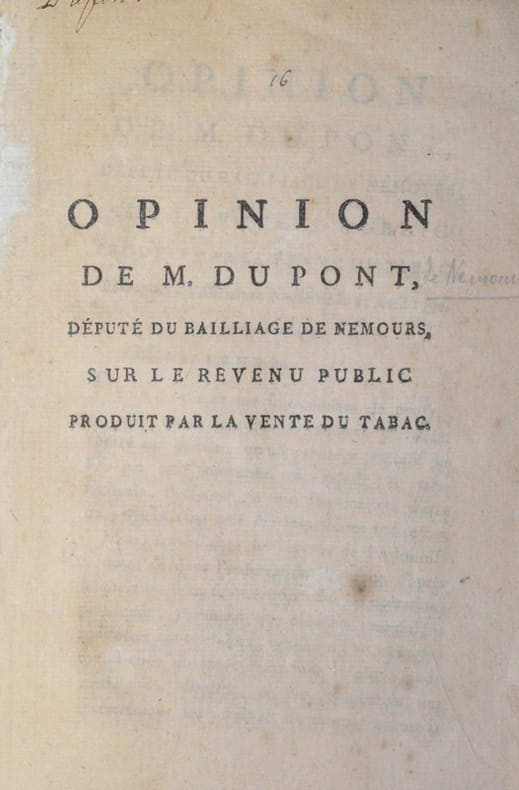
1790127703Paris: Imprimé par ordre du comité de l'imposition 1790. First edition. A supporter of constitutional monarchy Dupont represented Nemours in the National Assembly. The present work is his report on the taxation of drink. A scarce item with WorldCat listing copies in ten institutions: one in the UK five in the US three in France and one in Switzerland. Octavo 191 x 120 mm. Recent marbled boards red morocco label to spine. Numbered in contemporary hand on title page. Toned and a little foxed else a very good copy. Schelle 41t. hardcover
13724Philadelphie (Paris, Barrois l'aîné), 1782. 2 parties en un volume in-8, VIII-(2 : supplément à l'errata)-148--268 pp., reliure moderne demi-maroquin à long grain, dos richement orné, tête dorée (rares rousseurs).
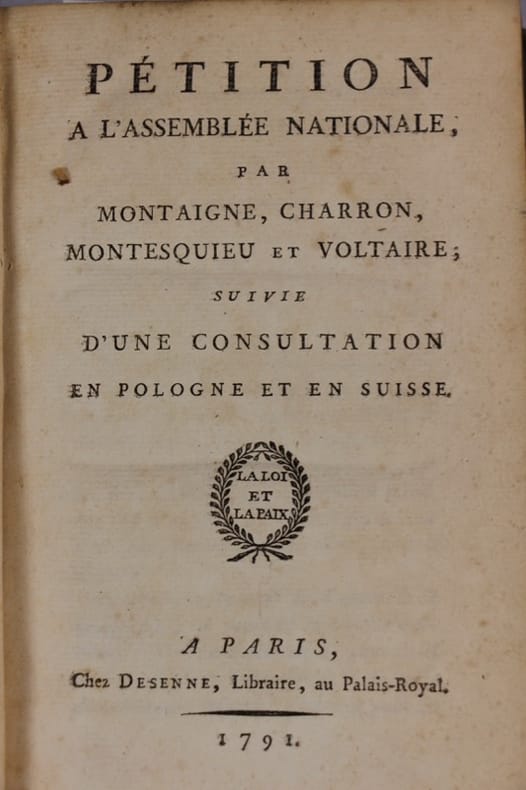
1797130932Divers 1797 Fort in-12, demi-veau, dos à nerfs, pièces de titre et tomaison [20], pagination multiple. Coiffes usées, mors fendillés. Rousseurs éparses. Précieuse réunion de 15 rapports, discours et plaidoyers emblématiques : 1 - [Divorce] [Voltaire, Montaigne, Montesquieu, Charron, Hennet, Albert] Pétion à l'Assemblée Nationale par Montaigne, Charron, Montesquieu et Voltaire ; suivi d'une consultation en Pologne et en Suisse..P., Desenne, 1791. In 8 broché, couverture muette de l'époque, 67 pp. - 2- Robespierre, Maximilien de. Rapport fait à la Convention nationale, au nom du Comité de salut public, par le citoyen Robespierre,... sur la situation politique de la république, le 27 brumaire, l'an II.. Impr. nationale, s. d. 30 pp. - 3 - Robespierre, Maximilien de. Discours de Maximilien Robespierre, prononcé dans la séance du septidi, 7 prairéal ["sic"], an deuxième de la République. De l’imp. du citoyen Delaloy. 13 pp. Accroc angulaire aux 2 premiers ff., - 4 - Barère de Vieuzac, Bertrand Rapport fait au nom du Comité de salut public, par Barère, sur les évènemens de Paris, du 9 thermidor,'Imprimerie nationale 1794. 4 pp.- 5 - [Dupont de Nemours Pierre Samuel] Lysias. Plaidoyer de Lysias, contre les membres des anciens comités de salut public et de sûreté générale. P., Chez du Pont, an III [1794-1795] 34 pp.- 6 - La Harpe, Jean François de. De la guerre déclarée par nos derniers tyrans, à la raison, à la morale, aux lettres et aux arts Paris : Migneret, an 4-1796. 45 pp. - 7 - Raynal Guillaume-Thomas Des Assassinats et vols politiques ou Des Proscriptions et des confiscations. Londres, Paris, Debarle, 1795. 64 pp. Fortes brunissures. - 8 - Boissy d'Anglas François-Antoine Ier Rapport au nom des comités de salut public de sûreté générale et de législation réunis. Pau, De l'Imprimerie nationale, Germinal an III [1795] 20 pp. - 9 - Garran de Coulon, Jean-Philippe Rapport sur les biens communaux, fait au nom du comité de législation, Impr. nationale, vendémiaire an IV. 40 pp. - 10 - Portalis, Jean-Étienne-Marie Conseil des Anciens. Opinion de Portalis sur la résolution du 17 floréal dernier relative aux prêtres non assermentés Impr. nationale, an IV 86 pp. - 11 - [Conjuration de Babeuf ] Corps législatif. Conseil des Anciens. Extrait du procès-verbal des séances du Conseil des Anciens [Texte imprimé]. Du 29 floréal, an 4. Imprimerie nationale. Floréal, an 4 [avril-mai 1796] 34 pp. - 12 - A.-C. Thibaudeau, Conseil des Cinq-Cents. Rapport fait au nom de la commission chargée d'examiner les opérations des assemblées primaires de Marseille, Impr. nationale, thermidor an IV. 35 pp - 13 - Dumas, Mathieu. Conseil des Anciens. Rapport fait au nom de la commission chargée d'examiner la résolution du Conseil des Cinq-Cents relative aux opérations des assemblées primaires de Marseille, Impr. nationale, an IV. 28 pp. Rousseurs soutenues. - 14 - Tronson du Coudray. Conseil des Anciens. Rapport de Tronson-Ducoudray au sujet du message du Directoire concernant l'approche des troupes et les adresses de l'armée d'Italie, Impr. nationale, an V. 35 pp. - 15 - Thibaudeau, Antoine. Conseil des Cinq-Cents. Rapport de Thibaudeau, au nom d'une commission spéciale... chargée de faire un rapport sur le message du Directoire exécutif du 22 thermidor.
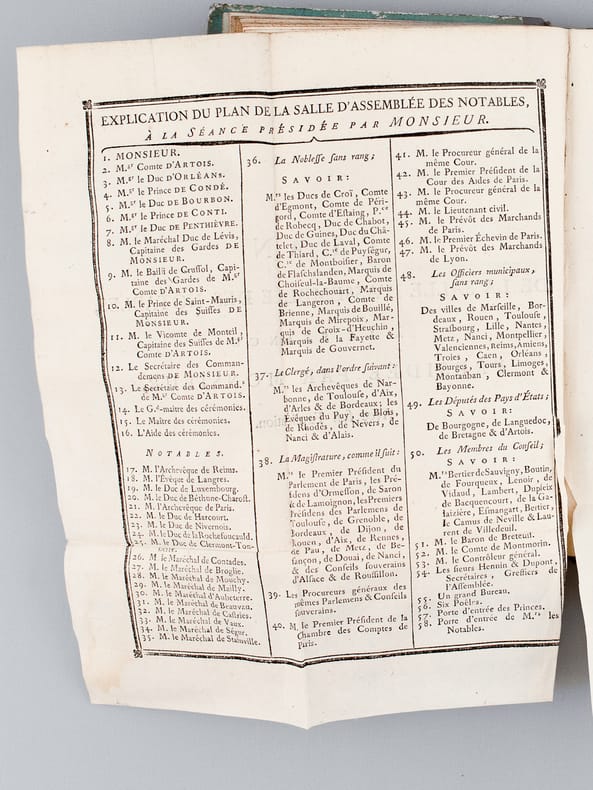
43019Paris De l'Imprimerie Royale 1788 in 8 (20,5x13,5) 1 volume reliure demi velin moderne, dos lisse, pièce de titre de cuir noir, 267 pages, avec 6 planches dépliantes, dont 2 plans de la salle d'assemblée des Notables. Ex-libris R. V. F. Bel exemplaire ( Photographies sur demande / We can send pictures of this book on simple request )
1837A Paris, chez Baudouin, (s.d.), Imprimeur de l’Assemblée Nationale, N° 31., (1), 34 pp. Plaquette brochée, in-8
1788657861 vol. in-8 reliure de l'époque demi-basane marron, De l'Imprimerie Royale, Paris, 1788, 2 ff., 267 pp. avec 6 planches dépliantes (dont 2 plans)
16587A Paris, Chez Baudouin, 1790. (2), 86 pp. 8vo. Modern half morocco, gilt lettering to spine, marbled boards. Schelle 41d; Kress B.1833; Goldsmiths 14301; Einaudi 1679; Martin & Walter 12189; Stourm 167. First edition of one the important writings of Dupont during the revolutionary period. 'Travail ou sont étudiés les principes fiscaux et l'ensemble de la situation financière ..... On y trouve un exposé intéressant du Fonctionnement de l'ancienne gabelle' (Stourm). "It was not so much his physiocratic doctrine as his general grasp of macroeconomics that led Du Pont to take a strong stand against the Revolutionary government's growing resort to the issuance of paper money. In March 1790 he prepared a report (this work) for the Committee on Finance, which warned against the Assembly's resort to financing revolution through the use of paper money. An an alternative to printing money Du Pont recommended that the government reduce a proportion of its increases in spending on new prpgrams and that it temporarily retain, though at a reduced rate, the taxes on salt, bouillon, and furs, which it was about to abolish. If any deficit remained in the government's budget after these actions, it was to be made up by a surcharge on all other remaining taxes" (James J. McLain, The Economic Writings of Du Pont de Nemours, p. 148).
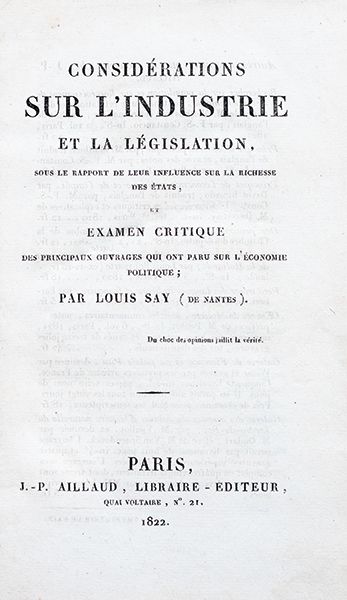
36931In-8, cartonnage ocre à la bradel, pièce de titre de veau brun, tranches jaspées (rel. moderne Devauchelle), (8), 412, (2) p. Paris, J.-P. Aillaud, 1822.
In-8, cartonnage ocre à la bradel, pièce de titre de veau brun, tranches jaspées (rel. moderne Devauchelle), (8), 412, (2) p. Edition originale, et unique, de cet essai que L.-A. Say consacre à l'analyse critique des œuvres économiques de ses contemporains: Dupont de Nemours, Adam Smith, Canard, Lauderdale, Ganilh, Ricardo, Malthus, Destutt de Tracy, Saint-Chamans et son frère J.B. Say. L'auteur y développe une théorie entièrement originale dont l'importance a été réévaluée par les historiens modernes de l'économie politique. "Anticlassique", il combat la théorie libérale non pas comme les socialistes de son temps au nom de la justice, mais en réfutant la détermination de la valeur par le coût de production des classiques, pour y opposer une théorie personnelle de la valeur fondée sur l'utilité. Frère cadet de Jean-Baptiste Say auquel l'ouvrage est dédié, Louis-Auguste Say (1774-1840) fit fortune dans l'industrie sucrière. Il est le fondateur de l'empire sucrier portant son nom. Sur son oeuvre économique cf. Marc Penouil, 'Louis Say', in "Revue économique", 1967, vol. 18, n°1, p. 98-122. (Einaudi, 5129. Goldsmiths, 23443. Kress, C.967). Très bon exemplaire, très bien relié.
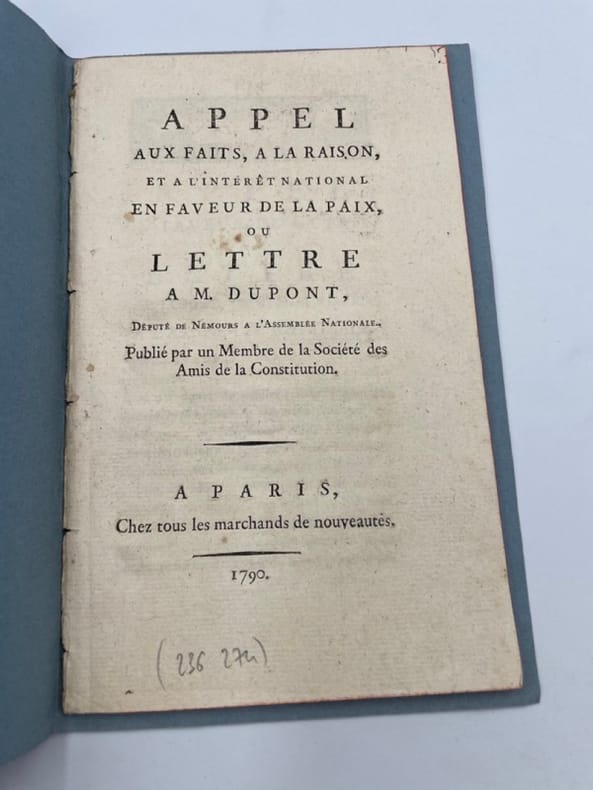
236274Paris, chez tous les marchands de nouveautés, 1790 in-8, titre, 40 pp., broché sous couverture moderne de papier bleu imprimé.