2 486 résultats
1999F70888s.l., Leo S. Olschki 1999 211pp., 24cm., in the series "Centro internazionale di cultura "Giovanni Pico della Mirandola. Studi Pichiani" vol.7, softcover, VG, (introduction in Italian, text in Latin), ISBN 88-222-4703-5, F70888
34pp., 22cm., in the series "Mediaeval philosophical texts in translation" vol.3, softcover, VG, (English translation), ISBN 0-87462-203-4, F70891
1994F70891Milwaukee, Marquette University Press 1994 34pp., 22cm., in the series "Mediaeval philosophical texts in translation" vol.3, softcover, VG, (English translation), ISBN 0-87462-203-4, F70891
Madrid, Ollero & Ramos, 1999. 4to. mayor; 3 hs., VIII pp., 416 pp., 2 hs. Cubiertas originales.
195610093Paris NRF, Gallimard 1956 In "Bibliothèque des Idées". Un volume in-8 broché, couverture blanche, 708 pages. Exemplaire de travail.
16010400Augsbourg, Augustae Vindelicorum Ad Insigne Pinus, 1601. Édition princeps de l’œuvre de Photios Ier de Constantinople par l'humaniste allemand David Hœschel, portant mention de primus edidit sur la page de titre. Fort volume (338 x 234 mm pour 105 mm d'épaisseur) en sexternions, (xi) 985 pp. Relié plein vélin, plats muets, dos lisse, mention calligraphiée "Photius Bibliotheca" en partie effacée près de la coiffe, cinq coutures apparentes aux charnières en plus des coutures de tête et de queue. Toutes tranches teintes en rouge. Un signet bicolore en tissu épais est fourni. Mention à la plume sur la première garde blanche datée de 1777. Page de titre, dédicace en latin à Marco Velsero, une page en grec, liste "Eruditorum Aliquot de Photio" en latin, élégie en vers latins à Janus Gruter ("Ianus Gruteri"), page dédiée à Isaac Casaubon ("Isaacus Casaubonus"), l'ensemble formant 11 pages non paginées. Commence ensuite le texte grec de l’œuvre de Photius, bien paginé, avec de nombreuses notes aux marges. Page de note en latin de David Hœschel à la p. 919, la suite étant consacrée aux notes de bas de page en grec jusqu'au colophon, en latin, qui clôt le livre p. 985. Gravures sur bois à la page de titre et au colophon. Nombreux bandeaux, lettrines et culs-de-lampe à travers l'ouvrage. "La Bibliothèque (Βιβλιοθήκη) ou Myriobiblos (Μυριόβιβλος), œuvre de Photios, patriarche de Constantinople de 858 à 886, est une collection de 280 notices (appelées traditionnellement « codex », parfois au pluriel « codices ») sur des textes littéraires de genres variés lus par le recenseur. L'ouvrage fut commencé vers 843. Les « codices », de longueur très variable, vont de la simple mention d'un nom d'auteur avec un titre à une analyse de plusieurs dizaines de pages. Ils traitent des auteurs, du contenu des textes, du jugement porté par Photios sur eux, et comprennent souvent des citations plus ou moins longues. Selon Karl Krumbacher (Die griechische Lit., 1905, p. 274.), il s'agit du « plus important ouvrage d'histoire littéraire du Moyen Âge »" (Wikipédia) Si Hœschel publia de nombreux textes de Pères de l'église en grec et latin, dont plusieurs furent des éditions princeps, le Myriobiblios reste considéré comme sa plus importante contribution à la philologie. Il fit l'objet d'une traduction en latin, publiée par le jésuite André Schott également à Augsbourg en 1606, ainsi que de plusieurs rééditions du vivant même d'Hœschel. Ouvrage rarissime et d'une grande valeur historique. Taches et frottements aux plats, légères craquelures en certains points du dos juste avant les charnières, coin inférieur avant frotté et émoussé, coiffes baillant légèrement avec débuts de craquelure au milieu, extrémités haute et basse des charnières avant craquelées. Trous de mite importants sur la marge intérieure des 9 premières et des 16 dernières pages, avec très légers manques au milieu de la colonne gauche de la p.969 au colophon p.985, quelques petits trous épars, rousseurs éparses surtout marginales sans perte. ************************************************** Augsburg, Augustae Vindelicorum Ad Insigne Pinus, 1601. Editio Princeps of the work of Photius I of Constantinople by the German humanist David Hœschel, with mention of primus edidit on the title page. Large volume (338 x 234 mm for 105 mm thickness) in sexternions, (xi) 985 pp. Bound in full vellum, blank covers, flat spine, calligraphic mention "Photius Bibliotheca" partly erased at the top of the spine, five visible stitches at the hinges in addition to the head and tail stitches. All edges dyed red. A two-tone bookmark in thick cloth is provided. Pen note on the first white guard dated 1777. Title page, dedication in Latin to Marco Velsero, one page in Greek, list "Eruditorum Aliquot de Photio" in Latin, elegy in Latin verse to Janus Gruter ("Ianus Gruteri"), page dedicated to Isaac Casaubon ("Isaacus Casaubonus"), this being 11 unpaginated pages. Then begins the (paginated) Greek text of Photius' work, with numerous notes in the margins. Page of note in Latin by David Hœschel on p. 919, the rest being devoted to footnotes in Greek until the colophon, in Latin, which closes the book on p. 985. Woodcuts on the title page and colophon. Numerous headpieces, initials and tailpieces throughout. "The Bibliotheca (Βιβλιοθήκη) or Myriobiblos (Μυριόβιβλος), the work of Photios, patriarch of Constantinople from 858 to 886, is a collection of 280 notices (traditionally called "codex", sometimes in the plural "codices") on literary texts of various genres read by the census taker. The work was begun around 843. The "codices", of very variable length, range from the simple mention of an author's name with a title to an analysis of several dozen pages. They deal with the authors, the content of the texts, the judgment made by Photios on them, and often include more or less long quotations. According to Karl Krumbacher (Die griechische Lit., 1905, p. 274.), it is the "most important work of literary history of the Middle Ages"." (Wikipedia) While Hoeschel published many texts by the Fathers of the Church in Greek and Latin, several of which were first editions, the Myriobiblios remains considered his most important contribution to philology. It was translated into Latin, published by the Jesuit André Schott also in Augsburg in 1606, as well as several reissues during Hoeschel's own lifetime. A very rare work of great historical value. Stains and rubbing on the covers, slight cracking in some places on the spine just before the hinges, lower front corner rubbed with a slight defect, spine extremities slightly gaping with the beginnings of cracking in the middle. Upper and lower ends of the front hinges crackled. Significant moth holes on the inside margin of the first 9 and last 16 pages, with very slight losses in the middle of the left column from p.969 to the colophon p.985), some small scattered holes, scattered foxing mainly marginal without loss.
AMA-1187Ann Arbor, the University of Michigan Press, 1994. In 8°, viii, 323 pp. toile grise de l’éditeur, jaquette.
1937F120792Paris-Bruxelles, Labor 1937 271pp., signé avec dédicace par l'auteur, 19cm., brochure originale (avec une signature d'un propriétaire précédent), texte frais, bon état, F120792
192149564Hersfeld, M. Zulauf, 1921. XII, 729 S. Mit zahlr. Textillustr. u. vielen tls. farb., tls. gefalt., tls. doppelblattgr. Taf., Faks. u. sonstigen Beilagen. 4to. OLdr. mit Rot-Grün- u. Goldpräg.
Light shelfwear to book. DJ has edgewear with a few small chips. ; Collection of Pfeiffer's works in German and English. ; 304 pages
Ex-library copy with usual stamps, call numbers and pocket. Many stamps to first few pages and textblock "Booksale". Spine a bit sunned. ; This volume is concerned with the foundations laid by Greek poets and scholars in the last three centuries B. C. For the whole future of classical scholarship. It starts with a brief survey of the pre-Hellenistic ages in Greece and a few hints at the oriental background. Then the author makes full use of the available evidence, especially that of the papyri, to demonstrate the fresh start made by Hellenistic poets after 300 B. C. And to describe the essential achievements of five generations of creative scholars in Alexandria and of their epigoni down to the age of Augustus. ; 9.75 x 0.75 x 6.5 Inches; 311 pages
Madrid, 1997. 4to.; 547 pp., 1 h. Enc. original.
In-folio; ff. (392), in caratteri romani; il titolo, tranne le prime due righe, è in caratteri gotici; pelle marrone ottocentesca firmata Bedford, con decorazione dorata ai piatti entro doppia cornice, titolo in oro al dorso, fregi, nervature, tagli dorati. Ex libris John Fairfax Crowder. Al frontespizio sotto al titolo una xilografia raffigura "Petrus Delphinus Generalis" inginocchiato di fronte a A. Romualdo; la pagina è inquadrata in una cornice a grottesche su legno che reca il monogramma "I C", che era stata impiegata nel 1521 per Sallustio, e poi per l'edizione delle Vite de SS. Padri del 1532. Raro epistolario del generale dei camaldolesi, fonte ricchissima per la vita storica e artistica fiorentina del XV secolo. PIETRO DELFIN, (Venezia 1444-1525), venne eletto generale dei camaldolesi nel 1480, e coltivò costantemente le lettere e la teologia, tenendosi in relazione con gli uomini più illustri del suo tempo, soprattutto con gli umanisti. Irriducibile avversario del Savonarola, nel suo Dialogus in Ieronymum Ferrariensem arrivò a chiedere la condanna al rogo del frate. Prima edizione del suo epistolario, una ricchissima fonte per la dottrina teologica ma anche per i dettagli storici di cui le sue lettere sono corredate. L'argomento principale che è al centro degli scritti di Delfin è certamente la disputa teologica o comunque religiosa, oggetto di fitti scambi epistolari con i rappresentanti del clero e gli umanisti di tutta Italia; tra gli altri argomenti vi rientra anche una disquisizione piuttosto lunga (l. II ep.LXXVII) circa l'azione corruttrice delle rappresentazioni teatrali, in particolare delle commedie, con un richiamo ai ludi scaenici degli antichi romani. Ma dati i rapporti con gli umanisti del tempo, la raccolta contiene anche scambi epistolari con questi ultimi: Ugolino Verino, Ermolao Barbaro, Francesco Guicciardini ecc. Ad esempio proprio in una di queste missive si esprime l'augurio che si ponga mano ad una edizione completa delle opere di Leon Battista Alberti. In folio; ff. (392), in Roman characters; the title, except for the first two lines, is in gothic characters; 19th century brown calf binding signed Bedford, with gilt decoration on the plates within a double frame, gilt title on the spine, friezes, bands, gilt edges. Ex libris John Fairfax Crowder. On the title page, under the title, a wood plate depicts "Petrus Delphinus Generalis" kneeling in front of A. Romualdo; the page is framed in a grotesque frame on wood bearing the monogram "I C", which had been used in 1521 for Sallustio, and then for the edition of the Vite dei SS. Padri 1532. Rare epistolary of the general of the Camaldolese order, a very rich source for the historical and artistic life of Florence in the 15th century. PIETRO DELFIN, (Venice 1444-1525), was elected general of the Camaldolese order in 1480, and constantly cultivated literature and theology, keeping in touch with the most illustrious men of his time, above all with the humanists. Irreducible opponent of Savonarola, in his Dialogus in Ieronymum Ferrariensem he came to ask for the friar to be condemned to the stake. First edition of his epistolary, a very rich source for theological doctrine but also for the historical details with which his letters are accompanied. The main topic that is at the center of Delfin's writings is certainly the theological or religious dispute, the subject of dense exchanges of letters with representatives of the clergy and humanists from all over Italy; among the other topics there is also a rather long disquisition (l. II ep.LXXVII) about the corrupting action of theatrical representations, in particular of comedies, with a reference to the ludi scaenici of the ancient Romans. Given the relationships with the humanists of the time, the collection also contains correspondence with the latter: Ugolino Verino, Ermolao Barbaro, Francesco Guicciardini etc. For example, precisely in one of these letters the wish is expressed that a complete edition of the works of Leon Battista Alberti be put to work.
1967T119553Citta del Vaticano, Biblioteca Apostolica Vaticana 1967 156pp. + frontispiece in colour & 37 plates out of text & 1 large folding plate, 25cm., original 1967-edition, softcover (lower end of spine slightly repaired), ex-libris stamp on frontcover, in the series "Studi e Testi" volume 248, good condition, T119553
1923470EXEMPLAIRE SUR JAPON AVEC SUITE SUR CHINE. traduits par HENRY COCHIN et ornés de vignettes gravées sur bois par ALFRED LATOUR. Chez l'Imprimeur Léon Pichon, Paris : 1923. L'un des 32 exemplaires numérotés sur Japon de Shidzuoka contenant une suite d'épreuves des gravures sur Chine. In-4 (21 X 26,5 cm) broché sous couverture rempliée. XIII - 137 pp.
1932471EXEMPLAIRE SUR JAPON AVEC SUITE SUR CHINE. Traduits par HENRY COCHIN et ornés de vignettes gravées sur bois par ALFRED LATOUR. L'1 des 32 exemplaires numérotés sur Japon de Shidzuoka contenant une suite d'épreuves des gravures sur chine. In-4 (21 x 26,5 cm) broché . VIII- 137 pp. Notes.
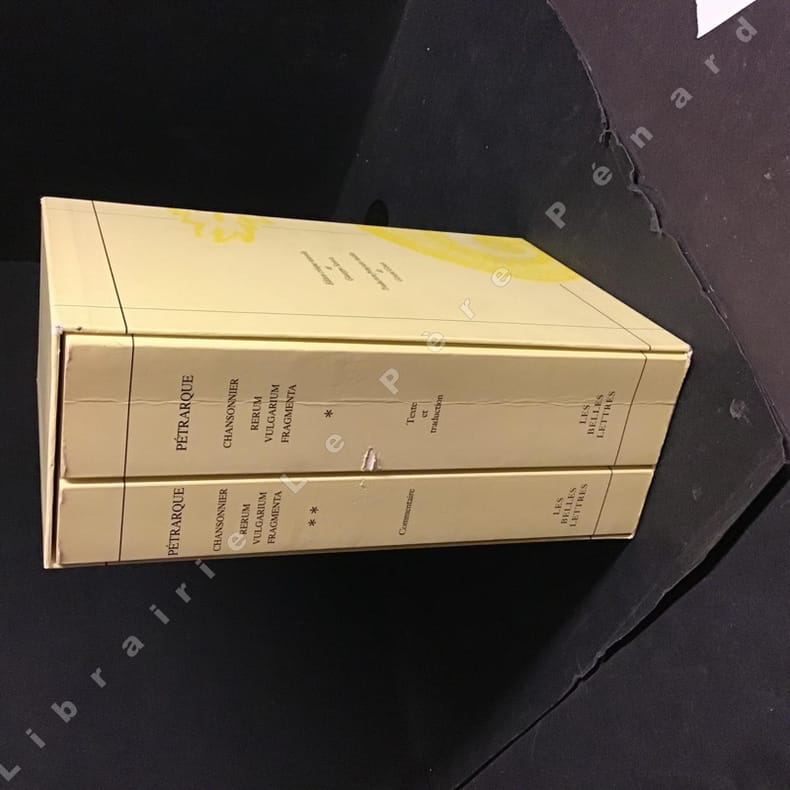
20091225762009 Editions Les Belles Lettres, Collection "Les Classiques de L'Humanisme" - 2009 - 2 volumes in-8, brochés couverture souple, dans leur coffret cartonné illustré- 508 + 400 pages
20091225772009 Editions Les Belles Lettres, Collection "Les Classiques de L'Humanisme" - 2009 - 2 volumes in-8, brochés couverture souple, dans leur coffret cartonné illustré- 508 + 400 pages
Frontispiece has been repaired with cloth tape. Former owner's name to ffep deleted with black marker. Chipping to spine ends. 1 corner lightly bumped. Light edgewear to corners. Dampstaining to corners of 3-4 pages and rear inner corner. Some pencil notes by R. E. Fantham. Pages tanned. ; 350 pages
Writing in pen to front cover with pen notes to some pages (by R. E. Fantham). Browning to wraps. ; 249 pages
184584827[ca. 1845]. 4,5 x 4 cm. Feinkartonpassepartout (21 x 14,5 cm).
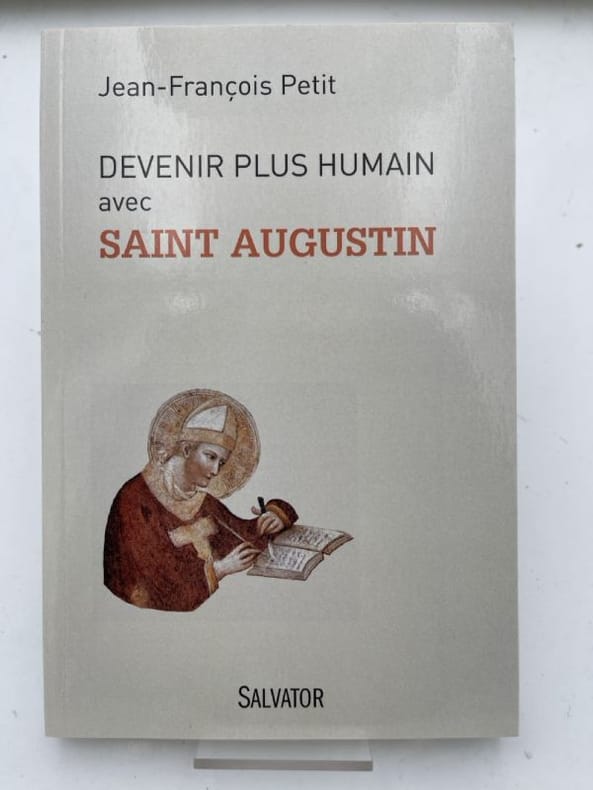
2015192191Salvator Salvator, 2015. In-8 broché de 190 pages. Très bon état
200258409CBFrankfurt am Main/Berlin/Bern/Bruxelles/New York/Oxford/Wien, Verlag Peter Lang, 2002. Groß-8°. 23 cm. 467 Seiten. Original-Broschur.
200258408CBFrankfurt am Main/Berlin/Bern/Bruxelles/New York/Oxford/Wien, Verlag Peter Lang, 2002. Groß-8°. 23 cm. 467 Seiten. Original-Broschur.
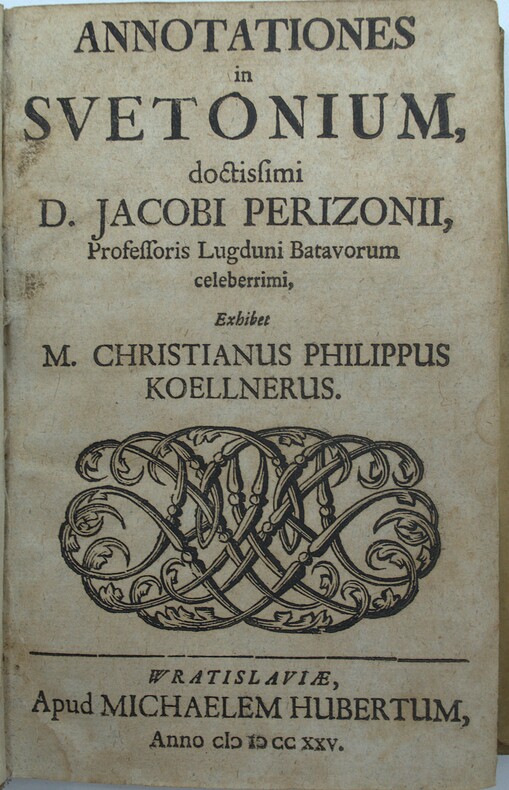
1725PHO-2421Wratislaviae, apud Michaelem Hubertum, 1725. In-8 (16,5x10cm), 4ff.-503 pp., vélin époque, dos lisse avec titre manuscrit, estampage à froid avec doubles filets et écoinçons, rousseurs.