Malebranche, NicolasBiblio.com
286 résultats
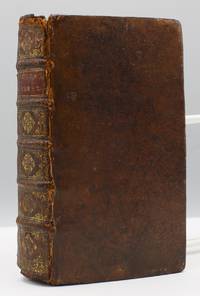
168712827<p>Rotterdam: Chez Reinier Leers 1687 First edition. Contemporary sheep gilt-decorated spine edges stained red marbled endpapers. Twelvemo. Joints and corners a bit rubbed but overall a very good copy. The present work is part of an energetic continuing intellectual disputation between the Cartesian Malebranche and the Jansenist Arnauld. Both philosophers published numerous books and essays on philosophical and theological questions many of them polemical and with each other's ideas as targets.</p> Chez Reinier Leers,
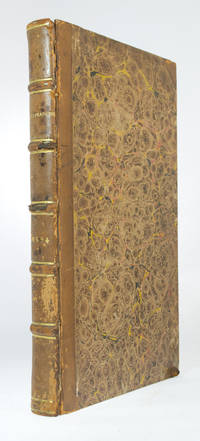
171512015<p>Paris: Michel David 1715 First edition. Quarter nineteenth-century red morocco over decorative boards. Spine ruled in blind and lettered in gilt marbled endpapers. . Twelvemo. Extremities lightly rubbed. A very good copy. This is the last book of Nicolas de Malebranche 1638-1715 the famous Cartesian philosopher. It was written as a retort to Laurent Boursier's De l'Action de Dieu sur les créatures. Boursier maintained that Malebranche's philosophy of occasionalism leads naturally to the Thomistic position that God determines our action by means of a "physical premotion." Malebranche responded that our free action involves a "consent" that God does not determine.</p> Michel David, hardcover
168835871Rotterdam Reinier Leers 1688. Small 8vo. Fine contemp. full mottled calf richly gilt back. Titlelabel in leather. 6604 pp. A very small inkspot in upper margin of the last 20 leaves. On good paper clean and fine. <br/><br/><em>First edition. Malebranche is one of the major philosophers of Cartesianism and his philosophy sought to synthesize Cartesianism with the thought of St. Augustin and with Neoplatonism. His "Entretiens." Dialogues on Metaphysics and Religion as a series of 14 dialogues is perhaps the best introduction to his philosophy in general."The French Cartesian Nicolas Malebranche was hailed by his contemporary Pierre Bayle as "the premier philosopher of our age." Over the course of his philosophical career Malebranche published major works on metaphysics theology and ethics as well as studies on optics the laws of motion and the nature of color. He is known principally for offering a highly original synthesis of the views of his intellectual heroes St. Augustine and René Descartes. Two distinctive reults of this synthesis are Malebranche's doctrine that we see bodies through ideas in God and his occasionalist conclusion that God is the only real cause." Stanford Encycl. of Philosophy. </em> hardcover
1721elala1472Paris: Christophe David 1721. 1721. 2 Volumes in 1. 4to. pp. 12 p.l. 386; 5 p.l. 399 3 4 1 leaferrata 2privilege. a few text diagrams. woodcut ornaments intitials & title vignettes. text in double columns. contemporary sprinkled calf gilt back front joint cracked corners & head of spine worn light foxing to outer leaves 2 small rubberstamps in text & on front flyleaf. Seventh Edition based on the important sixth last lifetime edition of 1712 which incorporated the authors final revisions and additions. It includes numerous "Eclaircissements" the Réponse à M. Régis and a list of the best editions of Malebranches works given at the end of the preface. This is the first and most important work of the author the most significant French thinker of the later seventeenth century and one of the principal figures in the development of Cartesianism. In it Malebranche sought to reconcile faith with reason and introduced two new theories that of la vision en Dieu that in God we live and move and have our being and that of causes conditionelles or occasionlism that God is the sole cause of change in the universe. In the numerous "Eclaircissements he elaborated and revised his views through an examination and refutation of the many objections and criticisms levelled against him including those of the Jansenist Antoine Arnauld. The work was placed on the Index in 1690. Brunet III 1335. cfCioranescu 44876-80. cfQuérard V 461. Hardcover. Paris: Christophe David, 1721. Hardcover
168316283<p>Cologne: Balthasar d'Egmond i.e. Amsterdam: Blaeu 1683 1683 First edition published with a false imprint as stated in Rahir and in Malebranche's correspondence giving the publisher as Balthasar d'Egmond in Cologne when it was in fact published by Blaeu in Amsterdam. Brown calf with a gilt-tooled spine and red morocco spine label lettered in gilt. Edges sprinkled red. . Twelvemo. Woodcut vignette on title page. Binding extremities rubbed with the crown and tail of spine worn away less than 1/4." Light foxing and toning with an occasional small chip to the paper. Light dampstain at bottom margin of gatherings G and H not affecting text. Very minor ink markings to margins of a few leaves in gatherings I K and L not touching text. Ink annotation on front pastedown. Two contemporary ink inscriptions in Greek one from the Gospel of John on the verso of the front flyleaf and the other from the Gospel of Matthew on the recto of terminal blank. Eighteenth century monastic inscription of provenance in French on title page. A very good copy of a scarce book. According to the Stanford Encyclopedia of Philosophy ".Malebranche 1638-1715 published major works on metaphysics theology and ethics as well as studies of optics the laws of motion and the nature of color. He is known.for offering a highly original synthesis of views of.St. Augustine and René Descartes. Two distinctive results of this synthesis are Malebranche's doctrine that we see bodies through ideas in God and his Occasionalist conclusion that God is the only real cause.Meditations was in some ways a follow up to his Christian Conversations published in 1677. In it Malebranche presented a defense of the Christian religion that emphasizes the Augustinian theme of human beings' dependence on God for knowledge and happiness." Of particular interest in Meditations is Meditation VIII in which Malebranche attacks the view of those who - albeit through sincere piety - believe themselves to be under une protection de Dieu toute particuliere and discusses the notion of amour-propre and its effects on faith and morals.</p>
1680548Amsterdam: Chez Daniel Elsevier. 1680. original edition. Front hinge cracked chips to top and bottom of hinge binding extremities rubbed text generally clean except for some light foxing to just a few pages a SOLID and RARE copy. VG. ; 16mo mottled calf period binding raised bands decorative spine with gilt lettering and ornaments gilt decorated binding edges illustrated title page 268pp. RARE FIRST EDITION not in British Museum Catalogue earlierst listed is 1684 . An early religious book written in the French langauge. . Chez Daniel Elsevier hardcover
169410292<p>Thomas Bennet 1694. First Edition. Full-Leather . Fair/No Jacket. The Whole work Compleat to which is Added the Author's Treatise of Nature and Grace being a Consequence of the Principles contained in the search Translated by T. Taylor Brown leather heavily bumped and rubbed on edges and corners. Spine is remarkably solid with gilt raised bands and embossed leaves. The book appears that it may have been rebound many years back due to the good condition of the leather on the spine vs. the boards. However there appears to be original endpapers. Bookplate on front pastedown of a J. P. Fallofield. Endpapers and several pages in are chipped on edges. Damp stains on edges. Paper used in preface is different and of higher quality than the remainder of the test. Two pages in the preface are close to being loose. Heavy foxing throughout with some pages being far more affected than others. This is a remarkable book by a man who's books were banned. Size: Folio - over 12' - 15' tall.</p> Thomas Bennet hardcover
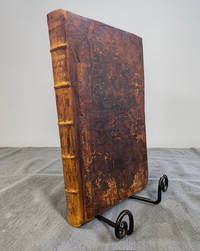
169466882London: Printed by L. Lichfield for Thomas Bennet at the Half-Moon 1694. TAYLOR T. . Father Malebranche's Treatise Concerning the Search after Truth. The Whole Work Compleat. To which is added the author's treatise of Nature and Grace. Being a consequence of the principles contain'd in the search. London: Printed by L. Lichfield for Thomas Bennet at the Half-Moon 1694.<br> <br> First edition in English. Folio 12 7/8 x 7 3/4 inches; 327 x 196 mm. xiv 172 10 203 1 42 pp. Eighteenth-century half brown calf over marbled boards gilt spine lettering. Front joint cracked but still strong. Some browning throughout especially to signature Ll. Overall a very good copy.<br> <br> Malebranche is now recognized as a major figure in the history of philosophy occupying a crucial place in the Rationalist tradition of Descartes Spinoza and Leibniz. The Search after Truth is his first longest and most important work. As a leading Cartesian Malebranche argued in The Search after Truth 1675 and the Dialogues on Metaphysics and on Religion 1688 that our ideas provide no direct certain knowledge of bodies but that instead we "see all things in god." This divinely ordained occasionalism provided for the apparent regularity of the natural world without appealing to any genuine causal interaction among things. Malebranche's explanation of the imperfection of a divinely-created universe in the Treatise on Nature and Grace 1680 and other theological writings influenced the theodicy of Leibniz.<br> <br> Wing M-317.<br> <br> HBS 66882.<br> <br> $2000. Printed by L. Lichfield, for Thomas Bennet at the Half-Moon unknown
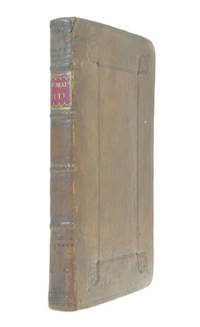
169967002London: Printed for James Knapton 1699. Nicolas. A Treatise of Morality. In Two Parts. Written in French by F. Malbranch author of The Search after Truth. And Translated into English by James Shipton M.A. London: Printed for James Knapton 1699.<br> <br> First English edition. Octavo 7 1/2 x 4 5/8 inches; 190 x 117 mm. 12 126 114 4 publisher's advertisements pp. Each part with separate pagination. With two final advertisement leaves. We could not find any other copies at auction in the past 50 years.<br> <br> Contemporary full calf. Boards ruled and stamped in blind. Spine with red morocco spine label lettered in gilt. Edges stained red. Some light and mostly marginal toning and dampstaining throughout. Head of the spine repaired. Corners a bit bumped.Leaf B8 is trimmed a half-inch along the fore-edge not affecting text. Previous owners old ink notes on front endpapers. Overall a very good copy.<br> <br> This is the first English translation of the Traité de Morale.<br> <br> Malebranche is now recognized as a major figure in the history of philosophy occupying a crucial place in the Rationalist tradition of Descartes Spinoza and Leibniz.<br> <br> Wing 319 ESTC R10000<br> <br> HBS 67002.<br> <br> $2000. Printed for James Knapton unknown
1373A Amsterdam; N.p. 1771. Hardcover. Good. Octavo. 120pp. 8 B8-G8 H4. Later half calf over boards repaired. Against Pierre Rousseau and the Journal encyclopédique - Cf. Barbier. Dictionnaire des ouvrages anonymes. With a stain on the title-page as a result of an ownership stamp on the verso. <br/> <br/> A Amsterdam; N.p., 1771. hardcover
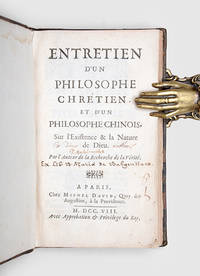
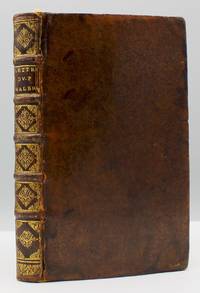
1708174236Paris: Michel David 1708. Chinese philosophy for the European Enlightenment First edition presentation copy inscribed "Ex dono authoris" in a neat hand on the title page of the first work bound with its sequel Malebranche's response to Jesuit criticisms of it. Leibniz read the Entretien closely and wrote his Discourse on the Natural Theology of the Chinese almost immediately after reading it. Growing awareness of Chinese moral thought and culture as conveyed through the translations and commentaries of the Jesuit missionaries played a significant role in shaping the European Enlightenment. The Jesuits took the position that the Chinese were neither idolaters nor atheists a position that relied on a theistic interpretation of Confucianism. Coming to the subject late in his career Malebranche attacks this Jesuit conception of Confucianism. A Catholic priest and firm opponent of irreligion Malebranche particularly links the Chinese emphasis on innate forces with Spinoza's atheism. Malebranche's supplementary Avis responds to criticism levelled at the Entretien in an influential Jesuit journal which turned charges of atheism back on him. From his correspondence we know Leibniz praised annotated and criticized the Entretien shortly before writing his Discours sur la theologie naturelle des Chinois suggesting that Malebranche's brief work provided the key stimulus for Leibniz's analysis of Chinese philosophy. The two men had known one another for almost 40 years and Malebranche's influence is detectable in several of Leibniz's other works. "Leibniz deserves the honor frequently bestowed upon him as the single most important early European interpreter of Chinese philosophy" Reihman. Two works bound in one vol small octavo 157 x 90 mm pp. ii 74 2; pp. ii 40. Wood-engraved headpieces and historiated initials. Contemporary sprinkled calf rebacked preserving original spine panels spine decorated in gilt and with red morocco label edges sprinkled red. From the abbey library at Beaugency in the Loire valley with 18th-century ownership inscriptions to the title pages of both works practice inscription on p. 35 Entretien. Extremities repaired with sheep light damp-staining to outer margins infrequent minor foxing: a very good copy. Quérard VI p. 460. Gregory M. Reihman "Malebranche's Influence on Leibniz's Writings on China" Philosophy East and West vol. 65 no. 3 2015. unknown