511 résultats
200433805Academia Verlag. New. 2004. Hardcover. 3896653156 . FREE UPGRADE to Courier/Priority Shipping Upon Request - IN STOCK AND IMMEDIATELY AVAILABLE FOR SHIPMENT - 246 pages size: 155 x 23 cm -- FLAWLESS COPY -- AVAILABLE IMMEDIATELY -- Choose us for the information you need -- TABLE OF CONTENTS: Preface 1. About this book 2. About Plato and his works 3. About Platonic dialogues and about the Theaetetus 4. The overall structure of the Theaetetus 5. Alternative interpretations of the Theaetetus as a whole 6. The introduction to the dialogue: 142a-145e 7. The question "What is knowledge" and the rejection of D0 a definition by examples: 145e7-147c6 8. A contrasting case: definition in mathematics: 147c7-148e5 9. Socrates the midwife's apprentice: 148e6-151d7 10. First definition D1 and consequent discussion: "Knowledge is perception": survey of 151-187 11. The statement of Theaetetus' first genuine definition D1: 151d8-e4 12. First statement of Protagoras' views: 151e5-152c8 13. First statement of Heracleitus' views: 152c8-152e1 -- DESCRIPTION: Timothy Chappell's Reading Plato's Theaetetus offers a complete new translation of Plato's most famous dialogue on knowledge together with an extended philosophical commentary. Dr Chappell defends an original form of the Unitarian reading of the dialogue arguing that Plato's aim in this enigmatic work is to show how little we can do towards defining or understanding knowledge if we try to do it on an empiricist or naturalist basis. The book also contains a wealth of argument on subsidiary topics-the language of the dialogue its date and place in Plato's development and its relation to earlier and later Greek thought in general. -- AUTHOR: Dr Chappell is Senior Lecturer in Philosophy at the University of Dundee. -- with a bonus offer-- . Academia Verlag hardcover
201091614Continuum. New. 2010. Paperback. 0826444172 . FREE UPGRADE to Courier/Priority Shipping Upon Request - IN STOCK AND IMMEDIATELY AVAILABLE FOR SHIPMENT - Flawless copy brand new pristine never opened -- 192 pages. Description: "In many regards the dialectical counterpart of the 'Republic' the 'Symposium' is one of the richest and most influential of the Platonic dialogues resonating not only with Western philosophy but also with literature art and theology. While Plato ostensibly dramatizes a humorous account of a drinking party he presents a profoundly serious explication of Eros that challenges the limits of reason the nature of gender identity and narrative form." -- with a bonus offer-- . Continuum paperback
2016119784Prestel. New. 2016. Hardcover. 3791382136 . FREE UPGRADE to Courier/Priority Shipping Upon Request - IN STOCK AND IMMEDIATELY AVAILABLE FOR SHIPMENT - Flawless copy brand new pristine never opened -- with a bonus offer-- . Prestel hardcover
200114343Chicago Illinois U.S.A.: Univ of Chicago Pr. New. 2001. Paperback. 0226042758 . FREE UPGRADE to Courier/Priority Shipping Upon Request - IN STOCK AND IMMEDIATELY AVAILABLE FOR SHIPMENT - Flawless -- with a bonus offer-- . Univ of Chicago Pr paperback
200335049Bristol. New. 2003. Paperback. 0862921910 . FREE UPGRADE to Courier/Priority Shipping Upon Request IN STOCK AND IMMEDIATELY AVAILABLE FOR SHIPMENT - FLAWLESS COPY BRAND NEW PRISTINE NEVER OPENED -- Platos "Politicus" "Statesman" stands both in date and in political thought between the Republic and the Laws. It presents his thoughts at the point when he was chastened by disappointment with his attempts to put theory into practice at Syracuse. The dialogue reflects contemporary controversies on the method of definition; but its logical exercises and the impressive myth of the two cosmic eras serve to bring out its essential political teaching. This volume contains the text in translation. In this second edition revised by the author for BCP in 1987 Skemp made corrections to his extensive introduction and running commentary and added a new appendix taking into account scholarship since the first 1952 edition. -- TABLE OF CONTENTS: FOREWORD Page 7 INTRODUCTORY ESSAY. Pages 13-111 A. HISTORICAL AND POLITICAL QUESTIONS. Page 13 I. DATE OF COMPOSITION OF DIALOGUE Page 13 II. GENERAL SCOPE OF DIALOGUE Page 18 III. THE PLACE OF THE DIALOGUE IN ITS GROUP Page 20 IV. THE PERSONS OF THE DIALOGUE & ITS DRMATIC DATE Page 22 V. THE DEVELOPMENT OF PLATO'S POLITICAL THOUGHT Page 26 B. PHILOSOPHICAL QUESTIONS. Page 66 C. INTRODUCTION TO THE MYTH. Page 82 SYNOPSIS OF THE DIALOGUE Page 113 TRANSLATION AND FOOTNOTES Pages 119-235 -- with a bonus offer-- . Bristol paperback
200234907United Kingdom: Duckworth Pub. New. 2002. Paperback. 0715631608 . FREE UPGRADE to Courier/Priority Shipping Upon Request IN STOCK AND IMMEDIATELY AVAILABLE FOR SHIPMENT - FLAWLESS COPY BRAND NEW PRISTINE NEVER OPENED -- 160 pages; 5 1/4 8 3/4 inches - SEE IMPORTANT INTRODUCTION BY THE EDITOR - A collection of Plato's work showing the unsurpassed power of his writing which ultimately lies in the fact that he was as much a literary as a philosophic genius. - Plato is without doubt one of the most important thinkers who has ever lived and his voice still resonates through all the disciplines of our time - politics justice law ethics beauty art education mathematics religion cosmology language and the afterlife are all embraced in his works. The new translations in this collection seek to reveal the unsurpassed power of his writing which ultimately lies in the fact that he was as much a literary as a philosophic genius. An introduction on the life works influences and philosophy of Plato sets the scene for the anthology of translations that follow which pay special attention to the meanings of key words and phrases and in several cases seek to replicate the structure and feel of the original Greek. The book concludes with a short essay on the philosophical dispute with Platos most famous pupil Aristotle. The Power of Plato is for all those searching for a first insight into the genius of Plato for students wishing to translate and understand his works and for those already familiar with his writings who welcome a fresh approach to the teachings of the greatest European philosopher. - TOC: Translators Note Introduction 1. Portraits of Socrates 2. The Death of Socrates 3. Creation and the Ages 4. The Use and Misuse of Language and Number 5. The Sophists and Education 6. Politics and Society 7. Life and Living 8. Law and Justice 9. Measure and Proportion 10. Knowledge and the Forms 11. Love Beauty and the Good 12. The Soul and Immortality 13. Appendix: Platos Divided Line Afterword: The Platonic-Aristotelian Controversy. -- with a bonus offer-- . Duckworth Pub paperback
200433677Spokane Washington U.S.A.: Eastern Washington Univ Pr. New. 2004. Hardcover. 0910055904 . FREE UPGRADE to Courier/Priority Shipping Upon Request - IN STOCK AND IMMEDIATELY AVAILABLE FOR SHIPMENT - FLAWLESS COPY BRAND NEW NEVER OPENED 559 pages -- A daring translator Quincy gives the most acclaimed of ancient thinkers a saucy new voice: colloquial pungent and terse. Animated by a new tone the characters in Plato's classic dialogues speak with vernacular directness as they ask Socrates why he is "always hanging around" or as they complain that he's "driving them nuts." But even as he gives Plato's characters license to speak in casual idioms Quincy trims their speeches abridging dialogues he judges verbose. As if such tampering with Plato's words weren't enough to scandalize traditionalists Quincy supplements the chronologically arranged dialogues with historical notes that cast unflattering shadows on the Greek philosopher and his famous tutor: Plato stands exposed as a propagandist hiding his own political blunders Socrates as an ill-tempered slanderer of a gifted rival. Such irreverence will send some readers scurrying for the cover of canonical translations. But Quincy's brashness will attract many readers glad to see Plato and Socrates rescued from their honorific spots among the museum alabasters set free to again discomfit and perplex the complacent." Bryce Christensen BookList American Library Association. " - "Entirely new vastly readable and shockingly less polite than the standard versions Keith Quincys new translation of Platos dialogues makes these texts truly accessible and restores to them some of their original power to provoke and inspire. Presented in chronological order rather than the usual thematic groups Quincys dialogues present a sense of the evolution of Platos thought making him more clearly a subject than he appears to be in other collections. Each dialogue is preceded by an introduction linking it to historical characters and events and providing biographical sketches of the principals and their relationship to Socrates and Plato. The resulting picture is not always flattering; some of the revelations challenge the prevailing view of Socrates as an almost saintly figure and of Plato as his devotedly brilliant disciple. But there is good evidence for Quincys view and it gives a new and enlivening slant to these treasured texts." -- with a bonus offer-- . Eastern Washington Univ Pr hardcover
200114720Indianapolis Indiana U.S.A.: Hackett Pub Co Inc. New. 2001. Paperback. 0872205541 . FREE UPGRADE to Courier/Priority Shipping Upon Request - IN STOCK AND IMMEDIATELY AVAILABLE FOR SHIPMENT - Flawless -- with a bonus offer-- . Hackett Pub Co Inc paperback
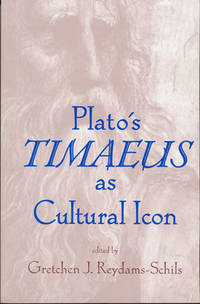
200369984Chicago Illinois U.S.A.: Univ of Notre Dame Pr. New. 2003. Paperback. 0268038724 . FREE UPGRADE to Courier/Priority Shipping Upon Request - IN STOCK AND IMMEDIATELY AVAILABLE FOR SHIPMENT - PRISTINE BRAND NEW COPY - 334 pages. From Library Journal: "Considered by most scholars to be one of Plato's last works the Timaeus is less philosophical dialog than rhetorical display. Though it begins with Socrates reviewing his previous day's discussion of the various institutions of the ideal state the majority of the text is taken up by Timaeus' long philosophical disquisition on the creation of the world. Because the text sets out the foundations of a number of sciences astronomy chemistry cosmology and physics to name just a few it became a central text of Platonism in later antiquity and in the Middle Ages and is still studied as a central element in the canon of Plato's thought. Under the capable editorship of Reydams-Schils liberal studies Univ. Of Notre Dame the present volume brings together 13 essays by scholars from the United States Europe and Canada that address the influence and cultural status of the Timaeus since its appearance more than two millennia ago. Reydams-Schils's well-written and perceptive introduction deals with the reasons for the dialog's special place in Western thought and also serves to introduce the essays themselves which deal with topics as wide-ranging as its influence on our perception of the mind-body relation Richard Sorabji the Timaeus and Renaissance science M. J. B. Allen and the relationship between the Timaeus and the Chaldaean Oracles Luc Brisson. This collection is an excellent and reasonably priced support to studies of Plato's dialogs in general and the Timaeus in particular. Recommended for all academic libraries and larger public libraries with collections in the origins of Western thought." -- with a bonus offer-- . Univ of Notre Dame Pr paperback
200534909United Kingdom: Duckworth Pub. New. 2005. Hardcover. 0715632914 . FREE UPGRADE to Courier/Priority Shipping Upon Request IN STOCK AND IMMEDIATELY AVAILABLE FOR SHIPMENT - FLAWLESS COPY BRAND NEW PRISTINE NEVER OPENED -- 240 pages; 6 x 9 inches - Platos Meno is a dynamic and entertaining examination of the nature and origin of the kind of excellence displayed by successful Greek leaders. That such excellence existed was difficult to deny but people expected to show it often disappointed and others expected to know about it seemed confused. Though it depended on something like knowledge it seemed impossible to pass on to others. Hence questions of social and political ethics also involve psychology and theory of knowledge. There is also an important focus on the nature of the learning process which is itself illustrated by the way characters in the dialogue respond or do not respond to the questions and encouragement of Platos protagonist Socrates. This book examines both the dialogue itself and the response to it of Platos successors from Aristotle and spurious Platonic dialogues through Cicero and an anonymous commentator on the Theaetetus to the Neoplatonists. It looks at which aspects of the dialogue they take most seriously and why. In the light of that response which often suggests a detailed reading of the text in its entirety Harold Tarrant develops a fresh and more integrated view of the original dialogue. - AUTHOR: Harold Tarrant is Professor of Classics and Head of the School of Liberal Arts at the University of Newcastle Australia. He is the author of several books. -- with a bonus offer-- . Duckworth Pub hardcover
200324278Focus Publishing/R. Pullins Co Incus. New. 2003. Paperback. 1585100781 . FREE UPGRADE to Courier/Priority Shipping Upon Request - IN STOCK AND IMMEDIATELY AVAILABLE FOR SHIPMENT - FLAWLESS COPY PRISTINE NEVER OPENED -- 90 pages; clean and crisp tight and bright pages with no writing or markings to the text. -- DESCRIPTION: This volume collects all of the surviving state funeral orations from Athens including Thucydides Gorgias Lysias Plato Menexenus Demosthenes and Hyperides. To stimulate student discussion and comparison For reference Lincoln's address at Gettysburg is included in an appendix. Translations are in English including introduction and notes as well as literary and historical commentary. -- AUTHOR: Jud Herrman is Assistant Professor of Classical Studies at Allegheny College. -- FROM THE INTRODUCTION: "Throughout the fifth and fourth centuries BC at the close of each campaign season the Athenian state honored its war-dead in a public burial ceremony choosing a prominent orator to give the keynote address. This volume collects all of the surviving state funeral orations from classical Athens. Like tragedy these speeches present an image of an idealized Athens. The narratives of past Athenian glories found in these speeches feature many of the same mythical tales that were also presented on stage. Like many of the plays the funeral orations emphasize important themes such as Athenian unity their aid to suppliants and their willingness to drive away foreign invaders to protect the other Greeks. The selective version of more recent history found in the funeral orations also highlights these same qualities by focusing on the role of Athens during the Persian Wars 490-479 when the city helped save the other Greeks from invading foreigners and by passing over other events such as the Peloponnesian War 431404 in which Athens opposed fellow Greeks. Although nearly all of the surviving Greek tragedies are set in the distant mythical past the significant exception is Aeschylus Persians the audience in the theater would recognize aspects of contemporary Athens in the depiction of ancient Athenian heroes such as Theseus. The funeral orations draw similar connections more explicitly by presenting a continuous narrative tying the present generation with the great heroes of long ago." -- with a bonus offer-- . Focus Publishing/R. Pullins Co Inc,us paperback