PlatoBiblio.com
4 367 résultats
3368313037.Ghardcover. Good. Access codes and supplements are not guaranteed with used items. May be an ex-library book. hardcover
3387013035.Ghardcover. Good. Access codes and supplements are not guaranteed with used items. May be an ex-library book. hardcover
B9783368313029Paperback / softback. New. paperback
1806292483.Ghardcover. Good. Access codes and supplements are not guaranteed with used items. May be an ex-library book. hardcover
2025x-1806292483The Library of Alexandria 2025. Hardcover. New. 366 pages. 6.00x1.06x9.00 inches. The Library of Alexandria hardcover
B9781544183053Paperback / softback. New. paperback
1544183054.Gpaperback. Good. Access codes and supplements are not guaranteed with used items. May be an ex-library book. paperback
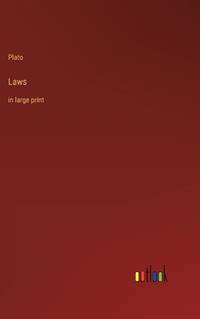
ria9783387013030_inpHardcover. New. New Book; Fast Shipping from UK; Not signed; Not First Edition; Reproduction of the original. The publishing house Megali specialises in reproducing historical works in large print to make reading easier for people with impaired vision. hardcover
ria9783368313036_inpHardcover. New. New Book; Fast Shipping from UK; Not signed; Not First Edition; Reproduction of the original. hardcover
ria9783368313029_inpPaperback. New. New Book; Fast Shipping from UK; Not signed; Not First Edition; Reproduction of the original. paperback
1120062179.Ghardcover. Good. Access codes and supplements are not guaranteed with used items. May be an ex-library book. hardcover
195379933Flammarion 1953. Book. Illus. by Georges Lepape. Good. Soft cover. 8vo - over 7¾ - 9¾" tall. In-8 broché Bon Etat No 292/350 sur vélin chiffon. avec une eauforte originale de l'artiste. Flammarion Paperback
186843536Paris: Henri Plon 1868. Small 8vo 13x9 cm. Half calf with cornerpieces sl. bumped; spine with ribbons and red morocco title-label; covers with marbled paper partly rubbed. ivxii100 pp. - Nice edition based on the first 1732 edition. Printed on handmade paper in only 100 numbered copies. This is number 32 Henri Plon unknown
49495Zürich A. Gonin u. L. Grosclaude 1941. 4° Fronti. Orig. Radierung 144 S. u. insgesamt 20 Orig.-Radierungen Plattengrösse ca. 24 x 17 cm im Text. Suite m. 6 zusätzlichen Radierungen davon 5 in Rot gedruckt Lose Doppelbl. in Umschlag m. OU diese in OHPgt.-Mappe m. gold. Rückenpräg. im Schmuckschuber. Frontispiz-Radierung wellig Schuber etw. fleckig u. lichtrandig sonst tadellos. EA. Nr. 124 von 170 Exemplaren. Von den Herausgebern und dem Künstler im Impressum signiert und num.Beiliegend 6 zusätzliche für die Buchausgabe wohl als zu schlüfrig verworfene Orig.-Radierungen des Zyklus. Eine der frühen Arbeiten Ernis die seine figurative Meisterschaft klar zum Ausdruck bringt. 2 Radierungen von Grosclaude bezeichnet: «Planche refuse Grosclaude editeur». 010 Zürich, A. Gonin u. L. Grosclaude, 1941 unknown
2384Couverture rigide. Bon/1953. in-8. Paris Flammarion 1953 in-8 213pp broché Très bel exemplaire. Superbes illustrations de Georges Lepape. unknown
0260745510.Ghardcover. Good. Access codes and supplements are not guaranteed with used items. May be an ex-library book. hardcover
0266695477.Gpaperback. Good. Access codes and supplements are not guaranteed with used items. May be an ex-library book. paperback
0666771529.Ghardcover. Good. Access codes and supplements are not guaranteed with used items. May be an ex-library book. hardcover
1332562965.Gpaperback. Good. Access codes and supplements are not guaranteed with used items. May be an ex-library book. paperback
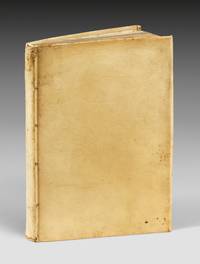
ABAA7<p>Paris chez Sebastien Nyuelle libraire demeurant à l'enseigne des Cicognes rue Sainct Iacques. </p><p>Avec privilège du Roy pour dix ans 1553.</p><p>4to 219 x 153 mm of 4 ll. 350 pp. and 1 l. of privilege. Overlapping vellum flat spine. <em>Seventeenth century binding.</em></p><p>First edition in French of the <em>Phaedo</em> an essential work by Plato setting out the main points of his doctrine.</p><p>It is here translated from Greek into French by Louis Le Roy 1510-1577 <em>'the greatest French Hellenist'</em>.</p><p>Brunet IV 701 ; Graesse V 324.</p><p>Louis Le Roy is one of the most unknown figures of a group of 'second generation humanists'. Le Roy known as Regius had a difficult existence so materially miserable that it led him to make pleas to the great ones in the form of unoriginal circumstantial works. This bland character who seems to have lived on the edge of fame especially in his relations with Du Bellay and the Pléiade happens to be in retrospect the greatest French Hellenist and as the one who made the political works of Antiquity known to a wide public. An excellent translator in many ways superior to modern translators he chose essentially the intermediate field between morality Isocrates and his speeches to the young princes philosophy Plato: <em>Timaeus Phaedo Banquet</em> and politics Demosthenes Plato and Aristotle.</p><p>In this work the main characters taking part in the dialogue are: Socrates Phaedo Simmias and Cebes. Here they are in the cell where Socrates victim of the reaction of the sophists he was fighting and condemned to death as a corrupter of youth is waiting for his jailer to bring him the hemlock. His disciples and friends crowd around him.</p><p>After having made it clear that a true philosopher cannot be afraid of death Socrates raises the question of the survival of the soul and what will become of it when it is 'gathered into itself and upon itself after having rid itself of its evils'. Socrates is immediately invited by his friends to demonstrate the immortality of the soul and this serious problem will occupy most of the dialogue.</p><p>Giving a marvelous and symbolic vision of our world placed in the whole Universe Socrates indulges in brilliant cosmological hypotheses in which the physical and metaphysical constitution of our globe tends towards a harmonious unity. Our planet is according to Socrates an enormous sphere placed at the centre of the Cosmos which is much larger than it appears to us.</p><p>But the time is short: Socrates retires to another room to take his bath then calls the jailer who brings him the hemlock. Having drunk it with perfect serenity Socrates lies down on his bed: but before dying he says to Crito: "We owe a cock to Asclepius: pay him don't forget!" These were his last words. Socrates who had promised to sacrifice a cock to Asclepius Aesculapius if he recovered from a disease he was suffering from was obliged to fulfil his promise since death brought him freedom from his disease with rest.</p><p>This first edition in French of the <em>Phaedo</em>is the work of Louis Le Roy considered "as a highly figure of the humanism of the Renaissance". His teacher was Guillaume Budé of whom he was to write a biography. </p><p><em>"A lively and curious mind he was one of the most enthusiastic Hellenists of his time".</em></p><p>A friend of Joachim Du Bellay the poet gave him the title of "<em>French Plato</em>".</p><p>A precious and rare copy pure with wide margins preserved in its seventeenth century overlappingvellum binding.</p><p><strong>French</strong><br /></p><p>A Paris chez Sebastien Nyuelle libraire demeurant à l'enseigne des Cicognes rue Sainct Iacques. </p><p>Avec privilège du Roy pour dix ans 1553.</p><p>In-4 de 4 ff. 350 pp. et 1 f. de privilège. Plein vélin à recouvrement dos lisse. <em>Reliure du XVIIe siècle. </em></p><p>219 x 153 mm.</p><p>Edition originale de langue française du Phédon œuvre essentielle de Platon exposant les principaux points de sa doctrine. </p><p>Elle est ici traduite du Grec en français par Louis Le Roy 1510-1577 " <em>le plus grand helléniste français</em> ".</p><p>Brunet IV 701 ; Graesse V 324.</p><p>Louis Le Roy est l'un des personnages les plus méconnus d'un groupe d' " humanistes de la seconde génération ". Le Roy dit Regius traîne une existence difficile matériellement si misérable qu'elle l'amène à adresser des suppliques aux grands sous forme d'œuvres de circonstances sans originalité. Ce personnage falot qui semble avoir vécu sur les bords de la célébrité en particulier dans ses relations avec Du Bellay et la Pléiade apparaît rétrospectivement comme le plus grand helléniste français et comme celui qui a fait connaître auprès d'un large public les œuvres politiques de l'Antiquité. Excellent traducteur à bien des égards supérieur aux traducteurs modernes il a choisi essentiellement le domaine intermédiaire entre la morale Isocrate et ses discours aux jeunes princes la philosophie Platon : <em>Timée Phédon Banquet</em> et la politique Démosthène Platon et Aristote.</p><p>Dans cette œuvre les principaux personnages prenant part au dialogue sont : Socrate Phédon Simmias et Cébès. Les voici dans la cellule où Socrate victime de la réaction des sophistes qu'il combattait et condamné à mort comme corrupteur de la jeunesse attend que son geôlier lui apporte la ciguë. Autour de lui se pressent ses disciples et ses amis… </p><p>Après avoir fait admettre qu'un véritable philosophe ne saurait avoir peur de la mort Socrate soulève la question de la survivance de l'âme et de son devenir lorsqu'elle sera " ramassée en elle-même et sur elle-même après s'être débarrassée de ses maux ". Socrate est aussitôt invité par ses amis à démontrer l'immortalité de l'âme et ce grave problème occupera la plus grande partie du dialogue.</p><p>Donnant de notre monde replacé dans l'ensemble de l'Univers une vision merveilleuse et symbolique Socrate se livre à de brillantes hypothèses cosmologiques dans lesquelles la constitution physique et métaphysique de notre globe tend vers une harmonieuse unité. Notre planète est selon Socrate une énorme sphère placée au centre du Cosmos lequel est beaucoup plus grand qu'il ne nous apparaît.</p><p>Mais l'heure presse : Socrate se retire dans une autre pièce pour prendre son bain puis fait appeler le geôlier qui lui apporte la ciguë. L'ayant bue avec une parfaite sérénité Socrate s'allonge sur sa couche : mais avant de mourir il dit encore à Criton : " Nous devons un coq à Asclépios : payez‑le ne l'oubliez pas ! ". Telles furent ses dernières paroles. Socrate qui avait promis de sacrifier un coq à Asclépios Esculape s'il guérissait d'une maladie dont il était affligé se devait d'exécuter sa promesse la mort lui apportant avec le repos la libération de sa maladie. </p><p>Cette première édition de langue française du <em>Phédon</em> est l'œuvre de Louis Le Roy considéré " comme une haute figure de l'humanisme de la Renaissance ". Il eut pour maître Guillaume Budé dont il devait écrire une biographie.</p><p>" <em>Esprit vif et curieux il compte parmi les hellénistes les plus enthousiastes de son temps</em> ".</p><p>Lié d'amitié avec Joachim Du Bellay le poète le pare du titre de " <em>Platon Français</em> ".</p><p>Précieux et rare exemplaire pur et à belles marges conservé dans sa reliure en vélin à recouvrement du XVIIe siècle.</p> hardcover
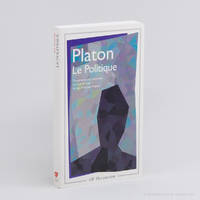
2003426Paris: GF Flammarion 2003. First Edition. Paperback. Very small closed tear at foot of spine else nearly fine. Binding square & tight text clean & bright. 12mo. 4.25 x 7 in. 316 4 pp. Glossy white pictorial wrappers. Introduction translation and commentary of Plato's dialogue the Statesman 'Politicus' by LUC BRISSON and JEAN-FRANÇOIS PRADEAU. Text in French. Signed by Luc Brisson and Jean-François Pradeau on half-title. Scarce thus. GF Flammarion paperback
0265886465.Gpaperback. Good. Access codes and supplements are not guaranteed with used items. May be an ex-library book. paperback
0260798495.Ghardcover. Good. Access codes and supplements are not guaranteed with used items. May be an ex-library book. hardcover
1120431026.Gpaperback. Good. Access codes and supplements are not guaranteed with used items. May be an ex-library book. paperback
1020326174.Ghardcover. Good. Access codes and supplements are not guaranteed with used items. May be an ex-library book. hardcover