1 747 résultats
196832235New York: Viking Press. As New. 1968. Paperback. FREE UPGRADE to Courier/Priority Shipping Upon Request - IN STOCK AND IMMEDIATELY AVAILABLE FOR SHIPMENT - AS NEW THE TEXT BLOCK IS PRISTINE CLEAN UNMARKED AND IN EXCELLENT CONDITION - - 696 pages. Includes the complete Protagoras Phaedo Symposium and The Republic. -- with a bonus offer-- . Viking Press paperback
196028720Viking Press. As New. 1960. Paperback. FREE UPGRADE to Courier/Priority Shipping Upon Request - IN STOCK AND IMMEDIATELY AVAILABLE FOR SHIPMENT - AS NEW THE TEXT BLOCK IS PRISTINE CLEAN UNMARKED AND IN EXCELLENT CONDITION - - -- with a bonus offer-- . Viking Press paperback
1977Q-0140150404Penguin Classics 1977-03-01. Paperback. New. New. In shrink wrap. Looks like an interesting title! Penguin Classics paperback
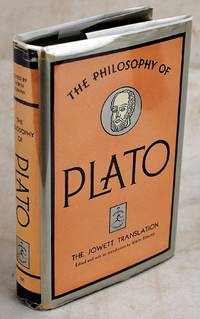
192819841.2New York: The Modern Library 1928. Ca 1950. Grey linen cloth binding. Pale green topstain. Gray & orange dust jacket. VG/VG. xlviii 577 15 pp. 12mo. <br/><br/> The Modern Library hardcover books
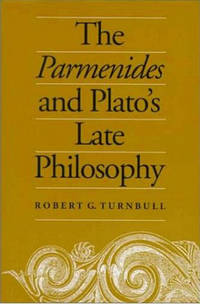
198022291BBThe Hague / Boston / London, Publishers: Martinus Nijhoff Publishers, 1980. Publishers: Martinus Nijhoff Publishers (1980). XIX, 144 Pages. Original Hardcover-Volume (titled). Ex-Library-Copy. Library-Button on the Spine. Library-Stamp [dropped out] on Front-Endpaper and verso Title. No Markings in the Text! No Underlinings! No O ('Martinus Nijhoff Classical Philosophy Library', Volume 2).
19282110270037Modern Library 1928-01-01. Hardcover. Very Good. 7x4x1. Signed. Flat signed Alexis Leger and Felix Morley and 7 other authors and scholars on half title page. Hardcover and dust jacket. Tears to jacket with loss. Dust jacket in protective mylar cover. Good binding and cover. Shelf wear. Small stain to edge. xlviii 577 p. 19 cm. Autographed by Alexis Leger Felix Morley A.D. Emmant James Kern Feibleman Francis S. Haserot and others. <br> "Alexis Saint‐Leger Leger 1887-1975 was a triple image. As Alexis Leger he was a professional French diplomat of impressive suavity and limited accomplishment. As himself he was a gracious aristocrat who preferred his own company to the glitter of the salon. As St.‐John Perse pronounced SIN‐jin he was a major poet of candescent belief in the indestructibility of humanity. The Nobel Prize only confirmed the rapturous regard Mr. Perse's peers expressed for him as one of the most original of contemporary poets. His audacious use of pungent imagery and arcane symbolism set him apart as did his celebration of the inexhaustible power of life to triumph over disaster His language was ambiguous lyric and cadenced studded with subtle metaphors and sprinkled with delicate melodies more discernible by the ear than the eye. Among poets writing in English Archibald MacLeish T. S. Eliot and Louise Varese were drawn to Mr. Perse and influenced by him." NY Times Obit. <br> "Felix M. Morley 1894=1982 was an educator and journalist who won the Pulitzer Prize. Mr. Morley won the Pulitzer Prize for editorial writing in 1936 three years after he was named editorial page editor of The Washington Post. In his career he was president of Haverford College and the first correspondent in China for The Baltimore Sun. He was a brother of the author and poet Christopher Morley who died in 1957. Felix Morley who held a doctorate in political science and was the author of seven books on economics and politics was born in Haverford Pa. His family moved to Baltimore in 1900. He was graduated in 1915 from Haverford College. In 1915 Mr. Morley went to Europe and became an ambulance driver for the British Red Cross. He returned to the United States a year later to become a reporter for The Philadelphia Ledger. In 1917 he became a Washington correspondent for the United Press news agency. Two years later he won a Rhodes scholarship and studied for two years at Oxford after which he studied at the London School of Economics on a Hutchinson Research Fellowship. Several years later he won a Guggenheim Fellowship to study the organization of the League of Nations. In 1922 Mr. Morley joined The Baltimore Sun working in several Far East bureaus and in 1925 becoming the newspaper's first correspondent in China. He left The Sun in 1929 complaining that H.L. Mencken was exercising 'excessive influence' on editorial policy. From 1929 to 1931 he was director of the Geneva office of the League of Nations Association of the United States. After serving as president of Haverford College from 1940 to 1945 Mr. Morley returned to journalism working as a Washington correspondent for Barron's Weekly a position that he held until retiring from full-time newspaper or magazine work in 1954." - NY Times Obit. Modern Library hardcover
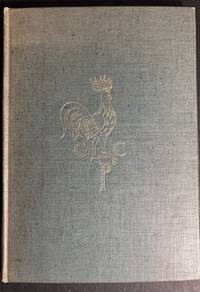
19307700Berkshire: Golden Cockerel Press 1930. Limited Edition. Hardcover. Very Good Textblock Fine. Light sunning at the spine and top of boards gilt toned at spine label small area of loss at spine label else tight bright and unmarred. Blue cloth boards red leather spine labels gilt lettering and decorative elements teg. Small 4to. 79pp. Numbered limited edition this being 276 of 500. <br/><br/>Ornaments and initial letters by Eric Gill. Golden Cockerel Press hardcover books
1973G0405048319I4N10Ayer Co Pub 1973. Hardcover. Very Good. Former library book; May have limited writing in cover pages. Pages are unmarked. ~ ThriftBooks: Read More Spend Less.Dust jacket quality is not guaranteed. Ayer Co Pub hardcover
19307700Berkshire: Golden Cockerel Press 1930. Limited Edition. Hardcover. Very Good Textblock Fine. Limited Edition. Hardcover. Ornaments and initial letters by Eric Gill. Light sunning at the spine and top of boards gilt toned at spine label small area of loss at spine label else tight bright and unmarred. Blue cloth boards red leather spine labels gilt lettering and decorative elements teg. Small 4to. 79pp. Numbered limited edition this being 276 of 500. Golden Cockerel Press hardcover
19306432Waltham Saint Lawrence Berkshire: The Golden Cockerel Press. Very Good with no dust jacket. 1930. Hardcover. Limited edition No. 74 of 500 copies. Grey-blue cloth leather title label on spine publisher's logo stamped in gilt on front. With ornaments and initial letters by Eric Gill . Printed in black and red. Cloth on spine somewhat sunned which appears to be common with this title. . The Golden Cockerel Press hardcover
199538180New York: Viking 1995. Hardcover. xx 585p. very good first edition in cloth-backed boards and unclipped dj. Massive cimpendium of classic works and excerpts by gay and homophile writers from Plato to Arenas. Viking hardcover books
199814729Downsview Ontario Canada: Univ of Toronto Pr. New. 1998. Hardcover. 0802042368 . FREE UPGRADE to Courier/Priority Shipping Upon Request - IN STOCK AND IMMEDIATELY AVAILABLE FOR SHIPMENT - FLAWLESS COPY BRAND NEW PRISTINE NEVER OPENED - -- with a bonus offer-- . Univ of Toronto Pr hardcover
200034141Amherst New York U.S.A.: Prometheus Books Publishers. New. 2000. Paperback. 1573927996 . FREE UPGRADE to Courier/Priority Shipping Upon Request - IN STOCK AND IMMEDIATELY AVAILABLE FOR SHIPMENT - FLAWLESS COPY PRISTINE NEVER OPENED -- 305 pages -- -- DESCRIPTION: Contains Plato's theory of law and punishment as well as his mature theory of the state and its laws. -- with a bonus offer-- . Prometheus Books, Publishers paperback
1970Q-0140442227Penguin Classics 1970-08-30. Paperback. New. In shrink wrap. Looks like an interesting title! Penguin Classics paperback
198873143AB1988. Chicago The University of Chicago Press 1988. 15 cm x 23 cm. 562 Pages. Original Softcover. Excellent condition with only very minor signs of external wear. From the library of philosopher Graham Parkes with his name to the endpaper. paperback
1988SKU0594509University of Chicago Press 1988-03-15. paperback. Good. 6x1x9. Textbook May Have Highlights Notes and/or Underlining BOOK ONLY-NO ACCESS CODE NO CD Ships with Tracking University of Chicago Press paperback
1988SKU0642016University of Chicago Press 1988-03-15. paperback. New. 6x1x9. New Textbook Ships with Tracking University of Chicago Press paperback
198025795New York New York U.S.A.: Basic Books. As New. 1980. Paperback. 0465038573 . FREE UPGRADE to Courier/Priority Shipping Upon Request - IN STOCK AND IMMEDIATELY AVAILABLE FOR SHIPMENT - -- with a bonus offer-- . Basic Books paperback
1988x-0226671100Univ of Chicago Pr 1988. Paperback. New. reprint edition. 576 pages. 9.50x6.25x1.25 inches. Univ of Chicago Pr paperback
1988Q-0226671100University of Chicago Press 1988-03-15. Paperback. New. New. In shrink wrap. Looks like an interesting title! University of Chicago Press paperback
198855496Univ of Chicago Pr. New. 1988. Paperback. 0226671100 . FREE UPGRADE to Courier/Priority Shipping Upon Request IN STOCK AND IMMEDIATELY AVAILABLE FOR SHIPMENT - Flawless copy brand new pristine never opened -- with a bonus offer-- . Univ of Chicago Pr paperback
1970DADAX01404422271970-08-30. paperback. New. 5.14x0.83x7.74. Buy with confidence. Excellent Customer Service & Return policy. paperback
19932312665New York: Penguin Books 1993. Reprint. Trade Paperback. Good. Reprint. Faint crease to rear wrapper edges lightly toned. 1993 Trade Paperback. xxxi 237 pages. Translated by Hugh Tredennick & Harold Tarrant with introduction & notes by Harold Tarrant. "The trial and condemnation of Socrates 469-399 B.C. on charges of heresy and corrupting the minds of the young forms one of the most tragic episodes in the history of Athens in decline. Plato chose to set the four works of this volume despite their different subjects in the context of the events leading up to Socrates' execution. Euthyphro and Crito are typical Socratic dialogues showing the pungency of his mind in addressing the question of man's relationship with the gods and with society. The Apology is Plato's version of Socrates' speeches at his trial -- a brilliant and humorous manifesto for a life guided by self-responsibility though deliberately doomed to failure as a legal defence. In Phaedo Plato develops his own philosophy out of Socrates' calm confidence in the face of death." CONTENTS: Preface; General Introduction; Holiness -- Socrates in Confrontation: Euthyphro; Justice and Duty i -- Socrates Speaks at His Trial: The Apology; Justice and Duty ii -- Socrates in Prison: Crito; Wisdom and the Soul -- Socrates about to Die: Phaedo; Postscript: The Theory of Ideas in the Phaedo; Notes; Select Bibliography; Index. Penguin Books paperback books
199263786London: Guild Publishing. 1992. 1st Guild Edition. Original quarter leather. Very Good in No Dust Jacket dust jacket. Light tanning to text block. Light soiling to top edge. ; With placeholder ribbon. ; 21.6 x 14.2 x 2.5 cms; Plato’s The Last Days of Socrates—a grouping of the dialogues Euthyphro Apology Crito and Phaedo—offers a powerful and enduring portrait of Socrates’ final days capturing his trial imprisonment and death. Often published together including in The Guild Books edition these texts explore central philosophical themes such as justice piety duty and the immortality of the soul. Euthyphro takes place shortly before Socrates' trial. He meets Euthyphro a man prosecuting his own father for impiety and together they debate the nature of piety. Socrates challenges Euthyphro’s definitions asking whether the gods love the pious because it is pious or whether it is pious because the gods love it. The dialogue ends unresolved as Socrates finds Euthyphro’s arguments lacking in clarity and consistency. In the Apology Socrates stands before the Athenian court defending himself against accusations of corrupting the youth and impiety. He speaks plainly and with conviction asserting that he is guided by a divine mission to encourage critical thought and virtue. Socrates refuses to pander to the jury ultimately accepting the guilty verdict and the death sentence rather than compromise his principles. Crito is set in Socrates’ prison cell where his friend Crito urges him to escape. Socrates calmly refuses arguing that to break the laws of Athens would be unjust even if the laws themselves have condemned him unfairly. He explains that he has benefited from and agreed to live under these laws and to flee would be to undermine the moral and legal foundation of the city. Phaedo recounts Socrates’ final conversation before his death. In the company of his friends and disciples he offers a series of arguments for the immortality of the soul including the theory of opposites the doctrine of recollection and the soul’s affinity with the divine and unchanging. The dialogue ends with Socrates taking the poison hemlock and dying peacefully confident that the soul lives on after death. Together these four dialogues trace a coherent philosophical journey—from ethical questioning to legal reasoning civic responsibility and metaphysical reflection. They not only memorialise Socrates’ death but also exemplify the principles by which he lived. The Guild Books edition presents these works in an accessible and enduring format allowing readers to engage with one of the foundational figures of Western thought. . Guild Publishing hardcover
20002606230148Easton Press 2000. Hardcover. New. 0x0x0. Hardcover. Bound in full leather. Stamped with 22kt gold gilt design on cover front back and spine. All edges gold. Silk moire fabric end papers. Satin ribbon place holder. Fine binding and cover. Clean unmarked pages. In publisher's shrink wrap. For more than 30 years the Easton Press has been the standard for finely bound profusely gilt classic leather bindings. Easton Press hardcover