Plato; Pangle, Thomas L [Translator]Biblio.com
4 367 résultats
1988Q-0226671100University of Chicago Press 1988-03-15. Paperback. New. New. In shrink wrap. Looks like an interesting title! University of Chicago Press paperback
198855496Univ of Chicago Pr. New. 1988. Paperback. 0226671100 . FREE UPGRADE to Courier/Priority Shipping Upon Request IN STOCK AND IMMEDIATELY AVAILABLE FOR SHIPMENT - Flawless copy brand new pristine never opened -- with a bonus offer-- . Univ of Chicago Pr paperback
1970DADAX01404422271970-08-30. paperback. New. 5.14x0.83x7.74. Buy with confidence. Excellent Customer Service & Return policy. paperback
48194793-nnew. unknown
48194793like new. unknown
7780214like new. unknown
45640551like new. unknown
46998553-nnew. unknown
46998553like new. unknown
44261573like new. unknown
44261573-nnew. unknown
29237465like new. unknown
50199867like new. unknown
50667793like new. unknown
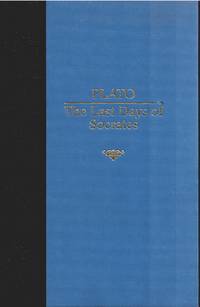
199263786London: Guild Publishing. 1992. 1st Guild Edition. Original quarter leather. Very Good in No Dust Jacket dust jacket. Light tanning to text block. Light soiling to top edge. ; With placeholder ribbon. ; 21.6 x 14.2 x 2.5 cms; Plato’s The Last Days of Socrates—a grouping of the dialogues Euthyphro Apology Crito and Phaedo—offers a powerful and enduring portrait of Socrates’ final days capturing his trial imprisonment and death. Often published together including in The Guild Books edition these texts explore central philosophical themes such as justice piety duty and the immortality of the soul. Euthyphro takes place shortly before Socrates' trial. He meets Euthyphro a man prosecuting his own father for impiety and together they debate the nature of piety. Socrates challenges Euthyphro’s definitions asking whether the gods love the pious because it is pious or whether it is pious because the gods love it. The dialogue ends unresolved as Socrates finds Euthyphro’s arguments lacking in clarity and consistency. In the Apology Socrates stands before the Athenian court defending himself against accusations of corrupting the youth and impiety. He speaks plainly and with conviction asserting that he is guided by a divine mission to encourage critical thought and virtue. Socrates refuses to pander to the jury ultimately accepting the guilty verdict and the death sentence rather than compromise his principles. Crito is set in Socrates’ prison cell where his friend Crito urges him to escape. Socrates calmly refuses arguing that to break the laws of Athens would be unjust even if the laws themselves have condemned him unfairly. He explains that he has benefited from and agreed to live under these laws and to flee would be to undermine the moral and legal foundation of the city. Phaedo recounts Socrates’ final conversation before his death. In the company of his friends and disciples he offers a series of arguments for the immortality of the soul including the theory of opposites the doctrine of recollection and the soul’s affinity with the divine and unchanging. The dialogue ends with Socrates taking the poison hemlock and dying peacefully confident that the soul lives on after death. Together these four dialogues trace a coherent philosophical journey—from ethical questioning to legal reasoning civic responsibility and metaphysical reflection. They not only memorialise Socrates’ death but also exemplify the principles by which he lived. The Guild Books edition presents these works in an accessible and enduring format allowing readers to engage with one of the foundational figures of Western thought. . Guild Publishing hardcover
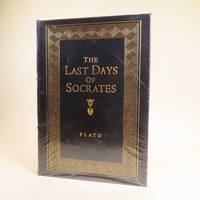
20002606230148Easton Press 2000. Hardcover. New. 0x0x0. Hardcover. Bound in full leather. Stamped with 22kt gold gilt design on cover front back and spine. All edges gold. Silk moire fabric end papers. Satin ribbon place holder. Fine binding and cover. Clean unmarked pages. In publisher's shrink wrap. For more than 30 years the Easton Press has been the standard for finely bound profusely gilt classic leather bindings. Easton Press hardcover
Q-0140440372Penguin USA Mm. paperback. New. New. In shrink wrap. Looks like an interesting title! Penguin USA (Mm) paperback
199373126AB1993. London Penguin Books 1993. 13 cm x 20 cm. 237 Pages. Original Softcover. Very good condition with only very minor signs of external wear. Slight tear on the front cover. Annotations throughout the book. A small ink stain on few pages. From the library of philosopher Graham Parkes. Includes for example the following essays: HOLINESS - Socrates in Confrontation: Euthyphro / JUSTICE AND DUTY I - Socrates Speaks at His Trial: the Apology / JUSTICE AND DUTY 2 - Socrates in Prison: Crito / WISDOM AND THE SOUL - Socrates about to Die: Phaedo / etc. paperback
2000316076Easton Press 2000. Hardcover. Near Fine. Typical Easton binding. Note Authentication Certificate and unused bookplate laid in. Easton Press hardcover
2000067862The Easton Press. A beautiful crisp clean leather bound hardcover in fine condition. Photos available upon request. We are a brick-and-mortar store and sell our own inventory. We are a brick-and-mortar store and sell our own inventory. . Fine. Hardcover. 2000. The Easton Press hardcover
1995Q-014044582XPenguin USA P 1995-02-01. Paperback. New. In shrink wrap. Looks like an interesting title! Penguin USA (P) paperback
2011Q-0140455493Penguin Classics 2011-01-25. Paperback. New. In shrink wrap. Looks like an interesting title! Penguin Classics paperback
2003Q-0140449280Penguin Classics 2003-04-29. Paperback. New. In shrink wrap. Looks like an interesting title! Penguin Classics paperback
20007623Scarce virgin copy in publisher's original shrink wrap. Black leather boards with tasteful Greek key gilt cartouche to boards; title & author to boards and spine. Moire endpapers and silk ribbon; four raised bands.<br />6.75 x 9.5 in Easton Press hardcover
1019587881.Ghardcover. Good. Access codes and supplements are not guaranteed with used items. May be an ex-library book. hardcover