Paul Henri Thiry HolbachBiblio.com
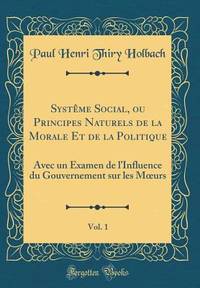
427 résultats
0260868981.Ghardcover. Good. Access codes and supplements are not guaranteed with used items. May be an ex-library book. hardcover
0265717965.Gpaperback. Good. Access codes and supplements are not guaranteed with used items. May be an ex-library book. paperback
0274859807.Gpaperback. Good. Access codes and supplements are not guaranteed with used items. May be an ex-library book. paperback
0274859815.Ghardcover. Good. Access codes and supplements are not guaranteed with used items. May be an ex-library book. hardcover
1017595046.Ghardcover. Good. Access codes and supplements are not guaranteed with used items. May be an ex-library book. hardcover
1017599882.Gpaperback. Good. Access codes and supplements are not guaranteed with used items. May be an ex-library book. paperback
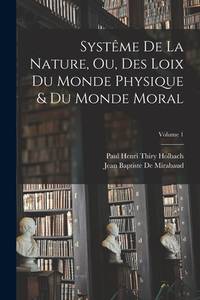
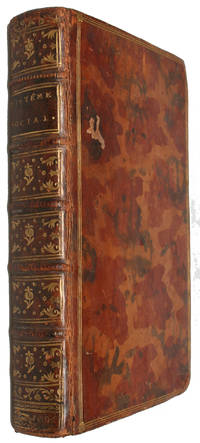
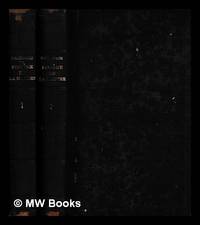
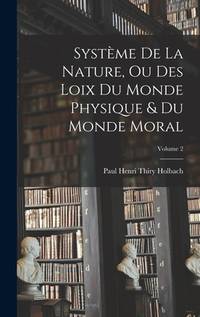
177066930Amsterdam: Marc-Michel Rey 1770. The Bible of Materialism"<br> <br> HOLBACH Paul Henri Thiry baron d'. Systême de la nature. Ou Des loix du monde physique & du monde moral. Par M. Mirabaud. Londres i.e. Amsterdam: Marc-Michel Rey 1770.<br> <br> First edition. Two volumes octavo. 12 370; 4 412 pp.<br> <br> Contemporary speckled calf with covers ruled in blind. Elaborately gilt spine with burgundy morocco label gilt board edges marbled endpapers edges stained red. Joints and extremities rubbed. Occasional light foxing and browning primarily to first and last few leaves of each volume. Generally a very good crisp copy. In a quarter morocco clamshell case.<br> <br> Paul Heinrich Dietrich Baron d'Holbach 1723-1789 first became known as a scientist contributing some four hundred articles to the Encyclopédie of his friend and colleague Denis Diderot. Holbach later turned from science to more dangerous topics writing and having published abroad a number of books attacking religion in all aspects which flooded illegally into France. Unable to publish safely under his own name he had the ingenious idea of using the names of recently dead French authors. Thus in 1770 his most famous book "The System of Nature" appeared under the name of Jean-Baptiste Mirabaud.<br> <br> "In the Système Holbach rejected the Cartesian mind-body dualism and attemped to explain all phenomena physical and mental in terms of matter in motion. He derived the moral and intellectual faculties from man's sensibility to impressions made by the external world and saw human actions as entirely determined by pleasure and pain. He continued his direct attack on religion by attempting to show that it derived entirely from habit and custom. But the Système was not a negative or desctructive book: Holbach rejected religion because he saw it as a wholly harmful influence and he tried to supply a more desirable alternative. In fact he outlined a whole ethical and political philosophy which he expanded in his later works" Printing and the Mind of Man.<br> <br> Goldsmiths' Library 10607. Kress 6737. Printing and the Mind of Man 215.<br> <br> HBS 66930.<br> <br> $3250. Marc-Michel Rey unknown
0543949710.Gpaperback. Good. Access codes and supplements are not guaranteed with used items. May be an ex-library book. paperback
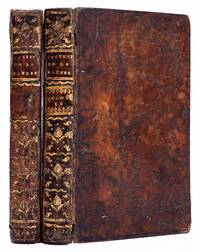
177340375London recte: Amsterdam M.M. Rey 1773. 8vo. Bound in one beautiful contemporary full mottled calf binding with five raised bands to richly gilt spine; triple gilt line-borders to boards and inner gilt dentelles. Edges of boards with single gilt line. All edges gilt. Corners abit bumped and a bit of overall wear. Inner hinges a bit weak. Internally very fine and clean. All in all a very fine copy indeed. 4 210; 176; 167 pp. With all three half-titles all three title-pages and all three indexes as well as the introduction. <br/><br/><em>The rare first edition first issue though Tchermerzine mentions an unknown 2-volume-edition form the same year - this edition has never been verified of one of d'Holbach's most important works his influential "social" and political continuation of his seminal main work "Systeme de la nature" - the bible of materialism. D'Holbach 1723-1789 who was raised by a wealthy uncle whom he inherited together with his title of Baron in 1753 maintained one of the most famous salons in Paris. This salon became the social and intellectual centre for the Encyclopédie which was edited by Diderot and d'Alembert whom he became closely connected with. D'Holbach himself also contributed decisively to the Encyclopédie with at least 400 signed contributions and probably as many unsigned between 1752 and 1765. The "Côterie holbachique" or "the café of Europe" as the salon was known attracted the most brilliant scientists philosophers writers and artists of the time e.g. Diderot d'Alembert Helvetius Voltaire Hume Sterne etc etc. and it became one of the most important gathering-places for the exchange of philosophical scientific and political views under the "ancient régime". Apart from developing several foundational theories of seminal scientific and philosophical value D'Holbach became known as one of the most skilled propagators and popularizers of scientific and philosophical ideas promoting scientific progress and spreading philosophical ideas in a new and highly effective manner. D'Holbach was himself the most audacious philosophe of this circle. During the 1760's he caused numerous anticlerical tracts written in large but not entirely by himself to be clandestinely printed abroad and illegally circulated in France. His philosophical masterpiece the "Système de la nature ou des lois du monde physique et du monde moral" a methodological and intransigent affirmation of materialism and atheism appeared anonymously in 1770" D.S.B. VI:468 as did the social and political follow-up of it the famous "Systême social" in 1773. That is to say Mirabeau whom he had used as the author on the "System of Nature" in 1770 is not mentioned in the "Social System" on the title-page of which is merely stated "By the Author of "Systême de la Nature". As the theories of d'Holbach's two systematic works were at least as anticlerical and unaccepted as those of his smaller tracts and on top of that so well presented and so convincing it would have been dangerous for him to print any of them under his own name and even under the name of the city or printer. Thus "Systême de la Nature" appeared pseudonomously under the name of the secretary of the Académie Francaise J.B. Mirabaud who had died 10 years earlier and under a fictive place of printing namely London instead of Amsterdam. "He could not publish safely under his own name but had the ingenious idea of using the names of recently dead French authors. Thus in 1770 his most famous book "The System of Nature" appeared under the name Jean-Baptiste Mirabaud." PMM 215 and so the next "System" also appeared in the same manner three years later.In his "Systême de la Nature" d'Holbach had presented philosophical materialism in an actual system for the first time and had created a work that dared unite the essence of all the essential material of the English and French Enlightenment and incorporate it into a closed materialistic system; on the basis of a completely materialistic and atheistic foundation he provided the modern world with a moral and ethic philosophy the effects of which were tremendous. It is this materialism and atheism that he continues three years later in his next systematic work "Systême social" through which politics morality and sociology are also incorporated into his system and take the place of the Christianity that he had so fiercely attacked earlier on. In this great work he extends his ethical views to the state and continues the description of human interest from "Systême de la Nature" by developing a notion of the just state by d'Holbach calle "ethocracy" that is to secure general welfare. "Système social 1773; "Social System" placed morality and politics in a utilitarian framework wherein duty became prudent self-interest." Encyclopaedia Brittanica. "Holbach's foundational view is that the most valuable thing a person seeking self-preservation can do is to unite with another person: "Man is of all beings the most necessary to man" Sysème social 76; cf. Spinoza's Ethics IVP35C1 C2 and S. Society when it is just unites for the common purpose of preservation and the securing of welfare and society contracts with government for this purpose." SEP.As the "Systême de la Nature" had been condemned to burning in the year of its publication so the "Systême social" was on the list of books to be confiscated already in 1773 and it was placed on the Index of the Church in August 1775. As the "Systême de la Nature" the "Systême social" is thus also of great scarcity. Another edition of the work appeared later the same year in 12mo. Tchermerzine says that "Il ya une édition que nous ne connaissons pas en 2 vol. in-8. C'est sans doute l'originale." The present edition was reprinted the following year in 1774.Tschermerzine VI:246; Graesse III:317; Barbier IV:622 only listing later editions. </em> hardcover
1773elala1356London Amsterdam: 1773. 1773. 3 Volumes in 1. 8vo. pp. 2 p.l. 210; 176; 167. with half-titles. contemporary sprinkled calf gilt back extremities worn. Published the same year as the first edition. Holbach was the foremost exponent of atheistic materialism in the Enlightenment. In the Politique Naturelle La Morale Universelle and the Système Sociale Holbach attempted to construct a system of ethical and political values based on mans physical nature and primary needs as the only desirable alternative to the illusory and harmful system predicated on supernatural theology. Copies of the present work were seized by the police and it was placed on the Index on August 18 1775. Vercruysse 1773-A5. Barbier IV 621-22. Cioranescu 34061. Quérard IV 119. Rand I 269. cfTchemerzine VI 246 a. 1st Edition. Hardcover. London [Amsterdam?]: 1773. Hardcover
1773POLst[HO77Londres Amsterdam: Marc Michel Rey 1773. 1773. 3 Volumes in 1. 8vo. pp. viii viii 9-218 2; 2 p.l. 174 2; 2 p.l. 166 2. with half-titles. contemporary quarter calf gilt back extremities worn head of spine chipped. First Edition First Issue. Holbach advanced a system of natural politics based upon the needs common to all men. As the legitimacy of government depends upon the happiness of one or all living under it Holbach affirmed the people's natural right to overthrow an unjust ruler. Barbier IV 621-22. Cioranescu II 34061. Querard IV 119. Tchemerzine VI 246. Vercruysse 1773-A4. Rand I 269. 1st Edition. Hardcover. Good. Londres [Amsterdam: Marc Michel Rey], 1773. Hardcover
elala2504Londres Amsterdam: Marc Michel Rey 1773. First Edition First Issue. Holbach advanced a system of natural politics based upon the needs common to all men. As the legitimacy of government depends upon the happiness of one or all living under it Holbach affirmed the people's natural right to overthrow an unjust ruler. Barbier IV 621-22. Cioranescu II 34061. Querard IV 119. Tchemerzine VI 246. Vercruysse 1773-A4. Rand I 269. 3 Volumes in 1. 8vo. pp. viii viii 9-218 2; 2 p.l. 174 2; 2 p.l. 166 2. with half-titles. contemporary quarter calf gilt back extremities worn head of spine chipped Londres [Amsterdam: Marc Michel Rey], 1773 unknown
60039Londres Amsterdam: Marc-Michel Rey 1770. FIRST EDITION FIRST ISSUE OF "THE BIBLE OF MATERIALISM" PMM 215. 2 vols. 8vo. 20 x 12.5 cm. Half-title Table des chapitres 2 title Avis de l'editeur 2 Préface de l'auteur 4pp.370; title Table des chapitres 2pp.412. Contemporary full mottled calf spines decorated in gilt two brown morocco labels vol. 1 missing one label decorative navy blue chequered endpapers pink silk ribbon page markers red speckled edges. Joints slightly cracked but strong and with some minor losses spines rubbed contents clean save for some occasional light toning generally a very good unsophisticated set of this major philosophical work. The rare first edition first issue with the correct pagination the comma after 'Londres' in the imprint' and without the 4-page errata which was added later during the printing process as mistakes were discovered of d'Holbach's main work the main work of materialism and one of the most important works of natural philosophy. Paul Heinrich Dietrich Baron d'Holbach was born at Heidelsheim in Germany and educated in Holland at Leiden University before settling in Paris and becoming a naturalized Frenchman. He first became known as a scientist and contributed some four hundred articles to the Encyclopédie of his lifelong friend and colleague Denis Diderot. Diderot d'Alembert Helvetius Voltaire and others of the philosophes met frequently for dinner and philosophical discussions at the Baron's house which became known as 'the café of Europe' among foreign visitors to these dinners were Wilkes Hume and Sterne. Later Holbach turned from science to more dangerous topics: he wrote and had published abroad a stream of books attacking religion in all its aspects which flooded illegally into France. He could not publish safely under his own name but had had the ingenious idea of using the names of recently dead French authors. Thus in 1770 his most famous book 'The System of Nature' appeared under the name of Jean-Baptiste Mirabaud. When it reached France it provoked one of the greatest scandals of the century being immediately condemned on the 18th of August 1770 and put on the Index the 9th of November. "In the Système Holbach rejected the Cartesian mind-body dualism and attempted to explain all phenomena physical and mental in terms of matter in motion. He derived the moral and intellectual faculties from man's sensibility to impressions made by the external world and saw human actions as entirely determined by pleasure and pain. He continued to direct his attack on religion by attempting to show that it derived entirely from habit and custom. But the Système was not a negative or destructive book: Holbach rejected religion because he saw it as a wholly harmful influence and he tried to supply a more desirable alternative. In fact he outlined a whole ethical and political philosophy which he expanded in his later works especially La Morale Universelle 1776. It was his aim to derive a morality and an ethic from a completely materialistic and atheistic bias.the confident dogmatism and the comprehensiveness of the Systême de la Nature which even provoked Voltaire to reply in defence of religion have ensured its survival as the bible of materialism" PMM 215. PMM 215. Londres [Amsterdam: Marc-Michel Rey], 1770. unknown
elala5529London i.e. Amsterdam: Marc-Michel Rey 1770. First Edition of Holbach’s most famous work the sole example in the Enlightenment of a comprehensive uncompromising defence of atheistic materialism which became the “principal free-thought textbook of the late eighteenth century.†PMM Holbach drew on the ideas of Hobbes La Mettrie Helvétius and Diderot but pressed them to their most radical conclusion. His work was assailed alike by the ecclesiastical and civil authorities as well as by the philosophes; both Voltaire and Frederick the Great wrote responses to it. This copy has the same pagination as the first edition first issue as described by Vercruysse 1770-A6 with a coma rather than a period after ‘Londres’ in the imprint but there are no errata leaves and the title of Volume I exhibits slight differences in setting and typography and has a different title ornament. It is generally referred to as a first issue in the trade. Brunet III 1739. Cioranescu 34051. Printing and the Mind of Man 215. Rand I 269. Quérard IV 119. cfVercruysse 1770-A6. cfTchemerzine VI 243. 2 Volumes. 8vo. pp. 6 p.l. 370; 2 p.l. 412. with half-title in Vol. I. A nice copy in contemporary mottled calf gilt backs few nicks & scrapes to binding faint embrowning to outer leaves. elala5529 London [i.e. Amsterdam: Marc-Michel Rey], 1770 unknown
0656827475.Ghardcover. Good. Access codes and supplements are not guaranteed with used items. May be an ex-library book. hardcover
1821466130Paris : Étienne Ledoux 1821. New Edition. Hardcover. Very good copies both in contemporary quarter gilt-blocked black leather over green marble boards now lightly scuffed and worn along the edges. Spines somewhat rubbed particularly at the endbands. Preliminary and final leaves lightly foxed; edges similarly foxed reaching faintly to some margins. The text blocks remain otherwise notably tight bright and clean. A well-preserved set overall. Physical description; complete in 2 volumes ; 20 cm. Notes; Nouvelle édition avec des notes et des corrections par Diderot. Subjects; Philosophy and religion. Materialism. Psychology. Early works to 1850. 18th century. 19th century. Paris : Étienne Ledoux hardcover
1019030542.Ghardcover. Good. Access codes and supplements are not guaranteed with used items. May be an ex-library book. hardcover
17800010066Leipsick / Leipzig 1780. Hardcover. Good. 16mo 161 212 pages contemporary quarter calf marbled boards tight but worn. Very scarce. <br/><br/>This is a volume of Baron Holbach's most regarded work SYSTEM OF NATURE. Holbach was a member of the French Enlightenment who presided over a salon in Paris and was a well-known atheist. His writings were published anonymously outside of France as in this instance. hardcover
0282440925.Gpaperback. Good. Access codes and supplements are not guaranteed with used items. May be an ex-library book. paperback
0282472479.Gpaperback. Good. Access codes and supplements are not guaranteed with used items. May be an ex-library book. paperback
0332468267.Gpaperback. Good. Access codes and supplements are not guaranteed with used items. May be an ex-library book. paperback
033272767X.Ghardcover. Good. Access codes and supplements are not guaranteed with used items. May be an ex-library book. hardcover
066629027X.Ghardcover. Good. Access codes and supplements are not guaranteed with used items. May be an ex-library book. hardcover
177066930ìThe Bible of Materialismî HOLBACH Paul Henri Thiry baron dÃ. SystÃme de la nature. Ou Des loix du monde physique & du monde moral. Par M. Mirabaud. Londres i.e. Amsterdam: Marc-Michel Rey 1770. First edition. Two volumes octavo. 12 370; 4 412 pp. Contemporary speckled calf with covers ruled in blind. Elaborately gilt spine with burgundy morocco label gilt board edges marbled endpapers edges stained red. Joints and extremities rubbed. Occasional light foxing and browning primarily to first and last few leaves of each volume. Generally a very good crisp copy. In a quarter morocco clamshell case. Paul Heinrich Dietrich Baron dÃHolbach 1723-1789 first became known as a scientist contributing some four hundred articles to the EncyclopÈdie of his friend and colleague Denis Diderot. Holbach later turned from science to more dangerous topics writing and having published abroad a number of books attacking religion in all aspects which flooded illegally into France. Unable to publish safely under his own name he had the ingenious idea of using the names of recently dead French authors. Thus in 1770 his most famous book ìThe System of Natureî appeared under the name of Jean-Baptiste Mirabaud. ìIn the SystËme Holbach rejected the Cartesian mind-body dualism and attemped to explain all phenomena physical and mental in terms of matter in motion. He derived the moral and intellectual faculties from manÃs sensibility to impressions made by the external world and saw human actions as entirely determined by pleasure and pain. He continued his direct attack on religion by attempting to show that it derived entirely from habit and custom. But the SystËme was not a negative or desctructive book: Holbach rejected religion because he saw it as a wholly harmful influence and he tried to supply a more desirable alternative. In fact he outlined a whole ethical and political philosophy which he expanded in his later worksî Printing and the Mind of Man. Goldsmithsà Library 10607. Kress 6737. Printing and the Mind of Man 215. HBS 66930. $3250 Marc-Michel Rey unknown books
DADAX0274859815Wentworth Press 2018-08-07. hardcover. New. 6.14x1.38x9.21. Buy with confidence. Excellent Customer Service & Return policy. Wentworth Press hardcover