16 126 résultats
192033770United States; Guelph and London Ontario; Brighton England; Germany 1920. 34 volumes. 7 x 7 inches to 10 2/3 x 13 inches. Extraordinary collection of 28 art albums from Froebel's beautiful Kindergarten "gifts" with over 1230 beauty forms or examples of vernacular artwork. These visual exercises developed for children left an indelible mark on the luminaries of twentieth-century art and architecture. The albums come with a manuscript book of Froebelian lesson plans a Milton Bradley catalog selling a line of Froebel products and three contemporary books of Kindergarten educational theory.<br/> <br/> "Come let us live with our children." - Friedrich Froebel In the 1830s German pedagogue Friedrich Froebel developed an educational system for young children based on the use of twenty "gifts" a sequence of simple educational toys using blocks sticks tiles paper sewing kits dried peas and other craft supplies. Using these gifts the students would "create pictures or structures that fit into three fundamental categories - forms of nature or life forms of knowledge or science and forms of beauty or art." Brosterman The visual albums in this collection are full of the beauty forms created by these students out of Froebel's gifts. By the 1850s the system was in widespread use in Europe. "Kindergarten" as Froebel called the system caught on in the United States starting in 1860 with the first English-speaking Kindergarten then opening in Boston though a German-speaking Kindergarten opened as early as 1836 in Columbus Ohio. Lithographer and toy manufacturer Milton Bradley "developed an early interest in educational theory and in 1869 published the first American book on Kindergartens: Wiebe's The Paradise of Childhood and throughout the years Bradley's company produced a large amount of educational material for Kindergartens and primary schools including books magazines demonstration equipment and art supplies." Last Bradley began issuing comprehensive catalogs of such materials one of which is in the present collection. After Bradley exhibited the educational system at the 1876 Centennial in Philadelphia other commercial agents began marketing materials for making Froebel's Kindergarten gifts including pre-cut strips and "mats" of glazed paper known today as color-aid as well as blank concertina-fold brown cloth albums for mounting and displaying a pupil's finished works. In Froebel's pedagogy a student progressed through a series of twenty "gifts" or "occupations" with each step of the progression becoming more complex. The gifts in order comprised: 1. Variously colored soft balls. 2. A wooden sphere cylinder and cube. 3-6. Wooden blocks starting with a cube composed of eight smaller cubes and proceeding to more complex structures ending with a three-inch cube divided into thirty-six different rectangles. 7. Parquetry i.e. quadrangular and triangular tiles of colored paper or wood. 8. Stick laying. 9. Ring laying. 10. Drawing. 11. Paper pricking. 12. Paper sewing. 13. Paper cutting. 14. Paper weaving. 15. Slats. 16. Jointed slats. 17. Interlacing. 18. Folding. 19. Peas-work. 20. Modeling clay. The present collection of 28 visual albums 1 manuscript lesson book 3 books of educational theory Froebel's autobiography and a Milton Bradley trade catalog includes examples of Froebel's paper-related occupations: pricking sewing cutting weaving folding and interlacing. These gifts with the exception of paper pricking especially emphasize color: "Although Froebel deemed color so important for infant development that he included it as a feature in the first gift it was in the paper occupations where color in the kindergarten really exploded." Brosterman Gifts taught children counting progression method composition planning and creativity; they also developed fine-motor skills dexterity and concentration. The present collection principally consists of albums likely created by teachers as examples for their students and for other teachers though student work is also represented here providing a full picture of the pedagogical practice. Indeed 12 of the albums those of Edith M. Garretson carry grades from B- to A. Some of the albums are dedicated to specific gifts while others consist of a mix of multiple occupations. Brosterman convincingly argues that Froebel's gifts and particularly their colorful geometric abstraction would have a remarkable influence on twentieth-century modern art especially that of Josef Albers Braque Buckminster Fuller Walter Gropius Klee Mondrian Le Corbusier and Victor Vasarely. Once viewed it's difficult to imagine Op Art hard-edge abstraction or the canvases of Agnes Martin without Froebel's gifts. Froebel's Kindergarten Brosterman writes "was the seed pearl of the modern era." For instance Gropius who founded the Bauhaus school designed a building in Froebel's honor Friedrich Froebel Haus in Bad Liebenstein Germany. Gropius taught Albers at the Bauhaus and both then moved to the US to teach at Black Mountain College where the student body would blossom into a who's who of American art. Albers then left to head the program at the Yale School of Art and developed an art school curriculum that has been copied throughout the United States for generations. Froebel's color and design exercises formed the backbone of Albers's program and that is particularly obvious in the painting practices of both Josef and Anni Albers. Frank Lloyd Wright 1867-1959 in his Testament 1957 discusses the influence of Froebel's Kindergarten. He writes lyrically of Froebel's "smooth cardboard triangles and maple-wood blocks" noting that "all are in my fingers to this day also German papers glazed and matte beautiful soft color qualities were another one of the 'gifts' cut into sheets. These squares were slitted to be woven into gay colorful checkerings as fancy might dictate. Thus color sense awakened. The virtue of all this lay in the awakening of the child-mind to the rhythmic structure in Nature - giving the child a sense of innate cause-and-effect otherwise far beyond child-comprehension. I soon became susceptible to constructive pattern evolving in everything I saw. I learned to 'see' this way and when I did I did not care to draw casual incidentals to Nature. I wanted to design." <br /> <br /> This unparalleled Froebel collection comprises: <br /> <p>a. BAKER G. Victoria. Weaving. London Ontario c. late-1800s. 7 x 7 inches. Gift 14. Black half-leather over blue boards with dye-stamped gilt lettering on front concertina-fold format floral front pastedown with binder's ticket of H. P. Bock of London Ontario. 80 color-aid paper-weaving beauty forms mounted on card with penciled and ink attributions of the "invention" of several of the designs.</p> <br /> <br /> <p>b. BAKER G. Victoria. Folding. London Ontario c. late-1800s. 9 x 9 inches. Gift 18. Black half-leather over blue boards with dye-stamped gilt lettering on front concertina-fold format detached from covers floral front pastedown with binder's ticket of H. P. Bock of London Ontario. 49 groupings of folded colored paper designs mounted on cards with blue guards. 4 tree leaves also pasted in. Pieces of colored paper and a sheet with penciled folding instructions laid in. Some paper forms with ink manuscript attributions.</p> <br /> <br /> <p>c. BAKER G. Victoria. Cutting. London Ontario c. late-1800s. 9 x 9 inches. Gift 13. Black half-leather over blue boards with dye-stamped gilt lettering on front concertina-fold format detached from covers floral front pastedown with binder's ticket of H. P. Bock of London Ontario. 67 cut colored-paper designs mounted on cards with blue guards. One card creased. Several cuttings accompanied by penciled drawings.</p> <br /> <br /> <p>d. BAKER G. Victora. Sewing. London Ontario c. late-1800s. 8 x 9 inches. Gift 12. Blue boards with gilt dye-stamped lettering on front stab-stitched with blue string with yellow floral endpapers and binder's ticker of H. P. Bock of London Ontario. 20 sewn designs of various colors taped onto cards with blue guards on recto only.</p> <br /> <br /> <p>e. BOND Edith R. Paper Folding. c. late-1800s. 9 x 11 inches. Gift 18. Blind paneled black cloth boards with dye-stamped gilt-titling on front with black ribbon ties in concertina-fold format. 17 cards each with 6 to 12 folding colored-paper designs in pink and blue. Paper with ink signature of "Edith R. Bond" tipped-in.</p> <br /> <br /> <p>f. BRADLEY Milton. Bradley's Kindergarten Material. Springfield MA: Milton Bradley Co. 1888. 9 x 6 inches. 50 pp. Stab-stitched pamphlet with printed wrappers. Detailed comprehensive text with woodcut illustrations arranged by gift with a bust of Froebel on back wrapper and a list of early books on Kindergarten. Shows embroidery cards which are found completed elsewhere in the collection.</p> <br /> <br /> <p>g. BROWN M. Kindergarten Work. c. late-1800s. 9 x 11 inches. Gifts 12 13 14. Pebble-grained black boards with gilt embossed title on cover and remnant of ribbon enclosure in a concertina-fold form. 43 groupings of 85 design figures including paper weaving paper sewing and paper cutting as well as 4 watercolors with paper samples laid in.</p> <br /> <br /> <p>h. EVANS Irma. Kindergarten Work. 1891-1892. 9 x 6.5 inches. Gifts 12 13 14. Brown quarter cloth over red stone-pattern marbled boards stab-stitched with brass fasteners with ink manuscript paper label on front board. 52 beauty forms including paper sewing weaving and cutting many signed in pencil and glued to recto only. With Milton Bradley logo on one of the pieces of sewing.</p> <br /> <br /> <p>i. FRANCIS. Booklet of Frobelian Gifts. c. late-1800s 8 ½ x 7 inches. Gifts 12 14. 40 pp. Saddle-stitched booklet with tan paper wrappers. 21 Froebel figures including a sewn cat and duck with color-aid paper-weaving and sewing samples glued down. Two loose beauty forms laid in at rear. "Francis" written in pencil on front wrapper.</p> <br /> <br /> <p>GARRETSON Edith M. Brooklyn NY 1915. All 12 volumes are 8 ½ x 11 inches on stab-stitched tan construction paper with black ink manuscript titles on front wrappers. Produced by a student at Pratt Institute's School of Kindergarten Training at the time headed by Alice E. Fitts.</p> <br /> <br /> <p>j. "Circular Cutting." Gift 13. 22 pp. 11 beauty forms of circular collages and cuttings composed of color-aid paper tipped-in on rectos.</p> <br /> <br /> <p>k. "Circular Folding." Gift 18. 22 pp. 22 pieces of folded blue paper glued to rectos of leaves in pairs.</p> <br /> <br /> <p>l. "Color Book." Gift 13. 66 pp. 34 beauty forms of chromatic scales composed of cut color-aid paper tipped-in on rectos with penciled captions and hand foliation on versos.</p> <br /> <br /> <p>m. "Free Cutting." Gift 13. 20 pp. 15 beauty forms of cut black paper.</p> <br /> <br /> <p>n. "Free Tearing." Gift 13. 20 pp. 19 beauty forms of black torn paper designs adhered to rectos of leaves.</p> <br /> <br /> <p>o. "Froebel Cutting." Gift 13. 24 pp. 12 beauty forms of cut navy color-aid paper with ink manuscript diagrams and descriptions in top right-hand corners of leaves.</p> <br /> <br /> <p>p. "Froebel Drawing." Gift 10. 50 pp. 25 pencil drawings overtop blue grids. Typescript titled "Froebel Drawing Rules" numbered 1-8 and bound-in on translucent copy paper. Hand foliated on verso of each leaf. Captions on two leaves. Two inch tear in front cover.</p> <br /> <br /> <p>q. "Interlacing." Gift 15. 16 pp. 8 beauty forms composed of popsicle sticks arranged in patterns and adhered to blue pieces of paper mounted on leaves.</p> <br /> <br /> <p>r. "Intertwining." Gift 17. 18 pp. 18 beauty forms intertwined blue paper shapes tipped-in.</p> <br /> <br /> <p>s. "Pricking." Gift 11. 46 pp. 33 beauty forms of pricked white paper often with two to a leaf.</p> <br /> <br /> <p>t. "Sewing." Gift 12. 50 pp. 45 beauty forms of variously colored thread sewn on paper cards tipped-in to rectos.</p> <br /> <br /> <p>u. "Square Folding." Gift 18. 92 pp. 105 pieces of blue folded paper tipped-in on rectos of leaves with some ink captions often in groupings.</p> <br /> <br /> <p>v. G. R. N. Cutting. '94. s.l. March 1894. 8 x 10 inches. Gift 13. Concertina-fold format with blue boards silver ink manuscript title on front board. 66 examples of paper cutting often with both negative and positive silhouettes mounted on blue card.</p> <br /> <br /> <p>w. G. R. N. Sewing. '94. s.l. 1894. 8 x 10 inches. Gift 12. Concertina-fold format with blue boards back board is detached and has "Sewing. '94" written in silver ink on it. Contains 30 groupings of 77 individual beauty form designs these embroideries are especially exquisite in pink and green on one side of the concertina and brown and gold on the other. With nine cards of pricked paper as well.</p> <br /> <br /> <p>x. G. R. N. Weaving. s.l. c. 1894. 7 x 9 inches. Gift 14. Concertina-fold format with blue boards manuscript silver ink on front board hand numbered in pencil. 54 wove color-aid designs in blue green and purple.</p> <br /> <br /> <p>y. KOLLISCH Charlotte. Flechtschule. Weaving School. Germany c. 1890. 6 ¾ x 9 ¾ inches. Gift 14. 64 pp. Oblong red cloth boards dye-stamped gilt with title and name on front board blue endpapers. 59 color-aid paper-weaving examples mounted on rectos with contemporary ink notations. Including 50 two-color designs 7 three-color designs and 2 four-color designs employing 9 total colors.</p> <br /> <br /> <p>z. MCKINNON Edith. Cutting. c. late-1800s. 9 ½ x 9 ½ inches. Gifts 13 15. Gilt-paneled black cloth boards with frayed hinges gilt dye-stamped title on front in concertina-fold format. "Edith McKinnon Guelph" written in ink on inside front board. 73 cut-paper designs 3 with toothpicks all glued to card.</p> <br /> <br /> <p>aa. POOLE Kate. Scrapbook. Brighton England. c. late-1800s. 10 x 13 inches. Gifts 10 11 12 13 14 17 18. Pebbled black cloth boards paneled gilt with dye-stamped gilt title on front binder's ticket of Carter Brothers in Brighton on front pastedown. Front board and spine covering detaching. 25 mounted groupings included 113 figures encompassing paper folding plaiting systematic drawing paper-sewing paper pricking and paper cutting with tipped-in manuscript instructions captions and stickers. Penciled note and folded figure laid in.</p> <br /> <br /> <p>bb. S.N. Paper Folding. c. late-1800s. 9 x 11 inches. Gift 18. Blind-paneled black pebble-grain cloth with dye-stamped gilt-titling on front in concertina-fold format with a black ribbon tie. 28 groupings of folded blue paper each with 2 to 5 pieces glued to card with brown guards.</p> <br /> <br /> <p>cc. S.N. Weaving. c. late-1800s. 8 x 10 inches. Gift 14. Blind-paneled black cloth with gold dye-stamped title on front and ribbon tie enclosure set within a clamshell box with title on spine. 57 color-aid weaving designs of various colors mounted on cards.</p> <br /> <br /> <p>dd. STRANG Mildred E. Paper Folding. Yorktown NY c. late-1800s. 9 x 8 inches. Gift 18. 24 pp. Sewn green paper wrappers. The entirety of this book including its decorative cover is in Strang's ink manuscript. Sections: Index Preliminary Folds Envelope Series Tent Series Checkerboard Series Tablecloth Series Odd Form Series. Each section heading is complemented with "Conversational Suggestions" for pupils and "Method" which provides detailed instructions on how to execute each lesson plan. The series headings are also accompanied by tipped-in envelopes six in total containing finished examples of each Froebel exercise in the unit. Strang a teacher wrote this detailed lesson plan; now it provides invaluable insight into how Froebel's art activities actually occurred in practice.</p> <br /> <br /> <p>ee. HAILMANN William Nicholas. Kindergarten Culture in the Family and Kindergarten: A Complete Sketch of Froebel's System of Early Education Adapted to American Institutions. For the Use of Mothers and Teachers. Cincinnati and New York: Van Antwerp Bragg and Co. 1873. First edition. i-xi 12-119 1 Plates I-XII. 144 pp. 7 1/3 x 4 3/4 inches. Elementary educator William Nicholas Hailmann 1836-1920 and his wife Eudora Lucas Hailmann 1835-1904 were some of the first promoters of the philosophy of Froebel in the United States. Together they developed a nationally acclaimed curriculum for both children and teachers established two of the first Normal schools in the country and published Education 1876-1893 the primary periodical for Kindergarten educators across the United States. They also established the Froebel Institute which later became the Kindergarten Department of the National Educational Association in 1884.</p> <br /> <br /> <p>ff. WIEBÉ Edward. The Paradise of Childhood: A Manual for Self-Instruction in Friedrich Froebel's Educational Principles and a Practical Guide to Kinder-Gartners. Revised Edition Containing the Text of "A Hand-Book for the Kindergarten." Springfield Mass: Milton Bradley Company 1887. Revised rarer and best edition due to the inclusion of the Hand-Book. i-iv 5-83 1-16 Plates I-LXXIV. 136 pp. 10 3/4 x 7 3/4 inches.</p> <br /> <br /> <p>gg. KRAUS-BOELTÉ Maria and KRAUS John. The Kindergarten Guide. An Illustrated Hand-Book Designed for the Self-Instruction of Kindergartners Mothers and Nurses. First Volume: The Gifts. New York: E. Steiger and Co.; London: A. N. Myers and Co. February 22 1877. First edition. i-v 1 1-453 1. 460 pp. Publisher's half-gray cloth over marbled paper-covered boards gilt-titling on spine marbled edges. Thorough explanatory text with step-by-step instructions for Gifts 1-13 with thousands of woodcut illustrations.</p> <br /> <br /> <p>hh. FROEBEL Friedrich. Translated and annotated by Emilie Michaelis and H. Keatley Moore. Autobiography of Friedrich Froebel. Syracuse NY: C. W. Bardeen Publisher 1889. First edition thus. i-xv 1 1-167 1. 184 pp. Beveled purple pebble-grained boards with gilt-stamped title on spine on wove. Half-title title ad preface comments table of contents introduction Autobiography of Froebel critical moments chronological abstract bibliography index.</p> <br /> <br /> <br/> Brosterman Inventing Kindergarten passim. Bruce et al The Bloomsbury Handbook to Friedrich Froebel passim. Bruce Early Childhood Practice: Froebel Today passim. Hewes W. N. Hailmann: Defender of Froebel p. 103 107. Kindergarten Review Vol. 14 1903 pp. 52-56. Last The Color Explosion pp. 40-44. Lilley Friedrich Froebel: A Selection from His Writings passim. MoMA Century of the Child: Growing by Design 1900-2000 2012. Peabody Kindergarten Culture p. 7. Rubin Intimate Triangle: Architecture of Crystals Frank Lloyd Wright and the Froebel Kindergarten passim. Wiebé The Paradise of Childhood passim. Weston Friedrich Froebel: His Life Times and Significance passim. Wright A Testament p. 20. unknown
179912534Paris: Du Pont 1799. Three engraved maps 465 by 420 mm 550 by 340 mm and 530 by 350 mm respectively with fine contemporary hand-colour in full old folds. These maps from the library of the Rochambeau family were published in the first edition of Rochefoucauld-Liancourt's travels in the United States 'Voyage Dans les États-Unis D'Amérique Fait en 1795 1796 et 1797 " Paris 1799 annotated in an early 19th-century hand after Abraham Bradley Junior's 1796 map 'A Map of the United States. Exhibiting Post Roads & Distances'. They are reduced copies of the 1796 first edition of Bradley's map and are therefore the first French edition of these maps. The Comte de Rochambeau 1725-1807 was a battle-hardened French general chosen by King Louis XVI in 1780 to command the expeditionary corps in the United States under the orders of General George Washington. Their combined success at the Siege of Yorktown on the 19th of October 1781 ended the Revolutionary War and secured American independence. 1."Carte générale des États-Unis de l'Amérique Septentrionale divisée en ses 17 provinces" annotated in an early 19th-century hand numbering each of 16 states giving the location of Native American tribes providing a key showing the major post roads from Main to South Carolina all after Abraham Bradley's map of 1796 acknowledged by the inscriber who has replaced the imprint with "par Abraham Bradley Jun.r" This map of the East Coast extends from Quebec south to include part of East and West Florida; the western boundary of Georgia extends to the Mississippi River; a strip of land extending westward between Georgia and Tennessee is designated "United States Territory" having been ceded back to the United States in 1787 from South Carolina; another strip between Georgia and West Florida is "Land claimed by the united states" referring to the ongoing dispute between the United States and Spain; all the land to the west which would become the Louisiana Purchase is "Spanish Territory Louisiana." English captions and French title. Manuscript ink annotations in French indicating the names of the 17 states and the position of the Indian tribes. Ink manuscript inscription to verso "IK 403" shelfmark of Rochambeau family library and as "Etats-Unis en 17 provinces." 2. The "Carte des États-Unis Provinces méridionales" shows Kentucky Virginia Tennessee North and South Carolina Georgia a strip of land between Tennessee and Georgia as "United States Territory" and to the south of Georgia "Land claimed by the united states". 3. The "Carte des États-Unis provinces Septentrionales" shows the states from Main sic to Maryland and Delaware. François Alexandre Frédéric duc de La Rochefoucauld-Liancourt 1747-1827 was a French writer and courtier. A social and scientific reformer he was elected to the Estates-General and pushed for changes to the absolute monarchy of France. Rochefoucauld-Liancourt was the first to warn Louis XVI of the fall of the Bastille; when the king called it a revolt Rochefoucauld Liancourt replied "No sire it is a revolution". Despite being sympathetic to the original aims of the Revolution and serving as the first president of the Constituent Assembly he opposed republicanism and secretly tried to arrange for the escape of the king. Following the storming of the royal palace in August 1792 and the beginning of the September Massacres later that same year precipitated his flight from France and he went into self-imposed exile in America. From London in September 1794 Angelica Schuyler Church wrote to her brother-in-law Alexander Hamilton with a glowing introduction. Liancourt made his was to Philadelphia in November and travelled extensively from "le Haute-Canada" above Lake Ontario to Charleston South Carolina taking notes on everything from the economy to slavery to agriculture. After returning to France in 1799 when Napoleon took power he published his analysis as an eight-volume work in which these maps were published. Related Letters and Historic Background Angelica Church to Alexander Hamilton September 19 1794: "My dear Brother I have very particular and very good motives to ask your kindness for the Duke de Liancourt. he loved Liberty with good sence and moderation; and he meant so well towards his country as to introduce into France a better system of Agriculture and to soften the situation of the Lower class of people there: Virtue has not found its reward for in the many scenes of distress that has afflicted his unfortunate country he like many more good men has been obliged to leave his possessions and seek an Asylum in this country. He goes to America and goes there without a friend unless my dear Brother who is always so good will extend to Monsieur de Liancourt his ease. besides many good Qualities this gentleman is the friend of the Marquis de La Fayette. Angelica Church." On April 10 1795 Liancourt wrote to Hamilton in a letter docketed by the recipient and then later by his widow Elizabeth Schuyler Hamilton. Rough translation from French: "You have allowed me to count on your interest Monsieur and this without complaint a hope for which I am flattered. I am herewith asking you to prove it which I hope will be one for you interest since it seems to me not being a stranger to you. I am at the point of leaving for a voyage that will take me as far as Canada. I will enter the United States through the province of Maine from there for another voyage in the east There are introduction letters to principle places that I am due to visit that I would be more pleased to get from you rather than anyone else. If you agree as I think you will to give them to me would you please send them to General Knox in the province of Maine where I will be until the end of July. I flatter myself that you will excuse my importunity!." Although France and the United States had been allies since 1778 political developments in both countries damaged the relationship. The French Revolution was viewed by Federalists like Alexander Hamilton as a dangerous precedent; and the ensuing wars between Britain and France placed the neutral United States in a precarious position. Relations deteriorated further on the signing of Jay's Treaty 1794 with Great Britain. France ordered the seizure of American ships carrying British goods and in 1796 the French refused to admit American diplomats. This impasse led to the XYZ Affair which provoked Congress in turn to suspend commercial relations with France and to authorize American warships to seize armed French vessels. This undeclared naval war lasted for three years with the United States capturing about eighty-five French vessels Du Pont, unknown
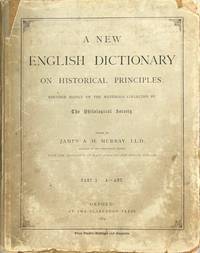
193371212Oxford: At the Clarendon Press 1933. First edition in the earliest state of the original 125 fascicles plus the final Supplement Bibliography and Introduction contained in 14 blue cloth clamshell boxes. Large 4to wrappers some loose 2 back wrappers missing and cloth-backed boards many of the latter with dust jackets jackets often with nicks tears splits and some with occasional loss; with many prefaces prefatory notes titles half titles and assorted ephemera etc. most not included in the book edition; a complete set in the most desirable state. This copy belonged to Fitzedward Hall 1825-1901 the American Orientalist and philologist and the author of several works on Sanskrit and Hindi who was "with another US citizen Dr. William Chester Minor the 'professor' in The Professor and the Madman one of the most important and most obsessive collaborators the OED Project's director Sir James Murray 1837-1915 had and is recognized as such in many of the prefaces to the Dictionary itself" Wikipedia. The first fascicle A-ANT is inscribed to Hall by the editor A. H. Murray three days prior to its publication date of February 1 1884. "To F. Hall Esq. D.C.L. / With Compliments and very special Thanks of / James A. H. Murray / 29 Jany. 1884." The second fascicle ANT-BATTEN is also inscribed: "To Fitzedward Hall Esq. D.C.L. / with the deeply grateful regards of / James A. H. Murray / Oxford 12 Nov 1885." Says Murray in the introductory matter to A-ANT: "Henry Hucks Gibbs Esq. M.A. and Fitzedward Hall Esq. D.C.L. who have given general help in every direction .Mr. Gibbs and Mr. Hall have read all but the earliest proof-sheets supplied deficiencies and given valuable literary criticism." Later Murray noted: "Time would fail to tell of the splendid assistance rendered to the Dictionary by Dr. Fitzedward Hall who devotes nearly his whole day to reading the proofs.and to supplementing correcting and increasing the quotations taken from his own exhaustless stores. When the Dictionary is finished no man will have contributed to its illustrative wealth so much as Fitzedward Hall. Those who know his books know the enormous wealth of quotation which he brings to bear upon every point of English literary usage; but my admiration is if possible increased when I see how he can cap and put the cope-stone on the collections of our 1500 readers." After his death in February 1901 when the dictionary was up to the letter 'J' "Murray corresponded with Hall's son to try to find and reference the supplies of quotations his father had noted but not submitted with unclear results." There are perhaps a couple of hundred or so annotations in the early fascicles by Fitzedward Hall. They are written in a tiny hand and are often in abbreviated or shorthand form and frankly difficult to read let alone parse. "In 1919-1920 J. R. R. Tolkien was employed by the OED researching etymologies of the Waggle to Warlock range;25 later he parodied the principal editors as "The Four Wise Clerks of Oxenford" in the story Farmer Giles of Ham" Wikipedia. Printing and the Mind of Man 371: "The greatest tresure house of any language in the world." A-ANT 1884 Murray; ANT-BATTEN 1885 Murray; BATTER-BOZ 1887 Murray; with complimentary slip from the Oxford University Press Delegates laid in - heretofore "OUP comp slip"; BRA-BYZ 1888 Murray; C-CASS 1888 Murray; CASS-CLIVY 1889 Murray; CLO-CONSIGNER 1891 Murray; CONSIGNIFICANT-CROUCHING 1893 Murray; OUP comp slip; CROUCHMAS-CZECH 1893 Murray; with a note tipped in on the binding of letter 'C'; D-DECIET 1894 Murray; back wrapper missing; DECIET-DEJECT 1895 Murray; DEJECT-DEPRAVATION 1895 Murray; OUP comp slip; DEPRATIVE-DEVELOPMENT 1895 Murray; DEVELOPMENT- DIFFLUENCY 1896 Murray; DIFFLUENT-DISBURDEN 1896 Murray; DISBURDENED-DISOBSERVANT 1896 Murray; DISOBST-DISTRUSTFUL 1897 Murray; OUP comp slip; DISTRUSTFULLY-DOOM 1897 Murray; back wrapper missing; DOOM-DZIGGETAL 1897 Murray; with notice to binder on blue paper laid in; OUP comp slip; E-EVERY 1891 Murray & Henry Bradley; OUP comp slip; EVERYBODY-EZOD 1894 Murray & Bradley; prospectus for Skeat's Chaucer bound in and specimen page for the same laid in; errata slip for 'eye-star' tipped-in; F-FANG 1894 Bradley; FANGED-FEE 1895 Bradley; OUP comp slip; FEE-FIELD 1895 Bradley; FIELD-FISH 1896 Bradley; FISH-FLEXUOSE 1896 Bradley; FLEXUOSITY-FOISTER 1897 Bradley; FOISTY-FRANKISH 1897 Bradley; FRANK-LAW - GAIN-COMING 1898 Bradley; with dedication leaf to Queen Victoria bound in; with Note on the structure of this particular fascicle laid in; OUP comp slip; GAINCOPE- GERMANIZING 1898 Bradley; OUP comp slip; GERMANO-GLASS-CLOTH 1899 Bradley; GLASS-COACH-GRADED 1900 Bradley; OUP comp slip; GRADELY-GREEMENT 1900 Bradley; OUP comp slip; GREEN-GYZZARN 1901 Bradley; note for GREEN-GYZZARN laid in; OUP comp slip; H-HAVERSIAN 1898 Murray; OUP comp slip; HAVERSINE-HEEL 1898 Murray; OUP comp slip; HEEL-HOD 1899 Murray; OUP comp slip; HOD-HORIZONTAL 1899 Murray; HORIZONTALLY-HYWE 1899 Murray; 'Notice' slip on green paper laid in; also a single leaf laid in 'HORIZONJTALITY-HYWE'; I-IN 1899 Murray; OUP comp slip; IN-INFER 1900 Murray; INFERABLE-INPUSHING 1900 Murray; INPUT-INVALID 1900 Murray; INVALID-JEW 1901 Murray; JEW-KAIRINE 1901 Murray; OUP comp slip; KAISER-KYX 1901 Murray; OUP comp slip; L-LAP 1901 Bradley ; LAP-LEISURELY 1902 Bradley; 6-p. prospectus for Wright's English Dialect Dictionary laid in; OUP comp slip; LEISURENESS-LIEF 1902 Bradley; LIEF-LOCK 1903 Bradley; OUP comp slip; LOCK-LYYN 1903 Bradley; OUP comp slip; M-MANDRAGON 1904 Bradley; OUP comp slip; MANDRAGORA-MATTER 1905 Bradley; OUP comp slip; MATTER-MESNALTY 1906 Bradley; OUP comp slip; MESNE-MISBIRTH 1907 Bradley; OUP comp slip; MISBODE-MONOPOLY 1907 Bradley; OUP comp slip; MONOPOLY-MOVEMNENT 1908 Bradley; MOVEMENT-MYZ 1908 Bradley; directions to binder slip on green paper tipped in; also commerative leaf to the Company of Goldsmiths at the end; OUP comp slip; N-NICHE 1906 W.A. Craige; OUP comp slip; NICHE-NYWE 1907 Craige; OUP comp slip; O-ONOMONASTIC 1902 Murray; OUP comp slip; ONOMONASTICAL-OUTING 1903 Murray; OUP comp slip; OUTJET-OZYAT 1904 Murray; P-PARGETED 1904 Murray; OUP comp slip; PARGETER-PENNACHED 1905 Murray; OUP comp slip; PENNAGE-PFENNING 1905 Murray; OUP comp slip; PH-PIPER 1906 Murray; OUP comp slip; PIPER-POLYGENISTIC 1907 Murray; POLYGENOUS-PREMIOUS 1908 Murray; OUP comp slip; PREMISAL-PROPHESIER 1909 Murray; OUP comp slip; PROPHESY-PYXIS 1909 Murray; directions to the binder slip on green paper tipped in; OUP comp slip; Q 1902 Craige; R-REACTIVE 1903 Craige; REACTIVELY-REE 1904 Craige; REE-REIGN 1905 Craige; OUP comp slip; REIGN-RESERVE 1906 Craige; RESERVE-RIBALDOUSLY 1908 Craige; OUP comp slip; RIBALDIC-ROMANITE 1909 Carige; OUP comp slip; ROMANITY-ROUNDNESS 1910 Craige; OUP comp slip; ROUND-NOSE-RYZE 1910 Craige; OUP comp slip; S-SAUCE 1909 Bradley; OUP comp slip; SAUCE-ALONE-SCOURING 1910 Bradley; OUP comp slip; SCOURING-SEDUM 1911 Bradley; OUP comp slip; SEE-SENATORY 1912 Bradley; OUP comp slip; SENATORY-SEVERAL 1912 Bradley; OUP comp slip; SEVERAL-SHASTER 1913 Bradley; OUP comp slip; SHASTRI-SHYSTER 1914 Bradley; SI-SIMPLE Craigie 1911; OUP comp slip; SIMPLE-SLEEP Craigie 1911; OUP comp slip; SLEEP-SNIGGLE Craigie 1912; OUP comp slip; SNIGGLE-SORROW Craigie 1913; OUP comp slip; SORROW-SPEECH Craigie 1914; OUP comp slip; SPEECH-SPRING Craigie 1914; OUP comp slip; SPRING-STANDARD Craigie & Bradley 1915; OUP comp slip; STANDARD-STEAD Bradley 1915; with a leaf announcing the death of Murray; also laid in is a 16-page self-wrappered pamphlet: "The Oxford English Dictionary - A Brief Account: Sir James Murrray - In Memoriam" with a portrait of Murray and 5 photomechanical illustrations of the editors and staff; also a specimen sheet by Murray covering the words INFRA-INFRUCTUOSE; OUP comp slip; STEAD-STILLATIM Bradley 1916; STILLATION-STRATUM Bradley 1917; STRATUS-STYX Bradley 1919; directions to binder slip on gray paper tipped in; OUP comp slip; SU-SUBTERRANEOUS C. T. Onions 1915; OUP comp slip; SUBTERRANEOUSLY-SULLEN Onions 1916; OUP comp slip; SULLEN-SUPPLE Onions 1917; OUP comp slip; SUPPLE-SWEEP Onions 1918; SWEEP-SZMIKITE Onions 1919; binder's slip dated July 1919 laid in; T-TEALT Murray 1910; OUP comp slip; TEAM-TEZKERE Murray 1911; OUP comp slip; TH-THYZLE Murray 1912; OUP comp slip; TI-TOMBAC Murray 1913; OUP comp slip; TOMBAL-TRAHYSH Murray 1913; OUP comp slip; TRAIK-TRINITY Murray 1914; OUP comp slip; TRINK-TURN-DOWN Murray 1915; OUP comp slip; TURNDUN-TZIRID Murray & Craigie 1916; OUP comp slip; U-UNFORESEEABLE Craigie 1921; UNFORESEEING-UNRIGHT Craigie 1924; UNRIGHT-UZZLE Craigie 1926; OUP comp slip; V-VERIFICATIVE Craigie 1916; OUP comp slip; VERIFICATORY-VISOR Craigie 1917; OUP comp slip; VISOR-VYWER Craigie 1920; W-WASH Bradley 1921; WASH-WAVY Bradley 1923; WAVY-WEZZON Bradley & Craigie 1926; WH-WHISKING Onions 1923; WHISKING-WILFULNESS; WILGA-WISE Onions 1926; WISE-WYZEN Onions & Craigie 1928; OUP comp slip; X-ZYXT Onions 1921; Supplement Bibliography & Introduction in original wrappers torn and split Craigie & Onions 1933 At the Clarendon Press unknown
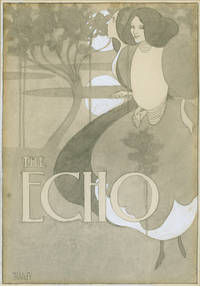
1895260460Chicago 1895. Original pencil watercolor-and-gouache poster design on card signed "Will H. Bradley" at lower left. 8 x 5-1/2 in. Tipped to board gilt matted and framed entire piece measures 13 x 16 in. Original pencil watercolor-and-gouache poster design on card signed "Will H. Bradley" at lower left. 8 x 5-1/2 in. A stunning original poster design by William H. Bradley 1868-1962 the foremost American Art Nouveau designer of his time known for his advertising posters and book and magazine illustrations. "The Echo" a "humorous and artistic fortnightly" was advertised as "Chicago's new paper - in which will appear a series of colored frontispieces by Will H. Bradley." It began publication on May 1 1895 and ceased with vol. 4 no. 3 July 1897. "Bradley was well acquainted with the stylistic innovations of his European counterparts. Like many French artists he borrowed stylistic elements from Japanese prints working in flat broad color planes and cropped forms. He appropriated the whiplash curves of the Art Nouveau movement so dominant in Europe at the turn of the century and was influenced by the work of the English illustrator Aubrey Beardsley" willbradley.com. Literature: Bambage p. 158 unknown
1929314035Pleasantville New York: Privately Printed 1929. First edition. 42 original mounted photographs each captioned by hand in ink. Text printed in brown. 20 pp. 1 vols. Folio. Original brown printed wrappers sewn. Fine short split at bottom of spine fold. Green half morocco slipcase and cloth chemise. First edition. 42 original mounted photographs each captioned by hand in ink. Text printed in brown. 20 pp. 1 vols. Folio. Bradley was Secretary-Treasurer of the Beaverkill Trout Club from 1910-1929; the club had 43 members at the time of his writing. A brief but detailed section of reminiscences is followed by early photographs of sport along the Beaverkill before World War I including author Geo. M. L. La Branche in mid-cast. Each photograph is titled in a fine hand which Bruns speculates is that of "Lady B." pictured on p. 19. There are also photographs of trout fishing in Maine and other points in New York State and of the author and his friend Charlie Campbell president of the club 1910-1923 fishing for Atlantic salmon in Newfoundland. Campbell was the friend who first brought Bradley to the Voorhees homestead in 1908 and with Bradley formed the Beaverkill Trout Club. Campbell's motto was "It's better just a little farther on". These recollections were evidently composed in 1927 for a speech to fellow members to judge from the text and expanded for publication here.<br /> <br /> "A very rare work numbering about 25 copies" Heller. The Litchfield copy sold at auction in November 2001 brought $14400.<br /> <br /> RARE AND BEAUTIFUL AND EVOCATIVE OF SPORT ON A LEGENDARY AMERICAN RIVER. Litchfield 85; Bruns B202; Heller 1:730; H.A. Darbee sale 1987 23A Privately Printed unknown
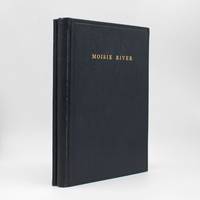
1938312708Boston: Privately Printed by Geo. H. Ellis Co 1938. First Edition edition of 30 copies both volumes numbered in ink "Ten. The first volume illustrated with 28 photographs on 14 plates and 5 hand-colored plates after old prints and a photograph with folding map tipped in on rear pastedown; the second contains a hand colored plate a hand-colored photograph and six illustrations in black and white after old prints. 78; 20pp. 2 vols. 8vo. Both volumes in the original dark blue grained leatherette title gilt on upper cover. Fine copies. First Edition edition of 30 copies both volumes numbered in ink "Ten" The first volume illustrated with 28 photographs on 14 plates and 5 hand-colored plates after old prints and a photograph with folding map tipped in on rear pastedown; the second contains a hand colored plate a hand-colored photograph and six illustrations in black and white after old prints. 78; 20pp. 2 vols. 8vo. In his Foreword to the first volume the author states: <br /> "These sketches were written for the members of the Moisie Salmon Club. The sole purpose was to give information to them of the waters and conditions of the Moisie River and its branches above the places customarily fished by them.". The Moisie is one of a network of navigable rivers running about 110 miles northward from the St. Lawrence in eastern Quebec; old and well worn portage paths testify to the antiquity of the route along which for hundreds of years Indians have hunted and fished. For salmon and sea trout it is one of the richest areas known. It is not surprising that the Moisie Salmon Club was founded to reap the benefits of this bounty; what is surprising is that so much care attention and expense has been lavished on a book limited to only 30 copies. The text consists primarily of the author's descriptions of areas north of the more usual fishing sites based on his explorations as a sportsman with guides. In addition to five colored plates which tend to establish the romantic mood of the region there are 28 superb reproductions of sepia photographs printed on special photographic-type paper to convey both the look and the actual feel of the originals. The book's 78 pages conclude with an Index and inside the back cover is mounted a folding map of the area described. <br /> The second volume gilt titled on upper cover Moisie River 2 is unrecorded in sporting literature and known to us in only one other copy. It consists of 20 pages of text plus 10 of prelims including a Foreword emphasizing the crucial nature of the Labrador portages in providing - albeit with difficulty - access to the area's lakes. ".We have had to do with many.portages and we must give them due consideration for in our pursuit of sport and adventure portages hold a place of primary importance." The book's chapters include: Portage vs. Airplane Trip to Lake Nipisso Trip to Lake Ashouanipi Lake Kaopasho Skatchewan Lakes Flies piscatorial and Nets. There is the intriguing suggestion that Mr. Palmer intended to write more: his final lines in this companion volume read "The author craves reprieve until his unfinished story can be completed. Hasta mañana". <br /> <br /> EXTRAORDINARILY RARE AND DESIRABLE<br /> <br /> Written for the Moisie Salmon Club the Second Volume is Unrecorded. First title not in Wetzel; Bruns: "Not seen"; SECOND TITLE UNRECORDED Privately Printed by Geo. H. Ellis Co unknown
1853878P39DLondon: Nathaniel Cooke; H. Ingram & Co; Geo. Routledge & Co; Ward and Lock; James Blackwood; Charles H. Clarke; Richard Bentley; Saunders Otley & Co; Simpkin Marshall & Co 1853-86. First edition. Leather. Fine. 7.5" by 5"; 6" by 5". Cuthbert Bede; Edward Bradley; W. M'Connell; Alfred Crowquill. A beautiful fine set of the collected first editions works of Cuthbert Bede pen name of Edward Bradley a set of his scarce novels uniformly bound by Bickers. A very smart first edition set of of the works of 'Cuthbert Bede' the pseudonym of Edward Bradley.In a full tan calf binding by Bickers.Edward Bradley was a prolific but now largely forgotten novelist who wrote under the pen name 'Cuthbert Bede' a name taken from his time at Durham University. He is best known for his character 'Verdant Green'.This set includes;'Adventures of Mr. Verdant Green' published in 1853. With in-text illustrations by the author throughout. Six pages of adverts to the rear. 'Further Adventures of Mr. Verdant Green' published in 1854. Original wraps are bound in. Illustrated with a frontispiece and in-text illustrations throughout by the author. Four pages of adverts to the rear.'The Diverting Pathetic and Humorous Adventures of Mr. Sydenham Greenfinch Gentleman and of His Friends in London' published in 1854. A very scarce work. Original wraps are bound in. Illustrated with a frontispiece and in-text illustrations throughout by W. M'Connell. Eight pages of adverts to the rear.'Love's Provocations' published in 1855. A very scarce work. Original wraps are bound in with adverts to the reverse of each wrap and to the recto of the front endpaper and verso of the rear endpaper. Illustrated with a frontispiece three plates and in-text engravings by the author. 'Motley' published in 1855. A scarce work. Half-title is present. Illustrated with a frontispiece engraved title and in-text engravings by the author. 'Book of Beauty' published in 1856. A very scarce work. Illustrated with a frontispiece engraved title and in-text engravings throughout. 'Tales of College Life' published in 1856 also bound with 'Medley' and 'Motley'. 'Medley' illustrated with an engraved title and in-text engravings bound without the title page. 'Motley' with half-title illustrated with a frontispiece engraved title and in-text engravings throughout. 'Medley' undated dated 1856 from Jisc from a copy held at the British Library. A very scarce work. Original wraps are bound in. Bound without engraved title. Illustrated with in-text engravings throughout. Four pages of adverts to the rear. 'Nearer and Dearer' published in 1857. An uncommon work. Half title present. Illustrated with a frontispiece nine plates and in-text engravings. 'Mr. Verdant Green Married and Done For' published in 1857. An uncommon work. Original wraps bound in. Illustrated with in-text engravings throughout. Twelve pages of adverts to the rear.'Fairy Fables' undated dated 1858 from Jisc from a copy held at the British Library. A very scarce work. Publisher's original cloth bound in to the rear. Illustrated with in-text engravings by Alfred Crowquill. 'Happy Hours; at Wynford Grange' published in 1859. A very scarce work. Publisher's original cloth bound in to the rear. Illustrated with a hand-coloured frontispiece three hand-coloured plates and in-text engravings throughout'Our New Rector' published in 1861. A very scarce work. Half-title is present. Publisher's original cloth bound in to the rear.'The Curate of Cranston; With Other Prose and Verse' published in 1862. A very scarce work. Half-title is present. 'A Tour in Tartan-Land' published in 1863. A very scarce work. Publisher's original cloth bound in to the rear.'The White Wife; With Other Stories Supernatural Romantic and Legendary' published in 1865. A scarce work. Publisher's original cloth bound in to the rear. Half-title is present. Illustrated with a frontispiece and in-text engravings throughout by the author. 'The Rook's Garden' published in 1865. A very scarce work. Half-title is present. Publisher's original cloth bound in to the rear. 'Mattins & Muttons' Volumes I and II published in 1856. A very scarce work. Publisher's original cloth bound in to the rear of each volume. 'Little Mr. Bouncer and His Friend Verdant Green' undated dated 1873 from Jisc from a copy held at the British Library. Half-title is present. With in-text engravings throughout by the author.'Figaro at Hastings St. Leonards' undated dated 1877 from Jisc from a copy held at the British Library. A very scarce work. Original wraps are bound in with adverts to the reverse of the wraps to the verso of the rear endpaper and to the recto and verso of both the front endpaper and front free. With in-text engravings throughout by the author. 'Fotheringhay and Mary Queen of Scots' published in 1886. A scarce work.Illustrated with a frontispiece being an original contemporary portrait of Mary now first published. Further illustrated with nine plates most by the author. Publisher's original cloth bound in to the rear.Bookplate of W. A. Foyle of Beeleigh Abbey to the front paste downs. In a full calf binding by Bickers. Externally smart with only a few small marks and patches of rubbing. Bookplate to the front paste downs. Internally firmly bound. Pages are bright and clean with only the occasional scattered spot. Prior owner has coloured the hair of the figure to the vignette to the final page of text of 'Mr Verdant Green is Married and Done For'. Some spots to the last pages of some volumes due to the original cloth being bound in. Fine Nathaniel Cooke; H. Ingram & Co; Geo. Routledge & Co; Ward and Lock; James Blackwood; Charles H. Clarke; Richard Bentley; Saunde hardcover
1938260500Boston: Privately Printed by Geo. H. Ellis Co 1938. First edition one of only 30 copies this copy numbered in ink "Seven. Illustrated with 28 photographs on 14 plates and 5 hand-colored plates after old prints and a photograph; with folding map tipped in on rear pastedown. 1 vols. 8vo. Original dark blue grained leatherette title gilt on upper cover. A fine fresh copy. First edition one of only 30 copies this copy numbered in ink "Seven". Illustrated with 28 photographs on 14 plates and 5 hand-colored plates after old prints and a photograph; with folding map tipped in on rear pastedown. 1 vols. 8vo. In his Foreword the author states: "These sketches were written for the members of the Moisie Salmon Club. The sole purpose was to give information to them of the waters and conditions of the Moisie River and its branches above the places customarily fished by them.". The Moisie is one of a network of navigable rivers running about 110 miles northward from the St. Lawrence in eastern Quebec; old and well worn portage paths testify to the antiquity of the route along which for hundreds of years Indians have hunted and fished. For salmon and sea trout it is one of the richest areas known. It is not surprising that the Moisie Salmon Club was founded to reap the benefits of this bounty; what is surprising is that so much care attention and expense has been lavished on a book limited to only 30 copies. The text consists primarily of the author's descriptions of areas north of the more usual fishing sites based on his explorations as a sportsman with guides. In addition to five colored plates which tend to establish the romantic mood of the region there are 28 superb reproductions of sepia photographs printed on special photographic-type paper to convey both the look and the actual feel of the originals. The book's 78 pages conclude with an Index and inside the back cover is mounted a folding map of the area described.<br /> <br /> The book is rare not in Wetzel or Heller not seen by Bruns and the only copy we know of to appear at auction - a worn copy - brought $1870 at the Netz sale in New York in 1986.<br /> <br /> This copy bears the ownership signature of E.H. Rawls on the front flyleaf: pages 12 to 19 comprise Edward H. Rawls' own account of his 1929 trip to the East Branch Chute and Cran Serré of the Moisie River where he was the first to take salmon on a light rod above the falls in defiance of "the old story retold until believed by everyone that salmon would rise ot the fly above the rapids". Palmer notes that Rawls' exploits prompted the club to build the Webster trail and develop the upper river.<br /> <br /> A choice association copy. Not in Wetzel or Heller; Bruns: "Not seen"; Bibliotheca Salmo Salar 151 Privately Printed by Geo. H. Ellis Co unknown
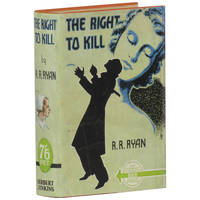
1936362669London: Herbert Jenkins 1936. First Edition. Hardcover. Very good/Good. The author's first book as Ryan and second novel overall after Tyranny of Virtue by "Noel Despard". The novel with its dreamlike third-person narration explores the idea of justifiable homicide and the sexual mores of the 1920s. A contemporary review described the book: "The Right to Kill is more of a problem than a detective story but the situation it presents—that of a detective who when sent to investigate a crime finds that it involves a former mistress and his own illegitimate daughter—is developed with skill and ingenuity" quoted from the Liverpool Daily Post July 1 1936. <br /> <br /> Ryan's many books mostly drifted into obscurity until the 1980s when genre fiction critics began to rediscover him. <br /> <br /> The works of R. R. Ryan have been attributed to a number of people most commonly Evelyn Bradley a minor British author. In the Ramble House reissue of Freak Museum another Ryan novel the author is identified as Bradley's daughter Denice Jeanette Bradley-Ryan who also wrote as Kay Seaton. I am going to go with Evelyn Bradley who was commonly known as Rex Ryan his wife took the surname Ryan and Evelyn's daughter used both. James Doig who blogs under the Wormwoodiana site reports obtaining documents from Random House which acquired the publisher Herbert Jenkins showing correspondence with the author going to the Ryan household after Denice left home and married. First edition states "First published 1936" on the copyright page with no indication of later printings. A very good copy in the publisher's orange cloth-covered boards hardcover. This copy is one of the few surviving copies with a dust jacket here restored to reattach the front panel at the spine some infill along the top edge and a long repaired tear on the front panel. There is also skillful infill and repainting of the spine ends. An attractive copy of a vanishingly scarce jacket correctly priced on the spine at 7'6. Herbert Jenkins hardcover
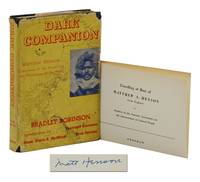
1947140944524New York: Robert H. McBride & Company 1947. First edition. First edition. Signed by explorer Matthew Henson subject of this book "Matt Henson" on the half title. Laid in is a program for the unveiling of a bust of Henson sponsored by the NAACP in New York City Feb. 9 1953 where he was a speaker; presumably this is where the book was signed. xviii 2 266 pp. Bound in publisher's black cloth with red lettering photographic endpapers. Very Good with former owner's name written in ink on title page his notes and underlines in light pencil throughout; slight lean bump to upper corner. In a Good dust jacket with chips and small tears along edges note in pencil on front flap unclipped. Program creased with notes in pencil on verso. Uncommon signed. <p>Matthew Alexander Henson 1866-1955 was the first African-American Arctic explorer an associate of Robert Peary on seven voyages over a period of nearly 23 years. They made six voyages and spent a total of 18 years in expeditions. Henson served as a navigator and craftsman traded with Inuit and learned their language and was known as Peary's "first man" for these arduous travels. The first to break the color barrier at the Explorer's Club Henson was also the only member of Peary's party to master the Inuit language and method of driving dog sleds. His only descendants are through his children with an Inuit woman Akatingwah. Robert H. McBride & Company unknown
19160001314ENGLAND UK GREAT BRITAIN FRANCE. Very Good. 1916. On offer is an original small archive of four 4 ephemeral items including: two 2 note pad style diaries and two 2 check books with stubs and unused checks all being handwritten and having belonged to General Alfred E. Bradley 1864-1922 Chief Surgeon of the American Expeditionary Force in France during WW1. This archive relates to his serving as a military observer in England during 1916 and1917 just prior to U.S. entrance into war through to the War's end. Historians and collectors of the era will recognize the uniqueness of original material from high ranking officers. The first diary dated "Trip July-Aug. 1916 and has a French stamp on the cover. Bradley has signed his name in pencil on the cover "Bradley". It starts out seeming to be an accounting book but morphs into cryptic notes made covering various subjects including medicine dosages prisoners etc. perhaps notes to jog his memory later. Here are snippets from the first: "Off. auxiliary part of 29th C.S. Georgina Court. 6 A. S. in operation _ to train 500 wounds received in previous riding adjacent 18:20 and German prisoners. German Pris. working in road. camp latrine in operation. Drop pits 14-20 feet with close fly tight box. signed Col. Bradley. bring in trucks not practicable seen by enemy. Anti Gas G____ vacuum tried but not found a success a mixt. of pyogenes & capsulates 2000 cases. German wounded arrived shot by own men. July 26 to Haig . Sir Sloggett . soldiers in France. To Lt. Col. Hording for lunch. Coffin board touch litter operating table with slots removable ext. from litter. Lt. Col. Goddard dinner. General Graham Thomson G.C.P.O. Capt. Prise R. E. of Camp. 60-70000 troops 15000 beds 10 Genl. Hospitals. Jaw cases Dr. Hoit. Dentist Powers Plastic not as good as Valendre and Koscasion judging from what we saw. Darkins-Alexis Carrel- 5% parts are used: Camus notes too severe as originally intended Mrs. W. R. Vanderbilt. Dinner Mrs. Brown Lunch Col Cosby Dinner Logan. Vaseline gauze 1st layer gone. Oct. 12 1916 Visited Blandpool convalescent Hospital. spent 2 hours going about. Capacity 2000 in 4 Divisions 500 each. Condition as a pool. Race course buildings Offices etc. in grand stand. hospital proper for serious cases and local aid 120 beds. all work done in a.m. when finished men have liberty to go and come up to 9:30. Each has a ticket which he hands in when he goes out and reclaims in entering. Tickets left at 9:30 show delinquents. Punishment is meted as at any pool. See to Regs. Lord Derby War Hospital in Warrington ." From book 2 dated: "Dec. Trip 1916. Edinburgh Trip Jany. 7" and is on Note Pad of the Medical Dept. U.S. Army. This is similar to the other "note pad diary." In part: "Left Charing Cross Station 11:30 . left S. S. Victoria about 2 p.m. arrived Balogue 3:30. sleeper to Paris arrived Dec. 12 9 a.m. went to A. Provost Marshal told would not have white pass until Sunday Dec. 17. 11 a.m. called at Embassy saw A.M. Sharpe Sloope. His Sur Commander Sayles Sigbee U.S.N. Capt. Smith U.S. M.C. Col. Cosby Capt. Boyd. Dec. 13 Spent a.m. at Am. Amb. til 12. Luncheon with Capt. Churchill at "Viel". Dec. 14 Rothschild took us to Val de Grace the America School and museum. Then to Issy. then to Embassy: at Cafe Durand on Ave. Victor Hugo. Dec. 15 to Campigue by train. at Horse Palace visit to hospital. Dec. 18 left Paris by train for Armien at 10 a.m. met by officer who took us to H.Q. 4th Army at Quici Lt. Col. Faivens James Lowe Col. Dindoir Genl. O'Keefe.in p.m. visited German Prison Camp at C.C. O. . had tea. back to Armine at Hotel Belfort for night. Dec. 19 to the front. Maj. Howe thought Alfort Frecous Montuban Breton Wood Petit At B. Wood saw a section of Field Artillery. Also at Bagetine Petit an advanced station connected to front by narrow gauge r.r. with little trucks to bring in patients. returned to front and saw German dugout at station of F.A. returned to H.Q. 4th Army for tea and dinner. Officers met- Capt. Hightatoe Maj. Howe Lt. Col. Foncous Col. Sinclair Col. Howes etc. Dec. 21. went with Col. Russell to S. Hosp. No. 3. . Col Heine saw burns and trench feet ox and ambionic . Visited No. 11 S. Hospital in Shooting Club. Lt. Col. Tribacteay: using Carrel pariphin. No. 1 General venereal cases 1500 or more. P.M. visited No. 6 Gen. Col. Archer. More truck of knee injuries and head cases. . at G. H. 6 saw Carrell cases just in from front; doing well . Col. McCrea C.O. Maj. Groves surgeon also Capt. Morrison. At G. Hospital 22 saw Col. Perry Maj. Robinson goes into detail about sanitary measures wounds etc. Blankets in most stations steamed every 2 weeks for men coming from front: every 2 weeks for troops going to front. Average are steamed 1000 a day. Rest Camp for troops on hill huts and tents: 8 camps are under C.O. Same plans as stations. Field Bakery or Boulogue bakes 75000 loaves a day about 1000 men employed sends bread to front by motor 20 loaves to a Culap sand.July 15 arrived Edinburgh 8 a.m. . . went to hospital. Col. Catterill O.C. . a wood house taken over for war purposes. met Prof. Ritchie. Jan. 16 went to Jamor Stiles at 9:30 in his motor to Banguor War Hospital . Dr. Jones in our company. work shops for orthopedic cases. draws diagrams of splints he saw . Brain cases closing up cranial opening with celluloid plastic. 2 cases 20 standing. put into wounds and closed if possible. applied and left open as long as 4 weeks without change. If discharge appears it is simply cleaned up externally and outside dressing put over. Few cases of lead food poisoning. patients in good condition. Left Newcastle at 4:54 arrived Leeds 7:35. message from Sir B. M. to operation infirmary." As to the check books the first is from The Seaboard National Bank and contains some unused checks including notations all in Bradley's hand of checks he used and the purposes for the checks the period is from March 1917 through Feb. 1918. An unused 2 cent stamp is taped in the front cover. The second check book is similar covering the period from July 1917 through May 1918. Bradley apparently used these check in France and there are two unused checks from the Farmers Loan & Trust Co. located in Paris. Again notations on the stubs of those checks he used indicating their use including one "advance for uniform". BIO NOTES: Bradley was born in N.Y. and graduated from Jefferson Medical College in 1887. He entered the Army Medical Corps in 1888 as a 1st Lt. and Asst. Surgeon at Fort Slocum. He then spent most of his early career out West at Fort Omaha Nebraska and Fort Sully South Dakota and was involved in the Sioux uprising at the Rose Bud Indian Agency. As Captain in 1893 he served at Forts Custer and Yellowstone. During the Spanish-American War and the Philippine Insurrection Bradley served on a hospital ship that traveled to Cuba Puerto Rico Gibraltar Japan and Hawaii. He was Attending Surgeon in the Philippines and later Commanding Officer of the Division Hospital in the Philippines. In May 1916 prior to America's entrance into WW1 then Colonel Bradley was sent to England as a Military Observer while Wilson "kept us out of war" he was not stupid to think we would stay out of war and wanted to be prepared in all aspects including military medical. When the U.S. finally entered the war in April 1917 Bradley was promoted to Brigadier General and became Chief Surgeon of the American Expeditionary Force in France. He became ill before the close of the war and returned stateside in 1918 but was awarded the Distinguished Service Medal for his services abroad. He retired from the military in 1920 and died in 1922. His son Major General Follett Bradley was the Commanding General First Air Force in 1942. Fifty or so pages between the diaries less in the financials Overall VG. ; Manuscript; 16mo - over 5¾" - 6¾" tall; AEF AMERICAN EXPEDITIONARY FORCES AMERICA ENTERS WORLD WAR ONE BRADLEY WORLD WAR I WWI DOCTORS AT WAR MEDICAL MEDICINE SURGERY SURGEON HANDWRITTEN MANUSCRIPT DOCUMENT LETTER AUTOGRAPH DIARY JOURNAL LOG KEEPSAKE WRITER HAND WRITTEN DOCUMENTS SIGNED LETTERS MANUSCRIPTS HISTORICAL HOLOGRAPH WRITERS DIARIES JOURNALS LOGS AUTOGRAPHS PERSONAL MEMOIR MEMORIAL PERSONAL HISTORY BRITAIN BRITISH BRITISH EMPIRE RAF World War I WW I TRAVEL GERMANY ANTIQUITÉ CONTRAT VÉLIN MANUSCRIT PAPIER ANTIKE BRIEF PERGAMENT DOKUMENT WESTERN FRONT EUROPEAN THEATRE EASTERN FRONT . unknown
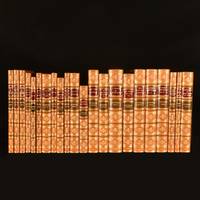
029962Oxford University Press. Hard Covers. Very Good. A rare complete set of this enormous edition the direct precursor to the Oxford English Dictionary. Eighteen books consisting of ten volumes and the Supplement which was published in 1933. The books are bound or perhaps rebound in uniform beige cloth by J. S. H. Bates & Co. Leicester. The first volume includes a descriptive pamphlet outlining past and at the time future volumes. Although the publication dates on the individual volumes range from 1888 to 1933 the books mainly appear to date from the 1915-1916 era as indicated by the pamphlet. Outside of smudging/scuffing to the boards and small bookplates on some of the front endpapers the condition of these volumes is very good. There is no foxing or markings to the pages and the bindings are solid and straight. The books will be shipped securely in multiple parcels. Please inquire for international orders. <br/> <br/> Oxford University Press hardcover
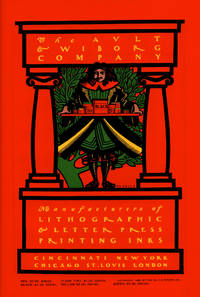
8184Cincinnati New York Chicago etc: The Ault & Wiborg Co. 1902. 4to original tan cloth decorative title device printed in white on upper cover. Title leaf 1 p. text 62 full page illustrations most chromolithographic some with additional advertising text and designs in black and white or color on the versos. One illustration in duplicate. CONDITION: Very good light wear to extremities and some light soiling to covers. <p>A tour de force of American graphic design demonstrating the effects achievable with Ault & Wiborg inks-and showcasing American poster art at the turn of the century.</p> <p>This stunning compendium of color advertisements effectively small scale poster designs for the Ault & Wiborg Co. "manufacturers of lithographic & letter press printing inks" includes most notably twenty designs by celebrated poster artist Will Bradley in both the Art Nouveau and the Arts & Crafts styles many of which originally appeared in the Inland Printer. The volume also includes many other vivid and attractive designs by Louis Rhead Edward Liggett Carolyn Huntington Frank Swick and others. All of these advertisements appeared in periodicals between 1895 and 1902. Much coveted by collectors of turn-of-the-century American poster art and aficionados of color printing examples of this book are increasingly scarce on the market many copies having been broken up over the years.</p> <p>Will Bradley 1868-1962 dubbed the "Dean of American Designers" by The Saturday Evening Post was a prolific and influential graphic designer and a central figure in the development of American poster art. His first poster for the Cincinnati-based Ault & Wiborg company was commissioned in 1895 the same year that he founded the Wayside Press in Springfield Massachusetts through which he began publishing his short-lived but highly successful monthly Bradley: His Book. Bradley was later active in film writing and producing several films in the 1920s. In 1954 he was awarded the prestigious American Institute of Graphic Arts medal and remained active as a designer until his death.</p> Cincinnati, New York, Chicago, etc: The Ault & Wiborg Co., 1902 unknown
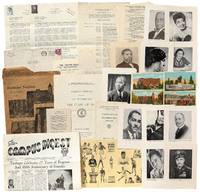
1956549515Alabama: Tuskegee Institute 1956. Unbound. Very Good. Printed brown envelope with brass clasp 9½†x 12½â€. Illustrated from photographs on the front side. Contains several printed programs printed portraits of noted students newsletters post cards ephemera etc. all relating to the Class of 1936 Twentieth Anniversary Reunion held at the Tuskegee Institute March 23-25 during its 75th Anniversary Celebration. A few scattered tears at the edges of the envelope the envelope flap is mostly torn away a few internal materials are lightly rubbed along two or three old folds very good or better overall.<br /> <br /> Thelma Belcher’s “Welcome†packet of materials to her 20-year reunion of the Tuskegee Institute. Included is a spirited invitation letter from Laly Charlton Washington Miss Tuskegee 1935-36 along with multiple programs and associated ephemera. Also included is another invitation letter sent from Washington to Thelma’s classmate Ollie Belcher. Thelma and Ollie married in 1937 and the couple eventually settled in Detroit where she worked as a librarian and Ollie worked as a supervisor at Ford Motor Company. He was inducted into the Tuskegee University Athletic Hall of Fame in 1974. Each invitation letter is illustrated with a small halftone portrait of the recipient Thelma and Ollie presumably taken from a yearbook mounted at top left corner.<br /> <br /> A nice survival of materials documenting both the Class of ’36 reunion and the Tuskegee Institute’s 75th Anniversary Celebration. A detailed list of the envelope’s contents is available. Tuskegee Institute unknown
198839168KRÜGER WOLFGANG 1988. 1. hardcover. KRÜGER, WOLFGANG hardcover
198839161KRÜGER WOLFGANG 1988. 2. hardcover. KRÜGER, WOLFGANG hardcover
198939162KRÜGER WOLFGANG 1989. 3. hardcover. KRÜGER, WOLFGANG hardcover
1874148987London: James Parker and Co. 1874. Lent to A. J. Ayer Scarce first edition of Bradley's first book with an autograph letter signed on New College Oxford headed paper from the philosopher A. J. Ayer 9 February 1962 thanking a "Dear John" for the loan of the book - "it is strange stuff even more 'literary' than his later work. But as nearly always he is troubled by genuine problems". This literary quality that Ayer identifies explains Bradley's appeal to authors such as T. S. Eliot whose doctoral dissertation was on "Knowledge and Experience in the Philosophy of F. H. Bradley". Octavo. Stab-stitched in original printed wrappers front wrapper lettered in black. Ownership signature of John Willes dated 1978 to inside front wrapper and his acquisition note at the head of the letter. Spine ends chipped short split to rear joint wrappers a little soiled; a very good copy. unknown
199247994FISCHER 08/1992. 291.-340. Tsd. softcover. FISCHER paperback
1998LS-65Berkeley CA.: Marion Zimmer Bradley Literary Works Trust 1998. Classic scarce text published on behalf of Fantasy Worlds Festival for Marion Zimmer Bradley a year before M.Z. Bradley's death contains a compilation of nineteen short science-fiction/fantasy novellas by various renown writers and protegees of MZB including Diana L. Paxton; Cynthia McQuillin; Raul S. Reyes; Lawrence Watt-Evans; Elisabeth Waters; Syne Mitchell; Paul Edwin Zimmer; and others. Some of the stories include: Lost Moon; Toyen; Totem Night; Washerwoman; The High Altar; Change-child; As Three to One; The White Falcon; Earth's Song; Ingredients; Rehabilitation; Raven's Blade; The Accursed Villa and others. 342 pgs. Minor slight crease on second front free blank endpaper. SIGNED by Marion Zimmer Bradley & Rachel Holmen on the title pg; Signed by Rachel Holmen on her last introduction pg. Signed by the copyright designer Margaret Davis on the last credits page. Gilt spine and front cover. Virtually no shelfwear. First Printing Limited to 300 copies. Scarce. Signed by Authors. Limited First Edition. Hard Cover. Fine. 8vo - over 7¾" - 9¾" tall. Privately Printed. Marion Zimmer Bradley Literary Works Trust Hardcover
2011100418Konig. New. 2011. Paperback. 3863350804 . FREE UPGRADE to Courier/Priority Shipping Upon Request - IN STOCK AND IMMEDIATELY AVAILABLE FOR SHIPMENT - Flawless copy brand new pristine never opened -- 224 pages. Catalogue Raisonne Catalog Raisonné Complete Works Life and Work Raisonnee -- with a bonus offer . Konig paperback
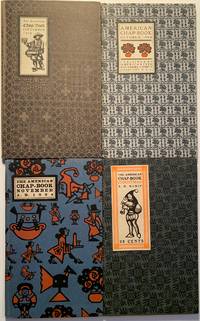
19051300Jersey City New Jersey: American Type Founders Company 1905. American Chap-Book 12 Volumes 1904-1905 plus Four Supplements Will Bradley American Type Founders Company Jersey City New Jersey 1904-1905. 7 x 4.5 inches. Various paginations.<br /> <br /> Beautiful set of Will Bradley's Chap-Book Series plus four supplements. All in fine condition protected by mylar wrappers and stored in custom clam-shell box. September 1904 is un-cut. Very light toning. Fine Condition.<br /> <br /> Will Bradley 1868-1962 the "Dean of American Designers" developed a unique American Art Nouveau style recognizable immediately. He worked variously as an illustrator artist printer and film director and while he struggled financially early in his career he was one of the highest-paid American artists of the early 20th century.<br /> <br /> In 1903 Robert Nelson president of American Type Founders hired Will Bradley to create a promotional campaign for ATF. Bradley was given full creative reign to print and design whatever he wanted without many financial constraints. In September 1904 Bradley's first "American Chap-Book" was published. With the ability to do what he wanted Bradley employed wide numbers of decorative and type designs over the next twelve issues. Bradley also planned a number of supplements to accompany his little books. Each book had a theme such as "Use of Borders and Ornaments" "The Value of Little Things" "A Detail of Advertising Display" or the July 1905 issue titled "Bookets" which contained two tipped in miniature booklets. <br /> <br /> "Two 'volumes' of The American Chap-Book were published between the years of 1904 and 1905 with six editions each. Volume 1 contains "Eighteenth Century Chap-Books and Broadsides" September 1904; "Directness and Simplicity" October 1904; "The Use of Borders and Ornaments" November 1904; "Appropriateness" December 1904; "The Abuse of Custom" January 1905; and "The Value of Little Things" February 1905. Volume 2 contains "Cover Designs" March 1905; "Business Cards" April 1905; "Use of Brass Rule" May 1905; "Advertising Display" June 1905; "Booklets" July 1905; and "Title Pages" August 1905." From Will H. Bradley: His Work A Bibliographical Guide compiled by Anthony Bambace.<br /> <br /> Author Robert Koch wrote a wonderful illustrated monograph on Bradley titled "Will H. Bradley American Artist in Print". Several pages are devoted to Bradley's "American Chap-Books."<br /> <br /> From cover and endpaper design to the use of typography and color these little booklets including the four supplements are a wonder to behold and rarely found on the market is such pristine condition. American Type Founders Company unknown
199048816BASTEI-LÜBBE 02/1990. 3. softcover. BASTEI-LÜBBE paperback
199248817BASTEI-LÜBBE 02/1992. 5. softcover. BASTEI-LÜBBE paperback
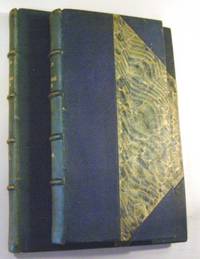
189717944Springfield MAss: The Wayside Press 1897. First edition. Hardcover. Very good. Volume I number 1 through Volume II number 3. Volume I is tall thin 8vo. containing the four numbers of Volume I. Volume II is 4to. containing the three complete numbers of Volume II all published but for a fragmentary No. 4 not present here. Contemporary half morocco marbled paper boards. Top edges gilt. Marbled endpapers with cloth inner hinges. <br /> <p><br /> A compilation of stories and poetry richly illustrated throughout with reproductions of the work of Beardsley Morris Burne-Jones Parrish Toulouse-Lautrec and others by a master of the American Arts and Crafts Movement. Unfortunately in 1897 Bradley's health suffered; he had to sell the Wayside Press and was unable to complete the final number of volume II. <br /> <P><br /> Spines are sunned and the bindings are rubbed in places. Overall a nice copy of Bradley's book in a very good binding. Scarce.<br /> <p>. The Wayside Press hardcover