503 résultats
1786126469London: no publisher 1786. From the library of Empress Joséphine True first edition of Condorcet's life of Turgot Gerits's Edition A; a superb copy from the library of Empress Joséphine de Beauharnais with her Bibliothèque de la Malmaison stamp on the title page and her initials to the spine. This work together with Dupont de Nemours's biography is the chief contemporary account of the renowned financial reformer and friend of the physiocrats. It contains in a footnote Condorcet's early attempt to apply mathematics to economics. On pp. 178-184 he discusses the various mathematical ways "in which indirect taxation could be replaced by direct taxation and the effects of such a change" Theocharis p. 65. Condorcet 1743-1794 secretary to the Académie and a prolific author was a strong supporter of Turgot who had attempted to implement physiocratic ideas as the French finance minister from 1774 to 1776. The present work seeks to vindicate Turgot's thought and work and is a powerful defence of Enlightenment economic ideas. "Contrary to what is suggested by the title this book was not a biography but rather an exposé of Turgot's educational political and economic ideas. In fact Stanley Jevons has called it one of the earliest works on 'économie pure'" Gerits. Seven editions of Condorcet's Vie de Monsieur Turgot appeared within two years making it one of the best-selling works of economics of its day. The first four editions all bear a London imprint dated 1786 though Gerits notes that it seems that all but Edition A were printed in France. Octavo 202 x 125 mm. Contemporary speckled quarter calf smooth spine ruled in gilt with red morocco label monogram "JB" gilt-tooled to penultimate compartment paste paper sides red silk bookmarker. Bibliothèque de la Malmaison stamp to title page. Spine ends and corners a touch worn a few light spots to title leaf scattered marginal pencil marks; a notably fresh and crisp copy beautifully bound. Einaudi 1217; Goldsmiths' 13128; Kress B.1032; Sraffa 1062 "first edition first issue". Anton Gerits "Condorcet's Vie de Monsieur Turgot" Harvard Library Bulletin 3 4 Winter 1992-93 pp. 35-37; Reghinos D. Theocharis Early Developments in Mathematical Economics 1961. unknown
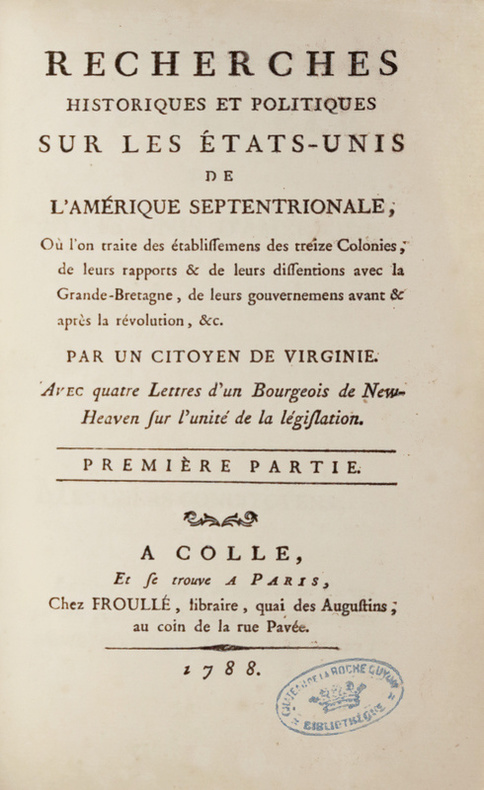
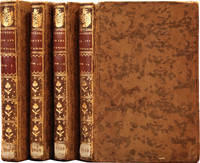
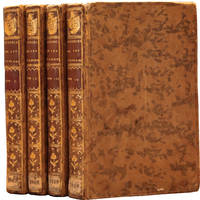
LCS-17450Bel exemplaire provenant du château de la Roche-Guyon, aux armes de Louis-Armand, duc de la Rochefoucauld (1732-1792),traducteur des Constitutions des treize Etats-Unis de l’Amérique. A Colle, et se trouve à Paris, chez Froullé, 1788. 4 tomes en 4 volumes in-8 de : I/ (2) ff., xvi pp., 383 pp., (1) p. d’errata ; II/ (2) ff., 259 pp. ; III/ (2) ff., 292 pp. ; IV/ (2) ff., 366 pp. Cachets de bibliothèque sur les titres. Basane marbrée, encadrement de filet à froid autour des plats, dos lisses ornés de fleurons dorés avec armoiries en tête, étiquettes de bibliothèque en pied des dos, pièces de tomaison en maroquin rouge, coupes décorées, tranches rouges. Quelques usures sans gravité. Reliure de l’époque. 193 x 123 mm.
ABAA25-36<p>A Colle et se trouve à Paris chez Froullé 1788.</p><p>4 parts in 4 volumes 8vo of : I/ 2 ll. xvi pp. 383 pp. 1 errata p. ; II/ 2 ll. 259 pp. ; III/ 2 ll. 292 pp. ; IV/ 2 ll. 366 pp. Library stamps on the titles.</p><p>Marbled roan blind-stamped fillet around the covers flat spines decorated with gilt fleurons and arms at the head library label at the foot of the spines red morocco lettering pieces red edges. Slight signs of wear. <em>Contemporary binding</em>.</p><p>193 x 123 mm.</p><p><strong>First edition.</strong></p><p>"Curious collection mainly with regard to the history of independence and the government of this country". Leclerc <em>Bibliotheca Americana </em>n°952.</p><p><strong>"</strong><strong>Very accurate compilation that refutes Mably and Raynal's theories and forms a precious wealth of information of all kind about the United States</strong>". Fay <em>Bibliographie des ouvrages français relatifs aux Etats-Unis 1770-1800 </em>page 25.</p><p>This work is the result of Mazzei and Condorcet's collaboration.</p><p>Mazzei was an Italian migrant in America before the revolution and that settled in Virginia. He was very close to Thomas Jefferson who being the President sent him on mission near the Great Duke of Tuscany.</p><p>Condorcet wrote the<em> Lettres d'un bourgeois de New-Heaven sur l'unité de la législation et Réflexions touchant l'influence de la révolution de l'Amérique sur l'Europe par un habitant obscur de l'ancien hémisphère.</em></p><p>" <em>The only book of that time to contain a collection of information absolutely true about the United States is Mazzei's big work : 'Recherches historiques et politiques sur les Etats-Unis de l'Amérique'… This enormous work in four parts is a methodical and careful rebuttal of every mistake that was said or written about the United States. His book is important. He also shows that if we had wanted we could have had in France an accurate knowledge of the United States of their social political and moral conditions. Mazzei refutes one after the other Hilliard d'Auberteuil the illustrious Mably the great Raynal and the newspapers. "</em></p><p>Fay <em>Bibliographie des ouvrages français relatifs aux Etats-Unis 1770-1800 </em>page 65.</p><p><strong>Fine copy coming from the castle of la Roche-Guyon with the arms of Louis-Armand Duke of la Rochefoucauld 1732-1792 </strong> the translator of the <em>Constitutions des treize Etats-Unis de l'Amérique the Constitution of the United States. </em></p><p><strong>FR</strong></p><p>A Colle et se trouve à Paris chez Froullé 1788.</p><p>4 tomes en 4 volumes in-8 de : I/ 2 ff. xvi pp. 383 pp. 1 p. d'errata ; II/ 2 ff. 259 pp. ; III/ 2 ff. 292 pp. ; IV/ 2 ff. 366 pp. Cachets de bibliothèque sur les titres.</p><p>Basane marbrée encadrement de filet à froid autour des plats dos lisses ornés de fleurons dorés avec armoiries en tête étiquettes de bibliothèque en pied des dos pièces de tomaison en maroquin rouge coupes décorées tranches rouges. Quelques usures sans gravité. <em>Reliure de l'époque.</em></p><p>193 x 123 mm.</p><p><strong>Edition originale.</strong></p><p>" <em>Recueil curieux principalement en ce qui regarde l'histoire de l'indépendance et le gouvernement de ce pays</em> ". Leclerc <em>Bibliotheca Americana </em>n°952.</p><p>" <strong>Compilation très exacte qui réfute les théories de Mably et de Raynal et constitue un répertoire précieux de renseignements de tous ordres sur les Etats-Unis</strong> ". Fay <em>Bibliographie des ouvrages français relatifs aux Etats-Unis 1770-1800 </em>page 25.</p><p>Cet ouvrage est le fruit de la collaboration de Mazzei et de Condorcet.</p><p>Mazzei était un italien émigré en Amérique avant la révolution et qui vint s'établir en Virginie. Il fut très intime avec Th. Jefferson qui étant président l'envoya en mission près du grand duc de Toscane.</p><p>Condorcet rédigea les <em>Lettres d'un bourgeois de New-Heaven sur l'unité de la législation et Réflexions touchant l'influence de la révolution de l'Amérique sur l'Europe par un habitant obscur de l'ancien hémisphère.</em></p><p><em>" Le seul livre de ce temps qui contienne sur les Etats-Unis un ensemble de renseignements entièrement exacts est le gros ouvrage de Mazzei : 'Recherches historiques et politiques sur les Etats-Unis de l'Amérique'… Cet énorme ouvrage en 4 tomes est la réfutation méthodique et soigneuse de toutes les erreurs que l'on colportait ou que l'on avait écrites sur les Etats-Unis…. Son livre est important … il prouve encore que si l'on avait voulu on aurait pu avoir alors en France une connaissance fort exacte des Etats-Unis de leurs conditions sociales politiques et morales. Mazzei réfute successivement Hilliard d'Auberteuil l'illustre Mably le grand Raynal et les journaux. " </em></p><p>Fay <em>Bibliographie des ouvrages français relatifs aux Etats-Unis 1770-1800 </em>page 65.</p><p><strong>Bel exemplaire provenant du château de la Roche-Guyon aux armes de louis-armand duc de la Rochefoucauld 1732-1792 </strong>traducteur des <em>Constitutions des treize Etats-Unis de l'Amérique.</em></p> hardcover
CA27<p>A Colle et se trouve à Paris chez Froullé 1788.</p><p>4 parts in 4 volumes 8vo of : I/ 2 ll. xvi pp. 383 pp. 1 errata p. ; II/ 2 ll. 259 pp. ; III/ 2 ll. 292 pp. ; IV/ 2 ll. 366 pp. Library stamps on the titles.</p><p>Marbled roan blind-stamped fillet around the covers flat spines decorated with gilt fleurons and arms at the head library label at the foot of the spines red morocco lettering pieces red edges. Slight signs of wear. <i>Contemporary binding</i>. </p><p>193 x 123 mm.</p><p><b>First edition.</b></p><p>"Curious collection mainly with regard to the history of independence and the government of this country". Leclerc <i>Bibliotheca Americana </i>n°952.</p><p><b>"Very accurate compilation that refutes Mably and Raynal's theories and forms a precious wealth of information of all kind about the United States".</b><b> Fay </b><i>Bibliographie des ouvrages français relatifs aux Etats-Unis 1770-1800 </i>page 25.</p><p>This work is the result of Mazzei and Condorcet's collaboration.</p><p>Mazzei was an Italian migrant in America before the revolution and that settled in Virginia. He was very close to Thomas Jefferson who being the President sent him on mission near the Great Duke of Tuscany. </p><p>Condorcet wrote the<i> Lettres d'un bourgeois de New-Heaven sur l'unité de la législation et Réflexions touchant l'influence de la révolution de l'Amérique sur l'Europe par un habitant obscur de l'ancien hémisphère.</i></p><p>" <i>The only book of that time to contain a collection of information absolutely true about the United States is Mazzei's big work : 'Recherches historiques et politiques sur les Etats-Unis de l'Amérique'… This enormous work in four parts is a methodical and careful rebuttal of every mistake that was said or written about the United States. His book is important. He also shows that if we had wanted we could have had in France an accurate knowledge of the United States of their social political and moral conditions. Mazzei refutes one after the other Hilliard d'Auberteuil the illustrious Mably the great Raynal and the newspapers. "</i></p><p>Fay <i>Bibliographie des ouvrages français relatifs aux Etats-Unis 1770-1800 </i>page 65.</p><p><b>Fine copy coming from the castle of la Roche-Guyon with the arms of Louis-Armand Duke of la Rochefoucauld </b>1732-1792 the translator of the <i>Constitutions des treize Etats-Unis de l'Amérique the Constitution of the United States. <br /></i></p><p><i><br /></i></p><p><b><u>Français</u></b><i><br /></i></p><p>4 tomes en 4 volumes in-8 de : I/ 2 ff. xvi pp. 383 pp. 1 p. d'errata ; II/ 2 ff. 259 pp. ; III/ 2 ff. 292 pp. ; IV/ 2 ff. 366 pp. Cachets de bibliothèque sur les titres.</p><p>Basane marbrée encadrement de filet à froid autour des plats dos lisses ornés de fleurons dorés avec armoiries en tête étiquettes de bibliothèque en pied des dos pièces de tomaison en maroquin rouge coupes décorées tranches rouges. Quelques usures sans gravité. <i>Reliure de l'époque.</i></p><p>193 x 123 mm.</p><p><b>Edition originale.</b></p><p>" <i>Recueil curieux principalement en ce qui regarde l'histoire de l'indépendance et le gouvernement de ce pays</i> ". Leclerc <i>Bibliotheca Americana </i>n°952.</p><p><b>" Compilation très exacte qui réfute les théories de Mably et de Raynal et constitue un répertoire précieux de renseignements de tous ordres sur les Etats-Unis "</b>. Fay <i>Bibliographie des ouvrages français relatifs aux Etats-Unis 1770-1800 </i>page 25.</p><p>Cet ouvrage est le fruit de la collaboration de Mazzei et de Condorcet.</p><p>Mazzei était un italien émigré en Amérique avant la révolution et qui vint s'établir en Virginie. Il fut très intime avec Th. Jefferson qui étant président l'envoya en mission près du grand duc de Toscane.</p><p>Condorcet rédigea les <i>Lettres d'un bourgeois de New-Heaven sur l'unité de la législation et Réflexions touchant l'influence de la révolution de l'Amérique sur l'Europe par un habitant obscur de l'ancien hémisphère.</i></p><p><i>" Le seul livre de ce temps qui contienne sur les Etats-Unis un ensemble de renseignements entièrement exacts est le gros ouvrage de Mazzei : 'Recherches historiques et politiques sur les Etats-Unis de l'Amérique'… Cet énorme ouvrage en 4 tomes est la réfutation méthodique et soigneuse de toutes les erreurs que l'on colportait ou que l'on avait écrites sur les Etats-Unis…. Son livre est important … il prouve encore que si l'on avait voulu on aurait pu avoir alors en France une connaissance fort exacte des Etats-Unis de leurs conditions sociales politiques et morales. Mazzei réfute successivement Hilliard d'Auberteuil l'illustre Mably le grand Raynal et les journaux. " </i></p><p>Fay <i>Bibliographie des ouvrages français relatifs aux Etats-Unis 1770-1800 </i>page 65.</p><p><b>Bel exemplaire provenant du château de la Roche-Guyon aux armes de louis-armand duc de la Rochefoucauld </b>1732-1792 traducteur des <i>Constitutions des treize Etats-Unis de l'Amérique.</i></p> hardcover
178486383Kehl Baden: Imprimerie de la Société Littéraire-Typographique 1784. Leather Bound. Very Good. L 8vo 7.75 - 9.75'' tall. Leather Bound. Condition: Very Good. Imprimerie de la Société Littéraire-Typographique Kehl Baden 1784. In French. Famous first posthumous collected edition of Voltaire's 1694-1778 works known as the 'Kehl Voltaire' produced by Beaumarchais who created a print foundry at Kehl to carry out this great work. Set contains 69 of the 70 Volume 8vo edition smaller 12mo 90 volume edition was also produced. Volume 23 Histoire de Charles XII missing. Volumes 10 and 27 printed 1784 summary volume 70 printed 1789 all other volumes printed 1785. Uniform 18th century calf full brown leather. Spines decorated in gold floral designs titles volume numbers within 6 boxed compartments. Boards have a natural brown mottled leather finish slanted gold lines on the narrow board edges. All page ends stained a very light yellow finely bespeckled with green. Green silk reading ribbons. Moderate wear of leather at spine tops light stress wear along exterior leather hinges some boards show minor leather loss at edges. All interior hinges firm untorn. Volume 20 upper rear board tip charred. Otherwise no volume damaged or repaired uniform light general wear. Only endpapers show browned bands along margins from pasted endpaper glue chemistry. Volumes 1 to 69 containing all the works and massive correspondences of Voltaire. Volume 70 contains Condorcet's Life of Voltaire and Condorcet's 'Memoires' of Voltaire index and 'Additions et Corrections' to the 70 volumes. Volume 1 frontispiece engraving of Voltaire by Moreau.; Volume 10 frontispiece engraving of Henry IV; Volume 16 frontispiece portrait of Voltaire; Volume 24 frontispiece engraving military map camp plan; Volume 31 14 engraved plates of scientific diagrams. Provenance: Each volume has the small ink stamp 'William H. Floyd Collection No.' on the rear of the title page. Floyd was a late 19th century American antiquarian collector. The numbering sequence 5098-5166 shows that volume 23 was missing even when cataloged by Floyd. Size: L 8vo 7.75 - 9.75'' tall. A major cultural event of the last decade of the ancien regime a beautiful monument to Voltaire the greatest man that literature had produced. Pierre-Augustin Caron de Beaumarchais led a controversial life. Playwright The Marriage of Figaro politician publisher entrepreneur spy supplier of munitions for the American Revolution and an early champion of the rights of artists and intellectual property. Shortly after the death of Voltaire in 1778 Beaumarchais set out to publish Voltaire's complete works many of which were banned in France and vehemently condemned by the Church. Royal letters would be censored by Frederick II of Germany Catharine II of Russia and others. He bought the rights to most of Voltaire's many manuscripts from publisher Charles-Joseph Panckoucke in 1779. To evade censorship printing presses were set up in the small neutral independant state of Baden at Kehl. Beaumarchais bought with exclusivity the complete foundry of the famous English type designer John Baskerville for the Societe Litteraire Typographique an organization he established to produce editions in which he was interested. Three paper mills were purchased. Seventy volumes were published between 1783 to 1790. While the venture proved a financial failure Beaumarchais was instrumental in preserving many of Voltaire's later works which otherwise might have been lost. The Kehl edition was banned on French territory until 1789. Baskerville font was revived by Americans in the 20th century. Voltaire Kehl Condorcet Pierre Beaumarchais Charles-Joseph Panckoucke RBR4 RBR4 Imprimerie de la Société Littéraire-Typographique hardcover
178566958ìThe First Large-Scale Attempt to Apply Mathematics to Knowledge of Human Phenomenaî CONDORCET Marie Jean Antoine Nicolas Caritat Marquis de. Essai sur lÃapplication de lÃanalyse ‡ la probabilitÈ des dÈcisions rendues ‡ la pluralitÈ des voix. Paris: De lÃImprimerie Royale 1785. First edition.†Quarto. 2 cxci 1 blank 304 pp. Decorative woodcut head- and tail-pieces. Contemporary French mottled calf spine decorated in gilt with five raised bands. Marbled endpapers all edges red. First and last few pages browned at edges . gathering K is browned a Q and 2G is toned. Otherwise very good and very scarce. ìCondorcetÃs most significant and fruitful endeavor was in a field entirely new at the time. The subject was one that departed from the natural sciences and mathematics but nevertheless showed the way toward a scientific comprehension of human phenomena taking the empirical approach of natural science as its inspiration and employing mathematics as its tool. Condorcet called this new science ësocial mathematics.à It was apparently intended to comprise.a statistical description of society a theory of political economy inspired by the Physiocrats and a combinatorial theory of intellectual processes. The great work on the voting process published in 1785 is related to the latter. Condorcet there sought to construct a scheme for an electoral body the purpose of which would be to determine the truth about a given subject by the process of voting and in which each elector would have the same chance of voicing the truth.No doubt the results obtained in the Essai dÃapplication de lÃanalyse were modest ones. ëIn almost all casesà Condorcet said ëthe results are in conformity with what simple reason would have dictated; but it is so easy to obscure reason by sophistry and vain subtleties that I should feel rewarded if I had only founded a single useful truth on a mathematical demonstrationà Essai p. ii. One must nevertheless recognize in this work.the first large-scale attempt to apply mathematics to knowledge of human phenomenaî D.S.B. Brunet VI col. 472. HBS 66958. $7500 De k'Imprimerie Royale hardcover books
178566958Paris: De k'Imprimerie Royale 1785. The First Large-Scale Attempt to Apply Mathematics to Knowledge of Human Phenomena"<br> <br> CONDORCET Marie Jean Antoine Nicolas Caritat Marquis de. Essai sur l'application de l'analyse à la probabilité des décisions rendues à la pluralité des voix. Paris: De l'Imprimerie Royale 1785.<br> <br> First edition. Quarto. 2 cxci 1 blank 304 pp. Decorative woodcut head- and tail-pieces.<br> <br> Contemporary French mottled calf spine decorated in gilt with five raised bands. Marbled endpapers all edges red. First and last few pages browned at edges . gathering K is browned a Q and 2G is toned. Otherwise very good and very scarce.<br> <br> "Condorcet's most significant and fruitful endeavor was in a field entirely new at the time. The subject was one that departed from the natural sciences and mathematics but nevertheless showed the way toward a scientific comprehension of human phenomena taking the empirical approach of natural science as its inspiration and employing mathematics as its tool. Condorcet called this new science 'social mathematics.' It was apparently intended to comprise.a statistical description of society a theory of political economy inspired by the Physiocrats and a combinatorial theory of intellectual processes. The great work on the voting process published in 1785 is related to the latter. Condorcet there sought to construct a scheme for an electoral body the purpose of which would be to determine the truth about a given subject by the process of voting and in which each elector would have the same chance of voicing the truth.No doubt the results obtained in the Essai d'application de l'analyse were modest ones. 'In almost all cases' Condorcet said 'the results are in conformity with what simple reason would have dictated; but it is so easy to obscure reason by sophistry and vain subtleties that I should feel rewarded if I had only founded a single useful truth on a mathematical demonstration' Essai p. ii. One must nevertheless recognize in this work.the first large-scale attempt to apply mathematics to knowledge of human phenomena" D.S.B.<br> <br> Brunet VI col. 472.<br> <br> HBS 66958.<br> <br> $7500. De k'Imprimerie Royale unknown
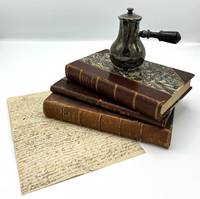
17801756c.1780-1800. French silver coffee pot with turned ebony side-handle 12.5cm in height with engraved inscription to the front: "Cafetière de la Marquise de Condorcet / donnée à Claude Fauriel / léguée à Madame Mary de Mohl / 120 Rue du Bac Paris" "Coffee pot belonging to the Marquise de Condorcet / given to Claude Fauriel / bequeathed to Madame Mary de Mohl / 120 rue du Bac Paris". Stamped maker's mark and hallmarks to the base and lid. The coffee pot's ebony handle has an old somewhat crude glue repair where it joins the silver pot there are possible old repairs to the silver base of the handle and to the base of the spout as well as a few minor dents to the body otherwise it is in good condition and presents well. </p><p>With: A closely-written 2pp. manuscript letter in French from Mary Clarke to Claude Furiel dated August 1829 with a later typed English translation. The letter with a 1cm tear to the foot some splitting along the folds and scattered foxing.</p><p>And three books comprising: </p><p>1 Mohl Ottmar de: Correspondance de Fauriel et Mary Clarke. Paris: Plon-Nourrit et Cie. 1911. Author's own copy with his armorial bookplate to the front pastedown. First edition. Octavo. Contemporary binding by Victor Wächter of Cairo Egypt of half brown sheep over marbled boards ruled in gilt the spine ruled and with titles in gilt. Marbled endpapers. Original blue paper upper wrapper with printed titles bound-in. Illustrated with a photogravure frontispiece of Clarke with tissue guard and two further portraits of Fauriel and Julius Mohl. pp. 6 iii 1 403. A very good copy the binding firm with a little rubbing to the joints. The contents with some minor spots of worming to the front hinge and occasional light foxing are otherwise in good order. The book is accompanied by a group of contemporary press cuttings reviewing the work.</p><p>2 Galley J. B.: Claude Fauriel Membre de l'Institut 1772-1843. Saint-Étienne: Loire Républicaine. 1909. Ottmar von Mohl's copy with his armorial bookplate to the front pastedown. First edition. Octavo. Contemporary binding by Victor Wächter of Cairo Egypt of half brown sheep over green cloth boards the spine with five raised bands ruled and titled in gilt. Marbled endpapers. pp. xxiv 512. A good copy the binding firm with heavy rubbing to the joints and fading and a few scuffs to the spine. The contents with the occasional spot minor mark or spot of foxing are otherwise in good order.</p><p>3 ROD. Ed.: Le Roman de Claude Fauriel et de Mary Clarke. Lettres d'Amour de 1822 a 1844. Three instalments excerpted from an unidentified journal "La Revue". 1909. Ottmar von Mohl's copy with his armorial bookplate to the front pastedown. Octavo. Contemporary binding by Victor Wächter of Cairo Egypt of half brown sheep over marbled boards ruled in gilt the spine with titles in gilt. Marbled endpapers. pp. 551-587; 832-862; 131-161. A very good copy the binding firm with rubbing to the joints and few scuffs to the spine. The contents with toning light scattered foxing and the occasional finger-mark are otherwise in good order. An evocative artefact in the form of a silver coffee pot connecting two of most significant female-intellectual salon hostesses of the late eighteenth and early nineteenth centuries. Originally owned by the philosopher author and influential public figure Sophie Madame de Condorcet 1764-1822 the coffee pot was subsequently bequeathed to her lover the historian philologist and critic Claude Charles Fauriel 1772-1844 who then gifted it to his intimate friend the feminist intellectual Mary Clarke 1793-1883.</p><p>Following her marriage to the French Enlightenment philosopher political economist politician and mathematician the Marquis de Condorcet 1743-1794 in 1786 Sophie de Grouchy now Madame de Condorcet began hosting what would become one of the most significant salons of the revolutionary period. Commencing in 1789 the salon ran until 1793 when it was halted by the reign of terror and the proscription and death of the Marquis resuming again uninterrupted from 1799 to 1822. More egalitarian than her fellow-Girondist hostess Madame Roland Condorcet did not discriminate on the basis of class or social origins and always welcomed other women into her salon along with a host of notable visitors including Thomas Jefferson Adam Smith and Germaine de Staël. The salon also played a particularly notable role in the promotion of women's rights with Condorcet allowing the Cercle Social - an association with the goal of equal political and legal rights for women - to meet in her home; Olympe de Gouges author of the "Declaration of the Rights of Woman and of the Female Citizen" 1791 being prominent amongst its members. Scholars have also argued that Sophie de Condorcet's own concern with female emancipation was responsible for her husband's arguments for greater rights for women most famously expressed in his essay "Sur l'admission des femmes au droit de cité" 1790. Beyond her role as a salon hostess Condorcet also penned the philosophical work "Lettres sur la Sympathie" which she appended to her 1798 translation of Adam Smith's "Theory of Moral Sentiments".</p><p>Claude Charles Fauriel a dedicated republican was a regular attendee at Condorcet's salon having been introduced to such intellectual circles by Madame de Staël particularly the group centred around Antoine Destutt de Tracy and the "idéologues". He began a relationship with Condorcet in 1801 living openly with her until her death in 1822. Fauriel met Mary Clarke that same year with the pair quickly developing a romantic attachment although this ultimately developed instead into an intimate friendship.</p><p>Born into a family of progressive intellectual women Mary Clarke moved from Westminster to Paris with her mother and grandmother at the age of eight. By her twenties initially via her friend the French socialite Juliette Récamier she had become a well-known figure at the heart of Parisian intellectual and literary life and was acquainted with writers including Stendhal Victor Hugo Prosper Merimee Chateaubriand and Alessandro Manzoni. In 1838 she established her salon in rooms that she rented above the home of Chateaubriand in a third floor apartment at 120 Rue du Bac in the Saint-Germain district. Here for more than forty years her home became an intellectual centre in Paris where she hosted all manner of writers thinkers aristocrats diplomats and politicians additionally offering a home-from-home for Anglophone foreigners such as William Thackeray the Brownings and the Trollopes. It was here that Clarke also cultivated a number of friendships with other distinguished female authors thinkers and activists including George Eliot Lady Augusta Stanley Elizabeth Gaskell and most intensely Florence Nightingale with whom she shared a close lifelong friendship. In her mid-fifties she married the German orientalist Julius von Mohl 1800-1876 whose nephew Ottmar von Mohl 1846-1922 a German diplomat and government adviser in Meiji period Japan ultimately published Clarke and Fauriel's correspondence and via whom the present collection descended. Between 1897 and 1917 von Mohl served as a German delegate to the Egyptian National Debt Commission in Cairo hence the Egyptian binder's labels in the three books.</p><p>In the present typically full letter by Clarke - which she notes with pleasing detail was written whilst her beloved cat sits upon her lap - she makes reference to her travels between Paris Brussels and England as well as politics religion her current reading and the pair's own intellectual and literary endeavours as well as mentioning the activities of various friends and associates including the physicist and mathematician André-Marie Ampère 1775-1836 statesman and later Prime Minister of France François Guizot 1787-1874 and historian Augustin Thierry 1795-1856. Writing in a forthright style she is unafraid to commence the letter with a rebuke to Fauriel for apparently requiring encouragement from another friend to reply promptly to her letters: "Madam Arconati is very kind and has more capacity for affection in her little finger than the entire male race has in their whole bodies".</p><p>The present coffee pot was left by Sophie de Condorcet to Fauriel in her will as part of a larger generous inheritance which is reproduced in one of the accompanying books noted in a more intimate line: "I bequeath and give to Mr. Claude Fauriel named above my small silver coffee pot the few pieces of furniture and books that will be found at the time of my death mixed with his in Paris and Meulan". Galley p.275. It was likely engraved with its present inscription later in Clarke's own lifetime following her marriage bearing her final address of 120 Rue du Bac.</p><p>Coffee of course formed part of the life-blood of convivial salon culture as it similarly did in the English coffeehouse; the present coffee pot which passed through the hands of two prominent public female intellectuals who served as leading salon hostesses of the period thus carries a strong symbolism which as the proud inscription attests was likely not lost on Mary Clarke. Considering the varied and illustrious nature of those who passed through Condorcet's and Clarke's salons it is tempting to imagine who may have poured their coffee from this distinguished little pot.</p><p>Provenance: Sophie Marquise de Condorcet; bequeathed to Claude Charles Fauriel 1822; bequeathed to Mary Elizabeth Clarke 1844; the collection of Clarke's nephew and the editor of her correspondence Ottmar von Mohl 1846-1922. hardcover
1777(LCPCRELI-0010)(Un rare ouvrage de Condorcet sur Michel de l'Hôpital, en édition originale, relié pour la Marquise du Deffand, la célèbre salonnière du XVIIIe siècle) REMY (Abbé) - MONTYOUD - CONDORCET M.J.A.N. CARITAT (M.is de). (Ribemont, 1743 - Bourg-la-Reine, 1794) "ELOGE DE MICHEL DE L'HOPITAL, CHANCELIER DE FRANCE, DISCOURS QUI A REMPORTE LE PRIX DE L'ACADEMIE FRANCOISE, EN 1777". (Avec :) "ELOGE DE MICHEL DE L'HOPITAL, CHANCELIER DE FRANCE. DISCOURS QUI A OBTENU LE SECOND ACCESSIT DU PRIX DE L'ACADEMIE FRANCOISE, EN 1777". (Avec :) "ELOGE DE MICHEL DE L'HOPITAL, CHANCELIER DE FRANCE. DISCOURS PRESENTE A L'ACADEMIE FRANCOISE, EN 1777". 1777, Paris, Demonville. 3 ouvrages en 1 volume in-8° (223x148 mm) (dimensions pages 217x138 mm) I : 68 pp. (y compris le titre) ; II : 59, (1) pp. (y compris le titre) ; III : 124 pp. (y compris le titre, l'avertissement et l'approbation). (I : A-D8, E2 ; II : A-C8, D6 ; III : A-G8, H6) Reliure de l'époque en veau marbré. Encadrement d'un simple filet à froid sur les plats. Dos à cinq nerfs avec le célèbre fer doré du "Chat assis" et petites décorations dorées dans les compartiments et pièce de titre en maroquin rouge. Filet doré sur les coupes. Tranches marbrées à couleurs. Gardes de papier décoré. Trois rares Editions Originales reliées ensemble. Deux petites et habiles restaurations à deux coins. Anciennes petites taches sur le premier plat, mais très bel exemplaire, très frais. Provenance : Rare exemplaire de Marie-Anne de Vichy-Chamrond, Marquise du Deffand (1696-1780), avec son célèbre fer doré du "Chat assis" frappé dans les compartiments du dos. Des écrits sur Michel de l'Hôpital consacrés au concours de l'Académie Française, la Marquise du Deffand à choisi les trois compositions qui lui ont paru les plus remarquables. L'ouvrage du célèbre philosophe et mathématicien était le meilleur. La personnalité de Michel de l'Hôpital, prônant la tolérance à l'époque si intolérante des guerres de religion, l'a évidemment inspiré. Mais son texte suscita l'hostilité des prêtres, des nobles et des amis de Necker. Prétextant que l'ouvrage excédait du double les bornes prescrites, l'académie ne lui donna pas le prix. "... Tel fut le Chancelier de l'Hôpital. Au milieu du plus violent fanatisme, il fit entendre la voix de la raison & de l'humanité ; au sein de l'anarchie & de la révolte, il défendit avec un courage égal & l'autorité du Roi & les droits de la Nation ; la corruption de son siècle, les intrigues de la Cour, n'altèrent ni son intégrité ni sa franchise ; & lorsque tous ne songeoient qu'à établir leur fortune sur les malheurs publics, seul il veillait pour la Patrie". (...) "On me reprochera peut-être de montrer les hommes sous des couleurs trop odieuses ; mais qu'on daigne se souvenir que j'ai à peindre, & le siècle le plus coupable peut-être dont les Annales du Monde aient transmis la mémoire, & dans ce siècle les classes plus élevées, c'est à dire, les plus corrompues de la Société...". L'union de Condorcet et de la Marquise du Defend est particulièrement piquante. On sait que Madame du Deffand tint un des plus importants salons du XVIIIe siècle où se côtoyaient hommes politiques, philosophes et écrivains célèbres : le Duc de Choiseul, Horace Walpole, Voltaire, d'Alembert, Montesquieu, Diderot, Condorcet, Mirabeau et bien d'autres le fréquentèrent et ce salon eut une grande influence sur la société du temps. Madame du Deffand était considérée comme une des femmes les plus spirituelles de son époque, comme en témoignent les lettres qu'elle a laissées, remarquables par la pureté de leur style. (LCPCRELI-0010) (4.500,00 €)
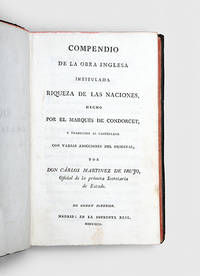
1792164946Madrid: en la Imprenta Real 1792. THE FIRST APPEARANCE OF ADAM SMITH IN SPANISH First Spanish translation of Condorcet's summary of Smith's Wealth of Nations the first appearance of any of his work in Spanish prior to the complete translation by J. A. Ortiz in 1794. The translator of the present summary is the young marqués de Casa Carlos Martinez de Yrujo y Tacón 1763-1824. "This is a translation of the Roucher/Blavet condensation of Wealth of Nations in the Bibliothèque de l'homme publique. to which Condorcet lent his name. The translator restores to the text a summary of Smith's Digression on the Bank of Amsterdam WN IV iii. b 479-88 a five-line qualification of the argument for free trade. The criticism of Catholic clergy is omitted." Tribe. Octavo 174 x 108 mm. Contemporary tree sheep flat spine ruled and decorated in gilt red morocco label marbled endpapers red edges. 19th-century ownership inscription to front free blank leaf extremities lightly rubbed one corner slightly worn; a crisp clean copy in fine condition. Palau 59126; Tribe 47. This edition not listed in Goldsmiths' Kress or Vanderblue. unknown
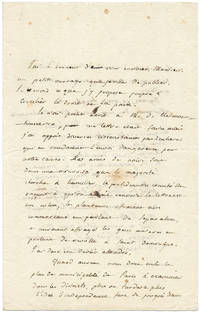
1789Condorcet2<p><strong>CONDORCET de Nicolas 1743-1794</strong></p><p>Autograph letter to Jacques Pierre Brissot<br />N.p.n.d. 25 June 1789 2 p. in-12° on laid bi-folio<br />Watermark cropped: Cornet à courroie double sur écu coiffé d'une couronne / pendentif petite fleur de lis renversée / "D & C BLAUW"<br />An ink blot on the first page evidence of a fold by Condorcet while the ink was still wet.<br />Five redactions and an interlinear insertion in his hand with very browning</p><p><strong>Nice letter on his fight against slavery in the early days of the Revolution</strong></p><p><em>" J'ai l'honneur de vous envoier Monsieur <strong>un petit ouvrage que je viens de publier</strong></em> <em>Sur l'admission des députés des planteurs de Saint Domingue dans l'Assemblée nationale</em>. <strong><em>Je</em></strong><em> <strong>crois ce que j'y propose propre á concilier le droit et la paix</strong>. Je n'ai point ecrit a M. de Clermont-Tonnerre ma lettre etait faite mais j'ai appris diverses circonstances particulieres qui en rendaient l'envoi dangereux pour notre cause. <strong>Les amis des noirs sont dans une minorité que la majorité cherche à humilier</strong> le president du comité rapport à qui on aurait renvoie la lettre est un colon les planteurs effraient nos commercans en parlant de separation et auraient effrayé les gens moderés en parlant de revolte á Saint Domingue. J'ai donc cru devoir attendre.</em><br /><em>Quand aurons-nous donc enfin le plan de municipalité de Paris á examiner dans les districts plus on tardera plus l'idée d'independance fera de progrès dans les districts. <strong>On prend aisement l'habitude de gouverner et on a peine à le quitter.</strong></em><br /><strong><em>Agreez je vous supplie les assurances de mon inviolable attachement.</em></strong><br /><em>Comme je vais à Versailles et que j'y reste quelques jours je vous prie de vouloir bien vous charger de ces deux billets pour M. de Gramagnac en le priant de passer chez M. Mazzei chargé d'affaires du Roi de Pologne hotel des colonies rue des Prouvaires afin de terminer avec lui. Il manque encore un nom mais comme le Roi connait M. l'abbé Piatoli qui demeure dans le même hotel que M. Mazzei je crois qu'il faut preferer sa signature á une autre "</em></p><p>Condorcet and Brissot jointly carried out during the Revolution a decisive action against slavery within the <em>Société des Amis des Noirs</em>. The parliamentary debate crystallized in June 1789 around the question of admitting a deputation of colonists from Saint-Domingue to the <em>Assemblée nationale constituante</em>. By sending Brissot <em>" un petit ouvrage "</em> of his own writing on this subject <em>Sur l'admission des députés des planteurs de Saint Domingue dans l'Assemblée nationale</em> Condorcet nevertheless explains that he had to give up sending a memorandum in the name of the <em>Société des Amis des Noirs</em> to Deputy Clermont-Tonnerre who was then presiding over the Assembly to oppose this admission. As the majority of the Assembly was in favor he rightly considered that such a claim would be <em>à contre-emploi</em>.<br />Later he also asks Brissot for news of the <em>" plan de municipalité "</em> then under discussion which aimed to allow the <em>" patriote "</em> municipality—created on June 25 1789 and in which Brissot sat—not to remain hostage to the sixty Parisian districts which were showing <em>" indépendance "</em> tendencies that Condorcet deemed harmful.<br />Finally Condorcet asks his correspondent to deliver <em>" deux billets "</em> to M. de Gramagnac secretary of the <em>Société des Amis des Noirs</em>. He recommends that Gramagnac visit the Florentine merchant Filippo Mazzei 1730–1816 also a fervent abolitionist and member of the <em>Société des Amis des Noirs</em> to obtain the <em>" signature "</em> of Abbé Scipione Piattoli 1749–1809. Piattoli's membership in the <em>Société des Amis des Noirs</em> was all the more valuable because he was <em>" connu "</em> to the king for having been a member of the court of the King of Poland Stanislas-Auguste Poniatowski for whom Mazzei was then acting as agent in Paris.</p><p><u>Provenance:</u><br />Drouot 2 Apr. 2003 n°19<br />M.L.M. N°40234<br />Bertrand Loevenbruck's estate</p><p><u>Reference:</u><br /><em>Inventaire Condorcet</em> dir. Nicolas Rieucau n°1661</p>
179542119Paris, Agasse, l'an III de la République, une et indivisible (1795). 8vo. Bound in a very nice newer pastiche-binding in full mottled calf. Five raised bands and gilt title-label to spine. A very nice, clean, fresh, and attractive copy. VIII, 389 pp.
179542119Paris Agasse l'an III de la République une et indivisible 1795. 8vo. Bound in a very nice newer pastiche-binding in full mottled calf. Five raised bands and gilt title-label to spine. A very nice clean fresh and attractive copy. VIII 389 pp. <br/><br/><em>The rare first edition of Condorcet's main work "the most fully developed exposition of the progress of man" Printing and the Mind of Man p. 149 and a main work of the Enlightenment as well as of historical thought in general. The author was the creator of what came to found the basis for the modern French system. The great French philosopher political thinker and mathematician M.J.A. Condorcet 1743 - 1794 played a seminal role in 18th century France. He was friends with the likes of d'Alembert Voltaire Turgot etc. and he greatly contributed to the social and political debates of politically turbulent France. As one of the few he advocated a liberal economy equality in public education as well as in gender and race etc. He preached constitutionalism and his thoughts that are still influential today embody those of the Enlightenment and rationalism."A belief in the ultimate perfectibility of man lies at the root of all progressive thinking about the human condition. The "philosophes" and Godwin had familiarized the reading public with this notion; it was left to Condorcet to give it its finest and most durable expression. It was the gospel of nineteenth century that mankind is destined for indefinite future progress. Condorcet looking back and then forward saw proof of this in the growing equality between classes and nations the intellectual physical and moral improvement of man; and he prophesied that popular education on correct principles would strengthen and assure this progress." PMM 246.During the French Revolution Condorcet came to play a dominating role advocating a rationalist reconstruction of society and he championed many liberal causes. In 1791 he became secretary of the Legislation Assembly and the institution adopted his scheme for comprehensive state education which later became the basis of the modern French system. In the struggle between the two political parties the Girondists and the Montagnards Condorcet occupied an independent role but when he opposed the death penalty under the trial of King Louis XVI still supporting the actual trial and the radical Montagnards gained more power Condorcet was branded a traitor and in October 1793 a warrant was issued for his arrest. He now went into hiding for several months almost a year and it is during these months that he writes the work that was to become his most important the main work "Esquisse." "Sketch for a Historical Picture of the Progress of the Human Mind" which was published posthumously the year after his death. In 1794 Condorcet was arrested and two days later he was found dead in his cell -it is unknown whether he committed suicide or was murdered because of fear of fierce reactions that would definitely have occurred had the beloved man been officially sentenced to the death penalty."In the Esquisse" published after his death Condorcet traces the history of man through epochs the first three covering his progress from savagery to pastoral community and thence to the agricultural state. The next five span the growth of civilizations and knowledge down to Descartes and the ninth describes the revolution of Condorcet's own lifetime from Newton to Rousseau. The prophetic view of the tenth epoch shows Condorcet at his most original. He forecasts the destruction of inequality between nation and classes and the improvement intellectual moral and physical of human nature. it exercised considerable influence on Comte. But it is as the most fully developed exposition of the progress of man that Condorcet's work is now remembered and it is this which has given it its lasting appeal." PMM 246. </em> hardcover
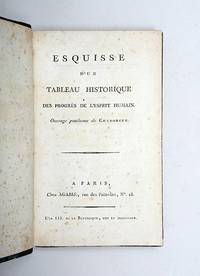
1795161166Paris: chez Agasse l'an III de la République 1795. History as progress First edition of the finest and most durable expression of the ultimate perfectibility of man perhaps the clearest and boldest statement of the enlightenment belief in progress demonstrating "man's progressive emancipation first from the arbitrary domination of his physical environment and then from the historical bondage of his own making" Encyclopedia of Philosophy II 184. Condorcet wrote the work in 1794 while in hiding from Robespierre's agents having voted against the execution of the king. Captured by the state he was found dead the next day presumed to have taken his own life to escape the guillotine. His manuscript was published the next year. "In the Esquisse. Condorcet traces the history of man through epochs the first three covering his progress from savagery to pastoral community and thence to the agricultural state. The next five span the growth of civilizations and knowledge down to Descartes and the ninth describes the revolution of Condorcet's own lifetime from Newton to Rousseau. The prophetic view of the tenth epoch shows Condorcet at his most original. He forecasts the destruction of inequality between nations and classes and the improvement intellectual moral and physical of human nature" PMM. Octavo 193 x 119 mm. Early 19th-century blue quarter roan smooth spine lettered and tooled in gilt blue mottled sides brown speckled edges. Front pastedown with early 20th-century bookseller's label of Emile Nourry of Paris and bookplate of Caroli Michel. Light rubbing to binding corners worn spotting to contents marginal loss to foot of G2 not affecting text a few peripheral nicks very good. Printing and the Mind of Man 246; En français dans le texte 196; Martin & Walter 1 8083; Quérard II p. 269. unknown
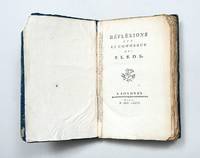
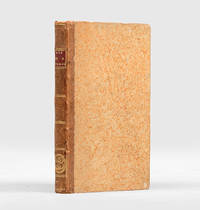
177683886London: No Printer 1776. Uncommon first edition of Condorcet's Thoughts on the corn trade. Appointed secretary to the Académie des Sciences in 1773 for his work in mathematics Condorcet "soon won the friendship of Turgot by whom his attention was turned towards political economy. Under the inspiration of Turgot he wrote various articles or works among others Les Réflexions d'un laboureur de Picardie à M. N. auteur prohibitif à Paris 1775; and Les Réflexions sur le commerce des bleds 1776 two writings directed against M. Necker that auteur prohibitif who had brought out May 1775 his work Sur la législation et le commerce des grains." Palgrave. Octavo 212 x 134 mm pages 2 title xvi 2 errata 221. Contemporary blue marbled paper boards paper spine label lettered by hand. Front board and upper outer corner of the first 100 pages gnawed title page with closed tear to the gutter partly repaired with tape to verso; a very good copy uncut with generous margins. INED 1178. Not in Goldsmiths' Kress Mattioli or Sraffa. See Palgrave's Dictionary of Political Economy 1925 I p. 386. hardcover
1795Biblio239THE PERFECTIBILITY OF MAN. 8vo. Early half red morocco. Near fine. FIRST EDITION. A distinguished mathematician and friend of Voltaire d'Alembert and Turgot Condorcet played a major role in promoting the Revolution's democratic principles. In the Esquisse An Historical Outline of the Progress of the Human Mind he traces the history of man through ten epochs moving from savagery through the development of civilization and knowledge up to Descartes in the eighth epoch. The ninth epoch spans the Enlightenment from Descartes to the Revolution. For the tenth epoch Condorcet predicts that equality of opportunity will prevail among all classes and nations and that man will improve intellectually morally and physically. "A belief in the ultimate perfectibility of man lies at the root of all progressive thinking about the human condition. The philosophes and Godwin had familiarized the reading public with this notion but it was left to Condorcet to give it its finest and most durable expression. . . . Unlike Godwin he does not preach absolute equality but equality of opportunity" Printing and the Mind of Man 246. A'gasse, L'An III hardcover
184711057Paris, Firmin Didot frères, 1847-1849. 12 vol. grand in-8 de (6)-CLXXXVI-(2)-652 pp. ; (6)-VIII-672 pp. ; (6)-664 pp. ; (6)-644 pp. ; [6]-575 ; (6)-662 pp. ; (6)-575 pp. ; (6)-662 pp. ; (6)-547 pp. ; (6)-616 pp. ; (6)-676 p. ; (6)-690 pp., percaline grise.
178851530No place: no publisher 1788. The abolition of taxes First edition the first four numbers of Le Moniteur a political journal edited by Brissot de Warville Clavière and Condorcet all published. Issues two and four consider taxation proposing the abolition of all existing taxes and their replacement by equally distributed voluntary subsidies. In this volume the fourth number is the 50-page edition. Garrett notes: "The Bibliothèque nationale has the only complete collection of Le Moniteur. The British Museum has a 38-page edition of the fourth number and Cornell University has versions of the same pamphlet in 48- and 50-page editions. Among the other major collections of French revolutionary pamphlets in this country i.e. USA Le Moniteur is to be found only at Harvard University 48-page edition of the fourth number Princeton University 50-page edition of the fourth number and the New York Public Library an edition of the third number differing slightly from that in the Bibliothèque nationale" Garrett. 4 parts in one vol. octavo 188 x 119 mm pp. 14 2 bl.; 20; 32; 50. Ownership stamp of Thomas Valletau de Chabresy to title verso of the fourth part. Modern dark red quarter morocco spine lettered in gilt patterned paper boards old red edges to first 3 parts. Boards rubbed at lower outer edges some dampstaining to part 4 very good copies. Hatin 92; INED 815. Clarke W. Garrett "The Moniteur of 1788" in French Historical Studies vol. 5 no. 3 Spring 1968 pp. 263-73. hardcover
1786003<b>London s.e. 1786; 8vo. 299 pp. 1 pp.n.ch. d'errata full vellum with flaps from the 19th century smooth spine tan title piece speckled edges. The true first edition of Condorcet's life of Turgot Gertis's edition A the first of four editions published with a London imprint in 1786. one of four published under the date 1786; this print corresponds to Einaudi's collation 2 ff. 299 pp. 1 p. d'errata which presents it as the first and therefore differs from the 287 pp. edition. with portrait reported by INED under n ° 1186. Condorcet was a strong supporter of Turgot who had attempted to implement physiocratic ideas as the French finance minister from 1774 to 1776. His biography seeks to vindicate Turgot's thought and work and is a powerful defence of Enlightenment economic ideas. Seven editions appeared within two years making it one of the best-selling works of economics of its day. From the Thomas Carnegy of Craigo library armorial ex-libris. A beautiful copy well preserved. Housed in a cloth clamshell box with leather label.</b> Published by London: [no publisher stated] hardcover
1778263011Paris: Not Identified 1778. hardcover. near fine. Title with ornamental borders; title vignette and ornamental head/tail pieces throughout. Illustrated with a portrait of Pascal engraved by L. Demeuse. XII 316 pages. 8vo handsomely bound in full contemporary mottled calf with gilt decorated spine and marbled page edges. Paris i.e. Geneva: Publisher Not Identified Grasset 1778. Nouvelle edition. Scarce.<br/><br/> According to BN the imprint is false; this edition was printed in Geneva by Grasset. A reprint of Condorcet's selection from the Pensees. he added to his own notes a selection from the "Remarques sur les Pensees de Pascal" by Voltaire who's notes are signed "Note du present editeur." -- Bengescu 1910; BN 5391. Page 163 is misnumbered 139; page 193 is misnumbered 391.<br/><br/> Not Identified unknown books
1778263011Paris: Not Identified 1778. hardcover. near fine. Title with ornamental borders; title vignette and ornamental head/tail pieces throughout. Illustrated with a portrait of Pascal engraved by L. Demeuse. XII 316 pages. 8vo handsomely bound in full contemporary mottled calf with gilt decorated spine and marbled page edges. Paris i.e. Geneva: Publisher Not Identified Grasset 1778. Nouvelle edition. Scarce.<br/> <br/> According to BN the imprint is false; this edition was printed in Geneva by Grasset. A reprint of Condorcet's selection from the Pensees. he added to his own notes a selection from the "Remarques sur les Pensees de Pascal" by Voltaire who's notes are signed "Note du present editeur." -- Bengescu 1910; BN 5391. Page 163 is misnumbered 139; page 193 is misnumbered 391.<br/> <br/> Not Identified unknown
2362recueil politique et d’économie sociales qui paraissait sous les auspices et avec le concours de 14 écrivains Patriotes,dont chacun était chargé d’une partie distincte, Clavière avait les finances,Condorcet la législation,et l‘instruction publique,Kersaint la marine et les colonies, Garran de Coulon la jurisprudence etc… à Paris de l’imprimerie du Cercle Social rue du Théâtre n°4 parution de novembre 1791 à juillet 1793 la collection forme 21 recueils.Premier recueil Novembre 1791 an 3 de la liberté 46 pages et titre,deuxième recueil Décembre 1791,troisième recueil janvier 1792 titre et 136 pages,quatrième recueil février 1792 an 4 de la Liberté titre,124 pages,cinquième recueil mars 1792 titre,88 pages Sixièmerecueil Avril 1792 titre, 116 pages,(pâle mouillure en marge extérieure pages 34 à 64),septième recueil Mai 1792 titre et 104 pages (mouillure en marge extérieure pages 89 à 104 sans gravité) huitième recueil juin 1792 titre,100 pages.Dixième recueil août 1792 titre,80 pages,+ intéressant catalogue,onzième recueil septembre 1792 titre et 80 pages plus supplément de 52 pages."du nouvel ordre social"par Henry BANCAL député du Puy de Dôme à la Convention Nationale(avec cette remarque:le supplément de ce cahier ayant été imprimé la nuit,on y a employé par erreur du papier destiné à un autre ouvrage)douzième recueil Octobre 1792 An Premier de la République,treizième recueil Novembre 1792 titre, 106 pages plus 80 pages par Guy KERSAINT député à la Convention "de la Constitution et du Gouvernement qui pourroie convenir à la République Françoise" quatorzième recueil Novembre décembre 1792 titre,72 page.Rarissime réunion de 13 recueils sur 21 devenue très difficile à rencontrer même en recueil isolé. L’ensemble en 4 volumes reliure cartonnée modeste, mais d’époque avec étiquette manuscrite et avec grandes marges "ces recueils contiennent des travaux solides d’un haut intérêt"
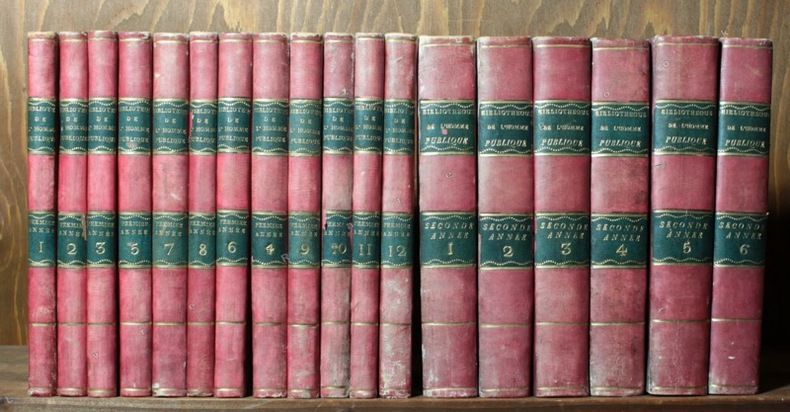
17909307A Paris, chez Buisson, 1790-1791. 24 tomes en 18 volumes petit in-8, demi-vélin teinté rouge à coins, dos lisses ornés de roulettes et filets dorés, étiquettes de titre et tomaison vertes. Reliures un peu frottées, dos légèrement passés, minimes manques à quelques étiquettes, quelques taches au papier des plats, très rares rousseurs, quelques auréoles. A noter que les étiquettes de titre orthographient "public" avec la terminaison -que. Les 12 numéros de la première années sont reliés indépendamment, les 12 de la seconde sont reliés à raison de 2 numéros par volume, sous la même reliure toutefois.
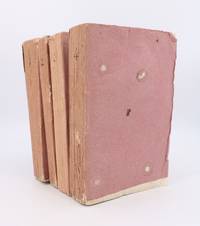
178889325Paris Colle: Froullé 1788. Fine. Froullé Paris Colle 1788 13.5 x 21 cm 4 volumes Brochés First edition cf. Sabin 47206. Leclerc 952.Some joints cracked at head and tail minor marginal losses of no consequence to the temporary wrappers.The author Italian by birth emigrated to America before the Revolution and settled in Virginia near Monticello.His book written in collaboration with Condorcet is of particular interest with regard to the history of independence and the government of the United States cf. Fay pages 24-25: ""Compilation très exacte qui réfute les théories de Mably et de Raynal et constitue un répertoire précieux de renseignements de tous ordres sur les États-Unis.""Rare and appealing copy preserved in its original stitching and in plain pink temporary wrappers. Froullé unknown
179565358ìCan Man Become Perfectî CONDORCET Marie Jean Antoine Nicolas Caritat Marquis de. Esquisse dÃun tableau historique des progrËs de lÃesprit humain. Ouvrage posthume de Condorcet. Paris: Chez Agasse LÃan III. de la RÈpublique 1795. First edition of CondorcetÃs philosophical masterpiece. Octavo 7 7/8 x 4 13/16 inches; 201 x 123 mm. viii 389 1 blank pp. Contemporary quarter calf over dark blue paste-paper boards spine gilt with dotted bands and ornaments gilt red morocco lettering piece. Old owner's signature on half-title. A quarter-inch marginal tear at the bottom of leaf M42 that does not affect the text. Light foxing throughout. A blue ink stain on top edge from signature Z to the end. Overall a clean and attractive copy. ìIt was the gospel of the nineteenth century that mankind is destined for indefinite future progress. Condorcet 1743-1794 looking back and then forward saw proof of this in the growing equality between classes and nations the intellectual physical and moral improvement of man; and he prophesied that popular education on correct principles would strengthen and assure this progress.In the Esquisse ëAn Historical Outline of the Progress of the Human Mindà published after his death Condorcet traces the history of man through epochs the first three covering his progress from savagery to pastoral community and thence to the agricultural state. The next five span the growth of civilizations and knowledge down to Descartes and the ninth describes the revolution of CondorcetÃs own lifetime from Newton to Rousseau. The prophetic view of the tenth epoch shows Condorcet at his most original. He forecasts the destruction of inequality between nations and classes and the improvement intellectual moral and physical of human nature.it is as the most fully developed exposition of the progress of man that CondorcetÃs work is now remembered and it is this which has given its lasting appealî Printing and the Mind of Man. Printing and the Mind of Man 246. HBS 65358. $2000 Chez Agasse hardcover books


_2.jpg)