Weil, Susan & Marjorie Van DykeBiblio.com
3 471 résultats
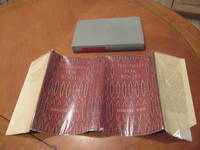
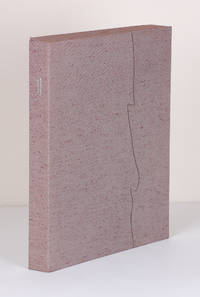
141347New York: Vincent FitzGerald 1987. Japanese style binding in purple and green Japanese cloth matching fold-over case. FitzGerald & Co. Vincent. 9 x 12 inches. Japanese style binding in purple and green Japanese cloth matching fold-over case. 40 pages. Interpreted by Susan Weil and Marjorie Van Dyke. Privately printed by Vincent FitzGerald in an edition of 65 copies signed by Susan Weil and Marjorie Van Dyke of which this is one of 50 copies available for sale. A fine copy in fine clamshell box.<BR> <br /> <BR> <br /> Text and titling printed by Daniel Keleher and Bruce Chandler at Wild Carrot Letterpress in typefaces created by Dan Carr & Julia Ferrarie at the Golgonooza Letter Foundry and printed on Moulin du Gue Japanese papers. Calligraphy by Jerry Kelly. With 62 etchings by Marjorie Van Dyke assisted by Maria Luisa Rojo at The Printmaking Workshop employing over 150 plates original watercolors collage and hand cutting printed on Moulin de Gue paper and Japanese papers. The texts of the forty epiphanies are printed in full and those selected for interpretation are assigned thematic divisions: "Planes" "Death" "Dreams" and "Games" with Weil undertaking the first two sections and Van Dyke the latter two. The thematic sectional titles to the divisions of the illustrative matter are keyed numerically to the relevant epiphanies in the text. Lithography by Rhae Burden and Collage creation by Zahra Partovi. Bound loose in hand-made box by David Bourbeau at his Thistle Bindery covered with Japanese hand-made silk with an incised line of Japanese tea paper showing a profile of Joyce.<BR> <br /> <BR> <br /> This book covering death word games / puns how a person dreams while sleeping and planes is considered a high-spot of Vincent FitzGerald & Company. Vincent FitzGerald unknown
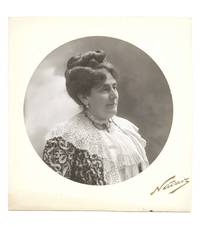
1904Pro4<p><b>PROUST Jeanne WEIL 1849-1905</b></p><p>5th December 1904 original period film print. Round photography 159 cm diameter mounted on thick paper frame in the photographer's name.Tiny spot on lower margin of the mounting small stainStamp on verso from collection Suzy Mante-Proust collection</p><p><b>One of Jeanne Weil Proust's last portraits less than a year before her death</b></p><p>This portrait was taken on December 5th 1904. At this time aged 56 years old Proust's mother has been a widow for a year. The translation of his son's <i>The Bible of Amiens</i> was published that same year. She died of nephritis a year later on September 26 1905. Nadar did process her portrait and removed the shadows and various flaws on her face.</p><p>Michel Schneider notes that the narrator's mother in the <i>Search</i> is obviously inspired by the mother of the author himself. Jeanne Proust was born Jeanne Weil in 1849 from a Jewish family of the enlightened bourgeoisie. Much has been said about the intellectual complicity that united her with elder son. Marcel Proust who during his mother's lifetime wrote only <i>beautiful</i>things in the spirit of the time <i>Pleasures and Days</i> will not become the novelist of the <i>Search</i> until after the death his mother an event that has somehow freed his creation. In the novel the grief he felt at his death is shifted to that of the grandmother and that of Albertine. In the <i>Search</i> Mom doesn't die she is also mentioned more than 500 times.</p><p>Provenance:<br />-Proust Family<br />-Suzy Mante-Proust only daughter of Robert Proust by descent<br />-Patricia Mante-Proust granddaughter of Suzy Mante-Proust by descent</p><p><u>References:</u><br />Nadar repr. p. 32 in full. <br />Cattaui n° 59 repr. <br />Mauriac repr. p. 10.</p>
1966129888N.P.: n.p. 1966. Limited Editions Club. framed painting 34 by 28 inches. A framed watercolor depicting a guard at the fortress and monastic community at Qumran. Shraga Weil 1918-2009 was an Israeli artist. Born in Prague in 1918 he studied at the National School of Arts there. He served in the Hungarian resistance to the Nazis during World War II. After the war he joined the exodus to Israel. He received training in monumental and graphic techniques at the Academy of Arts in Paris in 1953. He worked as a designer and illustrator of books during the 1950s during which time he was illustrator of The Dead Sea Scrolls New York: Limited Editions Club 1966. This work was offered but not used as an illustration for that book. In the 1960s and 1970s he created several architectural designs including the copper doors for the main entrance of the Knesset building and the residence of the President of Israel in Jerusalem. source: Knesset website and Shraga Weil website. Qumran was the location of an ancient Jewish fortress and Essene monastic community where the Dead Sea Scrolls were found beginning in 1947. n.p. unknown
1966129889N.P.: n.p. 1966. Limited Editions Club. framed painting 34 by 28 inches. A framed painting depicting a guard at the fortress and monastic community at Qumran. Shraga Weil 1918-2009 was an Israeli artist. Born in Prague in 1918 he studied at the National School of Arts there. He served in the Hungarian resistance to the Nazis during World War II. After the war he joined the exodus to Israel. He received training in monumental and graphic techniques at the Academy of Arts in Paris in 1953. He worked as a designer and illustrator of books during the 1950s during which time he was illustrator of The Dead Sea Scrolls New York: Limited Editions Club 1966. This work was included as an illustration in that book. In the 1960s and 1970s he created several architectural designs including the copper doors for the main entrance of the Knesset building and the residence of the President of Israel in Jerusalem. source: Knesset website and Shraga Weil website. Qumran was the location of an ancient Jewish fortress and Essene monastic community where the Dead Sea Scrolls were found beginning in 1947. n.p. unknown
19782612SUCHIER RALPH 1978. 1.ND. hardcover. Tausend und eine Nacht Über 700 Illustrationen! Erstmalig aus dem Urtext vollständig treu übersetzt und umgearbeitet! SUCHIER, RALPH hardcover
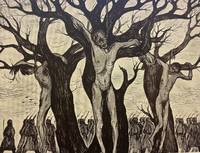
19462547Budapest: Hasomér Hacair 1946. In an original folder. Plates are in fine condition. Small tears on the text plate. Folder little bit torn but still in very good condition. In an original folder. 10 plate with text plate. Ten plates with printed illustrations by Shraga Weil documenting the holocaust period and life in the camps. Shraga Weil Ferenc Ferdinánd; 1918–2009 was a Hungarian born Israeli painter. He studied at the Academy of Art in Prague and École des Beaux Arts in Paris. During WWII he was active in the Zionist underground movement in Budapest working in the workshop for forging documents. After the war he sailed for Palestine on an illegal immigrant ship and became a member of Kibbutz Ha’ogen where he lived until his death. In 1959 Weil was awarded the Dizengoff Prize for painting. He created the doors of the main entrance to the Knesset building and the President’s residence in Jerusalem. Weil painted the wooden panels in the Israeli Hall at the Kennedy Center. (Hasomér Hacair) unknown
H4406Paris: Hermann 1971. Paperback. Very Good. First printings 1939-1971 mainly in very good condition of one of the most important contributions to 20th century mathematics. Also includes Amir D. Aczel's "The Artist and the Mathematician the story of Nicolas Bourbaki the Genius Mathematician who Never Existed" 2006 a book which establishes the greatness and enormous influence of "Bourbaki" as the roots of "New Math" and including its effect on literature and the Oulipo Group. 30 fascicules: the project was ongoing but volumes came out sporadically in the decades after including revised editions of earlier volumes and additional chapters to previous volumes. This set is from the library of Walter Noll a well known mathematician who was a long time professor at CMU. In an interview Noll stated 'I have been accused of being too "Bourbakistic". I plead guilty. I believe the work of Bourbaki was the most important contribution to mathematics in the 20'th century. Bourbaki was not a single individual but a group some of whose members I met personally.' Clifford Truesdell the biographer of Noll wrote that 'Paris brought to Walter his first contact with the work of N. Bourbaki. He saved enough money to buy all the volumes of the Elements de Mathematiques yet published; later he studied some of the volumes systematically. In the Spring and Summer of 1950 Walter acquired "Certificats d'Etudes Superieures" through three examinations at the Sorbonne' 1993. Most volumes bear Noll's signature and the early ones confirm that he acquired them in 1950. The volumes are in very good condition and includes errata slips and other loosely laid in instructions and supplementary material for some volumes. Condition problems are here noted: No. II has light wear to spine XI lacks a third of its spine paper light loss to bottom of front cover no. XII has light loss to spine ends. Most of the missing volumes can be readily acquired online the only troublesome one might be no. IV. The Bourbaki collective whose membership was kept secret had a rule limiting the age of any member to 50 or younger which meant that there was an entire turnover of authors by the late 1950s and again by the 1970s. The Bourbaki group was known for its rigour and adversity to the free-flowing instinctive styles of Poincaré and his followers. The first volumes in first editions are practically unobtainable. Hermann paperback
Z1-Q-024-02834Franklin Watts Ltd. Used - Good. Ships from UK in 48 hours or less usually same day. Your purchase helps support Sri Lankan Children's Charity 'The Rainbow Centre'. Ex-library so some wear and barcode page may have been removed but in good overall condition. 100% money back guarantee. We are a world class secondhand bookstore based in Hertfordshire United Kingdom and specialize in high quality textbooks across an enormous variety of subjects. We aim to provide a vast range of textbooks rare and collectible books at a great price. Our donations to The Rainbow Centre have helped provide an education and a safe haven to hundreds of children who live in appalling conditions. We provide a 100% money back guarantee and are dedicated to providing our customers with the highest standards of service in the bookselling industry. Franklin Watts Ltd unknown
200151565Montpellier Editions Fata Morgan 2001 In-4, en feuilles, couverture et chemise illustres par l'artiste (embotage de l'diteur).Edition originale, runissant 18 citations de Simone Weil choisies par Jean Capdeville qui a ralis dans chaque exemplaire 8 peintures originales en couleurs dont une sur la couverture, une sur la page de titre, 5 hors-texte (dont 3 sur double page) et un in-texte. 5 des citations ont t manuscrites l'encre par l'artiste, chacune pleine page. Jean Capdeville a galement calligraphi le titre de l'ouvrage et les noms de l'auteur et de l'artiste sur le premier plat de la chemise de l'embotage. Tirage unique limit 70 exemplaires numrots sur vlin de Rives, signs par lartiste.
1952032525London: Routledge and Kegan Paul Ltd 1952. First English Edition 1st Printing. Green Cloth. Near Fine/Near Fine DJ. 288 Pp. First English Language Translation Of Her Book Which Was First Published In France In 1949. Gallup B66 For The Eliot Preface. Camus Reportedly Considered Her To Be The Most Important 20Th Century Writer. Book Is Clean Unmarked No Names No Fraying Light Rubbing At Corners. Dj Is Especially Clean And Bright Unfaded Price Clipped At Bottom Of Front Flap With A 1/4" Deep X 1/2" Long Chip At Bottom Of Front Bottom Spine Fold A 1/8' V-Chip At Bottom Of Rear Spine Fold And A 1/8" Deep X 1/4" Long Chip At Top Of Rear Spine Fold. <br/> <br/> Routledge and Kegan Paul Ltd hardcover
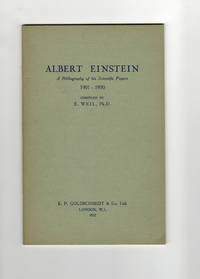
1937008688London: E. P. Goldschmidt 1937 8vo 21.5 cm 24 pp. Printed wrappers both wrappers and paper inside are slightly toned. This is a limited first edition restricted to 100 copies featuring Einstein's bibliography. It includes 174 entries encompassing papers collections of papers and their translations. E. P. Goldschmidt paperback
194316547London 1943. <p>Weil Ernst 1891-1965. Complete set nos. 1-33 of Weil's rare book catalogues. Approx. 1320pp. total. Plates. London: E. Weil 1943-1965. 218 x 138 mm. Bound in 3 volumes recent cloth red leather spine labels; original printed wrappers present. Fine. Herbert M. Evans' Copies with his purchase notes on the front wrappers of several catalogues and his signature or initials on one or two front wrappers. Typed letter signed from Weil to Evans dated 19 May 1953 bound into Catalogue 20.</p> <p> First Editions of these important catalogues issued by one of the foremost 20th-century dealers of rare books in medicine and science. These copies are from the library of Herbert M. Evans 1882-1971 co-discoverer of Vitamin E and one of the pioneering collectors of rare medical and scientific books. Many of the catalogues in this set bear Evans's pencil or ink notes on their front covers and Catalogue 20 1953 has a typed letter signed from Weil to Evans bound in discussing a possible purchase of four items.</p> <p> Ernst Weil a native of Germany was influenced by his cousin the bookseller Heinrich Eisemann to collect and eventually to sell early printed books. In 1924 he founded with Hans Taeuber the firm of Taeuber & Weil in Munich; in 1933 he moved his family to London where he entered into partnership with E. P. Goldschmidt. In 1943 he began selling books under his own name issuing 33 catalogues before his death in 1965. Although modestly produced his catalogues contain much research and original observation particularly on hitherto ignored medical and scientific books. See E. Weil "A doctor and his books: Harvey Cushing and his library. The formation of the Harvey Cushing Collection" Journal of the History of Medicine 1 1946: 234-246. </p> . unknown
201298708D. A. P. Distribution. New. 2012. Hardcover. 1427613753 . FREE UPGRADE to Courier/Priority Shipping Upon Request - IN STOCK AND IMMEDIATELY AVAILABLE FOR SHIPMENT - Flawless copy brand new pristine never opened -- Most of text in English and Hebrew with portions in English only. 64 pp. ; 48 color illustrations. -- with a bonus offer-- . D. A. P. (Distribution) hardcover
200357676Berghahn Books. New. 2003. Hardcover. 157181812X . FREE UPGRADE to Courier/Priority Shipping Upon Request IN STOCK AND IMMEDIATELY AVAILABLE FOR SHIPMENT - FLAWLESS COPY BRAND NEW PRISTINE NEVER OPENED -- - 322 pages. -- with a bonus offer-- . Berghahn Books hardcover
197764791MMFA. As New. 1977. Paperback. 0892800070 . FREE UPGRADE to Courier/Priority Shipping Upon Request IN STOCK AND IMMEDIATELY AVAILABLE FOR SHIPMENT - AS NEW THE TEXT BLOCK IS PRISTINE CLEAN UNMARKED AND IN EXCELLENT CONDITION - - 122 pp. With 44 ills. On 43 pls. one foldout. 28 x 22 cm. -- with a bonus offer-- . MMFA paperback
19822257EDITION C.O.L.S. 1982. 7.ND. hardcover. Tausend und eine Nacht Über 700 Illustrationen! Erstmalig aus dem Urtext vollständig treu übersetzt! Neu umgearbeitet! EDITION C.O.L.S. hardcover
1984195MÜLLER KARL 1984. 1. hardcover. Tausend und eine Nacht Über 700 Illustrationen! Erstmalig aus dem Urtext vollständig treu übersetzt und umgearbeitet! MÜLLER, KARL hardcover
192065907Wien, WILA / WEAG, 1920. Farb. lithogr. Plakat (ca. 94 x 62 cm).
41457570-nnew. unknown
2013Discovery-9780357671177CENGAGE NP 2013. Paperback. New. CENGAGE NP paperback
2013Discovery-9780357671177CENGAGE NP 2013. Paperback. New. CENGAGE NP paperback
5FSZKH0011HZBallantine Books. hardcover. Good. 1.2000 in x 9.4000 in x 6.5000 in. Ballantine Books hardcover
72405James L. Weil Publisher / Origin Press et al. First edition first printing / Broadside / Limited Editiions / Keepsake Series. 15 items sold as a set. William Bronk Ñ "Bare Bones" James l. Weil Publisher 1995 First edition. James L. Weil Publisher 1994 First edition first printing One of only 50 copies. Quite lovely and beautifully designed with a snowy cover in sewn wraps. James Weil was quite close to William Bronk and often issued exquisite copies for his friend // "Beethoven : The Late Sonatas" James L. Weil Publisher 1990 First edition first printing One of 60 and this is a little higher range for the usual Keepsake Editions which we have. A lovely deckled beauty in sewn wraps. Has become scarce // "Sizes" James L. Weil Publisher 1991 First edition first printing One of 50 copies. Lovely copy in sewn wraps. Part of the Keepsake issues of James Weil issued for his good friend William Bronk. Sent as a gift to his friend the poet Bob Arnold with a typed note to Bob regarding the book with some interesting insight on James Weil's personal business card. // "For All We Know" James L. Weil 1998 First edition first printing One of only 50 copies beautifully presented on ragged edge paper and sewn wraps. Lovely // "Lite". James Weil 1995 First edition first printing One of only 50 copies Fine bright side-stapled wraps with deckled edge and lovely all around // "In Private" James Weil 1996 First edition first printing One of only 50 copies. Exquisite edition. Also with the publisher's short business card and noted affectionate inscription to the poet Bob Arnold from James Weil the two were friends poets and publisher colleagues. Fine bright tall sewn wraps and lovely deckled edge. // "Sizes" James L. Weil Publisher 1991 First edition first printing Fine bright sewn wraps printed in only 50 keepsake copies at the Kelly-Winterton Press in 1991. Handsome all around. // "Literal Speech" James L. Weil 1997 First edition first printing One of 50. Lovely sewn wraps new. // "The Fife" James L. Weil 2002 First edition first printing One of only 50 copies. Printed in memoriam for the poet's 84th birthday in 2002. As new and bright sewn wraps. Lovely copy. // " Exemplaries" James L. Weil 1994 First edition first printing One of 50. Lovely deckled edge gatefold warps with a warm inscription to the poet Bob Arnold from James Weil on his business card. Bob Arnold and James Weil were close friends and colleagues. //// Kearns Sherry Ñ "The Ginko at 57 Pearl St." James L. Weil Publisher 2005 First edition first printing Unusual design and publication from James Weil. One poem on deckled edge papers booklet and quite exquisite printed at Kelly-Winterton to commemorate William Bronk's 87th birthday 17 February 2005. Inscribed affectionately on the publisher's business card to another poet tipped in. A fine association copy between the two poets. As new sewn wraps. //// Lyman Henry Ñ "Bill's Room" James L. Weil 2003 First edition first printing One of 50 copies only printed at the Kelly-Winterton Press to celebrate the 85th birthday of William Bronk. Fine bright all around sewn wraps. //// Morse Samuel French "Life Supports" James L. Weil Publisher 2000 First edition first printing One or only 50. As new and bright lovely sewn warps to celebrate in memoriam the 82nd birthday of William Bronk sent to the poet and publisher at Longhouse Bob Arnold from his good friend the publisher James L Weil who has tipped in a card with a greeting to Bob Arnold. A fine association copy. //// Weil James Ñ "Westchester Walls for William Bronk" 1994 Broadside Broadside printed in 76 keepsakes copies to celebrate the 76th birthday of William Bronk September 17 1994. Roughly 6 x 9 deckled edge and ideal for framing. Two color broadside. Affectionately inscribed by James Weil to the poet Bob Arnold. James Weil and Bob Arnold were close associates both as poets and publishers. //// Weil James L. Ñ "Really" Origin Press 2001 First edition first printing One 50 copies printed elegantly and celebrating William Bronk's 83rd birthday. New and bright sewn wraps from Cid Corman's Origin Press and printed at the Kelly-Winterton Press. Fine bright sewn wraps to celebrate in memorial the 83rd birthday of William Bronk. Uncommon and quite scarce. Please inquire for shipping costs and insurance James L. Weil, Publisher / Origin Press et al paperback
200754502Sans lieu (Paris) La Compagnie Typogra 2007 In-4, en feuilles, tiquette imprime colle sur le premier plat de la couverture (embotage de l'diteur).Trs lgante dition typographique de ce texte crit en 1939 et 1940, comportant des passages de l'Iliade traduits du grec en franais par Simone Weil elle-mme. Dans cette dition, la traduction a t accompagne du texte original compos en grec, tir d'une dition de 1556. La prface indite de Jacqueline de Romilly a t compose la main en Garamond italique, le texte de Simone Weil en Univers, le texte d'Homre et sa traduction respectivement en Grecs du roi et en petites capitales Garamond. L'ouvrage se termine par un alphabet grec imprim sur plusieurs colonnes donnant les caractres usuels et accentus. Tirage limit 100 exemplaires numrots sur papier Zerkal. 42me livre dit par La Compagnie Typographique.