788 résultats
183631189London: William Pickering 1836. First edition 2 volumes 4to pp. 4 1183 1; 4 1185-2222 1; contemporary and probably original full calf double gilt-ruled borders gilt-decorated spine in 5 compartments gilt-lettered in 2; rebacked original spines laid down; spines a little rubbed else very good and sound. The most substantial lexicographical undertaking in England between Johnson and the O.E.D. "Richardson was an ardent philologist of the school of Horne Tooke . His principle was to arrive at the original and proper meaning which was inherent in a word from its etymology" see DNB. Based on the "historical principle" of lexicography this work formed the most substantial link between and the O.E.D. <br/><br/> William Pickering unknown books
17971002815Cambridge: J. Burges Printer to the University 1797. First editions of these historical Shakespeare studies by James Plumptre 1771-1832 a young playwright and fellow at Clare Hall Cambridge later a clergyman. Plumptre argues through an elaborate series of parallels that the character of Gertrude in Hamlet is intended as a critique of Mary Queen of Scots who like Gertrude remarried hastily under a cloud. Plumptre characterizes Hamlet as an effort by Shakespeare to secure the approval of Elizabeth I "to flatter his mistress by adding his drop to the flood of calumny poured out against her rival." The final page of the Appendix advertises Plumptre's first two plays The Coventry Act: A Comedy 1793 and Osway: A Tragedy 1795 as well as a forthcoming two-part drama entitled Mary Queen of Scots which was apparently never published. Bound in a single volume these presentation copies of Observations of Hamlet and its Appendix are both inscribed to literary scholar William Richardson 1743-1814 at the University of Glasgow. Richardson's Philosophical Analysis and Illustration of Some of Shakespeare's Remarkable Characters appeared in 1774 and featured a chapter on Hamlet. These Plumptre essays are uncommon. I have been unable to locate an extant presentation copy of either work and neither title has appeared at auction since 1973. A near-fine pair of presentation copies handsomely bound in period style by Philip Dusel. Two octavo volumes bound in one measuring 8 x 5 inches: 6 44; 2 85 1. Recent full polished calf boards tooled in blind with a floral border spine decoratively tooled in gilt red morocco spine label lettered in gilt. Bound without half-title for Appendix. Inscribed by Plumptre to William Richardson on half-title of Observations and title of Appendix. Publisher's advertisement on final page of Appendix. J. Burges, Printer to the University unknown books
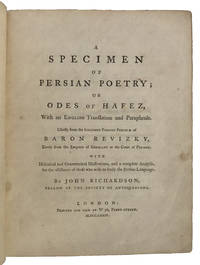
1774ME1081London:: Printed and Sold at No. 76 Fleet-Street 1774. 1774. 4to. iv xv 1 68 pp. Original full calf gilt spine; neatly rebacked to style preserving original endsheets. Inscribed by an early owner "This Book belonging to Monsieur Pierre Monneron." Extremely rare. This is the first edition in English of the ghazals of Hafez translated by one of the leading Persian orientalists of his day John Richardson FAS of Wadham College Oxford and famous for his seminal work written in conjunction with Sir William Jones the work being A Dictionary Persian Arabic and English 1777. / Hafez was previously unknown to the western world until Count Karl Emerich Reviczky von Revisnye 1737-1793 the Hungarian Orientalist and bibliophile 'discovered' him and brought his poetic classic to Europe with this Vienna printing. The work features an extensive text on Hafez and a translation of selected ghazals . Reviczky von Revisnye also issued in 1784 1794 a catalogue of his Greek and Latin library using the pseudonym of "Periergus Deltophilus". In the prefatory essay for that volume he shows an interest in the printing of Nicolas Jenson Aldus Manutius and the Estiennes. / Hafez was born in Shiraz Persia and lived approximately from 1325/26–1389/1390. He is considered a mystic and poet. His life and poems are the subject of much analysis commentary and interpretation influencing post-fourteenth century Persian writing more than any other author. FULL TITLE: A Specimen of Persian Poetry; or Odes of Hafez With an English Translation and Paraphrase. Chiefly from the Specimen Poeseos Persicae of Baron Revizky Envoy from the Emperor of Germany to the Court of Poland. With Historical and Grammatical Illustrations and a complete Analysis for the assistance of those who wish to study the Persian language. Printed and Sold at No. 76, Fleet-Street, 1774. unknown books
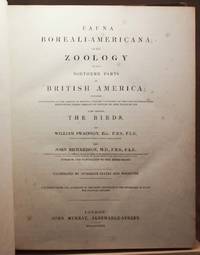
18316251London: John Murray 1831. First edition presentation copy from John Murray to Edward Jesse. Very Good/Sir John Richardson accompanied Sir John Franklin on both of his overland expeditions to the North 1819-1822 and 1825-1827. As naturalist to the expedition Richardson collected specimens of the flora and fauna of the Arctic. Swainson was responsible for preparing the lithographic plates classification and synonymy for Richardson's monumental Fauna Boreali-Americana which described the zoology ornithology ichthyology and entomology of the fauna of northern Canada. Swainson was entirely responsible for this volume on the birds. The illustrations mark the beginning of the use of lithography in bird book illustration. Quarto 285 mm; lxvi 2 523 1 pages. 50 hand-colored lithograph plates finished in gum arabic by Swainson. In contemporary half leather over marbled boards worn. Mild to moderate foxing present on some plates primarily in the first quarter of the text block; later plates quite clean. Provenance: presentation inscription on half-title by John Murray "The Publisher" to natural history author Edward Jesse; armorial bookplate of Irish ichthyologist and breeder of Irish Setters Harry Blake-Knox JP. References: Fine Bird Books p.135; Nissen IVB 773; Sabin 71027; Zimmer p.520 John Murray hardcover books
01915Londres Paris: Chez Jean Osborne Didot 1742. First Complete Edition in French<br/>Of the First English Novel<br/>Not Seen at Auction in Seventy Years<br/><br/>RICHARDSON Samuel. Paméla ou la vertu recompensée. Traduit de l'anglais. Londres Paris: Chez Jean Osborne Didot 1742. <br/><br/>First complete edition first printing in French of Richardson's classic epistolary novel integrating his sequel Pamela's Conduct in High Life translated by F.-A. Aubert de la Chesnaye des Bois erroneously attributed to Abbé Prevost. Four twelvemo volumes 6 7/16 x 3 3/4 in; 165 x 94 mm. xxiii 1 271 1; 4 324; 4 298; 4 302 pp. Two leaves from the end of Volume III have been mis-bound into the last signature of Volume IV.<br/><br/>Full contemporary French mottled calf with blind ruled border. The spine features five gilt-tooled raised bands separating six compartments with an unusual gilt floral tool of a lily with eight leaves and central annular dot within a double-fillet frame with foliate sprigs as corner pieces. Maroon spine labels lettered in gilt the Volume labels decorated with gilt roseates with lateral floral volutes above and below the lettering in gilt. Original French marbled endpapers. All edges stained red. Original green bookmark ribbons. Oval stain 1 3/4 x 1 1/4 in. to upper board of volume four otherwise an absolutely stunning copy tight bright and clean inside and out.<br/><br/>First complete edition in French of what is considered to be the first novel in English by the Father of the English novel Samuel Richardson the translation traditionally attributed to Abbé Prevost but later scholarship has shown it to be the work of François-Alexandre Aubert de la Chesnaye des Bois a defrocked Capuchin monk who was the compiler and author of many books including Lettres amusantes et critiques sur les romans en général 1743.<br/><br/>The last copy of this the first complete edition in French to come to auction was according to ABPC seventy years ago in 1941. Only nine complete copies are known to exist: the ESTC records only eight and NUC records one other. <br/><br/>Richardson wrote Pamela 1740 at the suggestion of booksellers Rivington and Osborn. "The book was highly successful and fashionable and further editions were soon called for. Richardson felt obliged to continue his story not only because of the success of Pamela but because of the number of forged continuations that began to appear. Pamela Part II appeared in 1741" Oxford Companion to English Literature.<br/><br/>"A translation of Pamela into French 4 vols. duodecimo with imprint 'A Londres chez Jean Osborne.M.DCC.XLII' was published shortly after the appearance of Vols. III and IV in English. The translator was the Abbé Prevost . It was offered for sale in France before Jan 12 1742 when fifty copies were seized from Guerin's. Apparently it was later sold with the tacit consent of the authorities. The price was six livres stitched" Sale Samuel Richardson: A Bibliographical Record p. 29.<br/><br/>The correct place of publication Paris and publisher Didot was discovered in a leaf of ads from an incomplete copy at the British Library that lists various Didot publications for sale.<br/><br/>An earlier translation of Parts I and II of Pamela appeared in 1741 in all likelihood by Chesnaye des Bois as well. "This French edition was published after the fifth English edition at the time when Richardson was begining to revise his text for the handsome octavo edition of the novel. According to the preface of the translator in Volume I Richardson furnished him with a small number of additions and corrections for the text" Ibid p. 16. And in the edition under notice the translation for the first two parts has been revised by Chesnaye de Bois per Richardson and the sequel has been translated for the first time.<br/><br/>Sale 15n p. 29. Rochedieu pp. 279-80. Londres [Paris]: Chez Jean Osborne [Didot], 1742 unknown books
1848WRCAM54899Baltimore: John W. Woods Printer 1848. 96pp. plus three wood-engraved plates including frontispiece one in-text illustration and a facsimile manuscript. Modern morocco in an antique style spine gilt raised bands edges tooled in gilt. Contemporary institutional gift inscription on front free endpaper. Occasional light foxing. A very good copy. Second edition after the very rare first edition of the previous year of this important Wagner-Camp and Mexican-American War title. This second edition remains quite rare and is seldom met with in commerce. Richardson enlisted as a mounted volunteer due to patriotism engendered on the 4th of July in Carrollton Missouri. He took part in Doniphan's expedition over the Santa Fe Trail in the fall of 1846 heading south to El Paso by the first of the New Year then on to Chihuahua and eventually to Matamoros where the command shipped by boat to New Orleans. By July 10 Richardson was back home in Anne Arundel County Maryland and the first edition of his fascinating journal was published before the end of 1847 in the nearest city Baltimore. <br> <br> An important and well-written account of overland travel along the Santa Fe Trail during the Mexican-American War. GARRETT p.153. GRAFF FIFTY TEXAS RARITIES 33 1st ed. WAGNER-CAMP 137:2. CLARK II:164. HOWES R262 "aa." TUTOROW 2630. GRAFF 3496 1st ed. RITTENHOUSE 480 note. SABIN 71093. John W. Woods, Printer hardcover books
1964131051Beverly Hills CA: Metro-Goldwyn-Mayer MGM 1964. Draft script for the 1965 film based on the 1948 novel by Evelyn Waugh legendarily co-written by Terry Southern and Christopher Isherwood. Deluxe working script belonging to uncredited crew member William Todd Mason with his name and phone number in holograph ink on the title page and some brief penciled annotations on three pages. Laid in is a corner stapled three page Staff and Crew list with two name additions in holograph red ink on the second page. <br/><br/>Included is a vintage studio still photograph from the film. <br/><br/>An early draft issued nearly two years prior to the film's October 1965 release with substantial differences from the finished film. <br/><br/>The sister film to "Dr. Strangelove" and in the eyes of many just as much a masterpiece of exquisitely wrought black humor. Made in the US but in a dense British-American style. Ostensibly a satire on the funeral business in which a young British poet winds up in a Hollywood cemetery as part of an inheritance arrangement-but in reality a satire of Hollywood itself as well as the Western malaise of the mid 1960s. <br/><br/>Script: Self wrappers presumably as this draft was issued. Title page present rubber stamped copy No. 70 dated July 21 1964 with credits for screenwriters Southern and Isherwood. 158 leaves mimeograph duplication with blue revision pages throughout dated 7-22-64. Pages Fine wrapper Fine bound with two gold brads. <br/><br/>Staff and Crew listing: two leaves slightly worn with annotations on the second page. Metro-Goldwyn-Mayer [MGM] unknown books
1968147232Paris: Les Films Marceau 1968. Three Draft scripts for the 1969 film by three different screenwriters. <br/><br/>From the estate of film producer Elliott Kastner whose best known credits include "The Long Goodbye" Robert Altman 1973 "The Missouri Breaks" Arthur Penn 1976 and "Heat" Michael Mann 1996.<br/><br/>The first script is an undated draft script by screenwriter George Bluestone who previously adapted Winston Graham's 1967 novel "The Walking Stick" for the 1968 Eric Till film with copied annotations throughout striking adding and adjusting dialogue.<br/><br/>The second is a Second draft script dated 1st April 1968 by novelist playwright and screenwriter Derek Marlow with copied annotations striking scenes or pages on nearly every page. Marlow said in an interview that he was asked by director Tony Richardson which book he'd like to adapt for a screenplay and Marlow suggested Nabakov's "Laughter in the Dark." Two or three months afterward Marlow received a call from Richardson asking him to write the adaptation. <br/><br/>At the time Richard Burton was to star alongside Marianne Faithfull. Marlow then went to the U.S. to promote his 1968 novel "Memoirs of a Venus Lackey" and upon his return to the UK found out a new screenplay by Edward Bond had been written and Burton and Faithfull had been replaced.<br/><br/>The third is a draft script dated 24th June 1968 by Edward Bond. IMDB shows the filming date as starting June 1968 thus likely a draft used early in the production. The first half of the script to page 66 is on pink paper with the remainder on green paper with no revision date change.<br/><br/>Based on the 1932 novel by Vladimir Nabokov updating the original 1930s Berlin setting to 1960s swinging London about a wealthy art dealer who is seduced and swindled out of his fortune by a young woman and her lover.<br/><br/>Set in London and the Riviera shot on location in Spain France and the United Kingdom. <br/><br/>George Bluestone script:<br/><br/>Wrapper integral with title page with credits for screenwriter George Bluestone and author Vladimir Nabokov. 114 leaves with last page of text numbered 109. Xerographic duplication rectos only. Pages Near Fine bound with two gold brads.<br/><br/>Derek Marlowe script:<br/><br/>Black wrappers with die-cut title window in the British style. Title page present dated 1st April 1968 obscured but visible through Winkast sticker noted as Second Draft with credits for screenwriter Derek Marlowe and author Vladimir Nabokov. 137 leaves with last page of text numbered 136. Xerographic duplication rectos only. Pages Near Fine wrapper Near Fine bound internally with two flat metal brads<br/><br/>Edward Bond script:<br/><br/>Black wrappers with die-cut title window in the British style. Title page present dated 24th June 1968 with credits for screenwriter Edward Bond and author Vladimir Nabokov. 110 leaves with last page of text numbered 108. Mimeographed rectos only. Pages Near Fine wrapper Near Fine bound internally with two flat metal brads. Les Films Marceau unknown books
1901249757New York: Croscup & Sterling 1901. Limited. hardcover. very good. Life of the Author and Introductions by by William Lyon Phelps. 20 volumes. Illustrated. Handsomely bound in full green morocco spines faded to brown elaborated stamped in gilt with red inlays & inlaid leather doublures by Stikeman. silk moire flyleaves t.e.g. New York: Croscup & Sterling 1901. Limited Edition.<br/><br/> Edition de Bibliophile limited to 20 named copies on hand-made Japan paper exclusively for American subscribers and the type distributed. Thhis is the "Aaron Hill" copy<br/><br/> Croscup & Sterling unknown books
1854WRCAM54205London 1854. xi11711 erratapp. plus thirty-three mounted lithographic plates seventeen double- page. Half title bound after the titlepage. Quarto. 20th-century half polished calf and marbled boards spine gilt leather label. Minor scuffing to boards. Modern bookplate on front pastedown light occasional foxing. Very good. The first edition of this zoological publication from the voyage of the Herald with descriptions of fossil bones from Eschscholtz Bay. The first part of this work appeared in 1852; in 1854 it was completed and issued with a new titlepage. The lithographs depict all manner of mammalian fossils including full skeletons of the bighorn and musk-bull and detailed illustrations of their parts with skulls spinal bones and more. Also includes three excellent plates featuring lizards and six of various fish. Rare; not in Hill or ARCTIC BIBLIOGRAPHY. <br> <br> "Sir John Richardson was a distinguished British naturalist and arctic explorer. In 1819 he was appointed surgeon and naturalist to Franklin's first arctic expedition and subsequently to the second. The scientific results of these expeditions he described in contributions to Franklin's NARRATIVES. He also wrote the natural history accounts of several other arctic voyages. The present work is one of these." - Lada-Mocarski. FORBES 2049. LADA-MOCARSKI 139. SABIN 71033. hardcover books
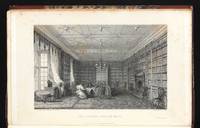
5008Four plates as usual a little foxed. xii 501 pp. 8vo orig. half-morocco & orig. marbled boards joints & spine rubbed spine gilt t.e.g. others uncut. London: Printed for Private Circulation Only 1833. Limited to 100 copies only. This is the second of Miss Currer's library catalogues; the first was issued in an edition of 40 or 50 copies in 1820. "Miss Currer continually added to her collection and found it necessary to have a new 'Catalogue' compiled by Mr. C.J. Stewart. One hundred copies of this handsome volume were printed in 1833 for private circulation. It contains four steel engravings representing the book-rooms and outside of the house; two may be seen in Dibdin's works.The catalogue is admirably arranged after a modification of Hartwell Horne's system of classification and has a good alphabetical index. It is a model catalogue of a private library and is now rare and much sought after. Miss Currer's library.contained many rarities. It was rich in natural science topography antiquities and history. There was a fair collection of Greek and Latin classics.The books were all in choice condition many with fine bindings."-D.N.B. V pp. 340-41. Very good copy. Inscribed on the free front endpaper by Miss Currer to "Cooper Preston Esqr. With Miss Currer's King Regards." Bookplates of John Norcliffe Preston and A.R.A. Hobson. ❧ Gustave Brunet Dictionnaire de Bibliologie Catholique cols. 612-13. De Ricci pp. 141-43. hardcover books
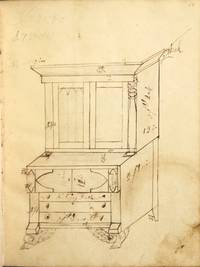
183561406Holley NY 1835. Small 4to notebook approx. 8 x 6 1/4 in. bound in original half calf over marbled boards containing approximately 80 leaves with manuscript entries and designs composed and drawn in ink and pencil; some blank pages scattered throughout. Approximately 50 designs including fully realized furniture styles with measurements some sketches or details of design elements table legs column styles acanthus leaf patterns etc. some more abbreviated images of design features. Dates on some of the drawings indicate the notebook was used between 1830 and 1833. One manuscript entry includes a grid-style list of prices for joints in various woods; another describes the construction of a portable desk giving the cost of various additions to the basic design such as a hollow for pens a square drawer and a book rest. Another 10 pp. offer approximately 18 recipes for stains and varnishes. Three loose scraps containing designs laid in. Moderate wear dampstaining to endpapers otherwise very good. The letterpress broadside advertises Richardson's business and reads in part: "Holley / Cabinet / Ware House. / C. Richardson / would inform the people of Holley and vicinity / that he still continues the cabinet making business 3 doors south of Perry's Tavern." Brockport: A. Edwards Printer 1835. The broadside measures 14 x 11 in. printed in various sizes and styles of type with a central composite image of period furniture including a dresser chairs settee and wash stand the text within a thick ornamental border. Old fold lines some foxing else a nice example. This broadside appears to be unrecorded. A very faint contemporary pencil notation on the front endpaper of the notebook reads "Chase Richardson 1832." This is most likely the same Richardson who had the broadside printed given that some of the illustrations on the broadside appear to be taken from drawings in the accompanying manuscript. Records from Hillside Cemetery Clarendon Orleans County NY just 3 miles from Holley NY mention a Chase Richardson 1810-1839. Both items are housed in recent cloth clamshell boxes with gilt stamped leather labels. At the beginning of the 19th century the furniture industry in America saw a sudden shift of its epicenter from Philadelphia to New York. Dubbed the "London of America" it was thought at the time that New York would in fact be the leader in business in the United States. To facilitate the cabinetmaking industry a new directory for cabinetmakers in New York was published in 1805 and various guides were issued helping craftsmen to price their furniture. Styles were elegant and influenced highly by the European furniture which was also being imported into New York. Phyfe Allison and Ash produced some of the finest examples of furniture from that period. However although the high styles of the time may have been determined by these well known cabinetmakers others imitated and added their own interpretations.<br/>John L. Scherer in his exhibition catalog "New York Furniture: The Federal Period 1788-1825" Albany: 1988 states: "Eventually cabinetmakers in upstate towns and villages who picked up New York City styles rendered their own versions. Using local woods this furniture evokes a spirit of the time with a dash of country charm. As trends in New York State furniture moved upstate they also spread across the country. New York remained in the forefront of furniture design and production until the end of the century." This fine group of material illustrates an 1830's provincial craftsman working in the newly fashionable Empire-style designs. Among the more fully executed designs in this notebook are a washstand stool dressing tables and secretaries each with detailed measurements. Some are titled such as "French Bureau" "Grecian Card Table" and "Portable Secretary." Others may have been sketched during a trip to York Ontario now Toronto including "York Bureau No. 1 and 2." Richardson was aware of the developments in furniture design in other parts of the state. One of the notes beside a drawing of a "Dress Beauro sic Plain" mentions what the same item sold for at Meads & Alvords. John Meads & William Alvord operated a successful cabinet-maker's shop in Albany NY until Alvord's death in 1847 according to a "Bi-centennial History of Albany" published by W.W. Munsell in 1886. The notebook also includes details of carving designs such as foliage scrolls turning profiles and volutes. In the back of the volume are several recipes for varnishes and stains some intended to imitate more expensive materials such as mahogany curly maple and marble. For example to imitate birds eye maple one had only to mix "cuprite two shades darker than white lead & chrome yellow & V. Red plus Raw Terra de Sena" using a quill and fingers as tools. Many of these recipes are credited to other cabinet-makers residing in Ontario and northern New England. A recipe for white varnish came from John Bradshaw of Waterson sp a stain for Rose Wood Chairs from Silas Alden of Boston a German Polish recipe from Clark H. Ober of New Ipswich etc. While information and documentation for furniture makers in the larger cities is often obtainable information on smaller local artisans is much more scarce. <br/>Both items were inherited by Gertrude Cole Simmons 1895-1985 of an old Holley-area family. Her grandmother was Ellen Maria Richardson Cowles 1838-1873 who may have been the daughter or niece of the cabinet maker C. Richardson. <br/><br/> hardcover books
183548691Holley NY 1835. Small 4to notebook approx. 8" x 6¼" bound in original half calf over marbled boards containing approximately 80 leaves with manuscript entries and designs composed and drawn in ink and pencil; some blank pages scattered throughout. Approximately 50 designs including fully realized furniture styles with measurements some sketches or details of design elements table legs column styles acanthus leaf patterns etc. some more abbreviated images of design features. Dates on some of the drawings indicate the notebook was used between 1830 and 1833. One manuscript entry includes a grid-style list of prices for joints in various woods; another describes the construction of a portable desk giving the cost of various additions to the basic design such as a hollow for pens a square drawer and a book rest. Another 10 pp. offer approximately 18 recipes for stains and varnishes. Three loose scraps containing designs laid in. Moderate wear dampstaining to endpapers otherwise very good. The letterpress broadside advertises Richardson's business and reads in part: "Holley / Cabinet / Ware House. / C. Richardson / would inform the people of Holley and vicinity / that he still continues the cabinet making business 3 doors south of Perry's Tavern." Brockport: A. Edwards Printer 1835. The broadside measures 14" x 11" printed in various sizes and styles of type with a central composite image of period furniture including a dresser chairs settee and wash stand the text within a thick ornamental border. Old fold lines some foxing else a nice example. This broadside appears to be unrecorded. A very faint contemporary pencil notation on the front endpaper of the notebook reads "Chase Richardson 1832." This is most likely the same Richardson who had the broadside printed given that some of the illustrations on the broadside appear to be taken from drawings in the accompanying manuscript. Records from Hillside Cemetery Clarendon Orleans County NY just 3 miles from Holley NY mention a Chase Richardson 1810-1839. Both items are housed in recent cloth clamshell boxes with gilt stamped leather labels. At the beginning of the 19th century the furniture industry in America saw a sudden shift of its epicenter from Philadelphia to New York. Dubbed the "London of America" it was thought at the time that New York would in fact be the leader in business in the United States. To facilitate the cabinetmaking industry a new directory for cabinetmakers in New York was published in 1805 and various guides were issued helping craftsmen to price their furniture. Styles were elegant and influenced highly by the European furniture which was also being imported into New York. Phyfe Allison and Ash produced some of the finest examples of furniture from that period. However although the high styles of the time may have been determined by these well known cabinetmakers others imitated and added their own interpretations. John L. Scherer in his exhibition catalog "New York Furniture: The Federal Period 1788-1825" Albany: 1988 states: "Eventually cabinetmakers in upstate towns and villages who picked up New York City styles rendered their own versions. Using local woods this furniture evokes a spirit of the time with a dash of country charm. As trends in New York State furniture moved upstate they also spread across the country. New York remained in the forefront of furniture design and production until the end of the century." This fine group of material illustrates an 1830's provincial craftsman working in the newly fashionable Empire-style designs. Among the more fully executed designs in this notebook are a washstand stool dressing tables and secretaries each with detailed measurements. Some are titled such as "French Bureau" "Grecian Card Table" and "Portable Secretary." Others may have been sketched during a trip to York Ontario now Toronto including "York Bureau No. 1 and 2." Richardson was aware of the developments in furniture design in other parts of the state. One of the notes beside a drawing of a "Dress Beauro sic Plain" mentions what the same item sold for at Meads & Alvords. John Meads & William Alvord operated a successful cabinet-maker's shop in Albany NY until Alvord's death in 1847 according to a "Bi-centennial History of Albany" published by W.W. Munsell in 1886. The notebook also includes details of carving designs such as foliage scrolls turning profiles and volutes. In the back of the volume are several recipes for varnishes and stains some intended to imitate more expensive materials such as mahogany curly maple and marble. For example to imitate birds eye maple one had only to mix "cuprite two shades darker than white lead & chrome yellow & V. Red plus Raw Terra de Sena" using a quill and fingers as tools. Many of these recipes are credited to other cabinet-makers residing in Ontario and northern New England. A recipe for white varnish came from John Bradshaw of Waterson sp a stain for Rose Wood Chairs from Silas Alden of Boston a German Polish recipe from Clark H. Ober of New Ipswich etc. While information and documentation for furniture makers in the larger cities is often obtainable information on smaller local artisans is much more scarce. Both items were inherited by Gertrude Cole Simmons 1895-1985 of an old Holley-area family. Her grandmother was Ellen Maria Richardson Cowles 1838-1873 who may have been the daughter or niece of the cabinet maker C. Richardson. See also: Finkelman Encyclopedia of the New American Nation: The Emergence of the United States 1754-1829. Detroit 2006; Scherer New York Furniture: The Federal Period 1788-1825. Albany 1988; and Scherer New York Furniture at the New York State Museum Alexandria VA 1984. <br/><br/> hardcover books