Anonymous (JOHN EVELYN).:Biblio.com
134 résultats
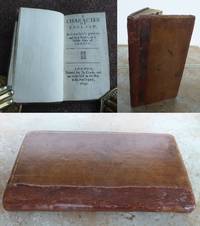
165952785<p>A CHARACTER OF ENGLAND. As it was lately presented in a letter to a noble man of France. SECOND EDITION 1659. The Second edition is one of three printed in the same year. The editions are easily recognised the title page in the first edition has present-ed and a small "s" after London and a different collation the second edition has present-ted and a comma after London the third edition has it printed on title page. 12mo small thin book approximately 120 x 60 mm 5 x 2½ inches pages: 6 1-66 collation A-C12 6 leaves in section "B" have paper fault to lower margins with slight loss of paper no loss to text see attached image and all leaves in this section have pale age-browning ESTC R213652. A PERFECT DESCRIPTION of the PEOPLE and COUNTRY of SCOTLAND London printed for J.S. 1659. Anonymous James Howell or Sir Anthony Weldon see Library Hub Discover. Pages: 2 1-22 last page blank pale age-browning throughout including title page ESTC R204012. Bound together in polished calf covers with old amateur repair to spine marbled endpapers engraved bookplate James Brindley Esq M.A.F. S.A to first pastedown. Spine rubbed corners worn at tips first inner paper hinge cracked a good tight copy. The Noble Man of France finds London to be a city with narrow streets and without fountains or running water. He admires St. Paul's and the Banqueting-house at Whitehall but is disgusted at the meanness of their surroundings. he then returns to complaints about the inconveniences of London and of the 'cloud of sea-coal'. . He has much to say of the national practice of drinking in Ale-houses and of the vile manners of the ladies and being Gaudy. He dislikes English social manners at dances at dinners in Hyde-park and in the Spring Garden. He is very difficult to please." - see full article in Keynes page 61. See Geoffrey Keynes John Evelyn A Study in Bibliophily with a Bibliography of his Writings page 60-67 No. 15 " A True first edition of A Character of England containing 42 leaves and 71 numbered pages is an exceedingly rare book. It was soon reset and reprinted on 36 leaves with 66 numbered pages as our copy listed and this is also very uncommon"; Christies The Evelyn Library Part iv page 87 No.1682 listing a third edition; Sotheby's The Collection of Robert S Pirie Volume I page 217 No. 354 listing the second edition; Bloomsbury Auctions The Cetus Library page 40 lot No.118 this is the same copy as the Pirie copy. MORE IMAGES ATTACHED TO THIS LISTING ALL ZOOMABLE FURTHER IMAGES ON REQUEST. POSTAGE AT COST.</p> London, printed for Jo. Crooke, and are to be sold at the Ship in St. Paul's-yard, 1659. hardcover
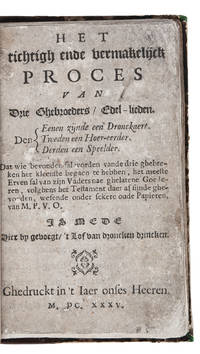
16351616Amsterdam 1635. Small 8vo 14.5 x 9 cm. Jacob Aertsz. Colom Half calf ca. 1830s with the binder's stamp on an endleaf F. DUQUESNE À GAND chemical marbled sides 2 black spine labels marbled endpapers. With 2 decorative initial letters castings made from woodcuts and a decoration made from cast fleurons on the title-page. The main text is set in roman type with long passages in italic and textura. 136 1 1 blank; 30 pp. Second known copy of the third edition 1635 of a rare satirical Dutch adaptation first and second editions 1634 of a moralistic story in Latin by Filippo Beroaldo 1453-1505 possibly intended in this adaptation to satirize the Princes of Orange. The quotations from classical sources are given in Latin each followed by a Dutch verse translation that takes some liberties with the text. Pieter Nootmans active 1627-1635 contributed a verse about the book printed on the back of the title-page. Following the main text is a drinking song by H. Rulant active 1632-1634 with its own part-title which had been published separately in 1632. We have located only one other copy of the present edition in the library of Tresoar in Leeuwarden.The British Library database of bindings includes one binding by this Ghent binder. The title-page is worn and dirty with a small abrasion obliterating the letter S in "Stichtigh" and the upper outside corner of the last leaf has been restored with the loss of a few words of the text of the added drinking song. The binding is good with some cracks in the hinges and minor damage along the edges.l KVK & WorldCat 1 copy; cf. Kruyskamp Jan Mommaert en het "Stichtelyck Proces" in: Het Boek XXX pp. 306-312 1640 ed. unknown
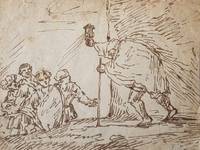
16502105Dutch mid-17th century drawing possibly by Rembrandt pupil Willem Drost. Depicted is Diogenes in robes with his lantern in his left hand and a staff in his right and a group of four figures. Diogenes the Cynic 4th cent. BC renounced material possessions and lived in poverty. He would go out with a lighted lantern in broad daylight to look for an honest man instead he would only find that everyone around him was morally corrupted. He would scare passersby with his lantern causing them to lose their mask and reveal their true intentions.In the present drawing the group of four is clearly scared by the lantern of Diogenes who seems to be towering over them. In fact the artist has placed Diogenes on a higher plane than the passersby an invention that effectively enhances the morality of the scene. This is not found in other contemporary depictions of the same story by artists like Rubens Sandrart Castiglione and Jordaens.The artistdisplays a masterful understanding and application of chiaroscuro. Not only does he use it for the composition he also applies it to benefit the narrative. Light is literally and figuratively at the center of the scene. The artist from the "Rembrandt school" who made most use of stark chiaroscuro in his drawings was Willem Drost 1633-1659. He became a student of Rembrandt around 1650 which corresponds with the dating of the watermark. The style of drawing is also close to drawings attributed to Drost. The facial type of Diogenes in particular the pointy nose corresponds with that found in each of Drost's drawings in the Rijksmuseum. Also the hatchingsmatch those in other works by Drost who made much use of individual lines instead of a continuous zig-zagging stroke and penstrokes of varying thickness to create depth in his compositions Bonny van Sighem 2000.<i>Condition: Number 3 in pencil at the bottom previous attribution to Ferdinand Bol written in pencil on the back. Several small brown spots and a couple minor defects including one on the face of the central figure in the group top edge slightly frayed and creaded. Old repair with tape on the back at the top.Literature: B. van Sighem 'attributed to Willem Drost David Prevents Abishai from Killing Saul Amsterdam c. 1650 - c. 1655' in J. Turner ed. Drawings by Rembrandt and his School in the Rijksmuseum online coll. cat. Amsterdam 2000 Bonny van Sighem 2000; for the watermark cf. Churchill fig. 305; Heawood 305 & 307.</i>
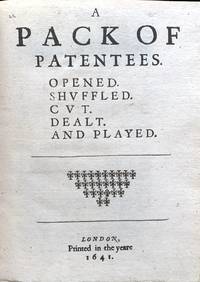
164117940London: n.p. 1641. FIRST EDITION. Type ornament device on title and woodcut headpiece. Polished calf signed “F. Bedford triple gilt fillet round sides spine gilt a.e.g. From the library of Lord Fairfax of Cameron with his armorial bookplate and the Huth bookplate lot 5630 Sotheby’s sale of July 17 1917. First edition of the very rare satire on the granting of monopolies. The anonymous author piles on the criticism of monopolies and patents granted on goods such as coal soap starch leather wine salt tobacco and butter. By the reign of James I patents had become so numerous and unfairly granted that they were considered oppressive and unjust to certain classes of people especially tradesmen and manufacturers. Except for “novel inventions†the King was finally forced to revoke all existing monopolies and declare that henceforth patents were only to be used for “projects of new invention.†This “Statute of monopolies†enacted in 1624 became the foundation for all later developments in patent law in England and elsewhere. It was a fundamental landmark in the transition of Britain’s economy from the feudal to the capitalist.<br /> <br /> Unfortunately James’s successor Charles I continued to abuse the patent system and it was only during the Restoration that the abuse was finally curtailed. The present work written during the reign of Charles I bitterly describes the injustices within certain trades and industries.<br /> <br /> Wing P156; ESTC locates 4 copies in North America Harvard Huntington NYPL McGill. n.p. unknown
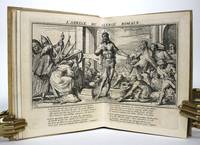
1695017087s.l.: s.n. 1695. 1st Edition. Hardcover. Near Fine/No Jacket. de Hooghe Romeyn; Dusart Cornelius. Small 4to 5.5" x 8". N.d. ca. 1695. S.l. likely printed in Amsterdam Dutch imprint reads "You will find them nowhere but they are sold everywhere in Holland by book and print sellers." Complete in two parts bound in one volume. Tweede Deel title page present lacking in many volumes. Parallel Dutch and French in Part 1 French quatrains and Dutch index in Part 2. Contemporary vellum over boards hand-lettered title to upper spine with spelling error. 4 19 1 104 pp. 25 numbered plates; 7 1 pp. 25 numbered plates. Features Romeyn de Hooghe's two-page frontispiece "L'Abrege du Clerge Romain" depicting Roman clergy torturing Jesus and collecting his blood which has turned to coins while his poor and infirm subjects look on. Contains a total of 50 mezzotint medallion caricature portraits attributed to Cornelius Dusart 1660-1704 by Landwehr. Binding tight but slightly tilted. A few stains to vellum. Light foxing else very clean and well-preserved. Comital bookplate with shelf number to front pastedown likely Belgian or German. Owner inscription of Hecht with their Latin inscription further pencil notations. Inscription of Cottet Oct 66. A rare desirable complete first edition of one of the most famous and remarkable examples of Dutch graphic caricature. The content is a scathing anti-Catholic and anti-monastic satire portraying monks and nuns as brutalized cruel malicious drunken lecherous avaricious and murderous. It was compiled and published by Huguenots during the diaspora and in reaction to the revocation of the Edict of Nantes by Louis XIV in 1685. With the mocking false privilege of Pope Innocent XI d. 1689. Brunet IV 1235; Cohen-de-Ricci 866; Landwehr Romeyn de Hooghe 70; Hollstein. Scarce. s.n. hardcover
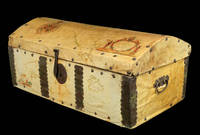
16902196Spain c1690. 320 by 740mm. 12.5 by 29.25 inches. Wooden chest clad in vellum manuscript maps with wrought iron handles rivets lock and clasp. A very unusual piece of cartographic history. It was common for seafarers to have sturdy wooden chests for storage whilst on a voyage but the owner of this chest chose to have it covered it with manuscript maps drawn on vellum possibly by their own hand with the decorative ironwork fitted on top. The lid is covered with a map of North and Central America with the Darien Isthmus labelled to the south and decorated with an elaborate compass rose and title cartouche supported by figures of Native Americans. The map on the front is decorated with a title cartouche showing a sea god. The sides are covered with maps of the East and West Indies decorated with ships. It is remarkable that the maps have survived given the treatment they would have encountered at sea. hardcover
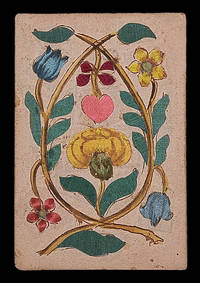
168021834Germany c1680. 93 by 65mm. 3.75 by 2.5 inches. A luxury silk and brocade deck 36 playing cards coloured silk and brocade laid between paper. The Maker There is no information on the present deck of cards about its maker but the nature of the materials used demonstrate that he or she must have been working for some extremely wealthy clients. The Cards The present cards are uniquely luxurious each one being comprised of layers of coloured silk and brocade laid between two sheets of paper. The different layers of fabric give the images added depth which reinforces the sense of meticulous craftsmanship. The janiform eagle which had been a symbol of the German emperors since the fifteenth century points towards a German origin for these cards. Indeed Hargrave records another deck of silk trappola cards from the seventeenth century which appear to have been made in Germany. It has been tentatively suggested that hearts represent France with Louis XIV as King; spades Russia with Peter the Great as Tsar - the jack bears the double headed-eagle of the Russian Empire; clubs the Holy Roman Empire with Leopold I as Emperor - he holds a shield bearing the imperial eagle; and diamonds the Ottoman Empire with - possibly - Mehmed IV as Sultan; the jack holds a falcon: falconry was one of the most popular pastimes in the Ottoman court. unknown