42 résultats
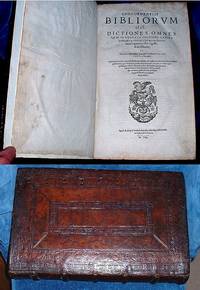
156388786Robert Estienne | Paris 1563 | 11 x 16 cm | Broché
156388786Paris: Robert Estienne 1563. Fine. Robert Estienne Paris 1563 11 x 16 cm Broché Rare original edition of this work not listed by Renouard. Disbound copy internally well preserved. Robert Estienne unknown
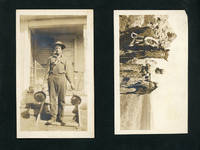
151948641Sentinel Butte: 1915-1916. 1915-1916. NORTH DAKOTA. Eighty-one black and white photographs most sized 4 1/2" x 2 3/4" and glued directly to pages of the album. Also includes one postcard also mounted directly to the page. It appears that several of the photographs have writing on the back. Also it does not seem that it would be too difficult to removed the photos to see exactly what is written. Gently lifting the edges of the first photograph in the album I can see "Cook for the G.H. Triangle outfit." Below the statement is a hand-drawing of the ranch's brand. Only a couple of the photos are labeled on the face of the photograph but the album for the most part involves the ranching life at the turn of the 19th century in North Dakota. The album was most likely compiled by an eastern gentleman by the name of Fred who traveled to Sentinel Butte in 1915. One of the photos states he arrived at the Sentinel Butte's train station on March 9 1915. Many of the photos are of cowboys wearing "woolies" leather cuffs carrying rifles shooting a cow saddles with lariats the ranch bugler a cowboy with a Navajo Indian blanket around him holding a rifle the train station at Sentinel Butte feeding a calf cowboys holding cattle on free range steam thresher being pulled by horses a large group of mounted cowboys watching some sort of competitions and several scenes of a quarry. Another photo shows a cowboy wearing wrist cuffs and caring a gun and holding coyote pelts while still another shows two cowboys unloading grain from a buckboard. There is a long range photo showing the ranch house the silo windmill and barns and another labeled "The First Harvest in Golden Valley N.D. - Sentinel Butte." The post card is labeled Dedication of St. Joseph's Hospital Dickenson N.D. March 31 1912 and then written over the card is "This is where Fred was when he had Typhoid Fever while out West in 1916." In a photo showing the main street of Sentinel Butte is the Blazed Trail Store with several cowboys on horses in front of it along with a lone gas pump. It is scarce to find North Dakota ranching albums featuring the actual day to day operations of a cattle ranch. Founded in 1902 along the transcontinental rail line of the Northern Pacific Railway the town in the 2010 census only had 56 residents. Its name comes from the prominent butte three miles to the south which had been named in honor of two Arikara sentinels killed nearby in 1864 by the Sioux. A rather remarkable cowboy photo album giving a sense of how desperate ranching was and still is in the western part of North Dakota. Most photos having very good contrast. 1915-1916. hardcover
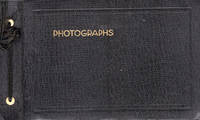
151945859N.P.: 1915-1948. 1915-1948. 5 1/4" x 8 3/4" x 2" in limp faux black calf post-binder with title PHOTOGRAPHS stamped in gilt on front cover sewn at gutter margin with black silk braid. 100 pp on thick black paper. 178 silver gelatin and silver print photographs sized 1 1/2" x 2" up to 4 1/2" x 6 1/2" all with identifying text below in white ink. A well-documented photo album recording the automobile travels of a young German-American woman and her beaus through the West and Midwest from before World War I through the Roaring 20s the Great Depression and post-World War II. The album carefully documents the friends family and places visited as well as the vehicles. The earliest automobile trip involves a 1923 Ford Model T 2-door given to our chronicler by Mac McGuire who also generously presents a trotting racehorse with several photos showing the car scenes in and around Illinois Illinois horse tracks as well as Mac himself. The 1925 Buick 2-door coupe experiences a much wider group of excursions including stops and views through Telluride Colorado with views of the town street scenes the mines as well as the “Gang” at the Hotel Telluride including the Chinese-American Cook. The album also shows views of the Painted Desert the compiler in front of the plane in Rock Springs Wyoming where she takes her first plane ride as well as sitting in the car in front of the US Airmail Service Hangar. In addition there are views of the auto trek to Yellowstone the dams along the way feeding the bears and even the Buick driving through the heavy brush. She apparently owns a 1927 Auburn 8-95 Coupe afterwards and visits include Petaluma California Santa Barbara and Pocatello Idaho with a view of the car and a Native American. The compiler consistently refers to herself as me my and mine and makes references to visiting relatives in 1948 after the War in Germany as well as a Sonnichsen relative released from Russian POW camp in 1948 but no indication of her name. Minor rubbing and edgewear along with minor wear to some of the leaves. A very good exemplar with all the photos retaining bright strong contrast. [1915-1948]. unknown
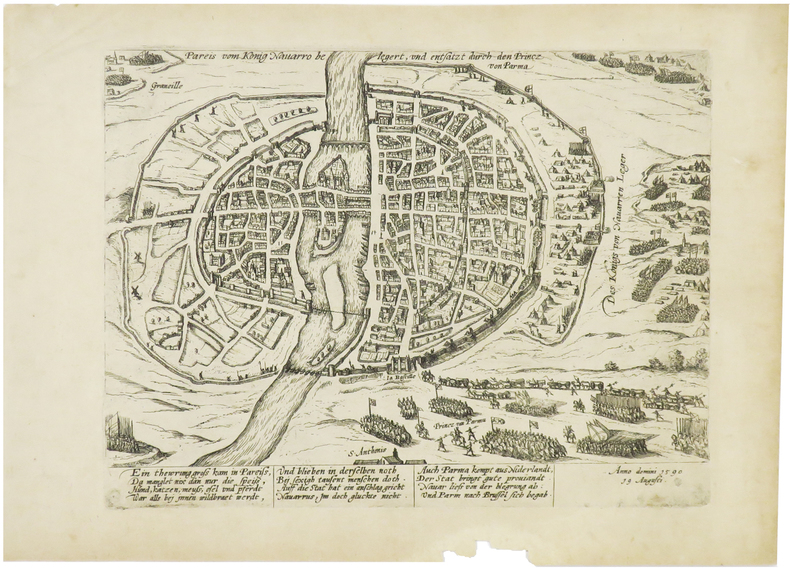
1590LBW-65151590?. 210 x 276 mm.
157053001Joannes Stelcius | Antverpiae (Anvers) 1570 | 6.50 x 11 cm | relié
157053001Antverpiae Antwerp Anvers Antwerp: Joannes Stelcius 1570. Fine. Joannes Stelcius Antverpiae Antwerp Anvers Antwerp 1570 6.50 x 11 cm relié New edition of this bible bearing the privilege on the verso of the title page dated January 20 1558. Preface by Johannes Hentenius and probably establishment of the text. Printer's device on title page. Decorated initials. Colophon on verso of last leaf: Excudebat Antverpiae Amatus Tavernerius anno M.D. LXIX. The text is found in the Vulgate version of the very famous Louvain edition of 1547; Charles V had indeed expressly requested a new more accurate version of the Bible and this was made from Greek Aramaic and Hebrew texts. This Old Testament comprises the Pentateuch: Genesis Exodus Leviticus Book of Numbers Deuteronomy and Joshua as well as the Book of Judges and Ruth. All other texts have been excluded from this edition: namely Book of Job Psalms Proverbs Ecclesiastes Song of Songs Wisdom of Solomon Ecclesiasticus but also the prophets: Isaiah Jeremiah. Full red morocco binding of the 17th century. Smooth spine decorated with 4 fleurons with frame of small dot tools. Gilt titles. Boards richly decorated with a central rectangle with medallion and leafy designs in the corners; corner tools and multiple framing fillets. Gilt edges. Tail headcap blackened with 2 small wormholes. Rubbing. Copy slightly warped. Missing the second marbled endpaper. Slight lack to upper joint at head. Handsome copy in decorated 17th-century red morocco. While references for this Antwerp bible can be found in libraries one notes that the collations of these bibles are not the same nor the format; thus the library of the Catholic University of the West at Angers shows Joannes Stelcius hardcover
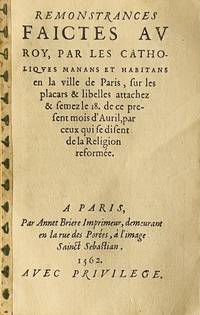
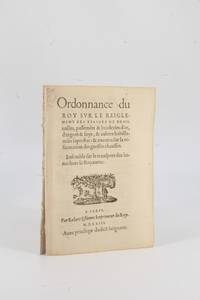
15622555A Paris: Par Annet Briere Imprimeur demeurant en la rue des Porées à l’image Sainct Sebastian 1562. First edition. Papered spine. In fine condition. First edition. Papered spine. ff. 4. <p><p><br /> First edition of this scarce Catholic attack on the Huguenots an important document of the French Wars of Religion.<br /> <p><p><br /> An anonymously published Catholic attack on the Huguenots who distribute placards and libels against orthodoxy. The prohibition of such defamatory publications was one of the main provisions of the 1562 Edict of January.<br /> <p><br /> Scarce USTC and FB French Vernacular Books list only one copy under the exact title which contains “manans et habitans en la ville†however it seems that the other title 6 copies lacking the aforementioned words in the bibliographies is in fact the same.<br /> USTC 27669 and 74708; FB 40754 and 40753. Par Annet Briere Imprimeur, demeurant en la rue des Porées, à l’image Sainct Sebastian unknown
1600V74274Frankfurt am Main: Heirs of Andreas Wechel: Claude Marne & Joannes Aubri 1600. Hardcover. Very Good. Woodcut printer's mark and a few woodcut head- and tail-pieces. . Folio fine English blindstamped Calf Binding attrib. to John Westall of Oxford c1606-1617 with 24 medallion heads between stylized foliage signed I.W. Restored by Trevor Hickman bookbinding lecturer at Leicestershire College of Art with his bookplate & binding details in pencil on new endpapers. All Edges Rouged Titlepage with Wechel printer's device but no place of imprint 6pp Prefaces 986pp with page numbers 869-70 left out but 871-2 used twice in succession. Pages 1-95 un-numbered p96 has last two and a bit columns of AZE- to AZY and then start of BAA but all un-numbered previous pages are present signatures starting from A1. Printed in 4 columns per page. Faint marginal damp mark to upper margin soon fading out some worming to margins usually just a few pin prick sized holes but in the V's some tracks again all marginal no text affected. Early Concordance Adams B1962 in splendid Oxford binding. In the Preface the anonymous editor credits the Frankfurt printers Marnius and Aubrius for this project: "viri pij de literis & literatis iam-pridem optime meriti quum de Latinis Concordantiis excudendis suscepissent consilium & nostram opellam ea in re petissent hunc ordinem sequi visum est". He dates the Preface Nonis Februariis anno primo seculi Millesimi sexcentesimi 1600 and cites six previous Concordances 1555-1584 on which this work is based. The printers Johann Aubry d.1601 & Claude de Marne d.1610 were sons-in-law of Andreas Wechel and his heirs in the business. Another copy of this book was owned by Francis Bacon 1561-1626 who recorded the price he paid 13s 4d Book Auction Records 1909. Heirs of Andreas Wechel: Claude Marne & Joannes Aubri hardcover
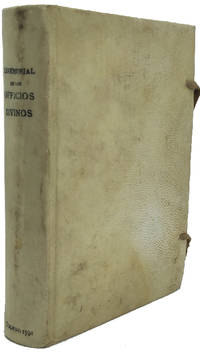
15918398Toledo: P. RodrÃguez 1591. Toledo P. RodrÃguez 1591. En 4º. 8 320 20 hojas. Portada con escudo xilográfico de los Franciscanos. Encuadernación en pergamino a la romana tÃtulo gofrado en la lomera. Cortes cincelados en rojo. Primera edición muy poco frecuente en comercio. Contiene los ritos y ceremonias de la Iglesia Católica durante los oficios. Perfecto ejemplar. P. Rodríguez unknown
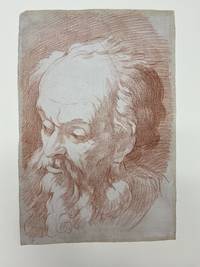
16002751<p>Venetian School. Sanguine drawing. 17th century. Size. With a watermark in the middle of the right eye. Margins: 10 x 7.</p>
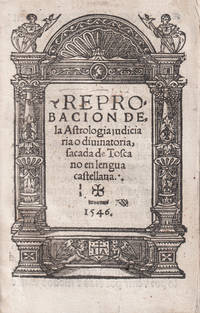
154610843Salamanca: Juan de Junta 1546. First Edition — Primera edición. Hardcover — Tapa dura. 134x94mm. 5¼x3¾". Salamanca Juan de Junta 1546. En 8º menor 134 x 94mm. TipografÃa gótica. 83 folios. Signaturas a-k<sup>8</sup> l<sup>4</sup>. Portada renacentista dentro de un tabernáculo arquitectónico xilográfico. Encuadernación del siglo dieciocho en pergamino. Primera y única edición de gran rareza de este libro publicado anónimo que ataca la astrologÃa judiciaria aquella que con sus predicciones se pueden declarar los efectos en las personas según la posición de los astros. Al tiempo que defiende la <em>astrologÃa natural</em> aquella que predice los fenómenos naturales según los movimientos del sol la luna y las estrellas denuncia el uso de la <em>astrologÃa judiciaria</em> para elegir el momento de las acciones como totalmente falsa y rechaza que la acción humana esté sujeta a la determinación de las estrellas debido a la existencia de la libre voluntad. No puede sacarse por ninguna parte de la obra ni el nombre del autor italiano ni el del traductor castellano si bien está generalmente admitido que el autor es Girolamo Savonarola. Nicolás Antonio menciona una obra de Antonio de Beja titulada <em>Tratado de astrologÃa judiciaria</em>. Buen ejemplar de este atractivo gótico castellano en su estado original. Pequeño taladro que afecta a una palabra de la última linea hasta mitad del volumen por lo demás perfecto. Juan de Junta hardcover
158520907<p><b>1585 DUTCH History Chronicle Divisiekroniek Netherlands Holland Zealand Woodcuts</b></p><p><b><u>"The keystone work of Middle Dutch historiography!"</u></b></p><p>The "<i>Divisiekroniek</i>" was the first and most important 16th-century Dutch national chronicle. It was notable for containing some of the most famous descriptions of Dutch history providing insight into the Renaissance in Northern Netherlands – Holland Zealand and Friesland – first printed in 1517. According to Blok the '<i>Divisiekroniek'</i></p><p>"was the usual reading-book in the 16th- and 17th-centuries for the ancient history of the countship of Holland and may be reckoned as the keystone of Middle Dutch historiography."</p><p>While the contents of this work are indisputably important the in-text woodcuts of kings and Dutch royals with their coats-of-arms are highly desirable and make this already famous work highly coveted.</p><p>Item number: #20907</p><p>Price: $4950</p><p>anonymous</p><p><b><i>Die cronycke van Hollant Zeelant ende Vrieslant. Noch is hier byghevoecht een cort verhael vande regeringe totten jare 1584</i></b></p><p>Dordrecht: Pieter Verhaghen 1585.</p><p><br /></p><p><u>Details</u>: </p><p>· Collation: Complete with all pages; 2 parts</p><p>o 16 CCLXXXIIII 284 leaves; XCIIII 94 leaves</p><p>o 19 woodcut engravings</p><p>· References: Petrus Blok <i>History of the People of the Netherlands </i>p. 396</p><p>· Language: Dutch</p><p>· Binding: Leather; tight and secure</p><p>o Includes two clasps</p><p>· Size: ~12in X 8in 30.5cm x 20cm</p><p>· Exceedingly rare valuable and desirable with auction records and price comparisons at upwards of $7500-$10000</p><p>Our Guarantee:</p><p>Very Fast. Very Safe. Free Shipping Worldwide.</p><p>Customer satisfaction is our priority! Notify us with 7 days of receiving and we will offer a full refund without reservation!</p><p>20907</p><p>Photos available upon request. </p> Pieter Verhaghen hardcover
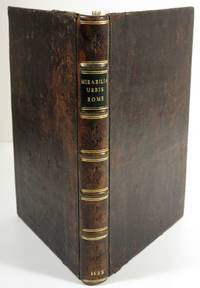
15229527Rome: Marcello Silber. Very Good with no dust jacket. 1522. Leather. Very scarce post-incunable edition of the famous marvels of the City of Rome bound as is common with a work on the indulgences of the churches of Rome. With 8 full page woodcuts papal arms and large initial. In two parts: 55 of 56 8 ff. A8-g8 missing a1 plus the 8 unnumbered leaves of the Mirabilia without signatures or catch phrases. Printing information on the Indulgentiae on g8 lacks title with image of wolf feeding the twins. Leaves have old hand-inked page numbers continuous through both parts. Small marks and occasional light stainsfirst few leaves have damp mark at bottom edge first leaf has marginal losses at bottom and stronger marks old neat ink notation at top of leaf date of 1522 written in top of leaf has papal seal of Hadrian VI 1522-1523. The Mirabilia has no title colophon nor illustration it is 22/23 lines with the only woodcut being the small first initial. In renewed leather boards with a new handsome spine with 5 raised bands and gilt. Renewed endpapers. Handsomely printed in Gothic type with 8 magnificent full page woodcuts plus the insignia on a2. The lines on the legendary Pope Joan have been neatly crossed out. The Mirabilia Romae is a rare text one of the first printed guide books to the marvels of the Eternal City. The tradition of the Mirabilia started in the medieval period as a guide for the use of Pilgrims combining Christian beliefs and the mythology and history of Rome. "Unhampered by any very accurate knowledge of the historical continuity of the city the unknown author has described the monuments of Rome displaying a considerable amount of inventive faculty" according to the Catholic Encyclopedia. The printer of this work is Marcello Silber who ran the family establishment in Rome until 1527. His father Eucharius Silber had printed a number of earlier editions of the Mirabilia including a 1491 incunable edition. This work with its wonderful woodcut illustrations is scarce in any edition. The Indulgentie conforms to G-250 of Rossetti's Rome I with 24 lines. We have not been able to identify which Mirabilia Rome Urbis this is: although the printing looks like Silber the paper is not the same as the Indulgentiae and as far as we can tell it does not conform to any of the Mirabilia in OCLC Rossetti Sander nor USTC. A very attractive copy inside and out. Provenance: the Joseph Mendham collection. ; Woodcut; 8vo 8" - 9" tall; 55 8 pages . Marcello Silber hardcover
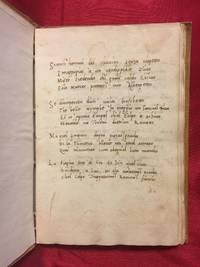
15102973Venice 1510. 8vo. in fours. Collation: A-Q4 COMPLETE. 64 ff. some signatures written in contemporary MS several erroneously neat modern foliation in pencil. Paper size: 155 x 105. Watermarks: Northern Italy ca. 1480-1520 see below. Bound in late 18th century Italian sprinkled ochre boards upper cover with title in MS. Text in Italian and with the titles of several poems in Latin. Several types of Italian humanistic literae cursivae all apparently by the same person see images below numerous corrections throughout. Fascinating Unknown Venetian Manuscript of Unpublished Sonnets and Love Letters ca. 1510.<br/><br/>An important discovery. Unknown manuscripts of unpublished Italian poetry written in Venice during the age of Aldus Manutius are rare in private ownership. The present manuscript contains 100 poetical compositions sic and merits considerable scholarly inquiry: certain sonnets and poems were extensively revised showing authorial development; the handwriting is perfectly clear in some instances modeled after contemporary Italian writing masters; and finally the codex is preserved in remarkably fresh condition and is perfectly suitable for exhibition and intensive study. <br/><br/>The manuscript consists mainly of sonnets in the style of Petrarch several capitoli and strambotti and includes many revisions variants and even cancellations to which two intriguing love letters were added. The name of the author is unknown but his identity may yet be discovered as he left a number of intriguing clues in the text the most obvious one being the family name Colonna famous in Venice and Rome and the names of several of his muses. <br/><br/>Certain sonnets exhibit handwriting reminiscent of Giovanni Antonio Tagliente ca. 1460s - ca. 1528 who worked for the Venetian Chancery and whose "Lo presente libro" Venice 1524 continues to inspire modern-day calligraphers and typographers. We may also reference the work of writing master Ludovico Vicentino degli Arrighi 1475-1527 who seems to have started his career in Venice before becoming a Papal scribe and type designer. <br/><br/>That the MS was written over a long period in some instances interpolated on formerly blank leaves is attested by the changes in handwriting and ink. To illustrate the development of the codex itself we propose an artificial division of four sections: <br/><br/>¶ Section A contains 42 sonnets written in the litera cursiva styles A and B. The neat humanistic handwriting is comparable with that used by contemporary Venetian scribes. If the text had been copied from previous drafts it is clear that the author remained unsatisfied as there are a number of substantive revisions in the text. In the upper margin of eleven sonnets were written the title of the poem - in Latin - at some point in the life of the MS. Two sonnets in this section were cancelled by the author. ¶ Section B contains 32 poems written in the litera cursiva styles C-G. These were presumably written in the same period except for some interpolated sonnets that were written slightly afterwards. ¶ Section C contains 16 poems one of which bears the date 27 Ianuarij 1510 fol. 46v. This section surely contains poems written in a different period including two sonnets fol. 49r-v that were written in the humanistic litera cursiva style A which begins the MS. ¶ Section D contains two Love Letters plus an Addenda of 10 "new" poems and capitoli hastily written. <br/><br/>That the author may have had thoughts on publishing his work is suggested by the "printer's signatures" that were written by him in ink in the lower margins of the first 16 leaves. If such a book was ever printed it has not been located; indeed not even a single poem has been traced see below for a complete Index Poematum. <br/><br/>The fact that the author never signed his work may be due to the private and very personal contents of this Canzoniere. The work was probably begun by the author as a young man and for years it served as a vehicle of consolation for unrequited love. <br/><br/>Faustina Helena Colonna Laura Arianna<br/><br/>In the first sonnet Stanch'ormai dal cacciar senza rispetto fol. 1r the author claims to have met "three beautiful nymphs" during a break from hunting. A possible connection to the Colonna family is first suggested in Sonnet II A una colonna d'alabastro fina 1v in which the poet declares his eternal lover for Faustina "ni altra Dea adorerò ch'a Faustina." The word colonna is found in other compositions throughout the Canzoniere suggesting that at least one of the author's muses was a member of the famous Colonna family. Sonnet XVIII Ardo piango sospiro et a tutt'hore 9v ends with the verse chiedendo sempre a un cor di marmo a una colonna viva "always begging a marble heart a living column" again suggesting by means of a well-crafted literary image the Colonna family. Most importantly the actual name "Helena Colonna" appears as the caption heading to Sonnet LXXXII Da una marmorina Alta colonna 48v. Lady Colonna may be referenced in the first Love Letter 53v in which the author describes her as alta colonna di mia vita "high column of my life". No longer is the Colonna surname obscured behind imagery. <br/><br/>The promise of endless love to Faustina was not kept unless the author cleverly utilized more than one name for the same woman a not-uncommon practice in this particular genre. Two other names appear herein namely Laura and Arianna. That the author may have had changes of heart might be due to the fact that he seems to have written the poems over an extended period of time see images of the handwriting development A-G and is therefore a record of failed love years in the making. The sonnets reflect perpetual desperate longing almost always to the point of death. How could it be otherwise<br/><br/>The Philosopher and His "Poetessa" Muse<br/><br/>In Sonnet LI I' solea ben la penna et l'intelletto 28v the author states quite clearly that the object of his desire was also a poet declaring that a mortal blow has pierced his side because he has lost the paper the ink and each amorous rhyme of his Lady's verse persi la carta l'inchiostro e ogni amoroso detto. The author claims that he is much better at writing about philosophy:<br/><br/>Smaritha quella strada. altro sentiero<br/>Hora mi è scorta mi governa et regge<br/>Qual va fina Avicenna e agli aphorismi<br/>Ove Signor si vostre rime egregge<br/>Non han da me risposta: a dirvi 'l vero<br/>Mi torna meglio scriver Syllogismi.<br/><br/>"The road is lost. A different path is now taking me to Avicenna the philosopher and to Aphorisms where Lady your excellent rhymes have no answer; to tell you the truth I'm better in writing Syllogisms." Thus the identity of the author a "reluctant poet" may be found among contemporary Venetian philosophers. <br/><br/>Index Poematum<br/><br/>Section A litera cursiva styles A and B:<br/><br/>I. Stanch'ormai dal cacciar senza rispetto "Stanch' hormai dal chacciar senza rispetto" fol. 1r<br/>II. A una colonna d'alabastro fina 1v<br/>III. Deponni l'archo la pharetra Amore 2r: textual corrections<br/>IV. Deh! Potess'io canggiar tecco mia sorte 2v: caption title in Latin<br/>V. Non posso più celar la fiamma ardente 3r: caption title in Latin<br/>VI. Era tutto coperto d'adamante 3v: caption title in Latin textual correction<br/>VII. Vedendo de gli fior le Vite corte 4r: caption title in Latin textual correction<br/>VIII. Vaten felice Aventurata Rosa 4v: caption title in Latin<br/>IX. L'esca gli stral et l'amorosa Rete 5r: caption title in Latin<br/>X. Quando sera quel giorno che chi m'have 5v: the entire sonnet cancelled<br/>XI. Dolce m'e 'l giogo et la pregion men grave 6r: caption title in Latin<br/>XII. La singular mia fede che vi porto 6v: entire sonnet cancelled<br/>XIII. Ardo d'Amor et ho la fiama viva 7r: caption title in Latin textual corrections<br/>XIV. Donna gentil fin hor son sta patiente 7v: caption title in Latin<br/>XV. Se mai per tempo alchun mi vedrò sciolto 8r: caption title in Latin<br/>XVI. Amor un dolce viso teso havea 8v: caption title in Latin<br/>XVII. Madonna ogni mio ben da dolci Rai 9r<br/>XVIII. Ardo piango sospiro et a tutt'hore 9v<br/>XIX. Qual vero Pregionier al sacro Tempio 10r<br/>XX. Sono doi animali un de si altera 10v<br/>XXI. Un scoglio d'una Pietra è tanto ardita 11r<br/>XXII. Amor in guisa d'huom che guerra aspetta 11v<br/>XXIII. Il mie Adversario a cui in tutte l'hore 12r<br/>XXIV. Amor nel volto mio ben più di mille 12v<br/>XXV. Sapete che ben solo me nutrisco 13r<br/>XXVI. Una che qui tra noi excider suole 13v<br/>XXVII. Si questo e ver Amor como se dice 14r<br/>XXVIII. Donna gentil mi sento 14v<br/>XXIX. Deh! Perché non vi è noto il mio dolore 15r<br/>XXX. Se gli è pur mio destin ch'amando i' rompa 15v<br/>XXXI. Sempre vidi Iustìa star accorta 16r<br/>XXXII. Come voi ho et d'enverno et d'estate 16v: textual corrections<br/>XXXIII. D'un verdeggiante Lauro un giorno Amore 17r: textual corrections<br/>XXXIV. Gli occhi leggiadri ove ch'alberga Amore 17v: final line verse rewritten in an 18th century hand<br/>XXXV. S'io fusse di sospir Et pianto privo 18r: extensively revised then completely cancelled<br/>XXXVI. Gratie che a pocche donne Amor concede 18v<br/>XXXVII. Occhi miei lassi ho ben mirare Fiso 19r: textual corrections<br/>XXXVIII. Il Pellegrin avintto dal disio 19v: textual corrections<br/>XXXIX. Il Chacciator che nel bosco la Ferra 20r<br/>XL. Smarite piaggie ov'hor piangendo torno 20v<br/>XLI. Mille fiate al di m'assale Amore 21r<br/>XLII. Ogni luocho mi spiace ov'io non trovo 21v<br/><br/>fol. 22r: S'io fusse de sospir et pianto privo: variant of Sonnet XXXV hastily written as a draft<br/>22v-23r: two pages of verse extensively revised and then apparently abandoned<br/>23v: blank<br/><br/>Section B litera cursiva styles C-G<br/><br/>XLIII. Amor Fortuna a sì'nfelice Sorte 24r<br/>Fol. 24v: blank<br/>XLIV. Lasso credendo haver pur qualche pace 25r: textual corrections<br/>XLV. Scoprir non posso l'amorosa fiama 25v<br/>XLVI. Miser vo pur scorgendo a passo: a passo 26r: textual corrections<br/>XLVII. Miser tutto ardo Et piango a tutte l'hore 26v<br/>XLVIII. Io viverei con la Phenice a prova 27r<br/>XLIX. Per la merce dil mio si longo affanno 27v<br/>L. Gli occhi beati intorno han l'esca e'l visco 28r: textual corrections<br/>LI. I' solea ben la penna et l'intelletto 28v<br/>LII. Sotto rara beltà nascosto è l'hamo 29r: textual corrections including one stanza cancelled<br/>LIII. Piango cantando 'n rime il mio lamento 29v: textual corrections<br/>LIV. Qual dolce mana qual esca qual visco 30r: introduction of "Laura"<br/>LV. Quando Madonna con dolci parole 30v<br/>LVI. In fronte meco i' porto l' ben e il male 31r: textual corrections<br/>LVII. Occhi ove ch'Amor sovente tresca 31v: textual corrections LVII and LVIII are written on the same page but in different handwriting styles<br/>LVIII. Che il tempo si consuma ogni fier cosa 31v: textual corrections<br/>LIX. Sol per farmi gustar mana in veneno 32r<br/>LX. Baso ogni giorno mille et mille volte 32v<br/>LXI. N'anti ch'entrasse un'hora me ritrovo 33r<br/>Fols. 33v-34r: blank<br/>LXII. Lauda le ver ch'ogni fidel amante 34v<br/>LXIII. Laura soave che si dolcemente 35r: reintroduction of "Laura"<br/>LXIV. Deh! Vi fusse si noto quanto ch'io ardo 35v<br/>Fol. 36r: blank<br/>LXV. Si come è vagho un vivido colore 36v: a capitolo written for "Arianna" <br/>LXVI. Maraveglia non è si ho mesto il volto 37r<br/>LXVII. Chi non vedrà quanto è mia bella 37v<br/>LXVIII. Dovran per mostrar gran maraviglia 38r<br/>LXIX. Si come è bello un vivido colore 38v: preliminary verses corrected cancelled and apparently abandoned<br/>LXX. Se mai per altra donna i' rompo fede 39r<br/>Fols. 39v-40r: blank<br/>LXXI. Et copre donna quel candido seno 40v: caption heading: "Laura S. C." <br/>LXXII. Amor da cui mai fu troppo lontano 41r<br/>LXXIII. Quella ch'un tempo la ti piacque tanto 41v-42r<br/>LXXIV. S'el primo di che mi piacesti tanto 42r-43r: ending with "Telos" in Greek<br/>Fol. 43v: blank<br/><br/>Section C:<br/><br/>LXXV. Vaga et smarita va Phylosophia 44r<br/>LXXVI. Spirto gentil in cui valor si trova 44v<br/>LXXVII. Occhi che nel mio cor fate il bel nido 45r<br/>LXXVIII. Gli occhi ove scherzar si vede amore 45v: textual corrections<br/>LXXIX. S'el vivo Sol et le doi chiare Stelle 46r: dated 27 January 1510 at Venice "M.E."<br/>LXXX. La meggia notte facea meggio giorno 46v: textual corrections <br/>LXXXI. Gratie da gli occhi uscian sante et si nove 47r: textual corrections <br/>Fols. 47v-48r: blank<br/>LXXXII. Da una marmorina Alta colonna 48v: textual corrections; caption title: "Helena Colonna" <br/>LXXXIII. Istarò sempre come scoglio al onde 49r<br/>LXXXIV. Ogni supplitio dammi ogni martoro 49v <br/>LXXXV. Questo già non pensai superba Altera 50r<br/>LXXXVI. Deh! Pensa un poco a la mia Iniqua sorte 50v <br/>LXXXVII. Da poi che per amar son gionto a morte 51r<br/>LXXXVIII. Non è cosa mortal benchè in fra sphera 51v<br/>LXXXIX. Ben è infelice chi in fra mondo ingrato 52r<br/>XC. Se dil mio amor volevi esser felice 52v: textual corrections<br/><br/>Section D Sigs. O-Q4:<br/><br/>NB: These three gatherings have a waterstain which does not appear in any of the preceding gatherings or individual leaves. <br/><br/>First Letter: Honoranda et singular mia Diva la cui imagime como richo thesoro explicit: Vale o et praesidium et dulce decus meus 53r-54v<br/>Second Letter: Suolsi communemente dire almo mio Sole explicit: Vale. 54v-55v<br/>XCI. Così come un sasso accorto et destro 55r<br/>XCII. Né illegible word d'haver più pena vale 55r<br/>XCIII. A che mostrarmi pace nel aspetto 56v<br/>XCIV. Io son contento poi che m'hai nel Iocho 57r-57v<br/>XCV. Sacro santo mio nome Alma mia stella 58r-59r: caption heading: "Capitolo" / Finis<br/>XCVI. Rotto e carcho d'amor spreciato e l'arco 59r-60v: caption heading: "Capitolo" / Finis<br/>XCVII. Un dolce laccio ha fatto amore 61r-61v: textual corrections; caption heading: "Capitolo" / "Telos" in Greek<br/>Fols. 62r-63r: blank<br/>XCVIII. Mai rosa fu si vagha nel mattino 63v: caption heading: "Strambotti"<br/>XCIX. De' Lumi da begli occhi discendea 63v: caption heading: "Strambotti"<br/>C. Doi occhi da far arder 64r: caption heading: "Sonetto"<br/>Fol. 64r: blank<br/><br/>WATERMARKS: As the book is an octavo the watermarks appear in the upper gutter margins and thus only one half appears at one time; however it has been possible to identify them especially with the aid of the countermarks "angle" and "lettre B". Chapeau: type of Briquet 3456 Venice 1499 and Briquet 3461 Udine 1521. Balance: type of Briquet 2575 Venice 1478 Briquet 2587 Verona et al. 1525. unknown books
156957498S. n. | s. l. [Grenade] 1569 | 21.50 x 30.50 cm | relié
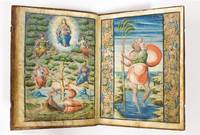
156957498s. l. Grenade Granada: S. n. 1569. Fine. S. n. s. l. Grenade Granada 1569 21.50 x 30.50 cm relié ILLUMINATED MANUSCRIPT ANONYMOUS Regla y Constitutiones de la Cofradia del Sanctissimo Sacramento de la Yglesia de San Christoval de Granada Autograph manuscript with three miniatures no publisher Granada 1569 folio 21.5 x 30.5 cm upper margin: 35 mm bottom margin: 50 mm interior margin: 30 mm exterior margin: 40 mm 31 ff. 16th-century full calf gilt Manuscript on vellum comprising 31 leaves: 50 pages of text ruled and lined and 3 full-page miniatures in colours heightened in gold. The four final leaves were numbered and partly ruled but left empty. Contemporary manuscript ex-libris on front endpaper. In Spanish throughout written in Caroline minuscule on 24 lines the text is very readable and very regular. The manuscript begins with a three-page summary covering the 24 chapters that comprise the Regla y constitutiones de la cofradia del Sanctissimo sacramento de la yglesia de San Christoval de Granada. One illuminated capital in red and blue indents and pagination in red small sketch in black ink to the inner margin. The verso of the final page of the summary has been ruled and lined in red but left blank. There follow the three full-page miniatures. The first shows a Communion scene on the recto of one leaf the second the Tree of Jesse verso of the same leaf and the third Saint Christopher bearing the baby Jesus recto of the following leaf. The verso of the miniature bears a short manuscript text explaining that these rules are those of the confraternity and brotherhood of the Holy Sacrament established in the Church of Saint Christopher of Granada on the 1st of May 1568. This is followed by the prohemio a prologue of two and a half pages in which the confraternity takes an oath; this starts with an imposing illuminated capital in red and blue. The chapters then follow on directly each with a tidy initial. The important terms are heightened in red allowing for quick navigation in the text. A long manuscript annotation to the outer margin of leaf 24. The aforementioned rules take up 23 ruled leaves ruled and lined in red. Leaf 27 bears two manuscript privileges. We have not been able to read the signature on the first dated May 1569 though quite elaborate. The second later one May 1596 is signed by Justino Antolinez de Burgos 1557-1637 at the time the Chaplain Royal charged with the inspection of ecclesiastical lodges. Long contemporary manuscript note to reverse of leaf 24. Contemporary light-brown calf spine in five compartments with gilt fillets and fleurons gilt fillet frame to boards small gilt fleurons to corner and a larger gilt fleuron to centre of covers. One clasp preserved. A few very skilful repairs and regilding practically invisible. This manuscript has three spectacular full-page miniatures in gouache heightened in gold. The first shows the Holy Communion with Christ himself establishing the Eucharist with the words This is my body this is my blood. The Apostles and Jesus with a halo blessing them are seated around a table set with bread and fish. This motif became a major theme of Christian art in the Renaissance as this miniature also shows. The second miniature shows the Tree of Jesse which symbolises the genealogy of Christ traced from Jesse Xese shown as an old man reclining. In keeping with the iconographic tradition a tree protrudes from his side the main branches of which bear some of Jesus's ancestors. Here they are: Zachary Jeremiah David an unidentified king and at the pinnacle Mary holding the Christ child within a mandorla. The third miniature presents a scene with Saint Christopher the patron of the Church in Granada to which the Confraternity of the Holy Sacrament was attached with a child on his shoulders as he was commonly represented. The iconography derives from a passage in the Golden Legend in which St Christopher helps a small b S. n. hardcover