Frankland, William and HugoBiblio.com
8 résultats
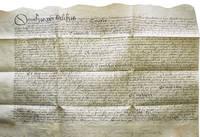
1568314595London 1568. 590 x 405 mm. Ink on parchment old folds signed in a contemporary hand on lower fold docketed in a contemporary hand on verso slightly effaced verso slightly darkened. 590 x 405 mm. This document would be an excellent paleographical example of English secretary hand with interspersed Gothic lettering used for emphasis. <br /> <br /> The legal terminology is straigthforward and usual for contemporary documents. Numerous locations within London are named though the hand is sometimes unclear enough to make the place names uncertain<br /> <br /> Both signatures -- of William and of Hugo Frankland -- survive clearly on the bottom fold above the vellum tags where wax seals would have originally hung the names above the corresponding seals. The extensive list of witnesses on the verso is of particular interest to any historian of early modern London. Names include: Richard Farmer Thomas Burton Henry Walker John Hellom and others<br /> <br /> In addition to its textual and historical interest this document would be excellent for teaching the material aspects manuscript history: it has the characteristically and distinctively "fuzzy" feel of English parchment which is unforgettable once encountered in person. unknown
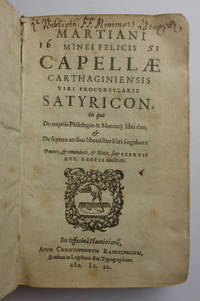
1599010034<p>Leida: Officina Plantiniana apud Christophorum Raphelengium 1599. Un volume in 8vo piccolo 105x165 cm di 32-336-80 pagine. Mancano come sovente i due ritratti di Enrico di Borbone cui è dedicata l'opera. Vecchia firma di possesso al titolo. Bruniture più accentuate in alcuni quaderni. Le note del Grotius qui in prima edizione occupano le 80 pagine finali non numerate. Grozio aveva sedici anni quando fu il curatore di questa edizione del Capella e compilò il commento. Legatura coeva in tutta pergamena con tracce di legacci. -"Le nozze di Filologia con Mercurio" è scritto in forma di satura ossia un misto di prosa e versi di vari metri. Con il suo impianto allegorico l'ascesa al cielo di Filologia accompagnata dalle arti liberali per sposare Mercurio ovvero l'Eloquenza risulta una specie di enciclopedia dell'erudizione classica che sarà diffusissima nel Medioevo cristiano. Le arti liberali sono ridotte dall'Autore da nove a sette poiché dopo le dotte esposizioni delle arti del Trivio - Grammatica Dialettica Retorica - e del Quadrivio - Aritmetica Geometria Astronomia e Musica - alle ultime due Medicina e Architettura non viene permesso di parlare alla festa nuziale che si è prolungata troppo."</p> Officina Plantiniana, apud Christophorum Raphelengium
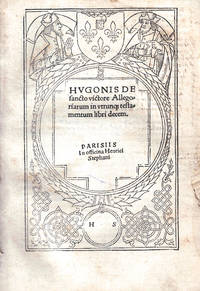
151712653Paris: Henrici Stephani 1517. 197x135mm. 7¾x5¼". Paris Henrici Stephani 1517. En 4º 197 x 135mm. 6 100 hojas. Sign.: A6 a-l8 m-n6. Portada grabada en madera ocupando la totalidad de la página iniciales decoradas grabadas en madera. Sin encuadernar. Primera edición de este tratado sobre las parábolas en el Antiguo y Nuevo Testamento del teólogo y filósofo Hugo de Sancto Victore 1097-1141 autor de numerosas obras incluyendo tratados de teologÃa comentarios a la Biblia obras de filosofÃa misticismo y artes. Estuvo especialmente influenciado por San AgustÃn de manera especial sosteniendo que el arte y la filosofÃa pueden ayudar a la teologÃa. Esta primera edición es muy rara. Pequeña restauración en el margen exterior de las primeras hojas sin afectar por lo demás perfecto. Ejemplar cosido sin encuadernar. Henrici Stephani unknown
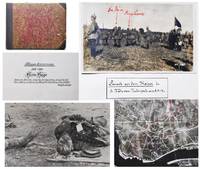
151925B045<p>A large photo album of 52 leaves with dipped in photos on each side. There is a total of ca. 394 pictures; 189 original photos 9 aerial photos 168 official buy photos and postcards 27 collotypes from a paper.</p><p>The size of the album is 32 x 41.5 cm.</p><p>There is also a unique unpulished photo of Kaiser Wilhelm visiting soldiers made by the author.</p><p>The photos in this album are unique documents showing the unvarnished truth of war. An album that should have its place in a museum.</p><p>The album was collated by a young German soldier named Hans Hugo who was born in Roth a small Bavarian town near Nuremberg Germany. Later he opened a photo studio in Roth that existed until the 1960ies. Hans Hugo was at war from October 1916 until the end of WWI in 1918.</p><p>The photos are from Belgium France and the Baltics. There are some exciting outstandingly rare large original air reconnaissance Photos. The largest of them showing a battle field near Riga measures 25 x 47.8 cm. These photos are original contact prints that were used in the general staff for the planning of battels. They have an extremely fine resolution so that under a magnification glass small details on the ground can be identified. Only a few original prints like this one have survived and today they are the pride of museum archives.</p><p>There are photos from battle fields downed aircrafts destroyed tanks and so on. Some of them are of excessive cruelty showing killed soldiers. Such photos were absolutely illegal as they were not in line with the official propaganda.</p><p>Furthermore there are photos from parades for high ranking persons: Generals princes and last not least the emperor Kaiser Wilhem II himself. These are original private photos by Hugo or one of his friends. These are not official photos. They are unique.</p><p>At the last pages there are a number of photos showing Hans Hugo or his comrades. Some of them have very macabre comments naming the date and place where they were killed.</p> hardcover
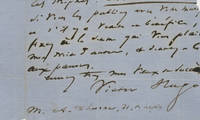
15122133015/12/1868. <p>From 1830 into the 1860's there were a series of massive political upheavals in Europe. Most were caused by the desire of the peoples of many nations to oust their royal elites and attain a fairer and more representative government. At the core of this was a struggle between the haves and have-nots. The elites fought back hard and there was fighting in the streets. There was a revolt in France in 1830 one in which Victor Hugo took part. but it led to the disappointing enthronement of King Louis Philippe. There was a widespread liberal revolution throughout much of the continent in 1848 which was crushed. In 1851 France was again in upheaval and Louis Napoleon seized power and proclaimed himself emperor. By 1860 forces in Italy and Germany sought to unify their respective people in national entities and wars were in progress that would soon achieve those goals. Thus there was both a significant reorientation of the political landscape the frustration of populist movements and the rise of nationalism and the modern nation state. Meanwhile in the United States brother fought against brother not against royal elites but on behalf of ideals.</p><p>In the world of philosophy and literature the most important year was 1862. That spring Victor Hugo released to the public a work of great scope – Les Miserables – that brilliantly examined the nature of good evil and the law in a sweeping story that encompassed history politics morality philosophy law justice and religion. It had taken 17 years to complete. It focused squarely on the poor of the streets of France during the French uprising and the protagonists were people with no means or those who had previously been poor. Hugo was a champion of the poor. He left five sentences as his last will to be officially published: ""I leave 50000 francs to the poor. I want to be buried in their hearse. I refuse funeral orations of all churches. I beg a prayer to all souls. I believe in God.""</p><p>La Légende des siècles The Legend of the Ages is a collection of poems by Hugo conceived as an immense depiction of the history and evolution of humanity. Written intermittently between 1855 and 1876 while Hugo worked in exile on numerous other projects the poems were published in three series in 1859 1877 and 1883. Bearing witness to the unparalleled poetic talent evident in all Hugo's art the Légende des Siècles is often considered the only true French epic. In it he contemplated the ""wall of the centuries"" indistinct and terrible on which scenes of the past present and future are drawn and along which the whole long procession of humanity can be seen. The poems are depictions of these scenes.</p><p>Alphonse Auguste Frédéric Thurner was a musician and friend of Hugo. He published the ""Chanson d'Edviradnus"" in 1886 after Hugo's death based on ""La Légende des Siècles"".</p><p><strong>Autograph letter signed</strong> December 15 1868 to Thurner.<em> ""Sir your book is an excellent treatise. I learned a great many things and thank you. Title these stanzas La Chanson d’Edviradnus. If you published them accompanied by your music and there are sales and profit kindly fix a sum that you feel appropriate as my takek as author and donate it to the poor.â€</em> In French that reads ""<em>Si vous les publiez avec votre musique et s’il y a vente et bénéfice fixez à la somme qui vous plaira mon droit d’auteur et donnez-le aux pauvres.""</em></p><p>This work was published by Thurner one year after Hugo's death.</p> unknown
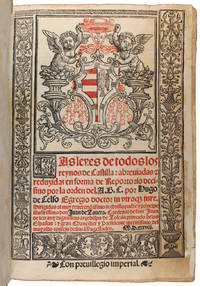
15387227Valladolid: Nicolás Tyerri 1538. First Edition Primera edición. Hardcover Tapa dura. 420x210mm. 16½x8¼". Valladolid Nicolás Tyerri 1538. En folio 320 x 210mm. Tipografía gótica. 8 364 folios. Portada en rojo y negro dentro de orla tipográfica y gran escudo arzobispal de Juan de Tavera grabado en xilografía a media página. Texto dentro de rectángulo tipográfico. Encuadernación de la época en pergamino. Primera edición de este libro estimado y de singular rareza posiblemente la recopilación de leyes de Castilla más importantes realizadas durante el reinado de Carlos I. Desde luego es la obra más importante de este controvertido jurista y por la que Hugo de Celso ha pasado a la posteridad; es una obra continuadora de la tradición jurídica iniciada desde la época romana a cuyo lado cabe situar también el <em>Repertorio de todas las leyes de Castilla</em> 1529 de Jaime Soler y el <em>Repertorio de la Nueva Recopilación de las leyes del reyno</em> 1571 de Diego de Atienza. Sin embargo ninguno de ellos tuvo el éxito y la aceptación como el <em>Repertorio</em> de Celso lo que se tradujo en cuatro ediciones posteriores. Fue el repertorio más completo y minucioso que cualquiera de los anteriores cuyo fin era facilitar el conocimiento estudio y consulta de la legislación castellana vigente única que podía ser alegada en juicio en Castilla al menos en teoría. Además Celso incorpora voces de derecho privado y respecto a las voces comunes transcribe parte de los textos legales en que se basa. "Condenado por herejía y bigamia Hugo de Celso escribió <em>Las leyes de todos los reynos de Castilla</em> con el fin de financiar su fuga de las cárceles de la Inquisición de Toledo. Hay constancia de que el 15 de octubre de 1537 firmó un contrato con Claudio Tupin librero de Lyon que exportaba desde Salamanca por el que se comprometía a escribir algunas obras jurídicas entre ellas el Repertorio decisivo que se publicó a finales de 1538 con dedicatoria al cardenal Tavera arzobispo de Toledo e Inquisidor General al año siguiente en un intento de conseguir más beneficios penitenciarios. Sin embargo cuando el libro salió a la luz Hugo de Celso ya había puesto en práctica otra decisión más drástica sobre su futuro: había urdido financiar su fuga con el dinero que Claudio Tupin le había entregado por escribir su Repertorio. El 13 de noviembre de 1538 la Inquisición pregonó la fuga del doctor Celso y el 22 de ese mes se le otorgó un plazo de treinta días para que regresara voluntariamente so pena de declararle contumaz. Un año más tarde el 11 de marzo de 1539 fue descubierta su presencia en Toulouse". J. Alvarado Planas Anotaciones manuscritas contemporáneas en los márgenes. Portada y primera hoja restaurada al verso en el margen exterior sin afectar; AA<sup>5</sup> con antigua restauración en el margen inferior sin afectar; primeras hojas de preliminares con suciedad en el margen primeros diez folios del texto con pequeña mancha en el margen exterior. Rasgadura restaurada en b<sup>4</sup> yy c<sup>1</sup> b<sup>3</sup> con pérdida de la esquina superior afectando a la numeración del folio v<sup>1-8</sup> con mancha en el margen exterior B<sup>3</sup> y B<sup>8</sup> con antigua restauración en el margen sin afectar; pequeñas restauraciones antiguas en D<sup>1</sup> D<sup>7</sup> y H<sup>5</sup>. K<sup>2</sup> rasgada con pérdida de algunas palabras de las dos últimas líneas. Y<sup>6</sup> con restauración en la esquina superior del margen. Algunas páginas ocasionales ligeramente amarronadas. Aun estos pequeños defectos generalmente pequeñas restauraciones antiguas en los márgenes es un ejemplar atractivo y genuino. Nicolás Tyerri hardcover