84 résultats
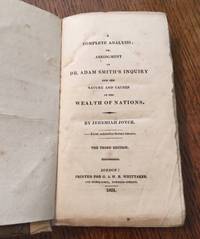
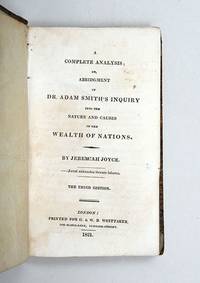
182155104London:: Printed for G. & W. B. Whittaker 1821. The Third Edition. original boards; green cloth spine with printed paper label. . Spine sunned; spine label tanned; but a beautiful copy in original condition. 12mo. Printed for G. & W. B. Whittaker, hardcover
1900IYClaJOY38New York: Murphy & McCarthy Publishers 1900. 1900. 4to. unpaginated. text in double columns. errata slip. additional chromolithographed title 20 double-sided chromolithographed plates of coats of arms 32 chromolithographed maps 1 other chromolithographed plate & numerous b/w plates & full-page illus. original gilt-stamped cloth. Hardcover. New York: Murphy & McCarthy, Publishers, 1900. Hardcover
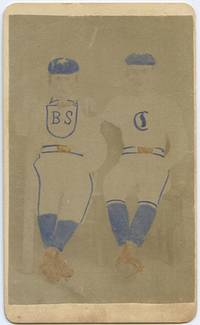
1868554278Bridgeton N.J.: Joyce Photographer 1868. Unbound. Fair. Carte d'visite. Albumen image with watercolor highlights provided by hand to the stockings belts shirts and caps. 2.5" x 3.75" on slightly larger thick card mount. Image of two seated baseball players; one with the letters "BS" on the bib front of his shirt; the other with an Old English "C" on his. Uncaptioned. Photographer name and address on verso. Only fair condition with the albumen image badly faded and the players' faces visible only with effort. Of most interest are the very early uniforms likely the carte is post-Civil War because of lack of a Civil War-era tax stamp; but almost certainly pre-1870. Joyce, Photographer unknown
18219777<p>G. & W. B. Whittaker. London. 1821. THIRD EDITION. 12mo. 7.8 x 4.7 inches. xii 395pp. A very good clean copy in the original publishers paper covered boards. Pages untrimmed. Chipping to the edges of the original printed paper label on spine. Previous owner has covered the spine and board edges with white paper which is chipped and showing loss which allows the original printed label to be seen. Board edges a bit rubbed and bumped. An uncommon survivor in any condition but in the original publishers boards even more so.</p> G. & W. B. Whittaker. London. 1821 hardcover
18836729Gibraltar: Unpublished 1883. Hardcover. Good. From the governor's residence in Gibraltar a manuscript record of British colonial officials staff naval and army officers in the Crown Colony which was used by the Governor's household as a social register for entertaining Gibraltar's elite and prestigious visitors including the second in line to the British throne Prince Albert Victor. An additional pleasure of the manuscript is that it includes a page-long listing of the officers of the 'Royal Dublin Fusiliers' who were stationed in the colony in 1884-5 with whom served the fictional Major Brian Tweedy father of James Joyce's Molly Bloom who remembers her time with her father in Gibraltar in 1885 the moment covered by this manuscript in the famous soliloquy which ends Ulysses: 'Yes I said yes I will Yes.' The manuscript is written in Army Book 129 issued '7 Dec 1883 Army Forces Stores' bound in worn half reversed calf over blue paper covered boards 31 × 19cm. The inner hinges are cracked although the binding is sound if delicate. An Index precedes a 'Precedence List made out for H.s Excellency's Levée of 6.1.83' - an event that would have been presided over by Governor Sir John Adye the ultimate presumed owner of this volume. This is followed by the Colonial Office's 'Precedency List' starting with The Governor 'Staff' in a mixture of red and black ink with a series of symbols possibly relating to their dinner invitation status alongside positions occupied and often their addresses in Gibraltar annotated regarding redeployment and transfers. There are 62 pages of comprehensive entries with particular interest attending mention of the legendary father and son American consuls with their addresses p.13 'Horatio Jones Sprague Esq; John Louis Sprague Esq Mrs and the Misses Prince Edwards Road'. The manuscript makes a second start at page 20 when Sir Arthur Hardinge took over from Adye as Governor whose departure is annotated in red ink 'Retired 2 Nov. 86. Sir G Hardynge'. The social element of the manuscript is signalled in two labels to the covers on the upper cover 'People to ask' and on the lower cover the tantalising phrase 'People Dinners and Dates'. This relates to the second section of the manuscript at the back of the book which details dates and invitees to a series of 'Dinners' beginning in December 1884 and concluding in December 1887 by which time Governor Hardynge had taken over. These are written in a very tricky hand many of the names annotated with a miniscule '2' presumably a couple or a cross - meaning unknown. The most prestigious event in the four years covered by this record 1883-1887 involved the visit to Gibraltar of the eldest son of the future Edward VII Prince Albert Victor who died before his father became king. On 30th March 1887 early in Governor Hardynge's tenure he hosted dinner for: 'Prince Albert Victor Major Miles. Capt. Hon A Grenville Equerry Sir H and Lady Temple Colonel and Mrs Montmorency.' On May 21st the Governor seems to have entertained the young Prince once again along with a large party at a 'Picnic Waterfalls.' A line is drawn across the dinner dates two days before the retirement of Sir John Adye as Governor with an intimate gathering held the night before he left Gibraltar comprising just '3 Adye girls Col Layard Major Dulton Cap.t Church Ward and Hickson.' Good Please contact Christian White Rare Books Ltd for more information or images of this item 1883 Unpublished hardcover
1821152837London: for G. & W. B. Whittaker 1821. Third Joyce edition constituting upon its first publication in 1797 the first abridgement of Smith's Wealth of Nations a conscious move by the editor Jeremiah Joyce to turn the bulky two or three volumes of the original into a more manageable textbook of economics. Octavo 174 x 102 mm. Contemporary marbled sides and vellum tips sometime rebacked with brown sheep spine lettered in gilt. Ownership inscription to front pastedown of Edgar MacCulloch likely the expert on Guernsey folklore 1808-1896 above later stamp of Elizabeth College Library in Guernsey. Very minor rubbing very light spotting and creasing to pages. A very good copy. hardcover
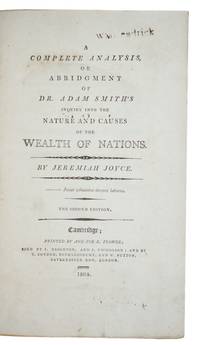
1804AQ21202Cambridge: Printed by and for B. Flower 1804. 324pp. Modern morocco-backed marbled boards gilt. Slightly rubbed to extremities occasional marking else a crisp unpressed and generously margined copy displaying several untrimmed fore-edges and some marginal paper flaws. With occasional neat early underlining of key passages suggesting a close reading a handful of single-word manuscript translations into French early ink-stamps of Wm. McKendrick to early blank preceding title and following leaf and later ink inscription to modern blank fly. The second edition of the first work of economics in English consciously intended to be used as a textbook: as the author himself notes in a preliminary 'advertisement' the work was to be 'found convenient as a text book in those institutions of liberal education in which the "Wealth of Nations" makes an essential branch of their letters'. A lucid abridgement by English radical Jeremiah Joyce 1763-1816 of Scottish philosopher Adam Smith's monumental Wealth of nations it condensed the two thick quartos of the original edition London 1776 or the by then well known bulky triple-decker octavo editions of the late eighteenth century into a single convenient octavo volume. Mizuta 82. Second edition. 8vo. Printed by and for B. Flower hardcover
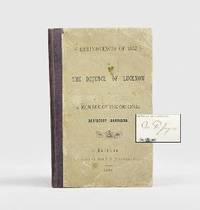
1891189414Lucknow: Printed at the N. N. Sivapuri Press 1891. Siege of Lucknow from the most exposed post - an Indian Rebellion eyewitness account of extraordinary rarity First and only edition - signed by the author on the last page - of this detailed firsthand account of the defence of Lucknow written by Matthew Rutland Joyce 1828-1911 in Uncovenanted Service the lower echelons of the ICS in the Judicial Garrison. Only the second recorded copy the Oxford University copy apparently lacking the initial leaf with excerpted passages from Tennyson's "The Defence of Lucknow". Joyce prefaces his narrative by explaining that it was written "for the information of those of my relatives and friends who were battling for their lives in other parts of the country or who were too young to remember". With no pretensions to being a "faithful history" of the period it is "simply a chronicle of such occurrences within the Residency defences. as memory retained and can be interesting to none but those few active participants in the great struggle who yet survive" p. i. The story which follows is all the more fascinating for its personlalized focus naming many of the most familiar names but introducing a cast of lesser-known characters to the famous story further broadening and humanizing the standard narrative. Presented in diary form the text follows Joyce through the preparation of the defences his training with an antiquated Brown Bess for the volunteer infantry brushes with death from both fever and enemy fire to the final relief and evacuation of the Residency "There was some confusion and heartaches in the matter packing up our belongings for the orders were peremptory that nothing but things necessary were to be taken out; and it certainly went against the grain to leave behind cherished articles". Joyce is a lively and personable storyteller his recollections of "the eternal din of musketry" of the rebels'' profligate firing the privations of the diminishing rations and the imminent threat of death are recounted in vivd vernacular style and his tales are often self-deprecating. In recounting what was despite his many "narrow escapes" "first and only" wound he explains how he would not have alluded to it "had there not been so much of the ludicrous about it". During the assault on Phillips's Garden which was being menaced by a rebel battery Joyce crafts himself "a capital loop-hole embrasure fashion" out of "substantial bricks" on top of the mud-brick wall overlooking the position. The result being much admired. While on watch he spots movement at the gun and foolishly fires off a round in the hope of "staying their purpose for a moment of two" which of course registers the rebels' aim and the gun was "presently laid and discharged". Joyce dives behind the wall for cover the shot clips the masonry of the house behind the shock dislodging the topmost bricks of his loop-hole which fell on his "bowed head and laid it open causing all over and inside it a sensation such as I had never felt before" pp. 71-3. Joyce was on the staff of the Judicial Garrison the Judicial Commissioner's Kutchery or Court House post a very exposed position during the siege. He and his brother Richard Christopher who served with the volunteer cavalry "Radcliffe's Horse" covering the withdrawal from the debacle at Chinhut were in the Uncovenanted Service a perhaps under-represented group in the history of British India. Originally introduced to offer opportunities for Indians or Anglo-Indians to join the Indian Civil Service covering key but less specialized administrative roles at commensurately lower salaries and with thinner employment rights the service had already began to attract a wider constituency before the expansion of the post-Rebellion government. By the 1880s voices were being raised on their behalf in the parliament to secure a levelling up of the benefits for their vital contributions to the increasingly complex bureaucracy of the Raj. Joyce was born in Agra post-Rebellion he was for a time curator of the Lucknow Museum and the donor of a number of specimens to the natural history section he was buried in the Residency Cemetery Lucknow. Beyond this we have been unable to trace earlier family connections with India and unfortunately within the text he tells us little of his background. Small octavo pp. ii iv 119 1. Original printed covers pebble-grain cloth backstrip. Externally overall a little browned rubbed and soiled but no loss of text to the covers endpapers browned; text toned but cleaned and sound; overall a surprisingly well preserved copy very good. hardcover
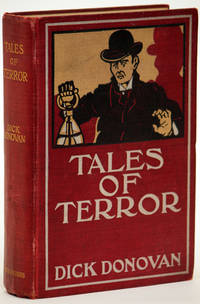
189913741London: Chatto & Windus 1899. First edition. Bookseller blind stamp WH Smith to upper corner of front free endpaper offsetting to endpapers some moderate foxing mild rubbing to cloth at corner tips and spine edges two small spots to rear cover a very good copy of a scarce book. 13741. Octavo pp. 1-8 1 2-325 326: blank 327: publisher's device 328: blank 32-page catalogue dated "Sept. 1899" inserted at rear original burgundy cloth front panel stamped in tan white and black spine panel stamped in gold fore and bottom edges untrimmed. "Wonderfully lurid sensational horror stories in full-blooded manner of Victorian melodrama; story titles such as 'The Corpse Light' 'The Cave of Blood' and 'A Night of Horror' say it all." - Robert Knowlton. Reference: Ashley Who's Who in Horror and Fantasy Fiction p. 68. Barron ed Horror Literature 2-70. Sullivan ed The Penguin Encyclopedia of Horror and the Supernatural p. 130. Tymn ed Horror Literature 3-66. Wilson Shadows in the Attic p. 192. Bleiler 1978 p. 62. Reginald 10482. Not in Wolff. Chatto & Windus unknown